Project Data
Dates: Started 1355 SH (1976), halted 1357 SH (1979), resumed 1373 SH (1994)
Pre-1357 — Project Manager: Manouchehr Iranpour
Architect: Bahrouz Ahmadi
Structural Engineer: Ove Arup & Partners
Contractor: Ras Company (the late Eng. Pourfathi)
Post-1373 — Client: Ministry of Housing and Urban Development
Consulting Engineer: Sharestan
Design Associates: Ali Mojtahedzadeh, Homayoun Nikbakht, Shahram Behzadian, Arshia Shoaleh
In 1313 SH (1934), the Marble Palace was built as a residence, reception venue, and office for Reza Shah on a plot of land in the center of Tehran. After its completion, surrounding lands were purchased and the palace grounds expanded to approximately 5.5 hectares, bounded to the north by Pasteur Street, to the east by Vali-e Asr Avenue, to the west by Felestin Street, and to the south by Imam Khomeini Street. Later, a building was also constructed in the southwest of these grounds for the residence of Reza Shah’s wife.
These two buildings served as royal family residences until the 1340s SH (1960s), but after the family’s relocation to palaces in northern Tehran, they remained vacant for some time. In the early 1340s SH, the Marble Palace was endowed to the City of Tehran and converted into the Pahlavi Monarchy Museum. The second building was renovated and opened in 1353 SH (1974) as the Negarestan Museum. The conversion of these two old and valuable buildings into museums, along with the expanse, greenery, and beauty of the grounds and their exceptional location on the historically important axis of Imam Khomeini Street, gave rise to the idea of adding a new building to transform the entire complex into a powerful cultural center.
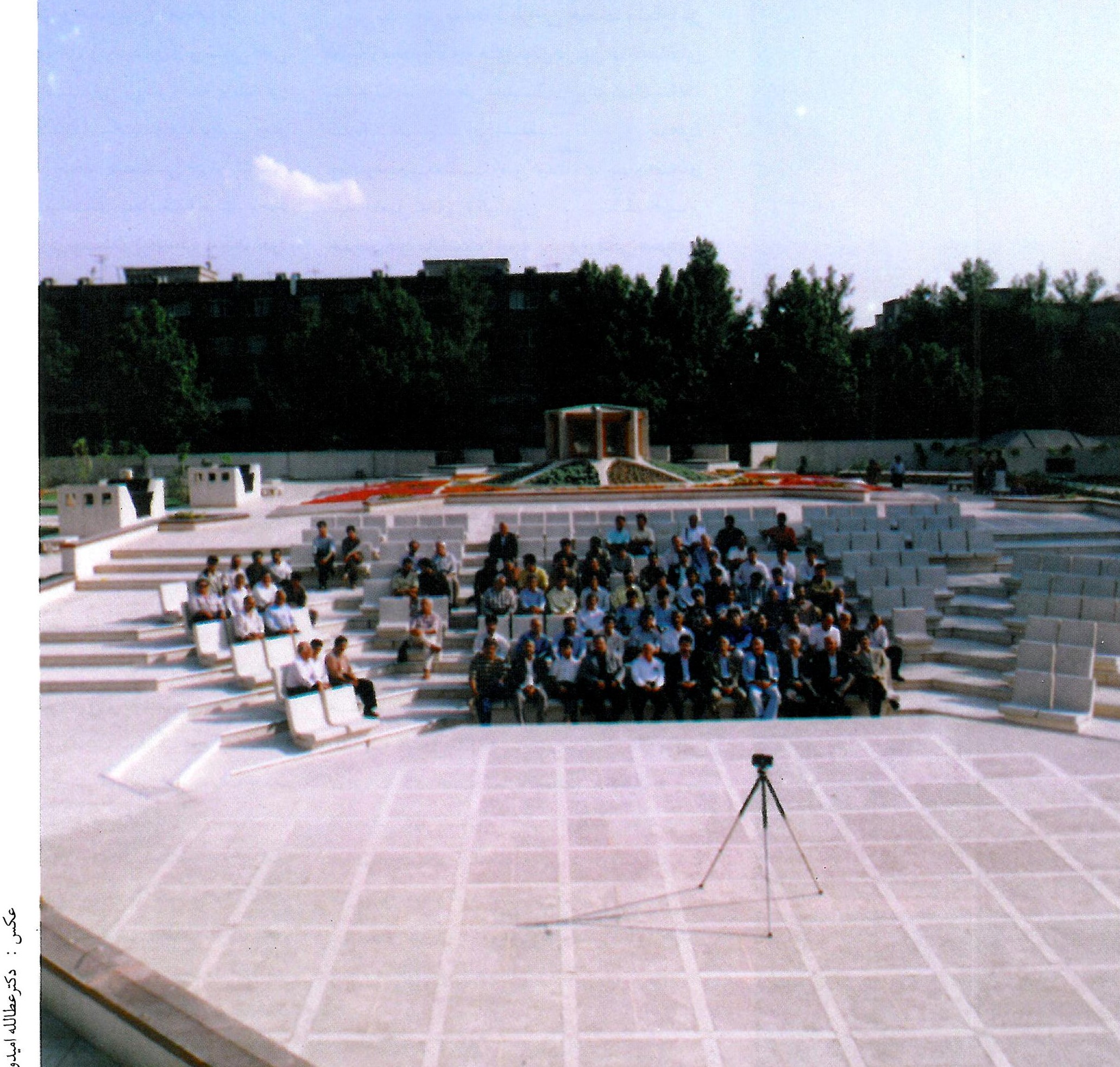
It was decided that a new cultural center would be built on the south side of the complex. To preserve the values of the existing historic buildings, this new structure would be built entirely underground, with an amphitheater above it forming part of the public park and garden. Construction commenced in 1355 SH (1976), and by the time of the Revolution approximately 25 percent had been completed. After the Revolution, the Marble Palace was allocated to the Supreme Judicial Council and construction of the new cultural center was halted for 16 years.
In recent years, however, the authorities’ attention to the shortage of cultural spaces in Tehran led to the decision to resume work. After three years of intensive construction, the building was finally completed and made ready for public use.
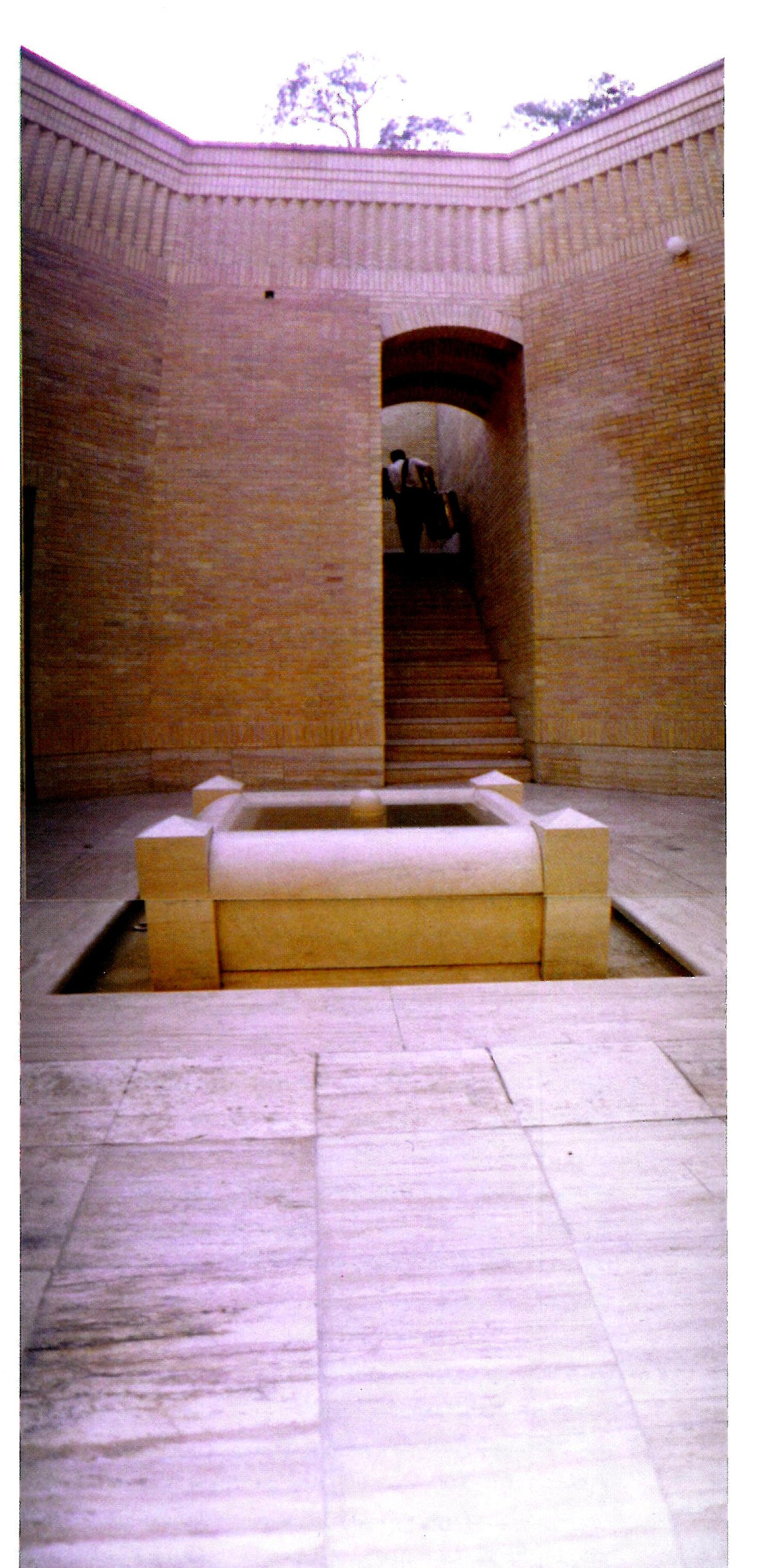
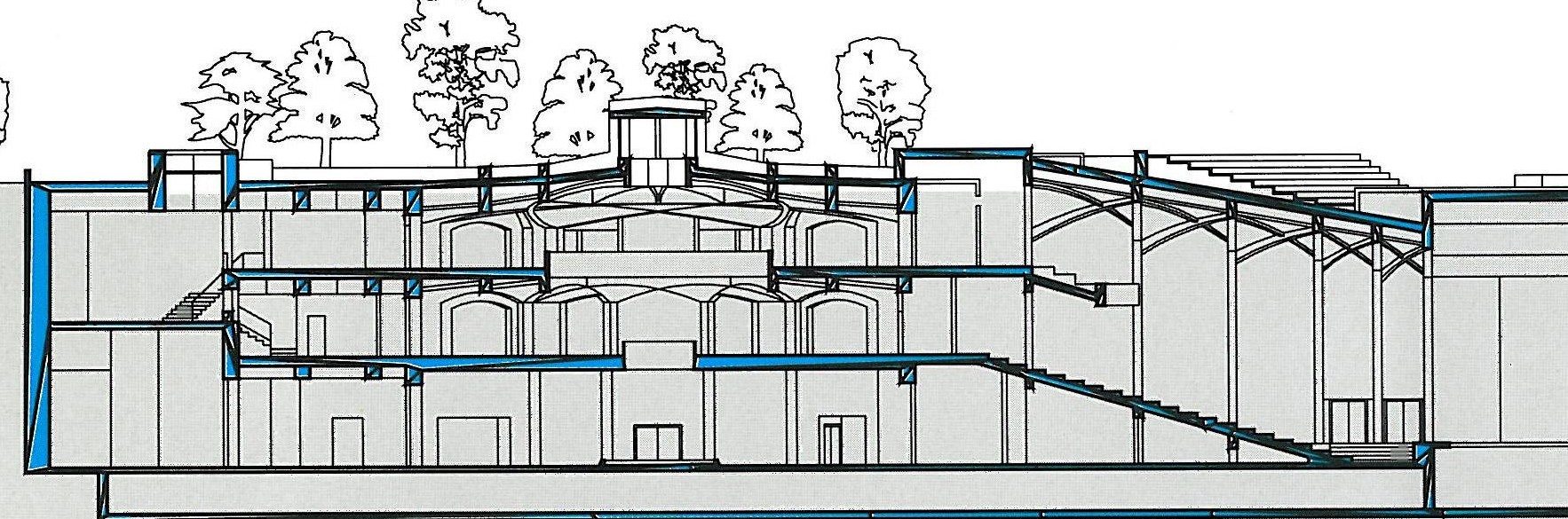
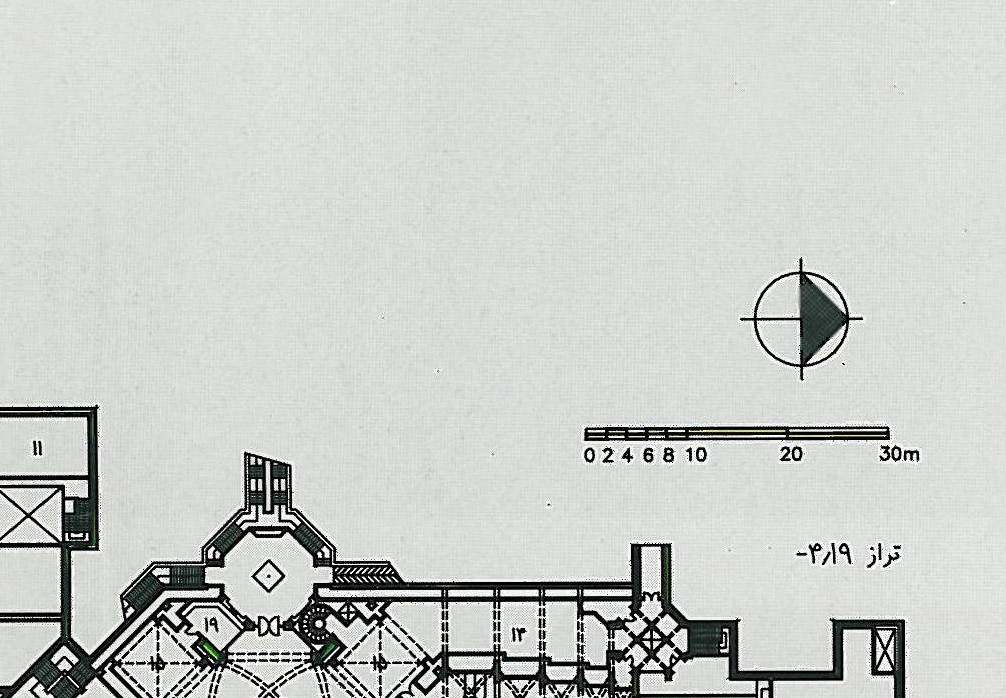
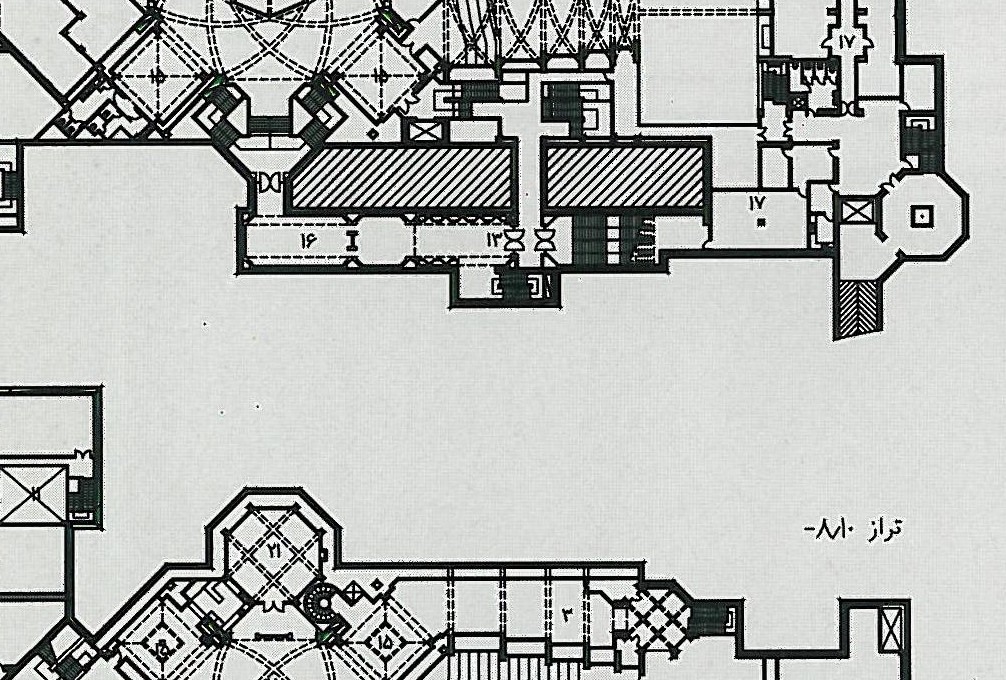
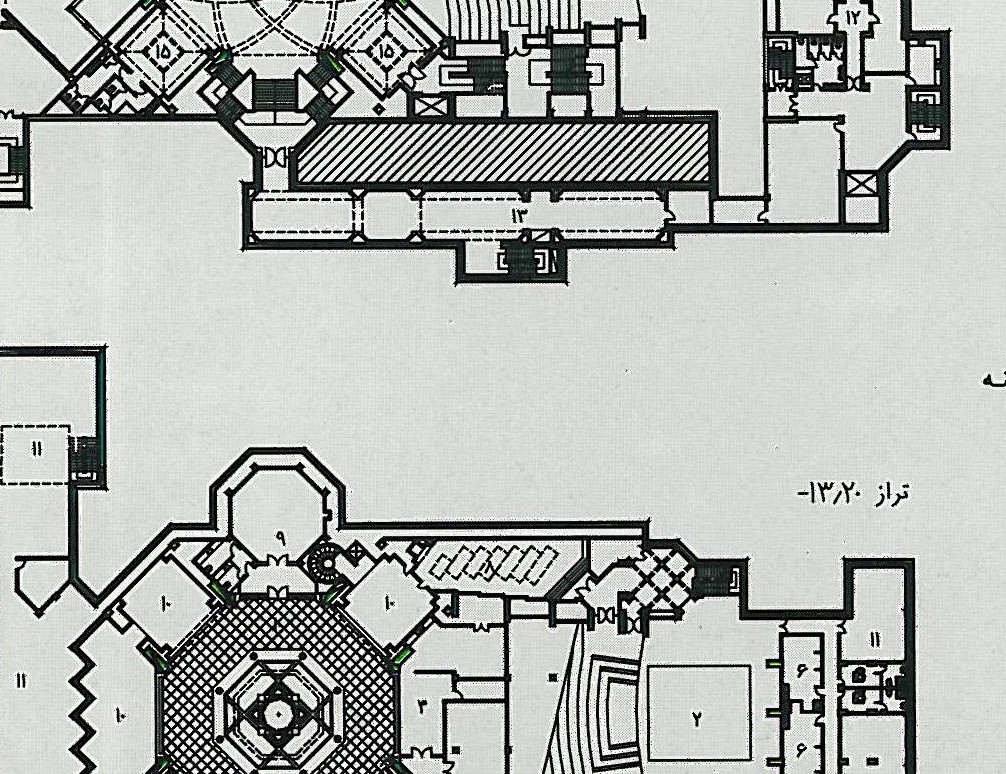
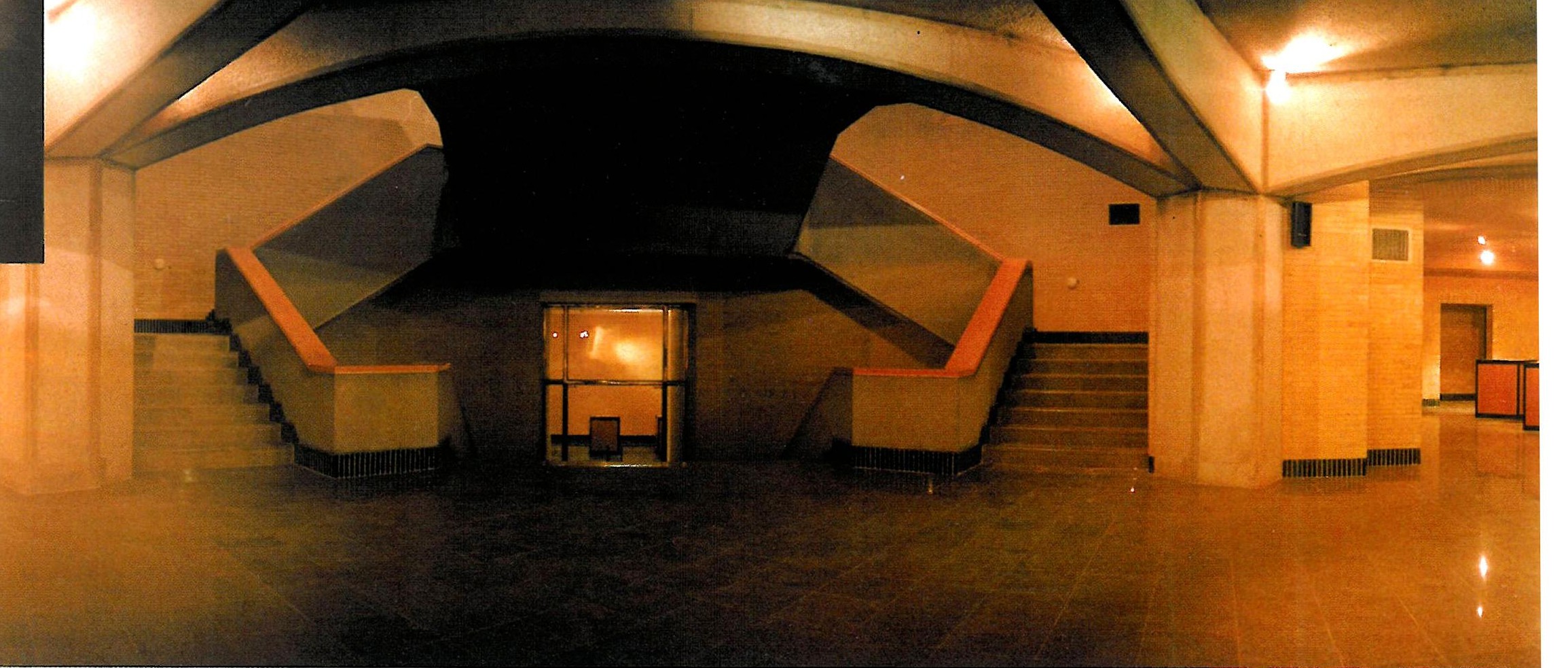
The Negarestan Cultural Center, with a total built area of approximately 10,000 square meters, has been constructed in an excavation pit measuring roughly 30 by 60 meters with a depth of about 14 meters. The angular offsets of the eastern and western walls result from the presence of valuable trees and the necessity of preserving them. This depth, equivalent to three stories, enables access between the complex’s various levels without the need for an elevator, as well as the possibility of benefiting from natural light at the lowest levels.
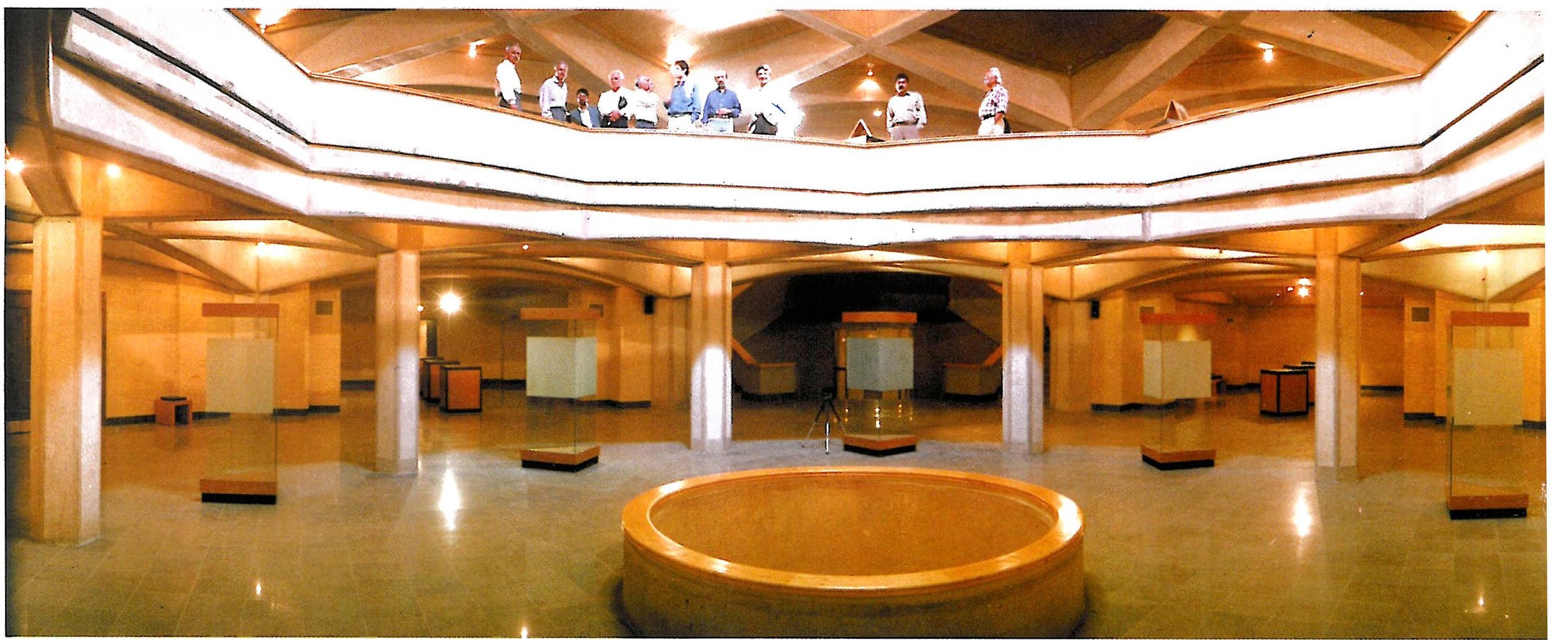
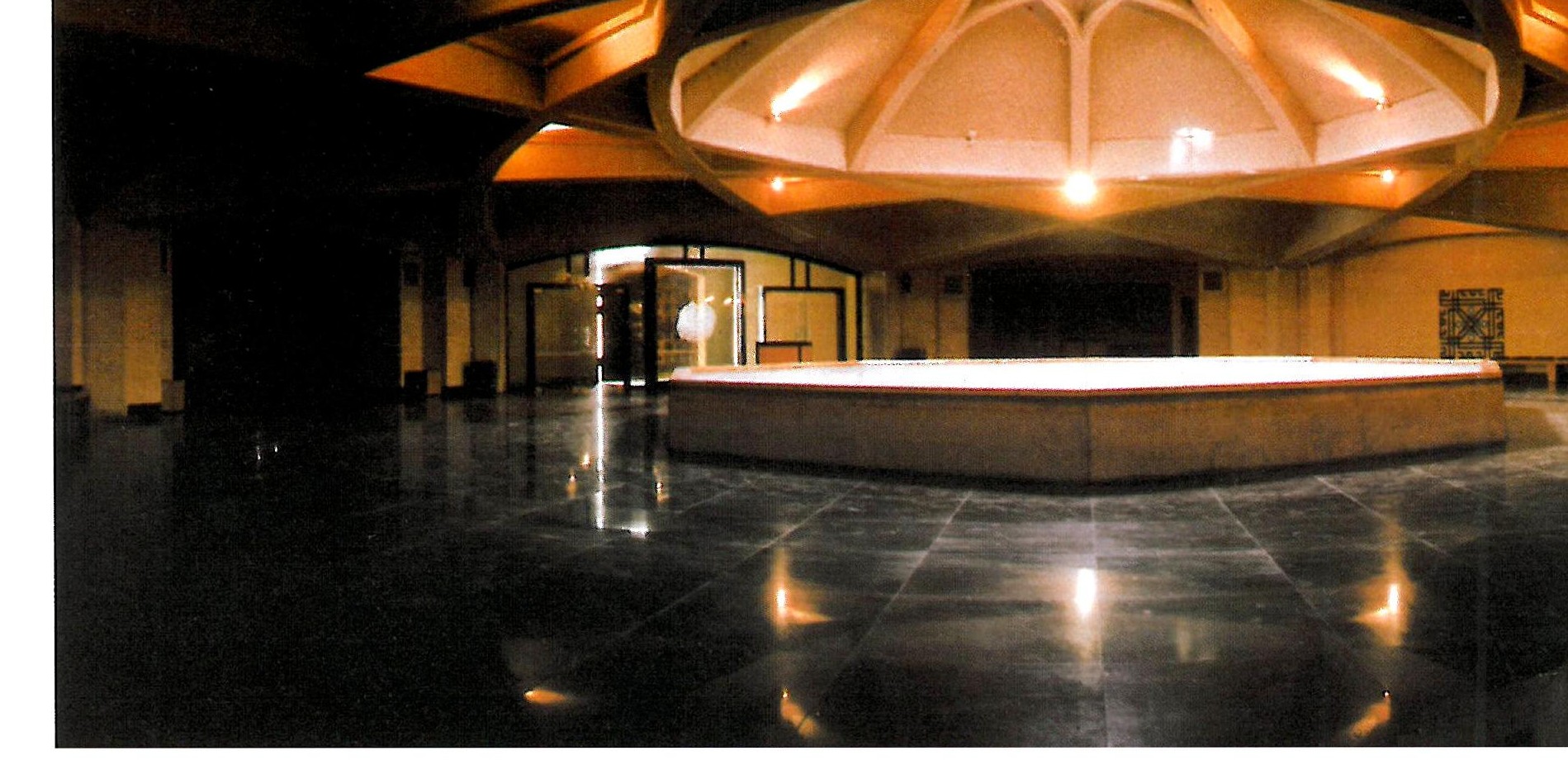
The complex is positioned along the north–south axis of the Marble Palace and uses the east–west axis of the Negarestan entrance courtyard for access, creating a link between the new building and the existing historic structures. The principal elements include the amphitheater hall with a seating capacity of 400, and the main concourse — the most important element of the complex after the amphitheater. Situated at the intersection of these two axes, the concourse on its first level constitutes the main entrance space; on its second level serves as the amphitheater waiting area; and on its third level hosts exhibitions. Skylights on the roof enable all levels to enjoy natural light.
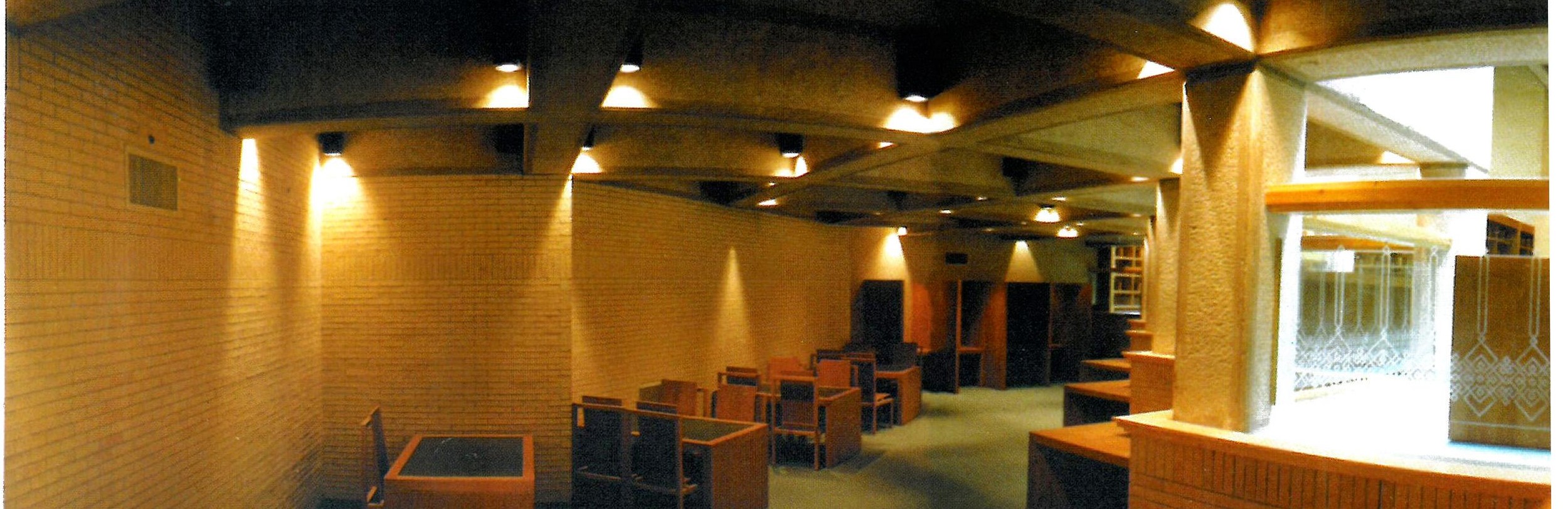
The next important elements include a library with a capacity of approximately thirty thousand volumes on the south side; the museum collection — including the Quran Museum and precious calligraphic manuscripts — on the east side with an independent entrance for security; galleries on the west side connected to the Negarestan Museum; and the administrative section with storage on the north side.
In the architecture of this complex, “geometry” and “structure” play the principal role. Geometry holds a particularly dominant and prominent presence in the design of the main concourse. Structure, through the skillful use of geometric forms in the construction of ceilings — especially in the library — and of ceilings and walls in the amphitheater, constitutes a fine example of structural elements integrated into architectural design.
In the selection of materials, durability, reduction of maintenance needs, and attention to the importance of interior finishes have been the principal criteria. The greater part of the building uses exposed brick and fair-faced concrete with white cement. Wherever possible, the precise and masterful execution of traditional Iranian craftsmanship in brickwork, joinery, stonework, and tilework has greatly contributed to the beauty of the spaces.
The decision to dedicate part of the complex to the Quran Museum, and the consequent use of distinctive tilework patterns and familiar religious motifs, has further strengthened the affinity of this architecture with the spirit of traditional and indigenous building. In construction, reinforced concrete framing has been used throughout, with a double-walled retaining structure of concrete piles around the entire perimeter protecting the complex from the pressure and moisture of the surrounding soil.
◆ ◆ ◆