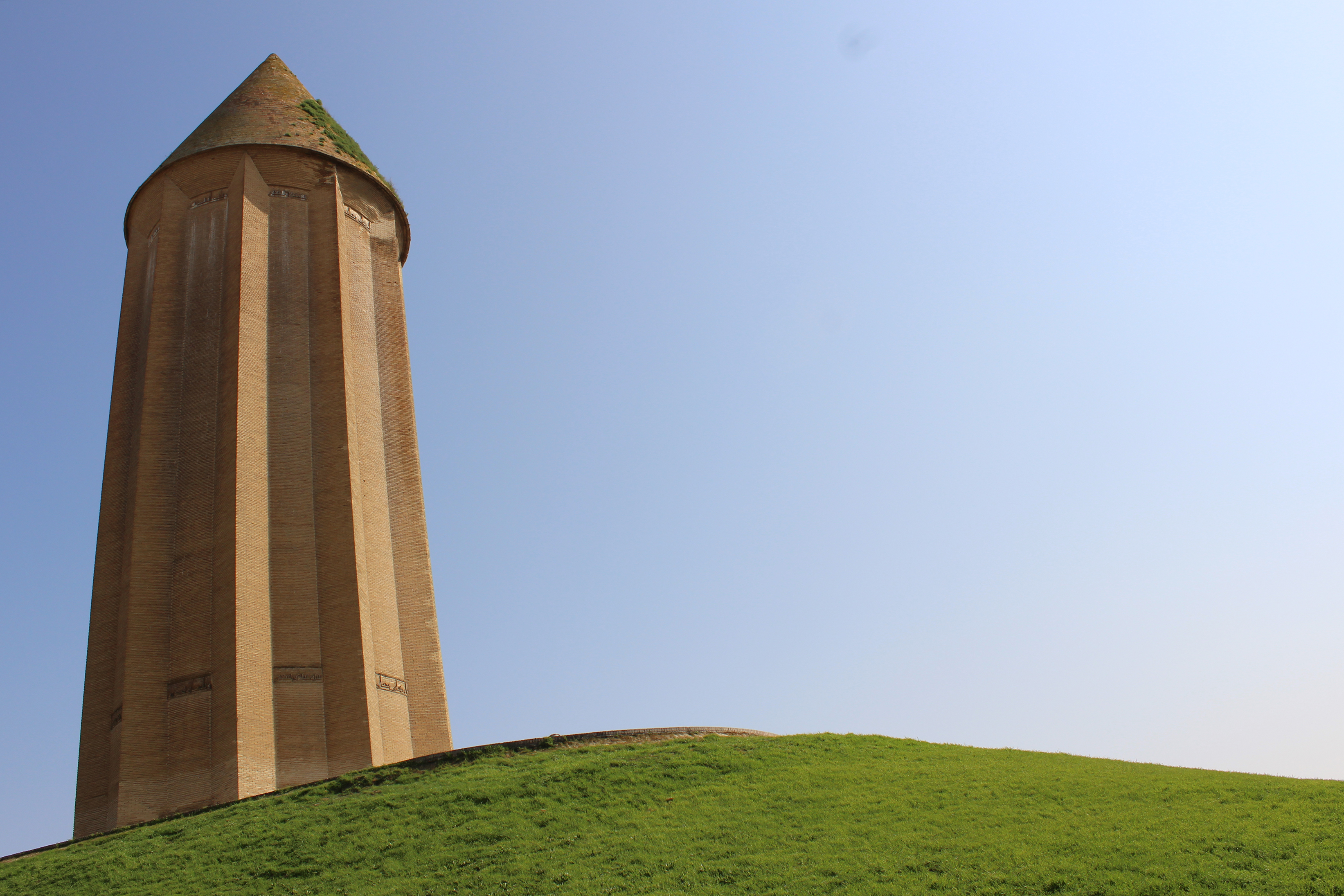
Gonbad-e Qabus (Tower of Qabus) is a brick tower tomb built in 1006 CE, rising 53 metres from its base — making it the tallest pure-brick tower in the world. Commissioned by the Ziyarid ruler Qabus ibn Voshmgir, the tower stands on a hilltop in Gonbad-e Qabus city in Golestan province, northeastern Iran.
The tower is a masterpiece of structural engineering and geometric precision. Its cylindrical body, 17 metres in diameter, tapers slightly upward and is crowned by a conical roof. The exterior is articulated by ten sharp-edged buttresses that create a striking star-shaped plan when seen from above. The only decorative elements are two bands of Kufic calligraphy encircling the tower near its base and summit, one recording the date of construction and the name of its patron.
The tower's remarkable height was achieved using an innovative double-wall construction technique, with an inner cone supporting the outer shell. Despite standing for over a millennium in an earthquake-prone region, it has survived virtually intact — a testament to the extraordinary engineering knowledge of its builders. The monument influenced tower-tomb architecture across the Iranian world for centuries.
Inscribed as a UNESCO World Heritage Site in 2012, Gonbad-e Qabus is recognized as a masterpiece of early Islamic architecture and an outstanding example of the scientific and mathematical knowledge of its era.
Gallery
Location
Loading map…
Gonbad-e Kavus, Iran(37.250, 55.167)



