
After a number of years, the Memar Award has become a cultural event and a recognised institution for Iran's architects. As someone who has at times sat on the jury and at other times watched the contest from the sidelines, I would say the most important aspect of the Memar Award is the very fact of the participation and engagement of so many architects and architecture enthusiasts in this competition. Each year the Memar Award has been bestowed — amid the admiration, surprise or critique of its observers, which is the natural by-product of such a cultural endeavour — on a number of the country's architects. But perhaps more important than the question of who finally stands on the podium is the fact that by entering the contest, Iranian architects find a chance to assess their own position in relation to the day's achievements in Iranian architecture.
The Memar Award has therefore, in recent years, made it possible to track the trajectory of contemporary Iranian architecture — to see, beyond differences in style, tendency and even quality, what shared principles bind architects' professional practice together, and what the variety of their ideas and methods looks like.
Naturally, just as the presence of architects and the variety of their work directly shapes the Memar Award, the award itself has not been without influence on the growth and transformation of Iranian architecture. Many interested architects begin preparing for the award long in advance, and some even seem to think — from the moment a project's concept is forming — about how their project will register with the award's jurors. Even so, whether or not a designer has the Memar Award in mind, the contest has become a kind of second eye from whose judgement architects cannot escape. Today's noteworthy works, willing or unwilling, are measured against the Memar Award's chosen projects — projects that act as a touchstone in our architecture. Iranian architecture today shows a maturity and ripeness markedly greater than twelve years ago, and part of that achievement is owed to the Memar Award as an institution that has given a wide spectrum of designers a chance to be visible and to be compared.
It is only natural that the Memar Award would mean nothing without the participation of those who submit their work to the competition, those who follow the contest directly or through Memar magazine, the jurors, the organisers, the financial sponsors — and even those who, in architectural magazines, on specialist websites and on Facebook, take the jurors to task. The Memar Award is the sum of all of these, all of whom, since its first edition, have moved it forward.
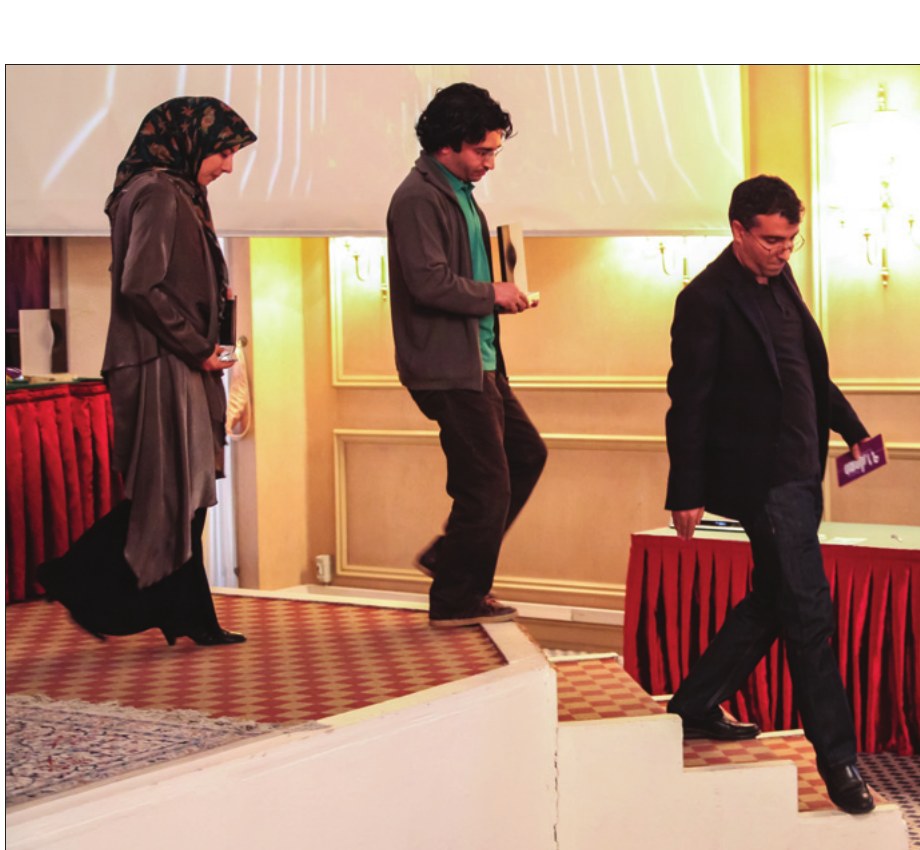
Each round of the Memar Award draws attention to the contest's winning projects; but in fact the projects that earn placements are only the tip of the iceberg. If we take a closer look at the iceberg's vast submerged body, we find that one of its decisive elements is the jury — who, because no prize is awarded to them, are less photogenic, and whose work occupies fewer pages of the magazines. The jurors, like the contestants, are not all the same: their opinions differ and sometimes contradict one another. This too is the nature of judging, and in principle a divergence of opinion in a jury is better and more useful than a uniform agreement.
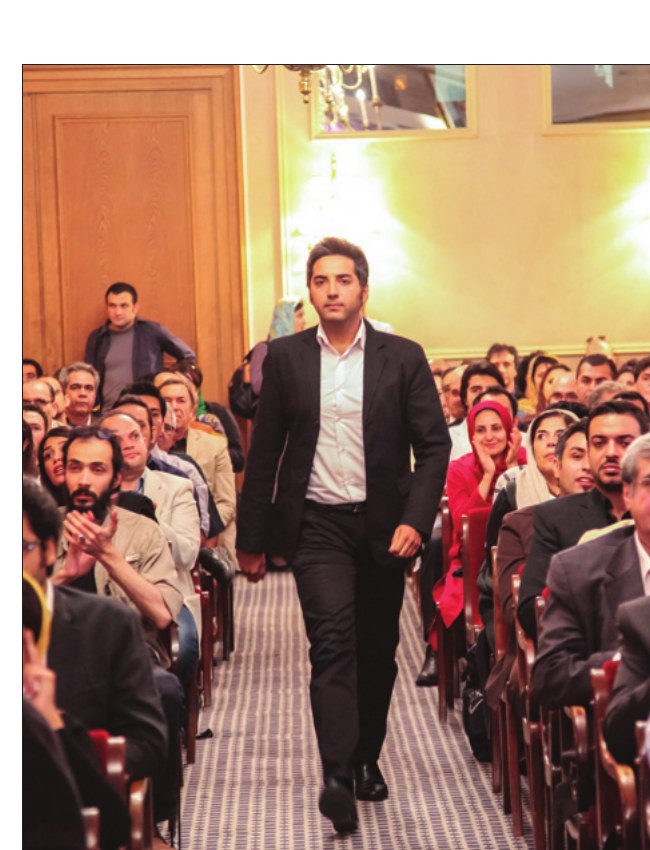
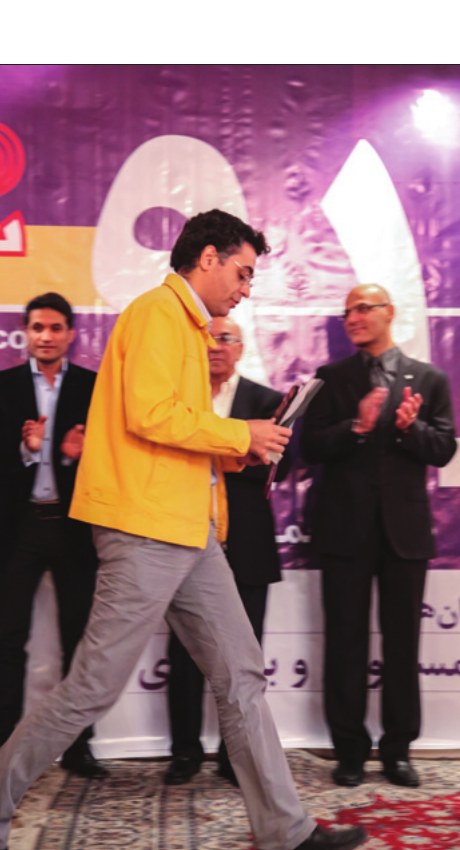
The result of judging is not a product with scientific precision but a relative one, and the factors that influence it — quite apart from the intrinsic quality of the work — are the way the project is presented (the clarity of its main ideas and merits), the body of competing works, and the composition of the jury. If today we believe that, beyond the differences between Iran's "noteworthy works," there are common threads and shared points that let us identify a definite trajectory in the architecture of the past ten years, then in the judging of the Memar Award too such shared principles have been more or less present from the start; and alongside them, there have always been dynamic and evolving aspects that have allowed us, today, to examine works more freely and at greater remove from any predetermined principles.
Judging the Memar Award is harder than judging a design competition, because there is no predetermined project and brief against which to compare the works; and comparing works that are each of a different kind also demands a particular care. The experience of judging has shown that often a work that wins first place was, at first glance, taken to be a reject — and was at risk of being eliminated in the early rounds. Fortunately the judging procedure is designed so that no work is eliminated until every juror has cast a negative vote against it, and therefore every work has the chance to be considered. Many good works are not large, or their importance does not lie in producing a beautiful, striking form; it takes time for jurors to grasp the project's value through a close reading of its drawings and explanations. One of the reasons that contestants in the Memar Award are sometimes surprised by the jury's results is that their own quick judgement collides with the judgement of a group that has spent hours studying the projects.
An architectural work is a complex bundle of values and even of weaknesses, and this is the very nature of architecture — it never reaches the pure expression and perfection of painting or sculpture. The number of factors at play in a project, some arising from the nature of the work itself and others imposed from outside, is such that even masterpieces of architecture have their contradictions and shortcomings. The award-winning projects are not exempt from this rule. A project may win first place for its inventive idea, for the quality of its spaces, for the coherence between whole and inner detail; yet in the way its glass façade is subdivided, where the standard limits of an industrial modulation system collide with the geometry actually built, it falls into contradiction. Some apparent contradictions are also tied to the designer's outlook — something that can only be debated from a philosophical viewpoint.
A project sits in a worn urban fabric, and the designer is bound to establish a clear relationship between the project and its surroundings. Whether the designer chooses to do so by making the project resemble its context, or by the strategy of acknowledging a substantive contrast with the environment that lies in the project's nature, is a philosophical matter — and both approaches are present in the outstanding works of contemporary architecture. Some works may seem, to certain observers, derivative or copied — and judgement on that is also difficult. On one hand, identifying the originality of every entry, given the abundance of projects worldwide that may serve a designer as reference, is in practice impossible. On the other, a designer may legitimately draw on his or her own earlier ideas in a new project, and that is an ethical question on which judgement is not possible. No architect can build every part of a design from scratch — that is the nature of all architectural work — and on the other hand great designers such as Daniel Libeskind and Frank Gehry, after the success of one of their important projects, have themselves modelled later projects on it, independent of any analytical discussion of the new project's subject.
Therefore judging, like designing, never reaches perfection and is always open to discussion and critique. Broadly speaking, one can say that just as the designer cannot claim that the project is the embodiment of every desire and factor connected to it — it is, rather, the designer's interpretation of the project's priorities, design method and aesthetic concerns — so too the jurors only declare their own interpretation of the values and weaknesses of an architecture in the form of a final vote. The jurors disagree about their working methods, and this disagreement raises the level of care and attention they devote to the works. The greater the disagreement, the more time the jurors spend on review and discussion of a project. It might seem, at first glance, that the jurors weigh the semantic justifications offered for a project, the designer's expertise and skill, and aesthetic considerations. These subjects do come within the jurors' attention, but my experience of taking part in many architectural juries shows that these factors weigh more in the early review of works and have not, in fact, been decisive in the final vote. What I am stating here, of course, is only my personal reading, and should not be taken as a rule or predetermined principle of Memar's jury work.
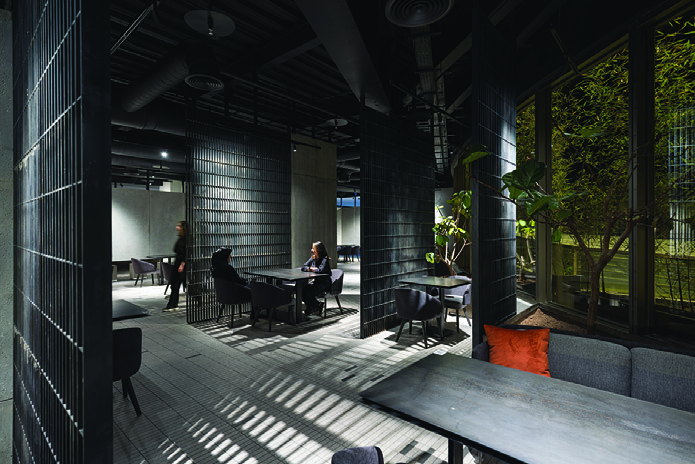
There are always a considerable number of beautifully built works that meet aesthetic and technical standards and please their audiences. These values belong to the professional practice of architecture rather than to the culture of architecture, which calls for research and progress. This year's Namak Fast Food, first place in the Public group, won the prize chiefly because of the designers' particularly compelling research and their inventions in materials and in the design of the overall form and details on the basis of that research.

Alongside research, innovation is one of the factors that weighs in the jurors' decisions, and works that avoid established, settled methods do important work. Of course the jurors know that an innovative work will never have the well-settled, flawless quality of a tested solution — but if innovations are not made, architecture will stand still. So Coffeeshop Son too earned third place in the Renovation group; its façade and entrance held a notable inventive and challenging quality.

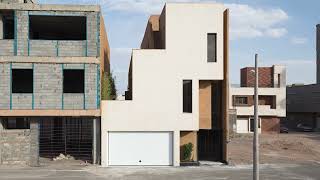
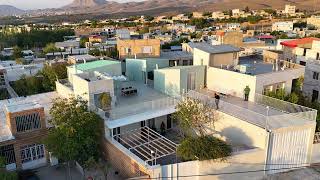
Social and cultural impact is another point most jurors consider valuable. More important than a project that satisfies its client utterly is one that has even a small positive effect on the public realm and can generate further moves to improve the quality of life in cities. The urban renovation of the Mahallat Bazaar fell into this category: drawing on concepts tied to urban memory, it offered a practical solution for the alleys of worn quarters and for the management of surface water runoff. Connection to local culture is also among the merits that count for projects. Of course doing this well is very difficult, and for that reason the Firouzmandan House and the Najafabad house earned second and first place in the Residential group. In most juries, overcoming the constraints of a project is counted as a merit; projects that were tightly constrained by frontage, awkward plot shape or budget are encouraged by the jurors. In the latest jury too, such projects were noted — but their scores were not sufficient to take a placement in the contest.
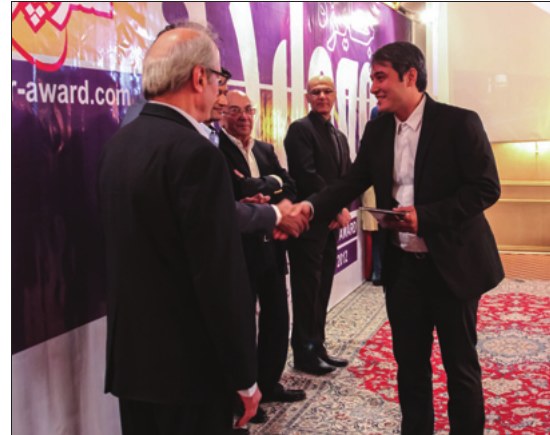
Another important matter is the scale of the project. The recent and past juries of Memar show that the jurors believe an architect who treats a very small commission as a full architectural project — and is prepared to take on the difficulties of a major architectural work for a small task — deserves recognition. For that reason too the small Takhte Soleyman prayer chapel earned first place in the Public Buildings group (alongside the Namak Fast Food).