Location: Reza Shahr, Anvari 4, No. 16 · Client: Mahdi Attarpour · Design team: Amene Akbari, Mojgan Afshar, Hedye Tadayon, Ayoob Abootorabi · Construction manager: Mohammad Ebrahimzade · Construction team: Mahdi Gholami, Mojgan Afshar · Structural engineer: Behzad Nezamdoost · Structure contractor: Asim Saze · Electrical and mechanical design and supervision: Meysam Poorghavam · Mechanical contractor: Mohammad Saedi · Electrical contractor: Mahdi Hajjizade · Graphic: Hibou Studio · Photo: Deed Studio · Video: Hamze Ebrahimzade · Footprint: 345 m² · Total built area: 2,650 m² · Site area: 510 m²
The brief was to design a roughly 300-square-metre residential unit for the parents of a family, four 150-square-metre units for the children, plus the remaining permissible floor area as units for sale, on a 510-square-metre site.
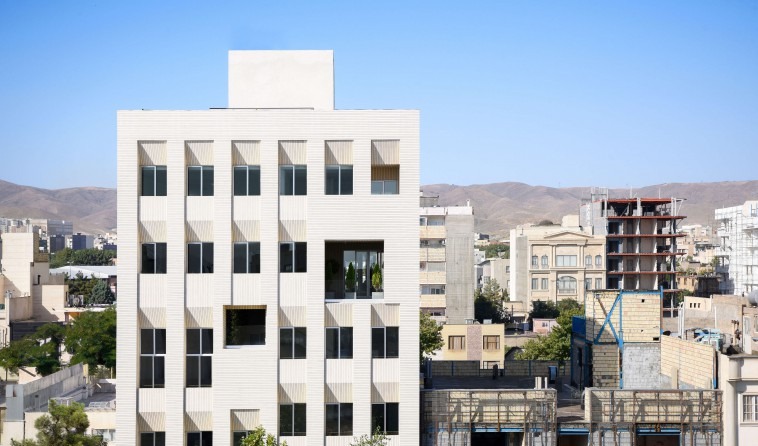
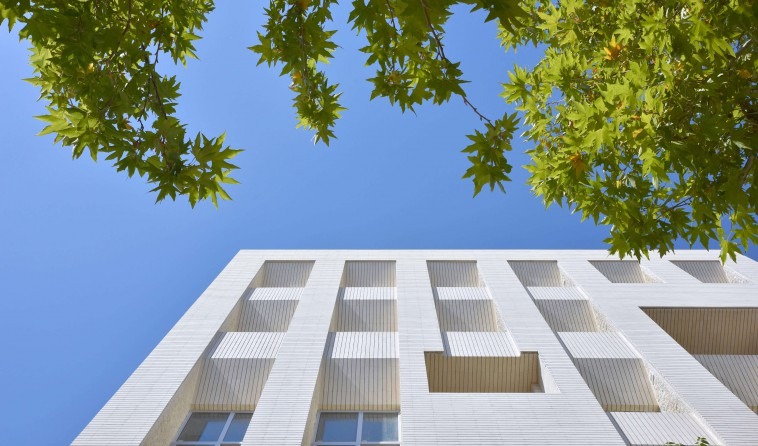
The principal design challenge was to separate the two-unit floors cleanly and to remove the shared lift filter from them without harming the single-unit floors. To that end, the familiar pattern of Tehran's vernacular-modernist apartment buildings of the 1950s and 1960s — known in Mashhad as the Khorjini scheme — was taken as the structural pattern of the project. To reduce the section difference on the single-unit floors, raising and lowering the storey heights led to a duplex unit in the middle of the building with eighty square metres of additional saleable area, which compensated for the loss of floor area to the central void on the courtyard facade and the gain of non-saleable area in the lift filters. With that resolved, other characteristics of late-modern apartment buildings — semi-open spaces on the floors, positive and negative volumes in the facades, and the separation of private and public spaces in some of the floor plans — were then injected to reinterpret this pattern in response to contemporary needs.
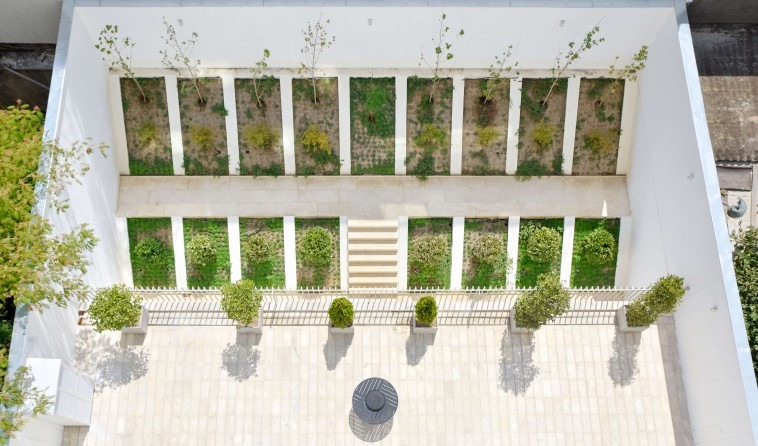
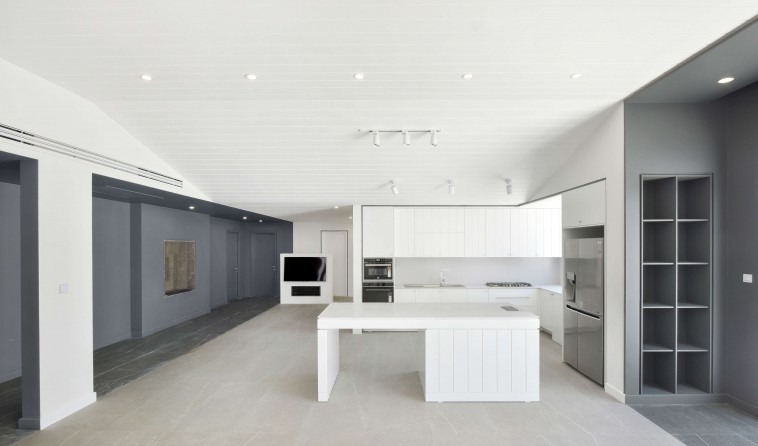
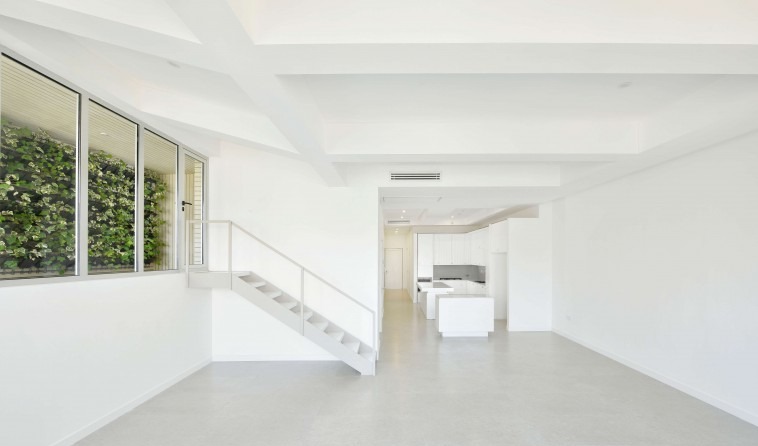
16 The Moment — six storeys of positive-and-negative Khorjini-pattern facade rising over Reza Shahr, with the Binalood foothills behind.The cantilevered planter set within the central facade void — the courtyard balcony reads through to the apartments behind.Khorjini pattern reading from the street — alternating positive and negative volumes register the two-unit-versus-one-unit logic on the facade.Open-plan kitchen and living area under the vaulted ceiling — the single-unit floor delivers maximum lateral spread without the lift filter.Section through the central void — the void cuts through the building's depth and lets the courtyard facade breathe.The duplex middle unit with the green-window wall — eighty square metres of additional saleable space stitched into the building's middle.Plans of the single-unit and two-unit floors — the Khorjini pattern adapted to contemporary needs, with private/public zoning on selected plates.