Contemporary Architecture

Golshahr Metro Station, Karaj — 4th Place

Golshahr Metro Station, Karaj — 4th Place

Project Information

Project: Golshahr Metro Station

Location: Golshahr District, Karaj, Iran

Client: Tehran and Suburbs Railway Company (Metro)

Lead architect: Farzad Rouzbeh

Architecture associates: Siamak Kalhori, Reza Rahimian, Omid Shaterian, Marjan Rezvani, Hoda Alavi Tabari, Niloufar Aleiha, Sourena Sateri

Structure: Farhang Ghajar

Structural associates: Jalal Hejazi, Alireza Yekkalam, Mohammad Babak Rajaee, Seyyed Ebrahim Ashrafi, Bahram Maleki, Reza Anamaghi, Sasan Sayyah

Electrical: Mohammad Saeed Atigh

Mechanical: Farzin Fardanesh

Contractor: Tehran Armeh Company

Construction period: 2002–2004 (1381–1383 SH)

Built area: 16,000 sqm

Site area: 7 hectares

◆ ◆ ◆

Golshahr Metro Station is located in the Golshahr district in the west of Karaj, near Mehrshahr. This above-ground station serves as the terminal of Tehran–Karaj Metro Line One, accessible from two sides via the Tehran–Karaj Highway and Moazen Molayeri Boulevard in Golshahr township. The station has been designed on two levels: the first level comprises the ticket hall, technical rooms, and commercial spaces, while the second level contains the island-type platform and under-platform service areas.

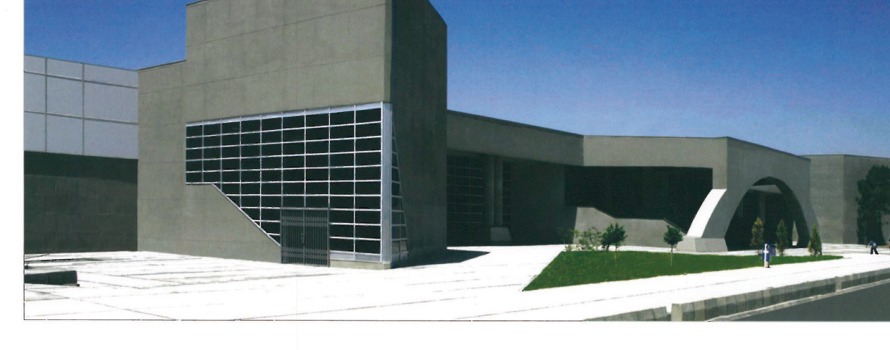
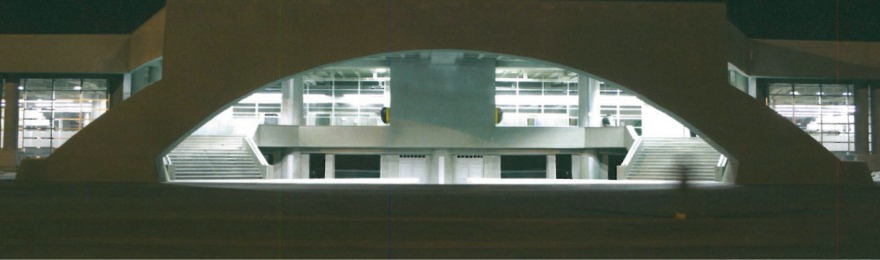
The design responds to the challenge of creating a civic landmark at the edge of a rapidly expanding satellite city. The station's most striking feature is its series of monumental parabolic concrete arches that span the main entrance, framing the two-story interior and establishing a bold silhouette visible from the approaching highway. These structural arches serve both as the primary load-bearing system for the elevated platform canopy and as an iconic gateway marking the threshold between the urban landscape and the transit infrastructure below.

Exterior

Golshahr Metro Station exterior in daylight, showing concrete volumes, glass curtain wall, and parabolic arch
Daylight view of the station showing the interplay of concrete masses, the glass curtain wall enclosing the staircase, and the signature parabolic arch at the far end

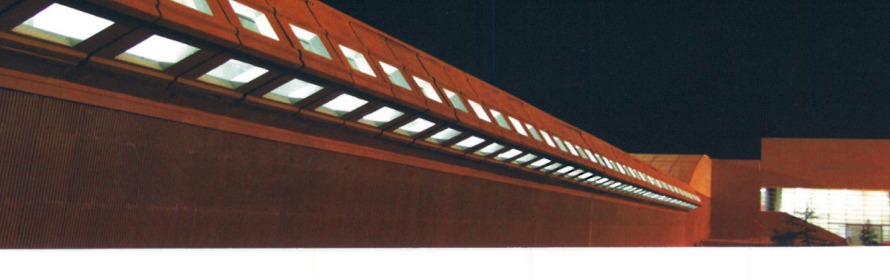
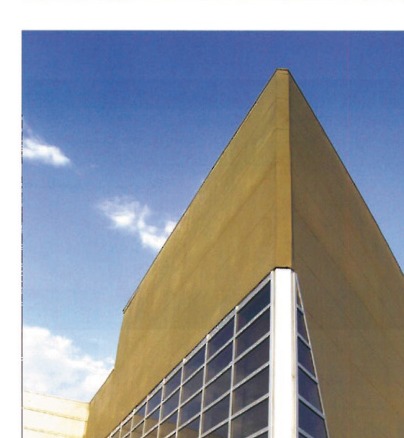
The exterior composition assembles a vocabulary of exposed concrete volumes, angular forms, and expansive glass curtain walls. A tall glass-fronted tower rises sharply to a pointed apex, housing the main staircase and flooding the interior with natural light. The warm ochre-toned cladding panels on the upper portions contrast with the raw concrete of the structural walls, while a series of clerestory windows running along the roofline illuminate the platform level from above.

Golshahr Metro Station angular glass tower rising to a sharp point against blue sky
The angular glass tower at the station entrance rises to a sharp apex, its ochre-clad walls and full-height glazing creating a distinctive landmark
Golshahr Metro Station facade at night showing Corten steel cladding with illuminated clerestory windows
Night view of the long lateral facade with its warm-toned cladding panels and rhythmic clerestory windows glowing from the platform level within

Interior

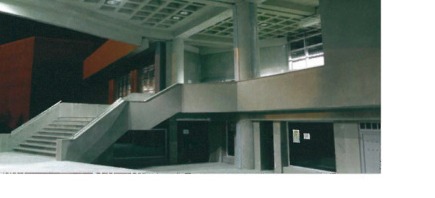
Inside, the station unfolds as a sequence of generous, light-filled volumes. The ticket hall on the ground level features a coffered concrete ceiling and open sightlines to the mezzanine above. Steel-framed staircases and escalators connect the two levels, their exposed structural members contributing to an industrial aesthetic softened by the abundant natural light entering through the glass curtain walls and the arched canopy overhead. At the platform level, the soaring steel-and-glass canopy with its parabolic arches creates a dramatic vaulted space, merging structural engineering with architectural expression.

Golshahr Metro Station interior lobby with stairs, coffered ceiling, and colored accent walls
Interior of the ticket hall showing the double-height space with coffered ceiling, concrete columns, and staircases connecting to the platform level above