Editorial Note
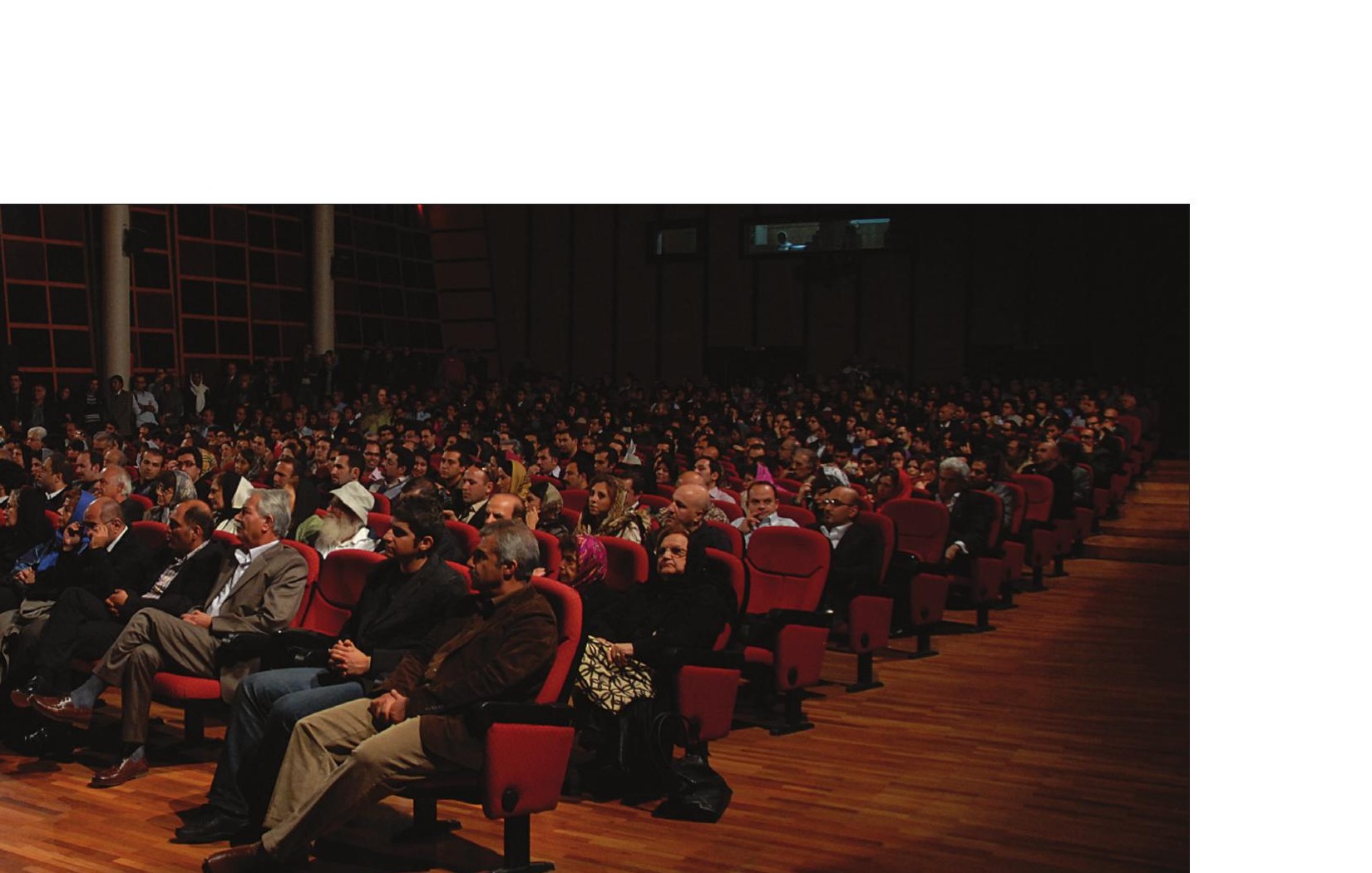
Audience at the 9th Memar Award ceremony, Tehran, November 2009
In the ninth edition of the Memar Award, we have introduced a change in naming the stages of the judging process. What was previously referred to as “first round” and “second round” of evaluation has been renamed to “elimination round,” “semi-finals,” and “finals.” This change is not merely cosmetic — it reflects a clarification in how we understand and communicate the ranking process. In the elimination round, projects are assessed on basic criteria; in the semi-finals, the jury examines works more carefully; and in the finals, the remaining projects receive the most thorough and detailed scrutiny.
This year, 92 projects qualified from among 94 submissions — two were disqualified for incomplete documentation. Of these, 30 advanced to the semi-finals, and ultimately 10 projects reached the finals with positive votes from the jury panel. Six of these received ranked awards: first, second, and third place in each of the two categories, Residential Buildings and Public Buildings.
Over the nine editions of the Memar Award, we have witnessed how the composition of the jury and the criteria they prioritize can shape the results in strikingly different ways. Each jury brings its own sensibility, its own reading of what constitutes good architecture. Some juries have favored bold formal innovation; others have valued contextual sensitivity or structural honesty. This variability is not a weakness — it is a reflection of the richness and complexity of architectural judgment itself.
We invite our readers — architects, students, critics, and all those who care about the built environment in Iran — to participate in the ongoing discussion about evaluation criteria. The Memar Award exists not only to recognize achievement but to stimulate dialogue about what we value in architecture, and why. Your observations, criticisms, and suggestions are essential to this process.



