
The first advertising boards on the walls of the city of Tehran — installed by a private advertising firm — appear, by comparison with the dimensions and form of today's giant boards, very humble. A long road has been travelled since: the painted advertising on the walls of the city's northern boulevards was the herald of the new wave of urban advertising in the post-Revolution years.
The emergence of these wall-mounted advertising boards coincided with the fitting of aluminium frames to the sides of the buses and the start of the activities of the Beautification Organisation (Sazman-e Zibasazi); all three came together with a shift in attitude towards the state ownership of economic enterprises, the start of the transfer of part of these units to the private sector, and the case-by-case, periodic opening of the import of foreign goods. The aggregate of these changes prepared the conditions for the start-up of advertising firms. It was as if all these transformations had been planned and executed step by step in some organised fashion to fill the rupture in the advertising space between roughly 1977 and 19891.
That rupture was understandable given the market constraints of those years: the prohibition on imports of foreign goods, state ownership of productive units and the limited availability of their output, production below nominal factory capacity, and against this a notable increase in demand — and, beyond all these factors, the matter of the war — had essentially eliminated the need for any commercial advertising. But it was foreordained that, in the post-war years, with the issuing of permits for tower-building too in proportion to the giant boards that were to come, advertising would be foreseen in the future visual composition of the city's space.
As the dust of the war was slowly cleared from the city's face, the boulevards of the north of the city — which played host to the various economic enterprises — adorned themselves with colour and figure so that economic life might return to the ordinary course of a commodity economy. The placards and images of the Sacred Defence in the lower districts of the city gave way, in the streets and squares of the upper city, to the bazaar of advertising for goods and services.
The municipalities of the districts, by building and completing motorways and urban communication networks, planting flowers and greenery, removing the physical fences of parks and urban green spaces, and renewed attention to city lighting — beyond the provision of welfare services — prepared a fitting backdrop for urban advertising boards. Eyes that, in the grey years of the war, had had no chance to behold the brilliance of colour, now in the festival of form and colour watched, unconsciously and rapidly, the transformation of the city's outward appearance. In this way the geometric flowering of steel and light and colour against the city's dust-laden backdrop began. As it grew, this movement also drew the bodies of the buses and the bus stops under its influence.
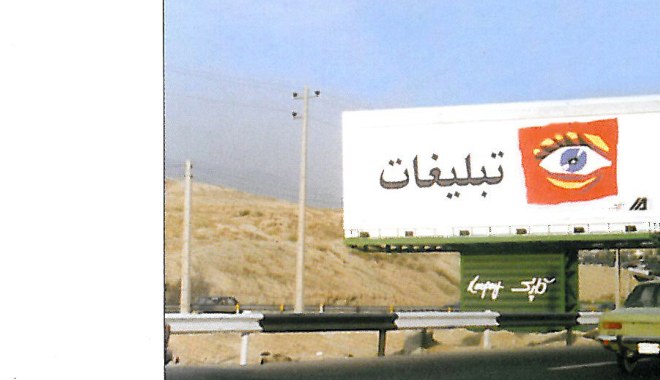
It now seems that without the boards of all colours and patterns, the city's face is somehow incomplete. The continuous presence of advertising boards over the past years has resulted in advertising elements, alongside their message-carrying function, also opening a place for themselves in the architectural expression of the design of urban space. In an ever more competitive setting, sheer board size has become an unmatched advantage.
The trouble of an unbridled growth in the boards' dimensions stems from the lack of knowledge and awareness of a large part of those at work in environmental advertising about the contemporary science and industry of advertising. In many countries where advertising is itself an industry, the value of each environmental billboard, and the demand for it, is gauged by a measure other than the simple-minded scale of area. Coefficients such as CPM (Cost Per Thousand Audience Member)2, or “Showing” at various percentages3, are weighed with great precision in setting value.
In our country, where in the environmental-advertising sector neither consultant nor execution firm, neither client nor the regulatory and supervisory state organisations carry the concern of planning on the basis of correct, up-to-date information, it is not far from expectation that board area should be the criterion for setting value. By way of example, just one of the rental advertising firms has, on its list of twenty boards, nine boards of more than 60 square metres in area. Presence on a larger board symbolically calls up the economic might of the advertiser.
The pull toward expanding the display surface of advertising boards reflects the impact of scale and dimension on the audience. This pull each day takes more of the urban skyline into its hands and feeds the spell of the feel of modern life. That spell, at its core, breeds a fresh fetishism of the commodity. The symbolic display of products at large scale, together with attractive slogans, while inducing and encouraging consumption, generates for the product a value beyond use-value — that is, the consumption of a particular item among a set of products of the same nature, all meeting the same need (apart from quality differences), comes to mark the social position of the consumer.
This may be one of the reasons for the density of billboards in the more northerly parts of the city. In the billboard rental market one finds few clients prepared to spend on advertising in the lower-income parts of town — partly because lower-income strata, on the one hand, have less occasion to attend to the post-consumption value of goods, and on the other, for many reasons, spend more time, in comparison with the well-off, watching television. Perhaps for this very reason the recent project of one of the established advertising firms — placing advertising inside the buses of the City Bus Co. — failed in practice. For instance, despite higher consumption of laundry powder in the southern parts of Tehran, given urban density, the appetite to advertise in the north of the city is markedly greater.
Billboards, and other urban advertising boards, while playing the role of conveyor of advertising messages, are also a part of the elements of urban design and signs for creating differentiation and variety in the urban spaces — signs which, alongside the other elements of urban design, may render urban spaces memorable and storied for their inhabitants, or, if accompanied by visual incongruity and an absence of formal proportion, may compound the discordance of the urban space.
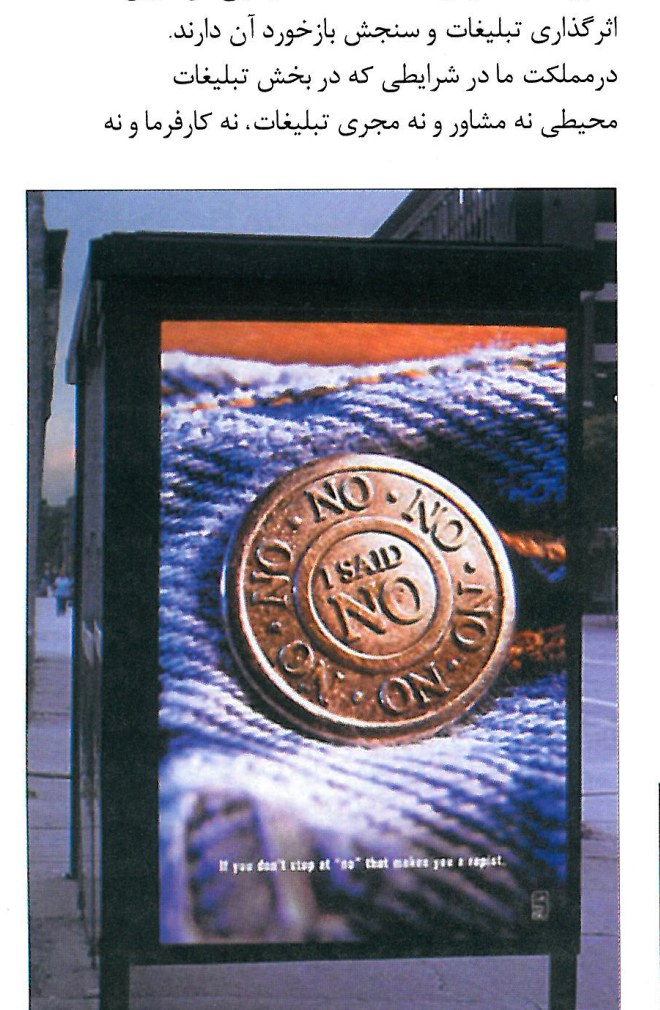
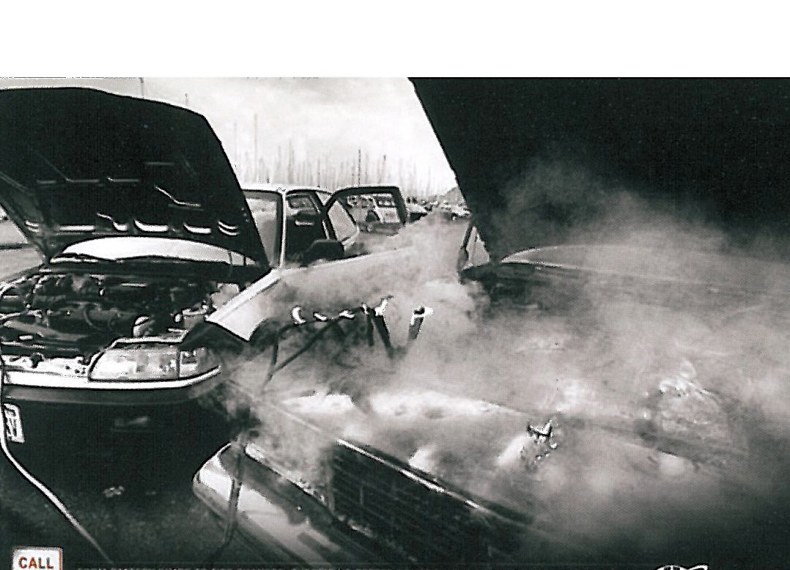
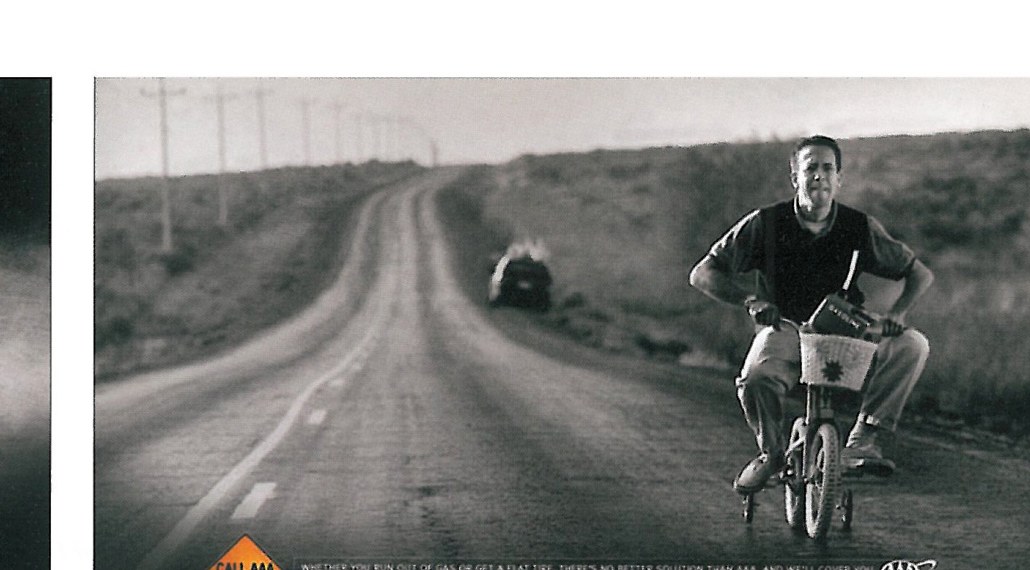
The rules governing environmental advertising — from the design of the stands and structures of the boards to the manner of expression and visual grammar — are, despite the presence of expert and qualified individuals and groups within the various advertising bodies, undefined and obscure. Some consultants still draw no distinction between a board and even a poster. Boards are not few that take the image of a press advertisement and blow it up at the same proportions.
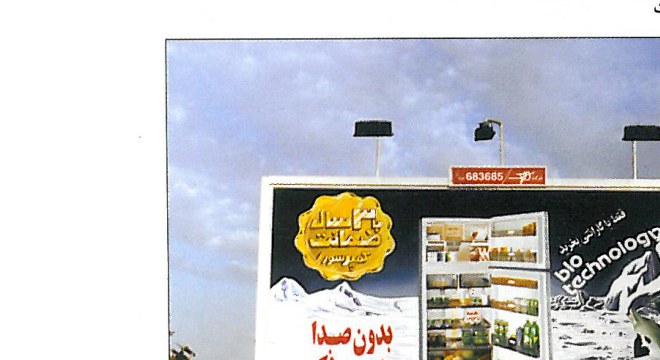
The reason for this must also be sought in the absence of expertise and education in this sector. In our universities, painting has long been offered in two streams — fine painting and mural painting — but in the curriculum of the visual-communication discipline at none of our universities does graphic at large scale find a place; and graphic designers themselves have made no effort to fill that gap. In the graphic schemes of most existing boards we encounter four-cornered frames in which a number of pictorial and textual elements — often empty of thought and subject — have been arranged. Considerations such as the cohesion of the subject in conveying the message, the type and size of letters, the amount of text and colour in coordination with the speed of moving cars, and the speed of conveying the message and its grasp by a moving viewer, are usually not considered in the design — or no understanding of these factors exists at the design stage.
So, in their length and breadth, in the format of 48-, 60- and 100-square-metre boards, an image of the product itself — even when it lacks any pictorial value or advertising appeal (such as the safety valve of a gas heater) — comes to be regarded as obligatory in the graphic scheme; while the visual quality of that image is, in many cases, lower than the actual form of the product. The criteria currently considered for the design and installation of urban advertising boards are merely traffic criteria, while attention to the other criteria effective in the design and installation of billboards remains undefined.
The state-owned or state-sponsored character of the major branches of industry and services often makes the process of choosing consultant and designer for these branches go through improper channels — generally through the special relations of managers and the levers of organisation. This bars the placement of advertising work with qualified consultants and designers.
Reform of the present condition of the urban advertising boards cannot come about by way of formulating regulations and instructions on the part of a state body that watches and acts — such as the municipality. Such reform is possible only through a vigorous leap in the structure of the firms involved in urban advertising boards and in the skilled labour of this profession. Convincing those who commission boards that advertising, in its professional sense, is composed of the applied specialisms of marketing, social psychology, graphic, industrial design and so on is the first necessity for the elevation and improvement of environmental advertising. Together with raising the expectations of client and audience, the creation of a setting for continuous critique and study of environmental advertising boards is an undeniable necessity of the present situation, which, with the participation and cooperation of all groups and parties involved in environmental advertising, can place a clear horizon before urban advertising.
Notes:
1. These dates are not exact; the meaning is the period from the start of the Revolution to the end of the war.
2. CPM = Cost Per Thousand Audience Member.
3. For environmental advertising, the “Showing” coefficient is the specific number of boards such that at least one occupant of every car will see one of the boards, indicating the number of advertising posters that cover 100% of the population of the area.



