Local and Vernacular Architecture

Amirieh Edifice

The Editor·Photos: Afsaneh Jafari·Bushehr Special Issue
Amirieh Edifice

This edifice is located in the Kuti neighborhood, on the edge of the old Bushehr fabric, beside the sea. Its main building was constructed in 1899 by order of Ahmad Khan Daryabeygi, governor of Bushehr. It served as the "center of governance of ports and islands of the Persian Gulf" and was Bushehr's seat of government.
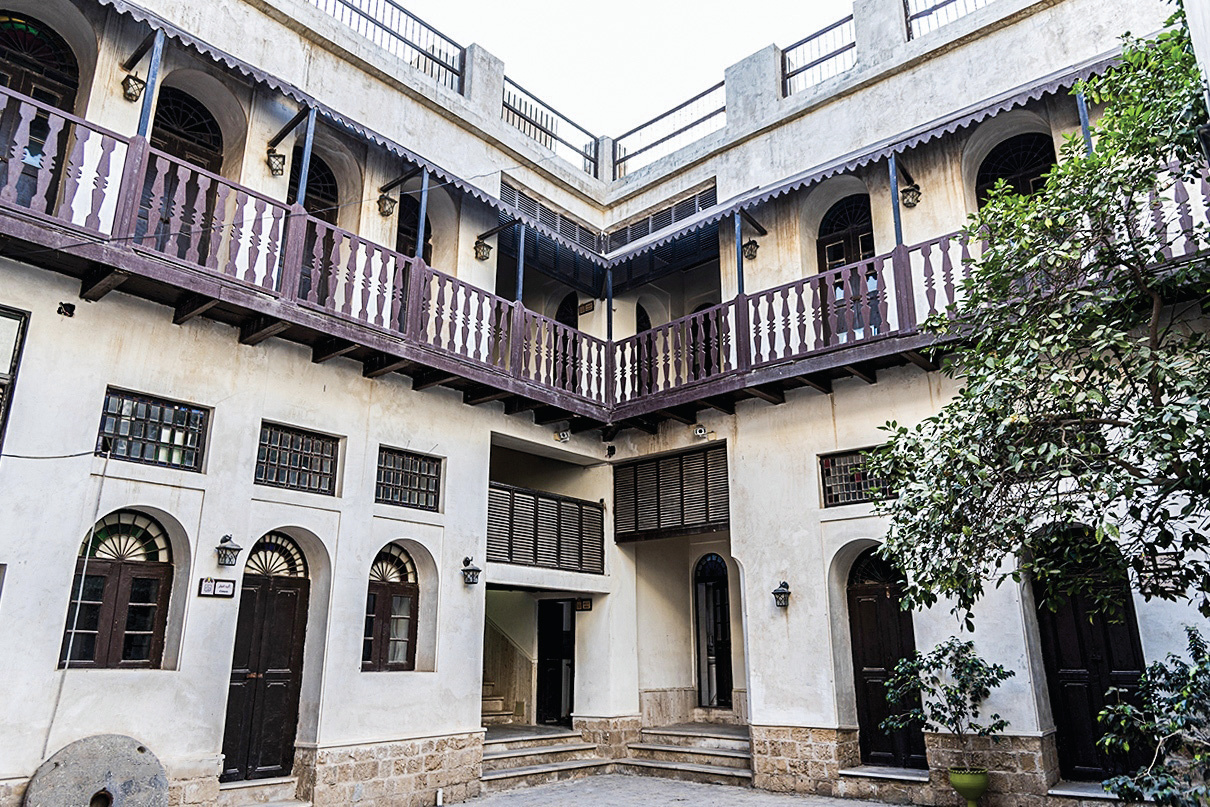
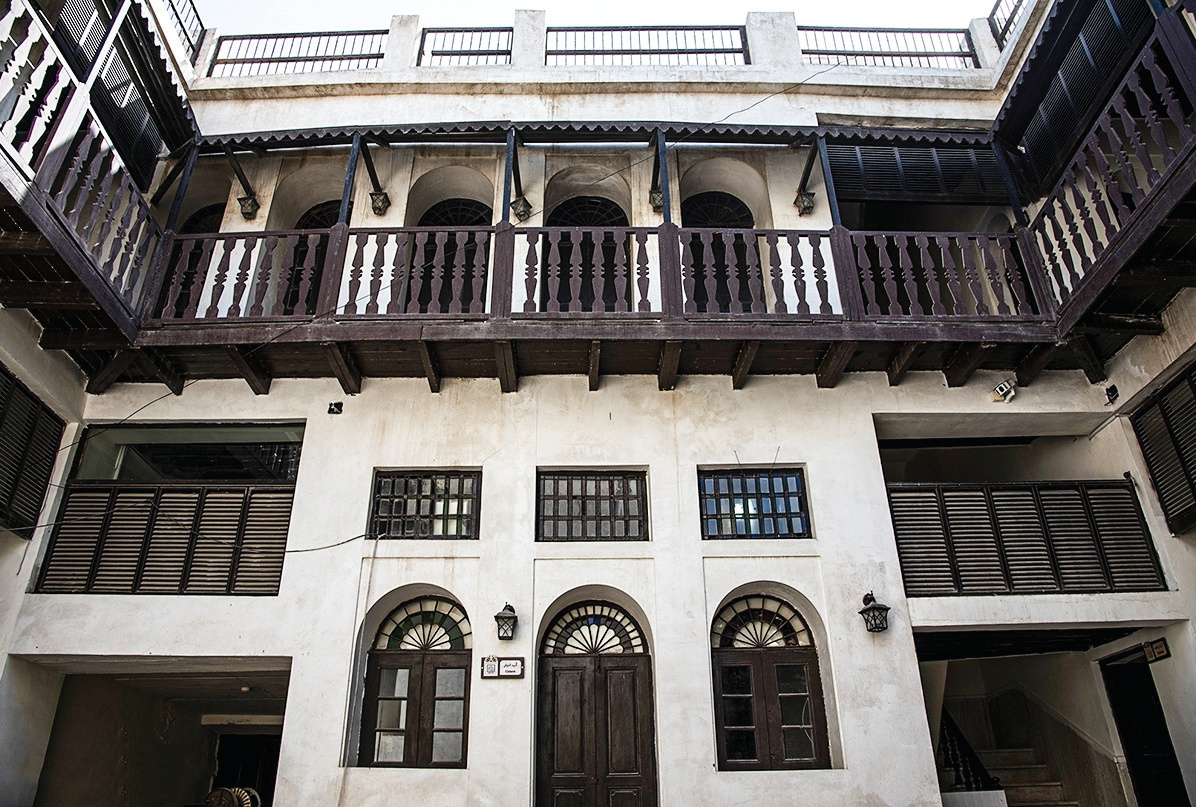
Inner courtyard of the Amirieh Edifice with two-story wooden galleries and arched openings
The inner courtyard — wooden galleries and arched openings on both floors

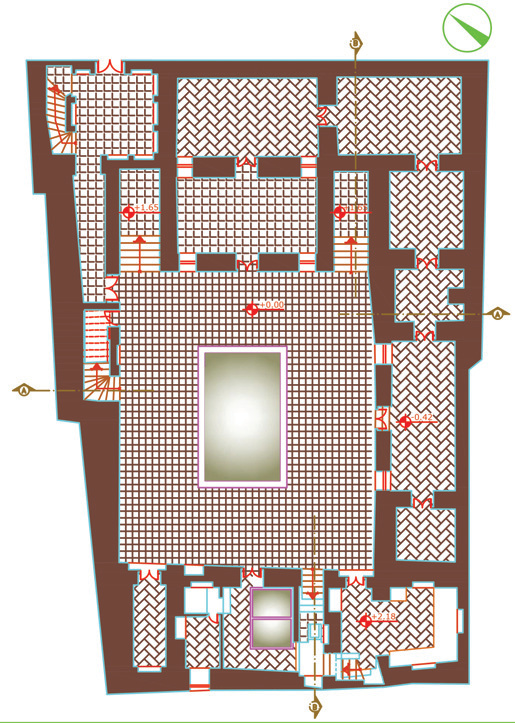
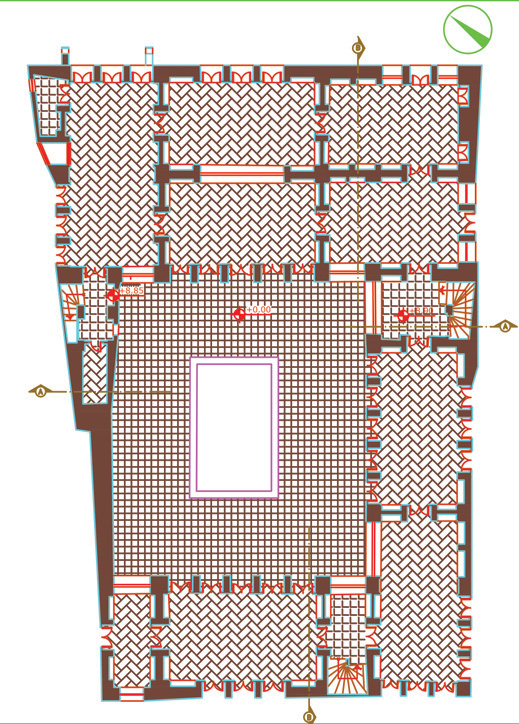
The Amirieh Edifice is two stories and follows the same central courtyard pattern as other Bushehr edifices, though its architecture has certain differences that make it suitable as a government building. Its entrance is a large eiwan with two doorways; between the two doorways inside the building, a large two-story room has been designed — apparently intended for government meetings. Each floor contains ten rooms, and both floors have a corridor onto which the rooms open.
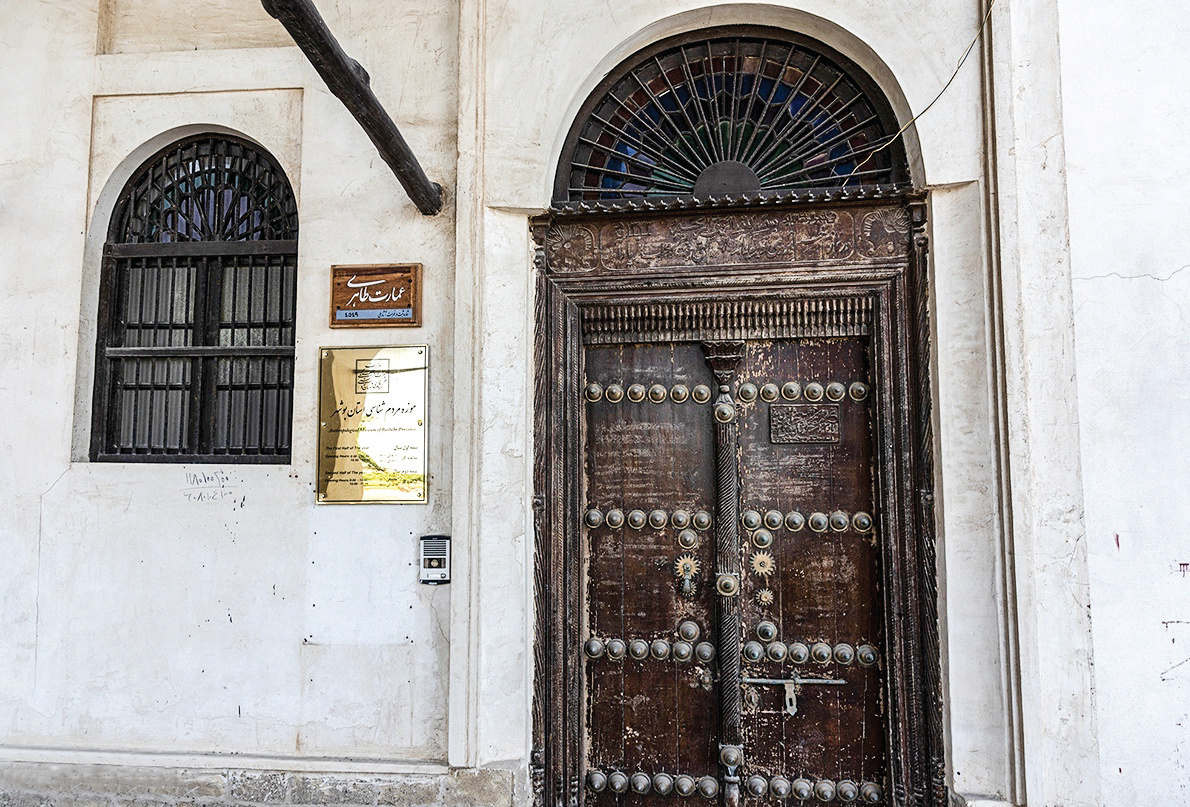
Ornate studded entrance door of the Amirieh Edifice with stained glass lunette above and museum signage
The studded entrance door with its stained glass lunette — now the Anthropology Museum

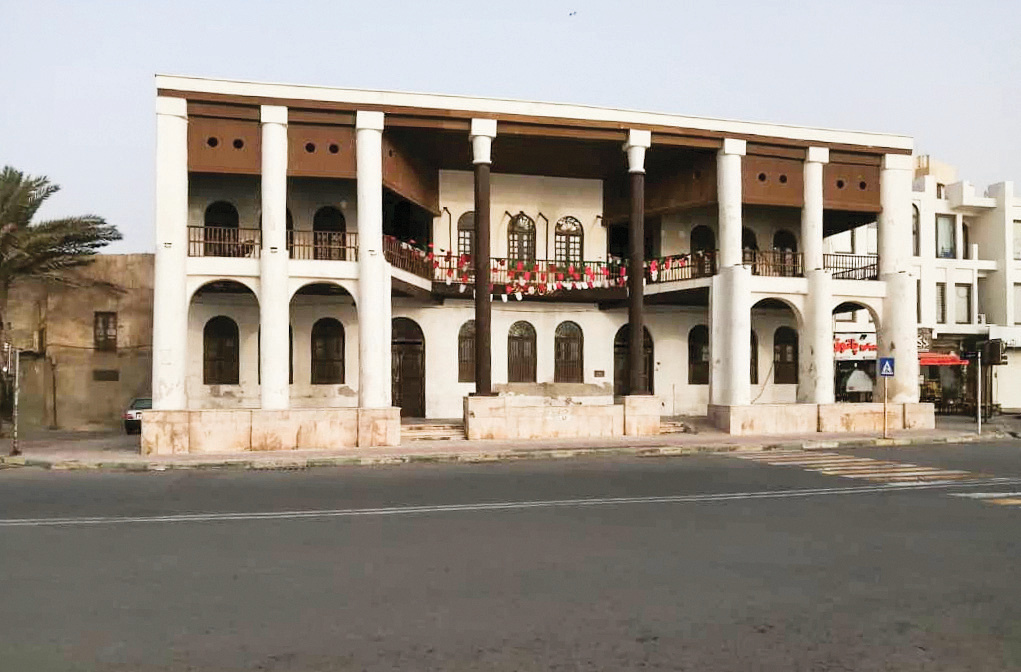
The doors and windows are made of teak. The doors are double-leaf and feature carved designs. The rooms are three-door and five-door, admitting the breeze well. The building materials are coral stone, gypsum mortar, and teak wood. The ceiling is covered with sandal beams and reed matting, finished with wooden strips. The teak columns supporting the eiwans of the edifice have been wrapped with kenbal (coconut palm bark) to prevent moisture and termite penetration, and then plastered over.
◆ ◆ ◆
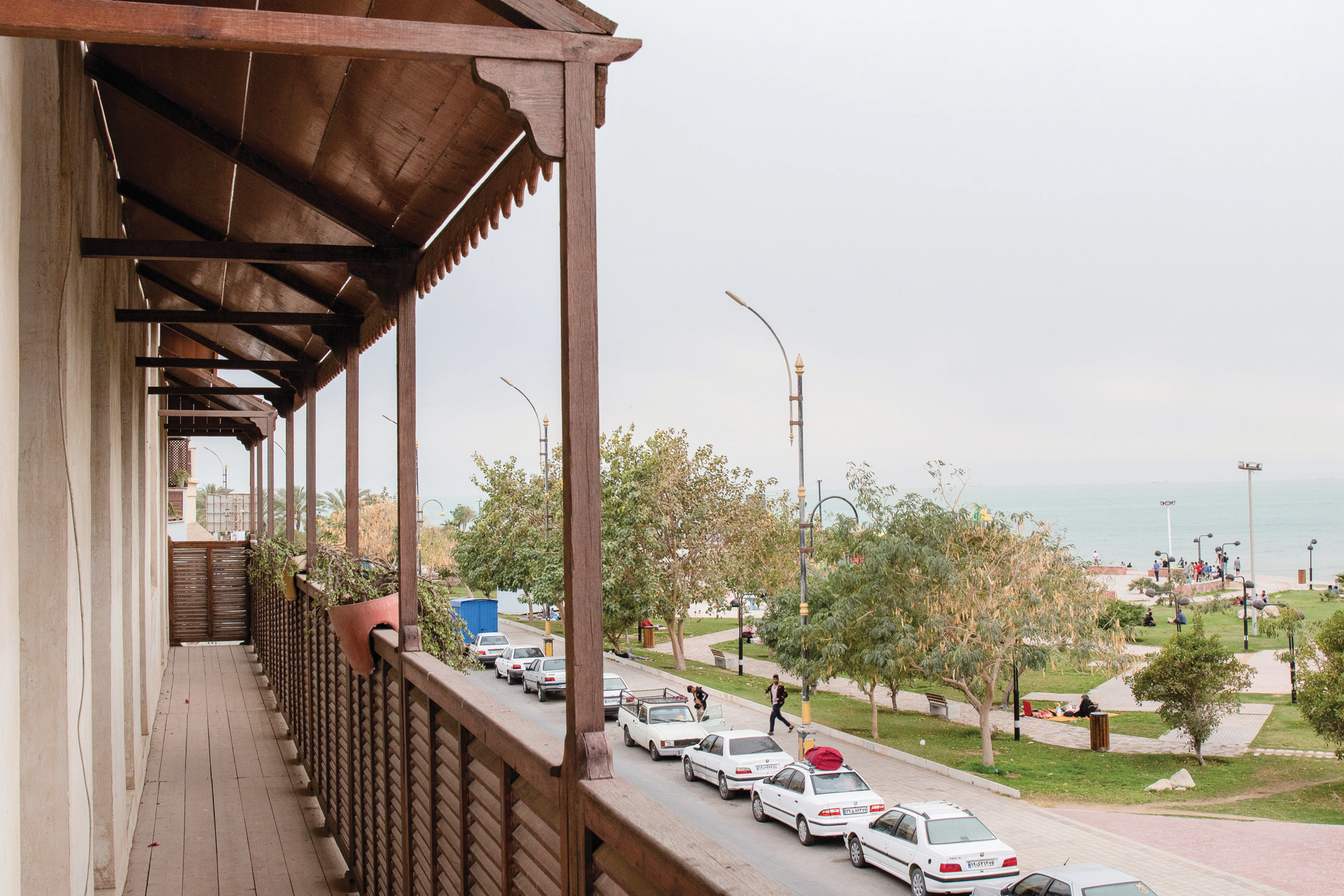
Upper floor gallery with massive columns and iron railings overlooking the sea and coastline
The upper gallery — columns framing a view of the Persian Gulf
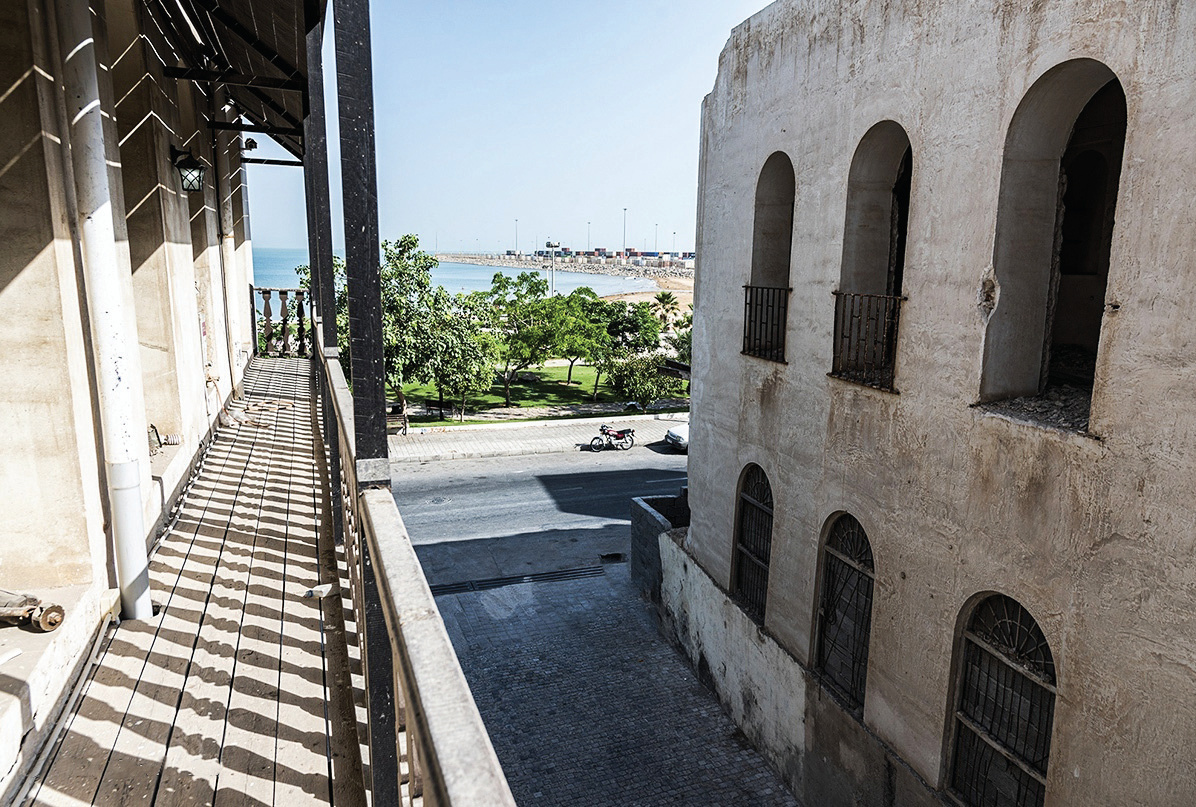
Side balcony with sea view and arched windows on adjacent wall
Side balcony — the sea beyond the arched facade
Inner courtyard looking up at two floors of arched openings and wooden balcony
Looking up from the courtyard — arched openings, wooden balcony, and rooms on two floors
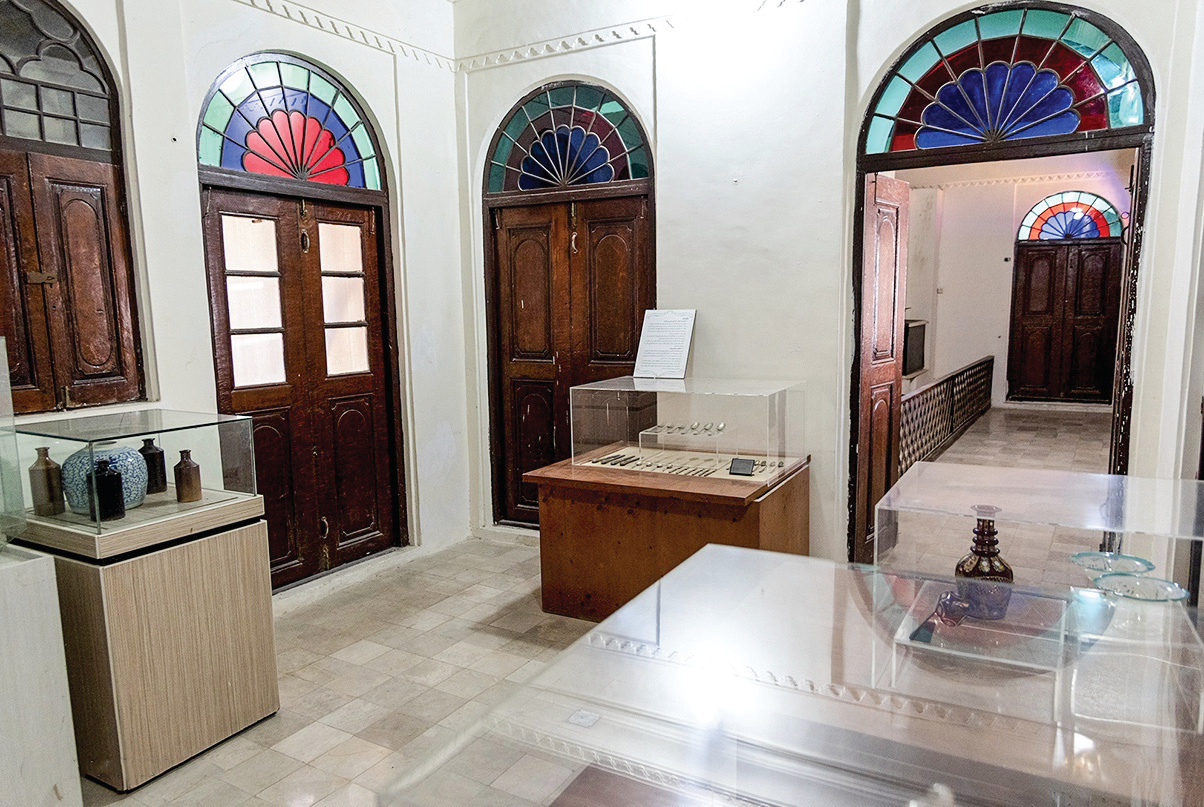
Museum room with three wooden doors featuring colorful fan-shaped stained glass lunettes and display cases
A museum room — fan-shaped stained glass lunettes above carved teak doors
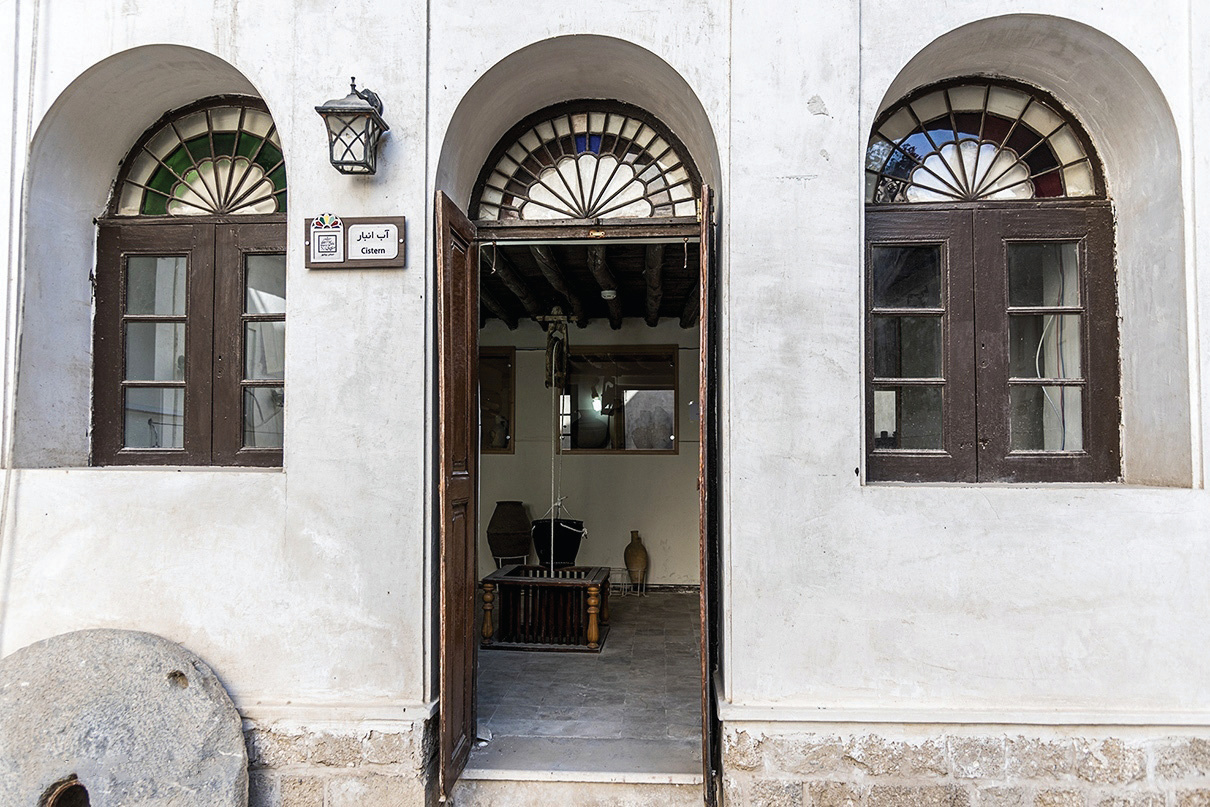
Arched entrance to the cistern room with fan lunettes and a sign reading Cistern
Entrance to the cistern — arched doorways with fan lunettes
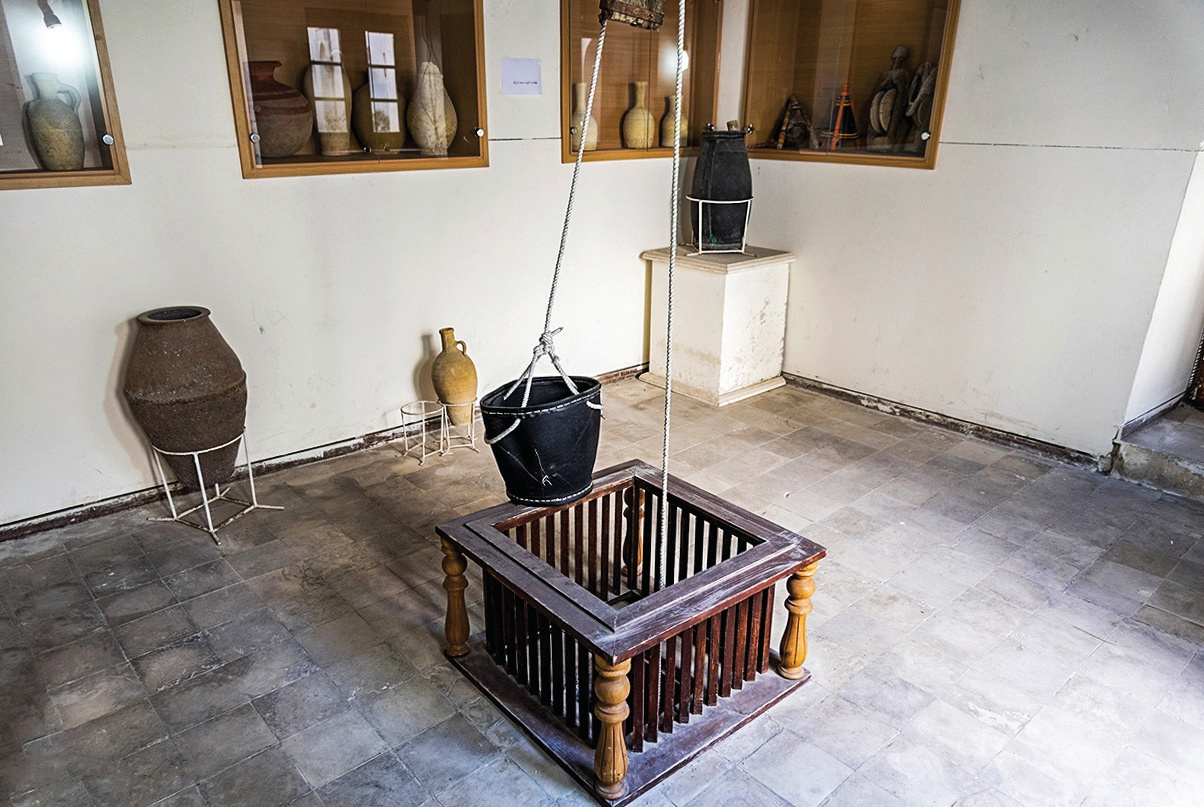
Cistern room with a wooden well frame, bucket on rope, and pottery displays
The cistern room — well frame, bucket, and traditional pottery
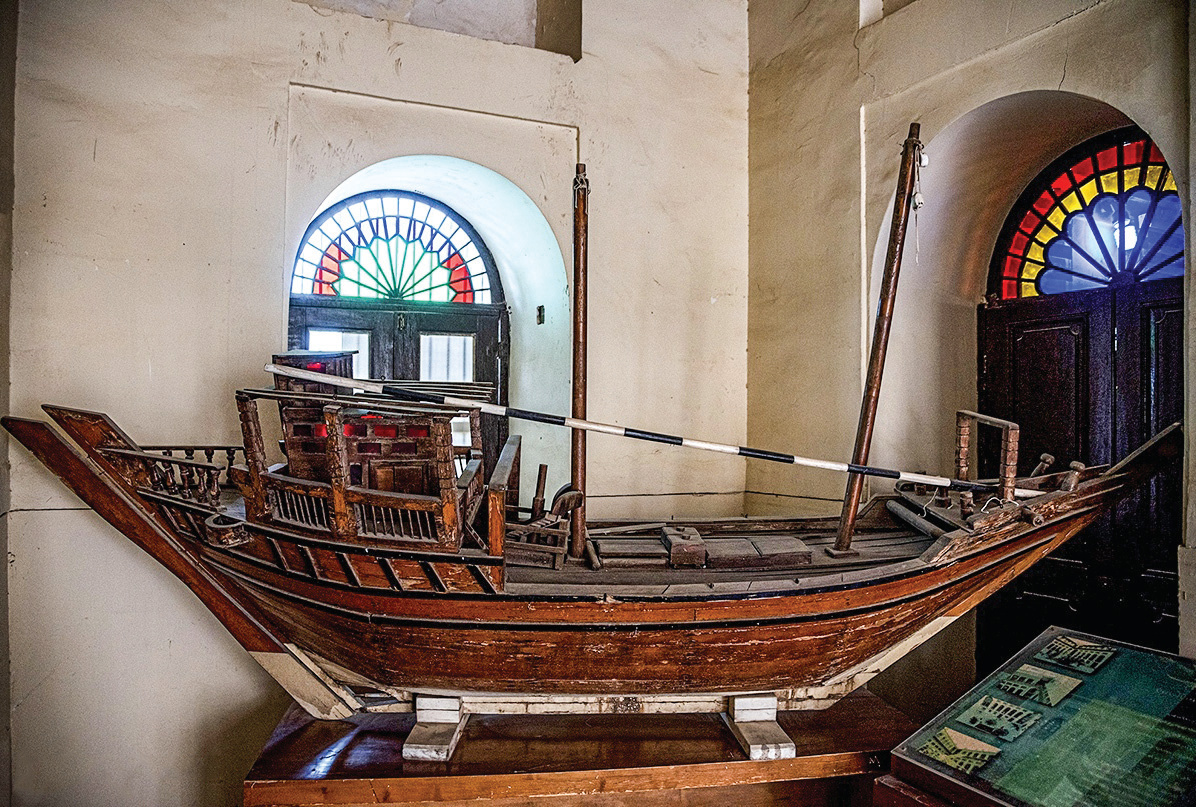
Scale model of a traditional dhow displayed between stained glass windows
A dhow model in the museum — between stained glass windows
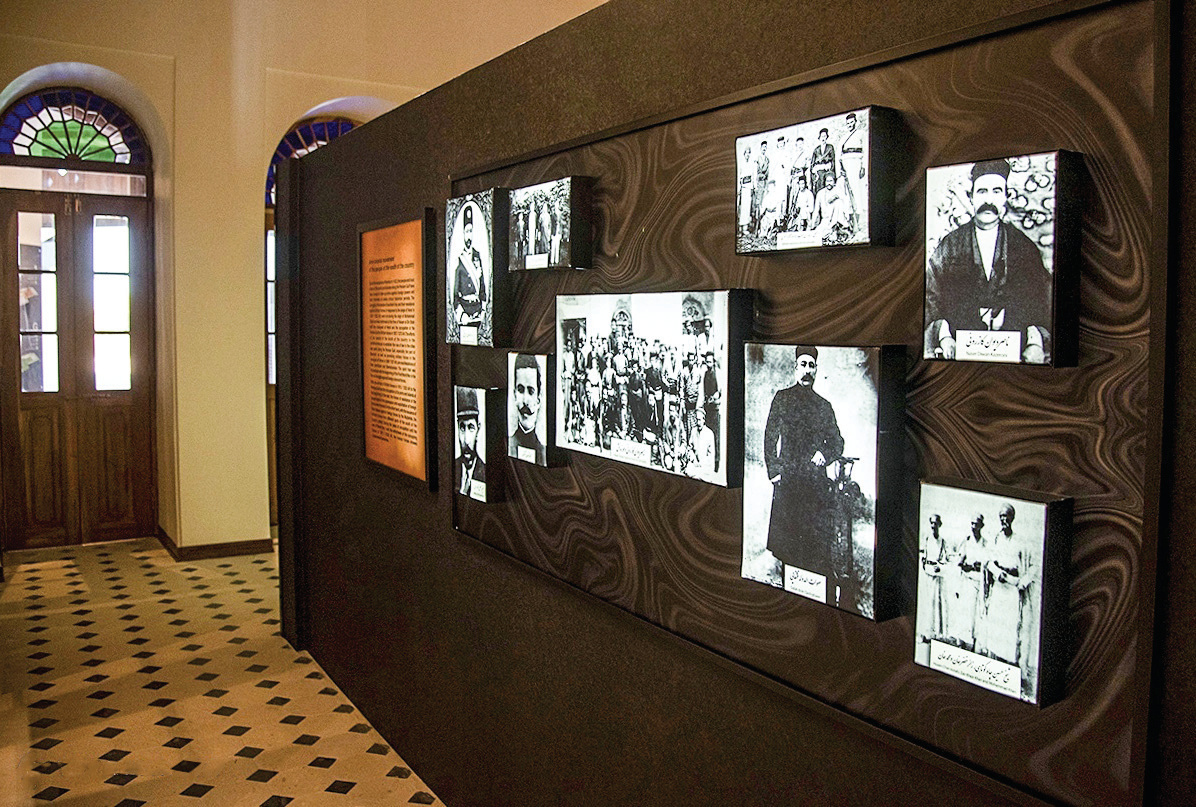
Gallery wall displaying historical black and white photographs of Bushehr notables on a dark marbled background
Historical photographs of Bushehr notables — part of the Anthropology Museum collection
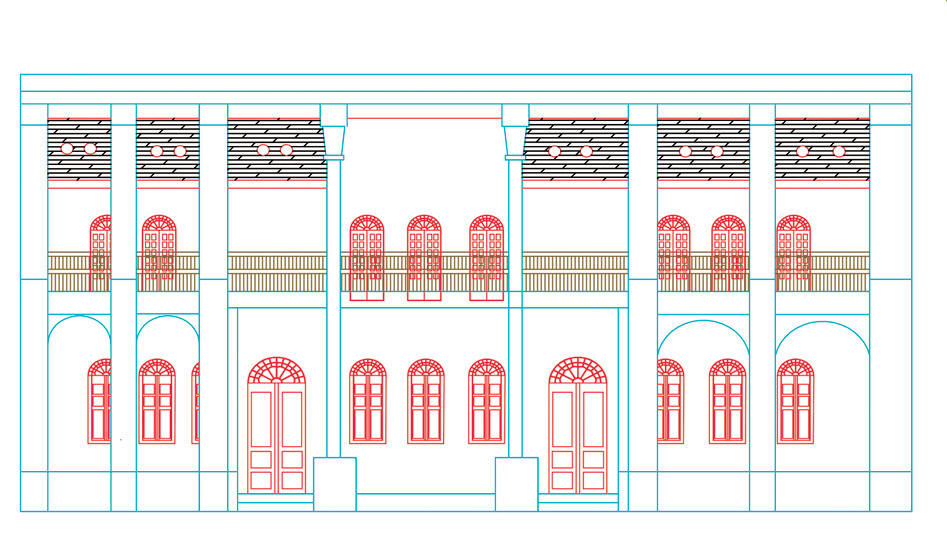
Architectural elevation drawing of the Amirieh Edifice facade
Elevation drawing
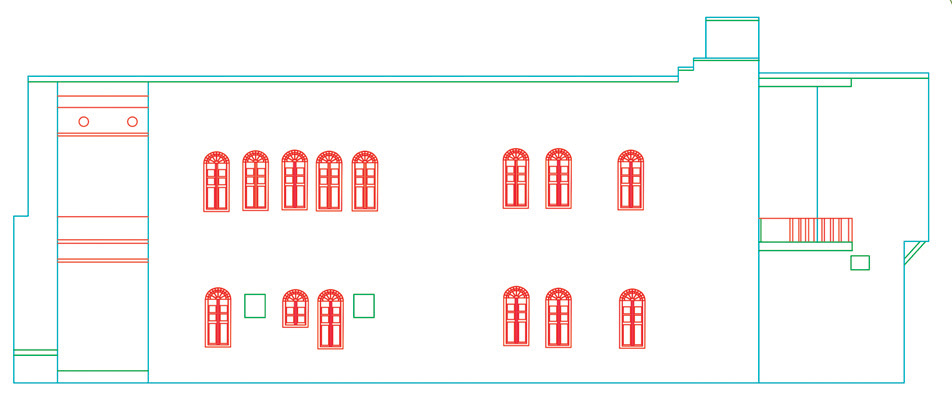
Architectural cross-section drawing of the Amirieh Edifice
Cross-section
Ground floor plan of the Amirieh Edifice
Ground floor plan
First floor plan of the Amirieh Edifice
First floor plan

1. Older reports mention that to its east was the Arab neighborhood and to its north the Jewish neighborhood.

2. This edifice was registered as a national heritage site in 1999 under number 2419 and has been designated as the Bushehr Anthropology Museum.