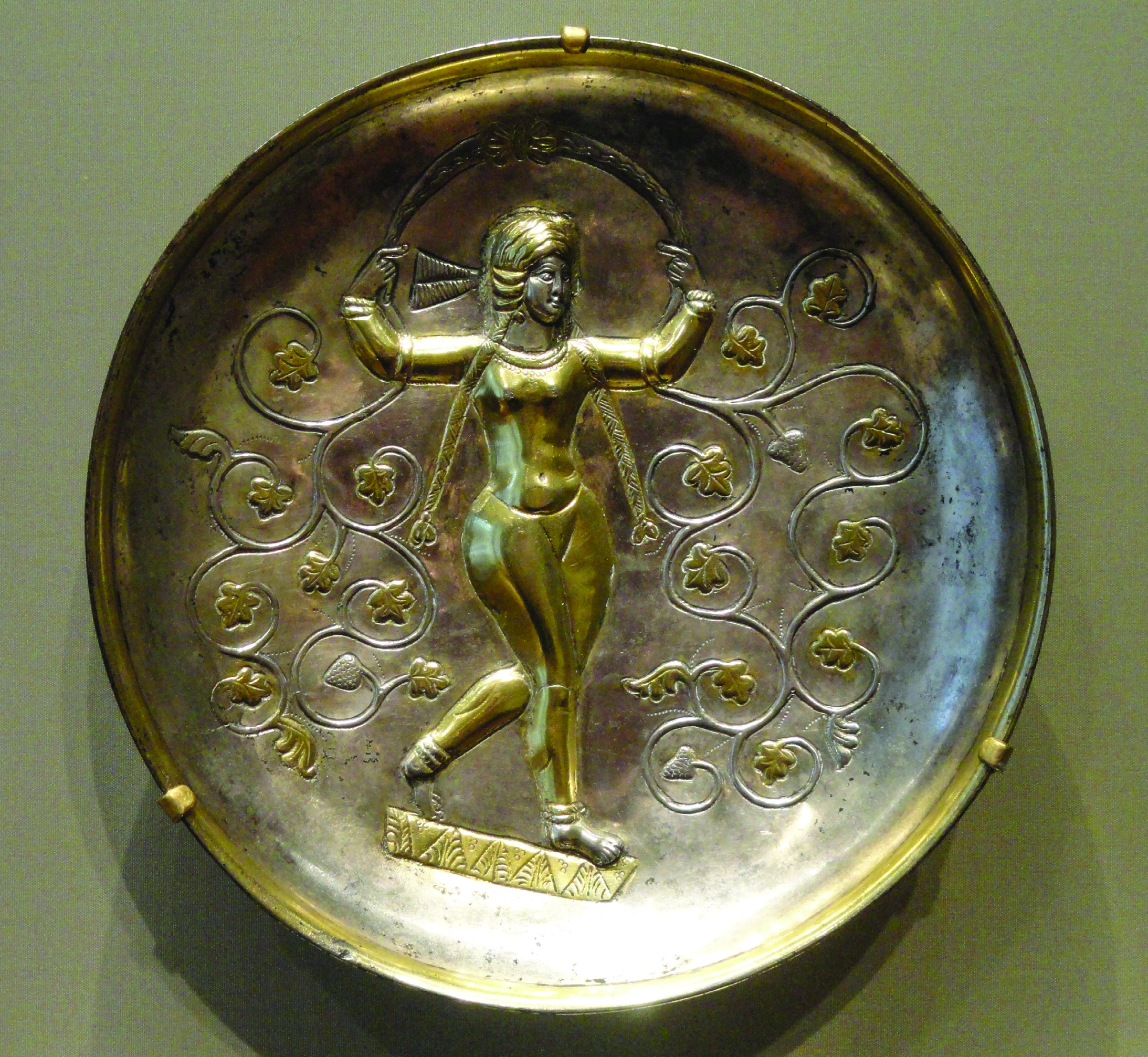
"Mithra and Anahita bestowed this realm upon me, and may they continue to safeguard it."
— An inscription from the era of Ardashir II of the Achaemenid dynasty
Water
The ancient Iranians believed that the four sacred elements — water, earth, wind, and fire — governed the order of existence, and they knew mythologies associated with each.1 Water, as the primary element of life, was a symbol of purity, blessing, bounty, and growth. Rain and water were therefore considered matters of vital importance, and when clouds dispersed and rain did not fall, it was believed that Ahriman (the destructive spirit) had scattered the clouds and caused drought. Thus the people would call upon the deities of rain to bring rainfall once more.
The ancient Iranians believed that the deity Tishtar (Tishtrya) created the raindrops, and the wind carried them to one side to form the cosmic sea (Farakhkard), Vourukasha, or the boundless sea, which lay beyond the peak of Alborz. This sea was so vast that it encompassed thousands of lakes, and these lakes were the springs of the goddess Anahita. In the Yashts, the Aban Yasht and Tir Yasht also discuss the importance and veneration of water, presenting water as a spiritual being worthy of worship. Anahita, as the goddess of water, fertility, and purity, was praised repeatedly and on various occasions. For this reason, in the ancient culture and civilization of Iran, there existed motifs, symbols, and temples that reflected the importance and mythological status of water.
Myth and the Symbolic Use of Water
In the artifacts of ancient civilizations, the presence of supernatural forces is tangible in the form of natural images, binding human life to celestial powers — especially from the time when agricultural modes of production expanded. Fertility and fecundity held immense importance, and goddesses of fertility, including Anahita, occupied a special place in ancient culture, with numerous temples erected in their honour.
Myth narrates how ancient civilizations understood their world. Our ancient architecture is itself a manifestation of archetypal realms, archetypes, and myths. By opening a horizon to this world, we enter a place where form and meaning are so intertwined, and body and spirit so commingled, that the perception of space becomes an inner state — an unmediated vision and presence in the realm of mythology. The qualities of place are perceived as inner states, and it is the transmission of archetypes that guarantees the spiritual validity of forms.2
The creation of the cosmos from water, purification through water, sacred springs, and many other concepts in our civilization attest to the special status of water in this ancient land. Water is the wellspring, origin, and womb of all possibilities of existence. The presence of water in culture, customs, beliefs, rituals, stories, and festivals speaks to the significance of water in the system of meaning for people of ancient times. For them, water was the primordial element, and everything was born from it.
In one version of Iranian mythology, "Thus it is said that at this first creation, everything was of the water of tears. People too are of the water of tears."3 And from another perspective, as we read in the Bundahishn (Book of Primal Creation), "First, He created the sky… Second, He created water in fifty-five days." Water was created from the substance of the sky, and elsewhere it is stated: "Of material creations, first the sky, second water, third earth, fourth plants, fifth cattle, sixth humans, and seventh Hormozd Himself."
In this view, the earth too was created from water — which is a sign of the renewal of life and regeneration — because they observed that lifeless nature, with the aid of water, found renewed life and vitality. For this reason, the ancient peoples came to believe in the life-giving and creative power of water, recognizing it as a vital element of creation.4 The recognition of water as among the first of the Creator’s creations was shared between the civilizations of Iran and India, and the sanctity of this life-giving element prompted them to assign a deity as its guardian. In this belief, God created water on the eleventh day of Esfand-Ruz (Khvar), and two guardian angels named Apam Napat and Anahita were known as the angels of water.
Anahita
The goddess of water in Iranian mythology bears the name Ardvi Sura Anahita, meaning "the powerful, pure river (water)." With this goddess are associated concepts such as water, rain, abundance, vegetation, fertility, blessing, birth, and victory. She is the source of all waters upon the earth and the origin of all fecundity.
In ancient texts, Anahita has been described with such precision and detail that these descriptions were connected to very ancient traditions, imagery, and rituals of her worship. In visual art and the plastic arts, this deity transforms into powerful flowing waters and appears as a mythological queen. Strength and power, beauty and majesty, fertility and valour, and all her capabilities converge to create a highly vivid image of her. Such an image was a natural and attractive focus for wishes and supplications, and according to the Avesta and the royal inscriptions of three successive empires in Iran, Anahita and Mithra are the most powerful divinities that the great god, Ahura Mazda, has created.
According to depictions of Anahita in the Yashts, this goddess appears as a most beautiful and tall maiden, fairy-like in form, mighty and resplendent, pure and noble, wearing a golden garment, bearing precious ornaments in her hands, a necklace of pure gems upon her breast. She wears an eight-pointed star crown upon her head, and as is her custom, golden four-sided earrings hang from her ears.
These vivid and eloquent descriptions indicate that from the most ancient times, statues of this goddess were used in her worship rituals.
Ritual Architecture
As stated, in most ancient civilizations there existed gods of fertility and fecundity, and people would erect temples and present offerings to gain the favour of these deities. In Iran too, the farmers' struggle against drought carried with it the sanctity of Anahita, and she was given a special place alongside Ahura Mazda. As Plutarch writes, the coronation ceremony of Ardashir II of the Achaemenids was conducted by a Zoroastrian priest at a shrine belonging to Anahita in Pasargadae. Furthermore, statues of her were erected throughout the Persian territories by Ardashir II, and the queen was considered the earthly symbol of Anahita.
Architecture, as the art of spatial design, is a reflection of the thought, philosophy, beliefs, and way of life of peoples across different eras. These abstract concepts and ideas find embodiment and crystallization in a category of buildings that we know as ritual or sacred architecture — temples, fire temples, churches, and mosques. These structures were often situated at the centre of the city and regarded as its principal pillar; at times, the fundamental structure and form of the city evolved in accordance with them.
The Anahita Temple at Bishapur

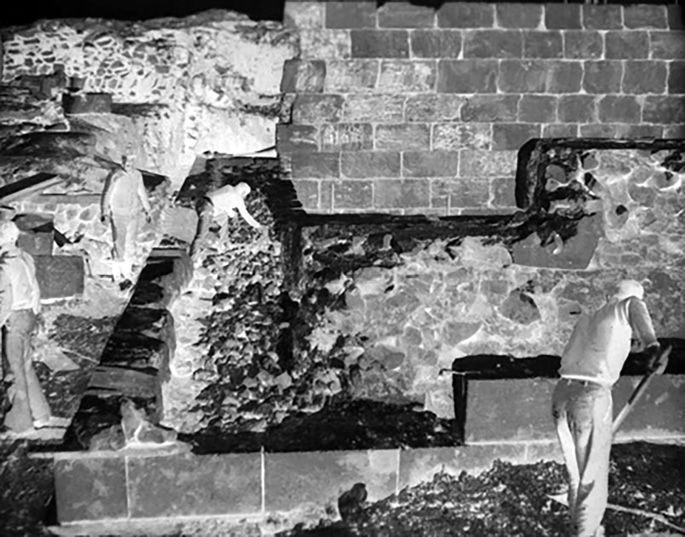
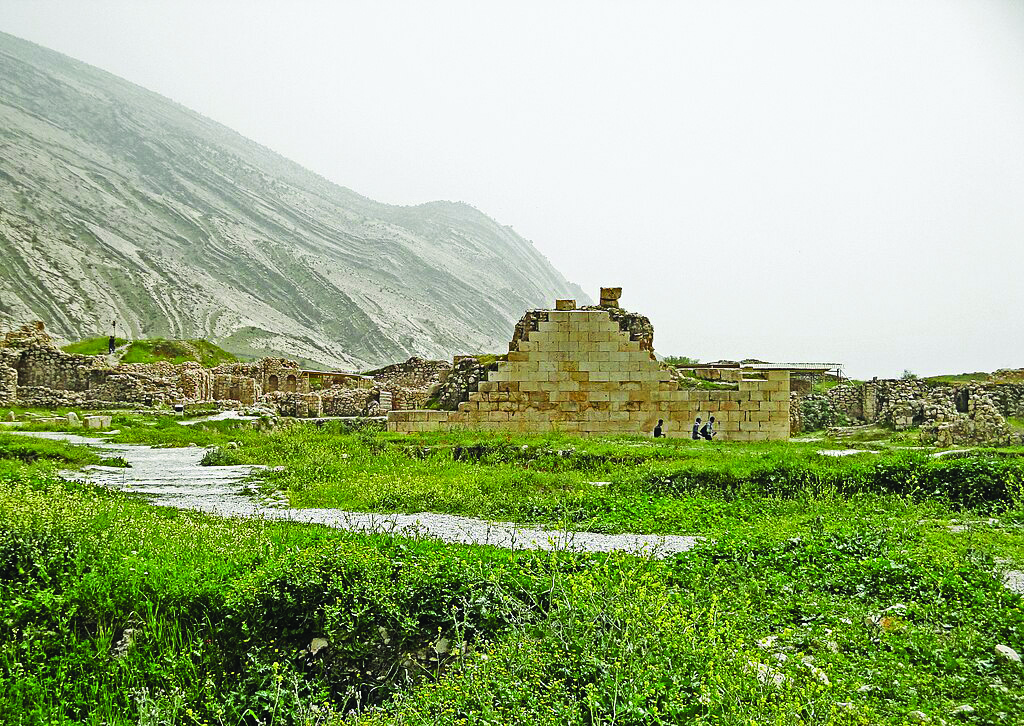
Precisely at the centre of the royal quarter, midway between the northeast and southwest sides, a temple is situated — a stone, cuboid structure built into the ground for the display of the sacred element of water. The stones are joined without mortar, locked together solely by iron clamps. The central space of the temple is open to the sky and surrounded by a corridor.
In an inscription at the Ka’ba-ye Zartosht (Cube of Zoroaster) from the time of Shapur II, it is written that he built a temple for Queen Azar-Anahita in his capital, Bishapur, which was the first temple constructed for the worship of the goddess of water (Anahita) during the Sassanid period. It is a stone structure that differs from other buildings in Bishapur in terms of technique and architectural structure. The siting and orientation of this building adjacent to the palaces indicate the antiquity of the structure, and its centrality and axiality parallel the placement of a tall building at the centre of the city of Gur (Firuzabad). No entrance vestibule was provided for this temple; the entry steps begin at the intersection of the northern and western corridors of the cruciform palace.
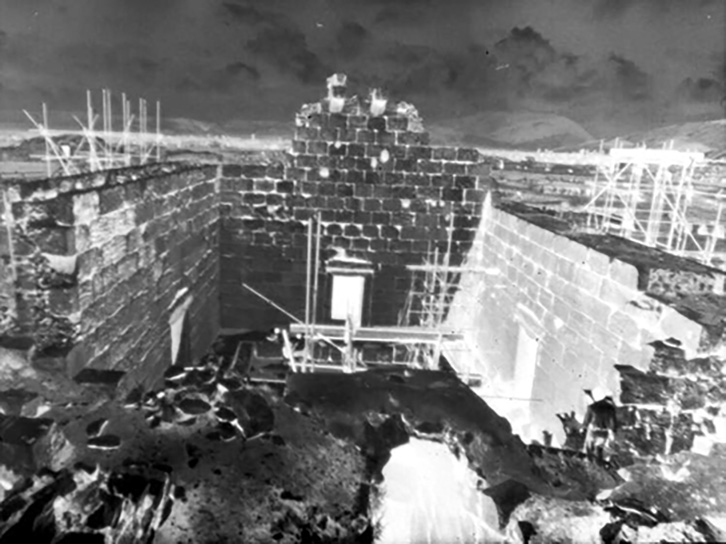
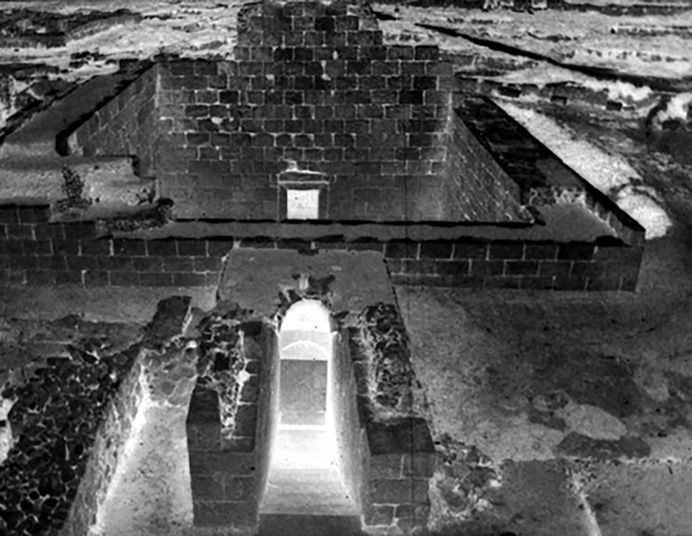
The temple was built below ground level, and according to Ali Akbar Sarafraz, one of the purposes of constructing the building in a hollow was to enable the introduction of water from a qanat (underground aqueduct) that, at a distance of 250 metres from a branch of the Shapur River, conveyed water to the structure. The negative cube foundation was designed so as to intercept the qanat at this point and use its water. The rate of water inflow and outflow was regulated so that the water level would remain constant. According to Dr. Sarafraz, the stone construction of this temple itself served as a divider and regulator of the qanat water, and a small chamber opposite it housed the water keeper. To ensure proportional water flow through the temple’s channel, two small, controllable openings were carved into the floor stones. At the end of the water outlet, a well 4 metres deep was situated at the centre of the pool, concealed by four square stone slabs of approximately 90 centimetres, matching the floor stones.
Architecture of the Structure
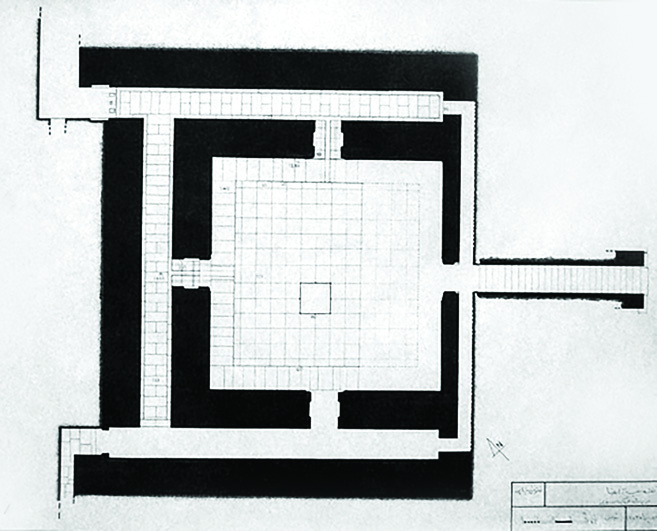
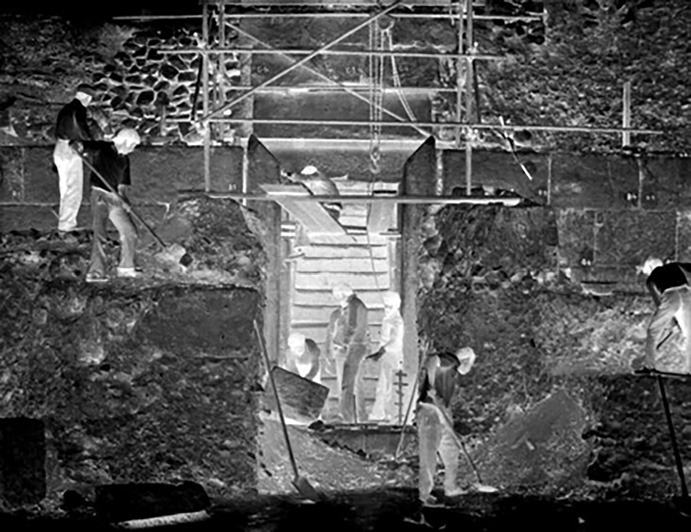
After descending 24 steps and passing through a vestibule-like corridor from the south side — which is the main entrance — one reaches the principal space: a square courtyard measuring 14 metres on each side, enclosed by walls of equal dimensions, forming a cuboid space. Of the wall height, 6 metres lies below ground and 8 metres above, though much of the upper portion has been destroyed.
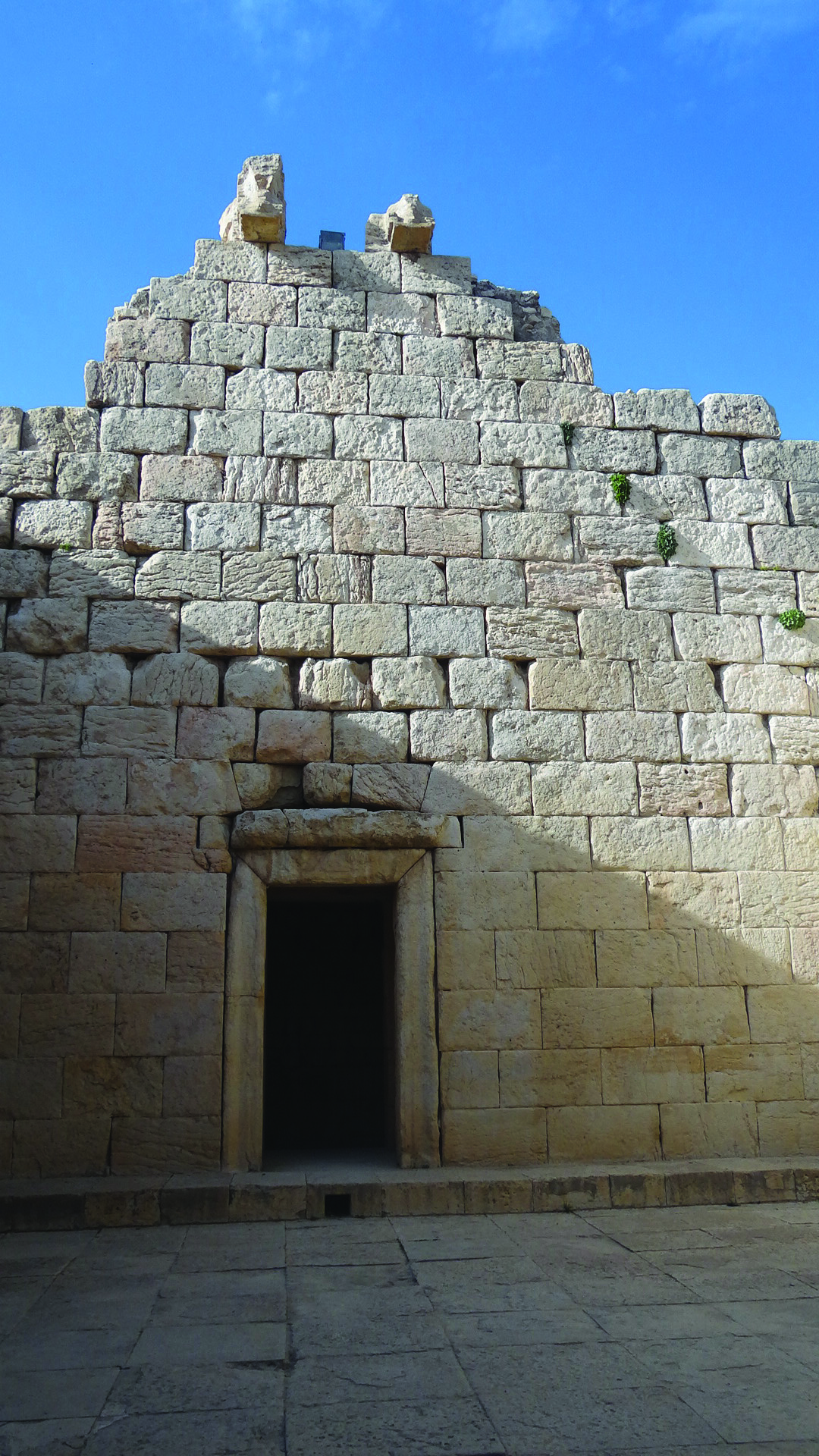
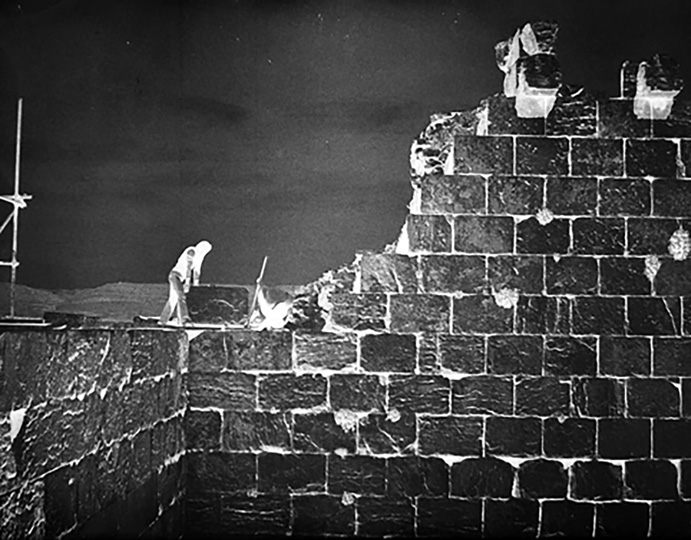
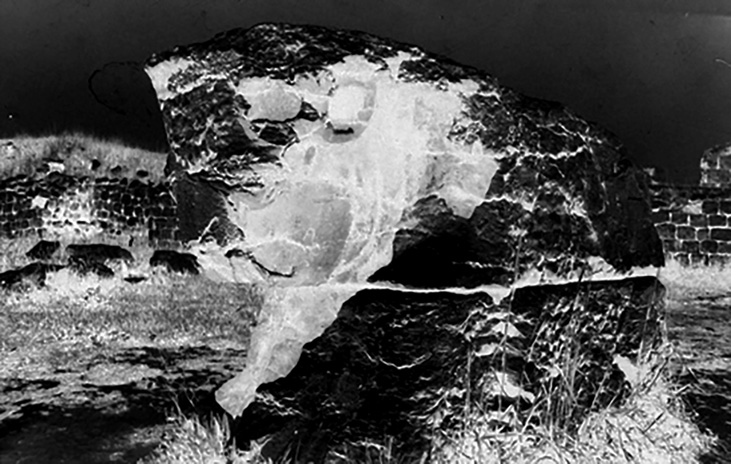
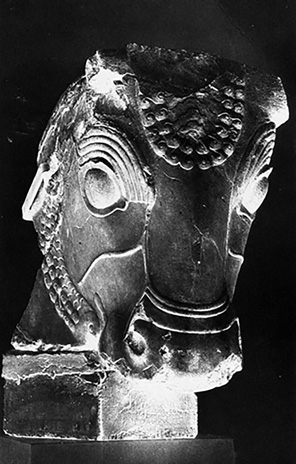
On the northern wall, four bull sculptures5 face the main entrance, though nothing remains of them except two stone protrusions; they served as symbols of divinity and signs of power and glory. On each side of this cube, there is an opening with lintels similar to Achaemenid architectural ornamentation, standing 4 metres high, and the method of door construction follows the Persian style. At the centre of each entrance, a water channel has been carved into the lower stones so that during special ceremonies, water would flow into the temple through this channel.
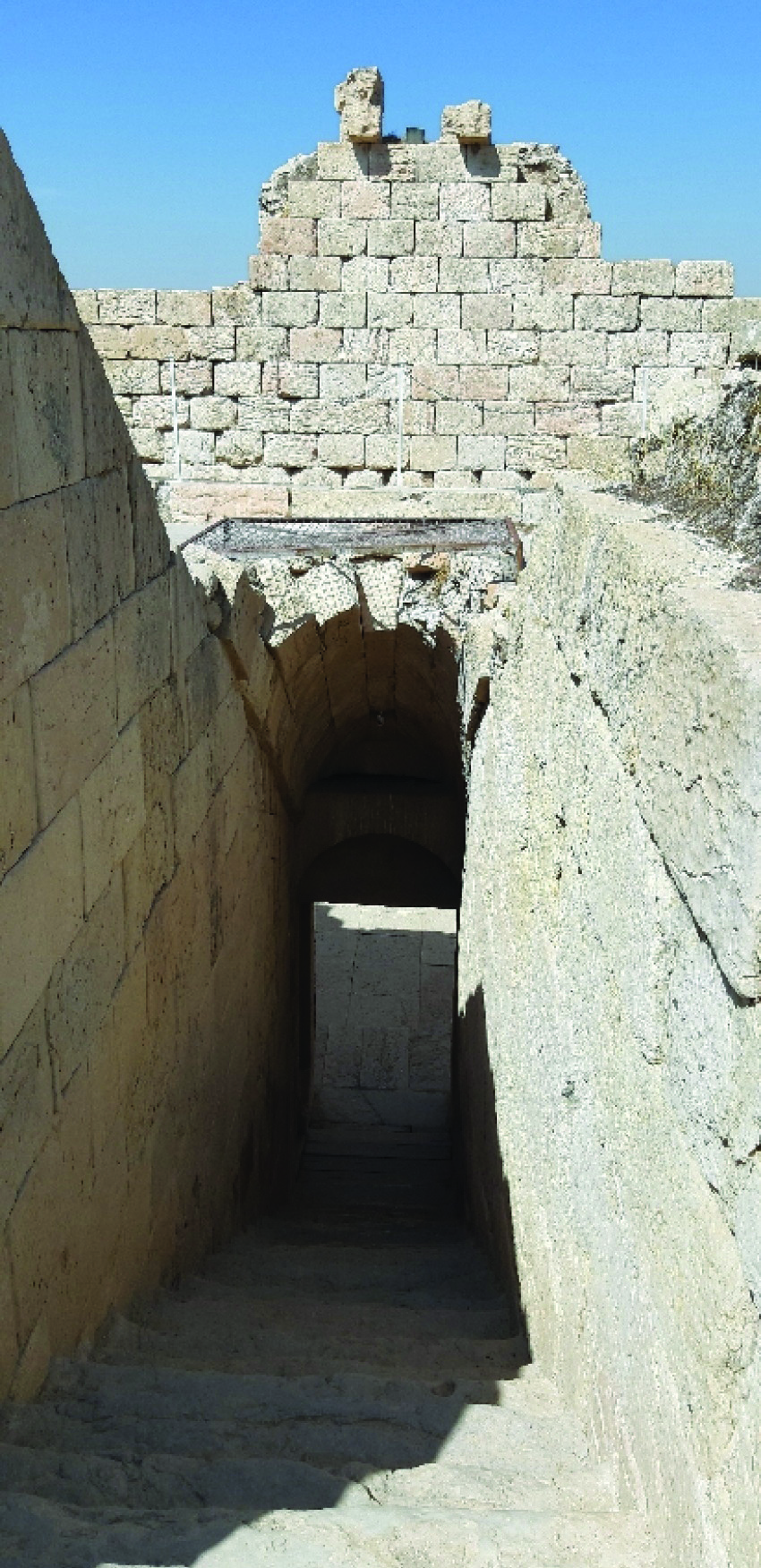
In the middle of the space, a cube measuring 10.11 by 10.11 metres is set 40 centimetres lower than the floor, with a platform of 140 centimetres surrounding it. Around the temple, four corridors exist, roofed with barrel vaults; except for the southern corridor, the remaining three — each 22 metres long and 1.83 metres wide — served the function of channelling water to the central pool through water canals. The southern corridor is narrower and higher than the floor. On either side of this corridor, two openings lead to the eastern and western corridors, enabling worshippers to observe the circulation of water.
Due to its symbolic use in the veneration of water, the building was not roofed, so that in daylight, the worshipper could observe their own reflection in the pool of the central courtyard, like a mirror. In this manner, in the worship and sanctification of water at the centre of the building, a mirror of water is formed, reflecting the image of existence.
The City of Bishapur
The city of Bishapur did not evolve from the expansion of a village but was built by decree of Shapur II according to a specific plan. Understanding the Anahita Temple is best achieved through examining the plan of this city. Bishapur was a rectangular city with a grid of streets running perpendicular to one another along a north–south and east–west orientation, situated beside the Sassanid royal road and the Shahrud River. It served as a crossing point for ancient routes, including those from Gur (Firuzabad) to Ctesiphon and a north–south route toward the Persian Gulf, which enhanced its importance.
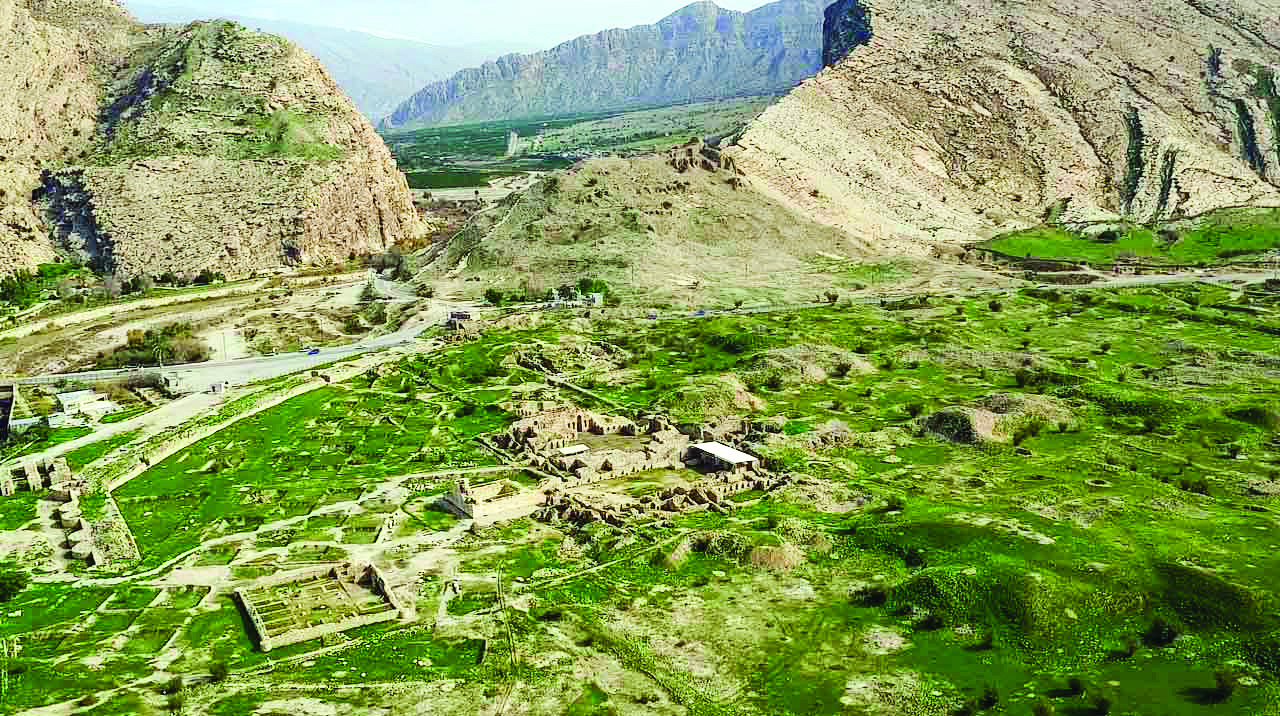
The city was built by order of Shapur, the second king of the Sassanid era (240–243 CE), in the Zagros mountain range at the shortest distance between these highlands and the Persian Gulf. Following his victory over Valerian (the Roman Emperor) in 260 CE, Shapur commenced the construction of the royal complex at Bishapur.
Among the defining characteristics of urban design in that era was the interaction of the urban plan with nature and the use of natural features in combination with geometry — a pattern observed in Sassanid cities such as Estakhr. In truth, these natural elements served a protective role for the city and blended seamlessly with its geometry, form, and structure. Another notable feature was axial symmetry and distinct order — a geometry that, in proximity to mountains, the Chogan Gorge, and the river, was well observed at Bishapur. The geometry is visible both in the overall form and in the alignment of the city’s principal routes, indicating a precise urban plan that preceded the city’s establishment.
In a 1935 study report on Bishapur, a sketch by Talbot Rice shows that the city was enclosed by ditches, large ancient mounds, and the river, with two main axes intersecting at the city centre. In subsequent studies by Ghirshman and Andre Hardy, the city’s structures were drawn in a more detailed map, and the Hippodamian (Greek grid) pattern at Bishapur was emphasized.6 However, unlike Greek examples, the grid is not regular; the spacing of streets parallel to the northern axis (rotated 38 degrees westward) is unequal, and the constructions between this grid lack a uniform pattern.
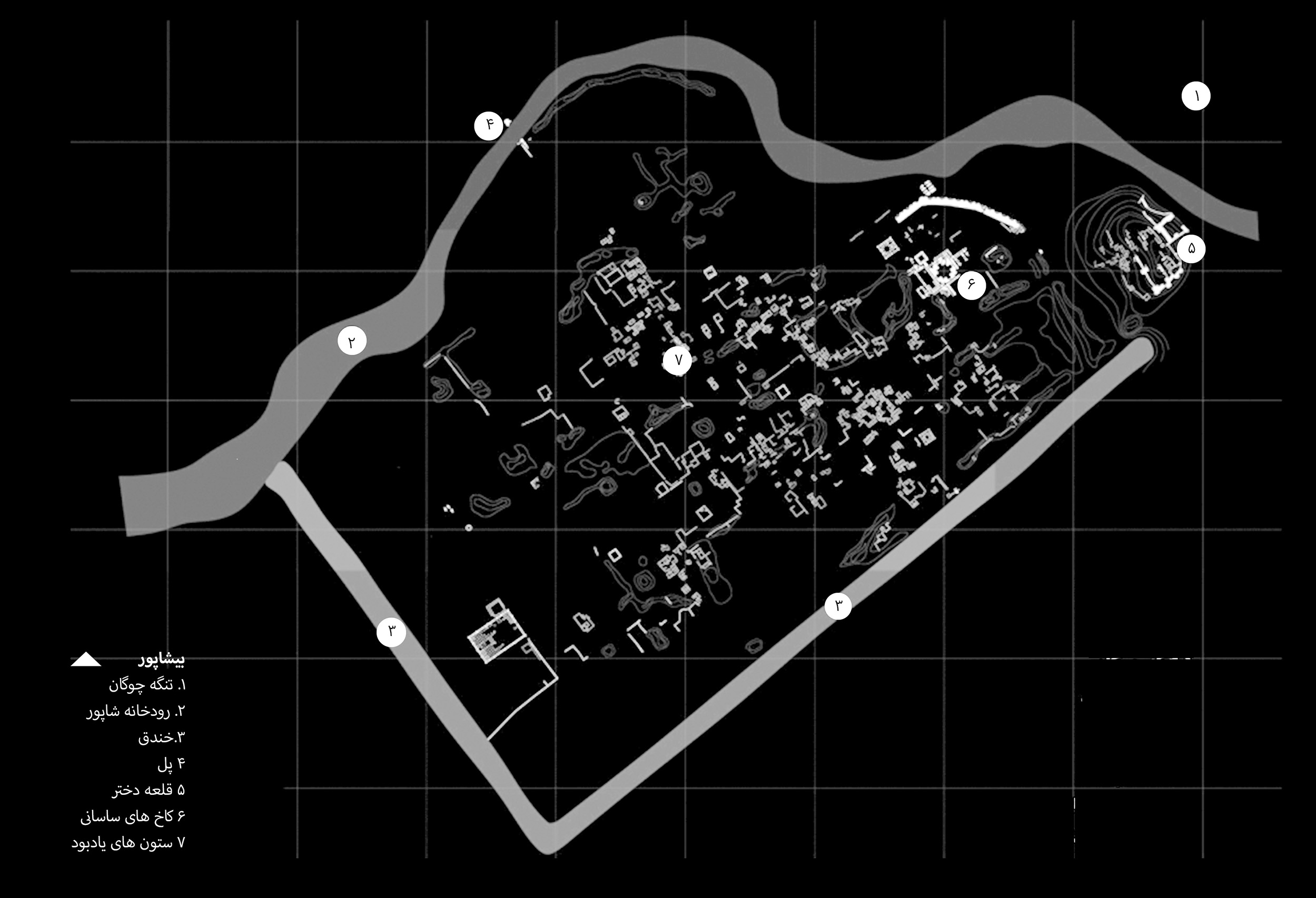
Among Bishapur’s other fundamental characteristics is its proximity to water sources. The Shapur River, whose waters flow perpetually, along with three springs — Sassan, Sarab-e Ardashir, and Sarab-e Dokhtaron — with their numerous pools, constitute the primary resources for life in this region. The Bishapur complex comprised private palaces, a public audience hall, a temple for honouring the deity of water, and a reception hall called Pis-Piseh (mosaic hall). The main hall of the palace follows a cruciform plan, which appeared in Sassanid architecture following the cruciform layout at Nushijan Tepe.
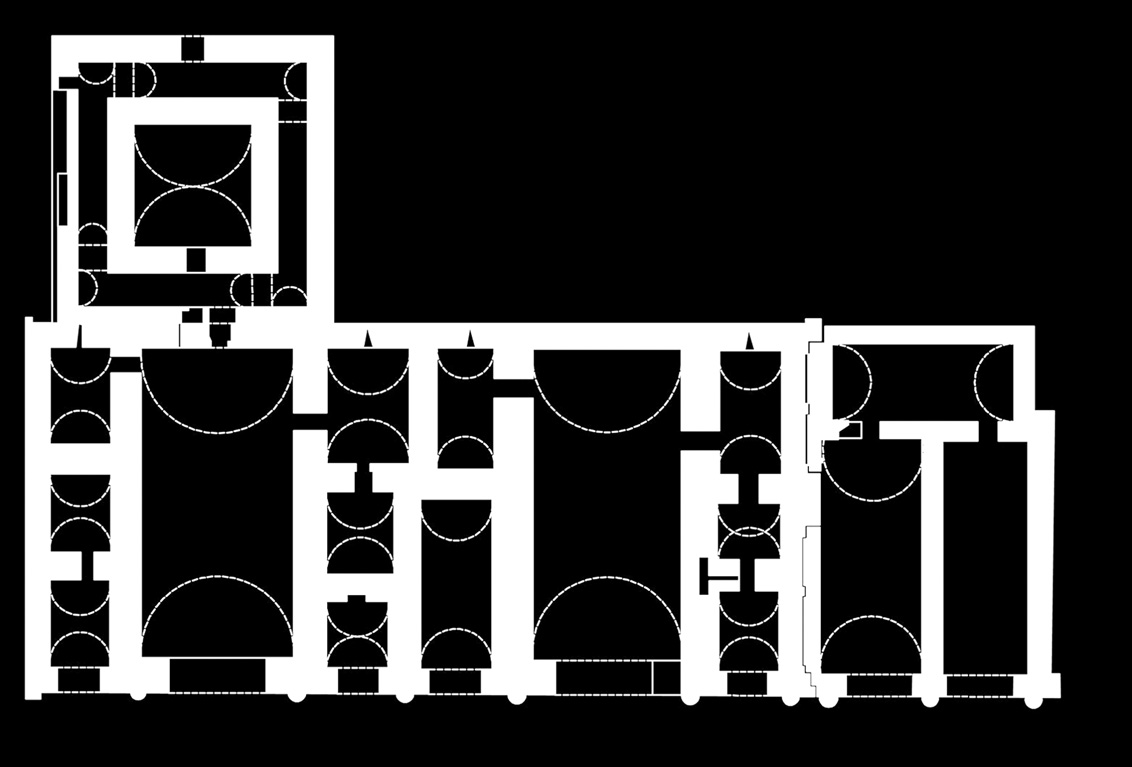
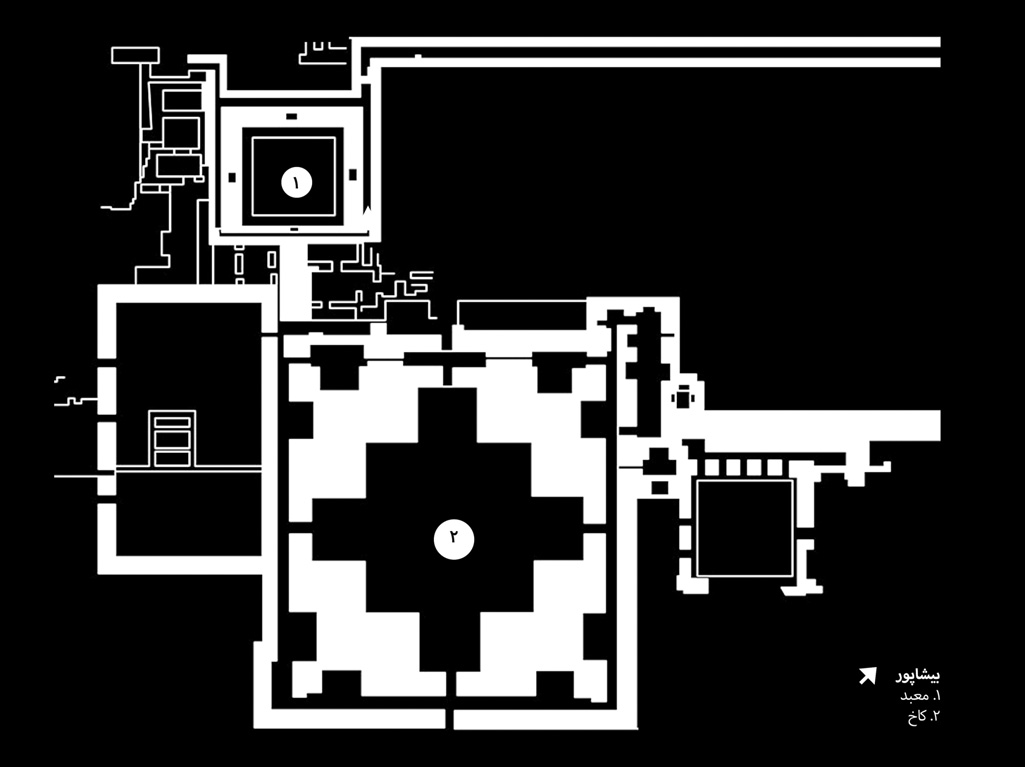
While the influence of Western (ancient Roman) architecture can be observed in the building’s ornaments, the Anahita Temple, situated in the western section of the cruciform chamber, has a distinctly indigenous design pattern, similar to what is seen in the architecture of the Palace of Parthanisa (or the Palace of Nisa) and in the Anahita Temple at Hatra. Near the palace and temple, the Shapur Memorial stands — commemorative columns upon a stone platform with Corinthian capitals — at the centre of the city, serving as directional markers.
The Anahita Temple at Kangavar
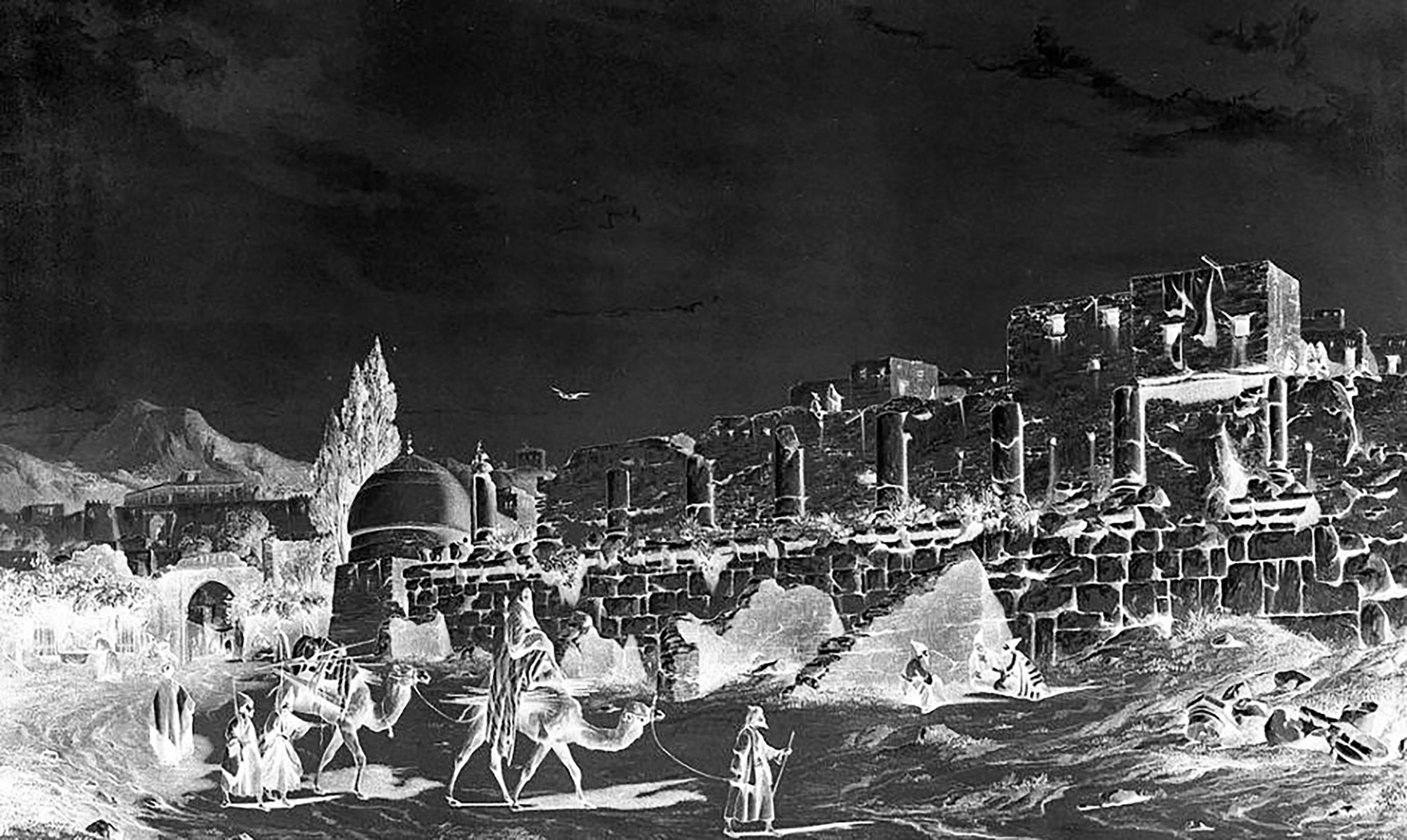
The Anahita Temple at Kangavar is a large structure built of dressed stone, significant in scale and importance, situated along the Great Khorasan Road at the centre of the present-day city of Kangavar, 90 kilometres east of Kermanshah. This structure was built atop a natural hill called Gach Kan (Nahid), rising 32 metres above the surrounding terrain. On three sides — east, west, and south — it has walls of rubble stone and gypsum mortar with rows of thick, unadorned columns. These walls once had a facing of dressed stone.
In the words of Kambakhsh: "The true physical plan of this architecture, which through archaeological excavations has emerged from beneath the soil, is a platform and a four-sided enclosure measuring 210 by 208 metres. On its southern front, a wall stands 18.5 metres in diameter, adorned with 24 columns in equal proportion on either side of a stairway, each 30 metres long, flanking a terrace 94 metres in length."
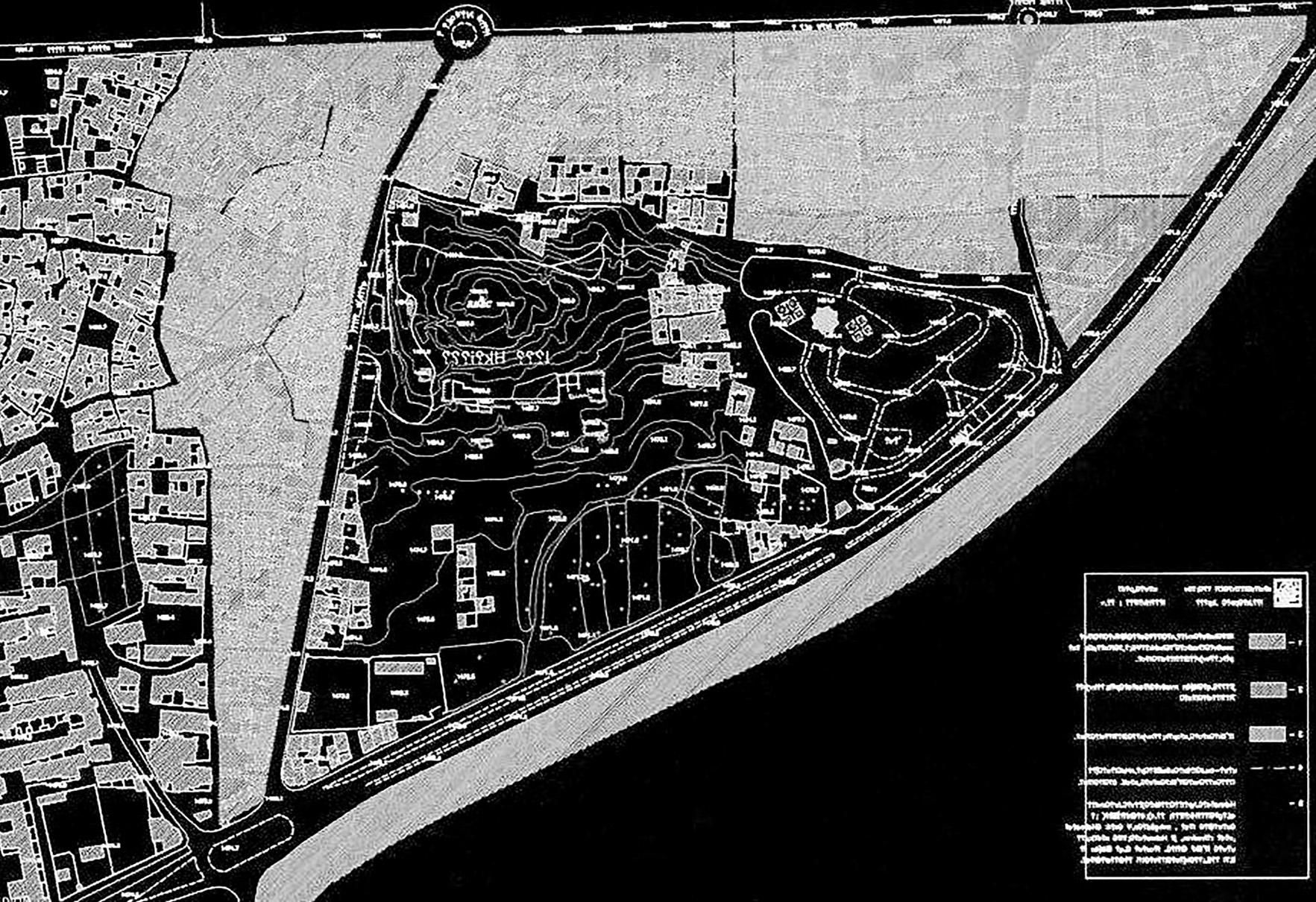
At the centre of the structure, a rectangular platform oriented east–west, rising 3 to 4 metres high, is situated. The main temple, set upon a tall stone platform, had a four-sided geometry surrounded by porticos on all sides — reminiscent of the pseudo-Greek temples at Hatra and confirming the penetration of Greek traditions in Parthian architecture. Following Greek models, the temple has a rectangular central core constructed in a peripteral style from stone (11 columns along the length and 6 columns across the width).7
Eugene Flandin and Pascal Coste, in their travelogue, consider the architecture of the Anahita structure to be an adaptation of the Doric and Corinthian Greek orders, comparing it with the Greek Temple of Palmyra in Syria. This claim has also been endorsed by Herzfeld, Malcolm Colledge, and Klemens Hora. Colledge maintains that Parthian architecture adopted a collection of ancient Greek forms but transformed them, enriched them, and blended in Eastern forms. European scholars attribute this syncretic style to the cultural exchange between Iran and Greece, particularly in borderland areas such as Kangavar.

Against these theories, Iranian archaeologists such as Ali Akbar Sarafraz, Ardashir Khodadadiyan, Masoud Azarnoush, and Seifollah Kambakhsh consider these interpretations incorrect and attribute the style of this building to the Achaemenid architectural tradition. They also emphasize the Iranian origin of the platform, comparing it to the examples of Persepolis, Taq-e Farhad carved at Bisotun, and the Sarmaj platform. Ali Akbar Heidari, in a research study, identifies the following as key characteristics of Iranian architecture at Kangavar:
• Construction of the building on Nahid Hill at Kangavar
• The ziggurat-like three-tiered platform structure of the temple
• Fire altar atop the hill for open-air ceremonies
• An open-air enclosure around the fire altar, bounded by rows of columns
• Perimeter walling around Nahid Hill
• Twin-sided main entrance stairway
• Square plan of the main platform
• Primary materials of stone and gypsum
Beyond the building’s style, the history, function, architecture, and structure of the Anahita Temple at Kangavar remain subjects of debate among archaeologists and scholars. Seifollah Kambakhsh, based on the view of Isidore of Charax8 — who referenced the existence of a Temple of Artemis (Anahita) in the city of Kangavar — has identified the building as a Parthian temple dedicated to the water deity Anahita, the equivalent of the Greek Artemis.
"From here (Bagastana, i.e. Bisotun) to the first station is 38 skhoinoi, and at the first 3 skhoinoi lies the city of (Kankubar) Kangavar, where there is a Temple of Artemis, and the distance is 3 skhoinoi."
However, contrary to this view, Masoud Azarnoush considers the stone structure to be unrelated to the Parthian cemetery, identifying it as an unfinished palace of the Sassanid period from the era of Khosrow II. Complementing this view, Sajjad Alibeigi, based on evidence and a ceramic seal bearing an inscription with the name Khosrow Shanum,9 considers this building to be a palace, residential complex, or administrative headquarters of Manuchehr ibn Hormazan (Khosrow Shanum).
Footnotes
- Water burial of the dead has also been reported in the civilizations of Greece, India, and China. According to Greek mythology, the world of the dead lay beneath the earth (the realm of Hades), and the River Styx and its aged ferryman, Charon, served as the intermediary between the worlds of the dead and the living and the sole means of transporting the dead to the underworld.
- Eliade, 1993: 189.
- "Water of tears" (ab-e sereshk) can be interpreted as semen — the substance of fertility and birth.
- Hinnells, 1994: 79.
- Anahita, as goddess of flowing waters and fertility, is associated with the cow. The cow is the animal symbol of Anahita. In the Anahita Temple at Bishapur, "the animal symbol of Anahita is in the form of a bull-head sculpture" (Sarafraz, 1987: 70).
- Based on archaeological evidence, the earliest traces of temples and sacred buildings can be found in primary settlements and ancient mounds — relatively small and scattered areas that were inhabited during the Neolithic period (9th to 3rd millennia BCE). In Iran, traces of the first temples can be found in settlements of the Qazvin Plain, Tepe Sialk, Tepe Qabrestan, and Tepe Sagzabad.
- Herzfeld, in examining the characteristics of the Anahita Temple, considers the analysis of its architecture, details, and forms to be an adaptation of the Doric and Corinthian orders.
- Schoff, 1984.
- "Khosrow Shanum" means "devoted to the king" and is the name of the governor of western Iran in the late Sassanid period.
References
- Azarnoush, Masoud. Kangavar Excavation. Tehran: Cultural Heritage Organization of Iran, 1998.
- Al-Hashemi, Aida. "Anahita Temple: Emergence of Architectural Space in the Evolution of the Concept of Water." Manzar Journal, 2009.
- Heidari, Ali Akbar. "Spatial Analysis of the Anahita Temple at Kangavar." Quarterly Journal of Iranian City Studies, 2011.
- Sa'di-Nezhad, Mania. "Iranian Goddesses." In Religions of Iran in Antiquity by Richard Foltz. Tehran: Dibayeh Publications, 2016.
- Shah-Mohammadpour Salmani, Alireza. "Urban Design Pattern of Bishapur." Iranian Architectural Studies, 2014.
- Alibeigi, Sajjad. "Anahita Temple: An Unfinished Palace or a Political/Administrative Structure." Cultural Heritage of Iran, 2017.
- Kambakhsh Fard, Seifollah. Historical Monuments of Iran. Tehran: Cultural Heritage Organization of Iran, 2001.
- Ghirshman, Roman. Iran from the Beginning to Islam. Tehran: Elmi va Farhangi Publications, 1993.
- Mansouri, Kaveh. "Origins and Evolution of Temple Architecture in Pre-Islamic Iran." Quarterly Journal of Art and Architecture, 2020.



