ARCHITECTURE, HUMAN AND ENVIRONMENT
تناسب زيبايى شناسى كلاسيك منهتن در شب، نمادى از شهر مصرفى رنه دكارت، سرچشمة مدرنيته Classic aesthetic proportion Night view of Manhattan, model of a consuming city Rene Descartes, father of modernism
Much is said about architecture, yet we conceive of it as a mul- ti-layered phenomenon which can be created and evaluated, depending on the situation, according to aesthetic, technologi- cal or functional concerns. However, such concerns result from a more substantial substratum which has informed the views of architects and their clients following the recent ontological challenges and developments. The most persistent challenge is probably man’s confronta- tion with the environment, which seems to have been, in the short term, to the benefit of the intervening man. This is while many thinkers consider such a relationship destructive. This is the context in which sustainable development and green architecture have developed. In fact, man’s relation to nature was in the past an inti- mate sacred interaction. Architecture was both a worldly and heavenly work in which environmental, structural and physical issues intermingled with conceptual and spiritual aspects. Hence, the aesthetics of buildings became deeply con- nected to natural material forces. Even when the appearance of architecture in different settlement differed due to different environmental conditions, it demonstrated the same beauty which originated from the essence of nature. Gradually, as innovative developments and a change in the attitude towards environment and nature turned onto what has come to be known as sustainable development, spirituality, ethics and adherence to principles lost their colour and nature become demystified. However, while the developed world (developed in a natu- ral context) is struggling today with new challenges due to the imposed forces and an increasing exploitation of the environ-
ment and society it is clear what greater difficulties face less developed countries with limited environmental potentials. While developed societies increasingly criticize the notion of consumption city and try, even on a symbolic level, to make them productive, a competition for consumption continues in the third world countries. These days there are at least two serious progressive international architectural movements influencing by one an- other but enjoying very different origins. The first movement has become popular in our academic and professional circles and is a kind of architecture in which the priority is given to formal aspects and their consecutive aesthetics. The second movement sees architecture from a different angle and is extremely opposed to the patterns of sustainable architecture and its byproducts on grand and urban scales as well as the corresponding pretentious and imposing architec- ture. This group focuses on the basic motives of architectural creativity which have gradually disappeared as a result of a growing passion for the architectural form and façade. While the product of such architecture can also be creative and innovative, it comes closer to indigenous architecture and can be considered the real version of green architecture. The greatest merit of environmental architecture - apart from creating the comfort zone with the least harm to nature, being in harmony with the context and making a logical use of local resources etc.- is its success in producing local thought and creativity.
سقف و پوشانندة فضا، عرش و نمادى از آسمان يا بهشت در معمارى گذشته بزرگراه ها و سيستم حمل و نقل عمومى شبكه هاى ارتباط شهرى را در شهرهاى امروزى شكل مى دهند. Roof and space covering; symbol of sky or paradise in traditional architecture Highways and public transport system shape the urban connection in contempo- rary cities
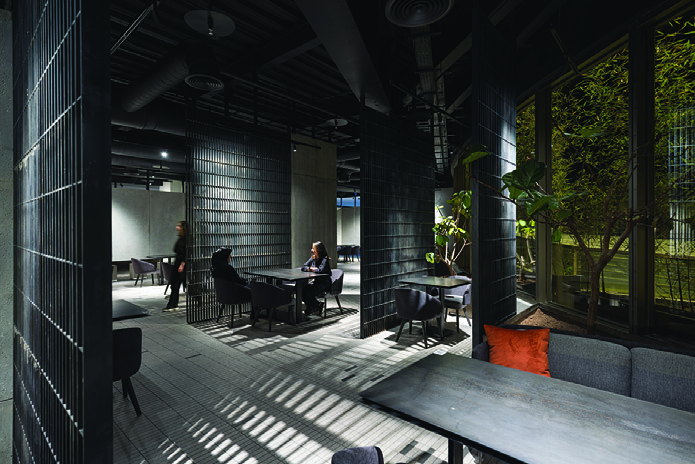
نمونه هايي از معمارى سبز؛ حركت به سمت زير زمينExamples of green architecture, constructing beneath the earth
(low-tech) نمونه هايي از معمارى سبز، چند نمونه از گرايش فروفناورExamples of green architecture, low-tech trend
موزة گوگنهايم بيلبائو، نماد نوعى گرايش پيشرو در معمارى امروز Guggenheim Museum, Bilbao, symbol of futurist tendency in contemporary architecture
1- Tough lands 2- Productive city 3- Imposing 4- Improvement 5- Intervention 6- Explotation 7- Hightech
8- Lowtech 9- Sustainable 10- Collaborative 11- Competetive 12- Local 13- Green architecture