Architect: Bernard Tschumi
Project: Le Fresnoy — National Studio of Contemporary Arts
Location: Tourcoing, northern France (near Lille)
Completed: 1997
Site area: 22,000 sqm
Budget: $40 million (government-funded)
Programme: Cinema, video, visual arts, sculpture, digital arts, live performance, studios, exhibition spaces, library, student & artist dormitories
Original source: Karen D. Stein, Architectural Record, January 1998
The year 1988 was a turning point for Bernard Tschumi. His most famous architectural work — the urban design of Parc de la Villette in Paris — had been delayed six years because the bureaucrats regarded his proposals with doubt and suspicion. His next project, too, seemed destined to remain on paper. The design and preservation of works at Columbia University became his academic post, and this university position both provided him with job security and gave him a laboratory for testing various ideas. Nevertheless, Tschumi was not satisfied with his administrative work, and pursued both lines of activity simultaneously — continuing his theoretical research while also coming to terms with the demands of practical building.
Bernard Tschumi was born in Lausanne, Switzerland, but has lived and worked in both Switzerland and France. He has been a resident of America since 1976. To the French, he is Swiss. To the Swiss, he is American. And more importantly, for Americans he is considered European. For this very reason, wherever he goes, people find him strange and exotic.
His architecture, too, is interpreted in contrasting ways, and the reason may lie in his theories about space. He has written: “Architecture resembles a masked face. One cannot easily tear off the mask. It is always hidden: behind designs, perceptions, habits, and constraints. Yet it is precisely this difficulty of tearing off the mask that makes architecture so desirable. Unmasking is the pleasure of architecture.”
— Bernard Tschumi
They say that every architect’s work bears the mark of their life. This is something Tschumi himself calls his “in-between strategy” — that is, the space in which a pre-existing building and what Tschumi inserts into it come together. This merging of old and new is the overarching product of the design.
Le Fresnoy
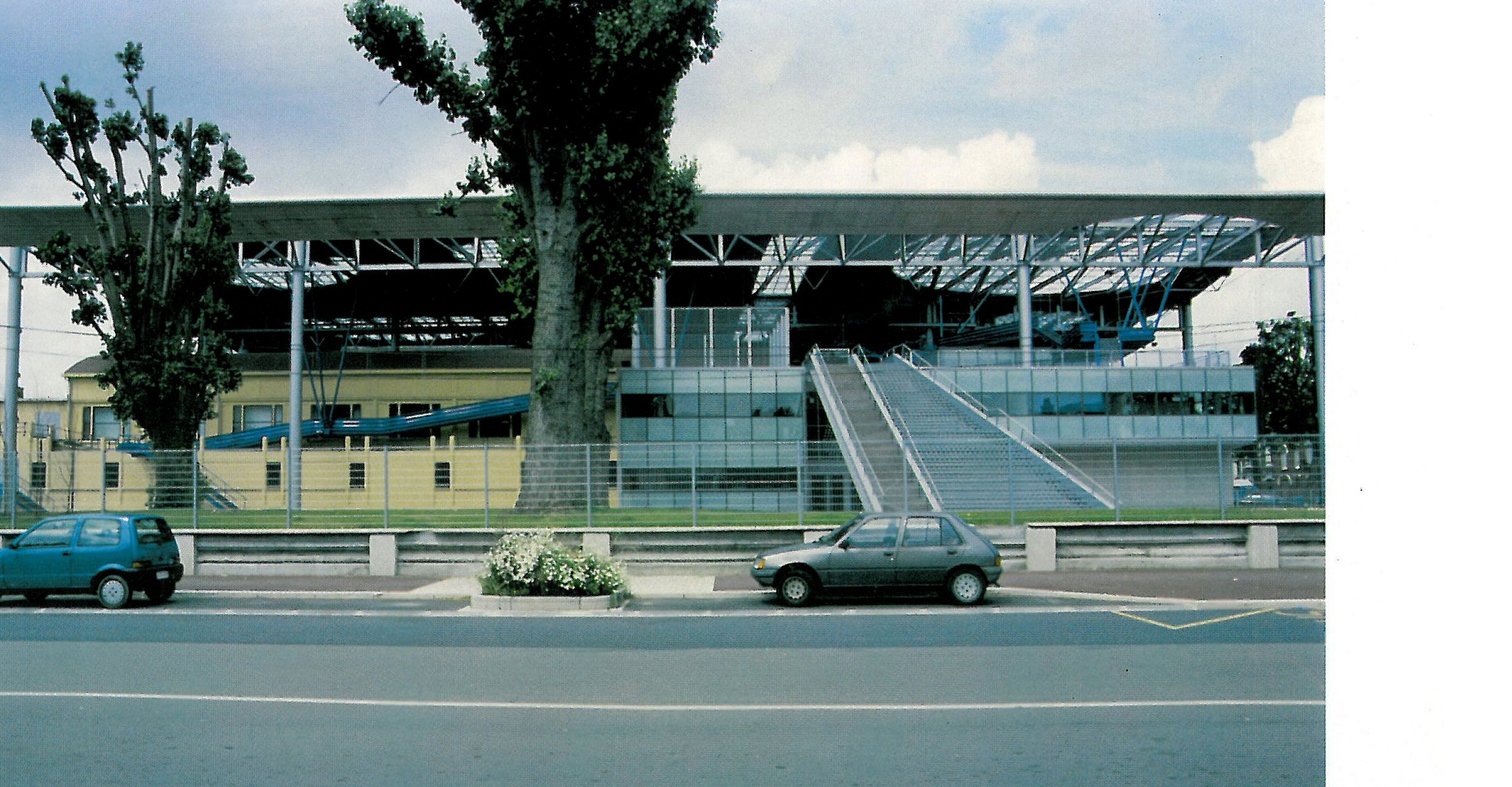
Tschumi, speaking about his new project — Le Fresnoy, the National Studio of Contemporary Arts in Tourcoing, France — has likewise acted according to this principle. The commissioning of this project has added to his fame, and now the expansion design for the Museum of Modern Art in New York has also been entrusted to him.
Le Fresnoy is located in northern France, near the major city of Lille, and is an academy for all forms of the arts — cinema, video, visual arts, sculpture, digital arts, and live performance. Its budget is entirely government-funded and it charges no tuition. There, students work alongside renowned artists and produce professional works of art.
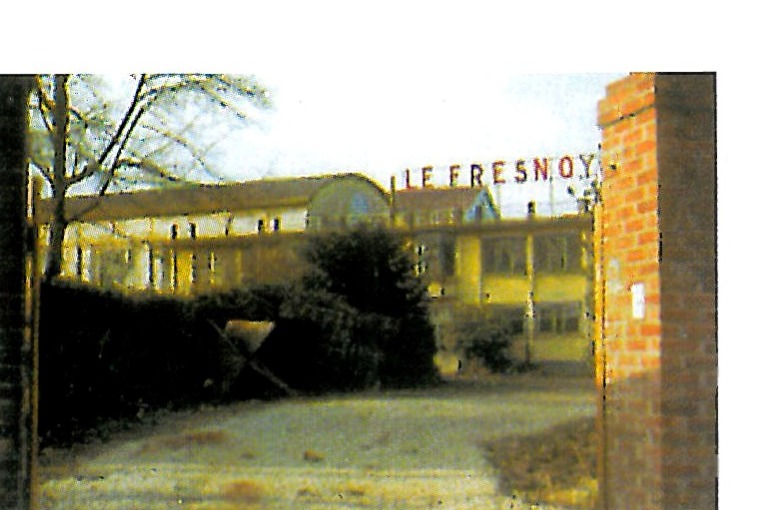
In the competition for this project, importance was given to the existing buildings. In the jury’s view, preserving the buildings was essential. Many architects ignored this requirement. Some pretended they were preserving the previous buildings. But Tschumi was the only architect who truly adhered to this principle. Tschumi himself says: “In the competition, everyone wanted me to demolish everything. I did not want to destroy the existing spaces. They were not in good condition, but the spaces were impressive. I thought demolishing these spaces would be a pity.”
The Old and the New
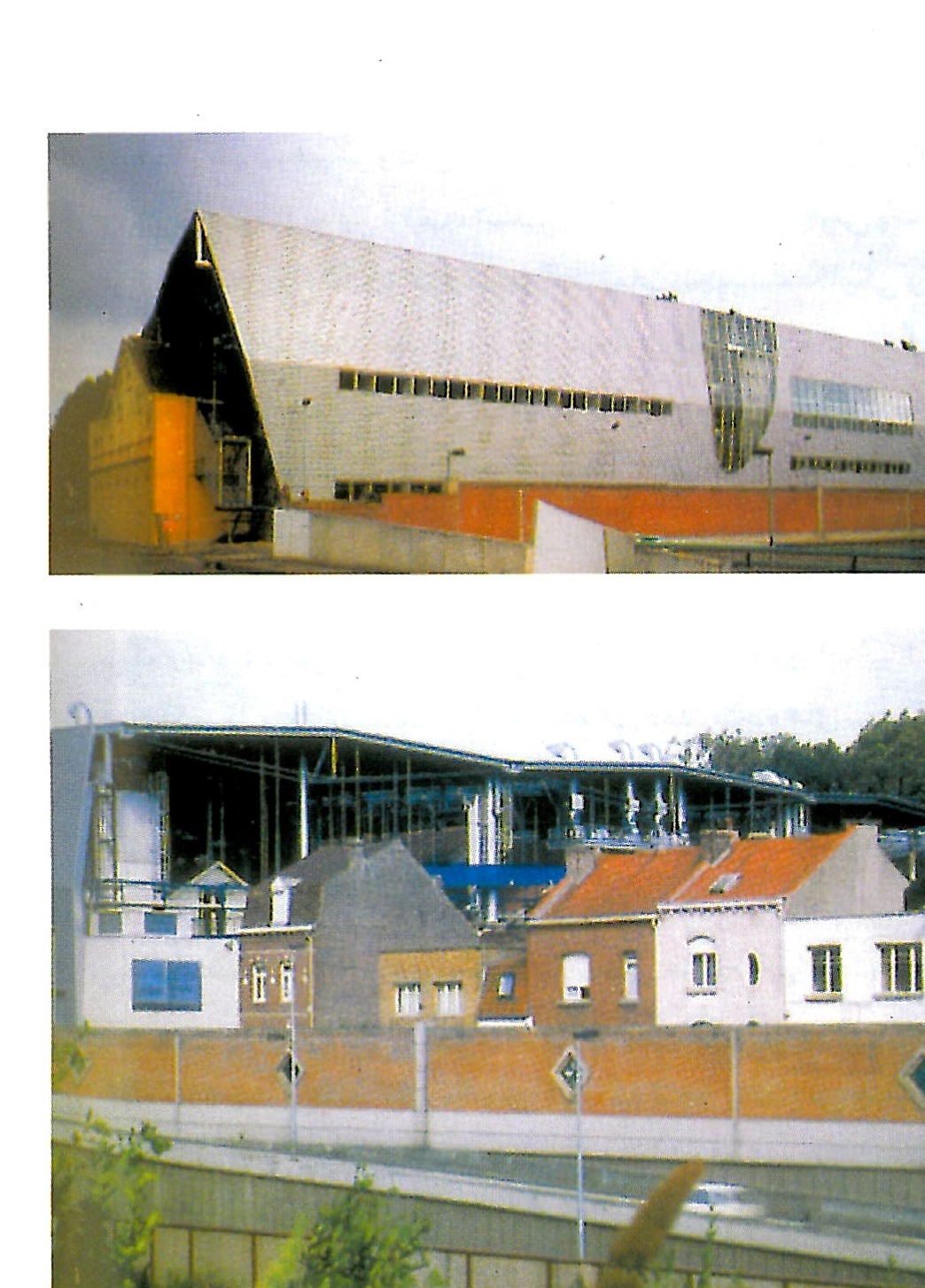
Bernard Tschumi, in the interval between the first phase of design (October 1991) and the second phase (February 1992), met with the client every two weeks. The design progressed rapidly, and in the autumn of 1992, the project was officially placed in Tschumi’s hands. He enlarged his team of collaborators and expanded his activities. Construction was delayed until April 1994 for administrative reasons.
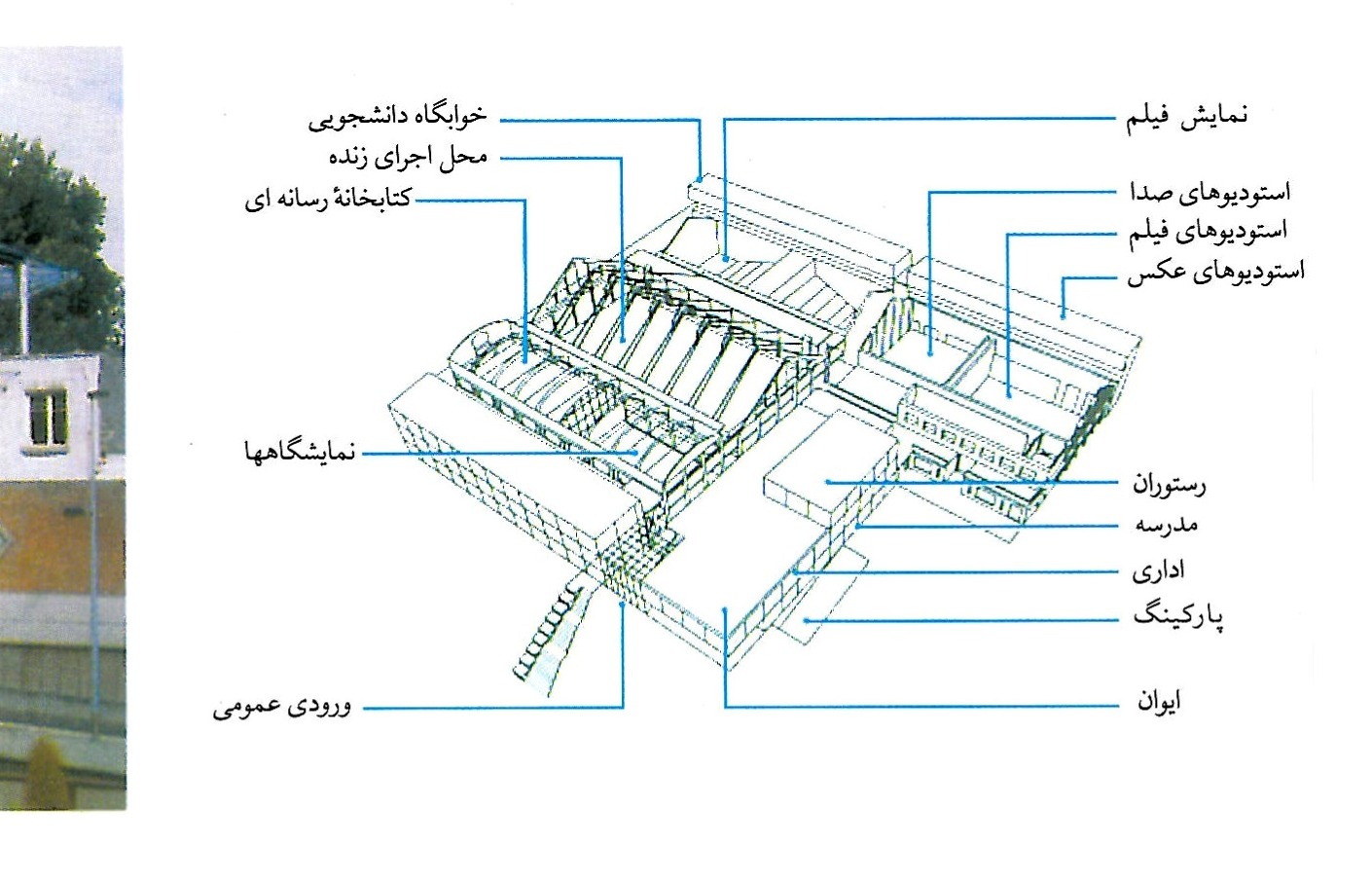
The Umbrella
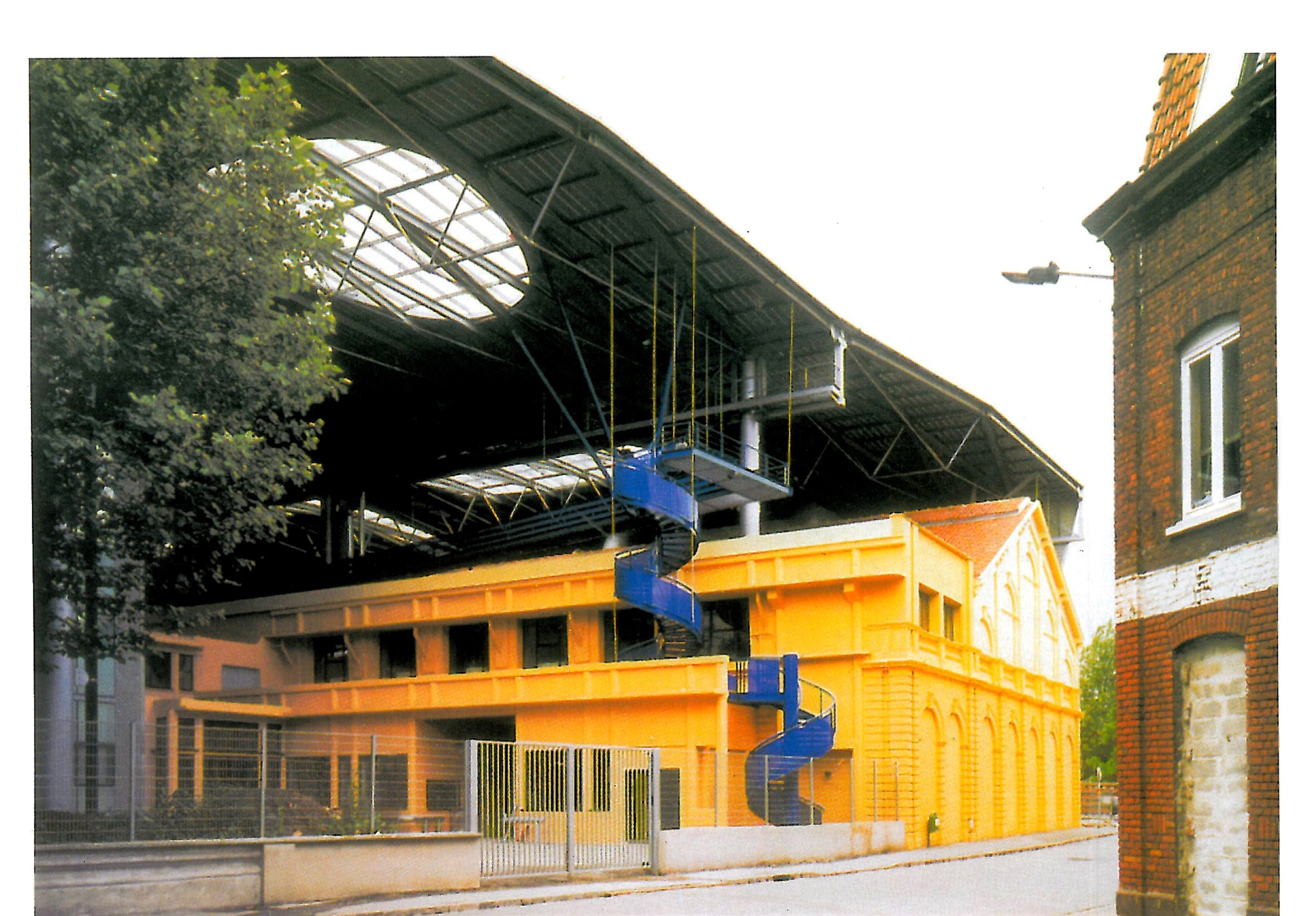
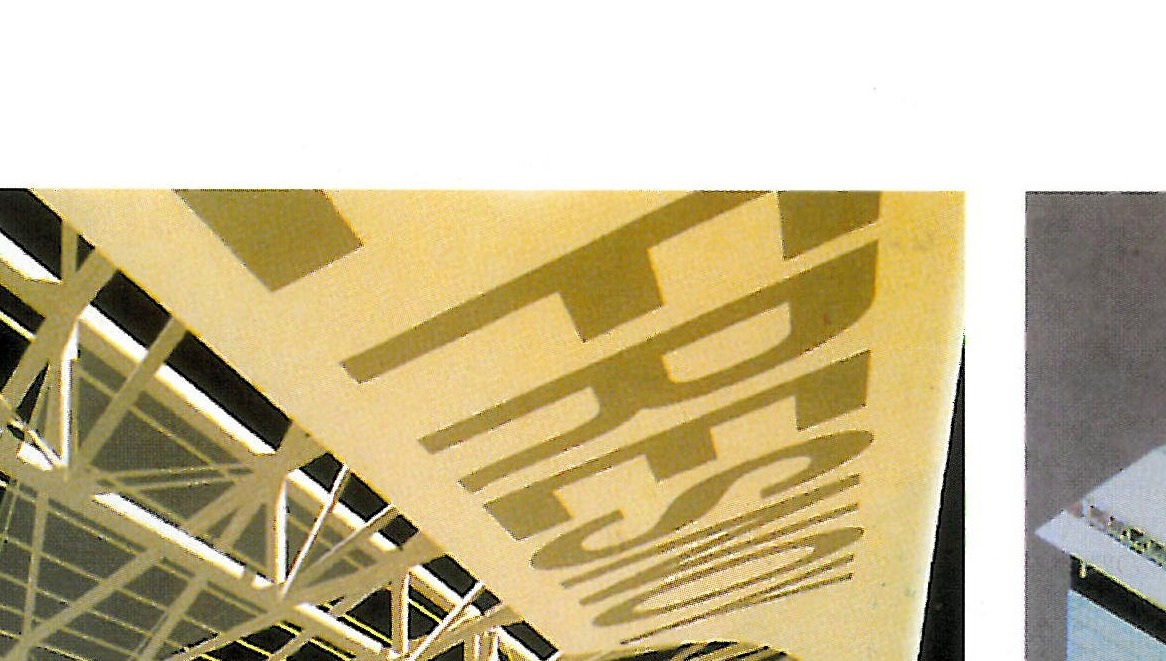
“At first, I said let us put one big thing over everything to keep out the rain and not have to deal with snow either. The engineers said that snow loads would become a major problem.” Thus the umbrella came into being. Tschumi’s umbrella became a steel roof measuring 90 meters by 93 meters, raised to a height of 15 meters above the ground. All the mechanical equipment and new stage-setting apparatus were housed in the in-between space — the zone between the old rooftops and the new canopy. An exhibition hall was created, and a library at the end of the hall was built as a box within a box. Another hall was dedicated to live performances. Studios for artists and dormitories for students were constructed alongside.
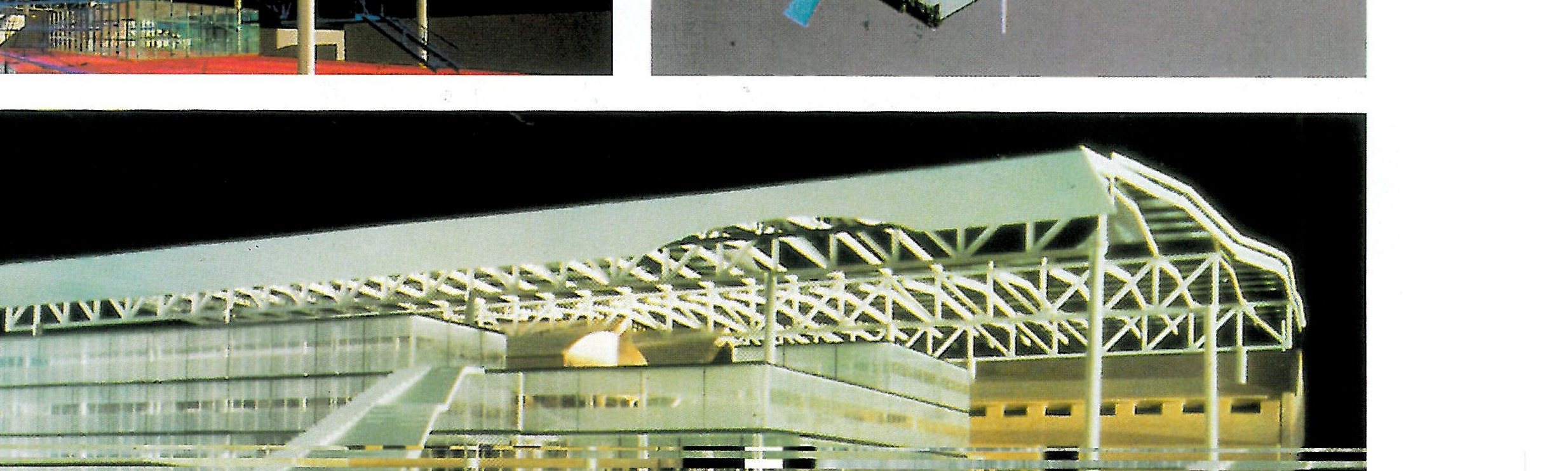
A glass wall near the entrance, with its incline and tilt, creates a novel sensation in the viewer. The “in-between” space, in the form of a blue-colored network of walkways and bridges, connects the various sections of the complex. Semi-elliptical windows cut into the steel roof provide views of the surrounding cityscape. From the elevated stairs, one can look down into the various spaces below, and the brick facades of the original buildings emerge into view.
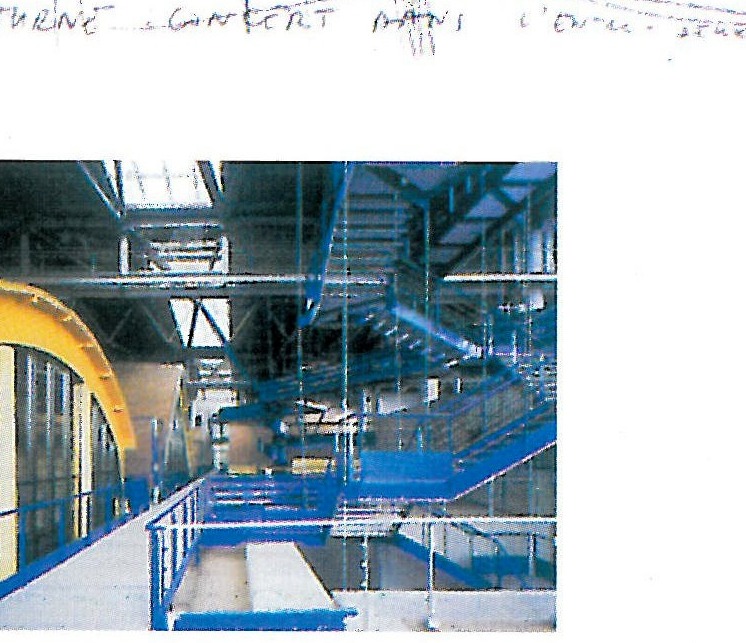
Building this enormous roof was accompanied by considerable technical difficulties, and the contractors’ delays made matters worse. At any rate, the final result was such that the client said: “The bond between old and new is very powerful. The new protects the old. When you look, you see the past and the future — you see the end of this century and the beginning of the new century. The old building is for consumption, and the new building is for production.”
— Client representative, Le Fresnoy
From Tschumi’s perspective, this project is akin to the movement of atoms: “In my view, creating certain conditions leads to something we do not expect… These manifestations of space could not have been designed. We created the conditions, but this unexpected space came into being.”
Technical Drawings
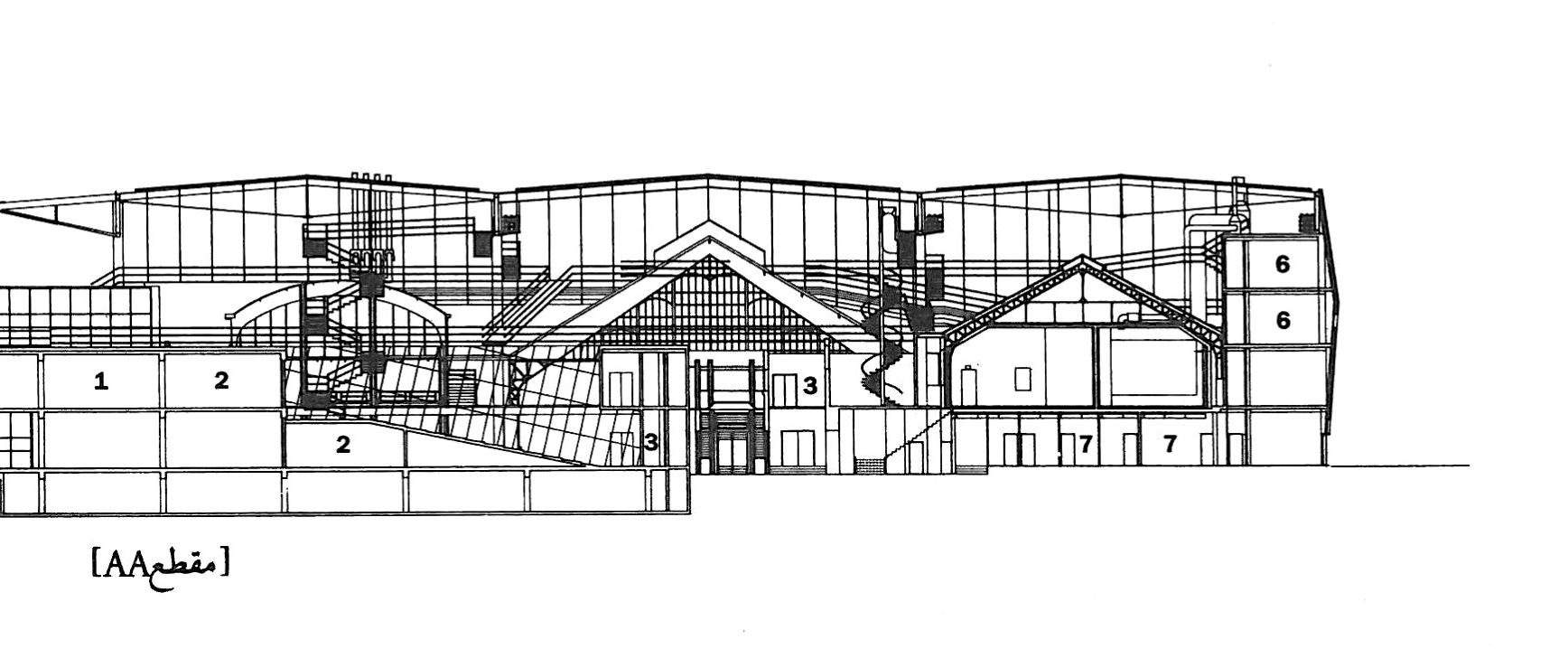
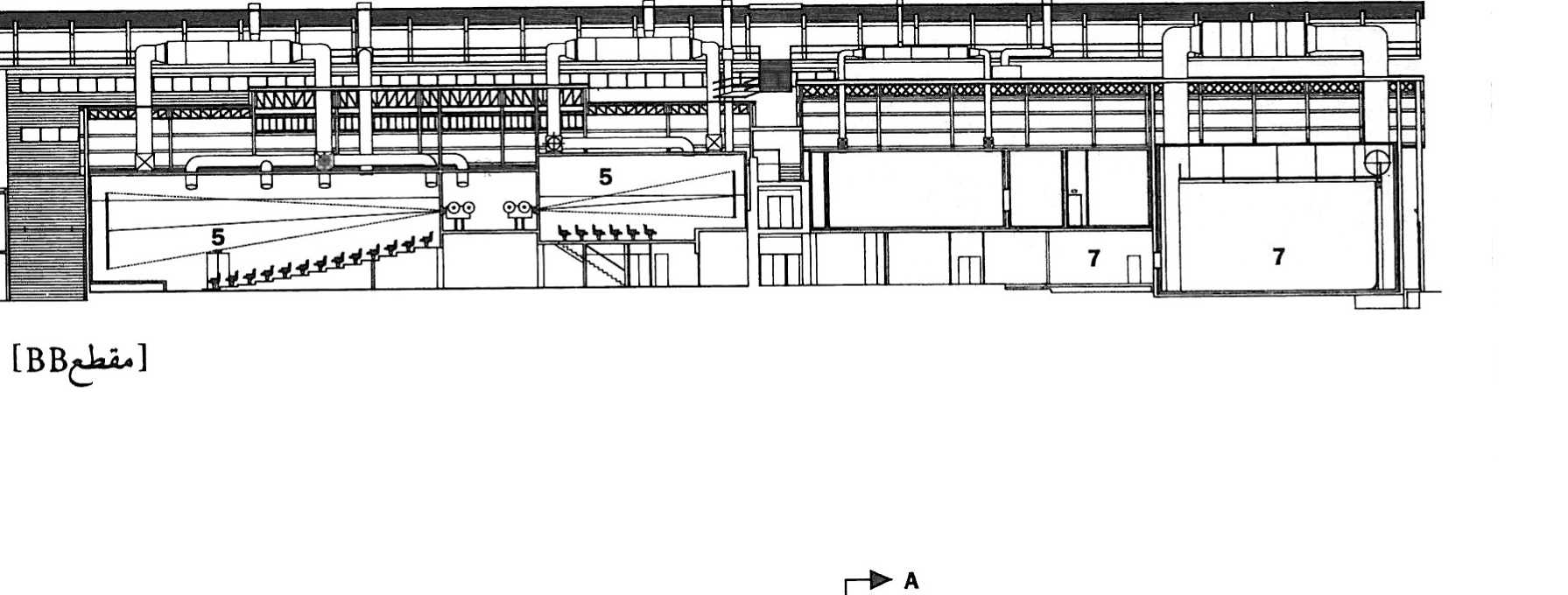
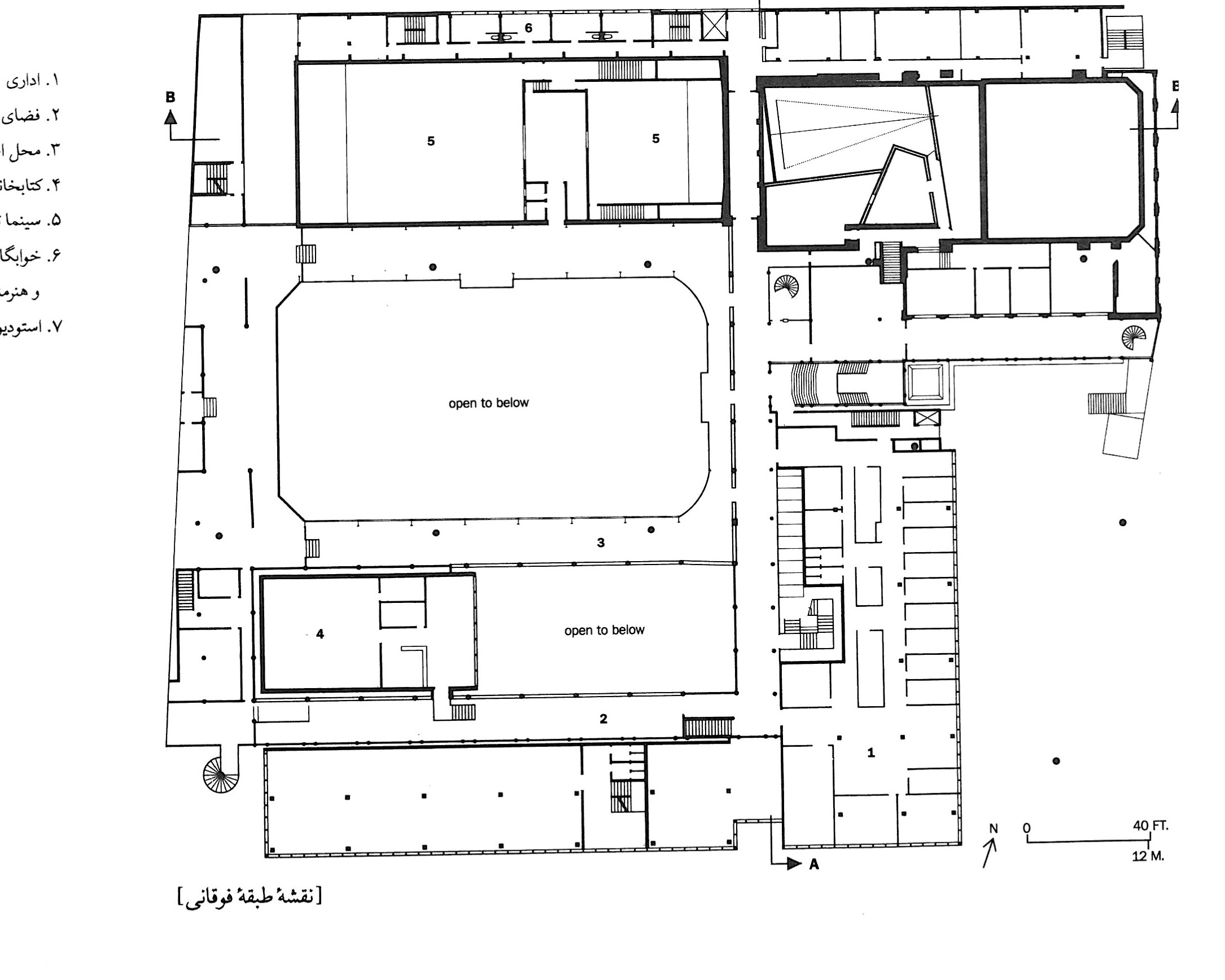
Computer-generated drawings were used as study tools throughout the design process. The project name, combined with portions of the tubular trusses, was inscribed on the surface of the roof covering. The performance spaces were placed in the upper section and arranged alongside one another. The row of student dormitories occupies the northern part of the complex, on the site of a demolished structure from the 1920s that could not be preserved. The colossal tent of the roof covers the front terrace of the cafe.
1 Originally published as: Karen D. Stein, “Architecture in the ‘In-Between’ Space,” Architectural Record, January 1998. Translated into Farsi by Reza Rezaei for Memar Magazine.