New Seeds — Editorial introduction
The volume of architecture students' extra-curricular activity, and the degree of their contact with the magazine for the reflection and publication of their work, is steadily on the rise. The increasing turn of the young toward architecture, and the rapid expansion of architecture schools across the country, has raised the share of the young — those still in school and in their first years of practice — in shaping architecture's professional and cultural currents to a determining level.
Beyond the need to undertake the necessary reforms and changes in the formal programmes of architectural schools (something both teachers, students, and the profession have been demanding for years), the rising presence of architecture students in the country's cultural space calls for the particular attention of the state and of the cultural and professional institutions.
Architectural culture feeds itself from a variety of sources. The young are at once a source and a channel of architecture's cultural feeding. They are quickly affected by fresh developments and move with them, and at the same time they grow within themselves, in unpredictable ways, the seeds of free thought and of inquiry. To stray into other intellectual and social fields — whether we count it among architecture's strengths or among its weaknesses — is, in no other discipline, as customary as in architecture. It is precisely this connectedness of architecture with various intellectual and social currents that has lent it that distinctive cultural standing.
The Canadian Centre for Architecture's effort in the extra-curricular teaching of architecture to children of kindergarten and to pupils of elementary and secondary schools is the subject of Bijan Shafei's article, included here in keeping with this discussion, and arises from this same wide social position of architecture.
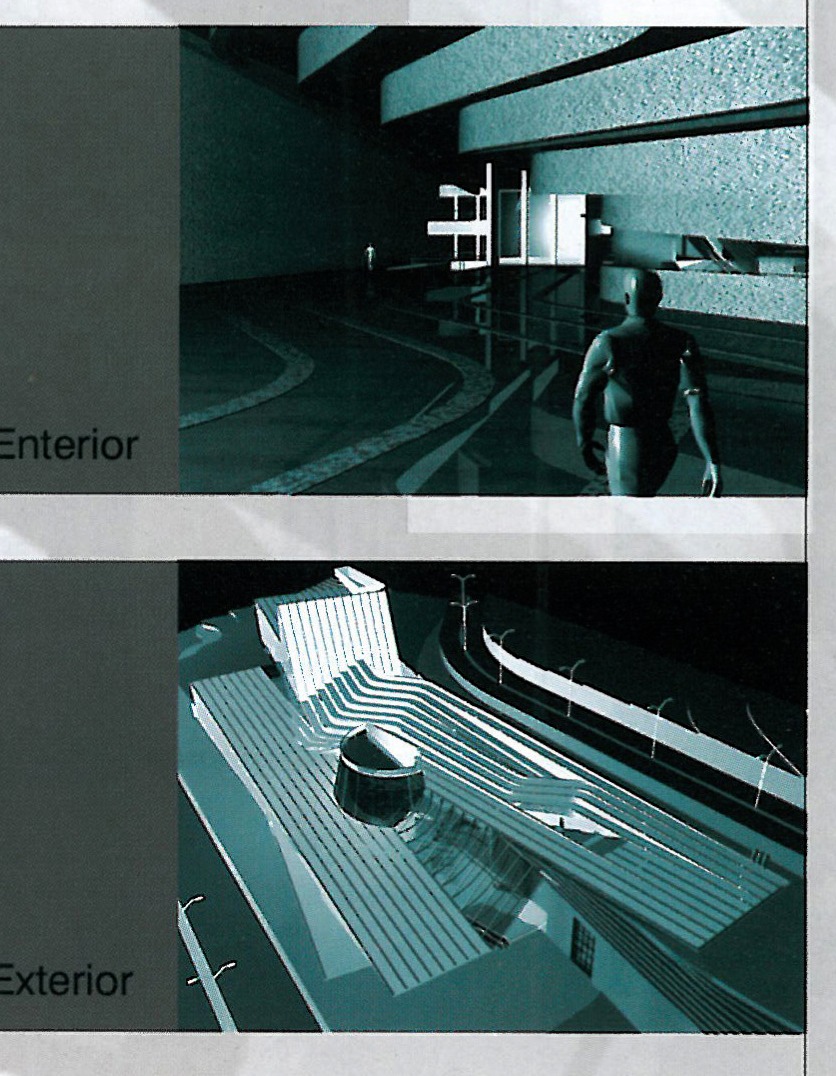
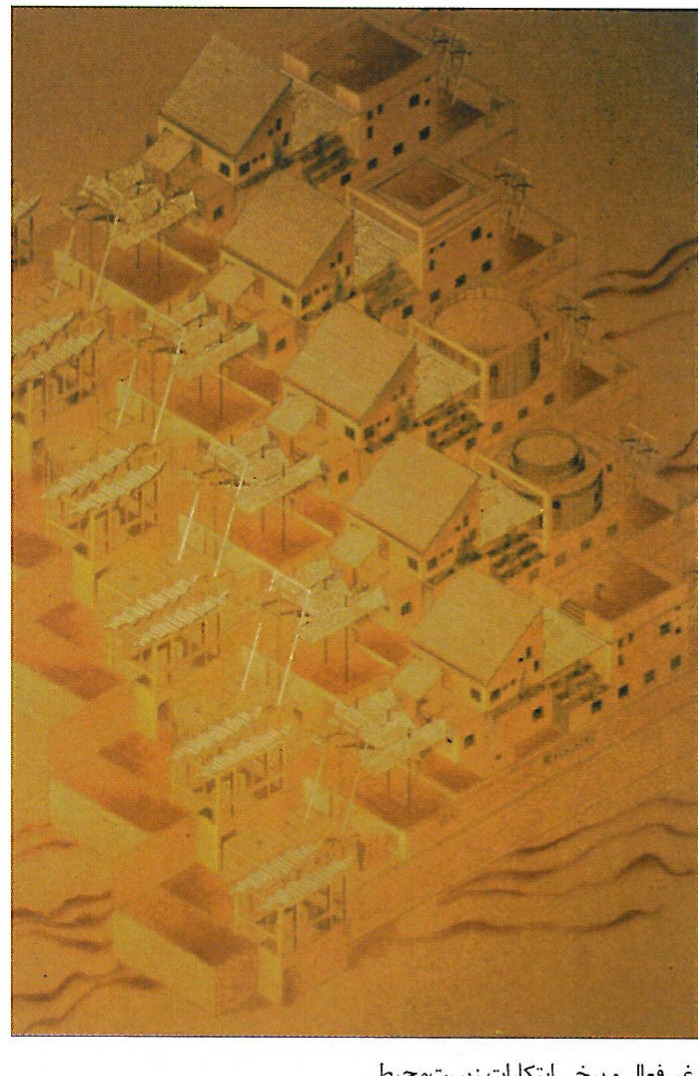
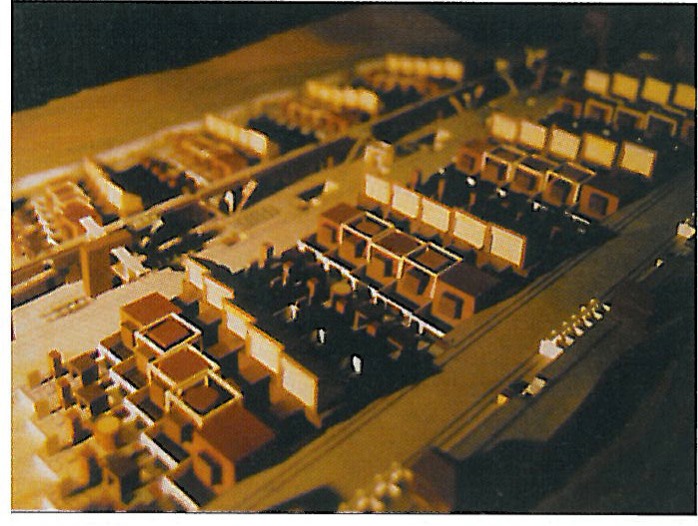
In this section, alongside a fine translation of part of a piece by Renzo Piano by two students, we present a serious and reflective comment by another student on the work of the jurors of the Grand Memar Award 80; a British architect's view on the Tabriz student congress; and samples of student work, dissertations, and publications.
From Builder's Son to Architect — a translation from The Renzo Piano Logbook
From The Renzo Piano Log Book, preface by Kenneth Frampton, translated from the Italian by Huw Evans, Thames and Hudson, London, 1997. Translated into Persian by Bavand Behpoor and Ameneh Amir-Hakimi, fourth-year architecture students at Shiraz University.
Thirty years of work
More than fifty projects are presented in this book in chronological order. These projects, without any deliberate intention, have shown an evolutionary line; a thread binds them together — a natural process of growth. One can see the gradual opening of the field of view: from the single building, from the structures of the early works, to a complete architectural organism; from the building itself, to the building set within its surroundings, in relation to its environment.
In the Middle Ages, people held an idea of the 'great master craftsman' — to whom the gift of entry into the sacred world of art had been granted; the most striking example is Leonardo da Vinci in the Renaissance. The thought that art and craft belong to two separate, parallel worlds is as recent as it is harmful.
If one of the directing factors of my work is a spirit of adventure, the other is, surely, persistence — both in professional work and culturally. This is no self-regard; in it I rather see an intellectual honesty. I am no preacher, but I believe that there is a certain ethics in architecture: faithfulness to one's own ideas, one's own commitments, one's own method. The question is how to be ethical without becoming a moraliser, how to be intelligent without descending into dogmatism.
Apparent contradictions
Architecture is an art full of contradictions. The more expert among us translate this contradiction into 'opposition': between discipline and freedom, between technology and the environment, between modernism and tradition. Those who relish opposition put the question in the form of a clear-cut choice — are you for science or for art? for nature or for development? for the southerners or the northerners? One can always find a way to resolve the contradictions, but that is precisely what I call 'a coarse use of method.' By that work, one strips our profession of its layered nature, of its richness, and of its positive sides.
Freedom and discipline appear to be in opposition; but is that truly so? Discipline sets a limit for freedom; but it is also its vessel — that which gives it form. The two live alongside one another and bear upon each other.
Originality and the re-reading of the past
What is paralysing in architecture is the blank page, not the limits the situation imposes. The situation is a source; a tablet on which to draw; a sign to be interpreted. A like relation can be found between originality and the re-reading of the past. Art is the constant reference to what has been done before. Originality in architecture cannot occur without attention to history, to tradition, and to the situation of building. One may consciously break one's connection with these — and yet, even so, one inevitably takes their effects into account, even under the heading of opposition or inversion.
Pretending the absence of the historical background is something else. Nothing is more ridiculous than the rigid conviction that one must, at any cost, be innovative. The eagerness to dazzle others is the old sign of an absence of self-confidence in those who must, at all costs, prove how clever they are. I have lately found that my own eagerness to take untrodden paths sits in complete harmony with my sense of tradition. It is, surely, the human cultural inheritance that allows for the boldest of innovations: the safety net of our past is always there to protect us.
Instinct and reason
The thread of creativity — present, more or less, in all these antitheses — also appears in the contradiction between instinct and reason. After years of work I have come to the conclusion that this so-called instinct or 'sense' that is supposed to lead art and creativity is nothing but a fast process of synthesis — an accelerated form of rational thought. There was a time when it was hard for me to speak of intuition; I felt a little embarrassed. But now I am no longer embarrassed by the word, since I have found that knowledge and intuition are nothing but my own digested and metabolised experience. When I look at a drawing, I grasp it far faster than others. I quickly discern what matters. But that has nothing to do with genius; it is experience — like the skill of an old fisherman, of a mushroom-gatherer, or of a jazz musician improvising.
I lately heard a live performance by Keith Jarrett at La Scala. He is so well-grounded in music and so masterly in all of its kinds, that, in improvisation, he easily and naturally weaves passages of classical music, bebop, rock, and folk music into his work. His hands move on their own and know exactly where to go.
Lasting architecture
Architecture is another nature laid over real nature. Those engaged in this profession should remember this when they speak of the environment. We live in covered places called houses because, on this planet, for most of the year, the air is too cold or too hot for the majority of people. That is the architect's task: architects alter the realm of nature in order to provide for human beings a pleasant and comfortable environment. If 'respect for the environment' means putting on slippers when walking on the grass, I have no taste for it.
On the other hand, it is wholly fitting that we speak of architecture's lastingness — which is something somewhat different: the understanding of nature, the respect for animals and plants, the right siting of buildings and factories, the use of sunlight and wind. This is precisely what we are trying to do in our two Pacific projects — the Tjibaou Cultural Centre in New Caledonia and the multi-purpose tower in Sydney: setting up an intelligent relation with the environment, which (like all other intelligent relations) allows for a certain measure of tension between the made and the natural.
Technology and the culture of materials
This is amusing, especially when expressed in the bellicose academic tone used in praise or rebuke of technology. Architects work with the tools the age places at their disposal. Even Brunelleschi, in the fifteenth century, built Santa Maria del Fiore in Florence using the most modern techniques available to him. Refusing to deal with the culture of new materials is a vain task — even, slightly, a self-harming one. Let us put it this way: technology is like a bus — if it helps you reach your destination, you board it; if it goes elsewhere, you do not. The quality of the pleasure of a piece of music played from a CD player is no different at all from a piece heard from a hand-cranked gramophone.
It is, surely, among technology's gifts that it makes possible the use of traditional materials in a new way. We use stone in a very demanding structural work in the Padre Pio church, and that work has been made possible thanks to modern computational methods and computers. The result is in some sense humble: technology used to the utmost, but without any showing-off. Technology becomes a part of the place without seizing it. So too, the building and services techniques used in this project are so advanced that they are scarcely seen — the same manner used in the Pompidou Centre.
Local and global
Locality is implied in the very definition of architecture, in its linguistic sense — meaning the bond with place, with topography, with region. Yet architecture, by absorbing aesthetic values, gives rise to ways of building that go beyond the locality — ways that are trans-national and that different countries together adopt. Architecture's wish to be universal is an ancient wish, even though, on the other side, the universality of its message depends on the adaptive capacity of its language. Architecture is born from within a place, but its language can encompass the world.



