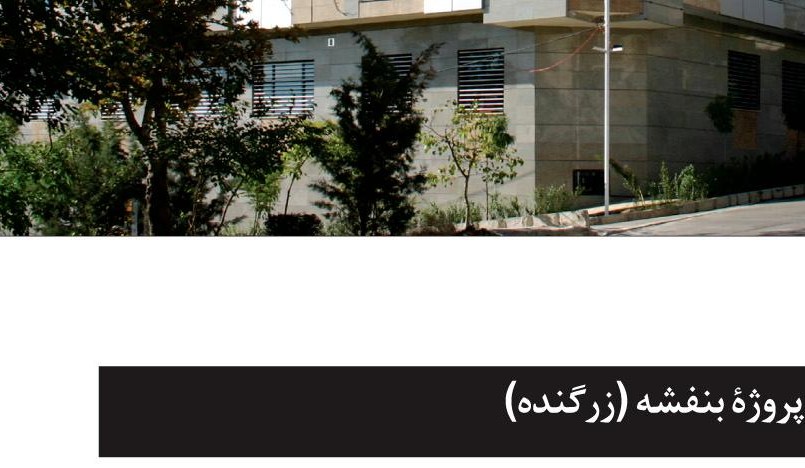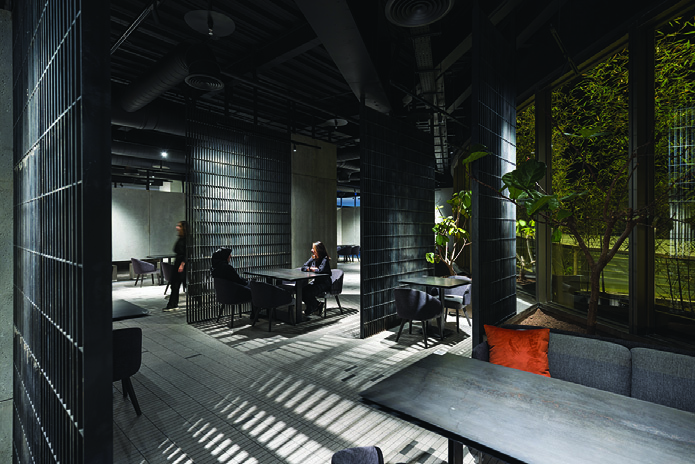
It seems that in recent years a current has taken shape in residential construction in which signs of the raising of building standards are apparent. Although this current is basically active in the private sector, and its audience and customers are the middle to well-to-do classes, it is hoped that the shaping of a kind of architecture with identity and professional standing will in the end bear fruit in the field of low-cost mass housing for the lower-income classes too. Memar has put the following four questions to a number of those involved in projects of this kind:
1. It is said that construction in Tehran has been stagnant for some time. When we speak of the stagnation of construction, how has the rate of return on investment in this field changed compared with past years, and what factors do you consider effective in the fall in investment? 2. It seems that the Bam earthquake and the recent northern earthquake, whose effect was well felt in Tehran too, have turned the attention of well-off building buyers toward certain technical standards of construction, including structural design and resistance to earthquakes. What is your answer on this? 3. In recent years a current has taken shape in residential construction in which investors, in collaboration with well-known architects, seek to offer better buildings in terms of technical standards, and some architects and engineers have sought, through partnership investment, to attain better quality; what is your assessment of this? 4. The result of this current, although it enjoys acceptable building quality, is also among the most expensive. It is said that about 70 per cent of the cost of each construction must be paid at the outset; we would ask you to present, for Memar's readers, an analysis of the price of these buildings.
Al-Naz Complex
Project designer: Faramarz Sharifi. Design team: Mehran Parnian, Parviz Sadeghi, Abbas Momeni, Niku Samak. Execution management: Hassan Tajeddin and associates. Calculations: Hamed Sharifi. Mechanical services: Farhad Nafisi. Electrical services: Amir-Hossein Javadi.
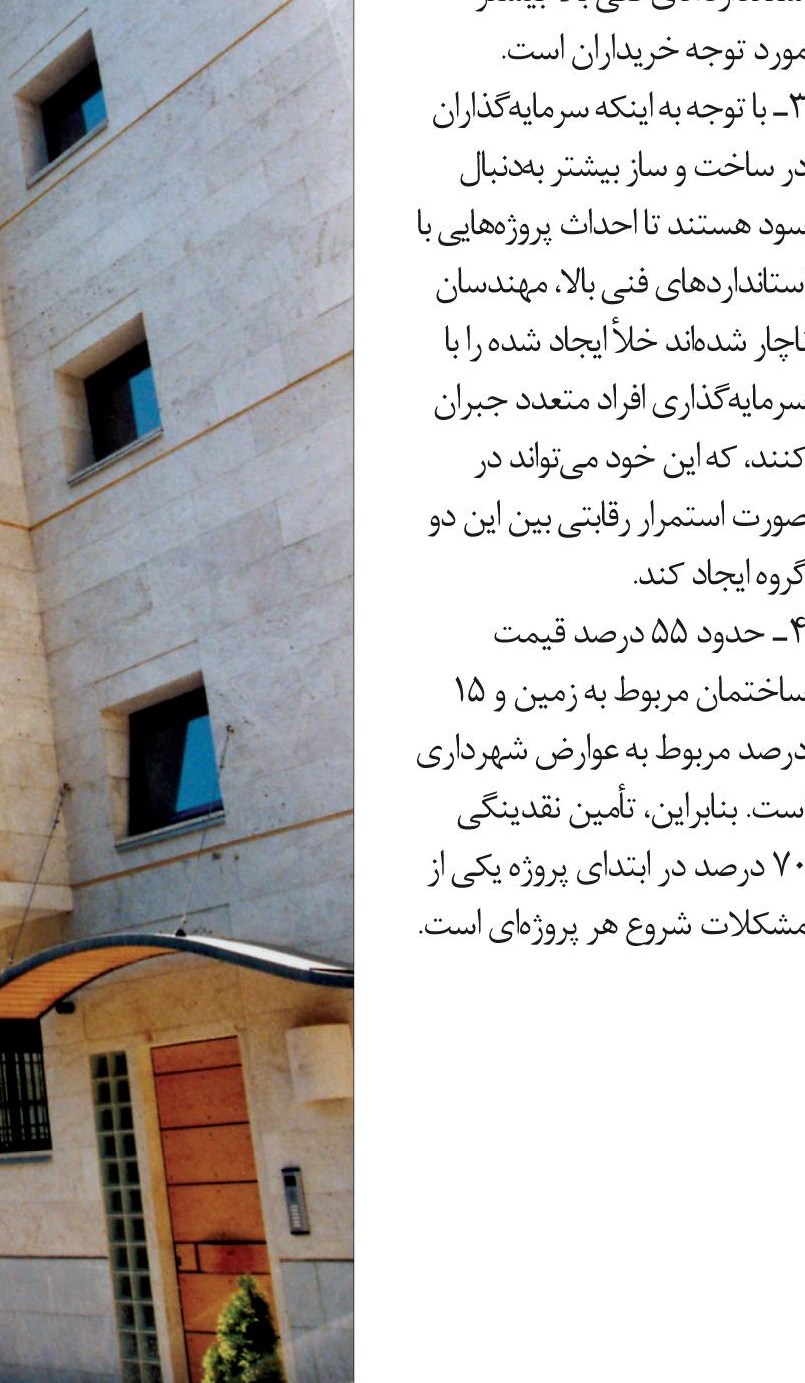
1. Owing to the rise in land prices, the several-fold rise in municipal charges, and the fluctuation in building-material prices, the finished cost of a built unit has risen markedly compared with the past. This price rise has affected the stagnation of construction; the rapid rise in prices and the lack of buying have created conditions of instability in construction, and some builders who have commitments have been unable to complete their projects. 2. Factors such as earthquakes have to some extent affected the stagnation of construction, while at the same time, because of the greater supply — since the buyer has more choice — buildings built to high technical standards attract more attention from buyers. 3. Since investors in construction seek more profit, they have been forced to make up the vacuum created through the investment of multiple people, which, if it continues, can itself create competition between these two groups. 4. About 55 per cent of the price of the building relates to land and 15 per cent to municipal charges; thus providing 70 per cent of the liquidity at the start of the project is one of the problems of beginning any project.
Behdad Residential Complex
Client: 12 partners (construction partnership). Structure: Shahram Mirsaeedi. Services: Abdollah Movahhedi. Supervision and execution: Shahriar Ghadimi.
1. Stagnation in the building industry is not confined to Tehran and covers almost all cities, or at least all the large cities of Iran, but is more noticeable in Tehran. Generally, in Iran, the building question is subject to wandering capital that periodically turns to one of the money-making categories. The profit from this economic activity reached, in some cases, as much as about 250 per cent in past years, and has now, depending on the case, fallen to about 15 to 50 per cent. 2. I have experienced personally that, despite the fear of earthquakes — which logically ought to lead the consumer to standard construction — in practice no such thing has happened, and consumers in general chase the cheapness of the building and its ostentatious appearances. 3. I do not know how long the specialists can sit and watch as our cities — which ought to have been built by architect and urban-planner engineers — are in practice shaped by land-grabbers and unqualified speculative builders. Now we wish to gain a meagre part of our professional share in society, and success in gaining even this meagre share depends on the awareness of the people and of the members of society.
4. At present, the share of municipal charges, of land, and of the city's public services (electricity, water, gas, sewage, and telephone) rises day by day. In the current situation the proportion of costs is roughly as follows: first, land, about 50 per cent; second, the municipality (density purchase, charges, and so on), about 20 to 25 per cent; third, construction — including the fees of the architect, designer, structural engineer, electrical and mechanical engineers, supervisor, executor, building materials, and construction operations — about 25 per cent; fourth, miscellaneous costs including registration, water, electricity, gas, telephone, and sewage, about 5 per cent. Moreover, in the above proportion, the location and district of the building have a great effect on the first item (that is, the land price); yet we see that the consumer and buyer usually prefer a building of worse quality in a more fashionable, better-known district to a better-quality building in an unknown one. In other words, they would rather, say, die in an earthquake in a well-named district than survive in an unknown one; and they most willingly pay for the money, brand, and prestige of their district, and are unwilling to pay part of that same money for the quality of the building.
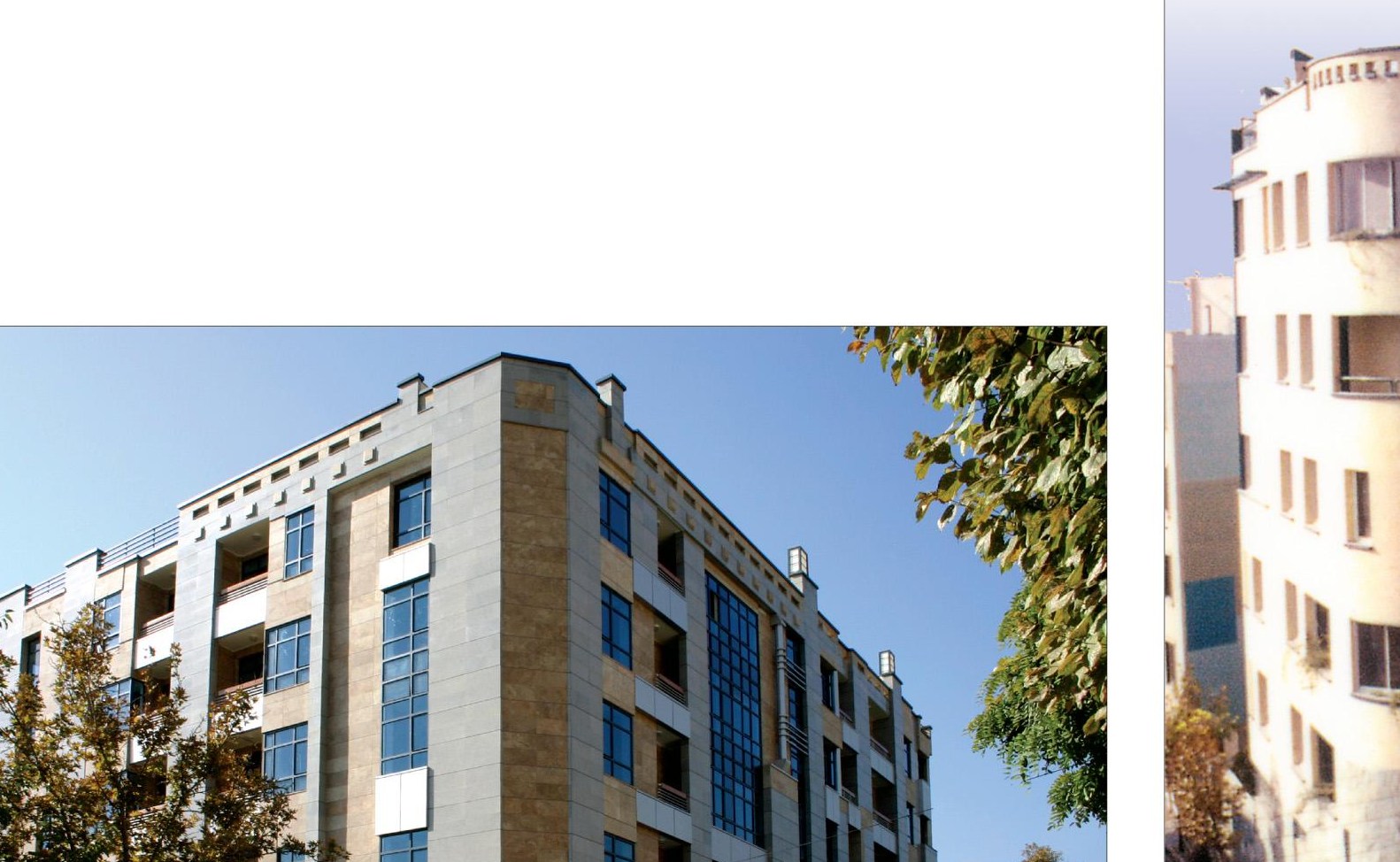
Banafsheh Project (Zargandeh)
Client and executor: Mehdi Soltan Mohammadi and partners. Architectural designer: Behrouz Nemati. Services designer: Arash Kheirkhah. Project manager: Kamran Salehi. Site manager: Reza Aryai.
1. Profitability has fallen to half of what it was in the year 1380, for the following reasons: the over-supply of residential units in the years 1381 and 1382 relative to effective demand; the considerable rise in the price of inputs, including statutory charges, the municipal density rate, building materials, and production cost; and the lack of growth in the income level of potential housing buyers. 2. It does not seem possible to find a cause-and-effect relation between the recent earthquakes and the housing stagnation in Iranian cities — save superficially and in the building drawings — but the executors use this point as an effective factor for marketing. 3. The rise in buyers' expectations has led housing builders to pay more attention to the quality of design and execution in the architectural, structural, and services dimensions and to good materials, and this will increase in the period of stagnation; thus this stagnation can itself be counted an advantage for raising building quality. 4. The proportion of costs in different parts of the city is not the same, depending on quality, the number of storeys, the dimensions of the land, the number of units, and the municipal district. It must be borne in mind that the cost of land and charges is paid at the start of the project and the construction costs gradually over the course of the project. If we convert all the costs to their present value, one can say that formerly, for a mid-range building, the land share made up about one half and the construction cost the other half of the price; but from the year 1380 onward, with the rise in charges and density costs, the sellers' profit margin has fallen from one third to one fifth.