Carlo Scarpa
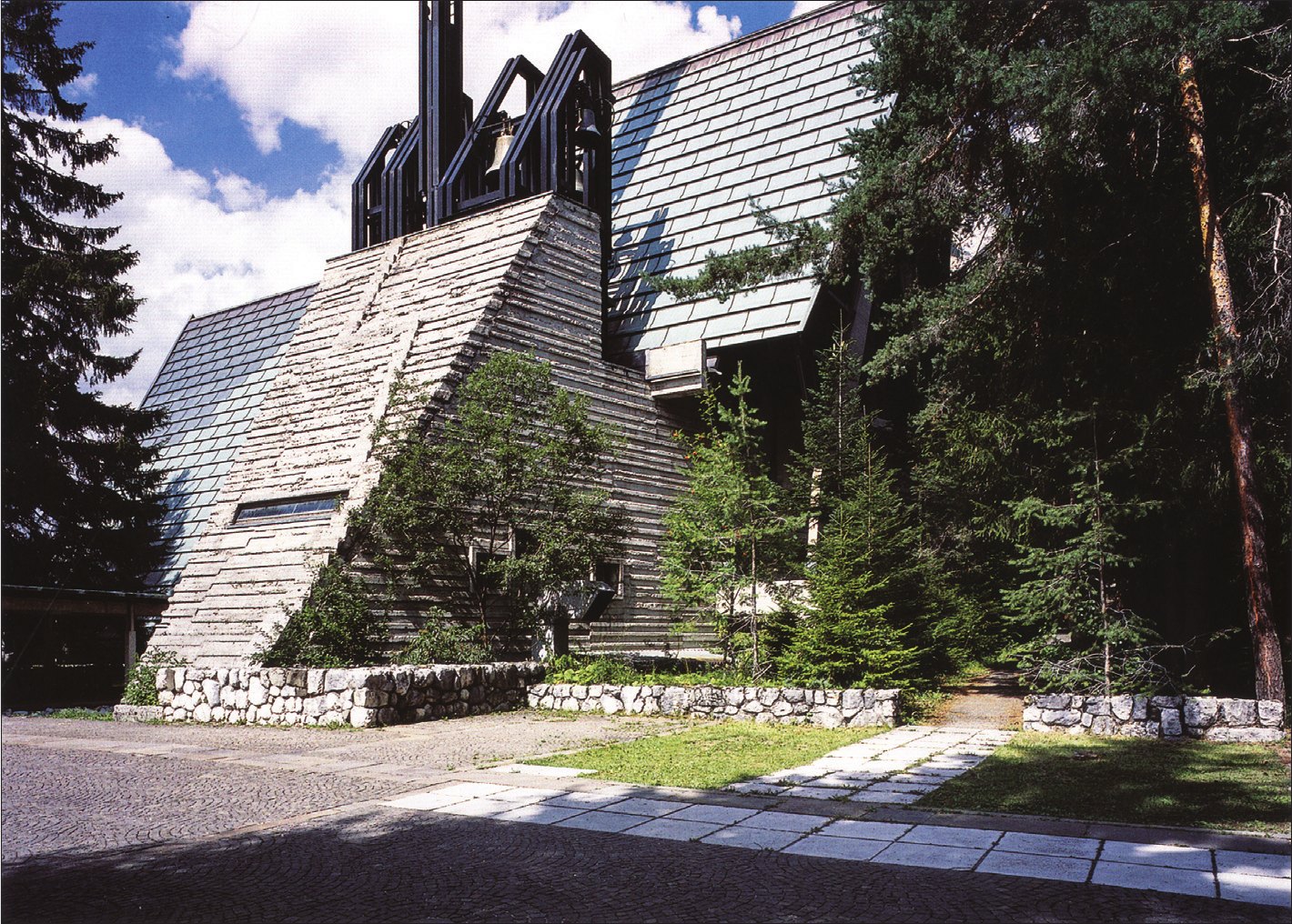
The idea of building a large mountain village at Corte di Cadore, in the heart of the Dolomites1, not far from Cortina2, was first put forward in 1954 by Enrico Mattei3, then president of ENI (the Italian national hydrocarbons company). Work began the same year, with Edoardo Gellner4 setting about assessing a number of Alpine areas to build the new tourist centre in the most suitable place. Two years later the programme was drawn up to precise specifications, including the building of separate residences and several service buildings, among them some hotels, a holiday camp, a community centre and a church. Building this complex was a unique professional opportunity for Gellner. The gradual construction of the various parts made it possible for Gellner to be fully involved in studying and building each particular architectural response.
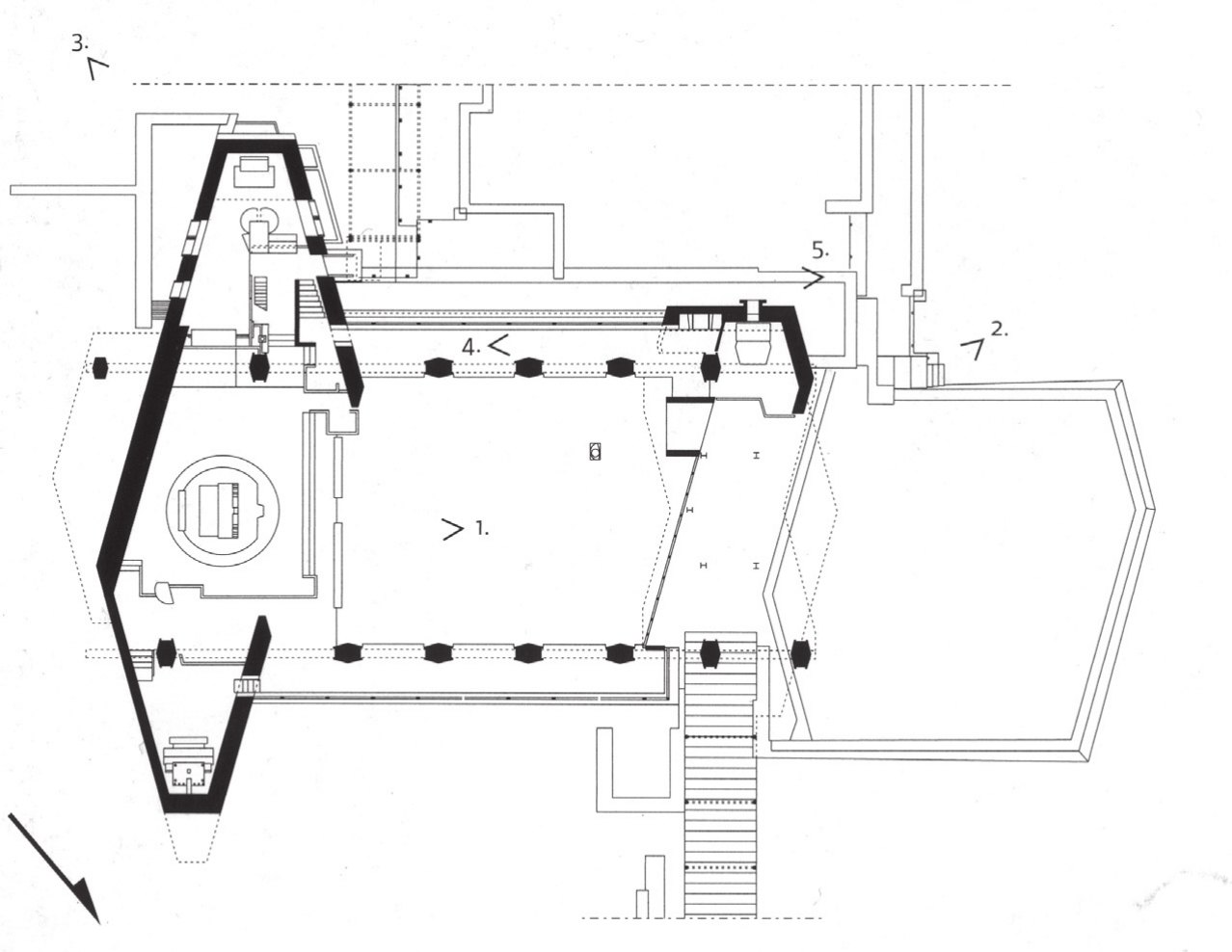
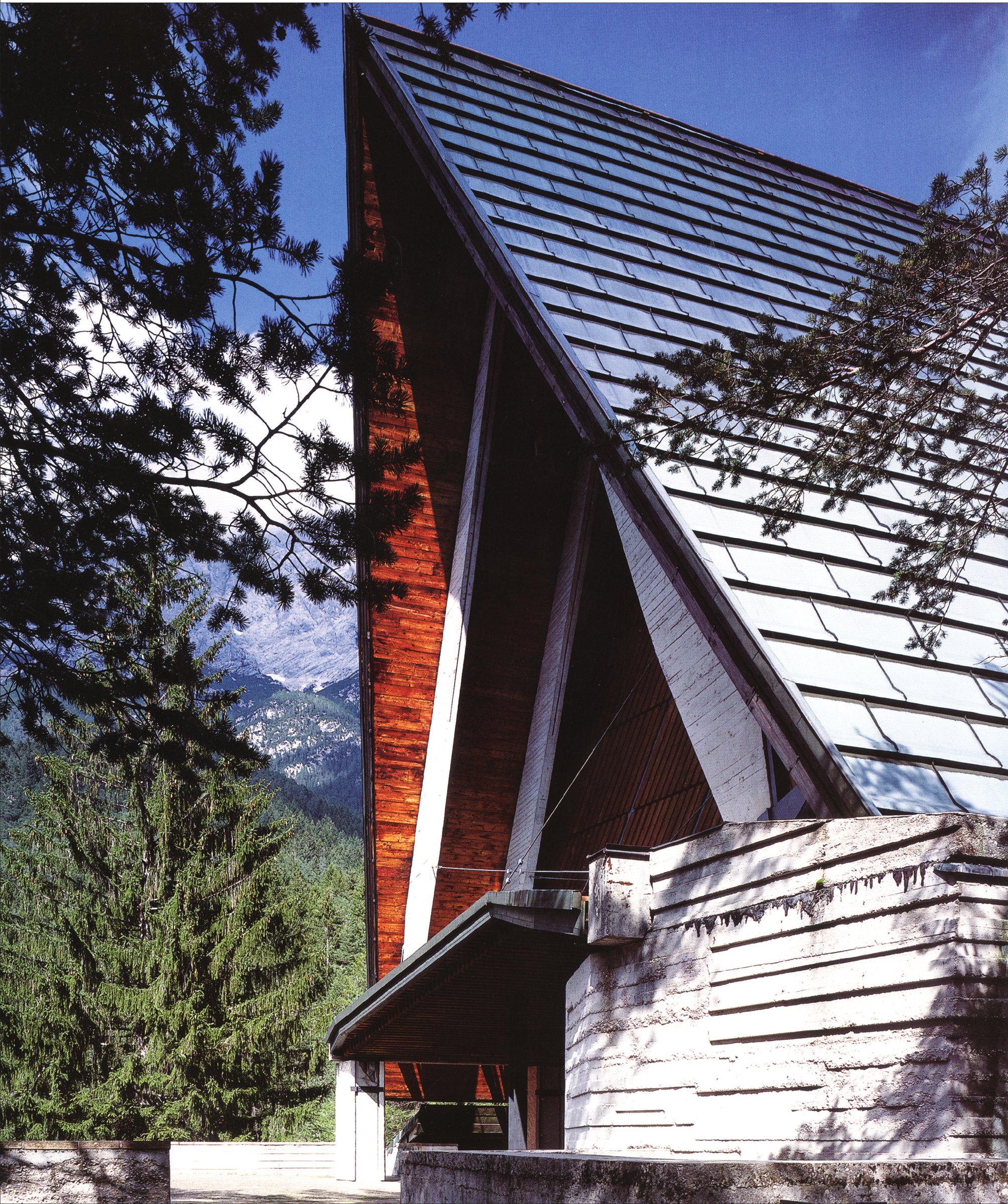
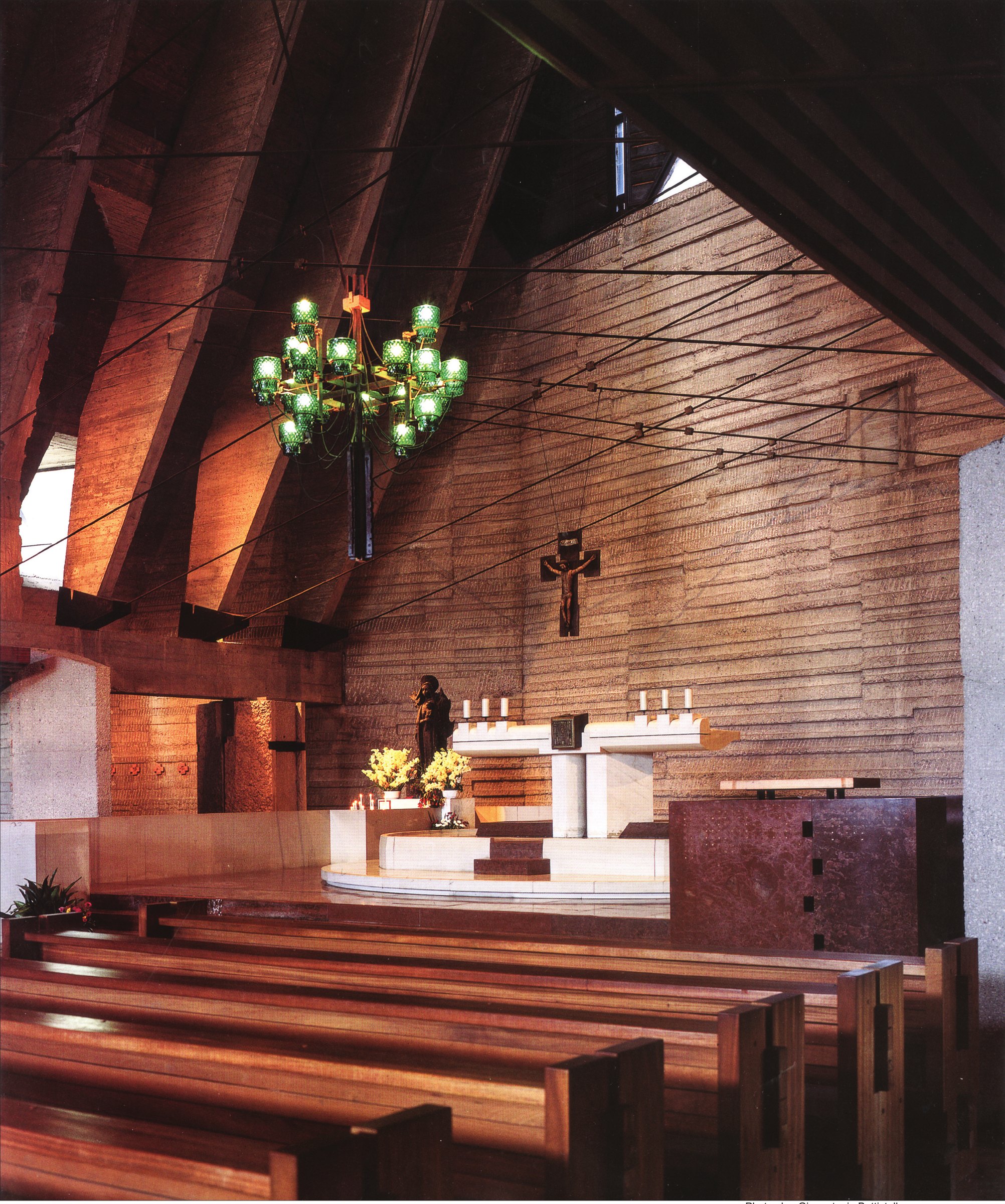
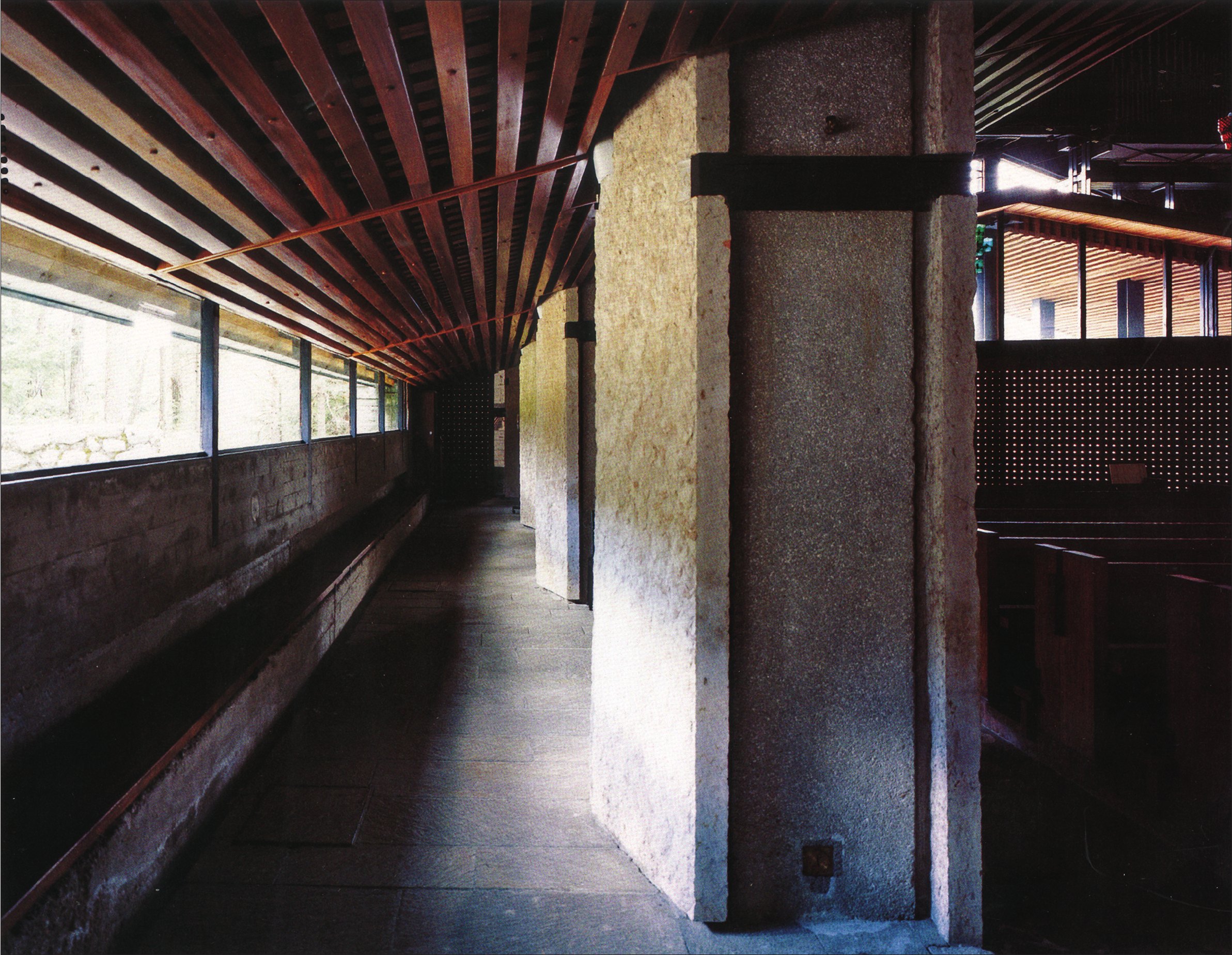
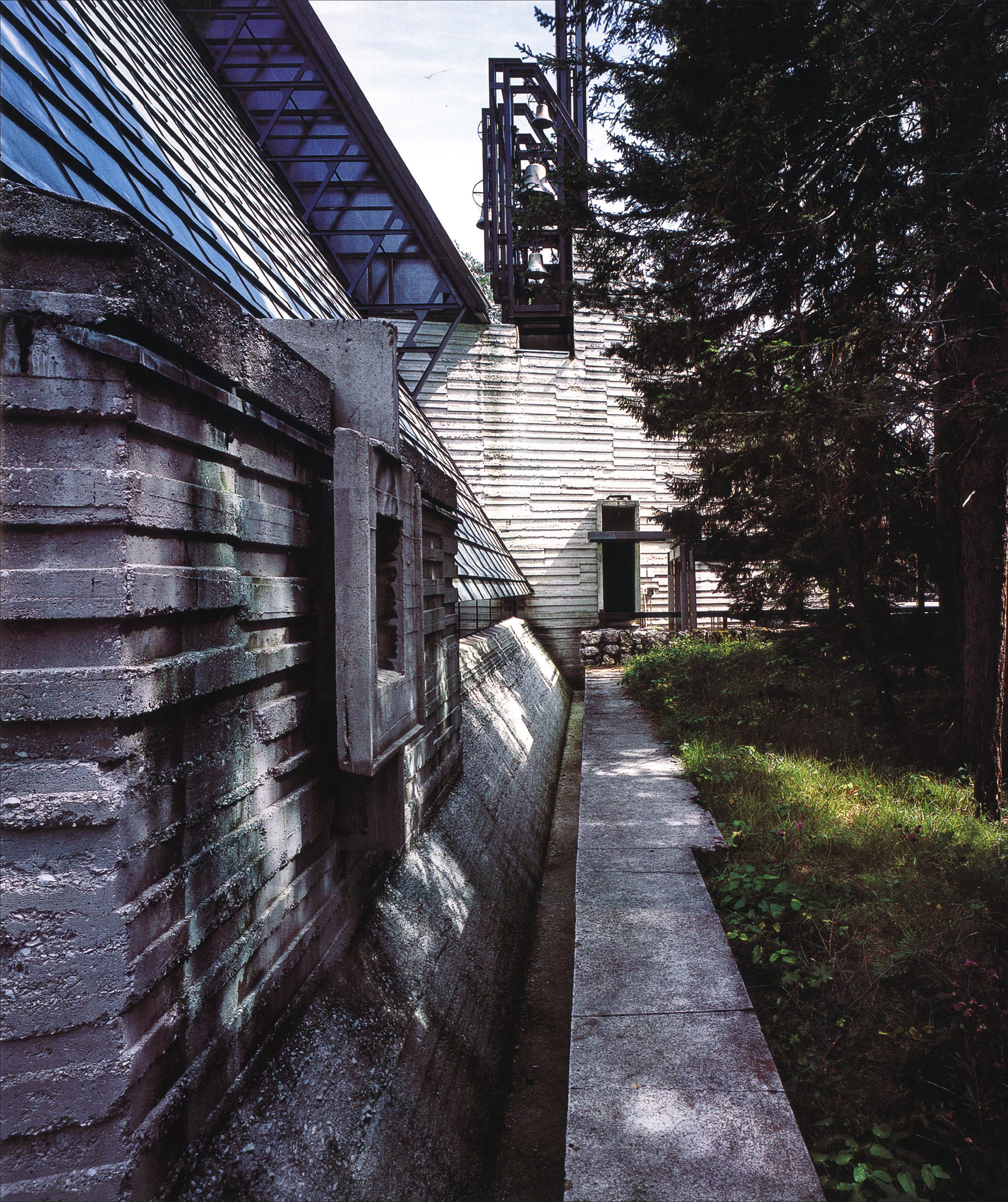
Gellner's collaboration with Scarpa on the design of the church began in 1956, at Gellner's suggestion. The two architects had in fact never worked together, but their friendship went back to the 1940s, when, at the university institute of architecture in Venice, Gellner and Scarpa were student and teacher respectively. By the time the Venetian architect arrived, the site and the main features of the church had been settled: set on a wooded hill, with a steeply pitched roof, the building was to be recognised as the visual landmark of the village. The work therefore involved the formal definition of the architectural details, in collaboration with Gellner's studio in Cortina.
Scarpa's thinking about this building, which took the form of a continual exploration of formal motifs drawn from the architecture of Frank Lloyd Wright, is fully evident in many drawings and in Gellner's account. The whole project was designed in one month, and the building was completed in 1961, when Scarpa, out of Gellner's sight, had also become involved in the restoration of the church of San Giovanni Battista5 in Fiorenzuola6.
Footnotes:
1- Dolomites
2- Cortina
3- Enrico Mattei
4- Edoardo Gellner
5- San Giovanni Battista
6- Fiorenzuola
Carlo Scarpa: Architecture and Design