
Bijan Kamouri Moghaddam
Member of the Board of Directors, Iranian Construction Companies Association; Editor of Abadgaran Magazine
The roots of the crisis that has now paralyzed our professional system reach back to very distant years — to the years before the Revolution, and even earlier. Before the Revolution, for certain reasons, and after the Revolution for other reasons, these roots remained hidden. But this concealment did not prevent their growth. Much like cancerous tumors that remain hidden and become manifest only when they bring the living organism to a complete halt.
This crisis emanates from the characteristics of our society's macroeconomy, and its roots are twofold: a single-product economy and a monopolistic government. The phrase “single-product economy” has become a cliché — but it is by no means a cliché concept. It means that by relying on God-given natural resources, we have failed to harness other assets — such as human capital, innovation, and capable management — to shape a dynamic and healthy economy. This single-product economy has had one ultimate master who has seized control of nearly all spheres of activity by virtue of revenues from the sale of a product it considers its own.
The essence of the current crisis is precisely this. A crisis that before the Revolution remained hidden due to the abundance of petrodollars, and after the Revolution due to circumstances arising from the Revolution and the Imposed War. Today, as the price of our single product has declined, its most dangerous dimensions have been revealed. We have now reached a stage where nothing short of every measure will suffice. Actions must be resolute and decisions cohesive and forceful, directed toward restructuring the country's economy — toward escaping the stranglehold of a single-product economy and transforming the manner of government intervention in the economy.
Yet the most grievous harm that the single-product character of the economy and the monopolistic government have inflicted upon our society is this: that over many years we have failed to properly exploit the factors of production — namely capital, labor, and management. We have not accumulated capital; we have had the lowest rate of labor productivity; we have ignored the waste born of mismanagement; we have squandered or left idle our resources. The difficulty lies in harmonizing the deployment of these factors within the framework of a sound and free economy.
The first step toward creating a suitable foundation for the essential changes that have now assumed vital importance is guaranteeing the security of capital. This does not mean guaranteeing profitability and certain return on capital. It means that the government should remove the constraints and obstacles it has placed on capital investment. Capital has its own laws; we cannot impose other laws upon it. If we want investment to take place so that the wheels of the economy turn and employment is created, we cannot prevent the accumulation of capital. This is self-defeating — for then capital simply will not enter the market. This is precisely what has happened today.
During a trip to England, I had the opportunity to visit a British construction company. This firm employed 14,000 people and had an annual turnover of two billion pounds. Its history stretched back to the seventeenth century. I reflected that we cannot find even one example among our own construction companies whose activity has continued across several generations. The fundamental solution to the crisis lies in a redefinition of the economy. In short, our proposals include:
- Not imposing budget deficits on development projects; reviving the construction program rather than halting it
- Prohibiting the entry of government companies into tenders
- Creating a reliable platform for the export of technical and engineering services
- Creating suitable conditions for the participation of public capital in the production of housing and public buildings
- Creating conditions for the establishment of private banks and credit institutions
- Ensuring the participation of professionals in decision-making and the formulation of regulations
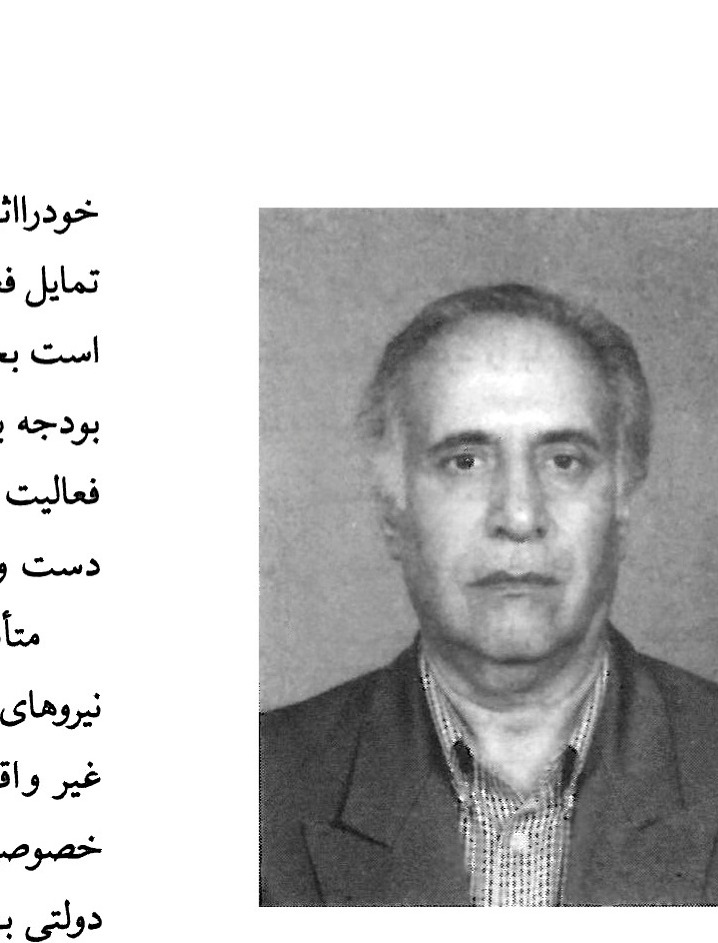
Manouchehr Eghbali
Member of the Board of Directors, Association of Mechanical Installation Companies
With the passage of more than two decades, the experience of the Islamic Republic's approach to economic development has now matured. Both the government sector and the private sector of Iran's economy have their lips still eagerly pressed to the spigots of oil revenue. In confirming the enumerated harms of a single-product economy, there is no doubt. But at the same time, one cannot ignore the important reality that nature has deposited resources in different regions of the world, and the international division of labor cannot be organized without regard to the distribution of these resources.
Today, oil, copper, decorative stones, zinc, lead, turquoise, and certain agricultural products such as saffron and pistachios are among the natural resources of this land. Instead of ignoring all of this, we should seek answers to the question of what factors have weakened the position of Iranian carpets and other Iranian products in international markets, turning crude oil into the main saleable product.
We know that, at least under current conditions, the power of the private sector is not sufficient to organize Iran's economy. The private sector, due to bitter past experiences, lacks self-awareness and self-belief, and therefore takes a short-term view, regarding the quick return of capital as the only viable path. After the Revolution, the goal of reducing the size of government and energizing the economy was emphasized in the First and Second Development Plans. At the same time, emphasis on preventing increased liquidity prevented the realization of genuine privatization. Speculation companies were a specific phenomenon of such conditions, which collapsed following state intervention, taking with them a portion of private capital.
The real solution lies in strengthening the private sector and creating appropriate mechanisms for its operation — contingent, first and foremost, upon a completely clear and unchanging definition of capital security in Iran's economy. The economy of Iran has peculiar characteristics and, despite having advanced sectors, is overall backward. In such an economy, does it make sense to speak of competition — which requires a market and a particular order? Banks are state-owned, functioning as government receipts and disbursement offices. Tax laws, customs regulations, and credit rules are all arranged to the detriment of the private sector. Changing these laws is among the prerequisites for any transformation in the country's economic structure.
In summary, the economic normalization of Iran depends upon deepening the understanding of the single-product economy, reducing government control, expanding privatization and competition, and reforming financial laws and regulations. This requires a systemic approach to the country's material capabilities, the transfer of profitable state industries to the private sector, the development of guarantee mechanisms for capital security, establishing quality control foundations for services, reviewing the labor law, and creating expert institutions for the export of engineering services.
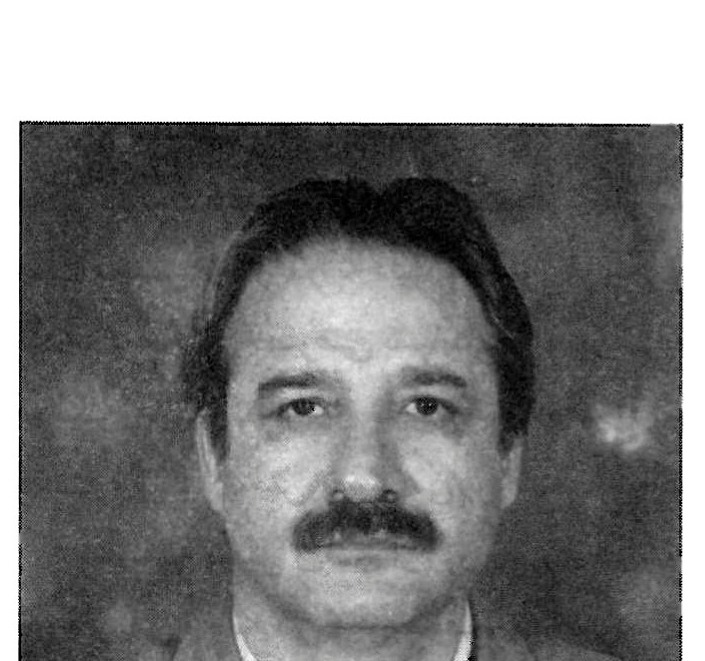
Parviz Khakpour
Chairman of the Board, Professional Association of Consulting Architects and Urban Planners
In debates concerning the crisis prevailing over consulting and contracting activities — which has recently intensified and become the subject of the day — topics such as the single-product economy, government monopolistic management, state companies, privatization, credit institutions, competition, financial difficulties, and the labor law are proposed, sometimes without regard to existing realities and mechanisms.
Unfortunately, a large portion of the energy and effort of both the government and the country's technical and engineering forces have been spent on fictitious privatization and the creation of companies that are neither private nor public. These companies have benefited from extensive government facilities, yet if their performance is compared with the actual private sector and their real costs are taken into account, they have not been successful.
We genuinely do not believe that the government should spend the oil budget on development project expenditures. The country's capital investment should be covered by the people themselves. But the realization of this depends on giving the people sufficient value and guaranteeing capital security for those within the country and for Iranians abroad who are poised for investment. The cumbersome laws and restrictions — including the Labor Law — are not only obstacles to public participation in domestic investment but have also become barriers to the export of engineering services.
The lack of trust in the private sector has prevented us from utilizing our engineering capacity in surrounding and neighboring countries. As a result, the Turks have taken our place. If these conditions continue, the situation will become much more dire. The widespread unemployment whose signs have already appeared can create unforeseeable problems. In our country, construction is still the mother industry, and cutting development budgets means rendering a significant portion of the country's workforce idle.
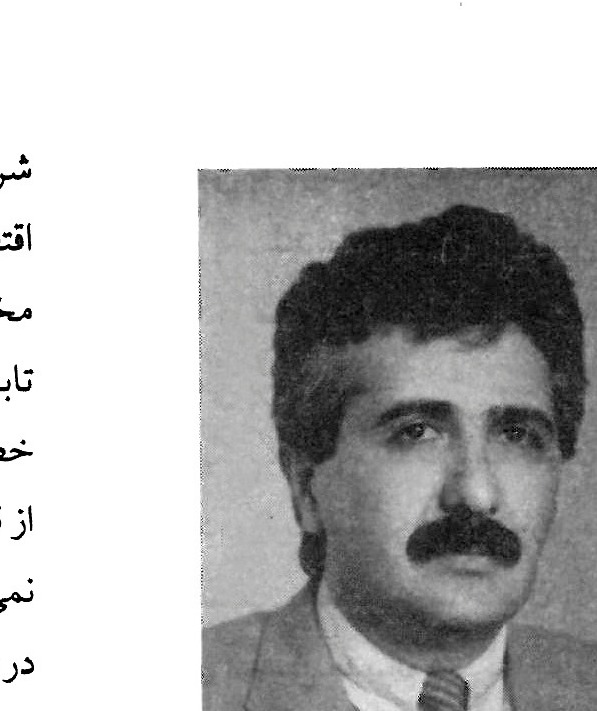
Kavosh Shahinfar
Member of the Board of Directors, Professional Association of Consulting Architects and Urban Planners
In our view, this crisis has been created by factors for which no remedy is currently within our power. Its resolution is contingent upon comprehensive government policymaking. With the decline in oil prices, and consequently the reduction in the government budget and the slashing of development projects, the crisis has assumed alarming dimensions.
For its resolution, there is no remedy other than giving credibility to the private sector, guaranteeing capital security, and preventing the activities of state and semi-state entities that, by benefiting from privileges such as non-payment of taxes and the use of government subsidies, deprive private companies of the ability to compete. Were these conditions realized, the crisis would resolve itself: capital would flow into the construction sector — one of the most profitable fields — creating widespread employment, and in its wake, construction industries would be activated.
Existing laws — which have grown ever more complex through various clauses, resolutions, and bylaws — are the fundamental obstacle. The definitions of free economy, private sector, and government have been distorted. The Mostazafan Foundation and its subsidiary companies, which are by no means private, are considered the “private sector,” while they follow none of the rules and mechanisms of the private sector: they pay no taxes, their real costs are not reflected in profit and loss statements. But the genuine private sector, which must pay taxes and meticulously calculate profit and loss every month, confronts all manner of obstacles.
The mechanisms of government organizations overseeing development projects — the so-called executive managers who, by virtue of government authority, possess unlimited power to impose unfair contracts, delay the approval of designs and payment of fees, and create labyrinthine regulations that require an interpreter and a fortune-teller to decipher — all constitute part of the problem.
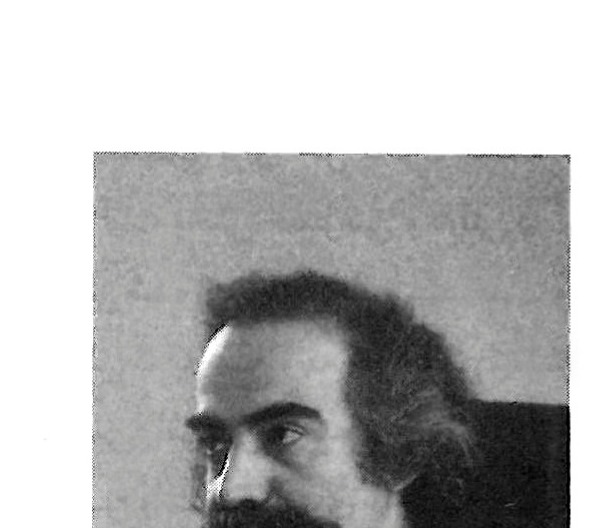
Khosrow Zarnab
Member, Society of Iranian Consulting Engineers
If the crisis became a pretext for the expansion and fruitfulness of thought, that would not be blameworthy but praiseworthy. The perspective that Iranians have developed throughout their tumultuous history has made possible the attainment of a fundamental guiding principle — one that has grown stronger in proportion to proximity to its source.
This inward-looking culture, in its finest manifestation, defines “architecture” and carries a valuable teaching: the “inward gaze.” From this perspective, many engineering professional organizations have lost their way. In the valley of daily routines, seeking a solution to the crisis leads astray. Our path and our work is to think and to devise new plans, to open the doors of the profession to the public and non-governmental resources, and to establish engineering relationships with them.
The key to such a presence in the age of participation is “independence.” Professional societies must be independent — pursuing their own strategic and structural recovery and organizational restructuring. With two examples from “laws and organizations” in the professional associations, this dependence becomes clear: in the Building Engineering System, the law allows the Ministry of Housing and Urban Development to exercise control; in the Association of Technical-Executive Managers, responsibility for drafting standards has been assumed through a government contract. These examples illustrate the deep-rooted dependence of professional associations on the government.
Our task is to say how to create conditions in which ideas flourish. Just as research holds foremost necessity and value in growth and development, engineering professional associations must first articulate the place of research within their own system and then give it methodological structure. Speaking with the people, articulating societal needs for valuable engineering structures, attracting them to collaboration and investment — all these are strategies that can be pursued. But ideas must first be freed from dependence. Then solutions will reveal themselves.
From the Perspective of the Society of Iranian Consulting Engineers
A summary of problems and proposals for resolving the crisis facing consulting engineering firms
Expansion of State-Owned and Privatized Companies
Despite the emphasis of the First and Second Development Plans on expanding private sector activities and reducing state companies, in practice: existing state companies expanded rather than contracting; new state companies were formed in connection with various ministries, with massive capital and interest-free government loans; municipalities, universities, the armed forces, and foundations were encouraged to form consulting or contracting companies. In total, approximately 200 companies were formed by the Ministry of Energy and Housing, 80 by the armed forces, and hundreds more by municipalities, universities, banks, and foundations.
Fair Contracts
One of the important problems of consultants is the unfairness of the standard-type contracts issued by the Plan and Budget Organization. Consulting firms are required to fulfill their contractual obligations, but clients bear no obligation regarding proper compliance or timely payment. Delays of one or two years in payment of approved invoices by government clients are common. Fair yet binding contracts should be drafted so that both parties are obligated to fulfill all terms, with compensation for delayed payments and realistic timelines established.
Banking Facilities
For more than a decade, banking issues have been raised with no results. When assessing a consulting firm's credit, only its initial capital and marketable assets are considered — the true value of services and contractual operations is not evaluated. A bakery has far more credit than a consulting firm responsible for designing dams and ports at a cost of billions of rials. Minimum operating credit and contract-based credit lines should be established.
On-the-Job Training
In industrially advanced countries, training classes are regularly organized for development project stakeholders. In Iran, the approach to work matters depends entirely on the personal viewpoints of individual managers. Training classes should be organized every six months for government executives and managers, covering the fair interpretation and execution of contracts, regulations, and payment procedures.
Customs Clearance of Technical Equipment
Customs regulations, prepared primarily for factory products, have created numerous obstacles to the transfer of advanced technology. The various deposits and guarantees required for clearance sometimes exceed the cost of the equipment itself. Temporary clearance procedures should be streamlined, and an annual allocation of foreign exchange for technology transfer should be provided.

Sohrab Mashhoudi
Head of Urban Planning Group, Society of Iranian Consulting Engineers
The shortage of funding, the reduction of projects, non-compliance with contract provisions, the absence of a grievance authority, and the one-sidedness of contracts are the principal problems of urban planning contracts, which require fundamental reform of the technical and executive system.
In the drafting of the Type 12 contract, a one-to-two-month review and approval period was envisioned, and fees were determined on this basis. Under the terms of the contracts, the consultant is only obligated to obtain the client's approval of the consultancy services; the approval of the plan itself in the High Council is the responsibility of the client. But this is not what happens. Plans are reviewed in a seven-step process through provincial housing organizations, technical committees, urban planning councils, and finally the High Urban Planning and Architecture Council — yet legally, only the High Council has approval authority.
Urban planning confronts consultants with numerous and even crippling difficulties. In one case, a city gas office demanded 130 percent of the entire project fee simply to deliver gas pipeline route maps. In a joint meeting, it was revealed that the Statistics Center's annual revenue from sales was only 20 million tomans against three billion tomans in costs.
Non-compliance with contract provisions by clients, the absence of oversight of plan implementation despite contractual provisions, failure to prepare detailed urban design plans, and the commercialization of statistical data by the Statistics Center — all contribute to the crisis facing urban planning consultants.
Shahrzad Mahmoudi
Urban Planner and Consultant
Perhaps one positive side effect of the economic recession is the reduction in pressure from hasty and ill-considered construction, creating an opportunity for reflection. In recession conditions, thoughtful and measured plans are prepared that can be implemented when prosperity returns.
But we are currently mired in recession even in the realm of designing plans and programs, and the main reason is disbelief in the effectiveness of plans. Consultants and clients share in this disbelief, but each accuses the other of ineffectiveness.
Shortcomings of Plans
If a logical relationship is not established between the problems a plan seeks to address and its proposed concepts, ideas, and solutions, the plan will not succeed at the implementation stage. This logical relationship takes shape when the question or main problem is correctly defined — a task that is the responsibility of the client and arises from the needs and desires of end-users.
To offer a glimpse of a rational process, the City of Los Angeles, for its downtown strategic plan (1995–2020), formed a citizens' advisory committee of representatives from private businesses, property owners, historic preservation societies, developers, advocates for the homeless, housing applicants, and social service providers to lay the foundation for a 25-year development policy. A multi-disciplinary consulting team was invited, and through intensive working sessions, divergent viewpoints converged toward consensus on key planning issues.
Scope of Services
The scope of services is either set forth in rigid standard-type contracts or left entirely to the consultant — both approaches are problematic. In advanced countries, two things are valued above item-by-item execution: first, the deliverables with predetermined specifications and emphasis on internal coherence; and second, the compatibility of study methodology with the plan's objectives. This simultaneously guarantees implementability and the comprehensiveness of deliverables.
Client Responsibilities
Clients must carry out essential investigations before entrusting work to a consultant. For development projects, legal foundations must be clear, the plan's position in the hierarchy of plans determined, relationships with other plans studied, and the client's authority examined. The client must also consider economic and social transformations, assess political sensitivities, and think ahead about financial resource estimates.
Therefore, respecting and observing the boundaries between the duties and responsibilities of the consultant and the client contributes to the proper and beneficial progress of plans and to building trust in them; conversely, blurring these boundaries damages mutual trust.
Mohammad Reza Zariovi
Engineer and Industrial Development Analyst
The unemployment and underemployment prevailing over the country's engineering community indicates that the capacity of our economy to absorb intellectual manpower is meager — a matter that is deeply alarming from the standpoint of industrial development. Industrial development is simply not possible except through increasing the share of knowledge and thought in the production and distribution of goods and services.
Our country, despite having received hundreds of billions of dollars in oil revenue, is by no means among those countries where capital scarcity is the primary cause of economic stagnation. No indicator more eloquently illustrates this point than the open and hidden unemployment of engineers who have all studied at universities and are all needed for service in the country's essential sectors — yet find no opportunity to serve.
Today's unemployment of engineers is, in a remarkably ironic way, the direct result of the severe shortage of engineers and the dramatic increase in their income in previous decades. Because we had so few engineers and specialists, we never learned to make extensive use of them. We shaped the nature and quality of work based on the small number of engineers and have now established norms accordingly. And today, when we have abundant educated and engineering manpower, we do not know how to deploy them.
We have not been aware of the depth of the complex software systems necessary for industrial productivity that have evolved in the West over hundreds of years. We attributed the cause of the West's industrial progress to tools and techniques, whereas the true cause was not the invention of machines but rather a new way of using people — organization and management — something for which we have placed the lowest value in our efforts to emulate.
Ebtehaj then catalogued a series of projects undertaken without adequate study — dams built without irrigation canals, without soil conservation, without drainage; factories built in the wrong location; a steelworks whose ore supply would last only four years. Four decades later, the same mistakes are being repeated on an even larger scale: highways built without geotechnical or environmental studies, urban renewal projects launched without feasibility analysis, a metro whose stations are tiled while there is no rail system.
The Place of Engineers in Design
It is not only in feasibility studies that we cannot bring intellectual forces together. In all design work, the place of engineering is vacant. The plans of many of our projects are at the level of preliminary, non-executable drawings. In industrial countries, even a simple street repaving requires precise surveying, utility mapping, detailed design to centimeter accuracy, and comprehensive construction documents — all done by engineers in offices. In our cities, engineers are usually not employed for such work, and no plans are prepared. The work is designed on the spot during execution.
The Place of Engineers in Execution
Few are the contractors who have well-equipped technical offices, who conduct genuine planning for site mobilization, prepare proper shop drawings, evaluate various execution methods, and keep documents and drawings current. In most contracting firms, the site develops in an unthinking, unplanned manner. Estimates are approximate and imprecise. Work methods are determined by workers in haste during execution.
Without creating organizational and managerial systems, increasing the share of thought in engineering services will not be possible. We must learn from countries that have managed to increase the share of intellectual manpower in their industries. The difficulty is that such learning is not as simple as acquiring theoretical knowledge. For the export of engineering services, we first need to promote new engineering practices in our own country. Exporting engineering services differs fundamentally from exporting engineers. Without a dramatic increase in the share of thought in the construction industry, our success in exporting engineering services seems very remote.
References:
1. Memoirs of Abolhasan Ebtehaj, Volume Two, First Edition, Elmi Publications, Tehran 1371 (1992), pp. 761–3.
2. Eisner, Simon, Arthur Gallion, Stanley Eisner, The Urban Pattern, Sixth Edition, Van Nostrand Reinhold, 1993.
3. Hall, Peter, “Planning and Urban Design in the 1990s,” Urban Design, Issue 56, October 1995.
4. Rowland, Jon, “Urban Design Process,” Urban Design, October 1995.



