Criticism of Architecture in Iran
Adolf Loos Exhibition in Tehran, January 2008
We generally recognize our age by important discoveries, inventions, and achievements in human rights as well as by wars, natural catastrophes and crises. Our age is also distinguishable by the objects and spaces of our daily life. They appear in infinitely different shapes, mediums, functions and measures, anyway competing with those of 600 years ago; we immediately notice a certain style which is common in most of the forms that infuse our life.
Flight engines, smooth surfaces, lack of ornaments, cubic forms, composition of geometrical volumes, modular arrangements, multi-level spaces that expertly exploit their function and materiality, forms that express our life style have their origin in the modern movement. And this is well over a hundred years of cumulative experience of form, space and aesthetics.
The modern movement which started at the beginning of the 20th century created the basis for a new attitude toward art, design and architecture. Adolf Loos is one of those. If today we are able to appreciate a simple cylindrical glass, a master house without forced decorations and stucco art, or we prefer a functional bathroom to a decorative and rich one, we particularly owe it to Adolf Loos -- one of the most contradictory and at the same time interesting characters of contemporary architecture.
Loos was an architect and at the same time, a theoretician and designer. He knew four languages: German, English, French and Czech, and among his close friends there were important characters such as Schoenberg, Altenberg, and Karl Kraus. He lived in Vienna between 1870 and 1933 -- in other terms between the unification of Italy and Hitler's rise to power. Adolf Loos was born in Brno, now in the Czech Republic, and was buried in Kalksburg near Vienna, beneath a modest tombstone of his own design.
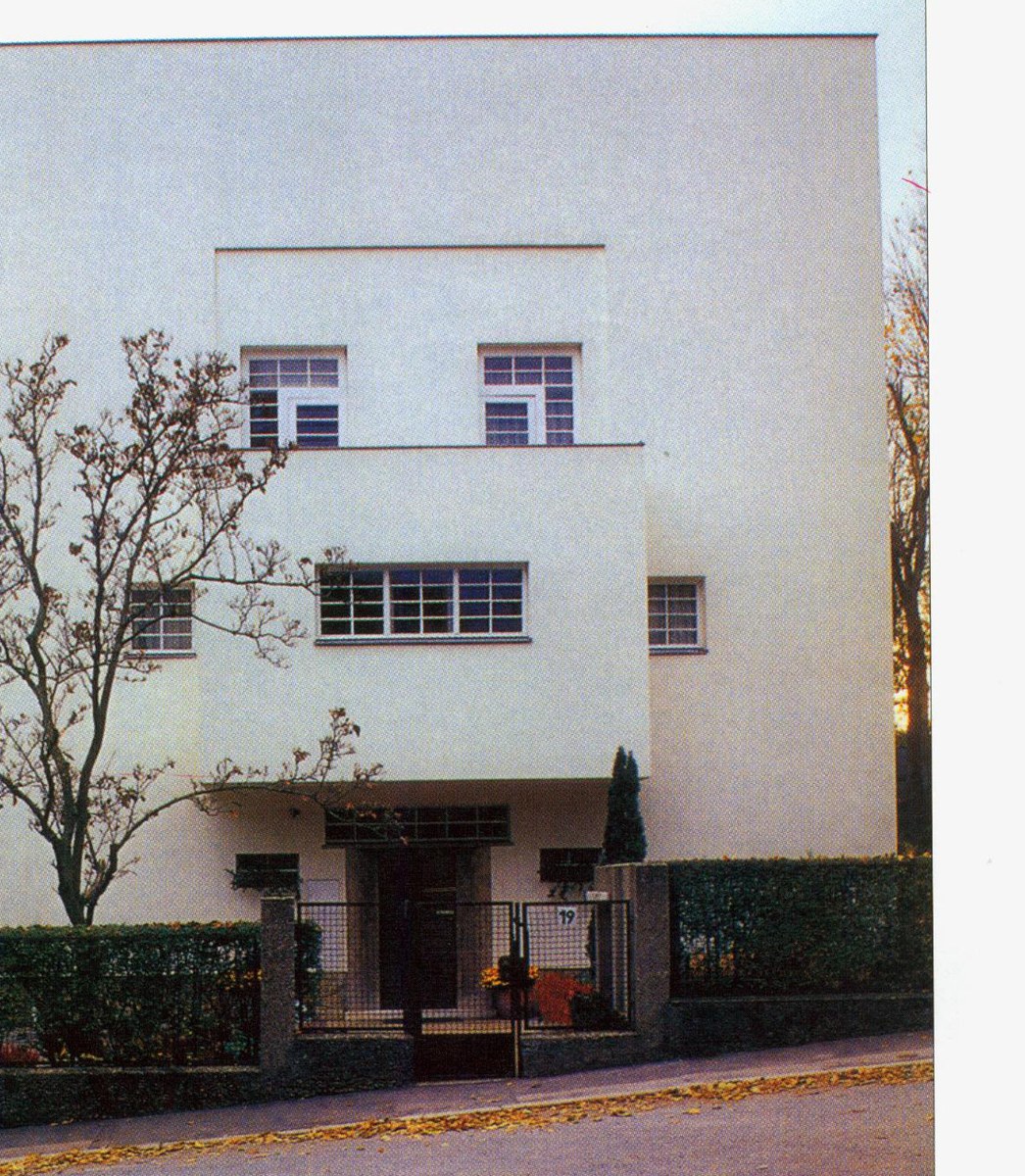
Adolf Loos was a man obsessed with ornaments. Between 1897 and 1931 he wrote at least thirty different essays on the subject of ornament. He criticized use of ornaments as a false embellishment, unless as a sign of the primitive culture or unless born of completely disengaged, functional concepts. These principles created an enormous impact on the designers for the next century, because their seductiveness will depend on fashion and ephemeral taste.
He is still a critical figure. A Pasolini-type inhabitant of New Guinea once said: "The Papuan fills his ornaments and devours them; he is not a criminal. But if a modern person fills ornaments and devours them, he is a criminal." Indeed, Loos is a mirror for a society that is either critical or not. Apparently, any civilization or region that is not prepared to confront Loos's ornament thesis is one that attempts to delight the viewer and to cause an emotional response. Modern architecture does not reject ornamentation for its own sake, but unlike a work of art, which carries meaning in its ornamentation, architecture should not preoccupy or captivate through surface decoration.
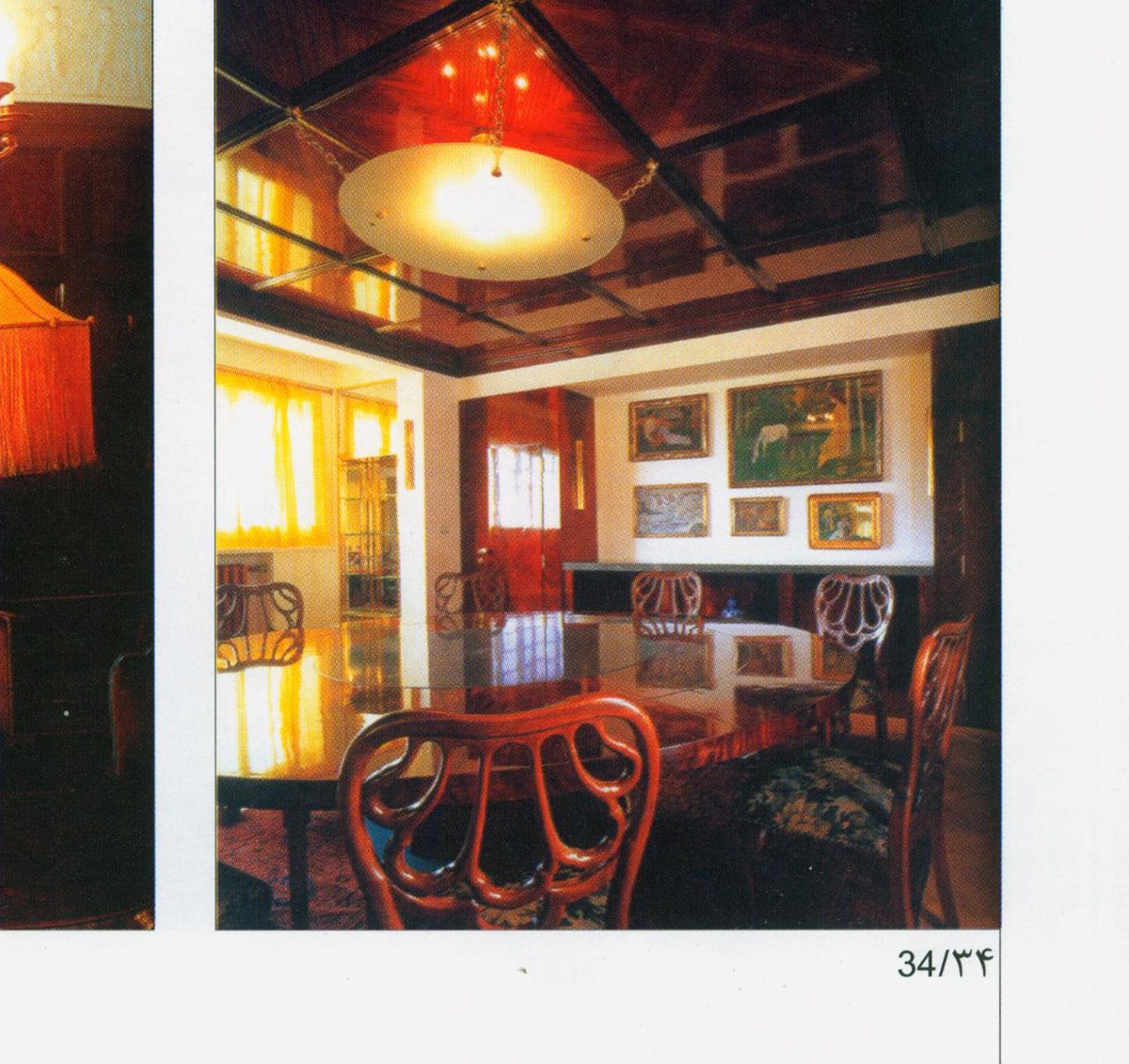
This exhibition at Saadabad Palace in Tehran -- the first of its kind in Iran -- presented Adolf Loos's furniture, interiors, and architectural ideas to an Iranian audience. It was a rare opportunity for Iranian architects and design students to encounter the work of a figure whose radical rejection of ornament shaped the course of modern architecture worldwide, and to reflect on the relevance of these ideas to contemporary Iranian architectural practice.



