We can claim that today we work with a spatial concept different from what the pioneers of the modern movement applied to modern space. Is what we are giving it, in reality, a transformation that in its humanistic essence resembles the Baroque period? With the announcement of nihilism, born from the dismantling of the sense of security that came from utopia?
As a method, along with various individual experiments based upon it, one of the principal driving forces in recent history was essentially a proposal for dismantling the traditional building. Until then, the outer wall and structure, which were inseparably merged in the wall, defined space. A building came into being from the construction of a mass that created a thick, solid appearance around a hollow. This dense, compact surface of the building traced the environment along a typological line. The description of a type of wall and a creative typology in the perimeter line were the most important arenas in which discourse or stylistic distinction manifested itself.
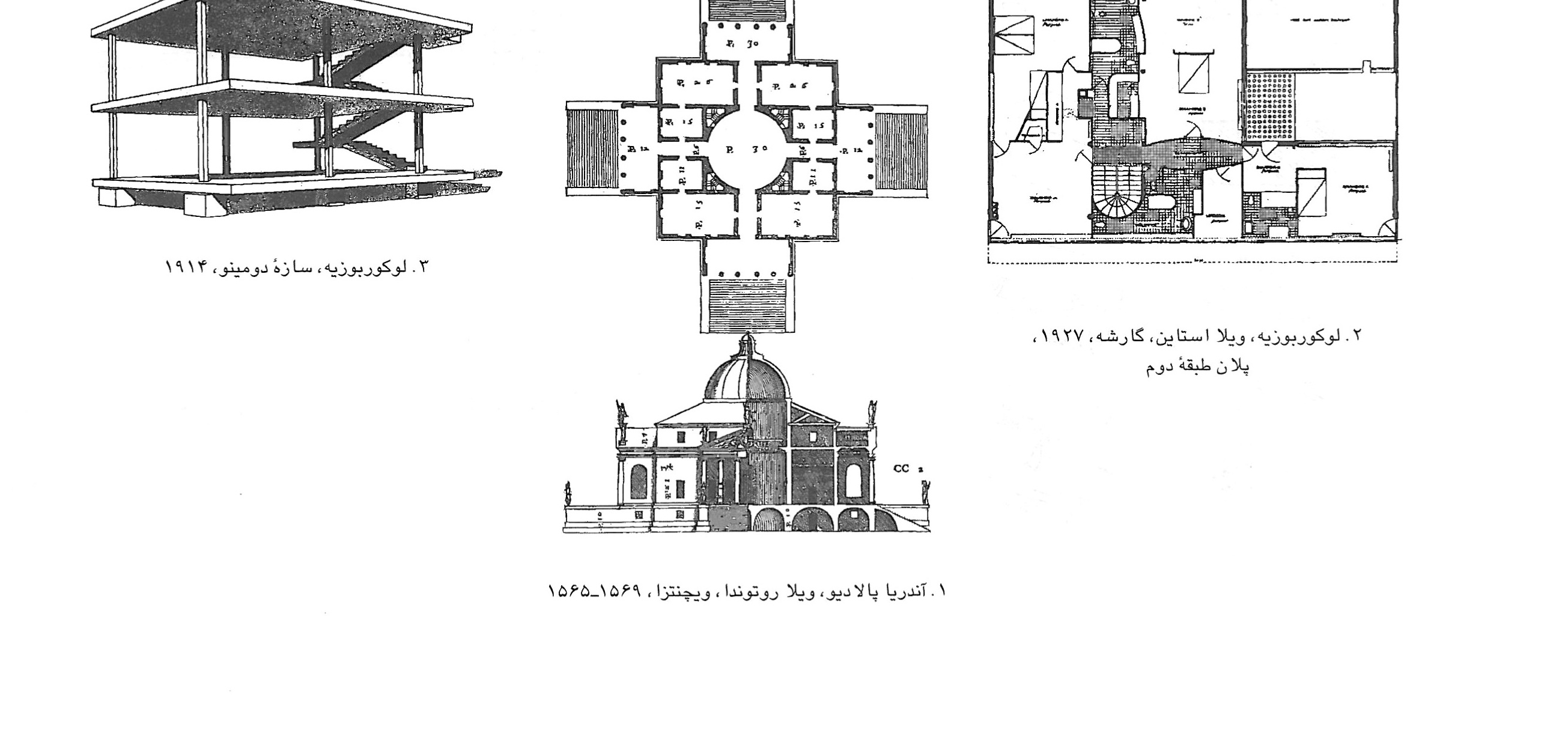
When we look at one of Andrea Palladio's floor plans for a villa, we can clearly see how wall, outer enclosure, and structure come together to create the interior space. The three-part main structure imposed order on the regular hollows — which could be regarded as filled-in voids — and locked them into a single mold along with the idea of casting classical designs onto a surface, a deep facade that became the particular quality of a new feature. The original definition of wall had its true meaning regarding a new architecture: not only did it classify a new structural mass through appropriate classifications for diverse needs, this was the beginning of the theoretical formulation of a new spatial principle that was placed above the formal ambitions of the modern movement.
The discovery of the free plan in the Corbusian sense was perhaps the most outstanding achievement of the modern movement. This spatial and structural innovation was in fact one of the points of rupture from prior architecture. Its framework was correct: this space was by no means entirely his invention. The use of grid structures, the Chicago School, the emergence of reinforced concrete, Cubist experiments, and the search for rules that would regulate the dissolution of form were all important factors in this evolution. But today our debt to him is vast because of the broadening of experiments and explorations in the field of design, as well as his simple and programmatic formulation.
The floor plans of Villa Meyer in 1925 and Villa Stein in 1927 at Garches come to mind here. The first astonishing feature is the regular grid throughout the plan. Each of the families of structural elements, walls, and interior partitions forms an independent and separate group. Each group has its own logic. Their internal relationships produce a complex interior space. Here, instead of the compressed classical solid-and-void, the fullness of the solid elements that define volume is revealed, making it possible to read it as a Neo-Plasticist painting. The artificial definition of wall loses its color.
Uniform, regular, expansive, undifferentiated — these are adjectives. Not so fluid as continuous. The columns have a physical and artistic existence of their own. Here and there, with the uniform structure, holes are punched, grid upon grid. Movement becomes a primary factor in the physical organization of space and predominantly affects the form of the plan.
The free plan also has an ideal image. The Maison Dom-Ino — continuous concrete slabs forming a grid of uniformly shaped columns with square cross-sections — has taken them on its shoulders. Le Corbusier, with the aid of this grid structure, created a free sheet and introduced traditional elements into it, organizing them by employing the same compositional methods that other avant-garde artists of the time were using. After defining the floor plan, the turn came for choosing formal patterns. In any case, the free plan was not a uniform concept across the entire modern movement. It was understood and constructed in various different ways.
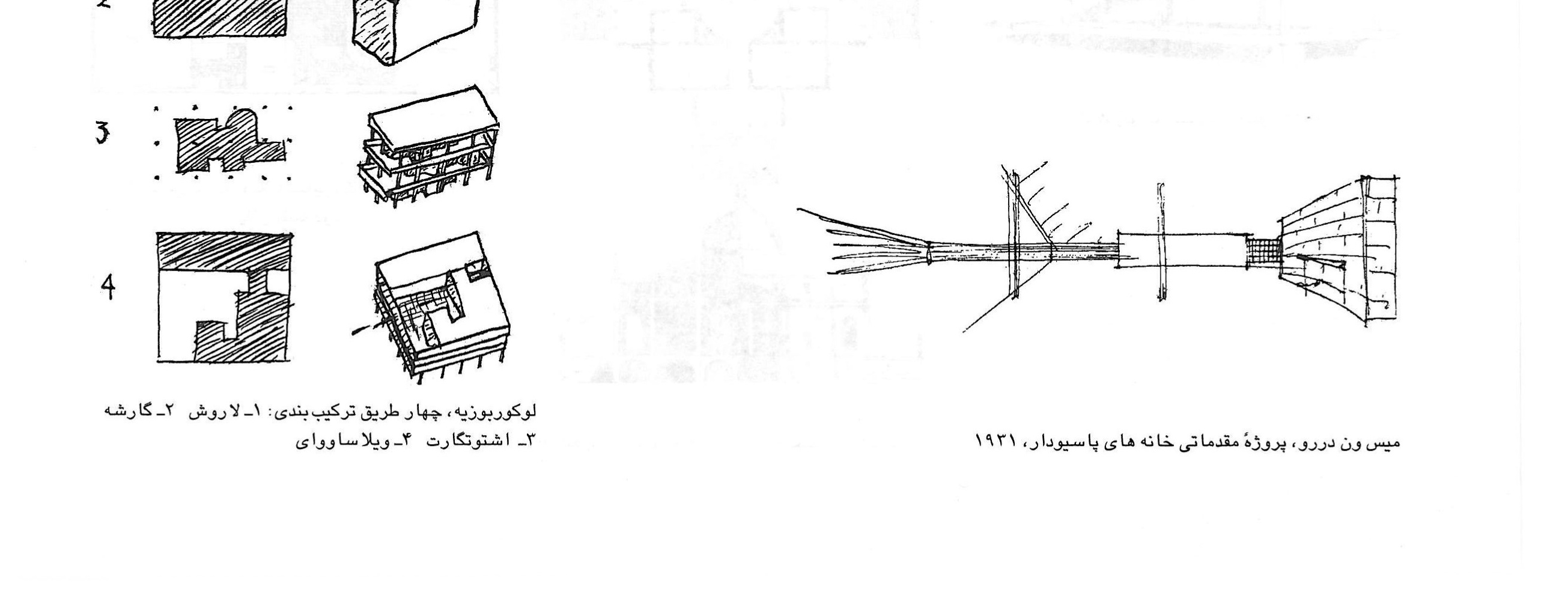
For example, Mies van der Rohe worked with a different conception. Although one can find the aforementioned elements in his Tugendhat House in Brno, no similar conclusions can be drawn. Le Corbusier tends more toward openness. From Mies's viewpoint there was no box-shaped mold (as we shall say later, Wright had already destroyed it). But neither is there any trace of interior boundaries. Each room, each environment, wants to escape to the next environment. The boundaries that Mies crafted from the edges of the environment — railings, gardens — have more presence than the boundaries of the house itself.
Mies did not believe in Le Corbusier's universal plan. He stubbornly defended a classical composition based on the dialectic between wall and column. The free plan in his view arose from the rhythms of load-bearing walls. The walls create environments, not boxes. Le Corbusier's structure — slabs and columns — serves only to make a roof. The essential quality of his space is its horizontal nature, ultimately defined by two parallel planes: floor and ceiling. This space is not homogeneous; rather, by placing interior pieces, it has acquired a delicate tension. Columns and partitions are all independent of each other. Usually their number and size are reduced so that the unbroken continuity Mies was perpetually searching for is created.
This space flows between the planes, and by extending beyond the roofs and floors, it blurs the difference between inside and around it. Both places apparently follow a single pattern. They have become mirror images of each other, lacking intermediate partitions. The transparency of glass causes the window frames to disappear. Thus the living rooms and patios form a continuous space, with the difference being that a pause created by the roof makes it a single interior environment, one that doubles in height in a section.
Previously, Wright too had pursued parallel research. He was interested in the space that had been enclosed from the outside. The gradual elimination of the continuity of four walls — first by removing corners and then by overlapping environments — led him to define a model closer to the space of Mies's separate components than to Le Corbusier's unceasing expansion: an embracing, emerging space versus an intellectualized one; walls that function like planes. His intervention in the floor and ceiling of architecture also articulated different heights to differentiate the various activities that were to take place in a single room.
All these spatial definitions are realized through the idea of creating surface in space, or in other words, they arise from the idea of surface. Contemporary avant-garde visual art — overlapping perspectives, the incorporation of time into the definition of space — wanted to replace the perspectival structures of the Renaissance and become a universal method for unification. But only the rules changed. Intuitive simulations of space on canvas replaced those geometric laws, so as to once again capture an imaginary volumetric reality.
In the free plan too this duality exists. In classicism, walls were the absolute masters. In the free plan, such authority was granted to columns. The modern skeleton, by toppling the load-bearing walls and vertical planes, had substituted horizontal slab floors and horizontal planes. The freedom that was previously provided in sections, domes, overlapping arches, and so on — in the programs, distributions, and formal inventions of modern architects — was now granted to them in the floor plan. At the same time, there is a powerful and inflexible aspect that was in the composition of classical architecture, and they condemned it: the freedom of section was exchanged for the freedom of the floor plan.
Modern volume is constructed using free plans stacked atop one another. Each layer is an independent case. Le Corbusier, in his collected works, once again used a sketch that later became a supreme example for explaining four composition methods. We see that in either the first two, a form has been vertically stretched to occupy several heights, or in the lower two, the stacked slabs and column designs come between. The Dom-Ino system itself has two stories. A staircase that connects two levels could not even disrupt or interfere with the structural plan.
The free plan lacks depth. Le Corbusier showed this clearly — by creating holes in the floors of his projects, he was able to give them a certain vertical dimension, using a system of voids, double and triple heights. He tried to create the spatial continuities necessary for recovering the sculptural quality of the building in the interior space. In some cases, he introduced the concept of a covered corridor — a fixed path and a way of connecting spaces to one another in a narrative manner. The last method he employed — the graceless insertion of an organic, unruly form within a single large interior volume — was meant to break the equal intervals between floor slabs. The villas of La Roche, Carpenter Center, and Assembly Hall at Chandigarh are examples of these corrective mechanisms.
What practical use have we inherited from these principles? The continuous manipulation of components that began with Modernism has largely continued. Although one can point to a research path that has taken a different direction, and despite the evident use of words and concepts such as ground, place, or form that previously had no role, we are still indebted to the presuppositions of the free plan. When we go searching for something similar among various current examples, we encounter alignment or perpendicularity with independent parts. Each one in some way has placed completely closed or limited spaces within massive wall-like grid structures.
The transcendence or rupture that the post-World War II movements were searching for is, to a great extent, limited to the varied and exaggerated use of the same components that were necessary for constructing that space. Every source, force, or system that defined the rigid, strict character of modern space has now been made explicit, expanded, or become independent from the ensemble of which it was previously a member. What was once abstract is now expressed with explicitness.
The main difference from the modern movement, which was consciously created, lay in the manner of controlling the internal order. The integration of all elements involved in the definition of space, which in Modernism was maintained through the effect of those abstract forces, has once again been placed on the shoulders of the object or a law that has no relation to them. The evolved space reaches a state of unity when it connects with what lies beyond it — with urbanity, and with its volumetric character. Experiential knowledge that initially wanted to fill the holes of abstraction has taken over the command of architecture. It transforms the general to the particular, space to place, and the abstract to the urban.
These Partituras
There is a close relationship between the means of representing musical ideas — rhythms and signs — and even the result itself in the form of sound. The evolution and transformation of musical thought has always been gripped in the iron fist of this relationship. More and more, one can say that this condition is a barrier to the birth of the avant-garde. It is therefore obvious that some avant-garde approaches — initially proposing the overthrow of melodies, sounds, and so on — have been forced to change the way musical symbols are notated on paper.
Therefore, in cases where sound takes precedence — not composition — the score comes to resemble a pure diagram: the more condensed and simplified it is, the more indifferent it is to its execution as sound. So the score becomes like a collection of ambiguous signs without clear or definitive meaning, accompanied by a long list of dominant signs. In other cases, when timing or duration is the goal of musical action, the traditional translation no longer serves, and new conventions are found — signs that correspond not with measured units but with approximate reminders that may even depend on external factors or on parts of the performance.
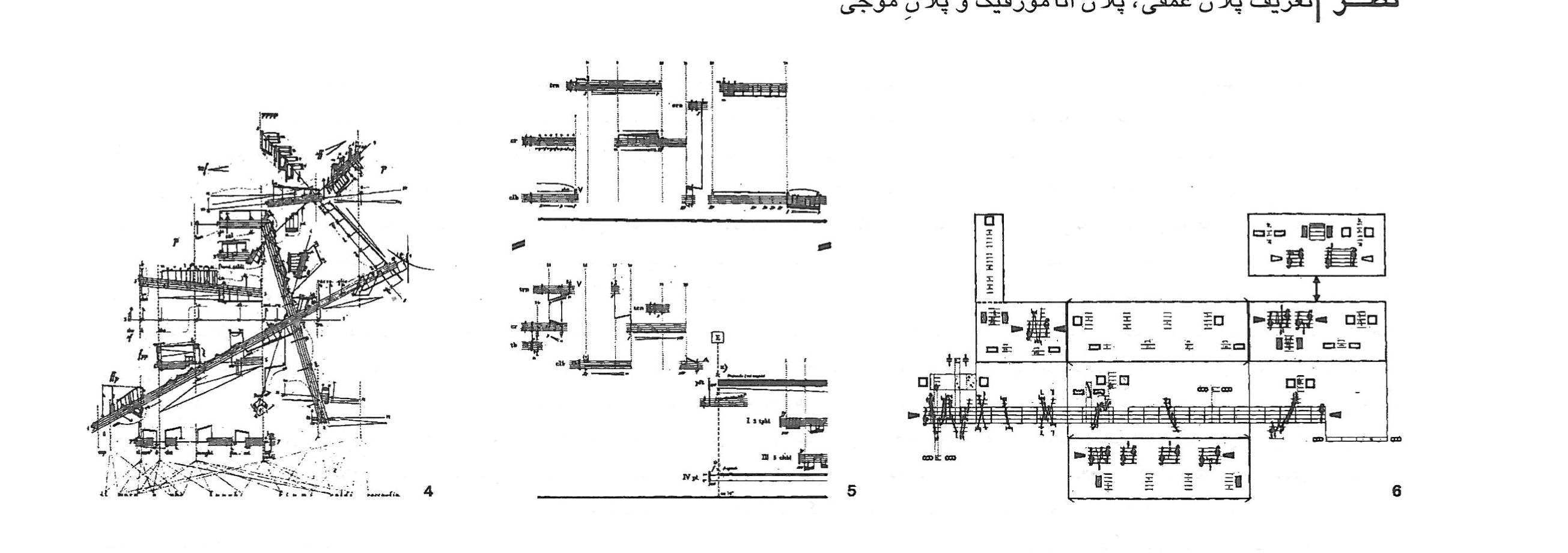
Consequently, scores gradually become filled with signs that indicate performance movements or instrumental actions, delegating the task of producing the desired indeterminate result to sound — parallel scores with inscribed actions. This evolution has continued to this day with the granting of freedom to the performer by the composer. Thus, the scores have become meaningless catalogs that the musician deciphers as he wishes, creating new possibilities and other orders, free to determine the result of a result.
The collection of these partituras will undoubtedly be fascinating. Their catalytic capability is such that they themselves become generators of ideas. They also share a common denominator: the abolition of the linear concept of time, and consequently the end of narrative structures.
We know a building as an accumulation of free plans. Does it have a structural section similar to a traditional score? The collection of floor slabs plays the role of ruled paper on which notes are written, giving the building its rhythm. In a building with a complex section, the various uses are not distributed between uniform slabs. A clear difference becomes apparent: the difference between partitioned space and space that has been distributed.
In the space that I am proposing here, objects are distributed within a space — and not a plan — based on frequencies and their length. The organization is known at the very moment of conception. This space, unlike the continuous, bounded space without divisions, is gridded, divided, or distributed with stitches, with the flow of comings and goings, with vectors and so on. This space is the antithesis of the traditional idea of the city — without image, without material, ethereal and full of movement, fleeting. This is not a space of freedom with uses flowing from point to point. This space, if we want to use a classical word that everyone understands, is composition — without the aid of recognized orders. At this juncture, our movement takes on a compound form with a mechanism that faces two situations: a schematic — naturally irregular — and free pieces.
A second invention of the modern movement. We can imagine that everything is presented on a single compound sheet, without connection: this is its point of divergence. In this collection, there is no trace of flexible spatial thread or organizing order. Its reference is to the deep plan; what refers to the fluctuating plan or the anamorphic plan differs in space. In the former, the pieces are either regular or irregular, or they belong to a schema or stand in opposition to it. In the latter — which is proposed in these partituras — it is undefined, like topological space: there is no definition of form; there is no rupture, only embedding and cutting.
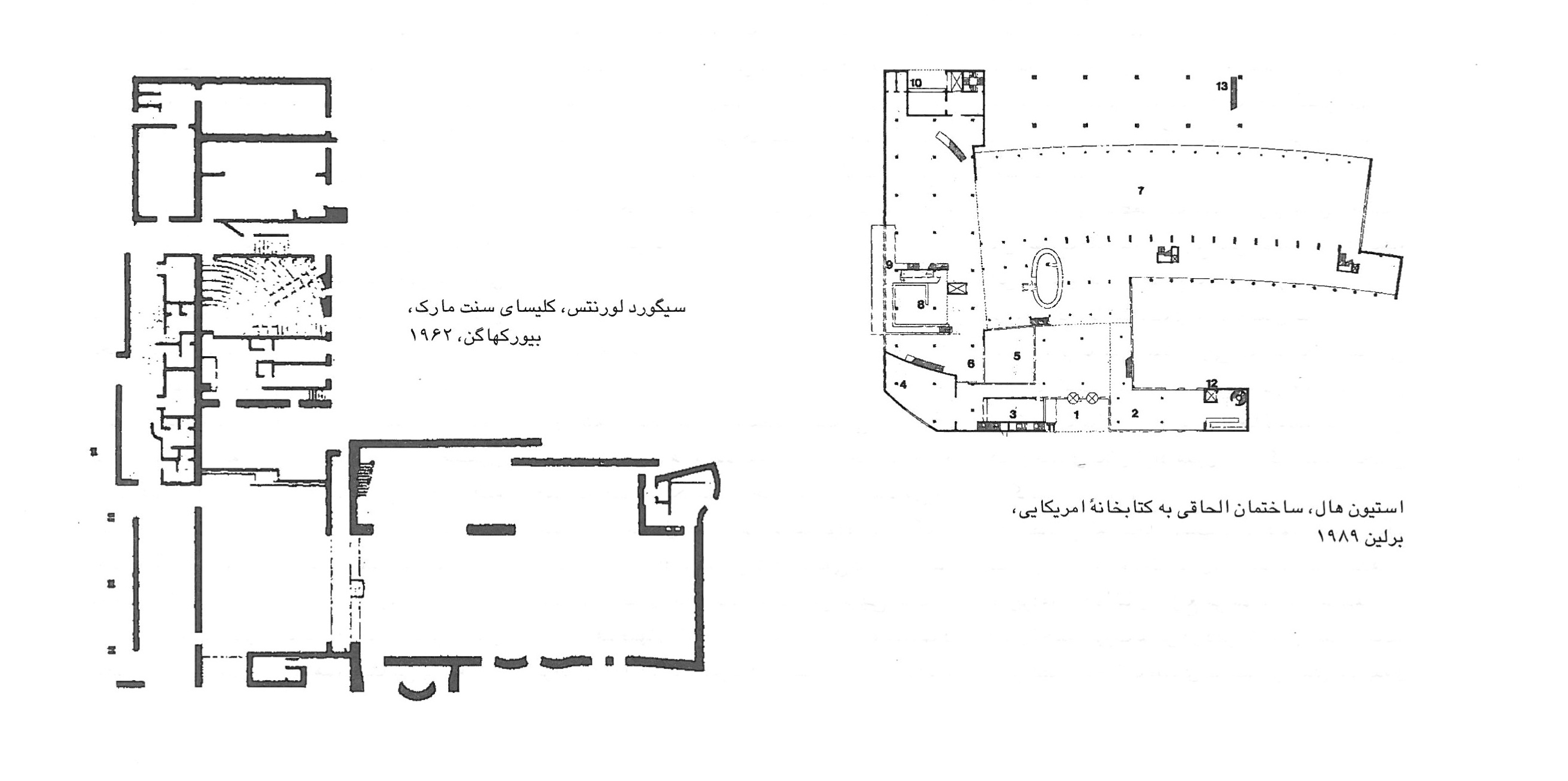
It is worth considering a few examples: the volumetric organization of Adolf Loos in the Tristan Tzara House in Paris, 1926, or the Müesi villa in Lido near Venice, 1923; the section of the Círculo de Bellas Artes by Antonio Palacios; the walls of St. Mark's Church by Sigurd Lewerentz in Bjorkhagen, 1962; the extension to the American Library by Steven Holl.
In the city, the patterned or gridded space — whether in infrastructure networks or in ordering lines — has found a physical presence. But there have been times when this underlying order was not what fitted the pieces together within the urban unit. The units organized in projects for the plumbing factory, the gas factory, and the Cinecittà studios are so strangely fused that they can only be understood from the perspective of this particular reading. The pieces have attracted or repelled one another at almost magnetic intervals, so close that they hint at forces with an essence different from those used in the equilibrium of modern compositions that Kandinsky maintained. The pieces are distributed across an almost empty expanse.
The Anamorphic Plan
The essay by D'Arcy Thompson entitled On Growth and Form has rekindled the interest it has always deserved. In this essay, he studies biological processes using mathematical, physical, and formal analysis. The theory of transformations, or comparison of related forms, is the most famous chapter. In it, the method of Cartesian transformation is applied to relating species and families. By employing simple topological operations, one animal is transformed into another animal of an evolutionary kind.
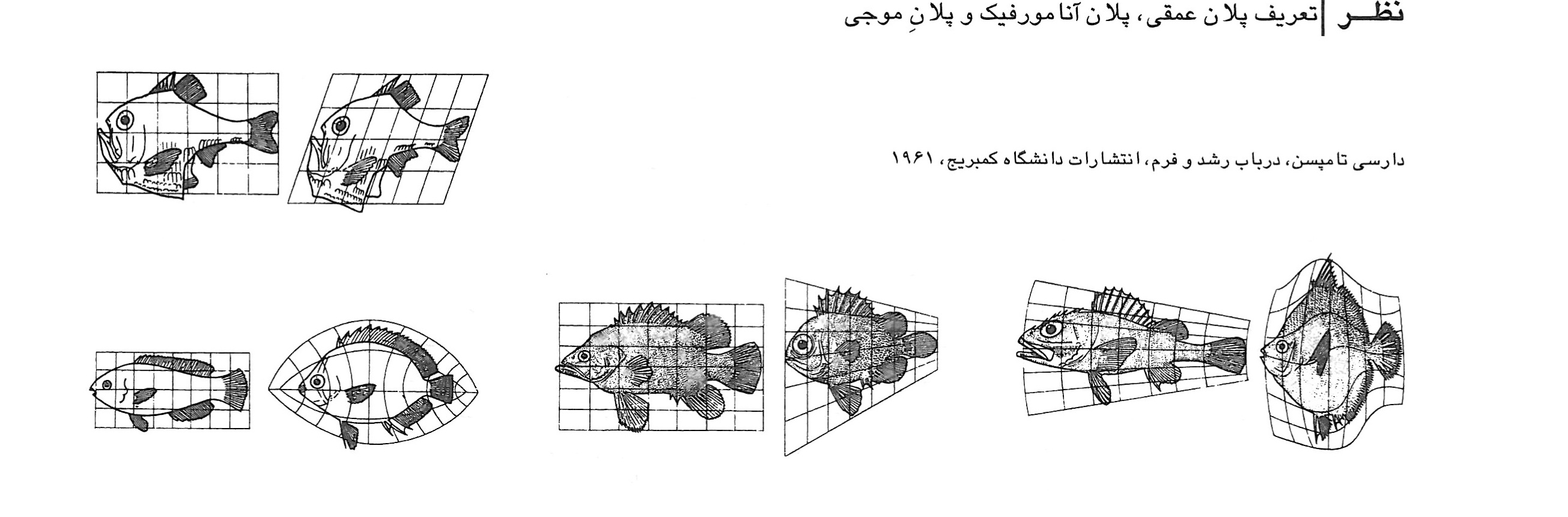
In Terminator 2, the advanced cyborg that comes to earth, thanks to its structure made of liquid-metal qualities, is topologically transformed. Morphing — one of the special-effects techniques that resembles Cartesian transformations — makes possible the transformation of objects with different profiles, shapes, and sizes. The topic makes different approaches possible. In the images, the first and last should be superimposed as a schematic: overlapping nearby points on top of each other. This same possibility provides the correspondence between points of each model. But in film, the schematic must be prepared in three dimensions.
The free plan can undergo various types of potential topological transformations in such a way that it can adapt to complex volumes without losing its qualities. It can wrinkle, swell, flatten, and occupy a section that defines an architectural object. The tensions that enter into an indeterminate horizontal plan must continue to the edges — which are now more compatible — and also diagonally follow the section of the building. The topological intervention enables the transition between different levels, while creating the outer lines of space and preserving the particular characteristics of that space.
The anamorphic plan is incomplete or unfinished because it results from the manipulation of an object. This plan requires movement from a concept of form in its static aspect toward a concept of form in its dynamic relationships. There is no set of fully formed solid components, each complete in itself. Greater attention is paid to the process of formation than to the definitive result. The modern fluid space was conceptually static. The anamorphic plan, from its very moment of formation, grants entry to fluidity.
The Fluctuating Plan
The pop-up is an engaging mechanism for analysis. A form is revealed in relief using cuts and folds. In simple models, plan and elevation appear as a simple piece of paper. Now, in more advanced models, sloped surfaces, circular ramps — we see a whole universe of directions and movements. When dimensional complexities arise from this paper, representing the free plan, shapes previously unthinkable are produced. Sites become long or short, stretch or compress: this is the nature of fluctuating floor plans.
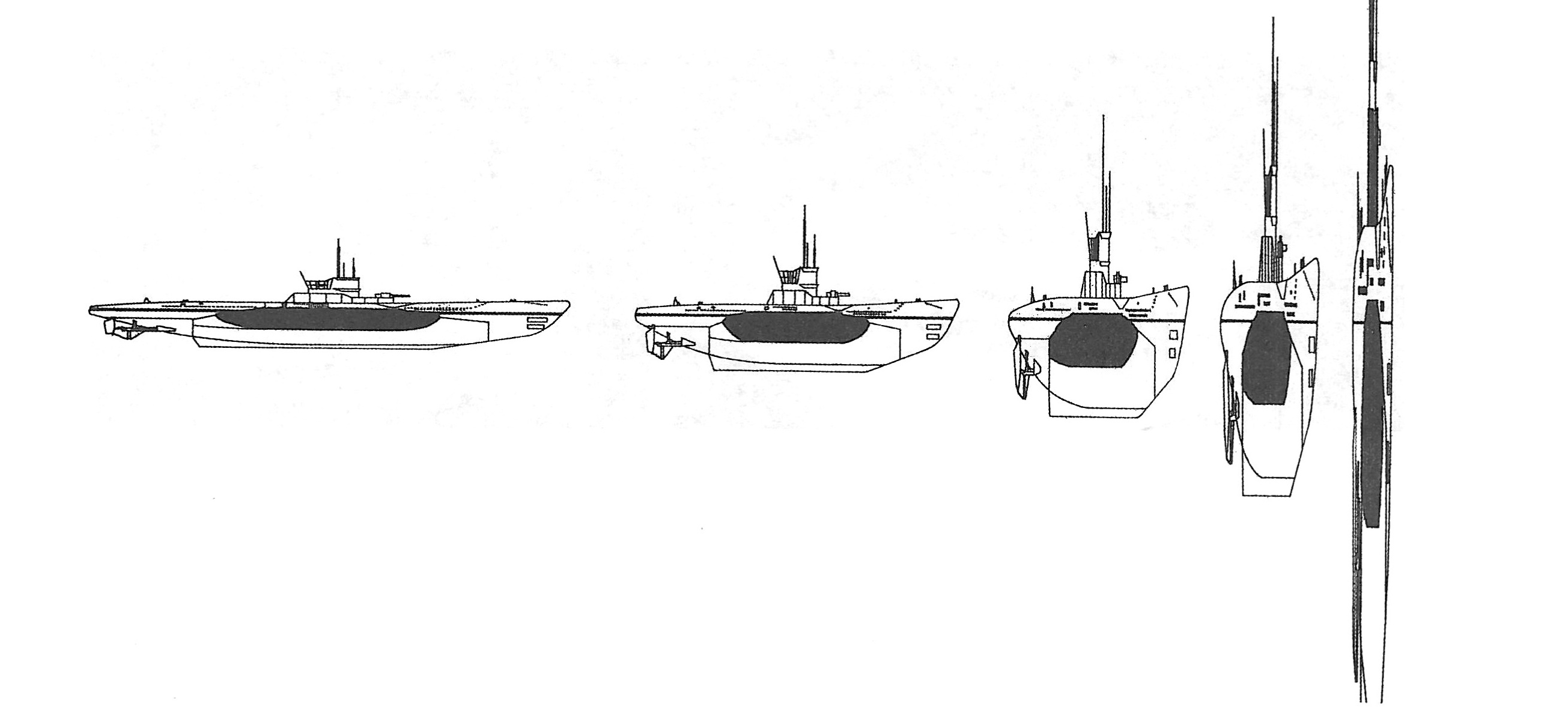
It is about the deformation of the manner of shaping irregular outer lines. The extension to the National Gallery in London by Venturi, or the analysis by Bolles and Wilson of a submarine that changed shape — together with their subsequent explanations of how their own pieces could change shape — are two extreme starting points.
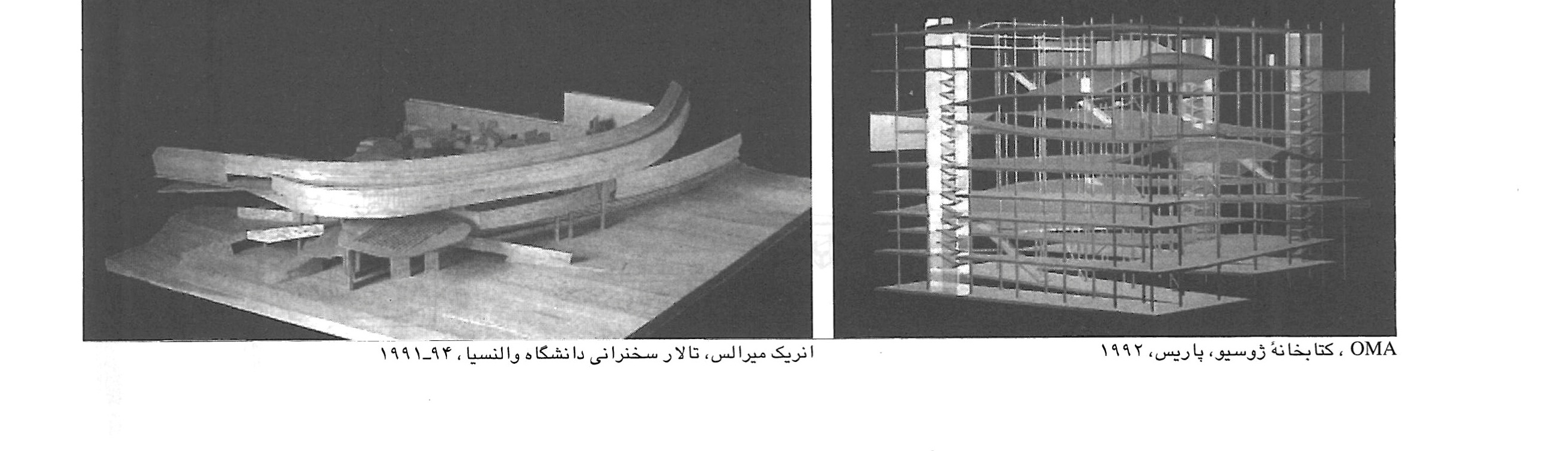
In applying the laws of the fluctuating plan, which provoke constant change, one moment balance, the next moment imbalance is projected. There is no breaking. The design of the Jussieu Library by OMA has become the new exemplary image. The Valencia University lecture hall by Enric Miralles also plays a complementary role. In the library, the continuous plan gives the volume its form, while in the lecture hall, a dense thread of passages and classrooms intertwines within a mass that wraps into itself. Ceilings and floors, like conveyor belts, intermingle.
In 1890, Henri Poincaré mathematically proved the ability to change the shape of the space that people actually perceive, so that measurement had no meaning and the observer had to adjust his receiving instruments accordingly. The resulting space is no longer horizontal or oblique extension, but rather leaps from one space to another. It pulsates without any stability, and it sets vibrating throughout all the scales employed. It consists of spaces that are continuously connected in terms of their linkages but discontinuous in terms of form and scale: continuity of distant points and diversity of adjacent points. We create a temporal dimension without needing a narrative trajectory. Space is read as an event, not as a place. It can be defined by an action.
The Deep Plan
In the diagram of the Maison Dom-Ino, infinite and homogeneous repetition is what acquires value. This repetition diminishes the columns — which are abstract pieces — and thus makes the spaces between them more prominent; that is, rhythm. What matters in the diagrams is the intervals. Being infinitely repeated and abstraction are modern words. But in another arena, they speak of grandeur — of the system, of objects, and not of the intervals between them. Magnitude, whose indeterminate size distinguishes it from infinity, can be both large and infinite. These are nothing but points of concentration.
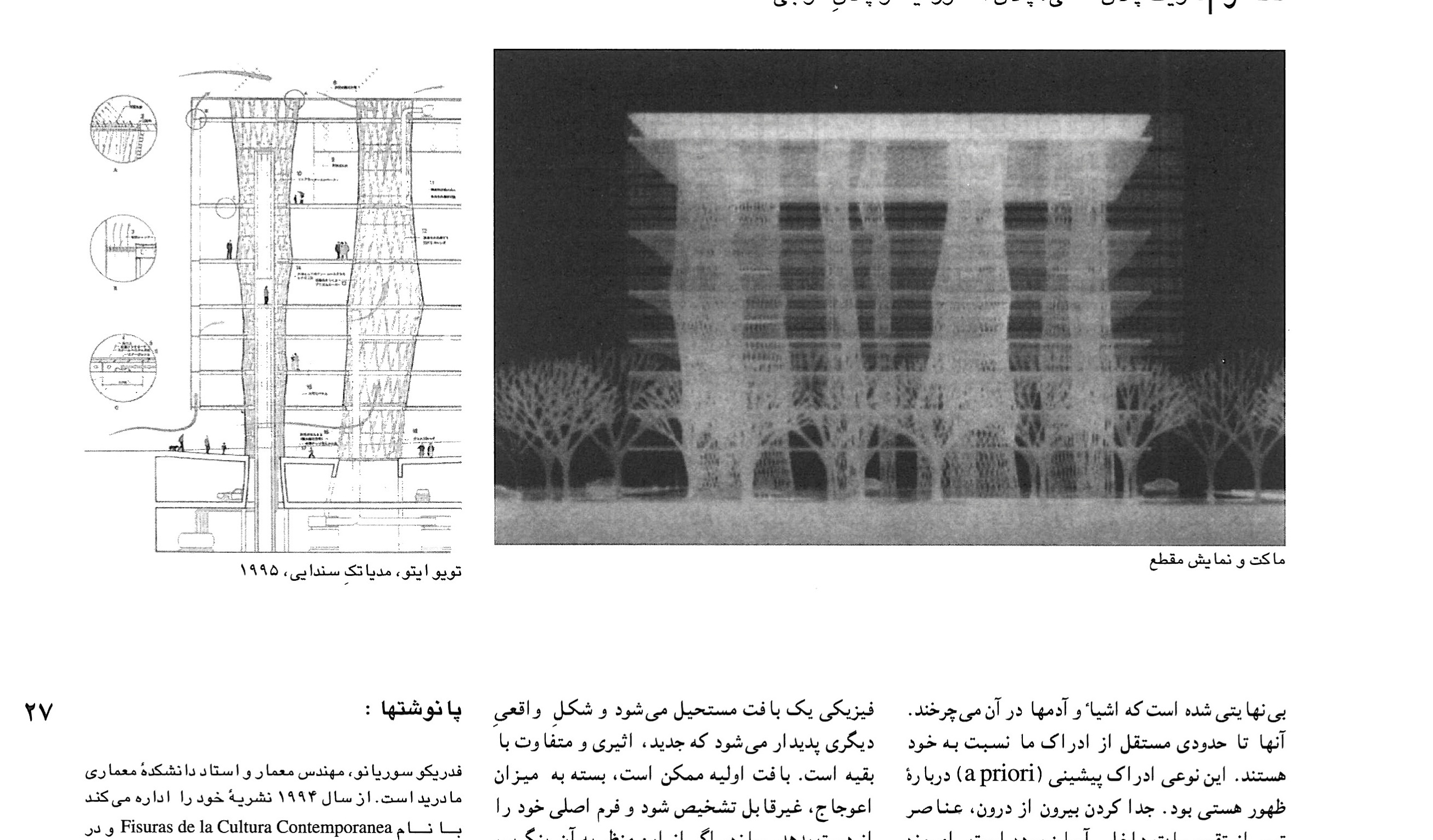
Speaking of a matrix means that formal, spatial, or structural definitions come into play at the final moments of the design phase. They are no longer important from the very beginning. And in fact, it is these architectural objects that come into being just one moment before being converted into form. These are based on the system of "in-between" spaces. The traditional dialectical relationship between figure and ground causes the continued perception of space as a vast empty void. The structure is a matrix of resistant elements, a collection of specific forms. What distinguishes a matrix from any other type of assemblage is that this collection possesses a formal unity of its own — independent of any particular use — that results from overall placement. A matrix has an independent physical existence.
Everything that has been said is that all these pieces are somewhat independent of our perception of them. This is a kind of a priori perception about the emergence of being. Separating outside from inside, elements from internal divisions, used to be easy. Today, these demarcations are no longer all that precise. Two concepts, by overcoming duality, have been merged in a single object. In some fields, a neutral territory is envisioned in which figure and ground act as points of tension. From here the concept of moiré arises — wrinkling, undulation, wave-like manifestation — as a new form resulting from the slightly neutralizing interference of different textures.
Moreover, when only colorless elements are at work, the primary texture may — depending on the degree of distortion — become unrecognizable and lose its original form. The structure, viewed from this perspective, may lose its corporeality and dissolve into space. This effect causes flat and overlapping sketches to gain depth. Here again we cannot speak of figure and ground issues, because both have been dissolved in a new intertwined assembly where the hidden embodiments or latent tensions on its surface become manifest.
About the Author
Federico Soriano is an architect and professor at the Faculty of Architecture of Madrid. Since 1994 he has published his own journal, Fisuras de la Cultura Contemporánea, and in his studio combines architectural practice with research and criticism.



