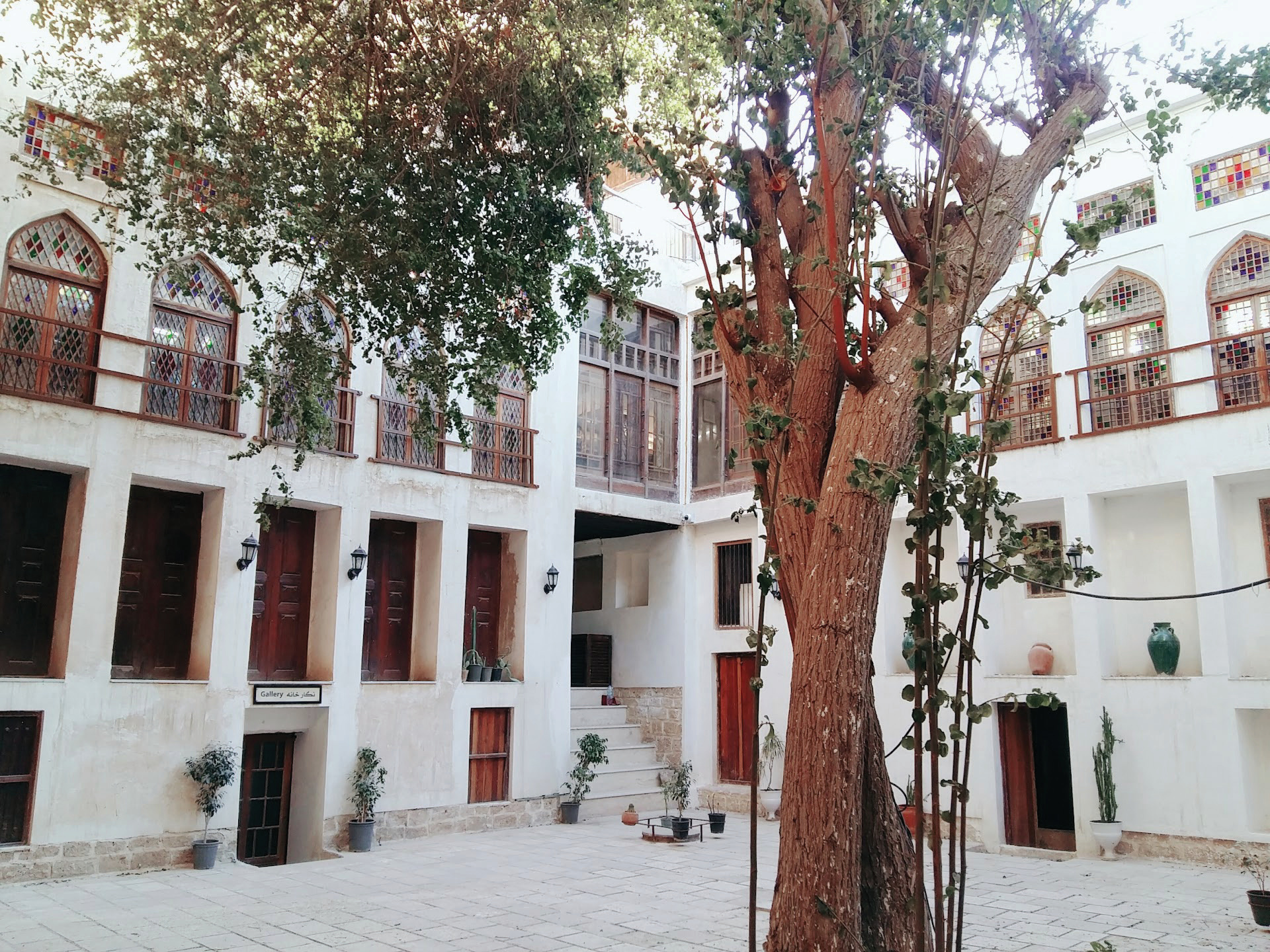
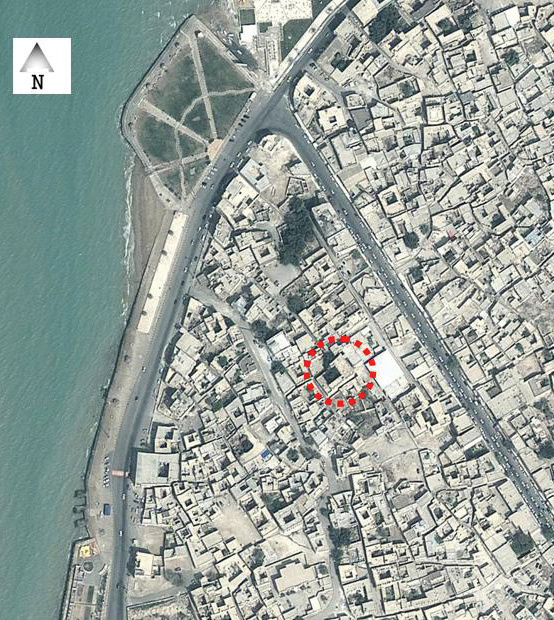
The Dehdashti Edifice is located in the Kuti neighborhood, within the old fabric of Bushehr. It was built at the request of Gholamhossein Dehdashti, an oil merchant who managed an extensive trade network with Britain, India, and Germany.
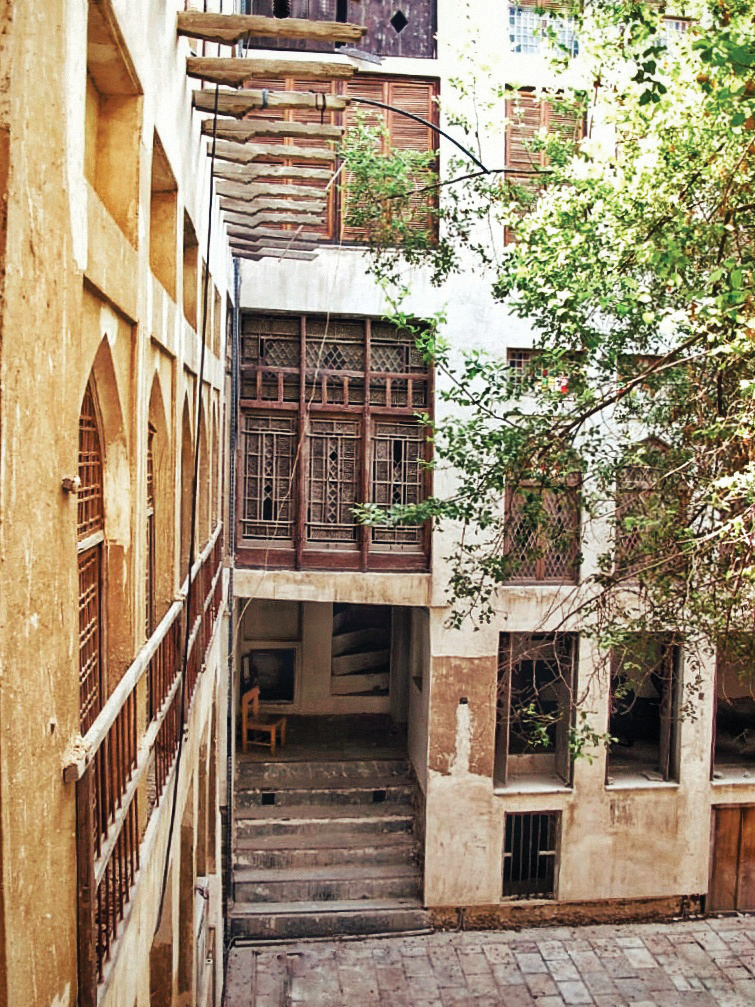
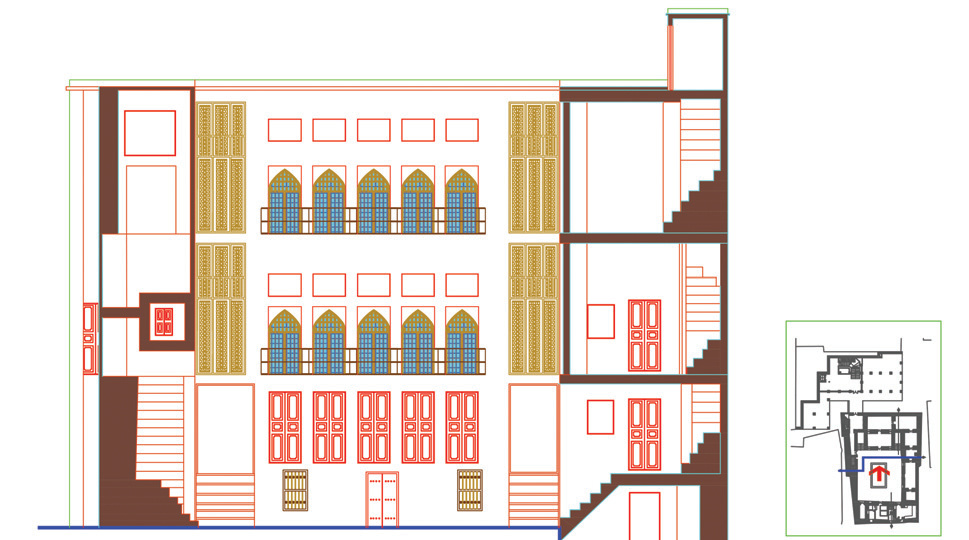
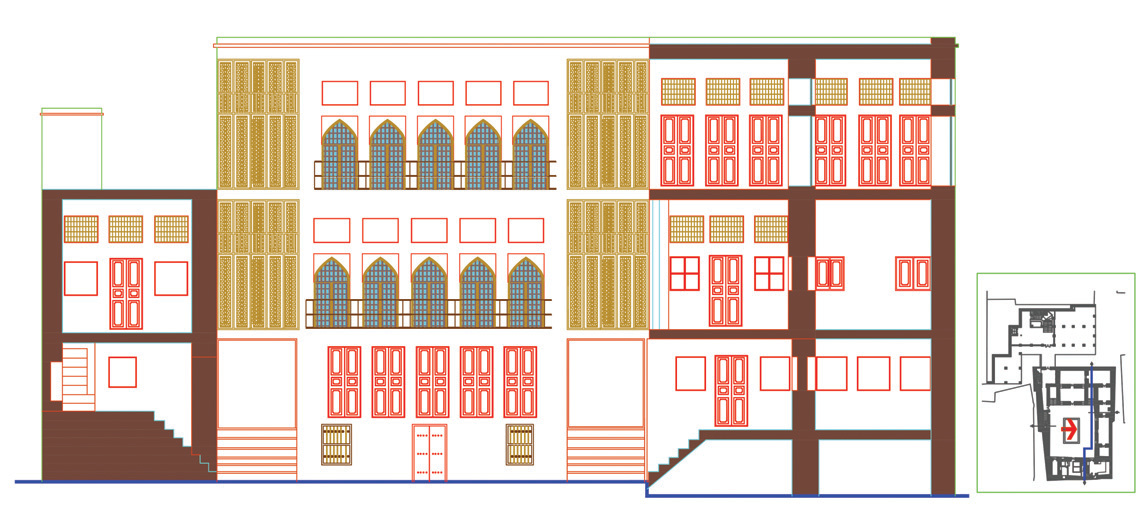
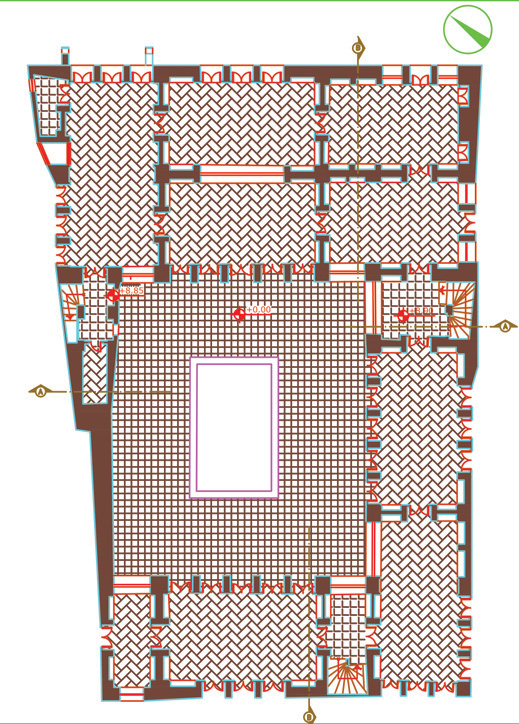
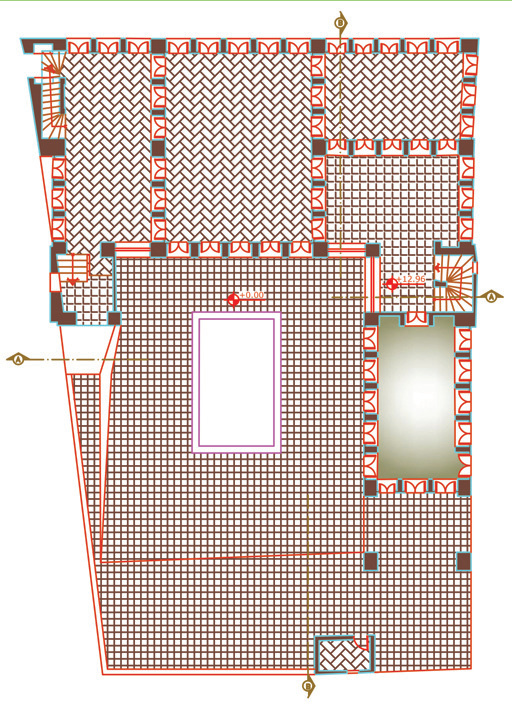
Unlike most old Bushehr edifices, which are two stories and rarely three, the Dehdashti Edifice was built in four stories — including one basement — and is of particular architectural importance.
Like other Bushehr edifices, the foundations and load-bearing walls, both interior and exterior, are made of coral stone, which is highly resistant to pressure and moisture and also provides good thermal and acoustic insulation. Coral stone was quarried from deposits near Bushehr, making it simple and inexpensive to transport. Gypsum mortar was used in the foundations and masonry, performing well in the hot and humid climate.
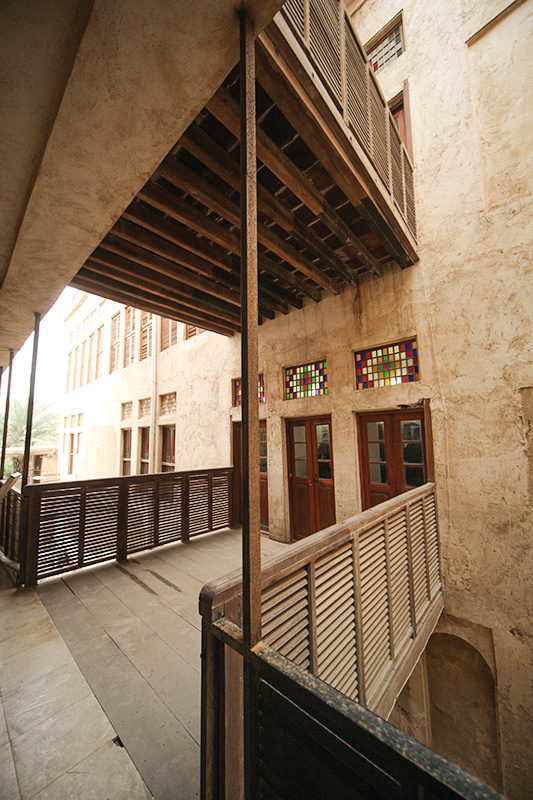
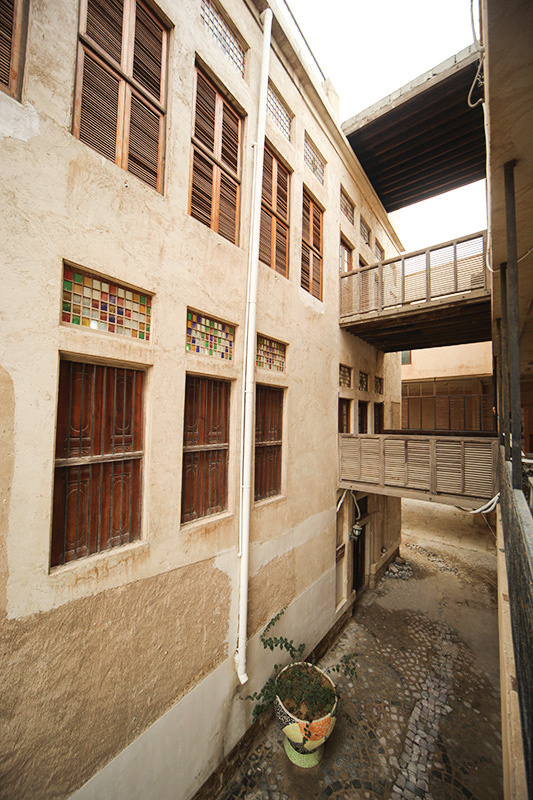
The doors and windows are made of teak and chandel wood, and the ceilings are constructed with sandal beams, reed matting, and wood paneling — lending a particular elegance and beauty to the interior. Beyond its aesthetic appeal, wood is also thermally well-suited: it transfers heat slowly and releases the heat it absorbs during the day with the night breeze.
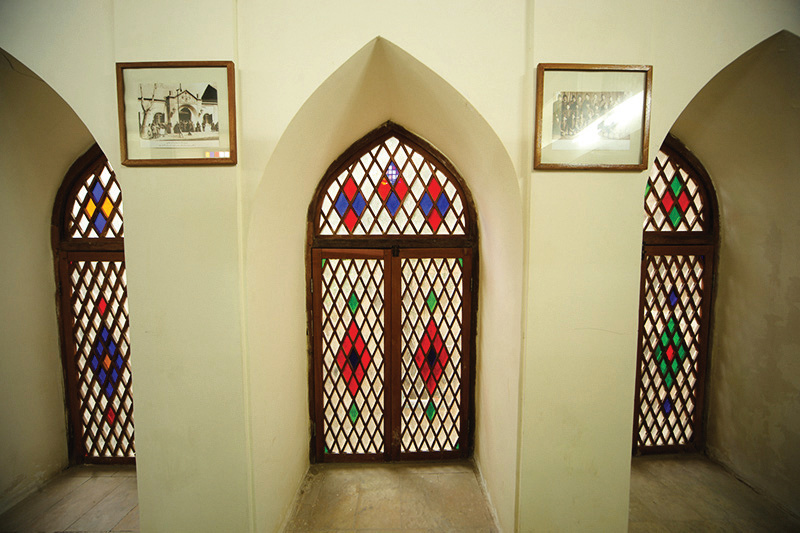
Plaster frames with carved designs encase the doors and windows. The edifice has beautiful orosi (sash windows) with lattice work whose colored light softens the interior.
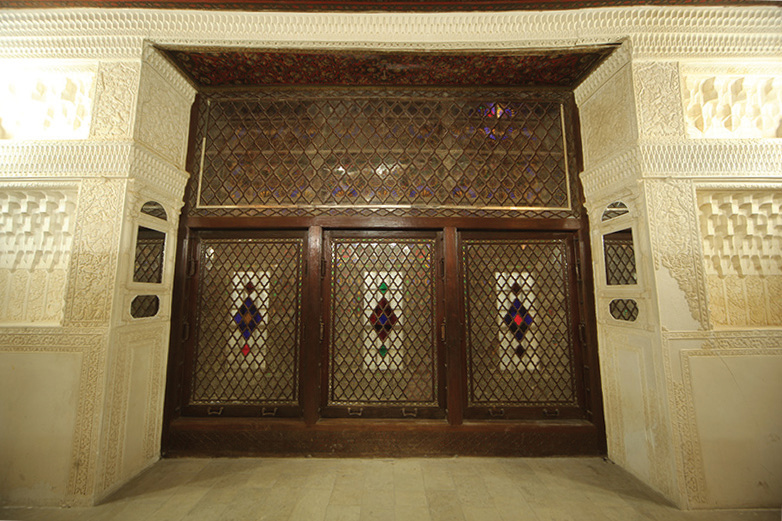
One of the distinctive features of this building is the painted ceiling of the reception room — an oil painting in the European style, which in turn demonstrates European influence on the art and architecture of Bushehr.
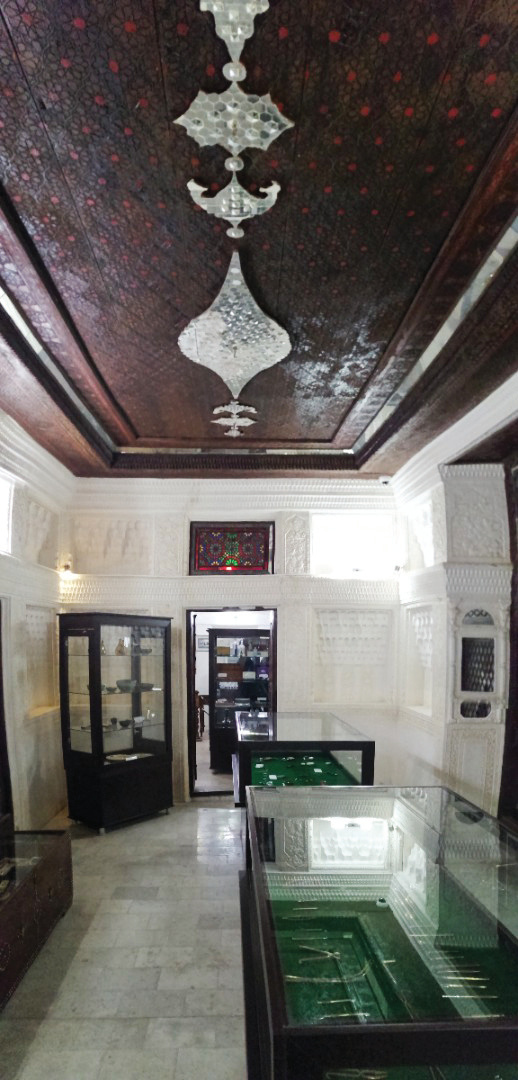
The architecture of the city — based on narrow, winding alleys with tall buildings on either side — strengthens the flow of wind and breeze. The architecture of the building, with its numerous openings onto the alley, causes the average temperature and humidity level inside to be considerably lower than the outdoor environment.
On the exterior, like other old-fabric edifices, light colors have been used — absorbing less heat under the intense sun. Inside, a network of windows facing one another and facing the central courtyard create air circulation.
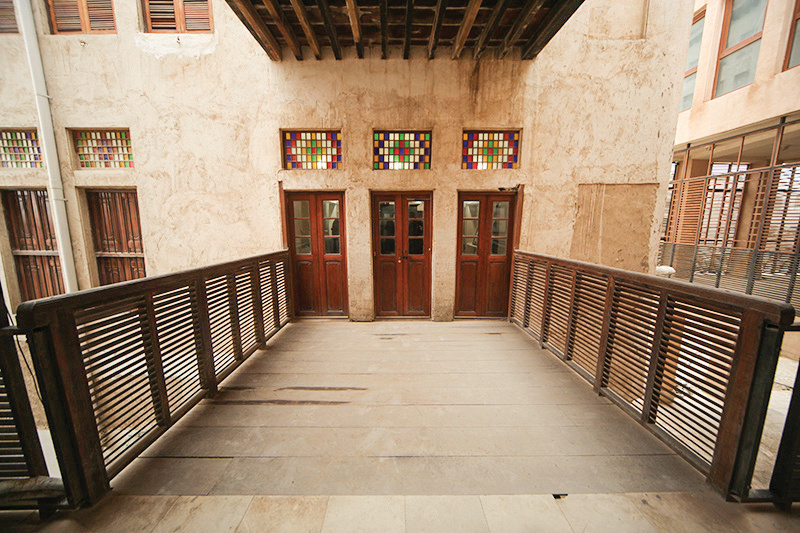
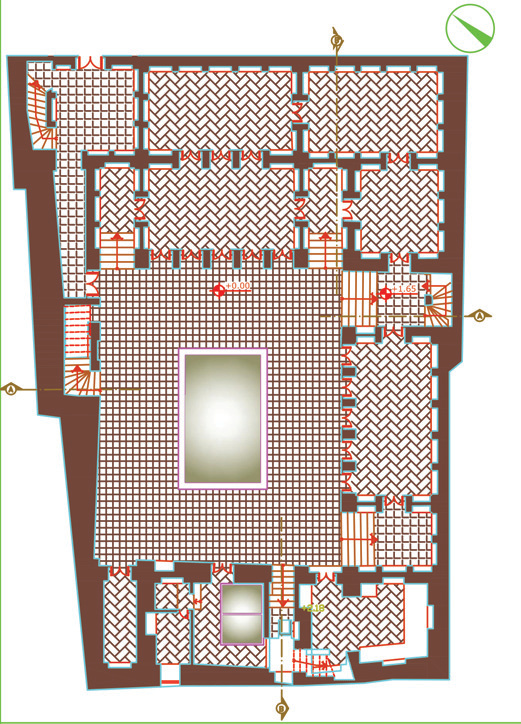
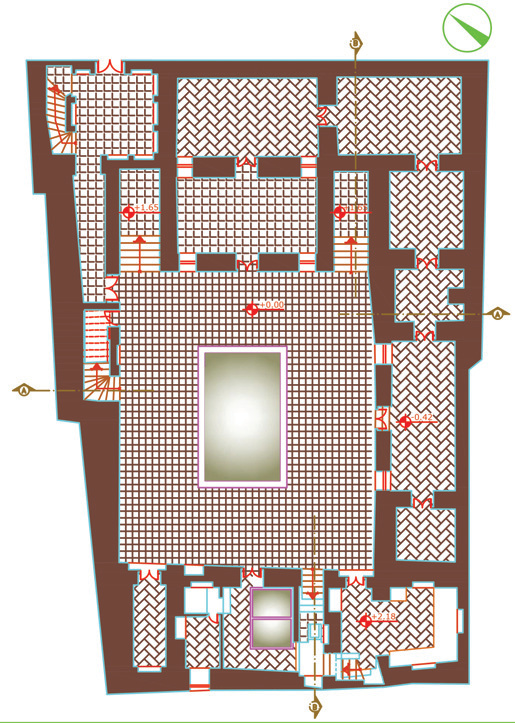
The semi-open spaces surrounding the rooms, along with the tarme (gallery) and horizontal and vertical canopies, provide broader areas of shade.
1. Many commercial documents have been found in this house, some with stamps dating back 200 years.