In any product that has a distinguished design, three important principles are always embedded: simplicity, humanity, and honesty. To understand this point more clearly, we can look at one of the icons of the twentieth century: the Volkswagen Beetle. My father had one — a yellow 1952 model. Later, during my college years, I bought the 1968 model myself; that one was red, and was one of the few cars in which I experienced the true feeling of driving. Its driver's seat was really a seat, and entirely ergonomic. It was an excellent car: comfortable, well-proportioned; and although I was never able to drive it very fast, I still felt that I was flying in it. The Beetle is a composition of three half-circles — two arcs for the fenders and one big arc for the body — a pure simplicity with superb proportion. And that is deeply human.
My car, with all its weaknesses — its heater never worked in winter — was and still is a very lovable car to me. What makes a design a good design? Design is not making beautiful or decorating; it is a thinking process. Design is a non-linear way of thinking — a space that takes shape on the basis of a relational structure among elements that appear unrelated.
Designers are creative visual thinkers, trained to look at the world in another way. Think for a moment about the Beetle. How many cars, or other objects around us, do people truly love?
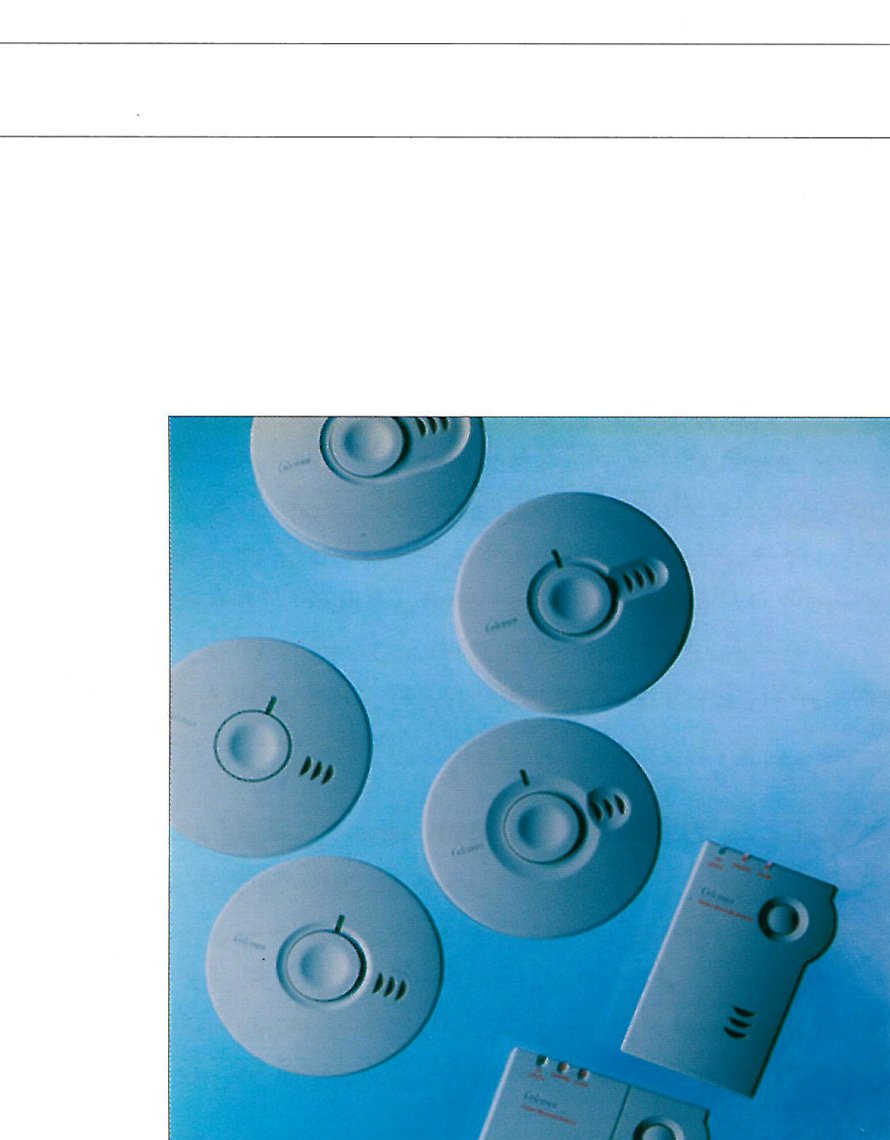
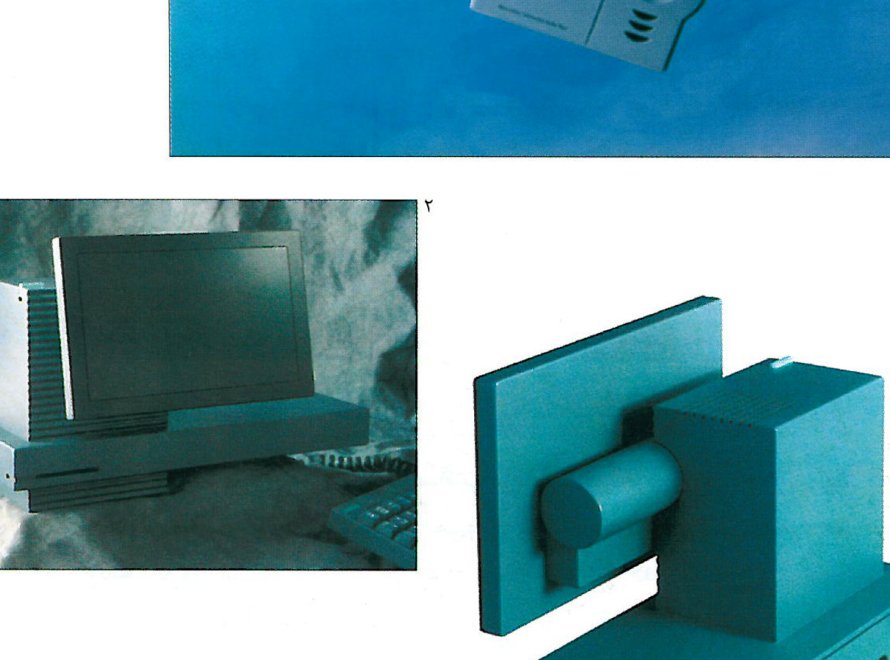
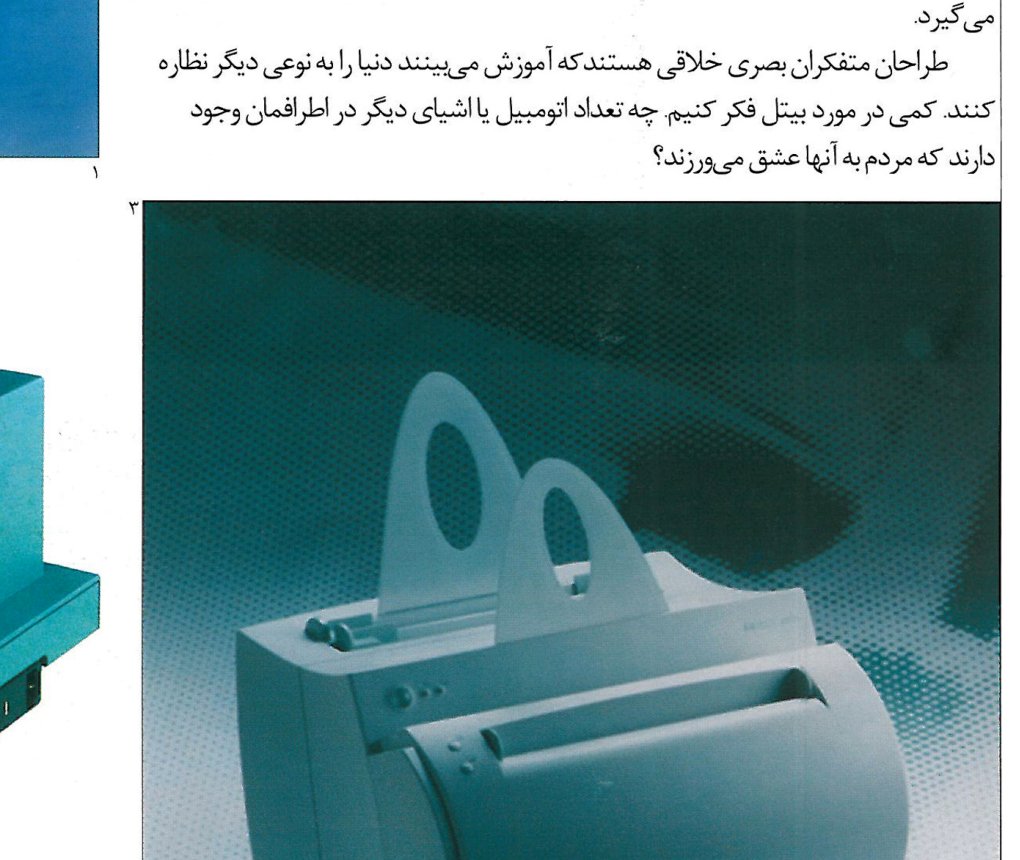
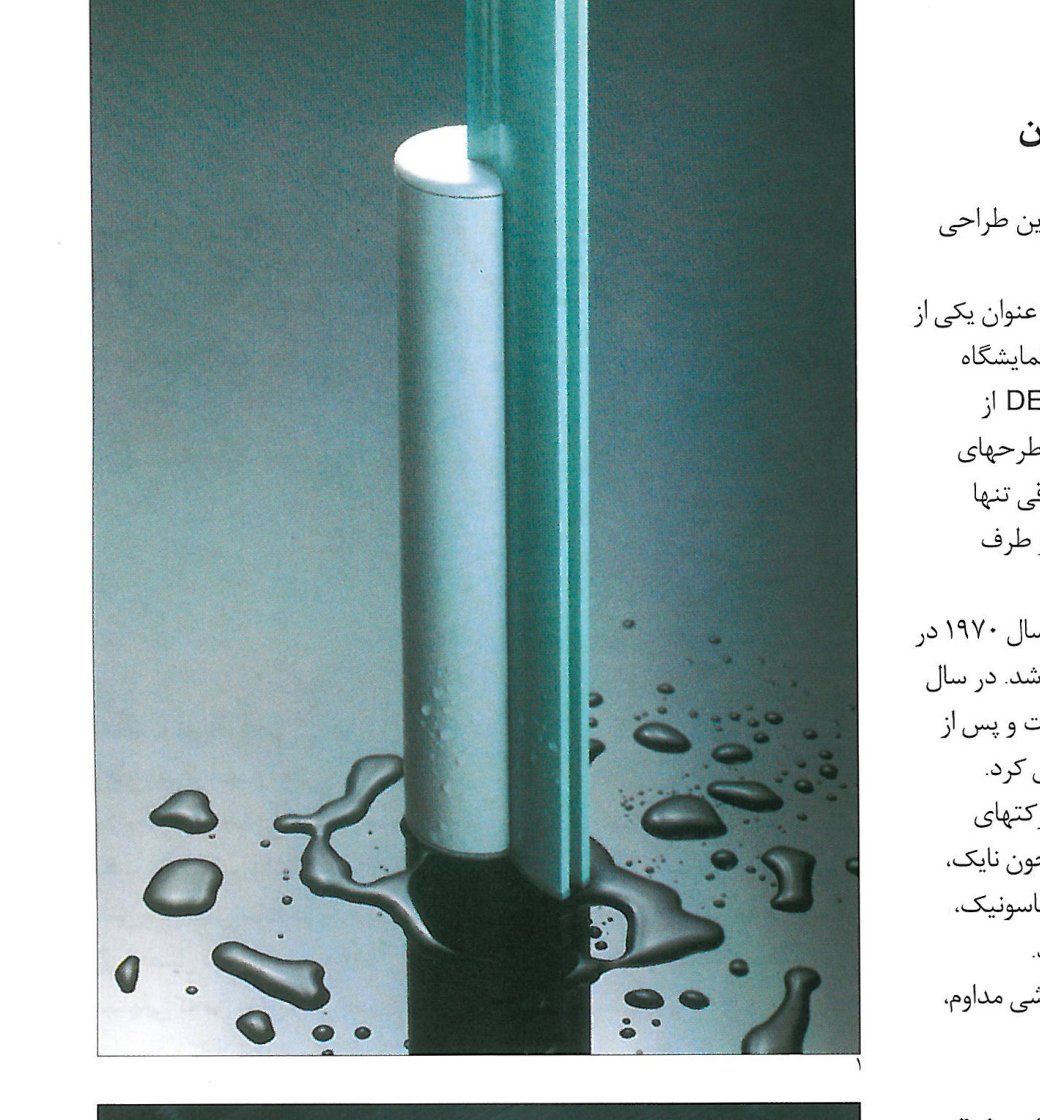
Your computer printer or keyboard may well have been designed by Ziba Design. Ziba Design, a design firm based in Portland, Oregon, is counted among the top three industrial design firms in America. The highest-class awards from the Hanover fair, Designers' Choice awards from International Design, IDEA awards from the IDSA (Industrial Designers Society of America), and a considerable number of Business Week's "Best Product Design" awards — Vosoughi is the only designer so far to have earned the title of "Pioneer of the Future World" from the World Economic Forum.
The driving engine of Ziba Design, Sohrab Vosoughi, was born in Tehran. He emigrated to America in 1970, at the age of fourteen, and settled in San José. In 1980 he went to Portland, Oregon, to work at Hewlett-Packard; and, after four years there, he founded his own firm under the name Ziba Design. Over the years, Ziba Design has quickly pushed itself into the front rank of respected design firms worldwide, so that well-known companies such as Nike, Black & Decker, Kenwood, Coleman and Rubbermaid have become its clients. Vosoughi, as the founder and director of Ziba Design, attributes his success to continuous effort, hard work and perseverance.
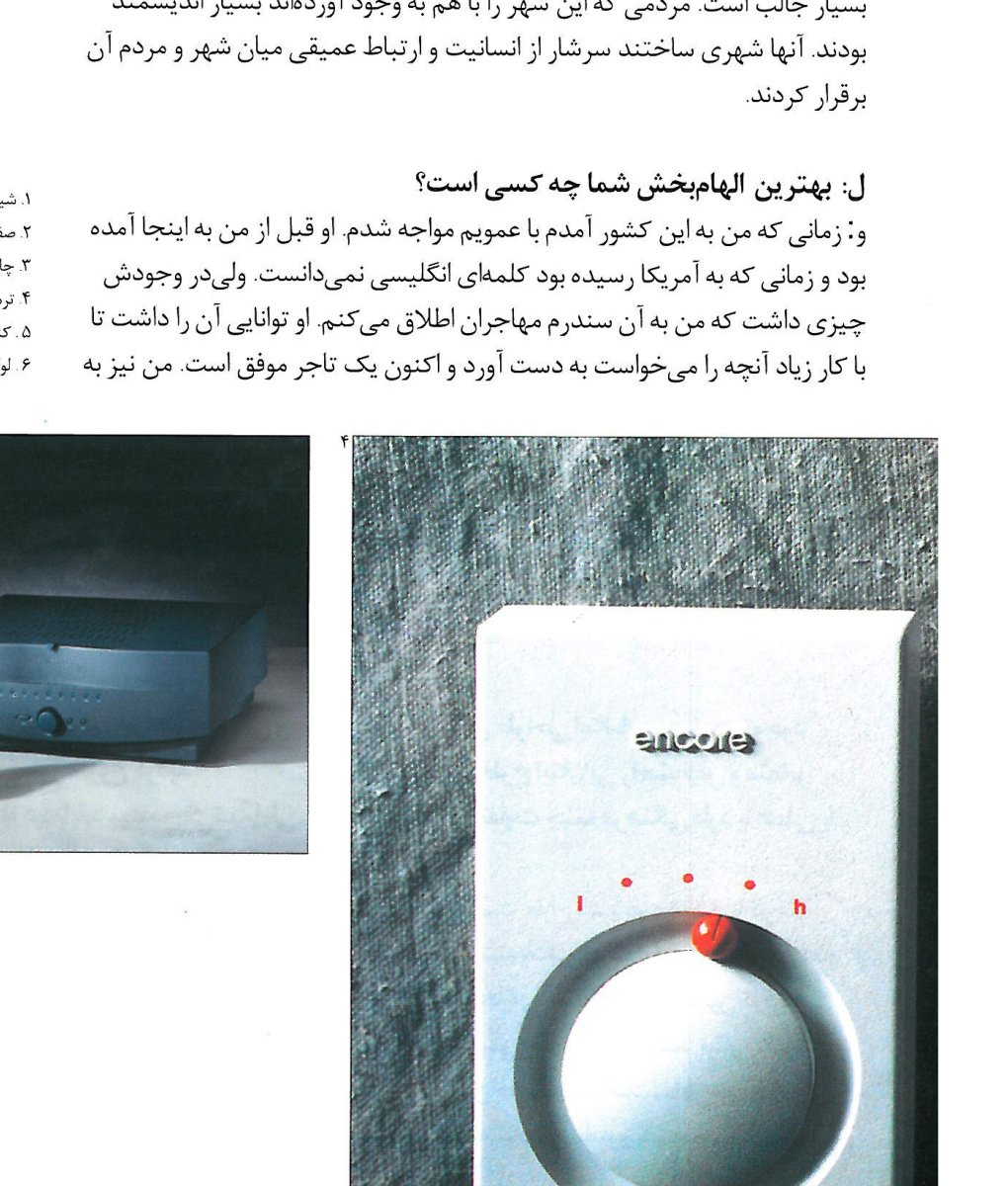
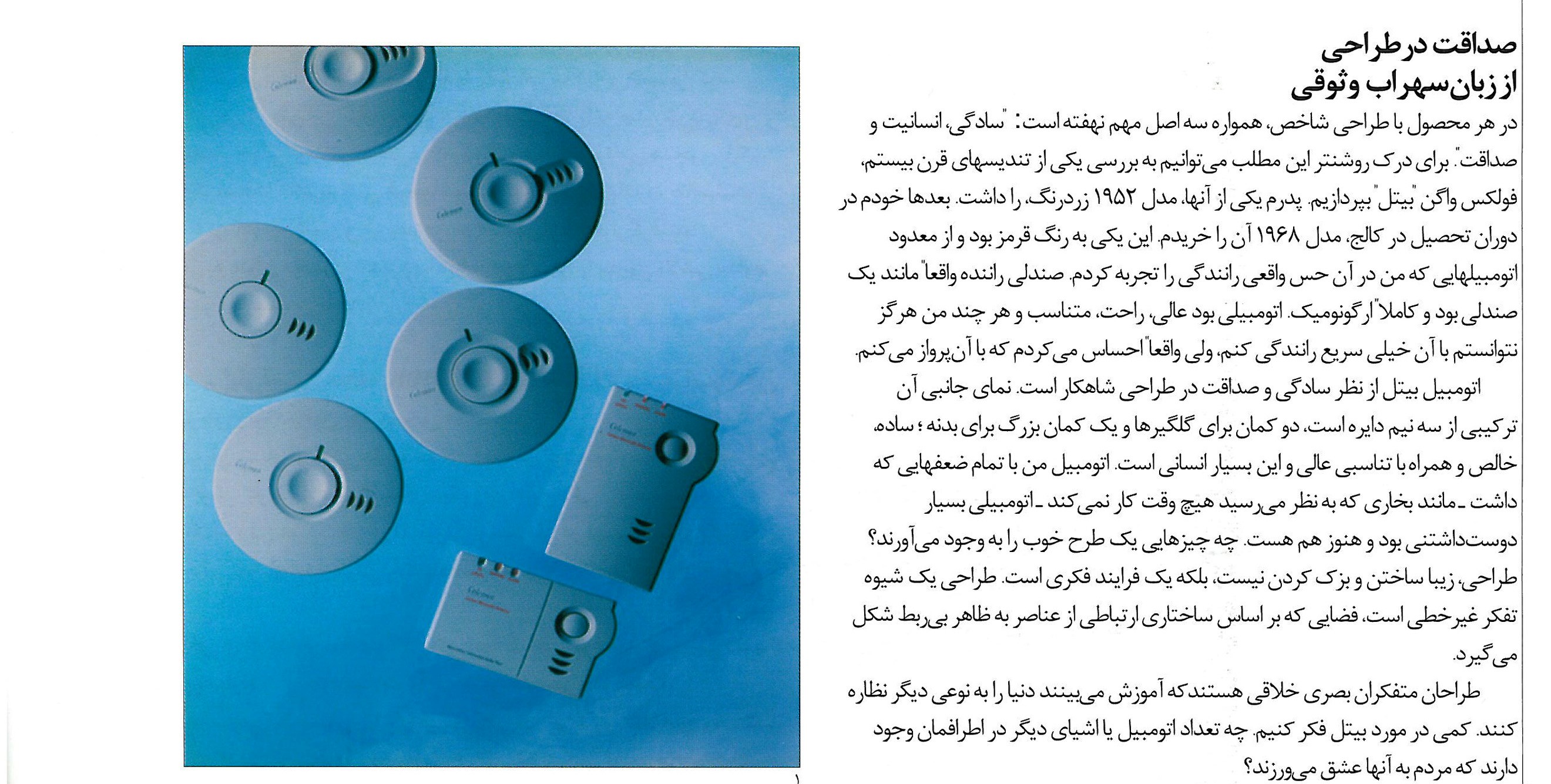
Brian Libby's interview with Sohrab Vosoughi, from Willamette Week Libby: What kinds of products do you design? Vosoughi: We have very varied clients. In one corner of our workplace we may be working on a coffee-maker, in another corner on the design of one of the service units for Federal Express, and at the same time, in another section, we are developing an e-commerce product. Libby: Do some buyers of the products you have designed assume that the manufacturer designed those products themselves? Vosoughi: Certainly — we have designed many products whose buyers do not guess at all that the work was done by us. But that is fine; it may be part of our strategy and we respect it. They want to create a name (a brand) for themselves, not for Ziba Design. One of Ziba's strengths is the study of what you want from the moment you walk into the firm. We do this to help our clients, and it brings them closer to success. Libby: Name a few familiar products that Ziba Design has done. Vosoughi: The Microsoft keyboard is a good example. For Rubbermaid we have also designed a waste-bin and a window-squeegee — products that can be made with fairly low technology. The smoke detectors for Coleman are another of our designs.