



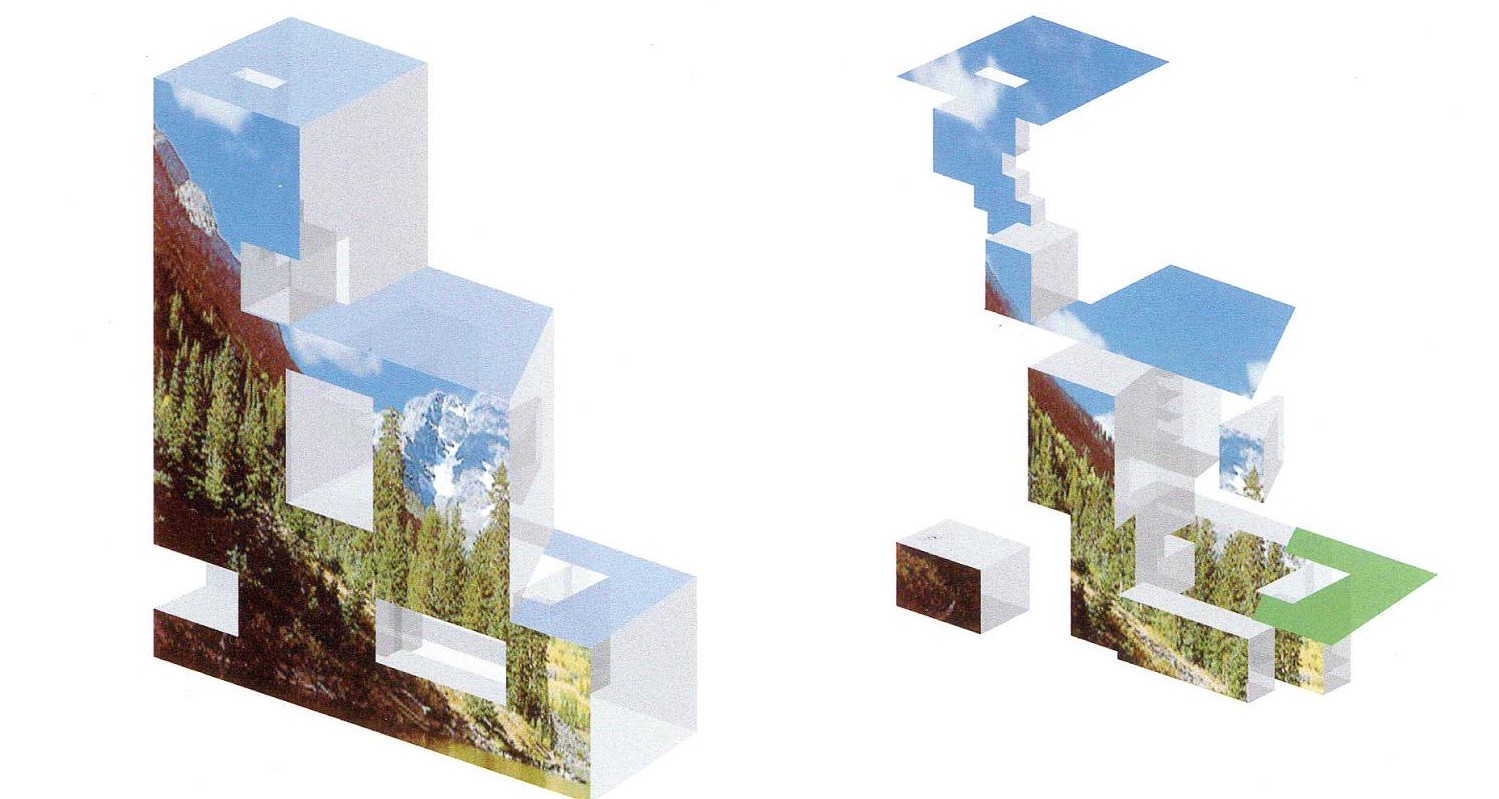
“Residence” — the place of dwelling, the space of private life, and in everyday speech, the home. Yet the particular weight of this term differs from the “personal house,” which takes shape according to the will and inclinations of its owner. Residence is a broader matter, directly bound up with economics, politics, and technology. Many factors intervene in the design of housing that close the way to creativity and feeling: energy conservation, regulations for earthquakes, construction, urban planning, fire safety, health, services, the fixed dimensions of spaces, the areas of windows, stairs and corridors, and hundreds of other concerns push architects toward adopting predetermined solutions — solutions that arise from the reaction of an independent set of project-determining factors, and are realized independently of the wishes of the designers, users, builders, and clients.
Building speculation too, which sacrifices values to price and to technical and economic criteria, produces an amalgam that is called a place of dwelling only out of necessity; it is not a residence in which a person lives willingly and to which they long to return. Such false housing is bought and occupied, yet it is never possessed emotionally or sensuously, and one does not find one’s identity in it.
In their drawings children take great pains to depict houses that spring from their natural instinct and reveal their understanding of the notion of dwelling as the origin and reference point of life. Most of these images are not the houses the children actually live in. And most houses, likewise, are not the crystallization of the invisible, indescribable — or even describable — desires of adults.
Although providing shelter and four walls is very important — and if all residential buildings were built with careful attention to technical standards and architectural codes, many of today’s troubles, such as the instability of buildings over time, the irrational costs of constant repair, and the lack of resistance to earthquakes, would be resolved — the task of architecture is not merely to meet these practical needs. Reducing architecture to such a level leads, in the end, to belittling those very technical and functional minimums.
One of the most fundamental matters that is often omitted from housing planning is the human being’s natural desire to dwell — as a determining factor in architectural choices — and its direct relation to the instinctive urge to build and the desire for the work of architecture. Dwelling is an ancient need, just as staying alive, eating, and social life are. Instinctively, the human being carries out the necessary tasks of life under the command of desire. Even cultural needs — such as learning, reading, writing, painting, visiting a museum, listening to music, or playing an instrument — come about through the stimulus of desire. In a healthy, natural life, even working, cooking, walking, and driving are done with liking and interest. Behind every desire there always lies a necessity or a need.
The home is a place where a significant part of the necessary human activities — those bound up with desire — take place. Attention to the wish to live within architectural space, and to the experience of its captivating manifestations, has been forgotten. Yet architecture is the last wholly unexplored territory that can still offer undepicted, novel spaces for the adventuring of the human spirit.
The desire of architecture concerns the creation of space and its use, and these two are inseparable. In the flourishing periods of architecture, both architects and the public shared in this desire, and clients in particular took part, side by side with architects, in the adventure of design. Today, the architects’ desire to design and the users’ desire to dwell have been suppressed; and neither the designer nor the public is satisfied by it. Desire and its satisfaction are, of course, two separate matters, and as Vittorio Gregotti¹ says, it is only the process of design that binds the two together.
Expressing desire through architecture is of great importance. Once basic needs — such as the need for shelter — are met, the range of desire expands and is drawn toward the realm of art. Today’s society moves toward consumption beyond need. The watch we strap to our wrist is more precise than we need; the car we drive can move faster than we need; and the mobile phone we buy has more features and options than our patience allows. We have filled our homes with things that, twenty years ago, could not even be imagined. In such a society, as De Masi² puts it, attention to beauty determines well-being. Today we buy our wristwatch not for its accuracy but for its distinctive design; and we do this out of desire, not merely out of necessity.
Although our society, and many human societies, have not reached a level of well-being at which all their choices are shaped by attention to beauty, when constructing a building — however economical — attention to the human being’s natural instinct for beauty, which should not be sacrificed to inattention, or, before that, to speculation, remains important.
It is certain that quality is a very important demand, one inseparable in the work of architecture from the ground of desire. The audience of architecture accepts only a work with which the designer is first satisfied. Desire is instinctive, but the form of its crystallization is determined by culture, and in architecture designers bear the duty of advancing cultural and aesthetic concepts. Through the act of design, the designer reacts to culture at a local or global scale. This reaction may move toward accepting and highlighting the aesthetic values latent in existing conditions, or it may offer an option that contradicts the existing built and cultural context. In any case, desire is a determining factor in architectural choices. Daniel Libeskind³ points, in his work, to three important factors — “desire,” “method,” and “idea.” In his view, between these three there is a distance that is never traversed, because each results from a different source.
Desire concerns the designer’s personal wish to give form to a conception, to convey a message, to leave a work of one’s own upon the surface of the earth, or to carry out a new experience. The idea is an intuitive leap that occurs independently of the will — and even of the desire — of the designer; and method is a craft acquired through training and experience. In general, it is not necessary that the distance between these three factors always be traversed and that the work of architecture reach an absolute unity. Such a unity never exists.
Certain unifying factors relate desire, idea, and method to one another. Two important factors are as follows:
(a) The work, as an independent being in which there seems to exist an inner urge toward transformation. Michelangelo held that sculpture is not the creation of a new work but the freeing of a form imprisoned within the stone. On seeing a block of stone, he could imagine what shape might emerge from within its irregular mass and how it might best accord with the subject of the work and the form of the stone. The writer has an idea in mind before beginning to write; once work begins, the text itself guides the writer. Every work of architecture worthy of the name has characteristics and conditions that guide the initial ideas and enthusiasm in a definite direction.
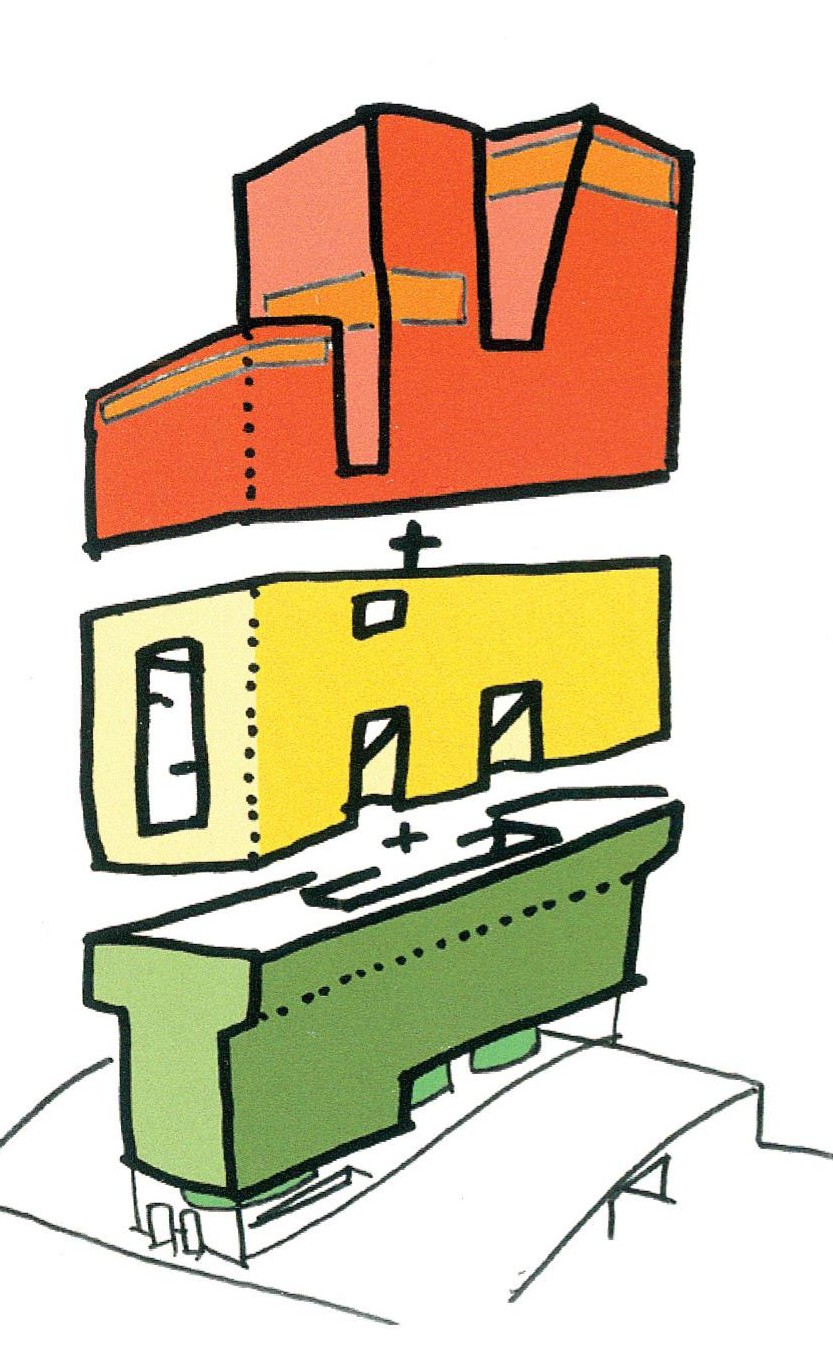
(b) Attention to the desire of architecture’s audience. When writing, many ideas and points crowd into the mind that are highly appealing to the writer. He asks himself again and again: what importance do these matters hold for the audience, and will they attend to my material with desire or not? Art becomes a necessity when, in its privileged position relative to the other arts, it stands in relation to its own practical necessity. Attention to the inner forces of each work, and taking into account the contradictions and the multiplicity of a project’s data, can guide it in a definite direction.
This article has sought to bring “desire” — which at first sight does not seem to be of the same kind as architectural subjects — into discussion, and to emphasize its determining role in design and in forging a bond with the architectural work. This matter is so instinctive and ancient that, like breathing, we sometimes neglect to attend to it. Returning to the elementary principles of any discipline is important; but in the absence of settled, firm foundations — the mark of an age of transition — attention to the more general factors and to the original, primary motives becomes all the more important.
Notes: 1. Vittorio Gregotti 2. De Masi 3. Daniel Libeskind