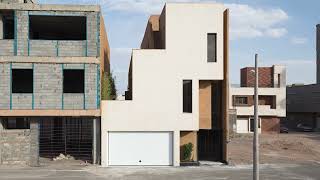
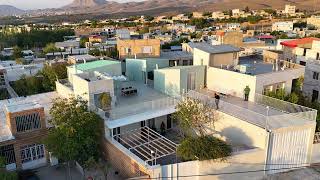
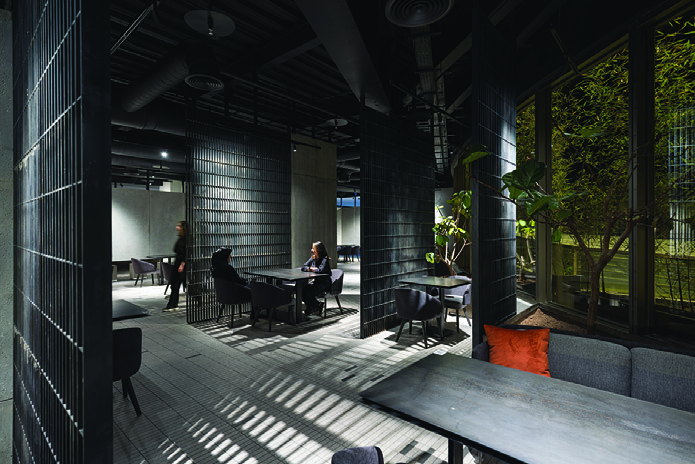
People of every era speak in the language of that era; they understand architecture, too, like everything else, in this same language. The language of an era is a living language nourished by the life and daily concerns of society. If architecture's presence in the life and affairs of an era grows faint for any reason, this poverty of presence spreads to language and culture as well. And if the language and culture of an era is emptied of architecture's presence, not only the path to future architecture but even the path to understanding past architecture becomes blocked. How could a society that lacks an architecture belonging to its own era say anything important and effective about architecture? Language is not mere words that can be borrowed from another people's culture with the help of a translation machine. Therefore, whether for returning to the architecture of the past or for entering the architecture of the future, one must pass through the architecture of today. If today's architecture possesses no force or vitality, no language will be forged capable of saying anything important about the architecture of past or future; and if it does possess force and vitality, the life of language must be linked to it.
Where should one seek the force and vitality of today's architecture? This force, whether little or great, where can one find it except on the ground and in the field of practice? Suppose we had a powerful architecture today — would we not want to extend it further? Or now that we lack a powerful architecture and are taking steps toward achieving one, do we not want to travel this path more swiftly? Or in the worst case, if we are mired in stagnation and lethargy, do we not want to prepare some effort for rescue from this stagnation and lethargy? Whatever our current condition, for connecting to the source of force and the origin of movement, what choice do we have but to turn to the field of practice of our own architecture today?
The magazine deals with words. But the referent of architectural discourse is on the ground. The magazine seeks, through the use of architectural discourse, to disseminate architectural values at the widest possible level across society. Now, if the existing reality of architecture does not possess many values worth disseminating, can one hope to project values superior to this reality and get ahead of it? We do not deny that one can get ahead, but on condition that we first become companions and co-speakers with the existing reality. Then, with the aid of this co-speaking, once again we may surpass the existing reality to penetrate the reality of the future.
Sometimes we see an Iranian architect present a design in a foreign publication that speaks beyond the current practice in society. Their work must be evaluated in the context of European or American architecture. It cannot easily be transferred to the domestic sphere. Those Iranian architects who have managed to establish a place within their international sphere of influence — when they return to their own country, they carry experiences and ideas that also affect the field of our architectural practice, and in any discussion of the field of practice one must inevitably take their presence into account. However, as long as the practical base and intellectual nursery of these currents has not been drawn into the country, they remain — for the domestic audience — remote from reality, imperceptible and intangible, despite all the wonder and commotion they have created. They appear peripheral and out of turn. The discourse of architecture, when removed from the environment of its practical reality, loses its vitality, meaningfulness, power of influence, and in short all its motivating force. The lamp of architectural discourse, if it does not draw its oil from the tree of practice, will see its flame quickly wither.
We do not have architecture so powerful that its field of practice would be vast enough for one to easily overlook mediocre and ordinary works and settle for nothing less than the outstanding and extraordinary. Today, even finding mediocre and ordinary works among the mass of bad works is not easy, let alone finding outstanding works above mediocre. Of course, the absence or scarcity of outstanding work does not mean that discussion and dialogue about architecture can be limited to famous and high-profile foreign works. The great flaw of such an approach is that since we inevitably borrow criticism and interpretation of foreign works from foreign sources themselves, their discourse — instead of penetrating to the level of architectural perception, that is, a perception rooted in the practice and reality of architecture — remains at the surface level of news and words. The fame and reputation that these works have gained in their own country may well be false, a product of the propaganda of influential media. But such fame and reputation, regardless of its truth or falsity, is at least grounded — for verbal and linguistic reasons — necessarily upon the description, explanation, and critique of the constructional reality of those works, and upon the introduction and analysis of innovations that have emerged within the fabric of the architecture of their own time, been put to the test of sense and observation, and have registered the vitality and pulse of architectural life in their name. How can this vitality and pulse, springing from the belly of architectural practice, be transferred to an environment that lacks such effervescence?
If in Western architectural publications there is room for discussion of unbuilt projects, it is because the holding of architectural competitions in those countries constitutes a fundamental and decisive part of professional practice, and intellectual effort and striving for innovation have found their way even to the level of speculative design competitions. But this very discussion and dialogue becomes possible in the light of a language that has been forged and refined in the field of practice. Theoretical discussion, however pioneering, cannot put forth its purpose without passing through the experience of practice. The evolution of practice, theory, and the discourse of architecture are interdependent and inseparable from one another. It may be that practice and theory, which are fundamentally and in the long run simultaneous, sometimes in the short term gain precedence or lag behind one another; but even a pioneering theory that transcends the practice of its own time in order to pave the way for the practice of the future still draws its language from today's practice. The discourse of architecture becomes more powerful and more vibrant in periods when the market of practice is more active.
The task of an architecture magazine in our current conditions is to patiently experience the difficult work of organizing architectural discourse. The aim of this experience is participation in invigorating the practical current of architecture. Perhaps a Western publisher — who naturally has no motivation to participate in invigorating the current of our architecture today — could present our past or present architecture to its particular audience using the same language and concepts of its own architectural discourse, which naturally draws from Western architectural practice. But how can an Iranian magazine speak about architecture and remain indifferent to its role in invigorating the country's architectural current?
Thinking about participation and effectiveness will tie our fate to the fate of the country's architecture. Our capacity, whether little or great, must be placed in the service of advancing the country's architecture. Our role in this participation is to pursue the architectural current around us and help clear the path for serious, honest, and faithful movements. Serious and honest movements, even if small at first — since they are the only movements that traverse the right path of architecture — are the most important subjects of our architectural discussion; and discussion of these very movements enriches the language of reporting and criticism and prepares it for more transcendent theoretical reflections.