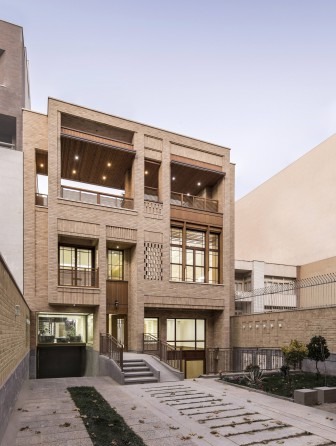
Emarat-e Nazar is a four-storey residential apartment beside the Zayandeh-Rud river, with a fitting view onto it. The structure is reinforced concrete (joist-and-block) and the services are organised around a central plant room, chiller and ceiling fan-coils.
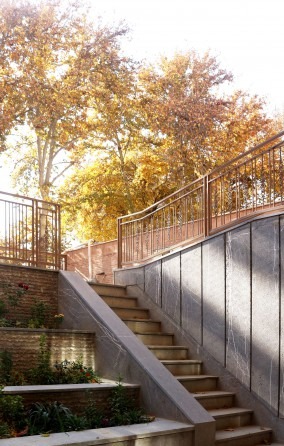
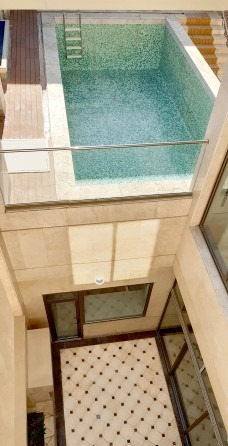
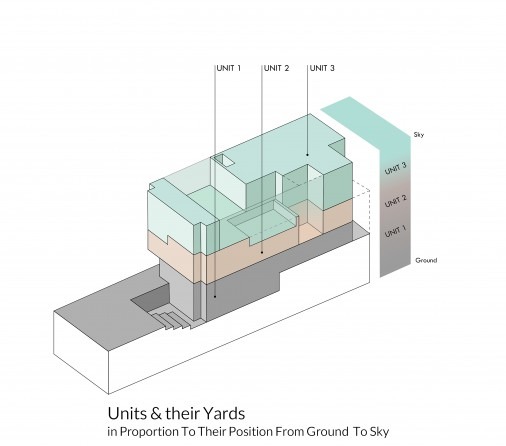
Across the four floors, three residential units have been designed in all, each finding a different quality through the relation it strikes with the ground and with the sky. The first unit binds itself to the ground and sits next to a sunken-garden well and a small private courtyard. By contrast, the topmost unit (the third) binds itself to the sky, with a green roof and a sight onto the sky. The middle unit, in turn, has found its own particular qualities through a dedicated courtyard set at its centre.
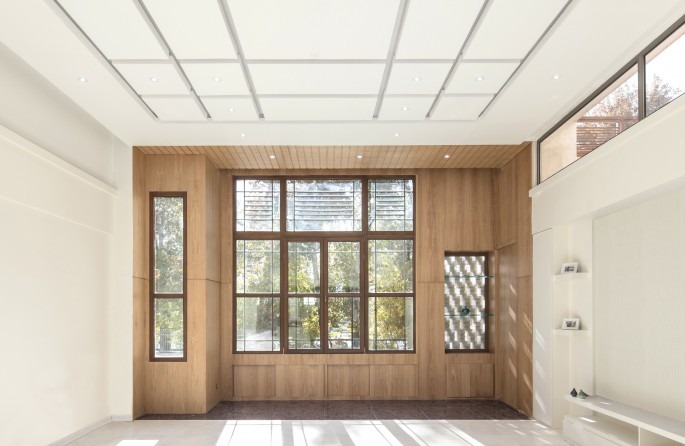
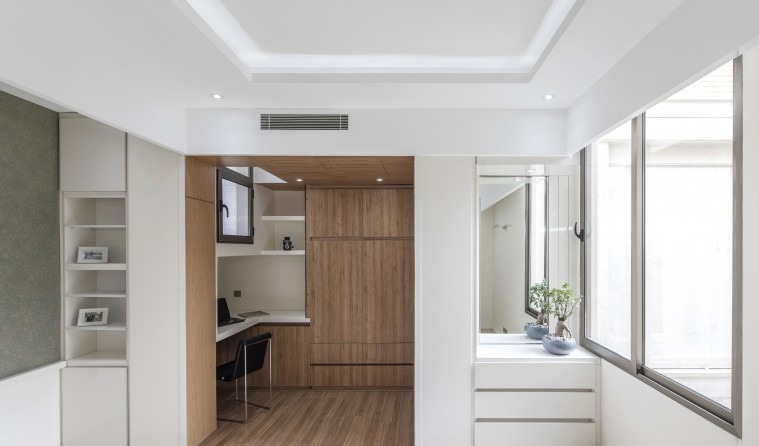
Despite the Zayandeh-Rud view, the project also has to contend with significant noise pollution throughout the day. In response, courtyards "set within the heart of the building" have been carved out, where it is possible to touch light and fresh air without being touched by the noise. By day, the back courtyard — borrowing the prospect of the neighbours' tall pines — and the central courtyard — which holds a live link between the family living room, the bedrooms and the kitchen — both perform well; nor have varied "vista qualities" from the different spaces and floors toward the beautiful surroundings been forgotten.
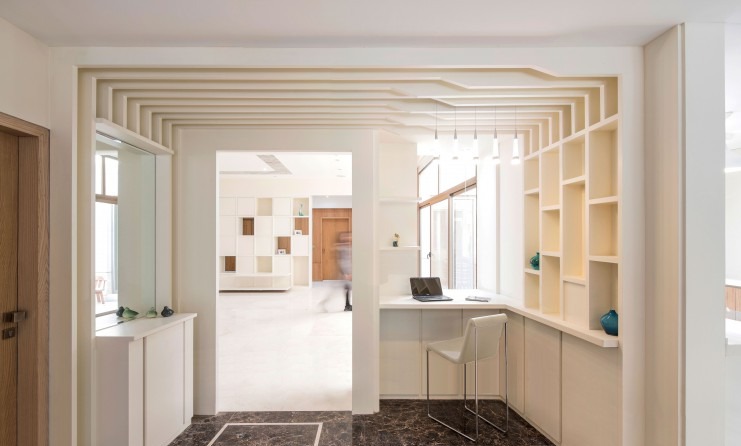
Another of the project's notable ideas is its spatial fluidity through "threshold and connecting spaces" rather than "dividing walls." Because of all this, although the apartment holds three residential units, every one of its parts maintains qualifying connections with the others, and the whole can in the end be called a single "emarat" — a mansion. Emarat-e Nazar has been an attempt to re-create the qualities of life of Iranian houses inside a contemporary apartment.