Faramarz Sharifi was born in 1315 SH (1936) in Tehran. In 1334 (1955), he entered the Faculty of Fine Arts at the University of Tehran, and over six years of apprenticeship in Houshang Sihoun’s atelier—during which the best lesson of each year was taking a study trip with Professor Sihoun—he graduated in architecture. From 1347 to 1372 (1968–1993), he worked within the framework of an architectural consulting engineers firm, and from 1372 (1993) onward, he has been personally and continuously active in the architectural profession.
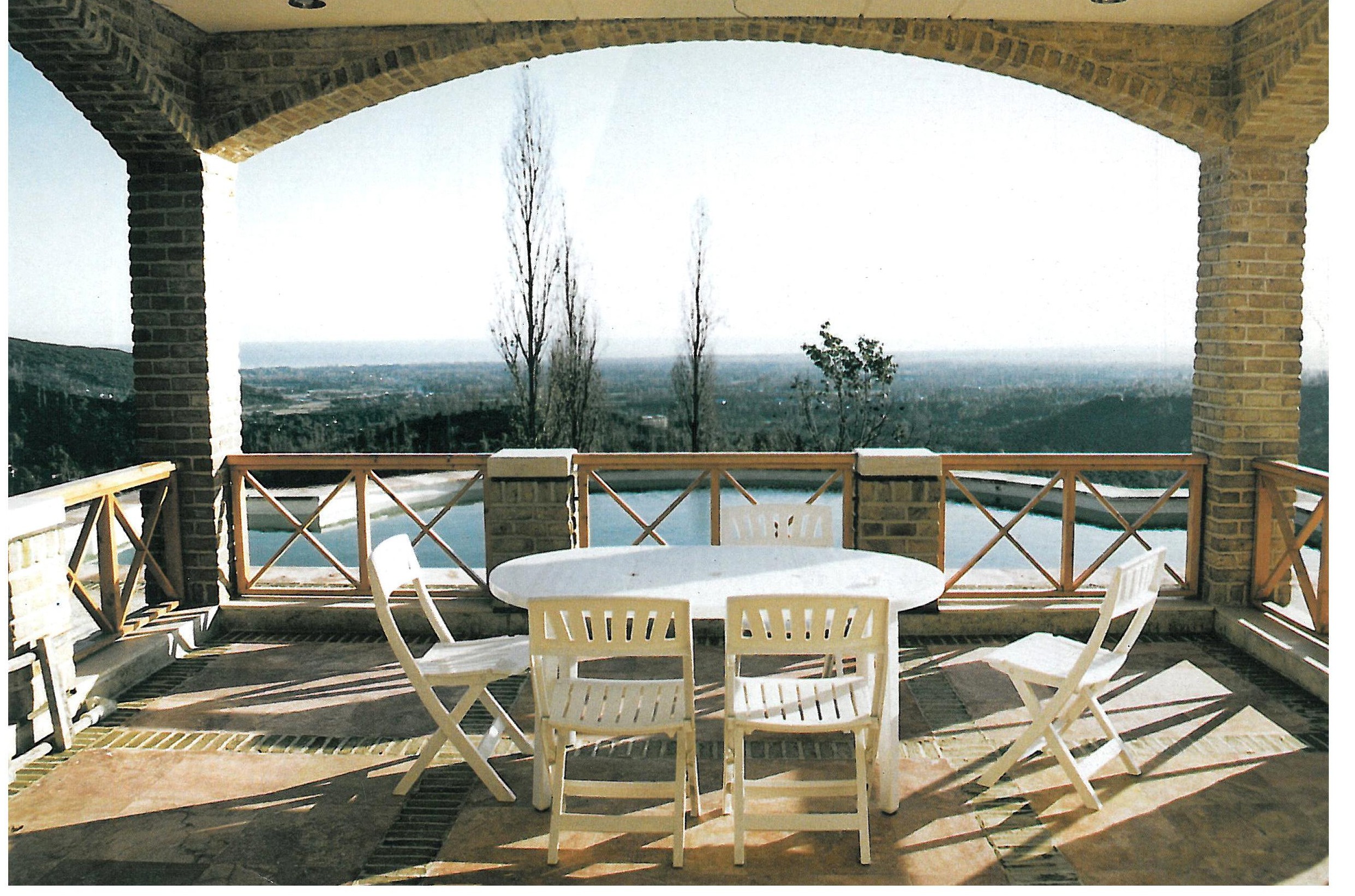
East view from inside the ground-floor terrace
Sharifi is among the experienced and distinguished architects in the field of residential design. All his projects are commissions from private clients who desire houses that, in addition to appropriate amenities reminding them of their social standing, possess dignified design embodying artistic and architectural values. He designs with extraordinary meticulousness, and throughout construction and completion maintains direct, continuous, and systematic supervision over execution—with his particular skill in directing the builder through precise expenditure of time and guidance, he delivers a product that meets the highest standards.
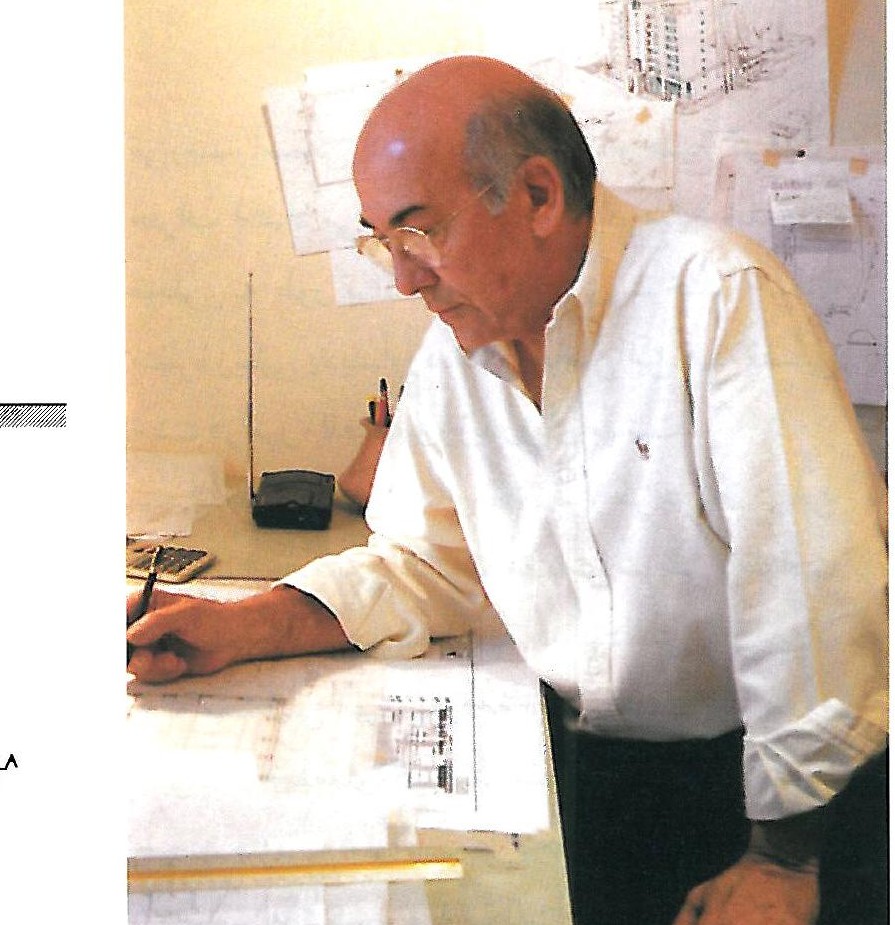
Faramarz Sharifi
His workspace is a personal office on a residential street—a compact, simple, and comfortable space arranged according to his orderly temperament: photographs and sketches of works in progress, strong freehand drawings of historic buildings in Iran and Europe, and a panel displaying memorable photographs from student days, friends, and colleagues. Books on the master builders of the modern era, exquisite houses, historic Iranian houses, and contemporary residential design in Europe, America, and Japan fill the shelves.
Sharifi has arrived at a clear and distinctive language in his work that makes his architecture distinguishable from others. In his works, which are very fresh and carry the scent of today, the flavor of past architecture is also perceptible—a sign of the architect’s receptivity and sensory understanding of traditional and vernacular architectural compositions. In his works, he employs simple and pure volumes and surfaces, but in corners and details, symbolic volumes appear. The variety of materials and colors is quite limited, but he creates balanced and stately compositions. Building surfaces are typically divided by framings created through differences in material levels, color, or texture, producing facades that are always balanced—an interplay of solid and void governed by a definite geometric order.
The Ramsar House
The selected example is a villa near Ramsar, built on a high hill in a forested foothill valley. The exceptional location has created an unparalleled vista: from three sides it overlooks orange orchards, tea gardens, and mountain forests, and from the fourth side a green and lush plain extends to the sea. The view ultimately reaches the horizon, where the sky meets the water. On this hillside, houses are scattered among the forest trees, creating a beautiful landscape—a space at the boundary of reality and the dream of paradise.
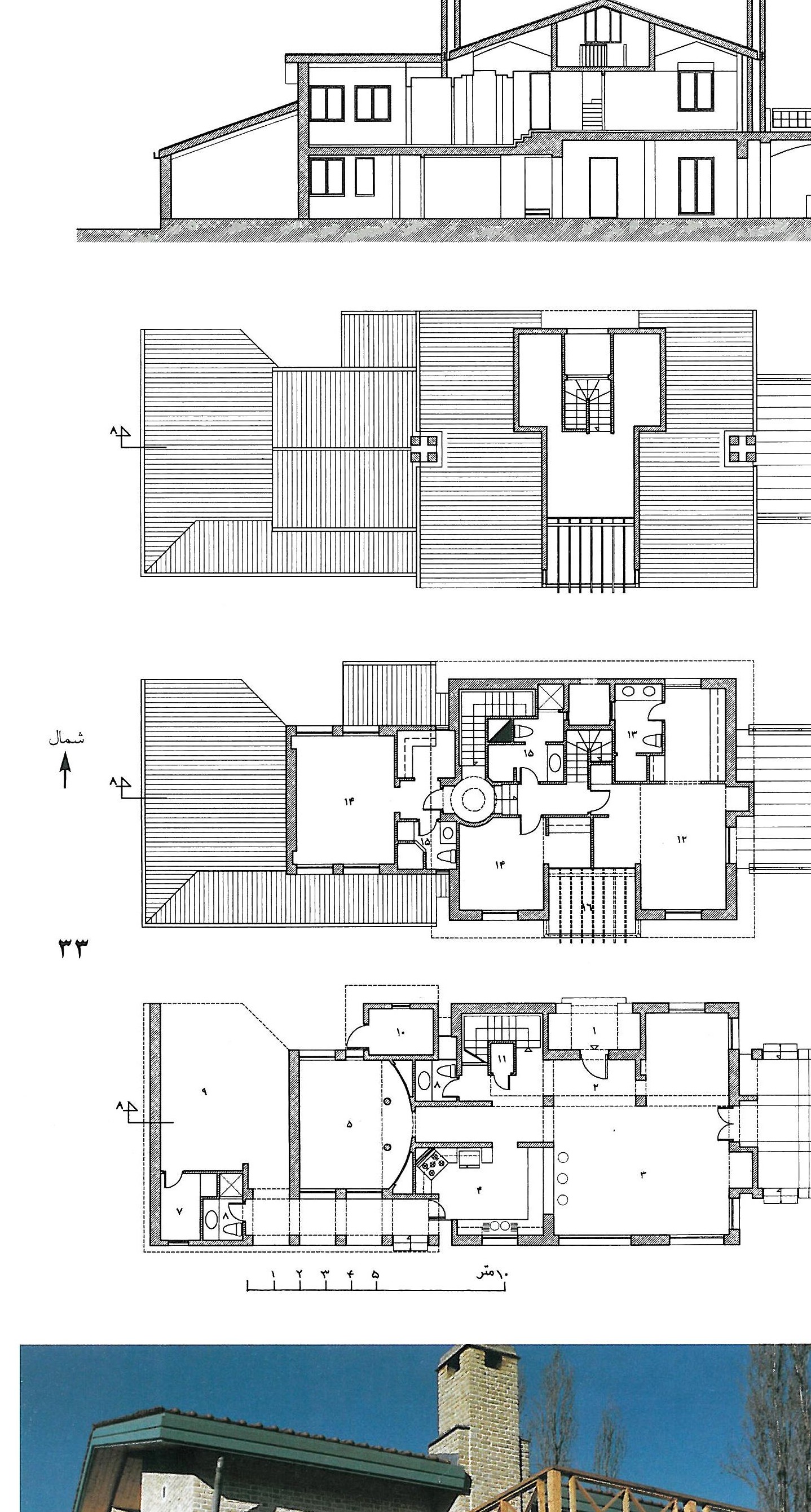
Ramsar House — longitudinal section, ground floor plan, and first floor plan
The house plan is rectangular, slightly angled relative to north, with the shorter sides facing north and south. The approximately 350-square-meter villa places living spaces on the ground floor and bedrooms and private areas on the upper floor. Covered parking with a portico on the eastern side connects to the kitchen. The main entrance, set back at the northwest corner for weather protection, features a continuous wall above creating a clerestory that ventilates the service spaces invisibly while enabling cross-ventilation throughout.
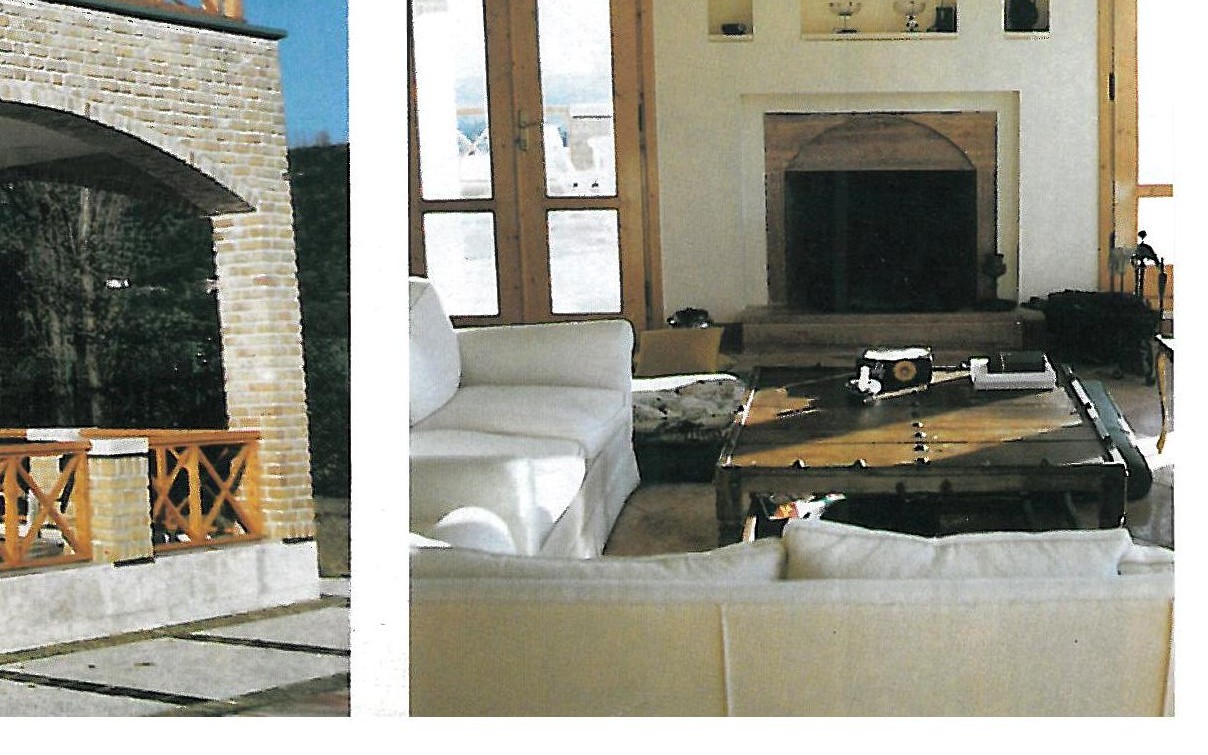
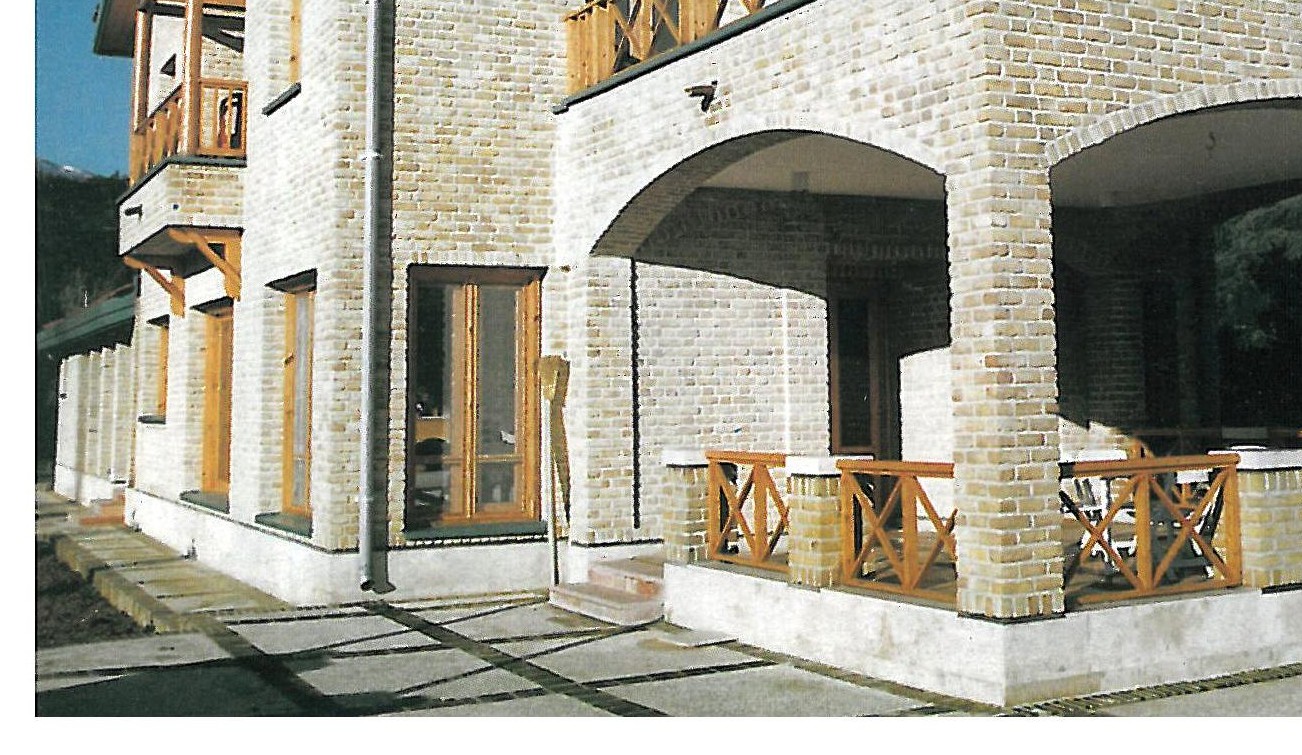
On the ground floor, framings, columns, and ceilings separate the living room, kitchen, and dining room while maintaining interconnectedness. The extraordinary view has not led the architect into excess—window frames and openings carefully frame the enchanting surrounding vistas. On the northern side, a covered terrace with wooden railings extends along the living room, overlooking the pool and, beyond it, the plain and the sea.
The upper floor houses three bedrooms with full amenities, with one set slightly lower and two others several steps higher. Beneath the sloped roof, a delightful independent suite has been created, connected by stairs to the bedroom corridor. The building presents a simple volume with brick and cement pointing, white glass-stone cornices, carefully executed parapets with white stone caps, and wooden railings, doors, and windows that reveal the architect’s attention to detail. The sloped tile roof runs from northwest to southeast.
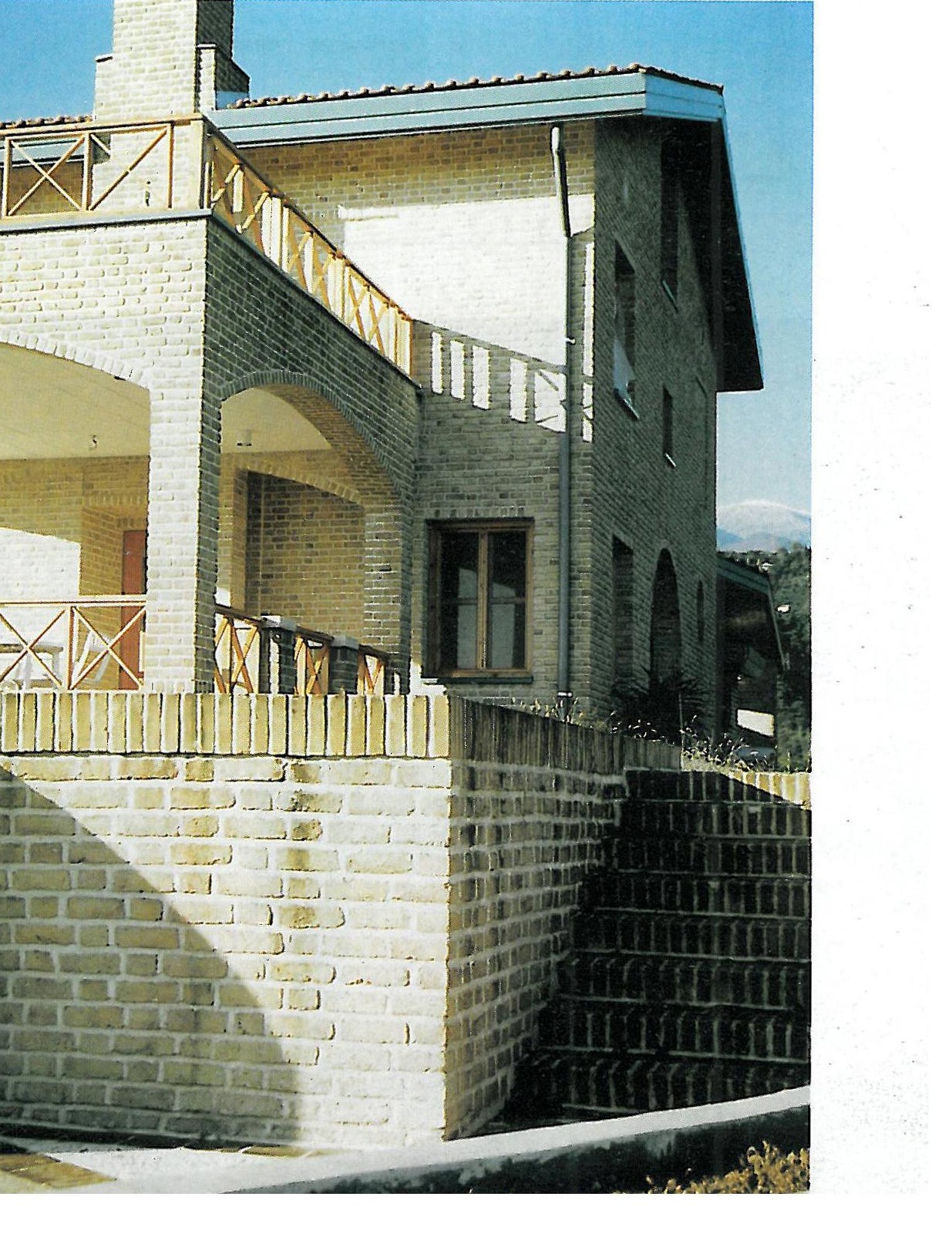
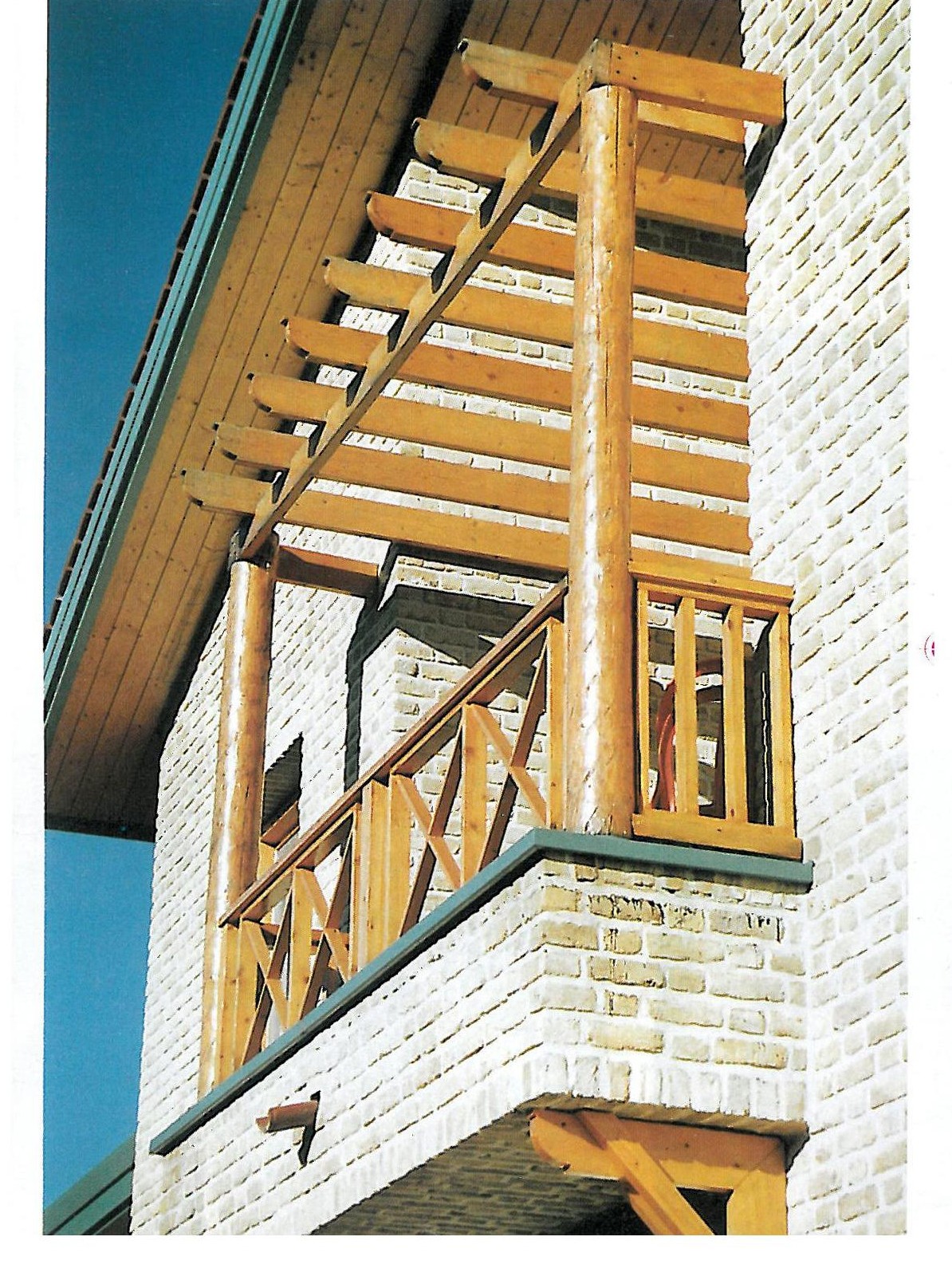
The building, while employing materials different from the surrounding environment, sits quietly and unpretentiously in the natural setting. Only the tall chimney serves as a marker of the building’s location, visible from the road curve. The proper positioning of elements and their intimacy are the main characteristics of Sharifi’s work in this building.
Other Works by Faramarz Sharifi
Sharifi’s works collectively create the impression that he is an architect who connects today with the concepts and values of past architecture, keeping the spirit of Iranian architecture alive in his work.
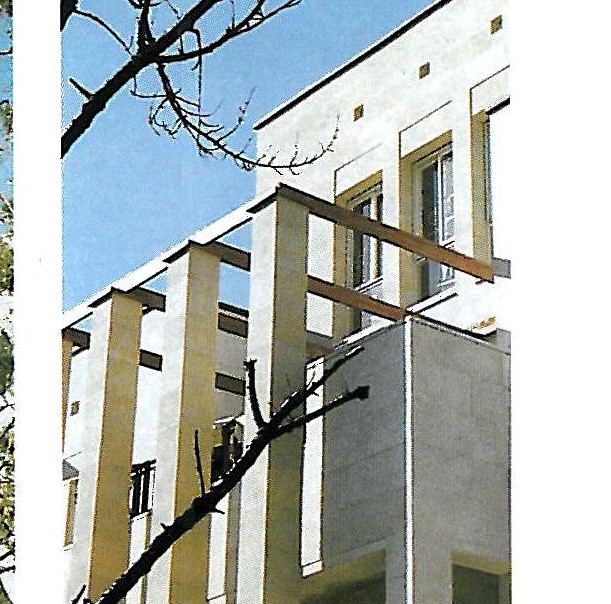
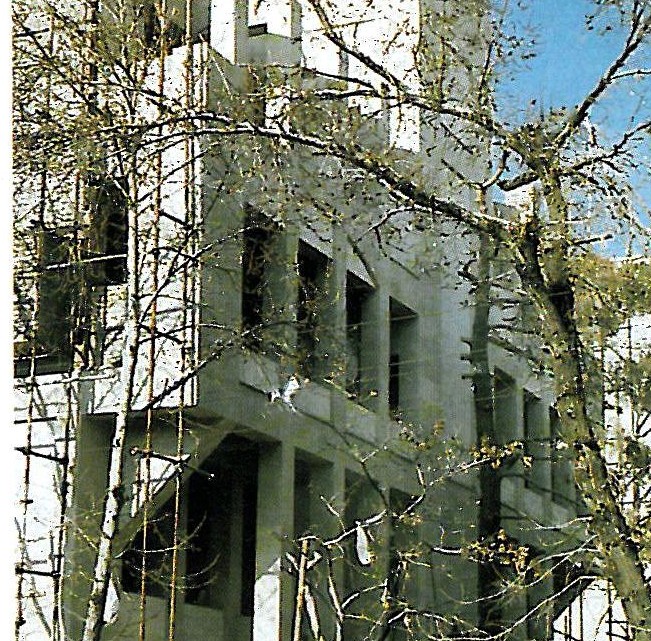
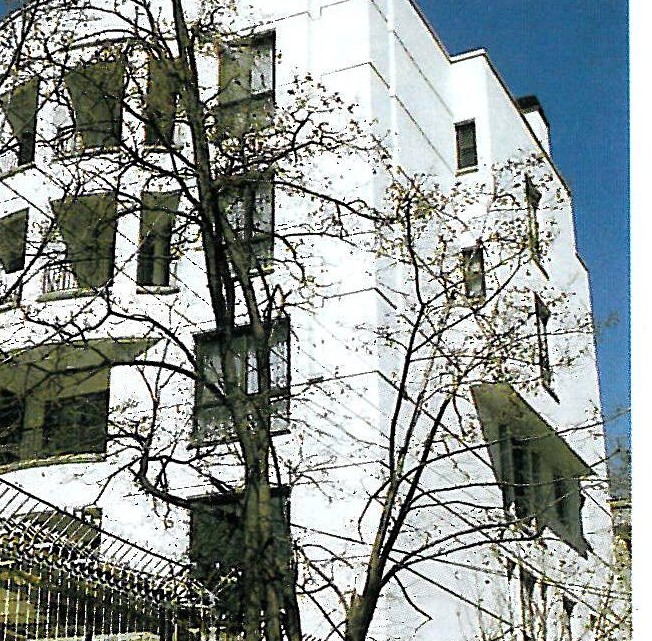
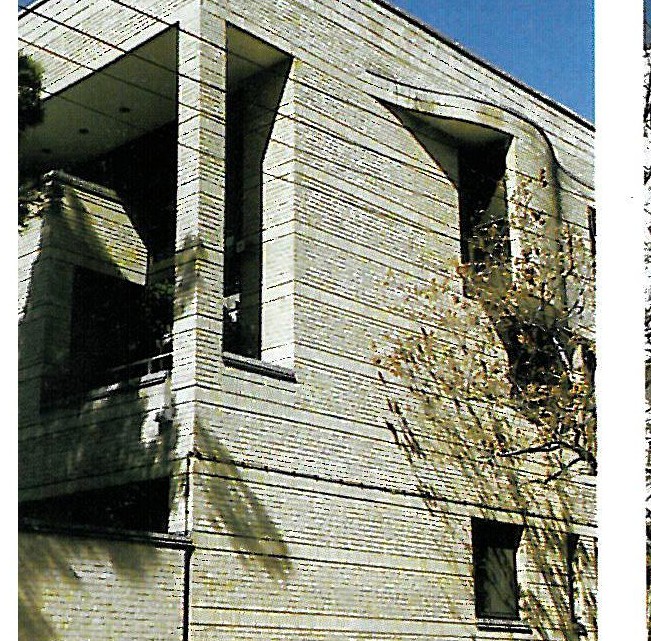
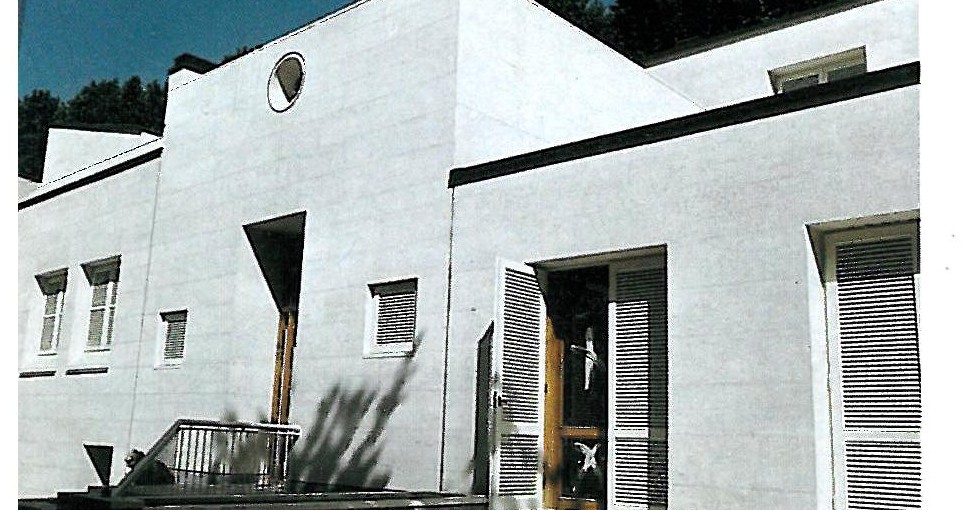
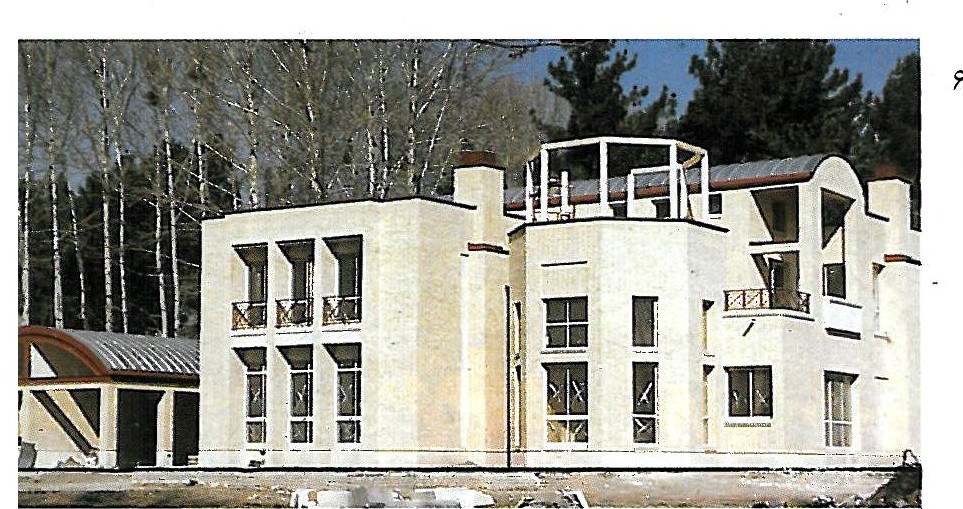
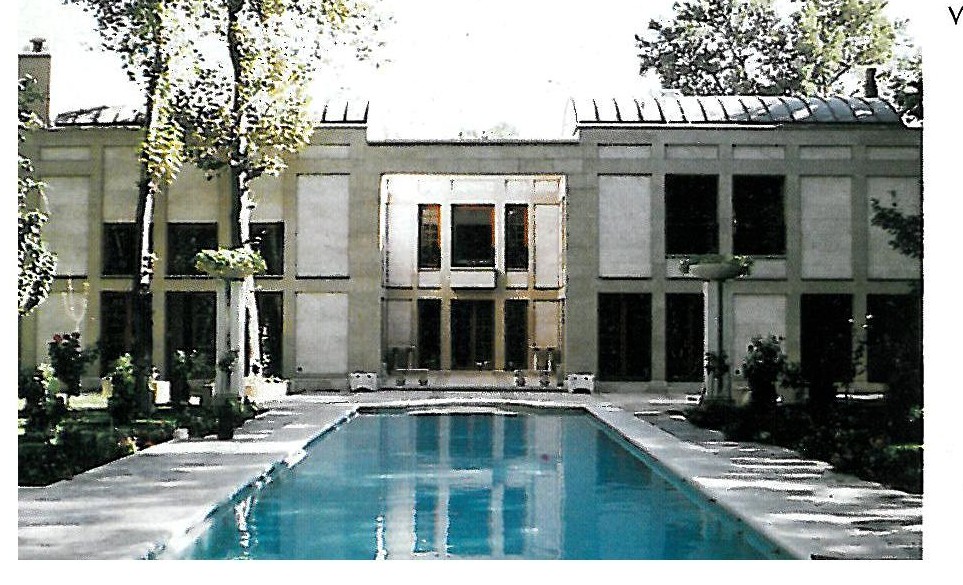
Other works by Faramarz Sharifi: Niavaran House, Ehteshamiyeh Complex, Neda Complex, Dibaji House, Saadabad House, Karaj House, Dezashib House.



