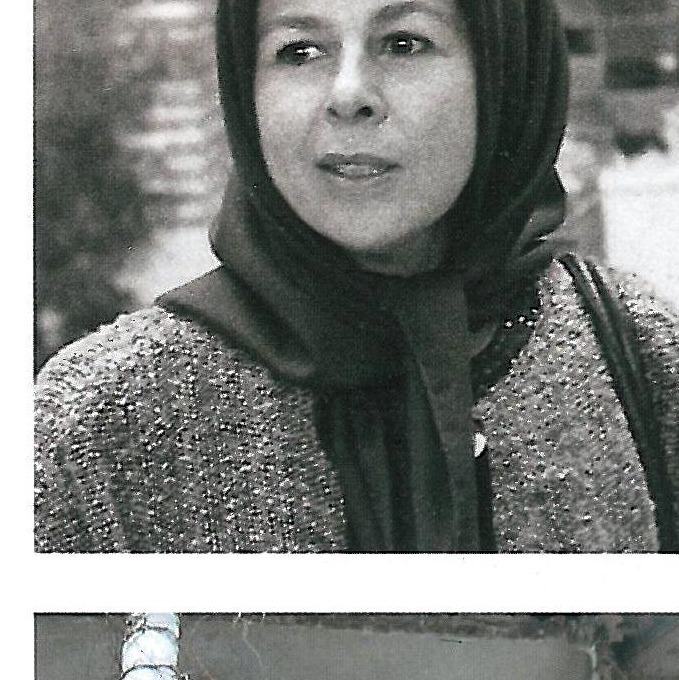
Faryar Javaherian
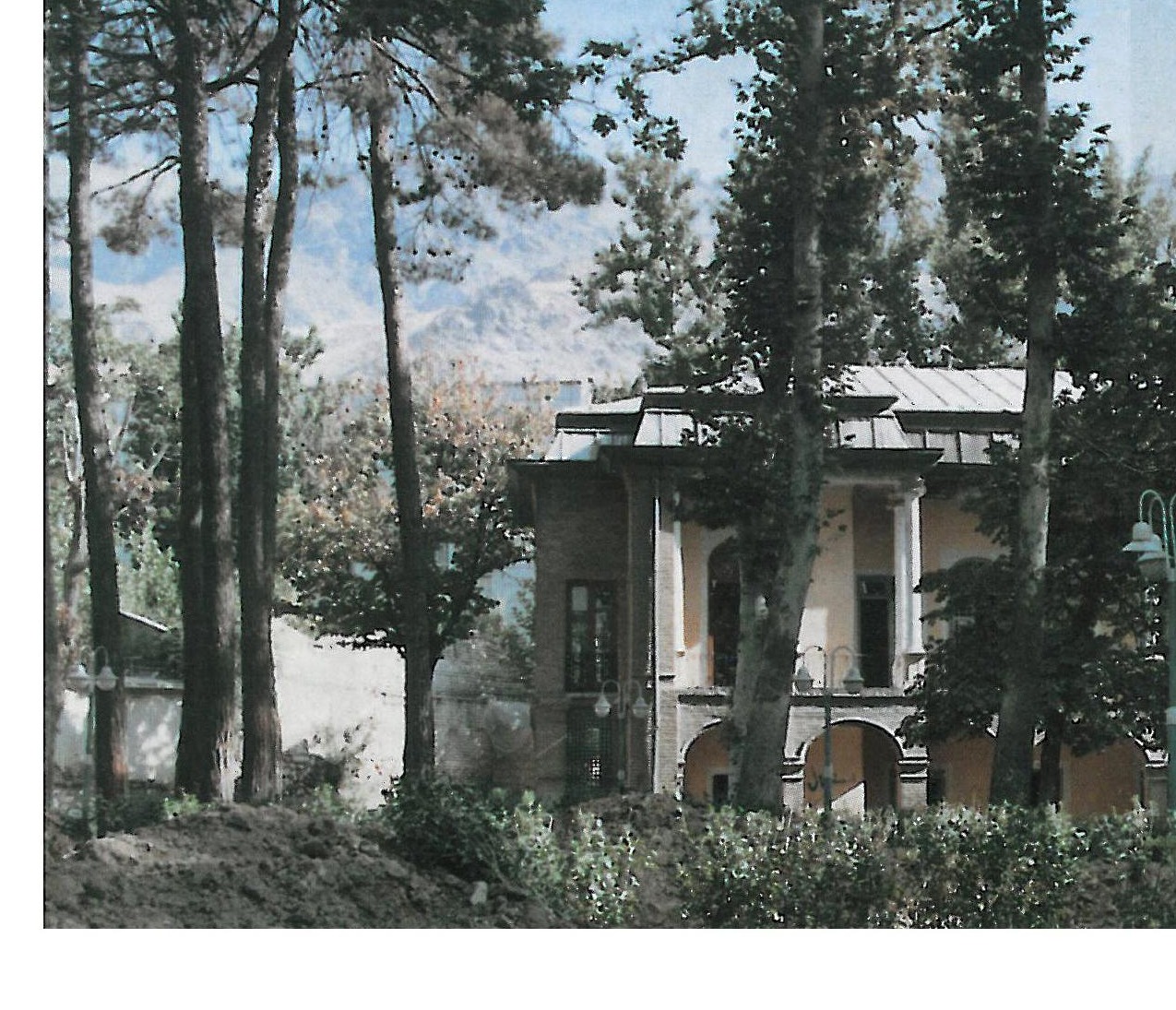
The 70-year-old Aala building before renovation
Faryar Javaherian, born in 1952, holds a B.A. from the University of Texas and an M.A. from Harvard. She worked for two years with Nader Ardalan at the Mandala firm, one year with Sardar Afkhami, and spent a year as a research fellow at M.I.T. Her built work includes the Pirayesh houses (at Pasdaran and Farmanieh) and a house on Maghsoudbik Street. She has also been the set designer on ten of Dariush Mehrjui's films.
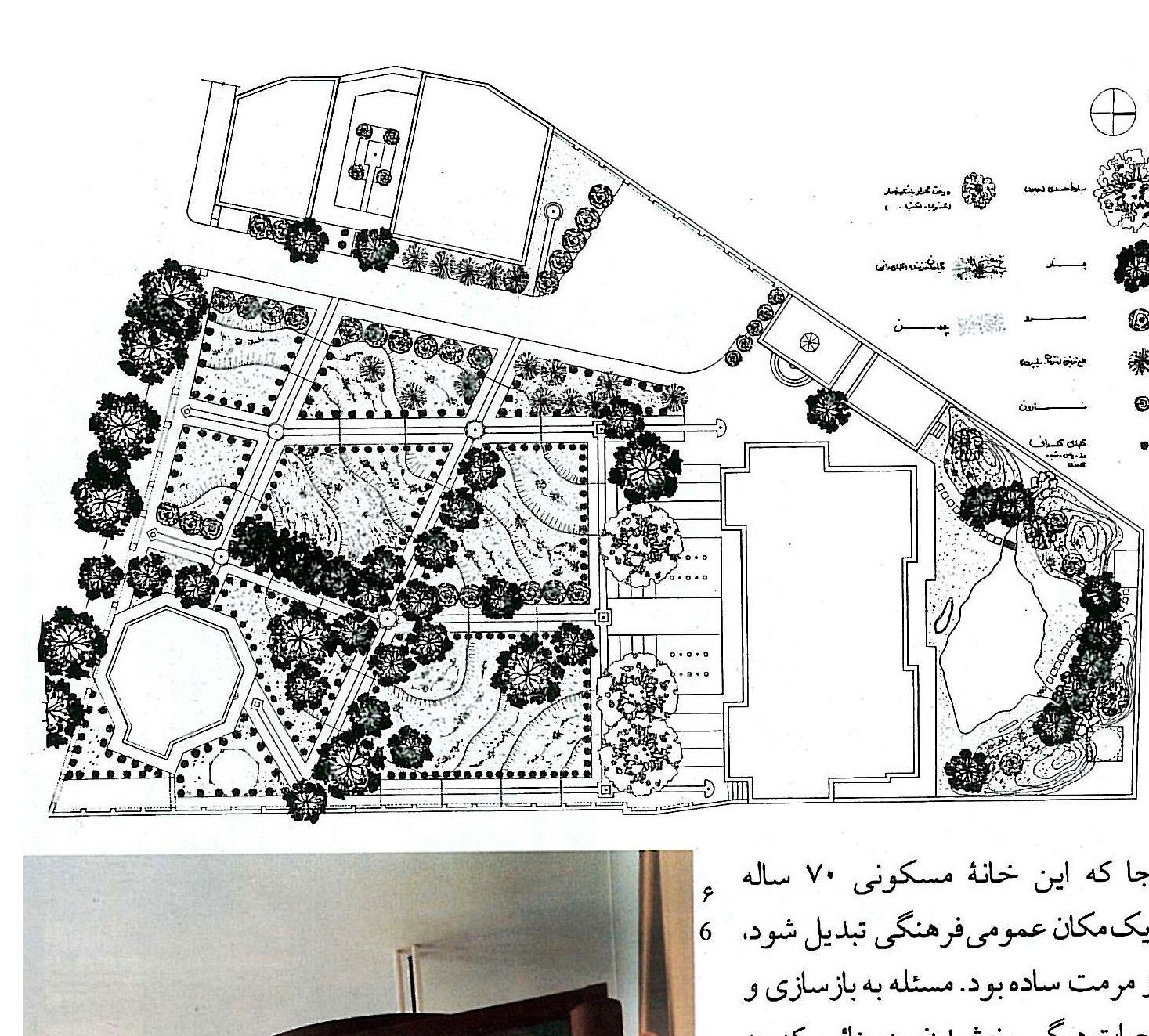
Site plan for the renovation
Renovation of the Aala House
Our language, as architects, is architecture; our words are stone and brick and plaster and tile and concrete and steel; our sentences are the shapes we give to those materials. Whether the designer likes it or not, architecture always shows something. The important question is what it is that we want to show. On the one side are architects who hold that the less meaning architecture carries — the more abstract it becomes — the better, because that way it is more universal; they speak from a position of the absence of meaning. On the other side are architects who believe the richer the meanings our architecture can carry, and the more layers of different meaning it can express, the better — and that the second path may in fact be the truly universal one. Iranian architecture can reach the world only by saying something new, and that something must be said in an Iranian tongue.
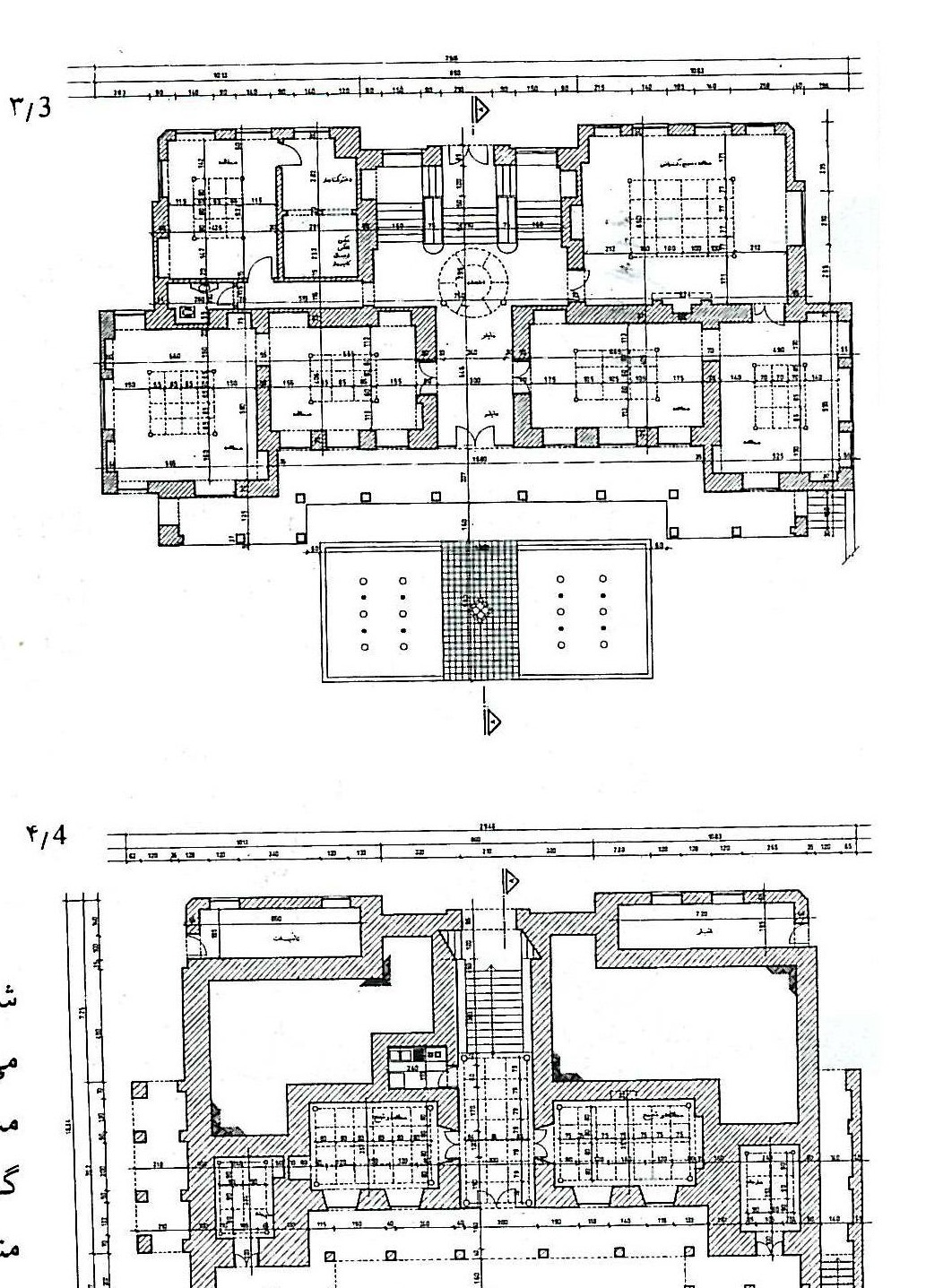
Renovation floor plans
A sense of historical continuity is a basic human need. It is a tunnelling down into the collective unconscious of our people, an examination of historical buildings, a direct engagement with history and an empirical learning of its techniques and taste. Restoring and reviving historical buildings, repairing them, is really an experimenting with historical experiences within the field of our own lives today — looking at history as a stock of material from which to innovate.
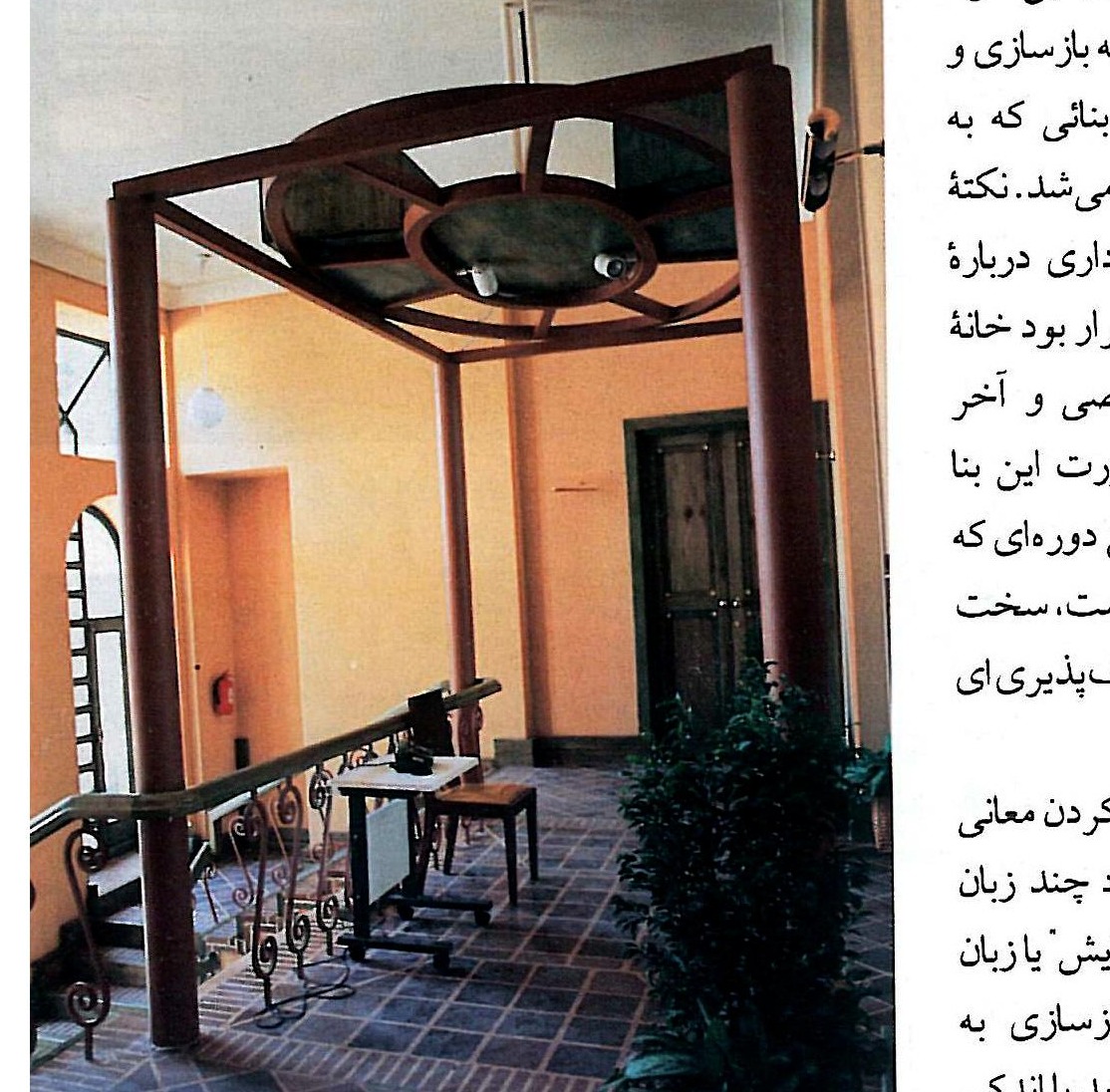
Continuation of exposed metal lattice and pillars
The restoration of the Aala house began in that spirit, and because this 70-year-old residence had to become a public cultural place, the task was more than a simple restoration. It was a matter of renovating, extending and giving another life to a building originally built for living in. Interestingly, the Municipality changed the building's intended function three times — first a cultural house, then a specialist library, finally the Iranian Calligraphers' Society — and in all three cases the building proved fully capable of that transformation, a flexibility one rarely finds in the architecture of this period.
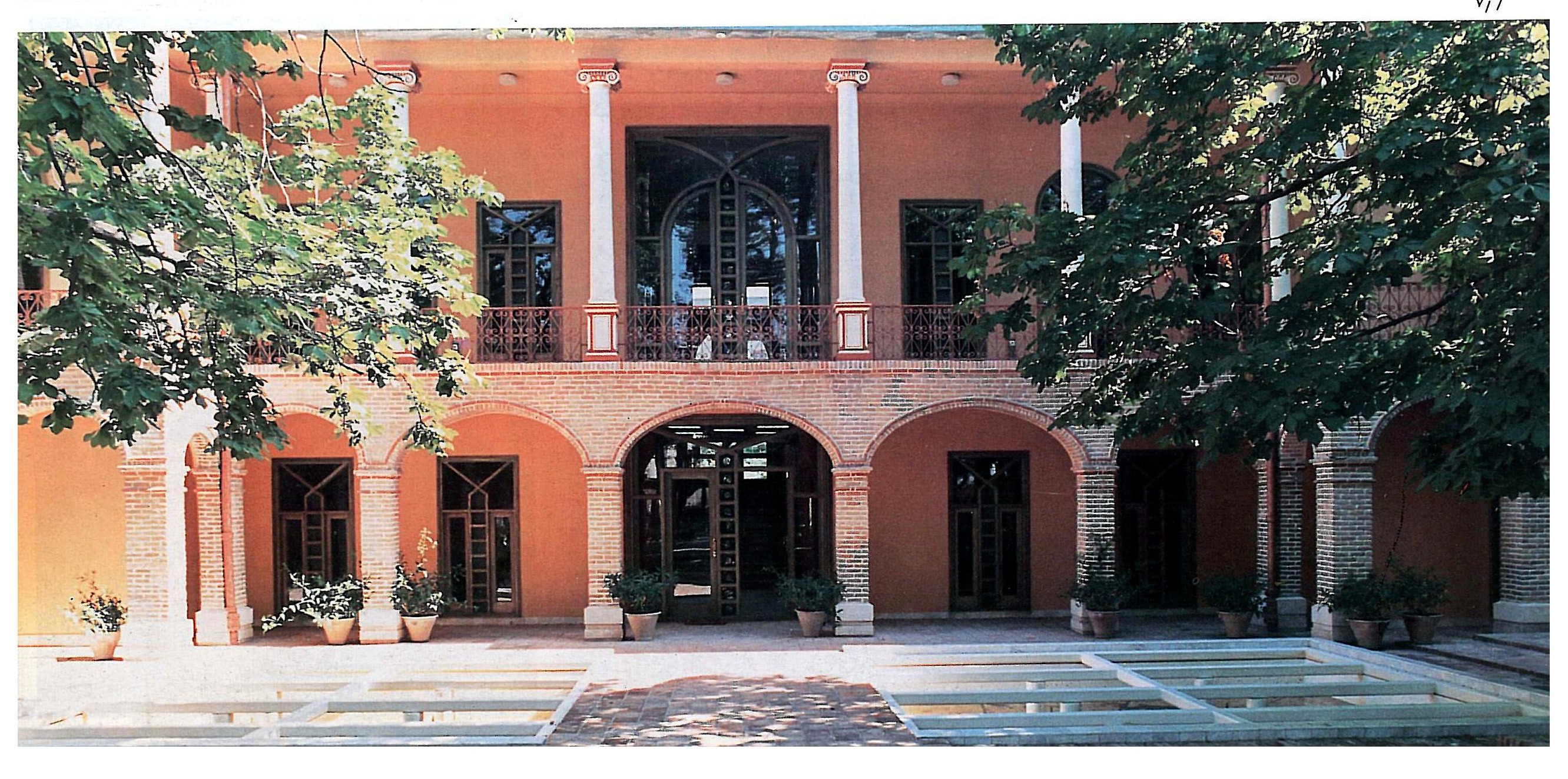
Main facade after the renovation
Since my own concern is above all to enrich architecture's meanings, it occurred to me that if we could place several “languages” of Iranian architecture side by side, we would arrive at a more compelling show, and a more compelling language. For that reason the restoration was carried out so that every new work stands a little apart from the old fabric. Two “languages” from two different periods of Iranian architecture are in conversation here. The old building has very thick loadbearing mud-brick walls (70 cm to 1 m), stone-and-lime foundations, and wooden-beam roofs that work in tension. The new skeleton has been built — with minimal excavation — in the earth-filled spaces of the ground floor, with concrete columns 15 cm clear of the old walls. An exposed metal grid rests on those columns and has been jacked up under the upper-floor ceilings to reinforce the first-floor slab. Continued above as a pergola, the same column-and-grid system loses its structural role and merely carries the mechanical and electrical services; it is the continuation of the structural conversation of the floor below. The game being played here is that of keeping the two languages in conversation. The glue holding them together is the very heavy timber work, abundant in both systems.
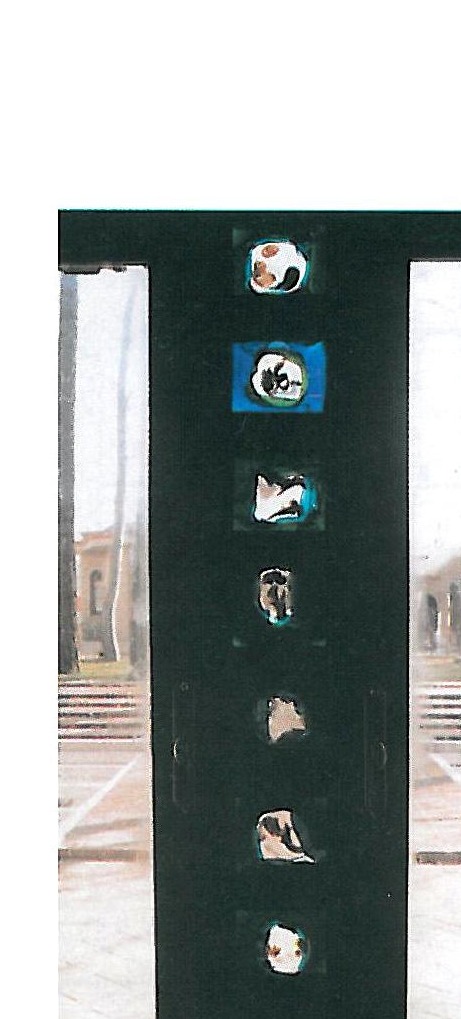
Old wooden windows
The old doors and windows were decayed and unusable; rather than repeat their original forms, the doors and windows were redesigned after Sassanid architecture. The old stained glass was likewise beyond repair, and the windows were enriched instead with a modern three-dimensional stained-glass work by Farideh Lashaii.
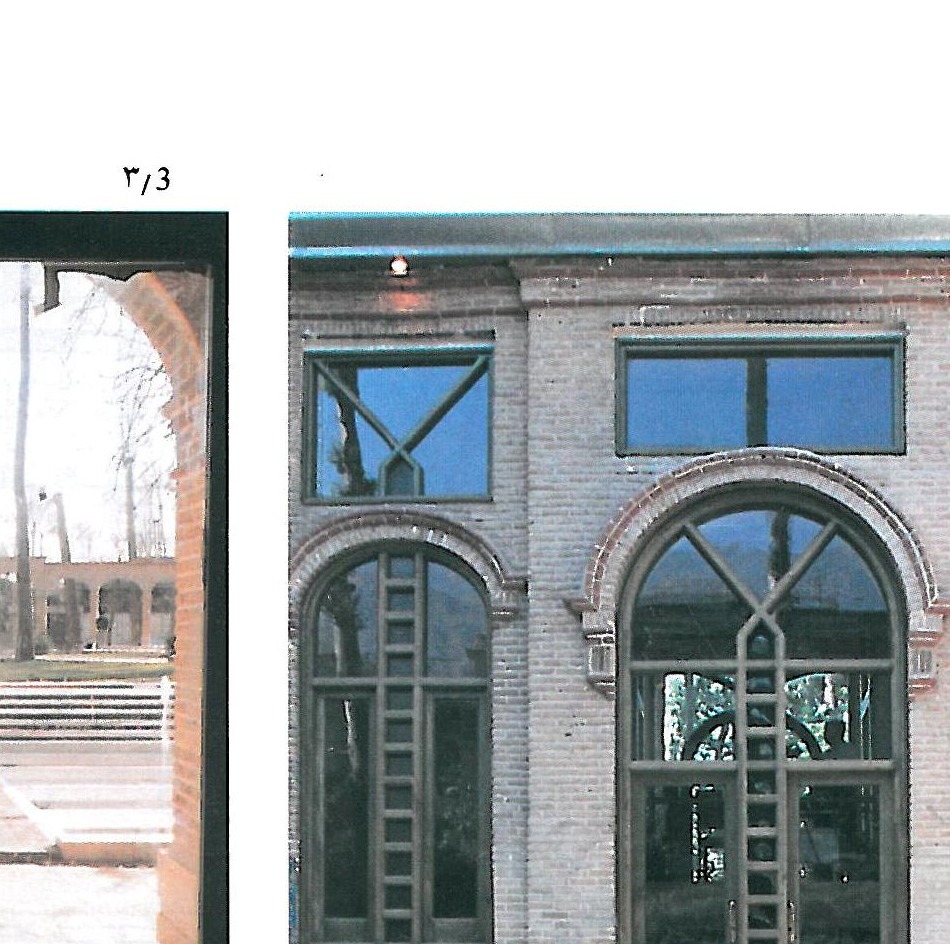
New wooden windows
The central space of the building is designed as a transparent volume, looking on one side into a Persian garden and on the other into a Japanese-style garden. A Persian garden of strict geometry recalling Kufic calligraphy, and a Japanese garden of flowing curves recalling Nastaliq, were meaningful for a Calligraphers' Society: the Persian garden is the front garden, full of bustle and coming-and-going; the Japanese garden is the rear garden, for meditation. Throughout the project, several languages are at work in the details; the real question is whether they have combined into something that pleases.
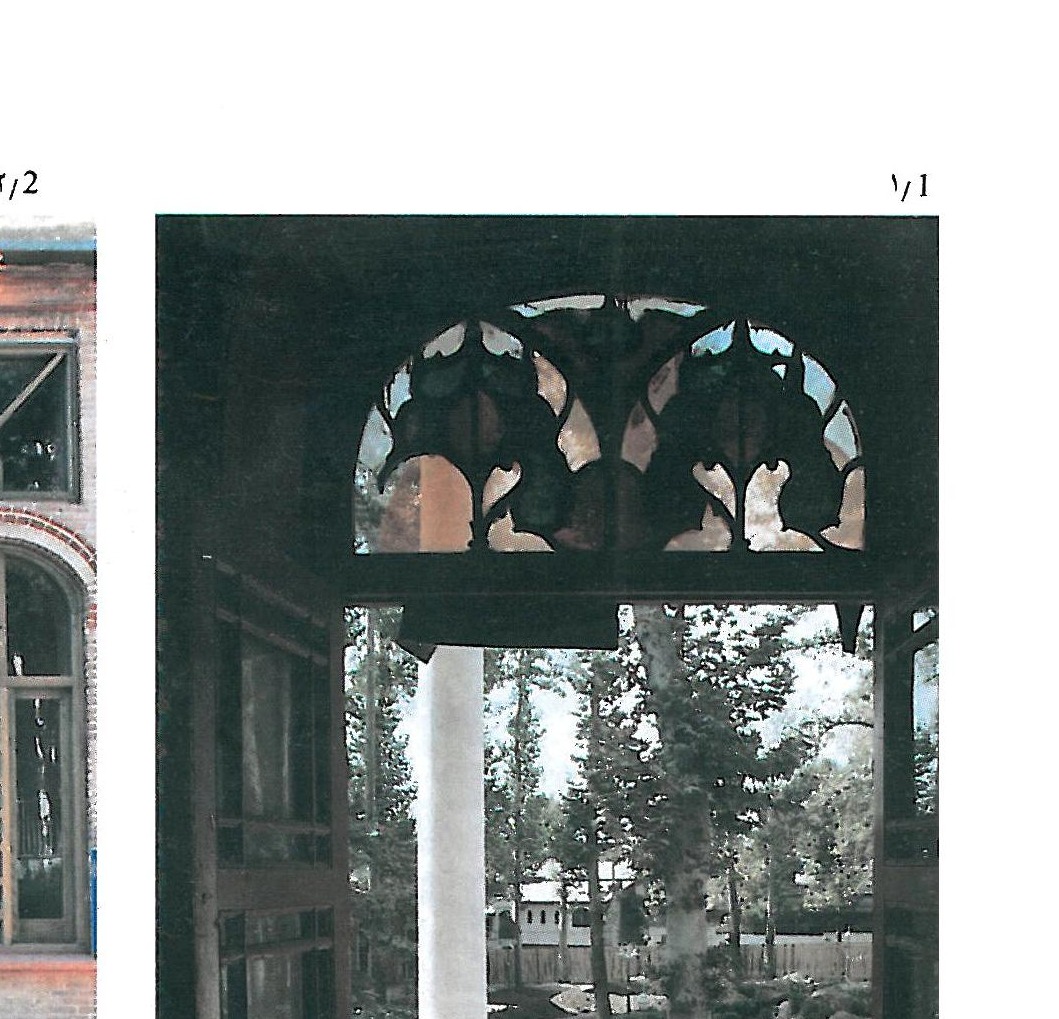
View of the building in the garden
What criterion do we have for answering that? Stirling says there are only two kinds of architecture — good architecture and bad. Vitruvius said good architecture must have three qualities: utility, beauty and firmness. For beauty, what criterion do we have? I have only one for myself: if the user of the space enjoys it and has a “good feeling” while in it, then the space is beautiful. When several languages from the history of architecture are placed visibly on one another and are at peace with one another, a contemporary Iranian, familiar and at home with this kind of architecture, feels good there.
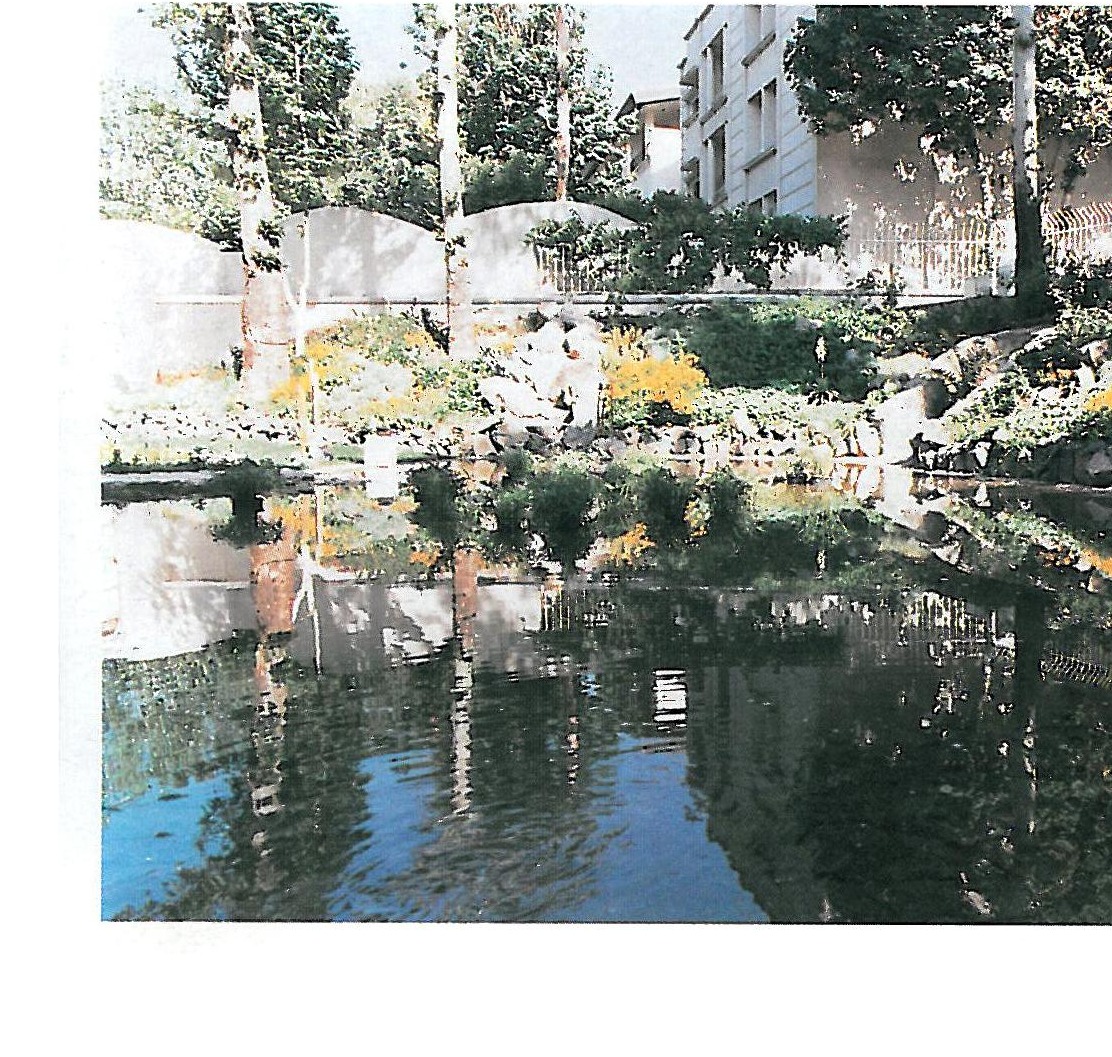
Pool and Iranian garden
This new movement of a history-minded architecture has now been at work for more than twenty years: from the restoration of the Abbasi Hotel in Isfahan to the Management Centre of Nader Ardalan; the Natanz guest-house by Kambiz Khosravani; the Velenjak housing complex by Mahvash Alemi; the Kamranieh houses by Minoosh Yavari, and so on. A glance at the path by which our other arts reached a universal voice reminds us that such syntheses take time — the movement that began with The Cow took twenty-nine years to arrive at Taste of Cherry; cinema needed roughly three decades to reach that synthesis. The last few years of isolation have in some way helped us to return to our cultural roots and to renew and revive our architectural heritage. One hopes that our architecture, too, will soon reach innovation on the world stage.
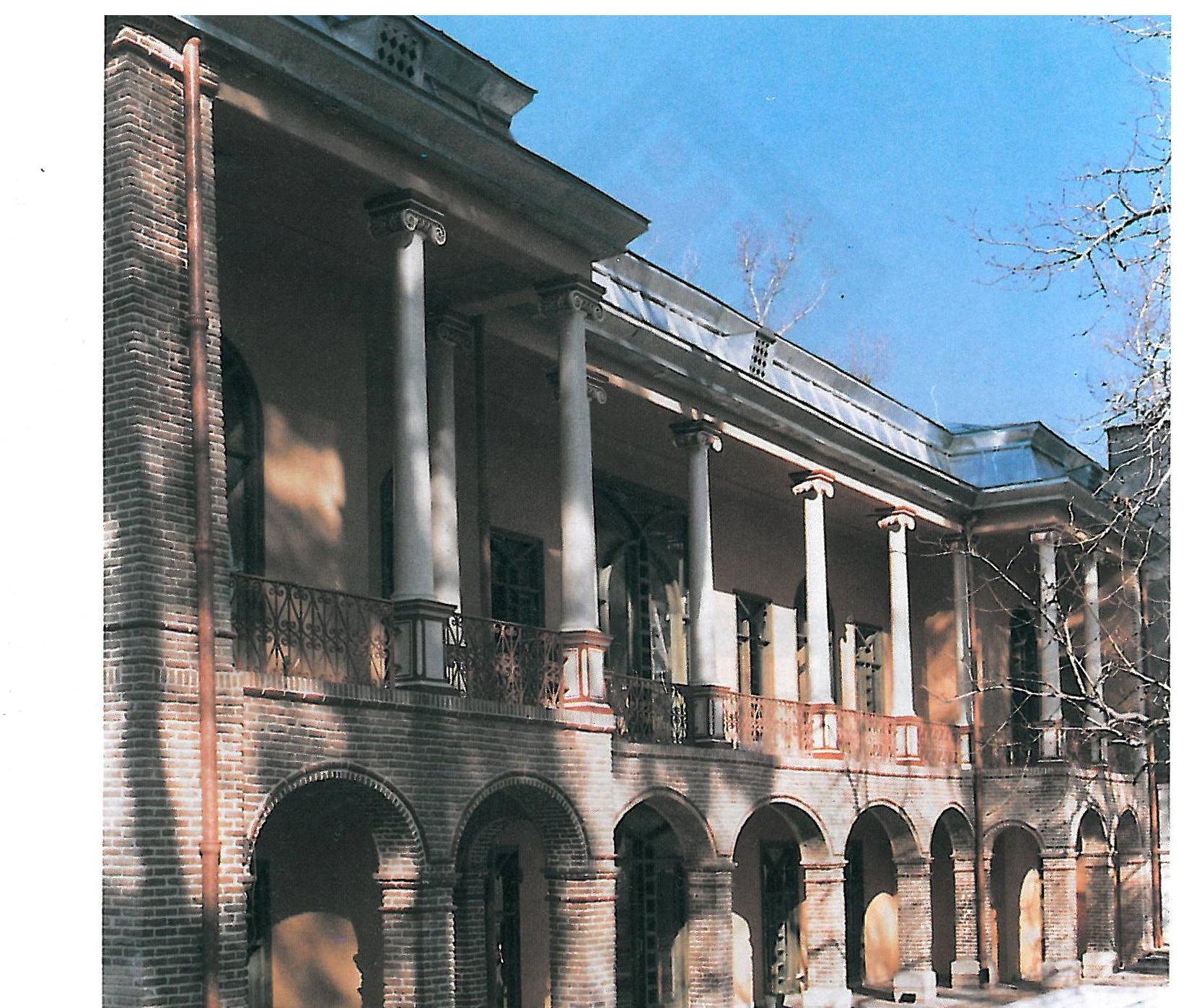
View of the building after renovation
I once asked the architect Seyyed Mohammad Beheshti how the architects of the Safavid period produced such works. He answered: “Because they were in good spirits.” If we do not have a magnificent architecture these days, it is because we ourselves are out of sorts — estranged, confused, lost. One has to be in good spirits first before one can pass good spirits on to others. My personal wish is to build an “Islamic” tower, or a high-tech mosque, one day, and to express in them the synthesis I have been looking for.
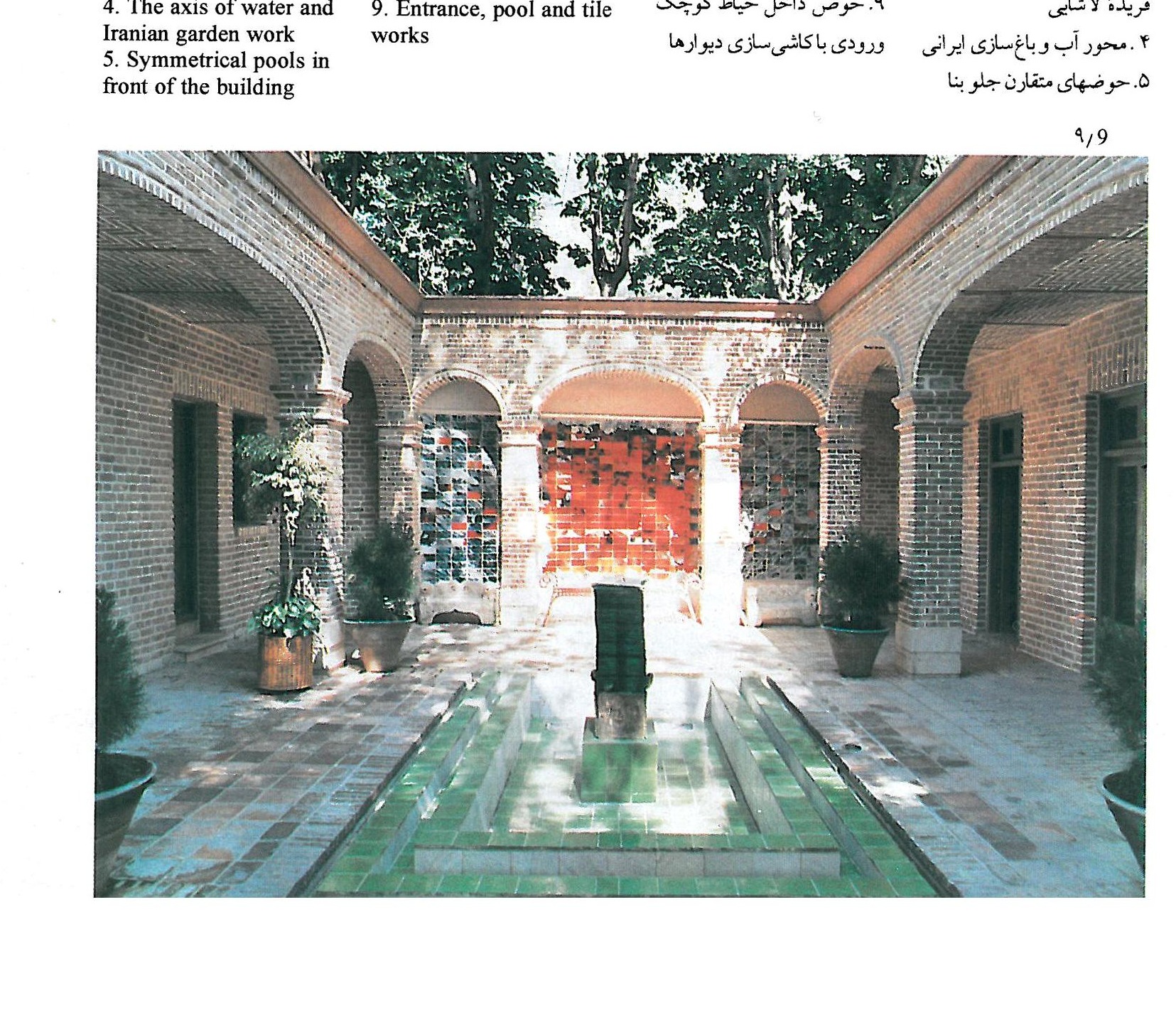
Entrance, pool and tile works
In closing, I would like to thank Mr. Mohammad-Ali Ghasemi, former mayor of Tehran's District 1, most warmly, for allowing me to design — from the smallest element (the design of the cafeteria's ashtray) to the largest frame, the programme of the whole 5,500 sq. m plot — with a single eye and a single hand.
Address: Darrus, Bu-Ali St., Yadollah Salimi St., no. 20.