Interior Design
Fereydoon Ave Modern Simplicity and Persian Finesse
Taraneh Yalda
Fereydoon Ave was born in 1944 in Tehran. He completed his higher education in America and began his artistic career in the 1970s in various artistic fields, particularly painting and sculpture. Design and production of furniture and interior design for residential homes and offices is a part of his artistic work that he has been more engaged with in recent years.
Fereydoon Ave is first and foremost an artist and an aesthete. Ave's gaze is not indifferent. He is constantly probing space and environment, analyzing objects in the play of light, and using materials and techniques alongside his painting. In furniture design too, he draws on the concepts and patterns of old furniture and often on the actual antique furniture that has survived from previous historical periods. He calls this use of discarded objects to create a new composition "recyclage."
Fereydoon Ave recognizes the differences between the achievements of three leaps or three transitional periods in the history of Iranian furniture — from Qajar to the first Pahlavi, then the second Pahlavi, and from the revolution onward — and the impact of these transformations on the lifestyle of Iranian people.
He says: "Iranian furniture was the carpet and the takht [platform]. Mattress and cushion. The takht itself belonged to places where someone more important than the rest — who all sat on the ground — existed and sat on the takht to display his importance and status. The Qajar kings who traveled to Europe probably brought back furniture or images of it. Iranian carpenters also added their own elements to it, which incidentally were quite charming. Of course the British and Russian embassies also had furniture and tried to impose their own taste on the Shah and the affluent class in Iran. But none of these had any roots."
In Ave's view, the genuine and widespread inclination toward European furniture emerged during the Reza Shah era. Reza Shah considered Germany the model for Europe and invited a group of German engineers to Iran to build cities and edifices in the modern style. In the Europe of that time — the 1920s to 1940s — Art Deco was the prevailing style, and in Iran the same furniture was made by Iranian carpenters and found its way into the reception rooms and salons of the so-called modern class of that era. "Those wide-armed sofas, large and heavy furniture of walnut wood and dark velvet. But the source of distinction in these salons was still the Iranian carpet and nothing else. Of course, again under the influence of foreigners, Iranian carpet developed simpler grounds, and contrary to the Iranian taste of embellishing all patterns, carpets with simpler grounds became fashionable."
"After the Reza Shah era, this modernization, having passed through its infancy and childhood, entered its 'adolescence' and 'nouveau riche' phase. It truly wanted to have many things but didn't know exactly what, and this is where imitation of European fashions replaced an Iranian style. This was a European way of thinking after Louis XIV. Before that too, the Renaissance had the last word in Europe. And after that, the nineteenth-century British Empire. In any case, we became engaged in imitating European fashions, without any connection to Iranian life and its customs. They would put furniture in the reception rooms and close the door. But all of this itself belonged to a period of growth and transition."
With the 1979 revolution, all these tastes and fashions were in some way called into question. Everyone was forced to pause for a moment and think about where in the world they stood. Of course this reflection had also occurred for Europeans. Their artists and architects too, while preserving the fundamental achievements of twentieth-century Modernism and respecting the teachings of the Bauhaus and the Modern architecture movement, tried in the last quarter of the twentieth century to distance themselves from the International Style and through revisiting the past sought to search for individual identities and the pleasure of living in ethnic and cultural signs and traditions. So they spoke again about decoration and gave diverse color and flavor to the space and place of living in their cities.
It is in this context that Fereydoon Ave wants to place the simplicity and finesse of modern thinking alongside the heritage of the past and employ his art in the design of markers from three historical periods. But he places real conditions and practical obstacles as his first priority. Responsible and realistic, he says: "I want my work to be executed.
So in today's Iran, I give a design that the maker can understand and build. I must design based on the common ground I share with the craftsman. My common ground with him goes a little beyond carpet and takht. So it's useless to give complicated designs on paper and not reach results. Whereas if I give a design that both the maker understands and the viewer and consumer appreciates, then my work takes off and touches the heart. Because execution means the passage from 2D to 3D and the gaining of spirit and life by the décor or object in a real and tangible space..."
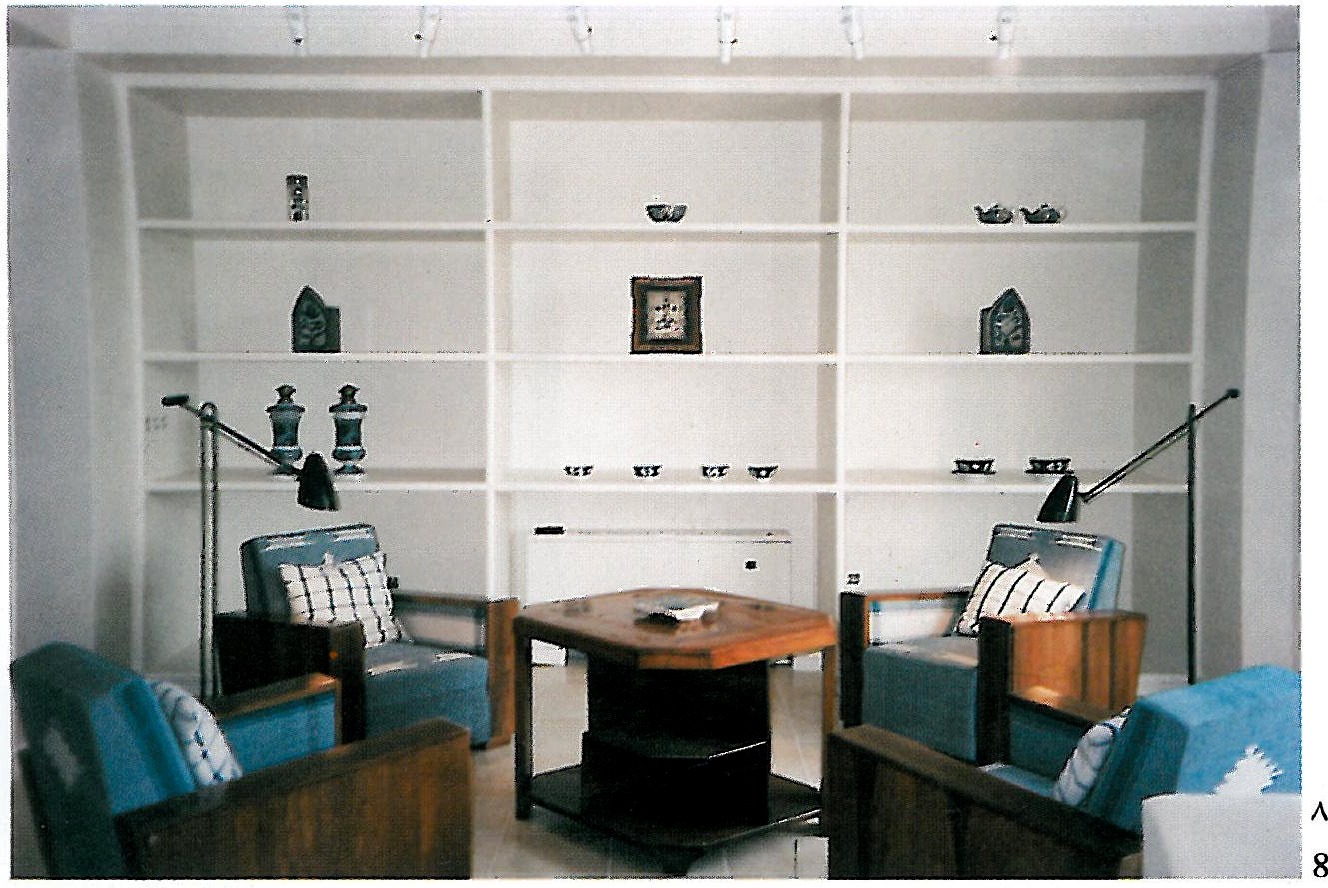
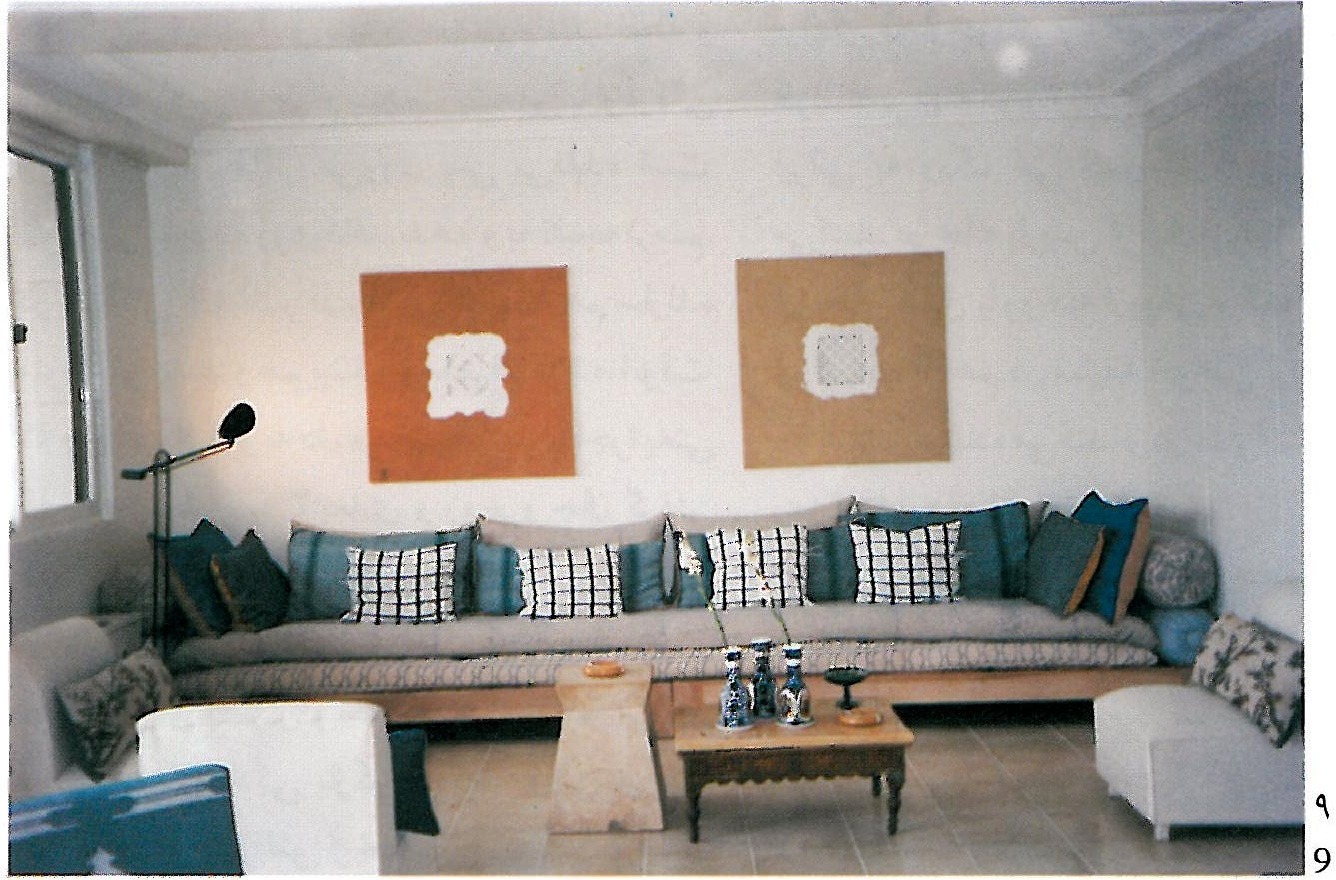
Ave calls this work honesty and truthfulness. He refers to his visual experiences and feelings and recounts them simply. When he sees that his memory and feeling of Isfahan is water and earth, he makes the color of water and earth the basis and essence of his work and proceeds based on these two elements. Is it not the case that the tiles of domes and streams and muqarnas of Isfahan, the blue-painted vessels and hookahs, all originate from this same blue feeling? (See the Isfahan house.) In Isfahan, he commissions simple qalamkar (block-printed) fabric with blue patterns on white, and in dining furniture and bedrooms that evoke tents raised on the desert plain, he uses Iranian denim fabric in light and dark blue. He uses European elements in accordance with the European spirit, and of course fine Iranian carpet, which has also been established in the taste of the European elite for centuries. And in the Farzan Rouz publishing office, he uses Iranian paintings and objects.
For undertaking a new project, Ave first considers the personality and purpose of the client and then their budget and local possibilities. He says: "Although I have a style of my own, this style is very flexible." He finds remnants from demolitions in corners and gives them a new role and status in a new place. All materials used in his works are Iranian. The paintings have all been created in Iran.
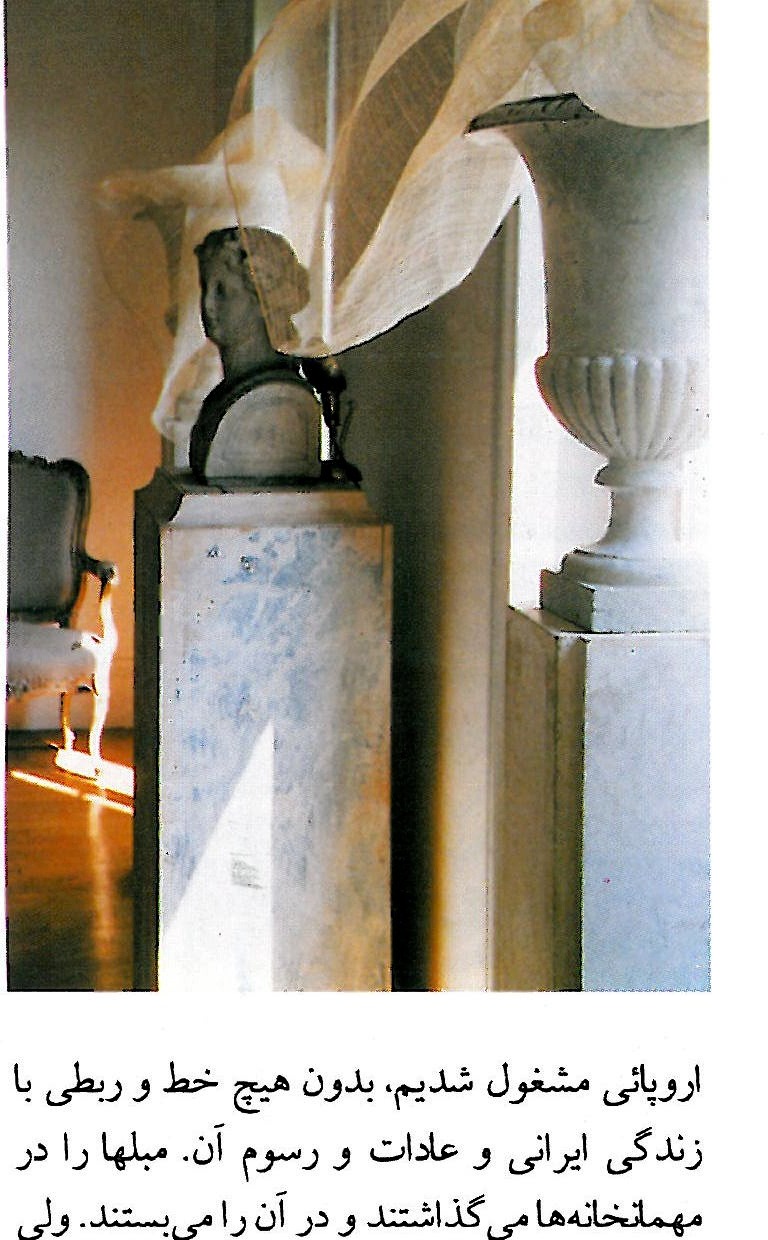
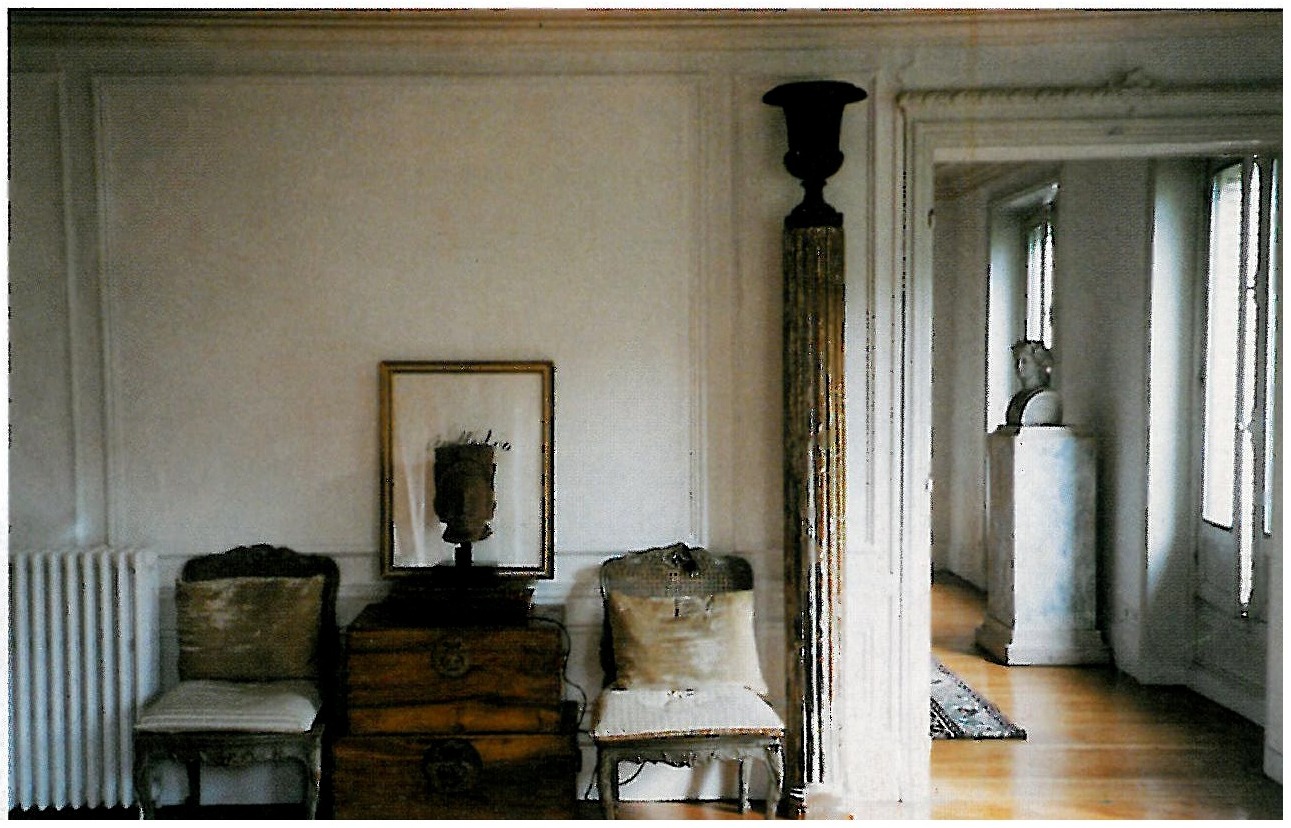
The Paris Apartment: Nineteenth-century atelier easel, École des Beaux-Arts painting, and on it a head. Nineteenth-century Chinese trunks. Nineteenth-century Chinese stone sculpture. Gravure painting. Eighteenth-century French chairs. Nineteenth-century French column. Tulle.
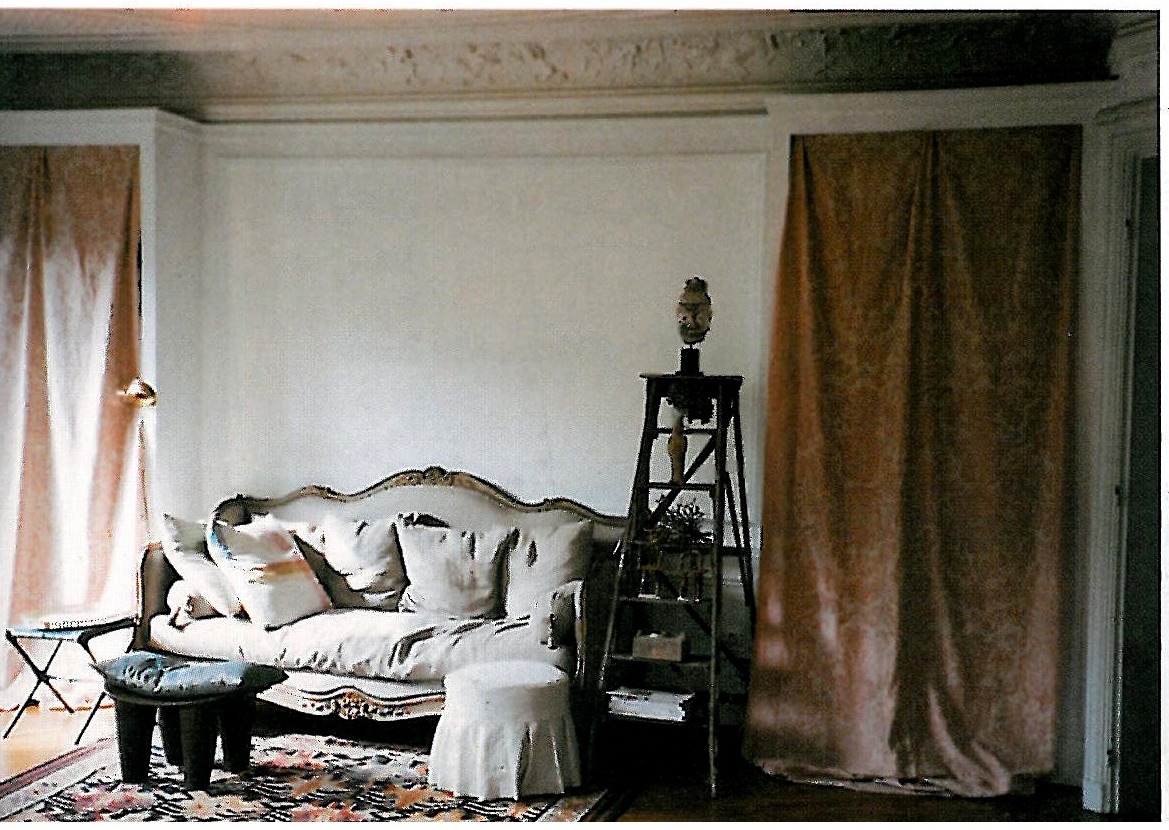
African stool — Qazvin leopard-pattern kilim. Eighteenth-century French sofa. Bahman Dadkhah iron stool. Fortuny curtains from Venice.
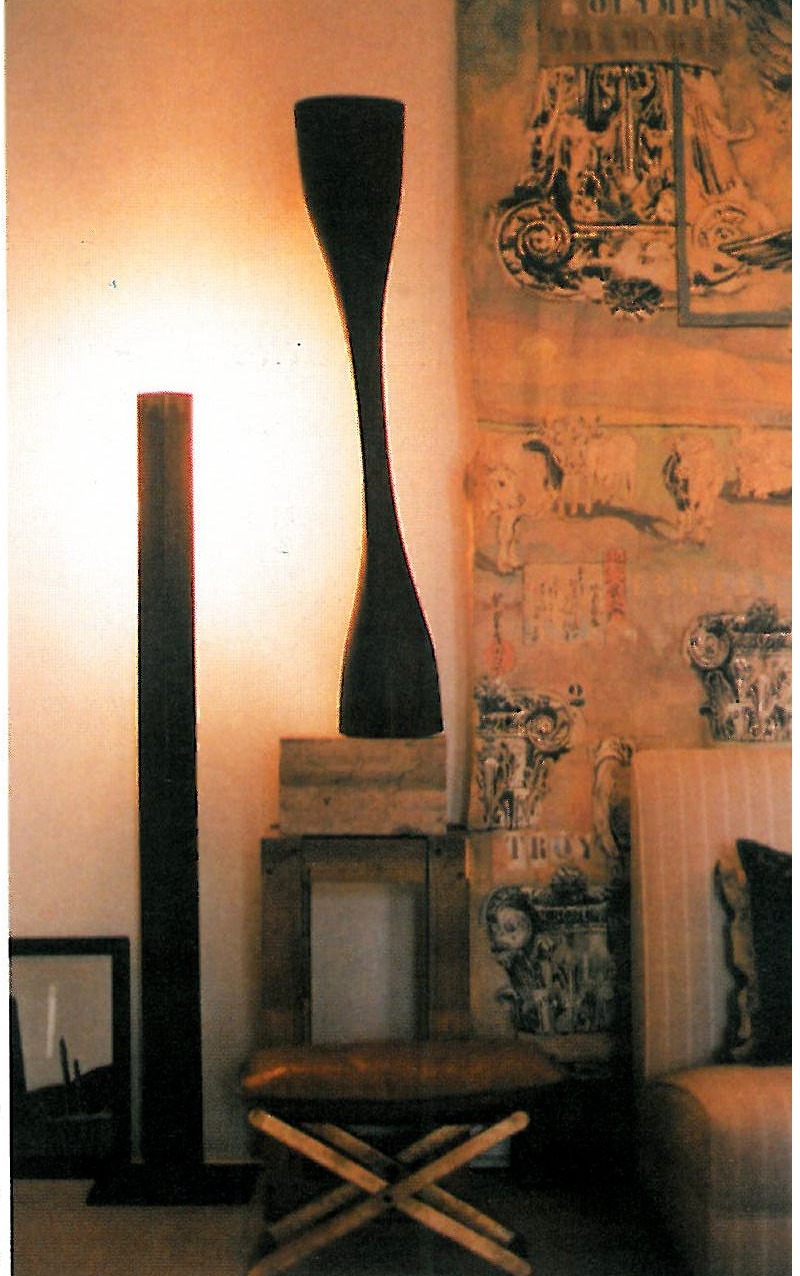
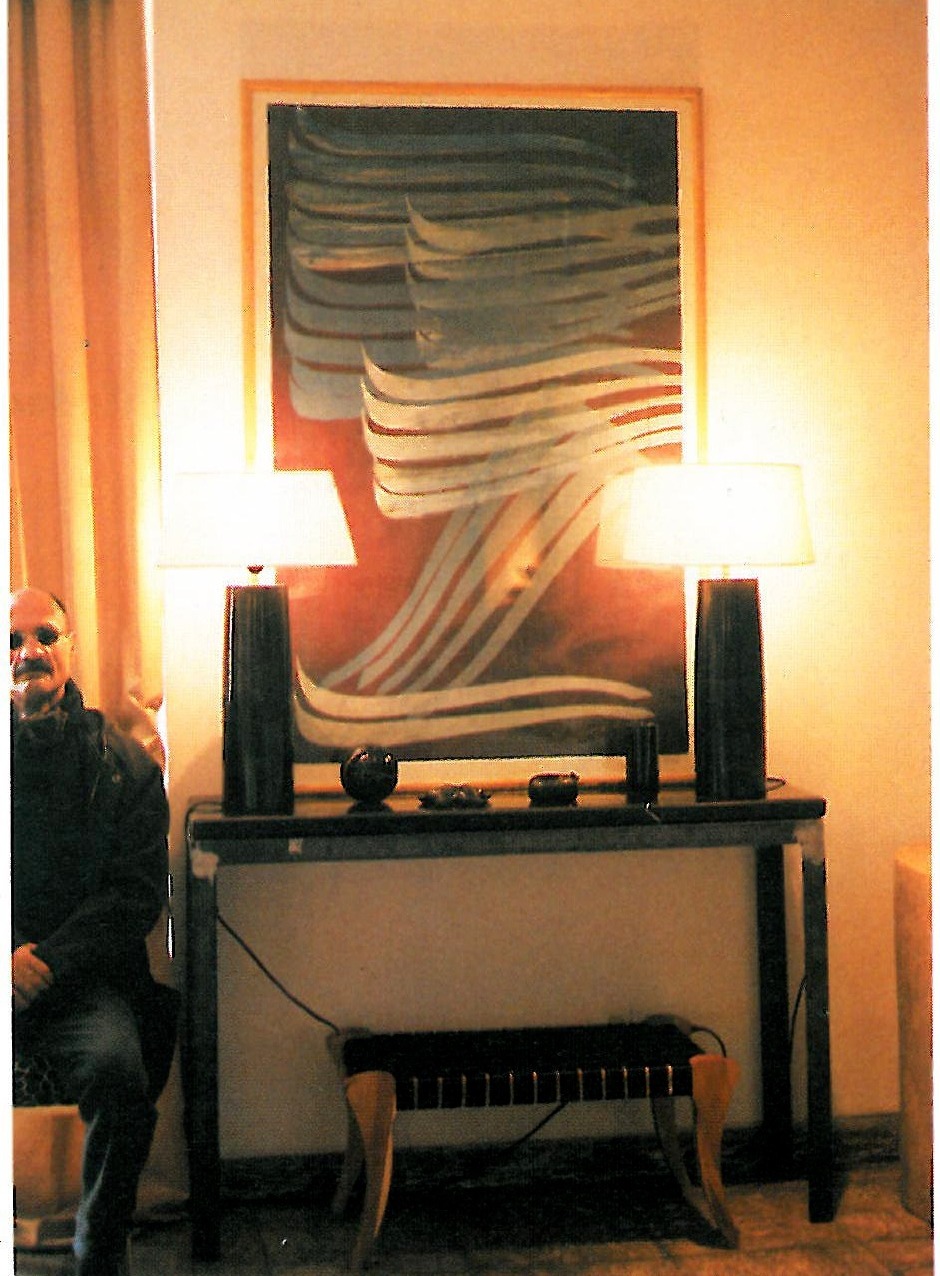
Vanak House: Photos 4 and 5 Console, lamps and stool designed by Fereydoon Ave. Zenderoudi calligraphy-painting. Photo by Taraneh Yalda.
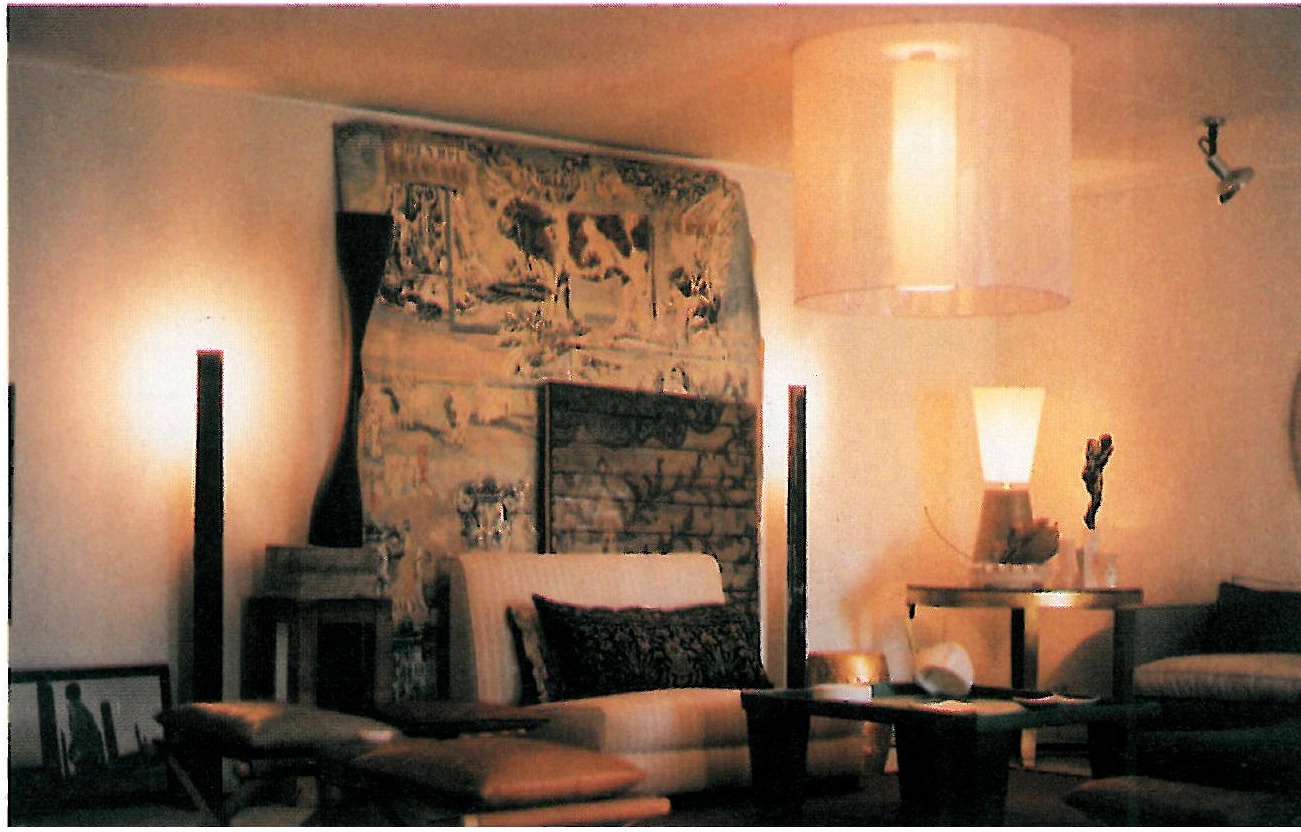
Vanak House: Photo 6 Corner lamps, ceiling lamp and lampshade designed by Fereydoon Ave. Sofa, armchair and leather stools and square leather table: designed by Ave. Large painting by Douglas Johnson, framed in Iran. Smaller painting: piece of an early-century ceiling. Varamin kilim.
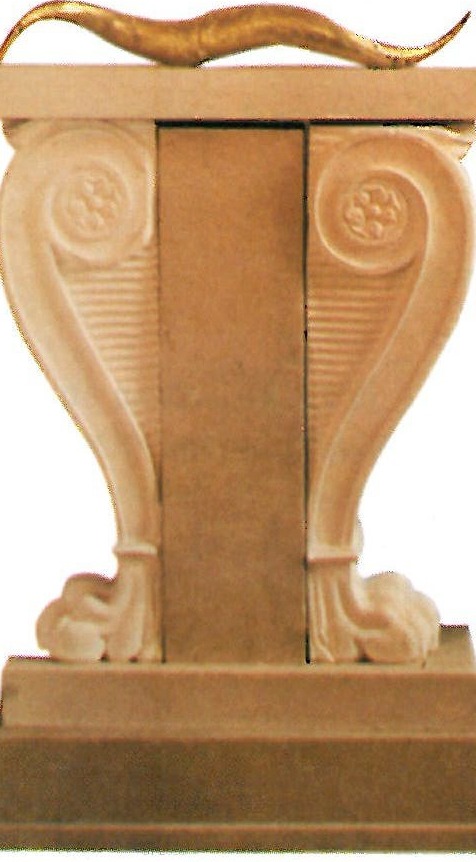
Photo 7: Table base, designed by Fereydoon Ave.
Isfahan House: Photos 8 and 9 Paintings by Parviz Kalantari, plaster and straw-clay. Furniture: Art Deco from the Reza Shah era and wall-to-wall takht. Decorations: made in Iran or commissioned by Iran to Russia and Europe.
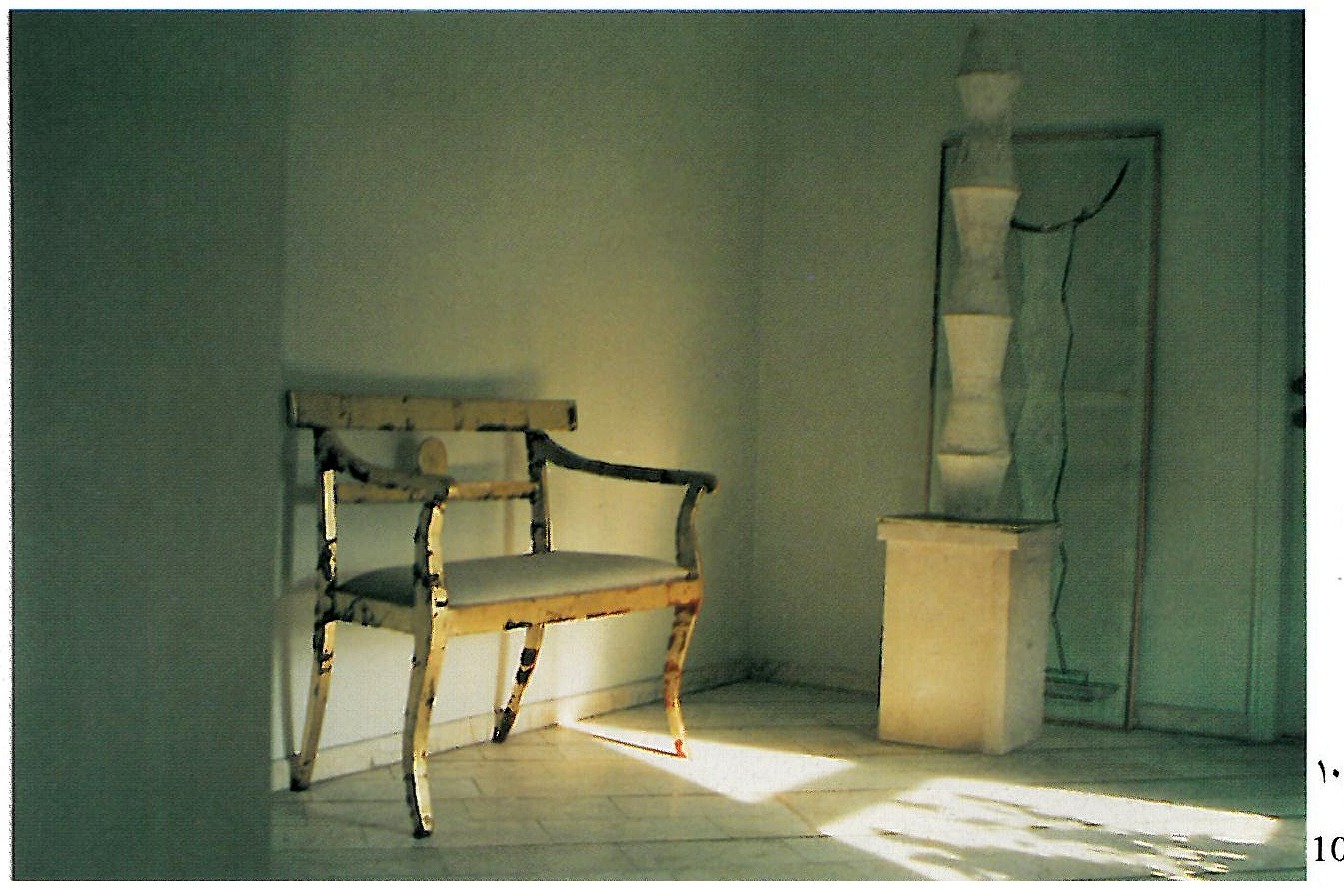
Entrance of Farzan Rouz Publishing Office: Photo 10 Sculpture and painting by Fereydoon Ave. Two-person chair inspired by a Qajar-era chair. Covered in broken gold leaf and rust-proof paint.