In the summer of 1372 SH, after a visit to Iran, Dr. Mounir Bouchenaki, head of the Cultural Heritage section of the World UNESCO Organisation, said: “The architects of Kashan are the greatest alchemists of history, for they made gold out of dust.” In truth, this sentence applies to the rest of Iran's architects as well.
Sadly, among Iranian artists, architects have been more overlooked than any other group. Many buildings of architectural and historical value in our country are known by the names of the rulers, princes, ministers or patrons who commissioned them — masterpieces known not only among Iranians but whose fame has reached beyond these borders. Even in old manuscripts and ancient works, the names of architects are rarely seen, and almost no information remains about their lives, beliefs, works or methods of work; no manuscript or drawing of theirs has been observed.
Western Iranologists like Pope, Godard, Wilber, Siroux, Coste and others — who effectively began the introduction of Iranian architecture — have only, by much delving among plaster motifs, tile patterns, stone inscriptions and wooden ornament, reached the names of architects (the trace of the “humble work of a poor servant…” and the date of construction). Iranian archaeologists and researchers like Yahya Zoka, Nosrat-allah Meshkati, Mohammad-Ali Mokhlesi, Iraj Afshar and others have completed those investigations. But the architects of buildings such as Ali Qapu Palace, the Vakil Mosque, the Gonbad-e Qabus, the Blue Mosque, the Khaju Bridge and others, are still unknown.
For this reason, and to keep alive the names of those who lived in this land without claim, without fanfare, and laboured all their lives in humility for the building of their country, we here introduce their names and works — although our information about them is no more than a few lines.
It should be noted that Donald Wilber's article and Yahya Zoka's article, both entitled “The Architecture of Iran, Islamic Period,”* have been the best guide and opener for this research. The first introduces 107, and the second 234, architects and master craftsmen, with many of the named figures shared between the two. A number of these are Islamic but not Iranian — among them Ostad Mostafa Baghdadi, Ostad Obayd ibn Samsam al-Misri, and Ostad Abu Nasr Muhammad ibn Ahmad al-Banna al-Tirmidhi, and so on.
Given that our knowledge of architects has been confined to the buildings they made, the criterion of identification has been the building constructed. Apart from the figures above (who are not counted as Iranian architects) and the master carpenters, stonecutters and so on, in total about 300 architects have been introduced together with their works (access to the works of the others has not yet been possible).
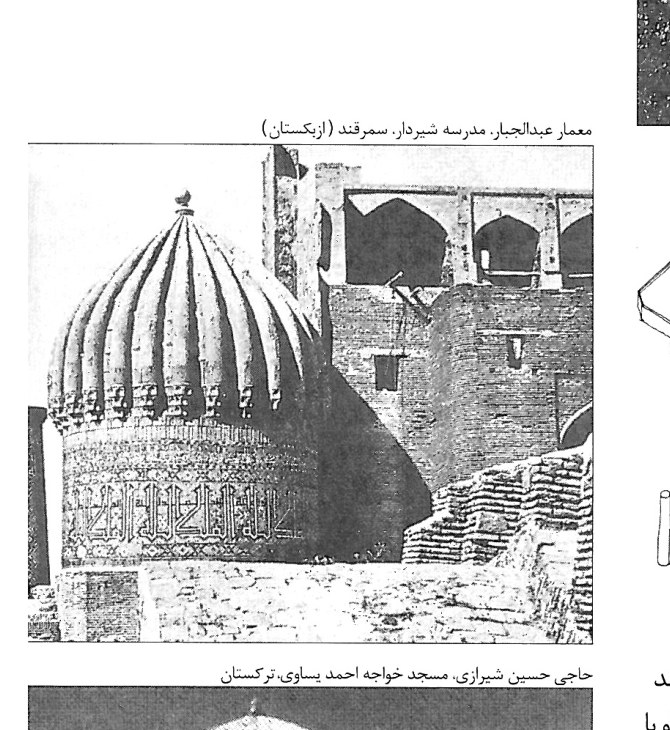
In pursuit of identifying these artists — the result of which has been a book entitled “The Architecture of Iran” — we came across the names of buildings that were built by the hand of Iranian architects but lie outside the present-day borders of Iran.
The capital of Iran in the Saffarid period was Zaranj; under the Samanids, Bukhara; under the Buyids, Baghdad; under the Ghaznavids, Ghazni; under the Khwarazm-Shahs, Khwarazm; under the Timurids, Samarkand and Herat; and under the post-Timurid governments — Safavid, Afsharid, Zand and Qajar — Tabriz, Qazvin, Isfahan, Mashhad, Shiraz and Tehran in turn.
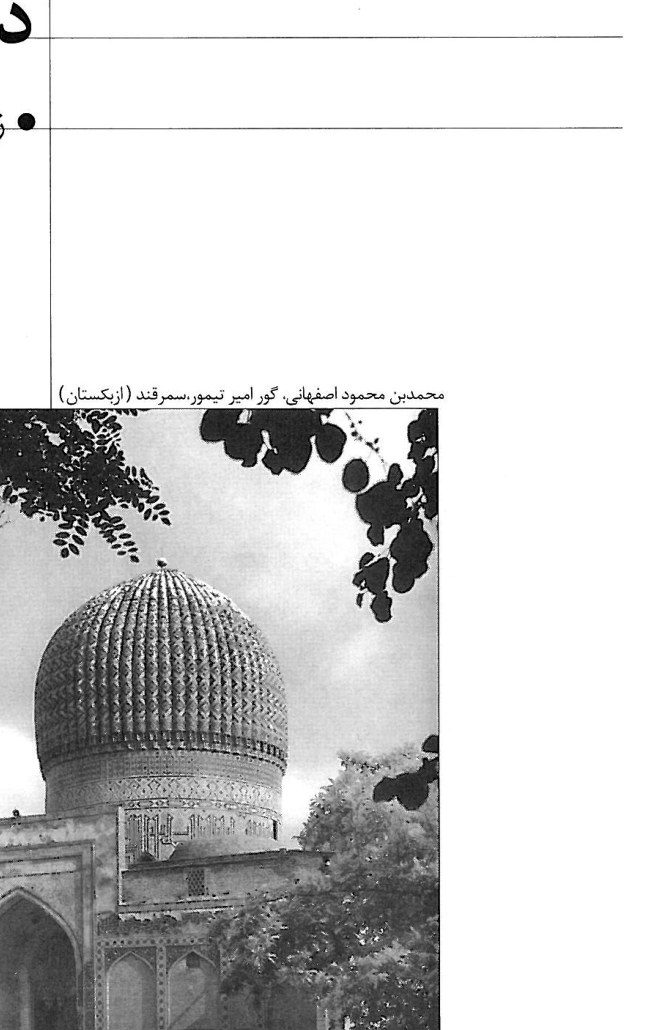
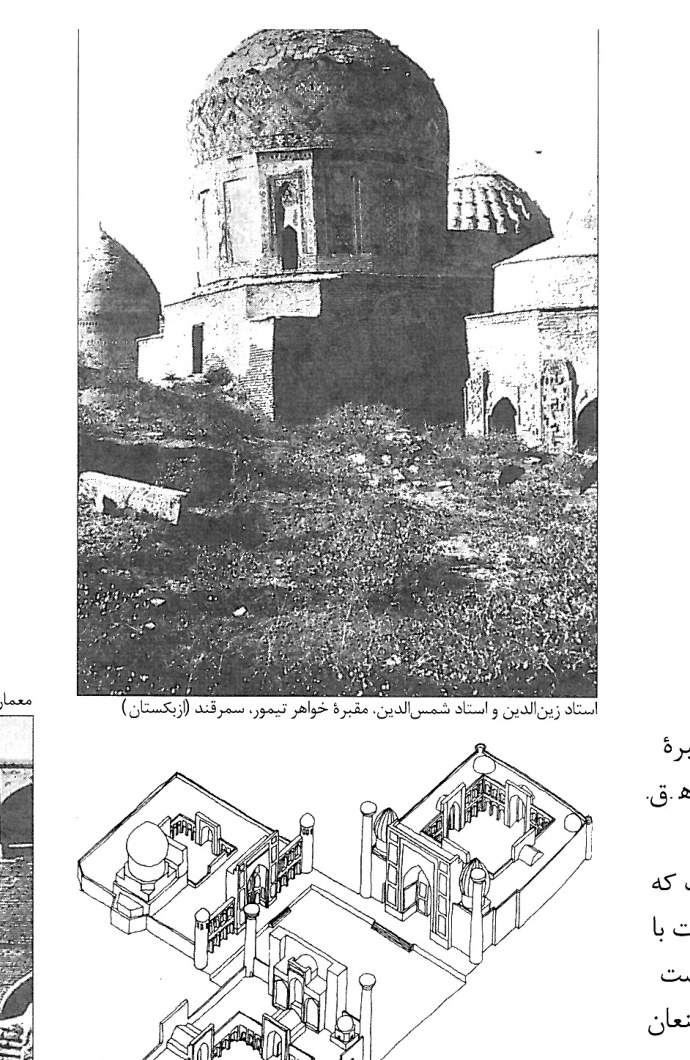
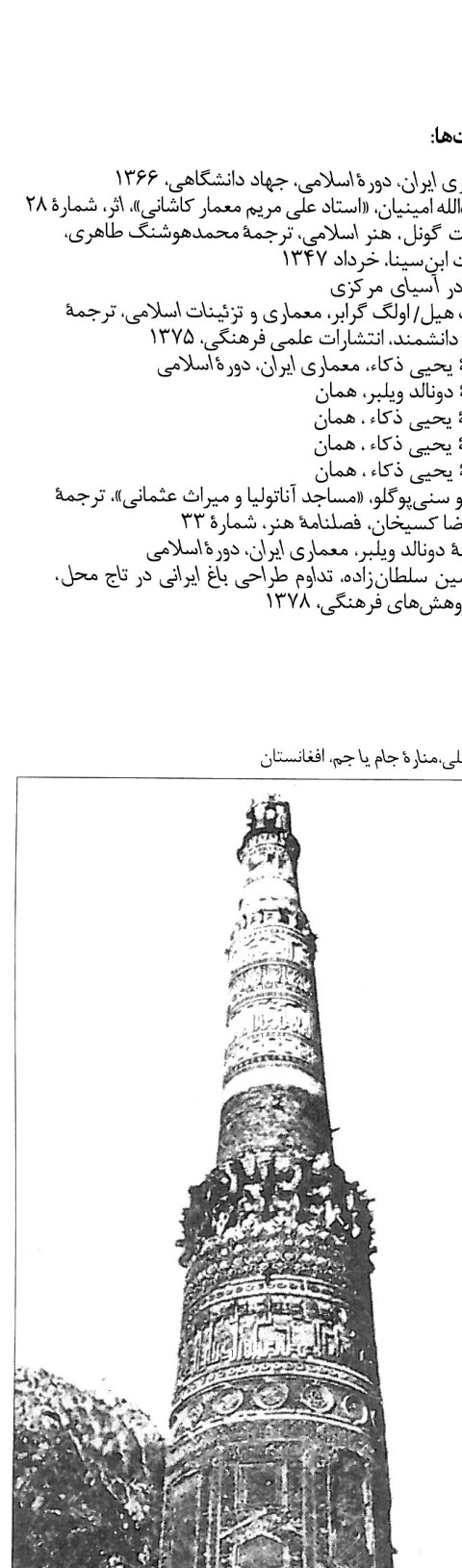
A considerable part of Azerbaijan and Armenia — including Yerevan, Nakhichevan, Ordubad, Georgia, Baku, Derbent, Shirvan — and the country of Afghanistan, before the treaties of Golestan, Turkmanchay and Paris, were counted among Iranian cities, and through these treaties, between 1228 and 1273 AH, were detached from Iran. The buildings identified in those cities thus belonged to Iran and were built by the hands of Iranian architects — among them the tomb of Amir Timur in Samarkand, which Mohammad ibn Mahmoud Esfahani built.
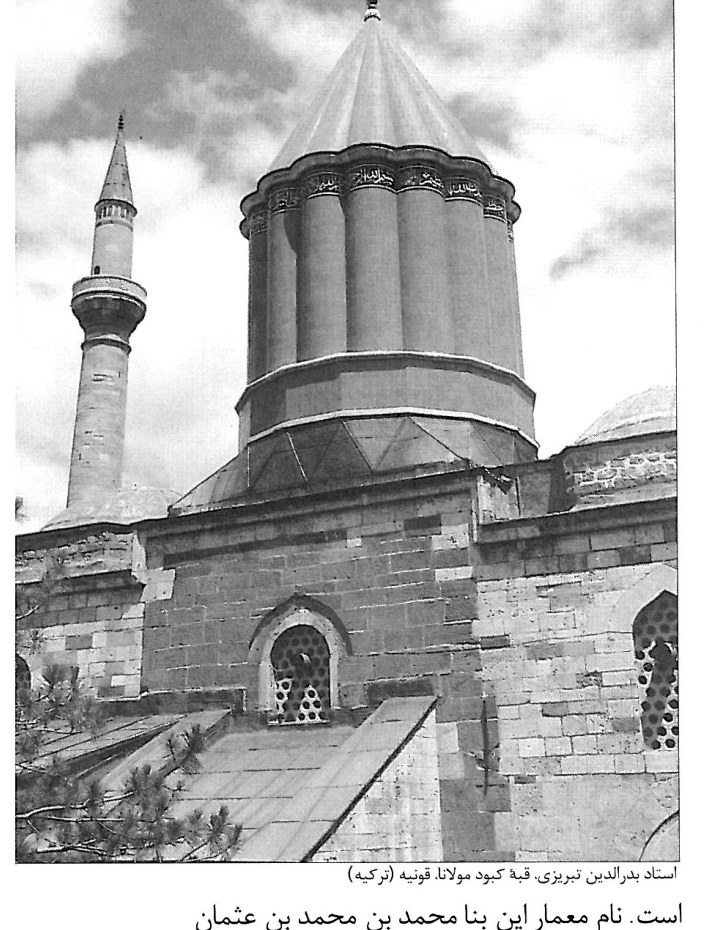
Some other buildings were made by architects who, at the time of the Mongol invasion, were forced to migrate, with other artists, philosophers and master craftsmen, to neighbouring countries — like Badr al-Din Tabrizi, who built the tomb of Jalal al-Din Rumi in the city of Konya in 673 AH (652 SH).
Another instance is Asir-Ali, or Ajam Ali Tabrizi, who was taken captive by the Ottoman army at the Battle of Chaldiran and, in captivity, demonstrating his abilities, became court architect. It is reported that the most famous Ottoman architect, Sinan, was his pupil.
In other cases, the Iranian king, in keeping with his religious convictions — especially the Shi'a faith in the Safavid and Qajar periods — sent his renowned architects to Baghdad, Kazimain, Najaf, Karbala, and so on, for the building or restoration of the holy shrines. Among these one can name Abolhassan, an architect of Kashan, and Ostad Rostam, an architect of Borujerd, whose work survives at the shrine of Hazrat Abolfazl in Iraq; and Ostad Sadeghi, the Shirazi architect, builder of the Afifabad Palace and the Naranjestan-e Qavam in Shiraz, who was sent to Karbala in the Qajar period. Ostad Soltan Hossein Qomi, by order of the Safavid kings, also built the precinct of Imam Musa al-Kazim and Imam Muhammad Taqi in Iraq.
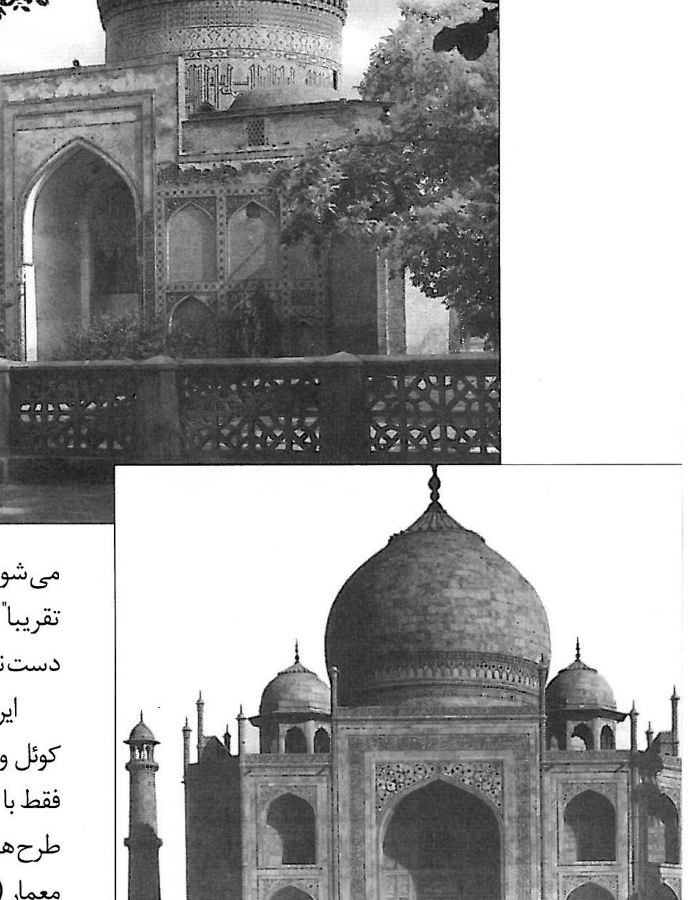
In some cases, too, a ruler from another land invited an Iranian architect for the building of a single, distinctive monument — as with the Taj Mahal, for whose construction Shah Jahan, the Mughal emperor of India, at the request of his wife, summoned Isa Shirazi.
Here we offer a brief introduction to a number of these buildings: