The text below is the translation of the preface to Christian Norberg-Schulz's book Architecture: Presence, Language, Place, in Norwegian, first translated into Italian and then from Italian into English. So the present text — in Plato's phrase — is three steps removed from the original truth. We hope the Persian translator has not strayed far from the original of his discourse.
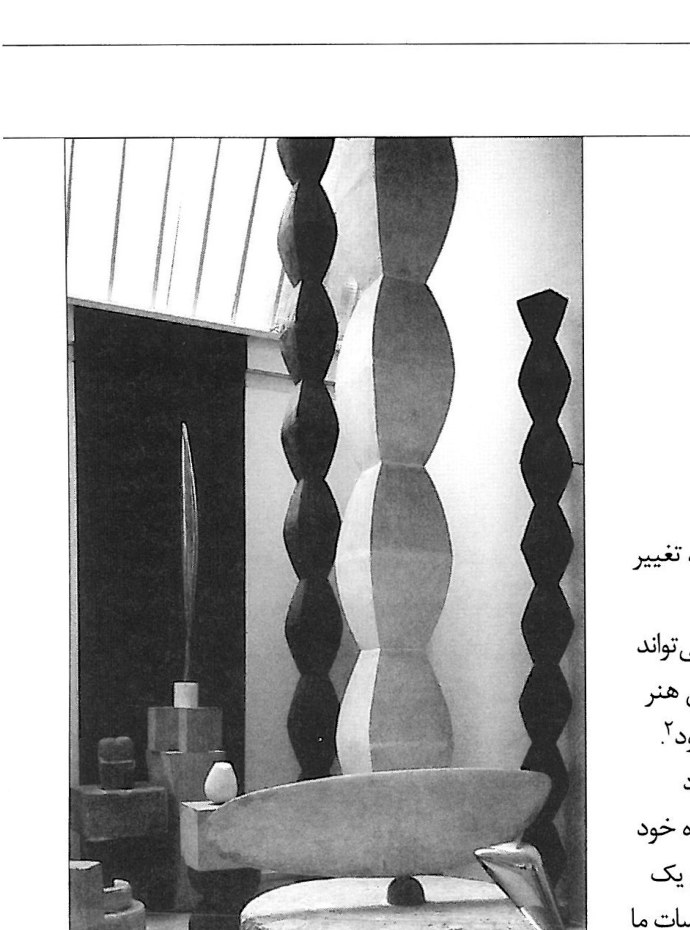
During my studies in Zurich after the war, I was very fortunate to attend Sigfried Giedion's course on the History of Modern Architecture. He introduced me not only to the basic principles of modernism but also to the most important artists of that era. If I call them artists, it is because what we are dealing with here is art. Giedion rightly remarked that, in the modern world, becoming an architect without passing through the eye of the needle of modern art is impossible. He took me with him to Paris, where I saw not only Le Corbusier but also Brancusi, Giacometti, and the lovely Nina — Kandinsky's widow. Often we were also dear guests at Giedion's house with Hans Arp, Max Ernst and Alvar Aalto. All this was rounded out by my acquaintance with the work of James Joyce — which Mrs Giedion was studying at the time — and my own private study of Arnold Schoenberg's twelve-tone music.
It seems important to mention these things, especially since these days many regard modernism as a kind of functionalism without artistic ambition. Mies van der Rohe's definition of architecture as “skin and bones,” in the post-war period, drew no attention. Modern architecture was reckoned an art. Its aim was to heal the rupture between thought and feeling — a rupture whose roots go back to Descartes and his line “I think, therefore I am.” That rupture binds thought to the level of mathematics and quantity, and shrinks the field of feeling to the bounds of subjective taste. This unyielding stance changed the prior outlook, in which description and meaning were unified within the wholeness of perception. The unique privilege of art is the recording and the logical expression of indescribable relations, of bonds and threads that cannot be brought into quantitative form. Therefore, since the expressive instrument of art is image, modernism was an art movement.
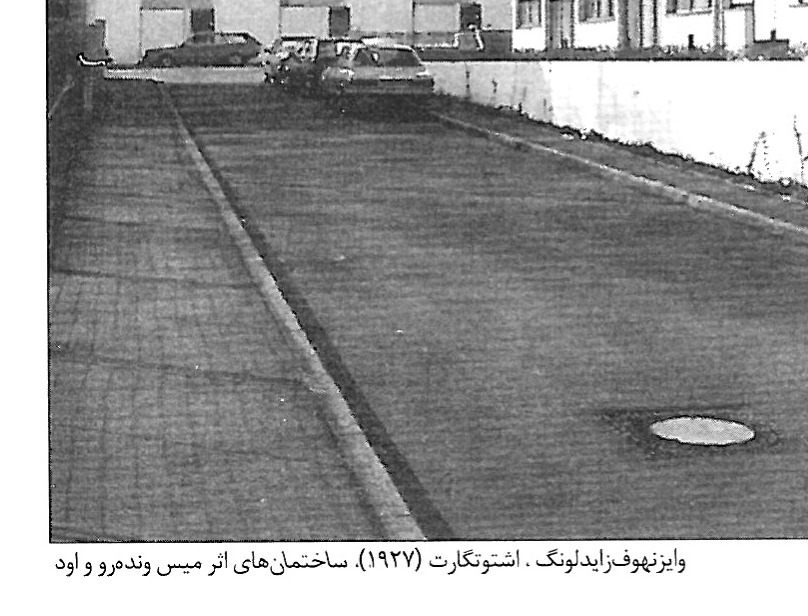
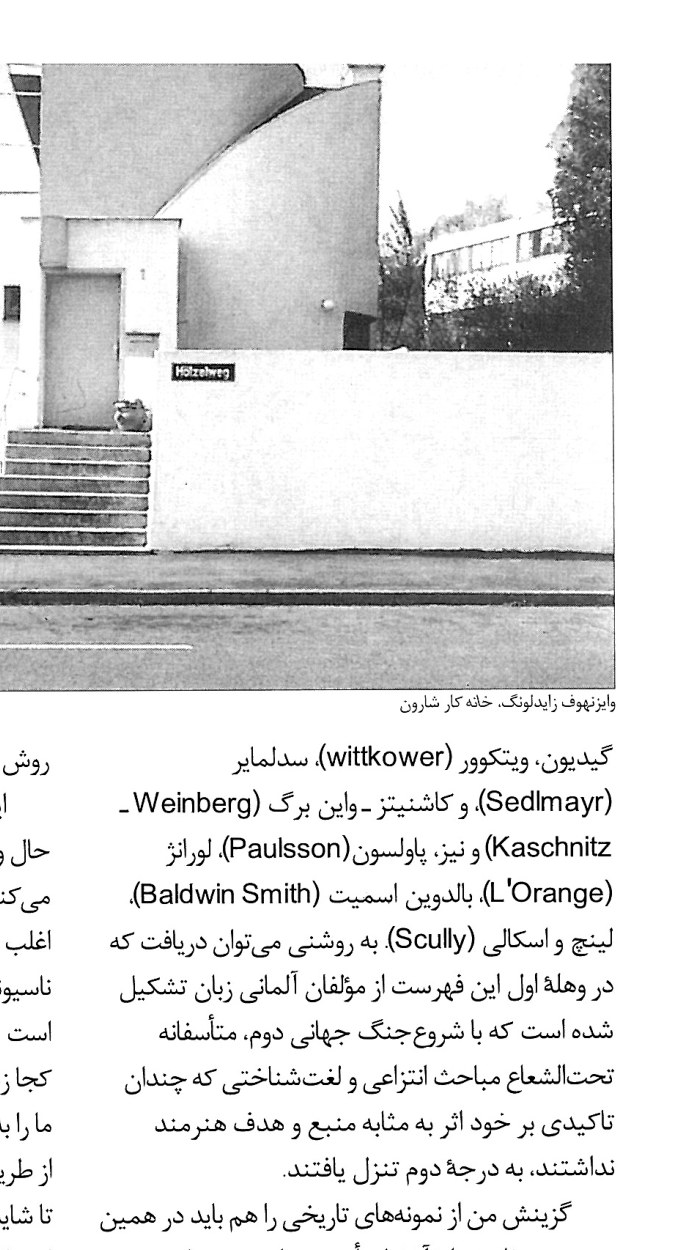
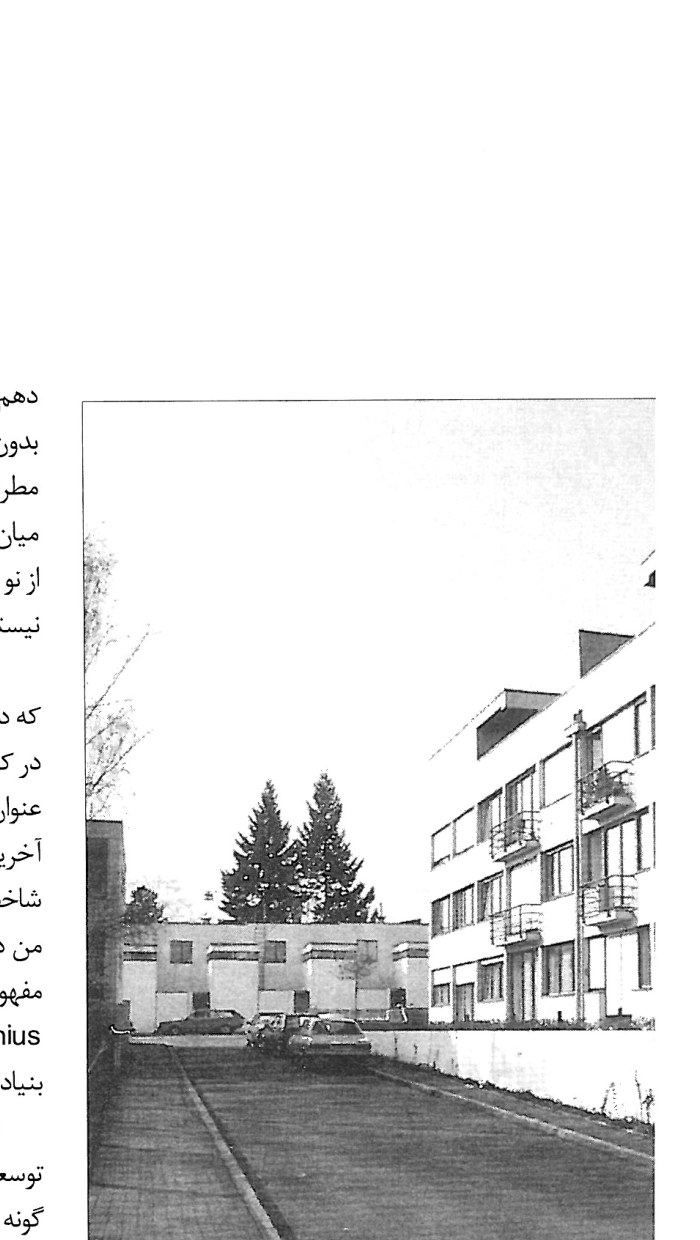
Thus, in order to find a way to mend the rupture between thought and feeling, one must trace one's path back to the sources of functionalism. For a work of art without function cannot succeed in satisfying our feelings. In fact it is not wrong to say that what is functional is also beautiful — if by beautiful we mean a real, living form of the expressive. The basic principles of modernism consisted of the union of the practical and the expressive, as Le Corbusier set out in his book Five Points for a New Architecture. The same point confirms that the basic aim of this movement, as it was shown in 1927 at the Weissenhofsiedlung, was a new kind of dwelling for the daily life of the ordinary person.
The union of the practical and the expressive gave fresh life to the leaders of the movement's interest in vernacular architecture and art. The original unity which the European styles, especially in their academic period, had lost was found exactly in folk architecture. Travel to Africa and Asia, in order to rediscover authenticity, was felt to be necessary. Sverre Fehn, in an issue of Byggekunst in 1952, on a trip to Morocco, wrote: “I am discovering, and I am discovering myself. These days, on a trip to Morocco with the intention of studying primitive architecture, my aim is not to copy old things — or to depict the present — but rather to recognise myself there.”
Giedion extended the concept of authenticity to the so-called constituent events, which keep returning anew in the history of European architecture and have given shape to a kind of fundamental language. As a result, he was able to show that the concept of space — clearly part of modernism — had been prepared earlier in the Baroque movement, although in an entirely different social and political setting. In his statement on modern architecture, in Space, Time and Architecture, he opens the first part with reference to Borromini, Guarini and Balthasar Neumann. His view of the past can be defined by the phrase “Constancy and Change,” which was the title of Gropius's first lecture at Harvard in 1961.
Constancy and change indicate that, despite all changes, certain things endure. Even before the appearance of contradictory phenomena like the Metabolist movement of the sixties, Giedion was rearranging modernism with concepts such as the “built functional plan” and the foundational thread of “character.” One can study, as a working group within the established movement, the constituent events; especially the scattered activities lacking constancy and change, or showing constancy without change — namely Deconstructionism and the false imitation of past styles. Both are kinds of display of broken-down nature between description and meaning.
The fact that modernism was essentially an art movement is also clearly shown by the movement's reliance on a major artist of the previous generation. Early functionalism leans on Josef Albers and György Kepes, both members of the Bauhaus teaching staff. In recent decades the concepts of presence and of meaning and language — which is perhaps the most important means of expression today — have also appeared in the architectural culture.
Given that the theoretical formulation of this movement, with reference to the views of Edmund Husserl's phenomenology, took shape and came into translation in the major European languages over the last twenty-four years, the approach of taking on a “concept of place” has gone deeper and become more open. This approach returns to the architectural perspective, where man turns toward phenomena and grasps life in them. Without reaching the place, there is no “built functional plan” — the very concept which was suggested in Genius Loci in 1979; a concept later developed in The Concept of Meaning in Western Architecture (1975), and which, in the project Living Concept of Architecture (1980), found a simpler and finally more practical sense.
No art, and no science, can find its way without an understanding of the multidimensional concept of “place.” The basis of recognition and the start of the search in architecture, in all phenomena from the classical to the vernacular, begins from the perspective of place — and, in pursuing these phenomena, a simpler, broader expression is brought into use: place, presence, a way back to the authenticity of architecture, of early modern architecture and its structure: the look from the perspective of modern architecture or of its presence and character.
The language of design, of form and their composition in a project, in modern architecture, while seeing as necessary their living source in constituent events that arise out of cogito ergo sum, will receive its answer from the rules attached to design — the presence of character or of types — to reach fundamental concepts and trans-material limits. In this discussion, by closing the loop between function, form, image, and the recognition of these in the whole perception of architecture, we can come close to a dialogical view and thought, of the kind one finds in Maurice Merleau-Ponty and finally in Martin Heidegger with the concept of being in time (Sein und Zeit) and Hans-Georg Gadamer with Truth and Method (Wahrheit und Methode).
The realisation of this view — not as a style or method ready at the start or end of the work, but as an exploring, immanent character — may perhaps awaken a fresh outlook on architecture; an outlook that, while in continuity with the past, brings to the design and structure of cities and villages a sympathetic and realistic change.
Notes:
1. C. Norberg-Schulz, Architecture: Presence, Language, Place; trans. from Italian by Antony Shugaar; Skira Editore S.p.A.; first published Italy, 2000.
2. S. Giedion, Constancy and Change.



