In the last issue, I allocated my discussion to form and space, and made an effort to prove that space is a concept more extensive and complete than form. In this present article, the concepts of function and place will be dealt with, for I believe that space and place are two complementary and principal categories in architecture, and that they can express the essence of architecture and perform its main responsibilities much better than the traditional / modern concepts of form and of function.
1. Definition of Place
Place is a part of natural or built space having a well-defined conceptual or physical boundary. Location is defined by its significance, or by the activities performed therein. The architectural space is the physical embodiment of location. It is the outcome of interactions and interrelationships among three factors: “human behaviour”, “concepts” and its “physical characteristics”. Places are centres where meaningful events of living take place. At the same time, those centres function as references helping man to define his identity in the environment and to bring about changes therein. Place is the natural consequence of man's bringing about changes in space. For instance, women villagers going to the bank of a river for washing convert a part of nature to a special place. The surrounding of a single tree to which cloths are fastened to ask a boon is an example of converting a part of nature to a sacred place.
2. Place and Nature
As already mentioned, man's bringing about changes in space, his conception of a well-defined boundary, and his giving the boundary a meaning and a function, are the most elementary and fundamental ways of creating a place. There is no need, on the part of the place, to be occupied by a construction or identified by a special object. Nevertheless, physical factors play an important role in making a place outstanding. A space enjoying outstanding physical characteristics is more susceptible to being converted to a place. A valley, the foot of a mountain, the bank of a river and a lake, etc., have the potentiality to be converted to a place. This explains the reason why ancient settlements have generally been formed in such surroundings. Man naturally takes possession of spaces enjoying salient environmental features. Environmental contrasts generally give rise to the potentialities mentioned. That is why natural border lines as seashores, riversides, the foot of mountains and the edge of jungles are susceptible to change into a place.
3. Place and Architecture
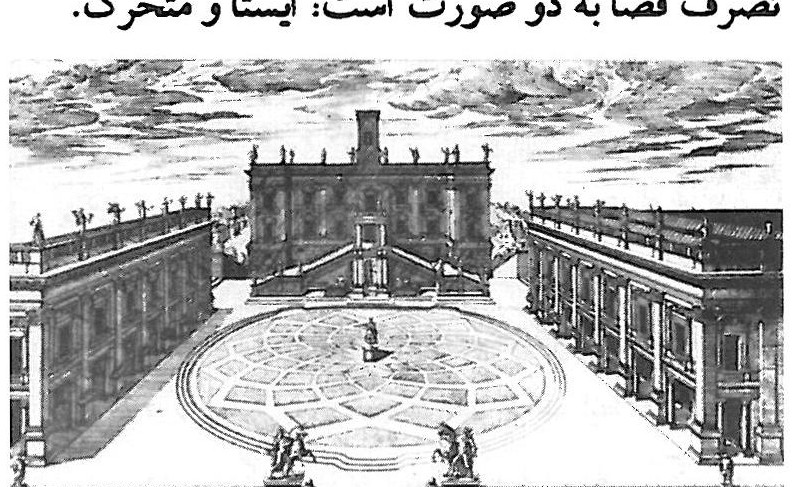
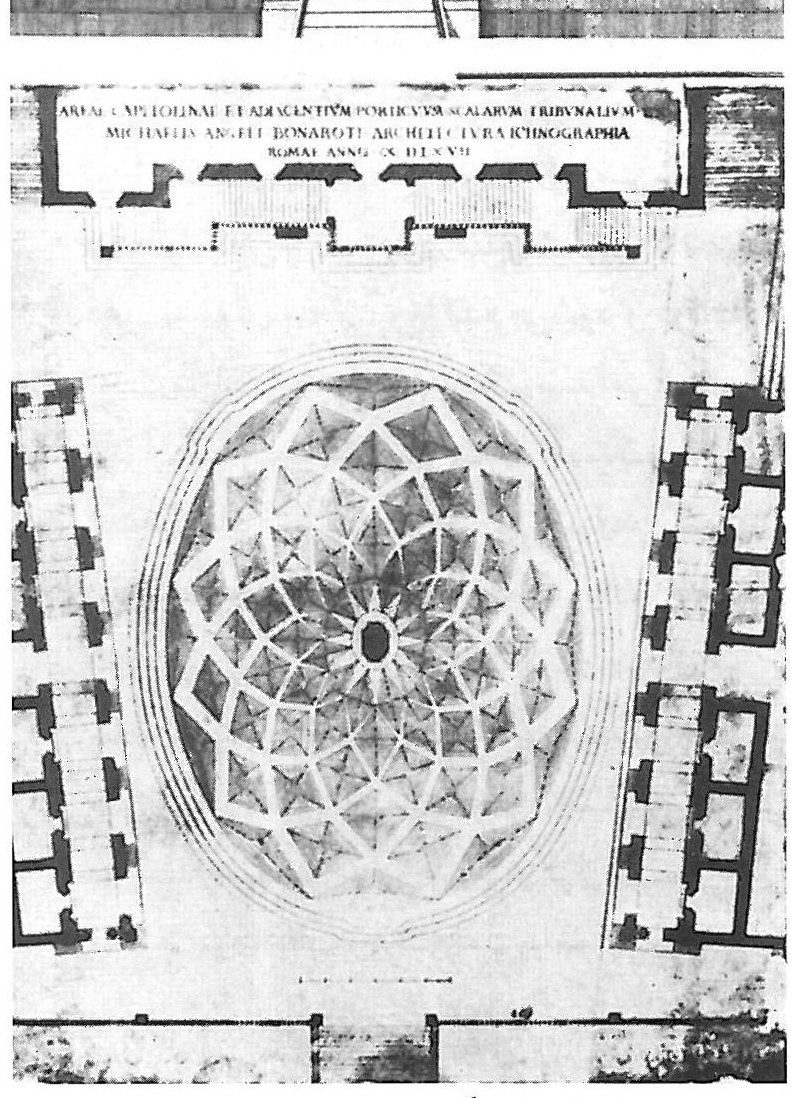
In connection with genius loci (the spirit of place), Schultz says that architecture is intrinsically capable of converting a place into a place — that is to say, it actualises the environment's potentiality. The Campidoglio Square in Rome, one of Michelangelo's works, can be considered as the actualisation of the spirit and of the value pre-existing on that historical hill. The function of architecture is to complement nature and to intensify environmental values. In the past, Iranian architects were aware of this architectural function. The vertical form of minarets complements the horizontal view of the desert; the colourful tiles of mosques decorate the pale colour of the salt desert. Generally speaking, prior to building the construction on the ground, the architect made an effort to give locational capabilities to the construction area. Takht-e Jamshid (Persepolis) has been built on a stone platform. An elevated and distinguished space on a plain is naturally capable of converting to a special place. Chehel-Sotun has been constructed by a swimming pool. This substantiates the theory of border conditions mentioned earlier: the building is by the water, at the edge of a pool, on a specific place.
4. Possession of the Space
Possession of the space is brought about in two different ways: static and dynamic. The youths talking to one another on a street corner convert it, statically, to a place. Mountain-climbing is an example of dynamic possession of the mountain, converting it to a place. The determining factor in creating a place is the bringing of changes in the space, which in turn is influenced by two significant factors, namely spatial potentialities and man's motivations. The spatial potentialities are considered as invitations from the environment, and man's motives determine, in competition with one another, the ultimate form of a place. At this very juncture the weakness of functionalism is revealed. The pedestrian bridge facing the Bu-Ali Hospital converts into a vagrants' dormitory, for the structure possesses both passing and staying potentiality, and the staying motive is much stronger than the passing one. Since economic motives are strong, street corners become a place for locksmiths, beggars, pedlars, car washers and mechanics. Similarly, wide and deserted lanes become temporary football playgrounds, because their forms give them the potentiality and sporting motives are sufficiently strong in the youth. The weakness of functionalist architecture lies in the fact that we can never predict, over time, how users will conceive what we have built and how they will behave in relation to our constructions.
5. Architecture of Place
Architecture is the art of organising space, and space cannot be organised unless we organise ourselves first, imposing some sort of structure on our lives. Anyhow, an over-structured and over-occupied location is a weak one. The more flexible the space, the higher is the likelihood of creating a rich place. In the past, Iranians paid little attention to furniture, and rooms had not been functionally divided. For that very reason, houses were a rich place. Consider, for instance, sleeping and resting — the functions that like any other human activity require a location. The roof, rooms, veranda, basement or courtyard could be converted into a place for sleeping and resting. The courtyard had the potentiality of converting into a location for play and rest, for washing and cleaning, for cooking in wedding and mourning ceremonies, for charitably distributing food, for cultivating vegetables and fruit trees, for keeping domestic animals, and even for such important occasions as wedding parties and the “recitation of the sufferings of the holy martyrs” (Rowzeh-khani). During winters we could cover the courtyard with a tent and the pool with a wooden frame, converting it into a show hall.
6. Architectural Developments and Place
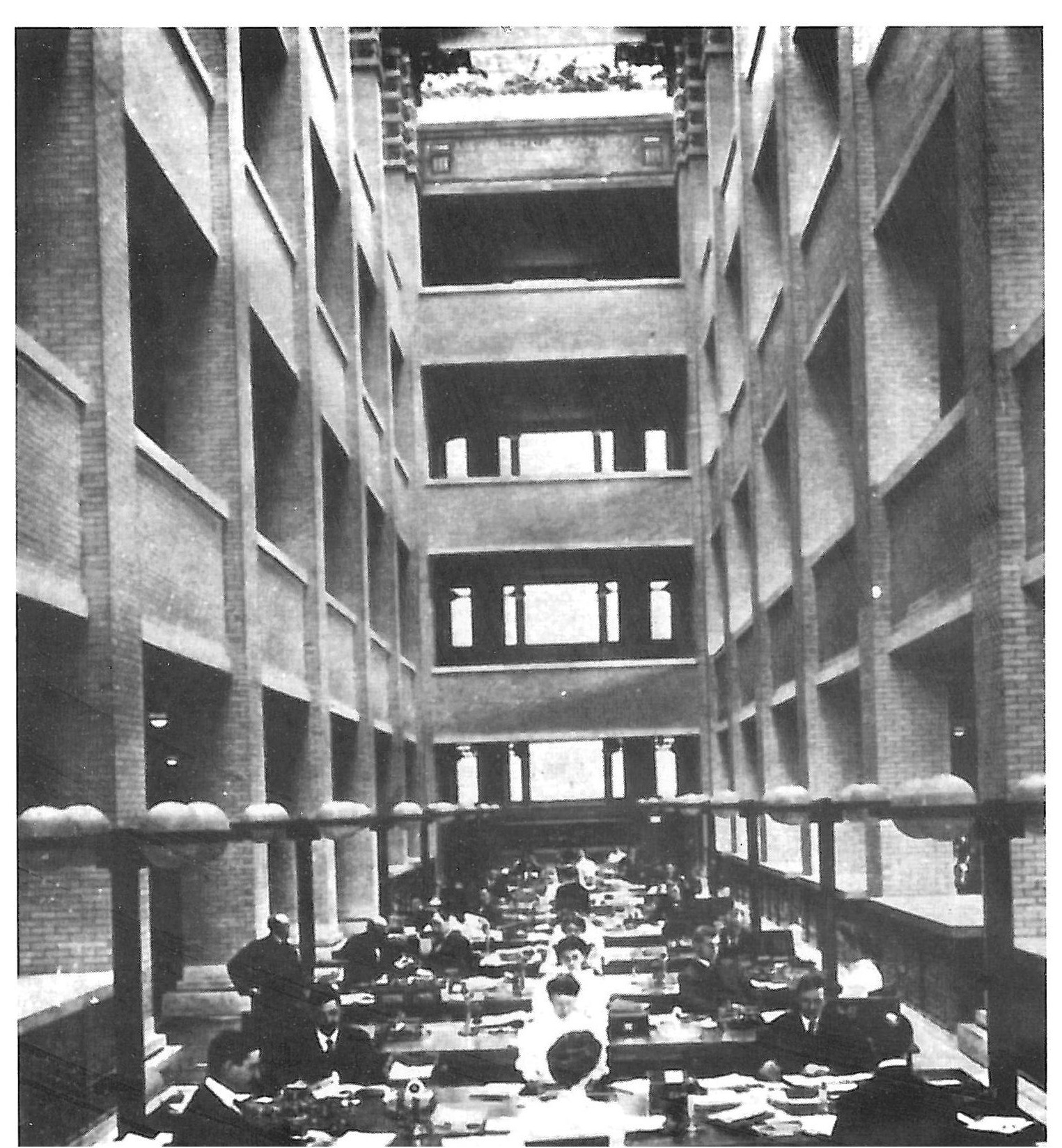
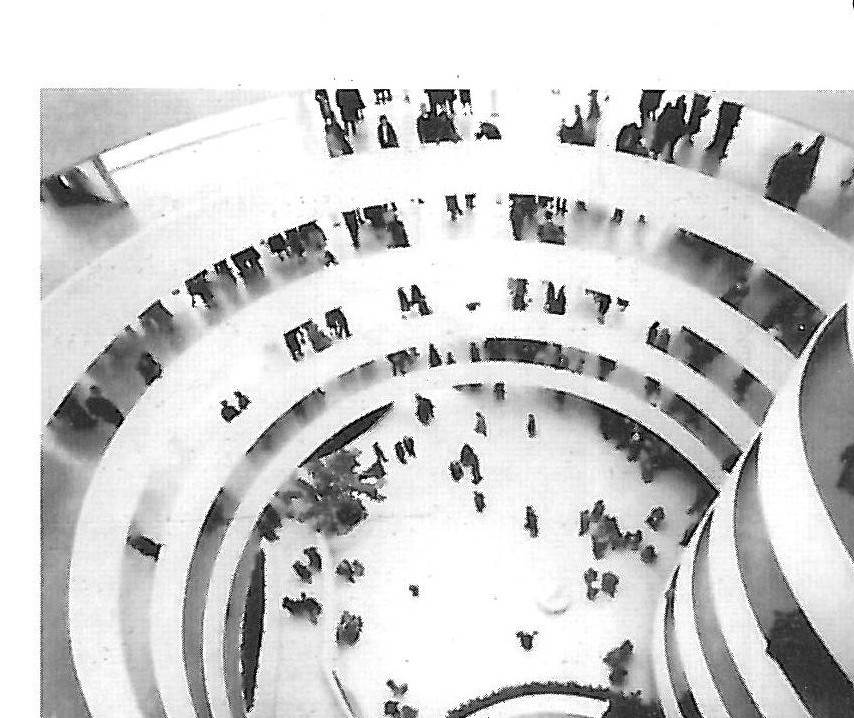
Mention was made of the fact that place has functional, physical and conceptual characteristics. Significant architectural developments were, in most cases, concomitant with changes in the concept of place and with a revision of its characteristics. As an example, consider the Larkin Administrative Building. Here, for the first time, the “administrative place” underwent a fundamental change. Another example would be Wright's Guggenheim Museum (1943–59), which was considered a development in the concept of place. The museum, with its expressive and highly dramatic architecture, contributes, like a great artistic work, to the overall locational effect (Me'mar, No. 1). This concept was modified again by Frank Gehry's new Guggenheim. Before that, the modern museum had been a neutral place in which, precisely because of the neutrality of its architecture, the works of art alone drew the critics' attention. The Bilbao museum, with its expressive and intensely dramatic architecture, itself participates in the overall effect of the place like a great work of art. To put the whole discussion in a nutshell: in architectural design, dealing with space and its complicated types is very attractive, but place cannot be ignored. A part of today's photogenic architecture — for example the UFA cinema complex in Dresden by Coop Himmelb(l)au (Me'mar, No. 4) — offers examples of carelessness with respect to place and a sheer concentration on spatial features.