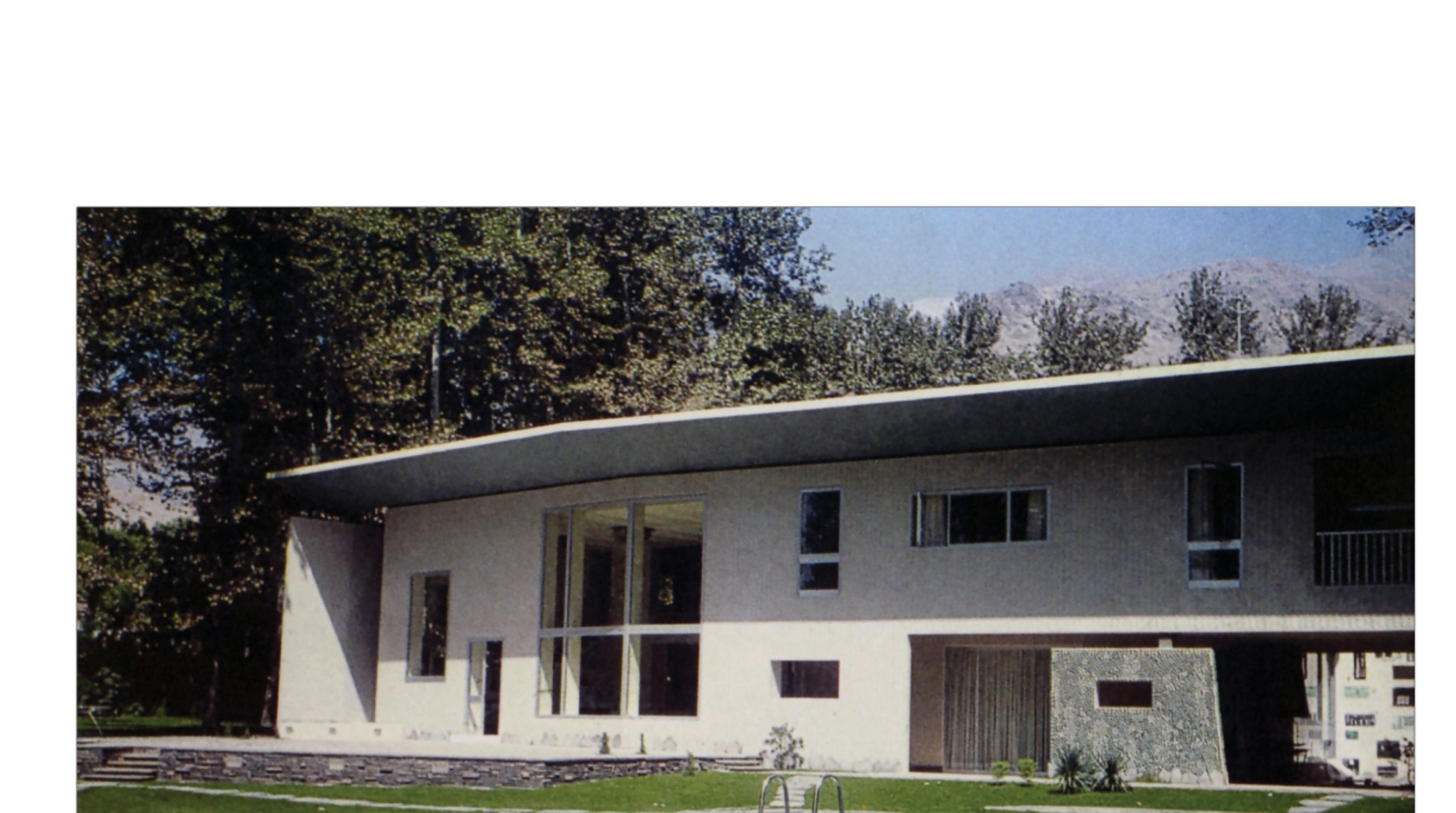
Gio Ponti's Namazi House in Tehran
Faryar Javaherian, who is one of the architectural editors of TAVOOS art magazine, received a request from Lisa Ponti, Gio Ponti's daughter, to find out about the Namazi Villa in Tehran designed by her father in the 1960s. This turned into a quest which has lasted three years in efforts to preserve this piece of modern architecture, signed by one of the great designers of the 20th century.
The Namazi House is among the rare examples of a work by a world-renowned architect in Iran. Gio Ponti, born in 1891 in Milan, was one of the most influential Italian architects and designers of the twentieth century. His prolific career encompassed architecture, industrial design, furniture, ceramics, and editorial work — he founded the legendary Domus magazine in 1928. His masterpiece, the Pirelli Tower in Milan (1956), remains an icon of modernist architecture.
The Commission
In the early 1960s, the Namazi family — one of the most prominent philanthropic families in Iran — commissioned Gio Ponti to design a residential villa in northern Tehran. The Namazis were known for their significant contributions to healthcare and education in Iran, including the founding of Namazi Hospital in Shiraz, one of the largest medical centers in the Middle East.
The house was designed by Ponti in the mid-1960s and construction was completed around 1964-1967. It stands on a large garden plot in the Niavaran area of Tehran, surrounded by mature trees with the Alborz mountains as a dramatic backdrop.
Architectural Design
The villa exemplifies Ponti's mature architectural language — a synthesis of modernist spatial planning with a richly decorative sensibility. The building features a distinctive curved roof that sweeps across the main facade, creating a dynamic profile against the mountainous landscape. The plan is organized around a central living area that opens to the garden and pool through large glass walls.
The facade is perhaps the most striking element. Ponti designed a remarkable wall composition featuring an array of ceramic panels, colored glass elements, and sculptural window openings of varying shapes and sizes. These are not merely decorative additions but integral to the architectural conception — they modulate light, create visual rhythm, and establish the building's identity.
The interior displays Ponti's characteristic attention to detail: custom-designed furniture, elaborate staircase with alternating marble treads in contrasting colors, ceramic decorations designed by Ponti himself, and a spatial flow that connects indoor and outdoor spaces seamlessly. The pool area and garden were conceived as extensions of the living spaces, with the canopy entrance serving as a transitional zone.
Preservation Concerns
The article raises urgent questions about the preservation of this architectural treasure. As one of the very few works by an internationally celebrated architect in Iran, the Namazi House represents an irreplaceable cultural asset. The building's condition and future remain subjects of concern for architectural preservationists.



