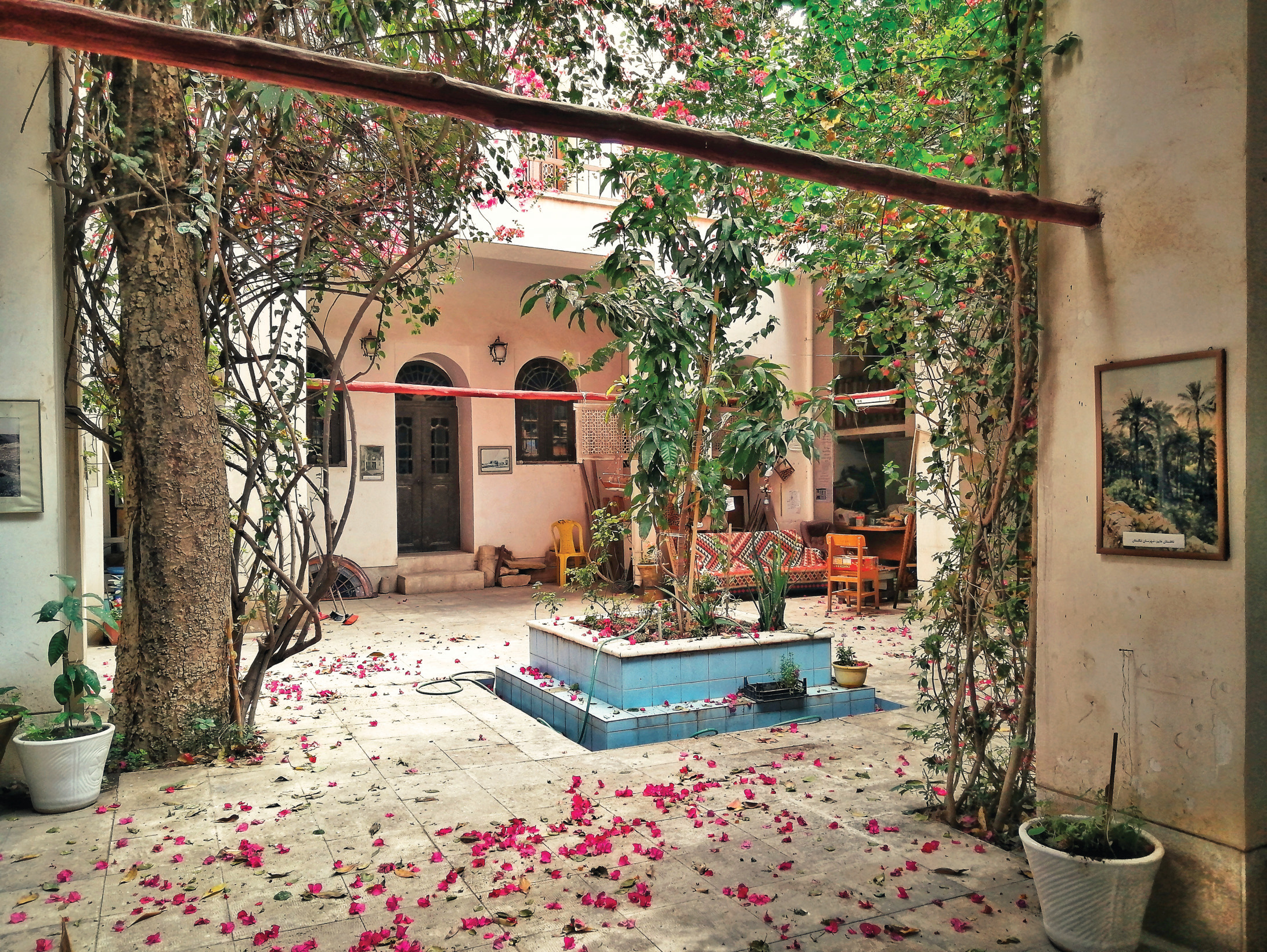
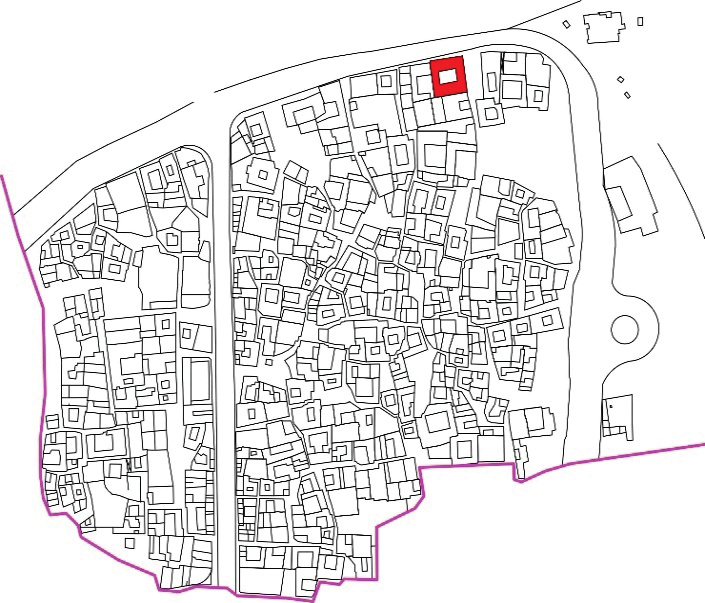
This edifice is located in the Behbahani neighborhood, on the edge of the old Bushehr fabric, beside the shore and approximately ten meters from the sea. It was built in three stories.
The building is known by the name of its owner, the merchant Seyed Jafar Tabib, during whose ownership it was entirely residential. It appears, however, that before him it was commissioned by a merchant named Mirza Gholamhossein Golshan, who used it both as a residence and a business office. The combination of residence and workplace was a common feature of many old Bushehr edifices — a practical arrangement in the region's hot and humid climate.
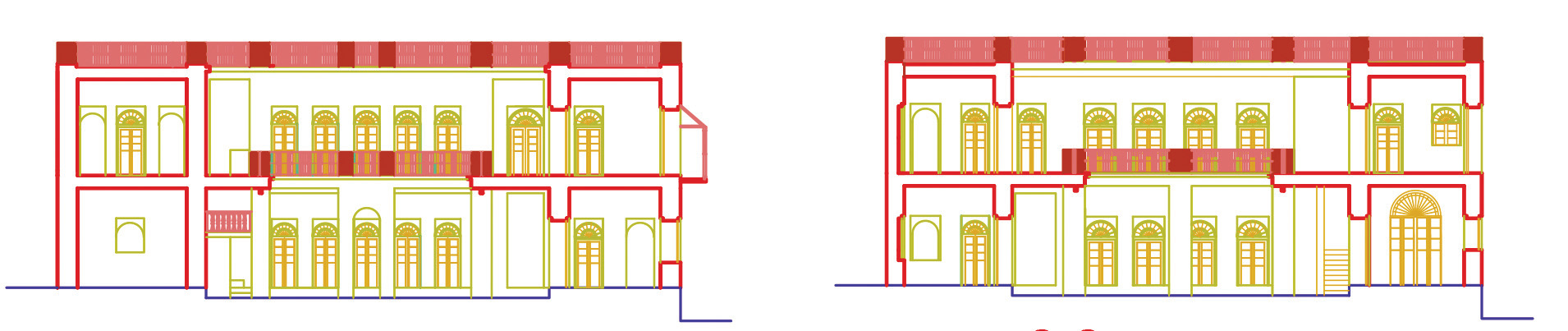
The site slopes from north to south. The architect compensated for this with a raised platform, resulting in a 1.5-meter difference between the building's floor level and the street. This difference is resolved through several sets of steps: first, steps from street level to the entrance vestibule; then steps within the vestibule; and finally a step from the rooms down to the central courtyard.
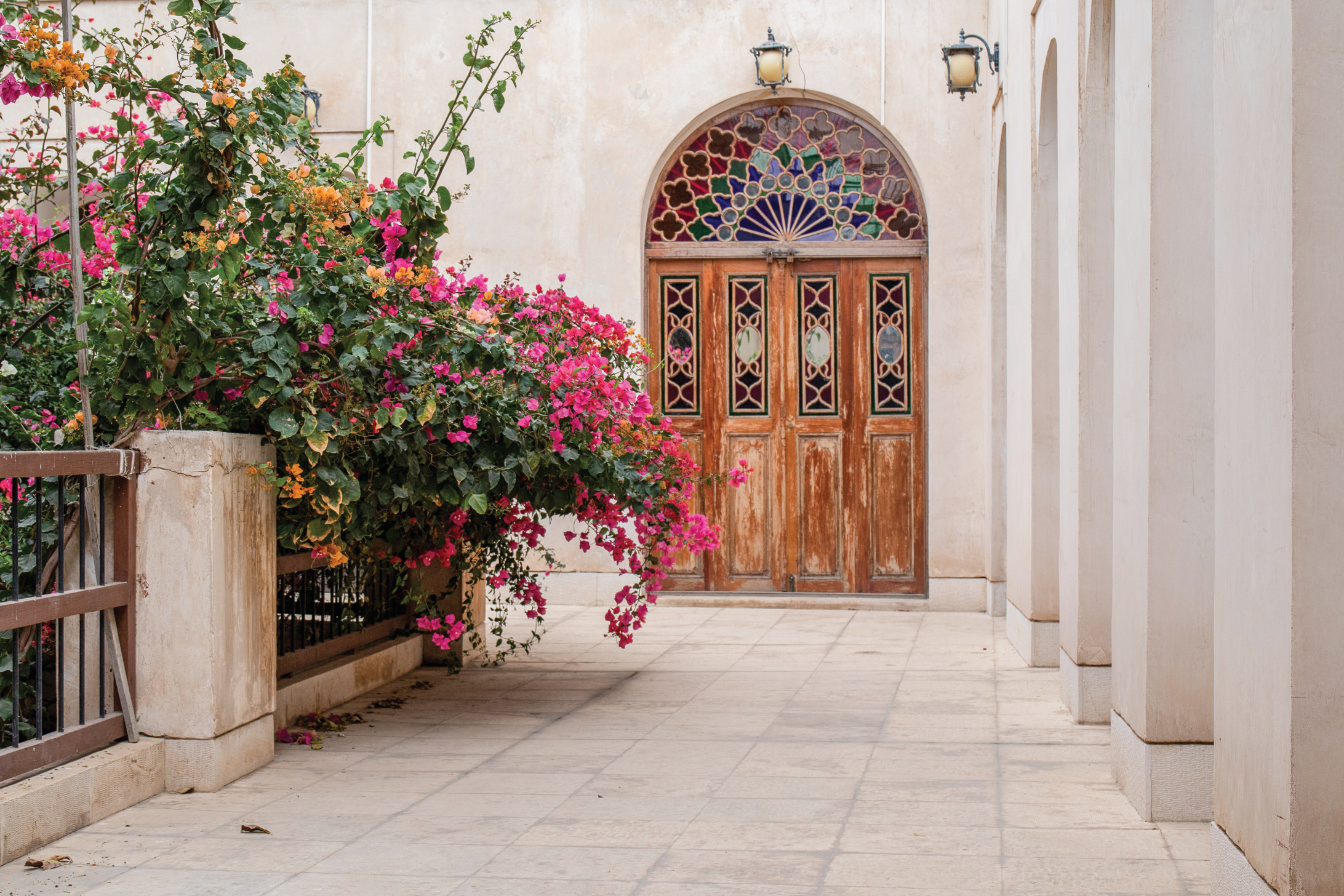
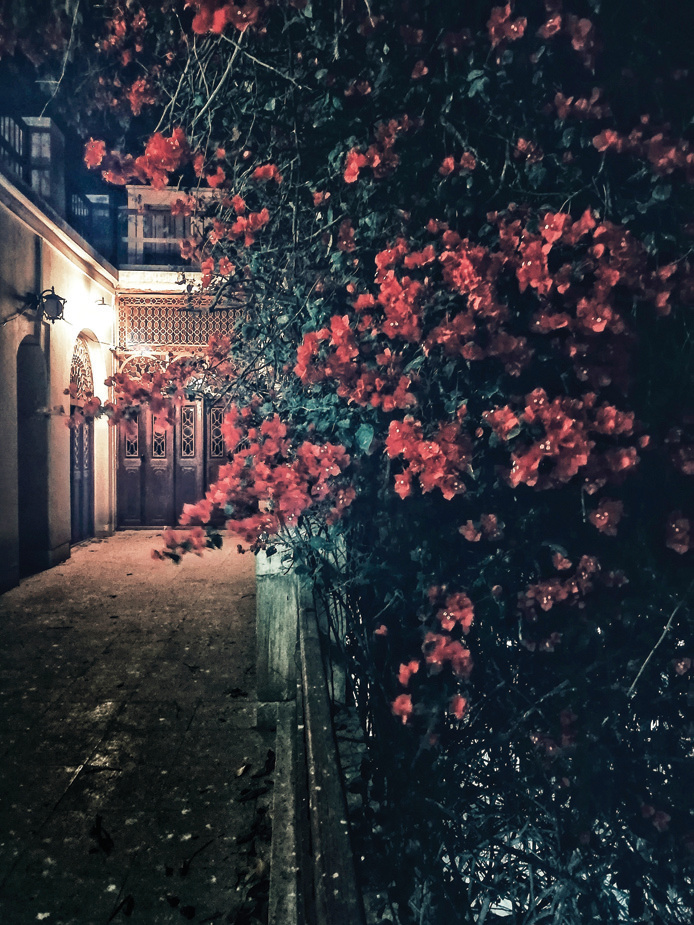
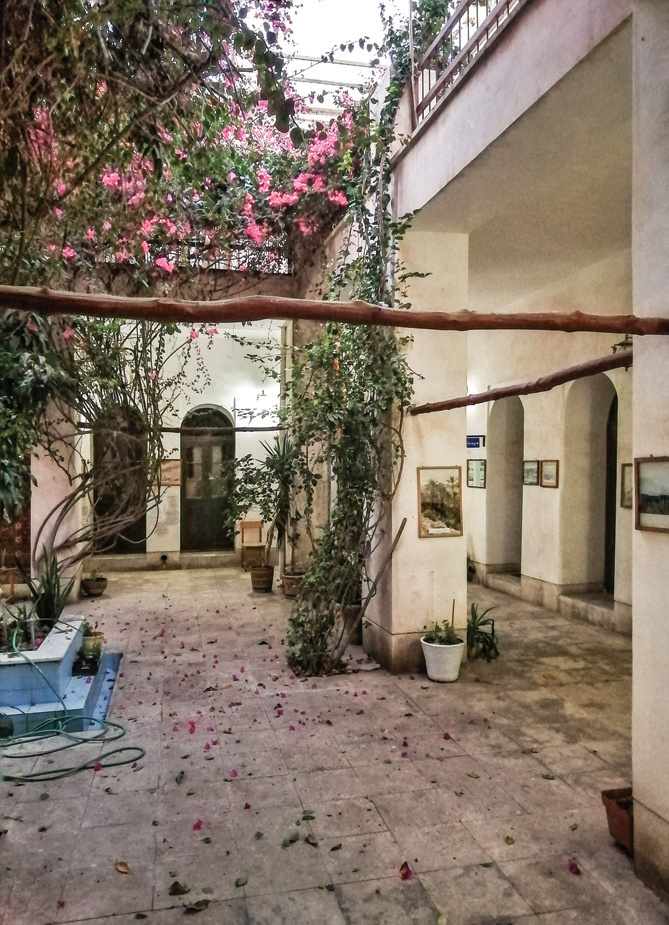
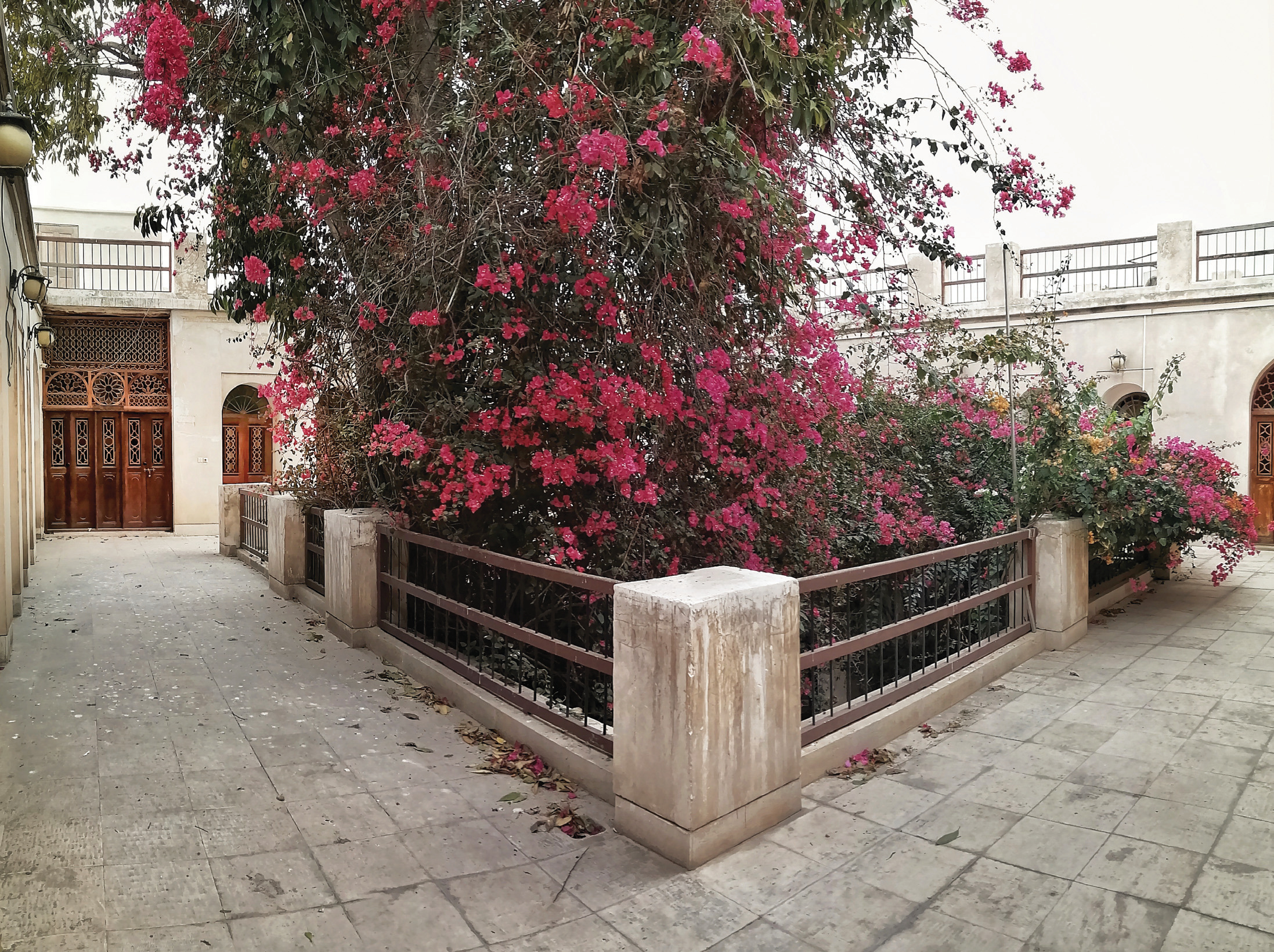
Through the handsome wooden entrance door, we enter the vestibule. Passing through a doorway on the right, we enter the central courtyard, which provides access to all ground-floor rooms. Via a switchback staircase and two spiral staircases — and then an eiwan — we reach all upper-floor rooms. The eiwan overlooks the central courtyard and wraps around the upper-floor rooms on all sides. The eiwans on the east, west, and south sides are supported by twin wooden columns joined by elegant crescent arches, while on the north side three single columns have been built.
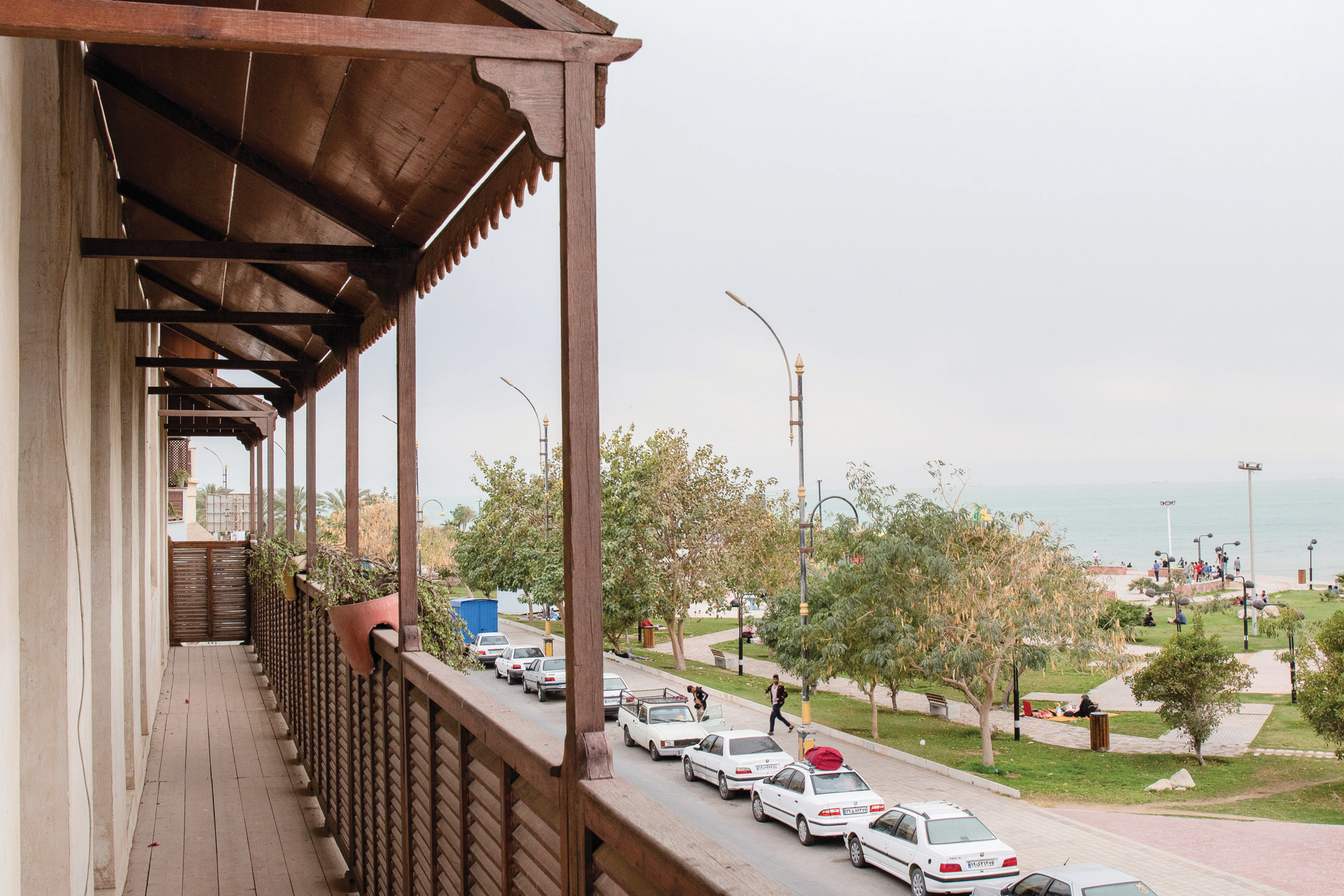
The floor plans of both stories are largely identical; differences appear only in the small corner rooms. The ground-floor rooms have a ceiling height of 3.5 meters, and the upper-floor rooms are slightly lower.
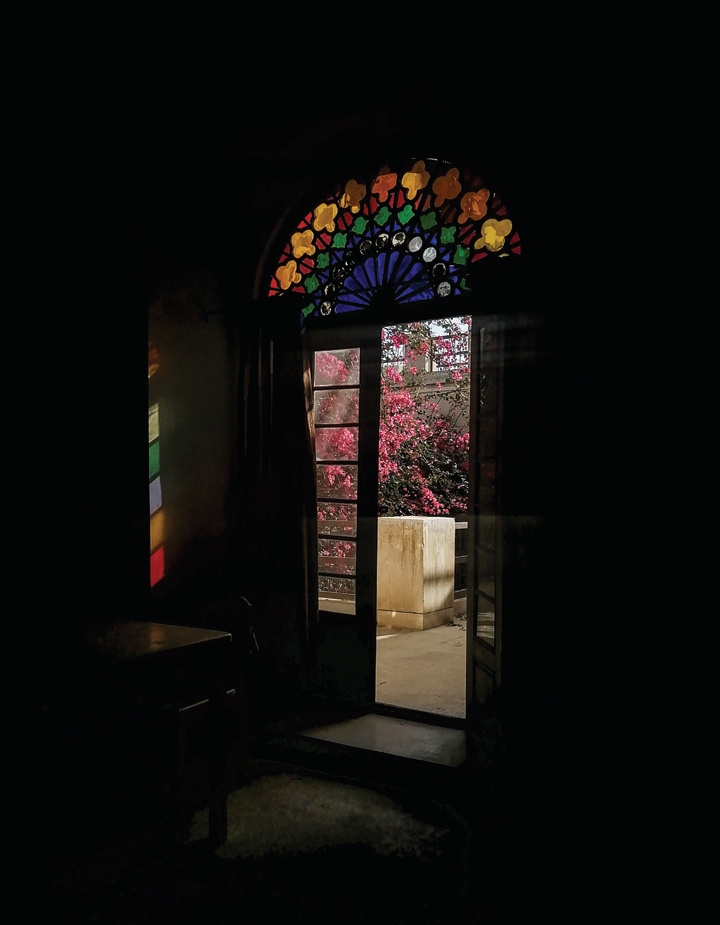
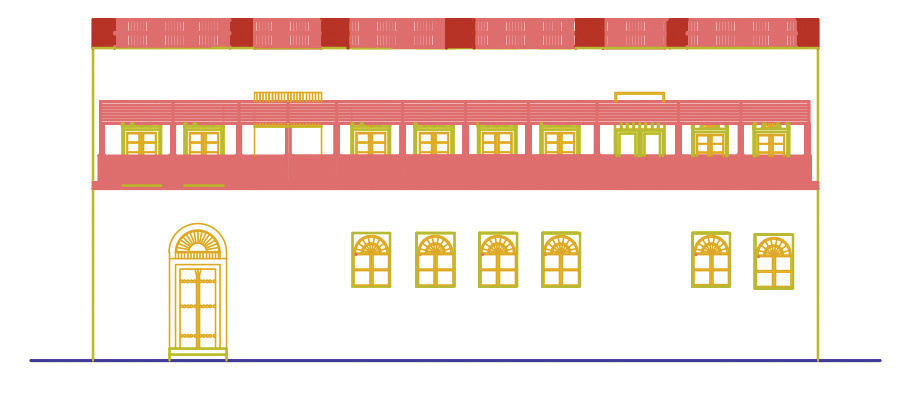
The use of wooden doors and windows lends a particular grace and beauty to the edifice — especially the colored glass lunettes above them, which filter and soften the light entering the rooms. The semicircular form above the doors creates a combination of two geometric shapes — rectilinear and curved — producing handsome doorways. Around the lunettes, doors, and windows, a plaster molding frames the entire door-and-lunette assembly within a rectangular border, created with raised plasterwork. In some cases, rooms are separated from one another by beautiful orosi (sash windows).
In the overall architecture of the building, admitting the breeze and circulating it through the structure is the defining principle; both beauty and comfort have been the architect's concern. To allow the sea breeze to reach the shore and flow into the central courtyard, the uppermost floor's facade — unlike other seaside buildings — has not been built facing the sea. Due to the region's scant rainfall, the roofs of the edifices are flat.
1. The Tabib Edifice is now in the possession of the Bushehr Studies Foundation and was registered as a national heritage site in 1998 under number 2252.
2. The small rooms were used as a cistern, bathroom, toilet, kitchen, and servants' quarters; the other rooms were designated for living, receiving guests, and conducting business.



