The Call for Entries
The second Me'mar Great Award for the post-revolution residential architecture, sponsored by Superpipe International, was declared in August 2002. Any architect who is a designer of a post-revolution residential building in which artistic values, engineering knowledge and construction technology have been combined in the sake of the family's economy and the health, safety, convenience and beauty of the living environment and which contribute to the urban architecture was welcome to participate in the contest. The buildings needed also to have been already put in use for at least two years. The deadline for the entries was Dec. 11th and the announcement date of the competition results was Jan. 17th.
The buildings needed also to have been already put in use for at least two years.
The Jury and the Process
The jury, consisting of Mehdi Alizadeh, Hadi Mirmiran, Ali Akbar Saremi, Kambiz Nazaramoo and Kamran Afshar Naderi, managed to prepare guidelines for the assessment of the designs, former to the receiving and evaluation phase. In these guidelines the residential buildings were grouped into four categories: single and two family houses, two to five story buildings, houses with more than five story and the large complexes group. The jury also agreed on a step-by-step method of design ranking, selecting five top designs and sorting them. The judges had extensive discussions on the essence of residential architecture values as it is mentioned in this issue. One hundred designs participated in the competition, among which seven projects were rejected due to their irrelevancy to the subject of the competition or their incomplete requirements. The jury studied the works carefully in three lengthy sessions on Dec. 19th, 22nd, and 28th. With the step-by-step method 20 top works were selected as the jury's preferred designs whose pictures you will see in the following pages. As each judge could vote for as many as five works, 12 works were chosen among these twenty. The judges discussed these designs in two more sessions and thus six works reached the final stage. These works were sorted according to the points they received from one to six by each judge.
The five top works:
First place: Sadri Residence, Isfahan — Mohammad Reza Ghane'i, Ali Sheykholeslam. Second place: Elahiyye Residential Building, Tehran — Behrooz Bayat. Third place: House of Navvab Safavi, Isfahan — Mohammad Reza Ghan'i, Ali Sheykholeslam. Fourth place: House No. 3, Shiraz — Mehrdad Iravanian. Fifth place: Kamraniyyeh Residential Complex, Tehran — Faramarz Sharifi.
Pre-judging guidelines — Grand Me'mar Award 81 (Post-Revolution Residential Architecture)
1. Introduction. In their preliminary discussions, the jurors grouped residential buildings into four categories: (a) single- and two-family houses; (b) residential buildings up to five storeys; (c) residential buildings of more than five storeys; (d) large complexes. Because the conditions and the relative importance of values differ in each of the four categories, comparing them by a single yardstick is not possible.
2. All entries are placed before the jurors at once. Once everyone is ready, the jurors stop in front of each work in turn and each declares whether the work should stay or be set aside. If even one juror votes to keep a work, it is not set aside.
3. The elimination procedure of clause 2 continues until no more than one fifth of the works — and in any case no more than twenty — remain.
4. The remaining works are sorted into the four categories (a) through (d).
5. From the surviving works, each juror nominates five preferred designs without ranking, and states the reason for each choice for the record. Designs that no juror has nominated are dropped at this stage. The remainder are arranged by the number of votes received (between five and one).
6. To establish first to fifth places, each juror awards points from one (for the fifth) to ten (for the first), and the points are summed. From highest to lowest total, the works receive first to fifth place.
7. Drafting the statement. The jury's statement is drawn up from the jurors' recorded remarks on the designs. The final, edited text is signed by all five jurors at the same session and is handed to Memar Press Institute.
The Values of Residential Architecture
Beyond drafting the guidelines, the pre-judging sessions held long discussions on judging criteria and on the values of residential architecture. The remarks made are summarised here:
Ali Akbar Saremi: Holding such competitions should itself be an educational panel, and I think it would be very interesting if, taking advantage of the presence of these specialists, we looked a little more deeply into this jury work. As is the case in some other arts — cinema, poetry and literature, for example, where there is a continuous current of criticism — in architecture there is no such thing. Even now, for those of us who teach at the university, judging students' work and explaining its principles is very difficult.
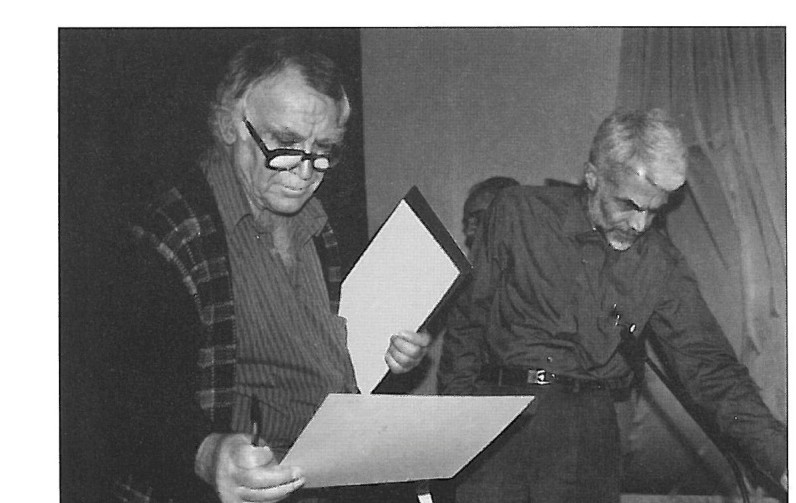
Kambiz Nazaramoo: If we suppose that the aims of holding the Grand Award are to encourage architects to professional honesty, to introduce the works that have been carried out and the appropriate models of design to society, and finally to raise the level of public expectations, knowledge and taste, we must keep these aims in mind during the judging.
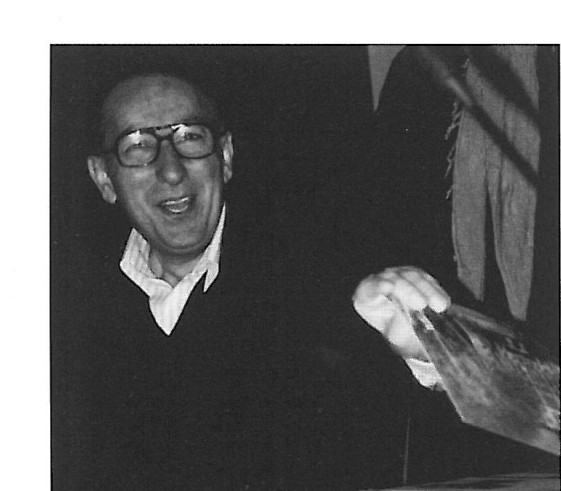
Kamran Afshar Naderi: In my view, since our subject is residential buildings, we should pay greater attention to technical, comfort, hygiene and safety questions. The various hygiene, safety and comfort questions matter only insofar as they are turned into design questions.
Mehdi Alizadeh: I do not agree that we should list the criteria like this. If, say, ten criteria with marks from one to ten are taken, other factors are unconsciously dropped. The mind works that way. But the multiplicity of factors under consideration is itself a good thing — abundance is always peaceful, and its result is flexibility.
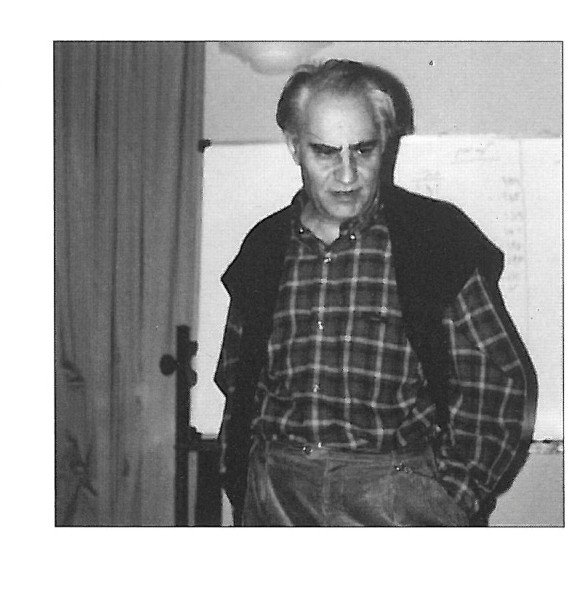
Afshar Naderi: Another important point: separating the question of housing from the question of architecture. From distant times these two have been distinct categories. From the Egyptians to today, the builders of pyramids, cathedrals and Friday-mosques did not build houses. Whoever built the Achaemenid palaces did not build houses. In the Gothic period, houses had one typology and the churches another. Architecture is dynamic and international — it changes from period to period and shifts from country to country — while housing is a local thing and has changed little over time.
Mirmiran: In housing the most important issue is the economic and the technical. Saving two square metres of area in a 2,000-unit project matters greatly; in a villa it does not. You build a villa for one specified client, but you do not build 2,000 houses for one specified client. Even great architects like Stirling and Le Corbusier ran into great difficulties when they took up housing.
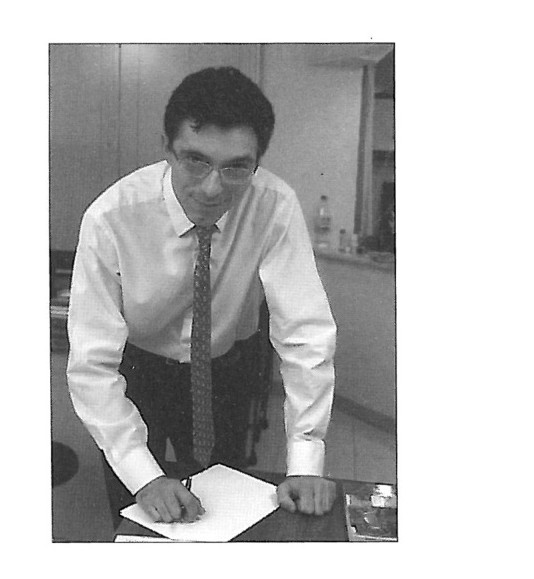
Saremi: In my view, beyond all this, function too is of importance in housing. At least under today's conditions, a house means function. If Villa Savoye, despite a poor functional record, is recognised as a work of architecture, that is because issues beyond function were at stake there. What concerns the architect under today's conditions is the functional resolution of the house's space. In these sixty years we still have not understood functionalism, which is the basis of architecture.
Afshar Naderi: In my view the issue is not economic, but the difference between housing and architecture. The first priority in housing is safety. The very notion of chahar-divari (four walls) springs from this. The second priority is shelter; the next, function; then comfort; and only after all this can a space for the mind, for thought, be opened up. In general, throughout history, housing — unlike architecture — has been more static and continuous, and answering climate and place has mattered far more.
Mirmiran: Europeans no longer have a housing problem. Housing today is our problem. New discoveries on this subject must come from countries like ours. Right now, the question of residential complexes in Iran is what matters.
The Judging
The judging began on the morning of Thursday 28 Azar (19 December 2002), with all five jurors present, at the House of Artists, and continued late into the day. The hundred entries had been numbered from 101 to 200; among them, entries 156, 163, 191, 192, 194, 195 and 200 were excluded as off-subject or incomplete; ninety-three projects went forward to the jury.
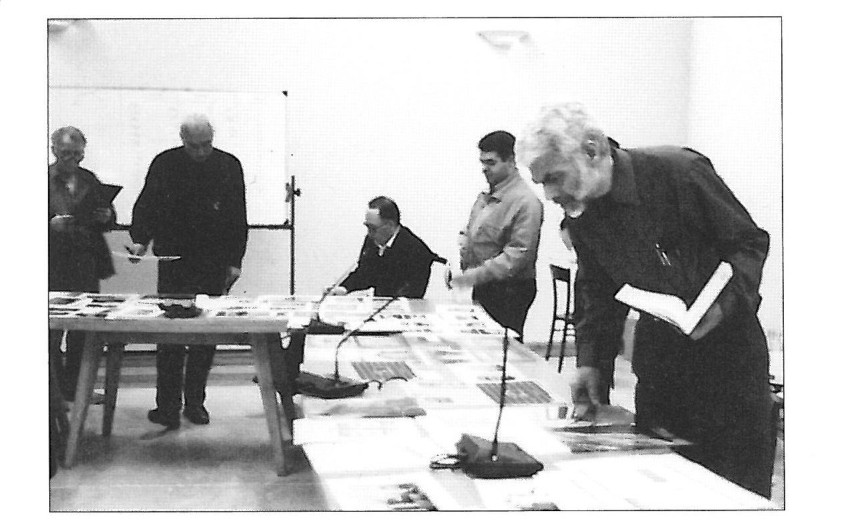
Each juror examined the works following the guidelines. Through stage-by-stage elimination, in the third and final round, twenty works were chosen out of the ninety-three as good examples of residential architecture, whose images appear in this issue.
The second judging session, with all jurors present, was held on the afternoon of Sunday 1 Dey (22 December) at the House of Artists. Each juror chose five preferred works, without ranking, from the twenty initially selected. Eight works that received no juror's vote were dropped; twelve works remained. Of these, four works received three votes or more and eight received only one or two votes.
The eight works debated at the second session
Entry 136 (Building No. 2, Reza Aliabadi); entries 187 (Pars Residential Complex, Dariush Shahnavaz) and 110 (Manzariyyeh Residential Complex, Dariush Shahnavaz); entry 148 (Kordan House, Firooz Firooz); entry 161 (Malekar Villa, Rashid Khomarlou); entries 150 (Elahiyye Residential, Behrooz Bayat) and 132 (Elahiyye Residential, Behrooz Bayat); and entry 101 (Lavasan Villa, Bahram Shokoohian).
After the eight-project debate, with the additional question of whether one of the residential complexes might enter the top five, a re-vote of the jurors selected entries 102, 104, 105, 132, 159 and 187 for the final ranking.
Third Session — Discussion of the Six Finalists
The third session was held on the afternoon of Saturday 7 Dey (28 December), with all jurors present, at the offices of Memar Press Institute. Before the ranking, the jurors made their remarks on each work and on the points they would assign:
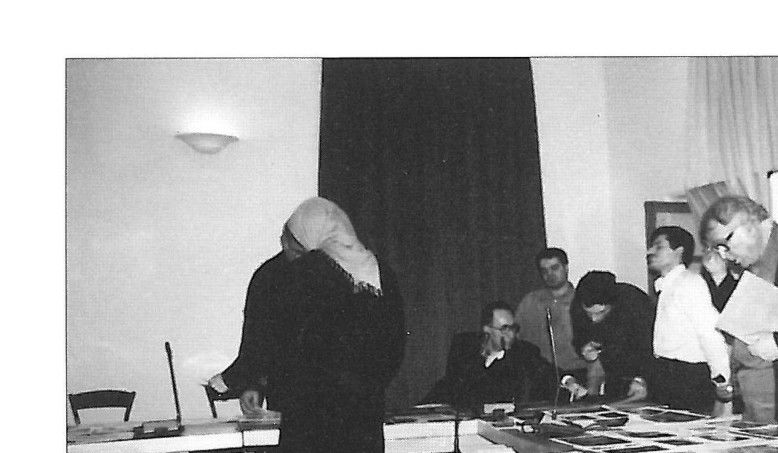
Entry 105 (Sadri Residence, Mohammad Reza Ghane'i, Ali Sheykholeslam) — Mirmiran: This longitudinal division of the space — into, in effect, three large 'tunnels', themselves further subdivided — is a fresh and original device. It takes great skill to do this on an 11-metre-wide site. Afshar Naderi: On this restricted, narrow plot the architects have brought into being a very rich and complex space. Saremi: By the way of its planning and the spaces it produces, this work goes far beyond a work that is merely beautiful: it is not only beautiful — it also looks critically at architecture.
Entry 104 (House of Navvab Safavi, Mohammad Reza Ghane'i, Ali Sheykholeslam) — Afshar Naderi: This project too is built on the idea of the corridor. Unlike the previous one, however, in its detailing it has tended toward ornament. This is a relative judgement; otherwise the project is among the very fine works of the competition. Mirmiran: The aim of the project is to add a hall and a swimming-pool beside an old building. The placement of this hall is excellent.
Entry 102 (House No. 3, Mehrdad Iravanian) — Mirmiran: The brave use of varied materials — from an unpolished timber beam to today's metal sheets — is one of the project's strengths and is admirable. Afshar Naderi: This is a work of conceptual art, and one must look at it with that view. Its architect is one of those few who have a personal style of their own.
Entry 132 (Elahiyye Residential Building, Behrooz Bayat) — Mirmiran: This is a normal project, but all its parts are bound together. Its mark is the architect's mastery in producing unity, and his refusal to imitate. Afshar Naderi: A fine urban apartment ensemble, an urban model worth disseminating. Saremi: Within the body of houses Tehran has built over the past forty or fifty years, this is in my view a very successful work. It is urban architecture and can become widespread.
Entry 159 (Kamraniyyeh Residential Complex, Faramarz Sharifi) — Mirmiran: A faultless project. It has produced a pleasant central space. Nazaramoo: The plans are designed with full care; there is no wasted space; the quality of execution is good.
Entry 187 (Pars Residential Complex, Dariush Shahnavaz) — Mirmiran: This project deserves attention because of the importance of residential complexes. The idea of its placement on the site is striking. Afshar Naderi: Its principal statement is to create an urban front, something sadly neglected in Tehran and in the provinces.
The Final Ranking
With the discussions complete and all the jurors' remarks heard, the ranking of the five top works was carried out. To this end, each juror distributed scores from 6 (highest) to 1 (lowest) across the six remaining works on separate slips and handed them to Memar Press Institute.
The jurors’ final scores for the six finalist projects; each juror awarded every entry a score from 1 to 6.
| Entry no. | Jurors’ scores | Total | ||||
|---|---|---|---|---|---|---|
| 102 | 4 | 1 | 3 | 3 | 3 | 14 |
| 104 | 2 | 2 | 5 | 4 | 4 | 17 |
| 105 | 6 | 6 | 4 | 6 | 6 | 28 |
| 133 | 5 | 4 | 6 | 5 | 5 | 25 |
| 159 | 3 | 3 | 2 | 1 | 2 | 11 |
| 187 | 1 | 5 | 1 | 2 | 1 | 10 |
The Awards Ceremony
The awards ceremony, as announced in the call-for-entries posters, was held on 27 Dey (17 January 2003). At the ceremony, Soheila Beski, executive director of Memar Press Institute, opened with a report on the running of the competition and announced the names of the twenty jury-selected works. Seyed Reza Hashemi, CEO of Memar Press Institute, then delivered an address. After him, Mehrdad Yousefi, CEO of Superpipe International, spoke to the guests. Finally the jury's spokesperson, Engineer Seyed Hadi Mirmiran, announced the five top works:
1. First place — Sadri Residence, Isfahan, by Mohammad Reza Ghane'i and Ali Sheykholeslam (entry 105)
2. Second place — Elahiyye Residential Building, Tehran, by Behrooz Bayat (entry 132)
3. Third place — House of Navvab Safavi, Isfahan, by Mohammad Reza Ghane'i and Ali Sheykholeslam (entry 104)
4. Fourth place — House No. 3, Shiraz, by Mehrdad Iravanian (entry 102)
5. Fifth place — Kamraniyyeh Residential Complex, Tehran, by Faramarz Sharifi (entry 159)
The first-place winner received the Grand Me'mar 81 medal, 100 million rials and a certificate of appreciation; the second through fifth places each received certificates. As part of the ceremony, the special Superpipe prize for use of the under-floor heating system (50 million rials) — in tribute to the Iran Cultural Heritage Organization's continuous efforts to preserve and revive Iran's historic architecture — was awarded to the Pardisan studio of the Cultural Heritage Organization. At the close, Memar Press Institute presented a certificate of appreciation to Mehrdad Yousefi, director of Superpipe, in recognition of his support for the cause of architecture.
It is also worth noting that, in the course of running the Grand Me'mar Award 81, the website www.memar-award.com — carrying information on both the 80 (1380) and 81 (1381) editions — was launched.
Address by Mehrdad Yousefi, CEO of Superpipe International, sponsor of the Grand Me'mar Award 81, at the prize-giving ceremony
I welcome all the honoured guests. The Superpipe International factory began work in Khordad of 1376 (June 1997) in the Qeshm free zone with a staff of 18. The product we make represents the latest pipe-manufacturing technology in the world. The machinery and the technical know-how belong to Germany — the Uponor company — and we operate under licence from Uponor and in partnership with them. Today, that small group has grown into a large family that, beyond the 130 staff, includes hundreds of others as official representatives, sales agents and installers throughout the country.
We are the first manufacturer of multilayer pipes in the Middle East. We were the first to receive the ISO 9000 certificate in the country's free zones. We won the Geneva 2000 Golden Quality Star and the 2001 Paris Trade-Credibility Award. But our greatest pride, in our own view, is the trust of the country's engineering community in us, and the result — the laying of more than six million metres of pipe in thousands of large and small projects across the country.
We make a product produced and offered to high standards. The construction of a building is a chain; any step that strengthens any link of this chain and raises the standard of housing-construction from design through to handover makes us more successful. This is the first point of contact between us and architecture as one of the most important links of this chain — and one of our reasons for being here and for supporting the Grand Me'mar Award. The slogan of our advertisements, 'Good architecture is the first condition of good housing', says exactly this.
If we accept the remarks of Engineer Monsef — one of the country's outstanding services engineers — in this same recent issue of Memar that architecture is, in the end, the making of a fitting space for human life, and that, therefore, structure and services cannot be separated from architecture, then it is clear that the building services are, before anything else, an architectural-design issue, not a separate category imposed on architecture.
Under-floor heating is widespread in Europe. We have laid tens of thousands of square metres of under-floor heating, some of it very visible: the heating of the lawn at Azadi Stadium; the combination of this system with solar energy in Shiraz; and — a field of particular concern to me personally — the many historic buildings being restored under the Cultural Heritage Organization. The advantages of the system: pleasant, even warmth; easier architecture; clean walls; more useful space; safety and hygiene; energy savings; and, in a word, greater comfort.
I thank Engineer Hashemi, Mrs Beski and the staff of Memar Press Institute, the honoured jury, my own colleagues at Superpipe, the entrants in the competition and all those present at the ceremony. Thank you.



