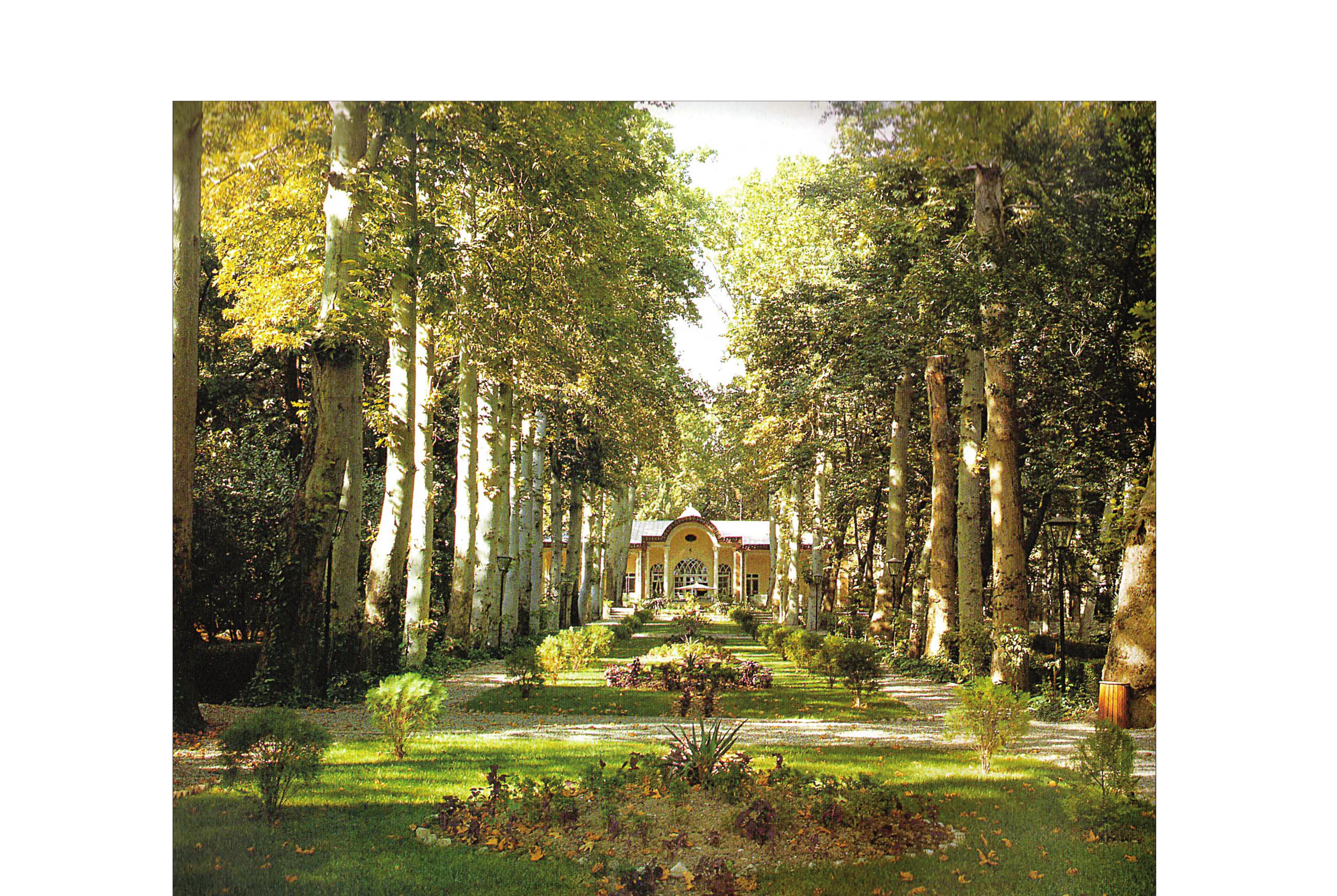
During its 500 years of history, Tehran has developed its green belongings, all with fresh and beautiful names, around its historical nucleus.
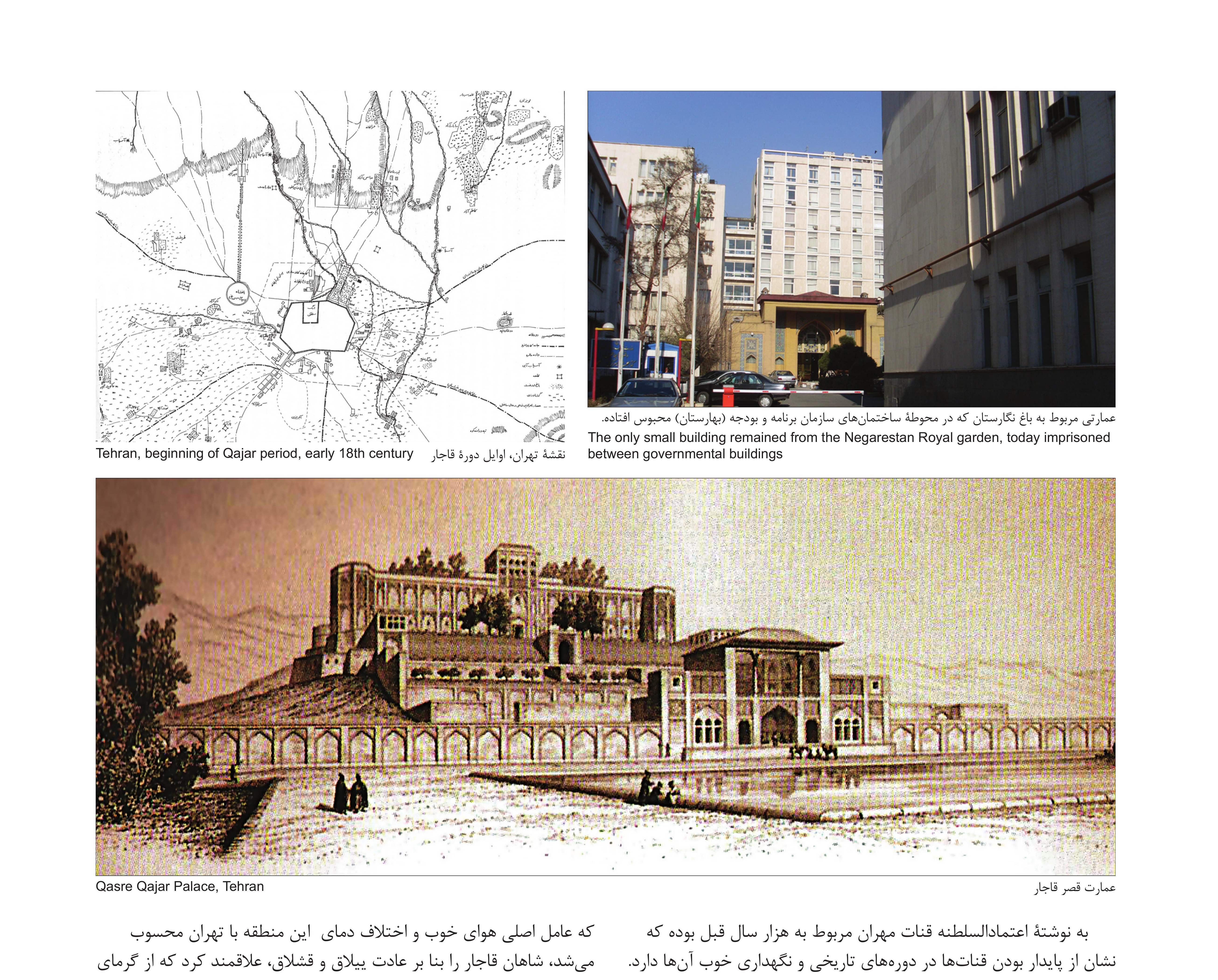
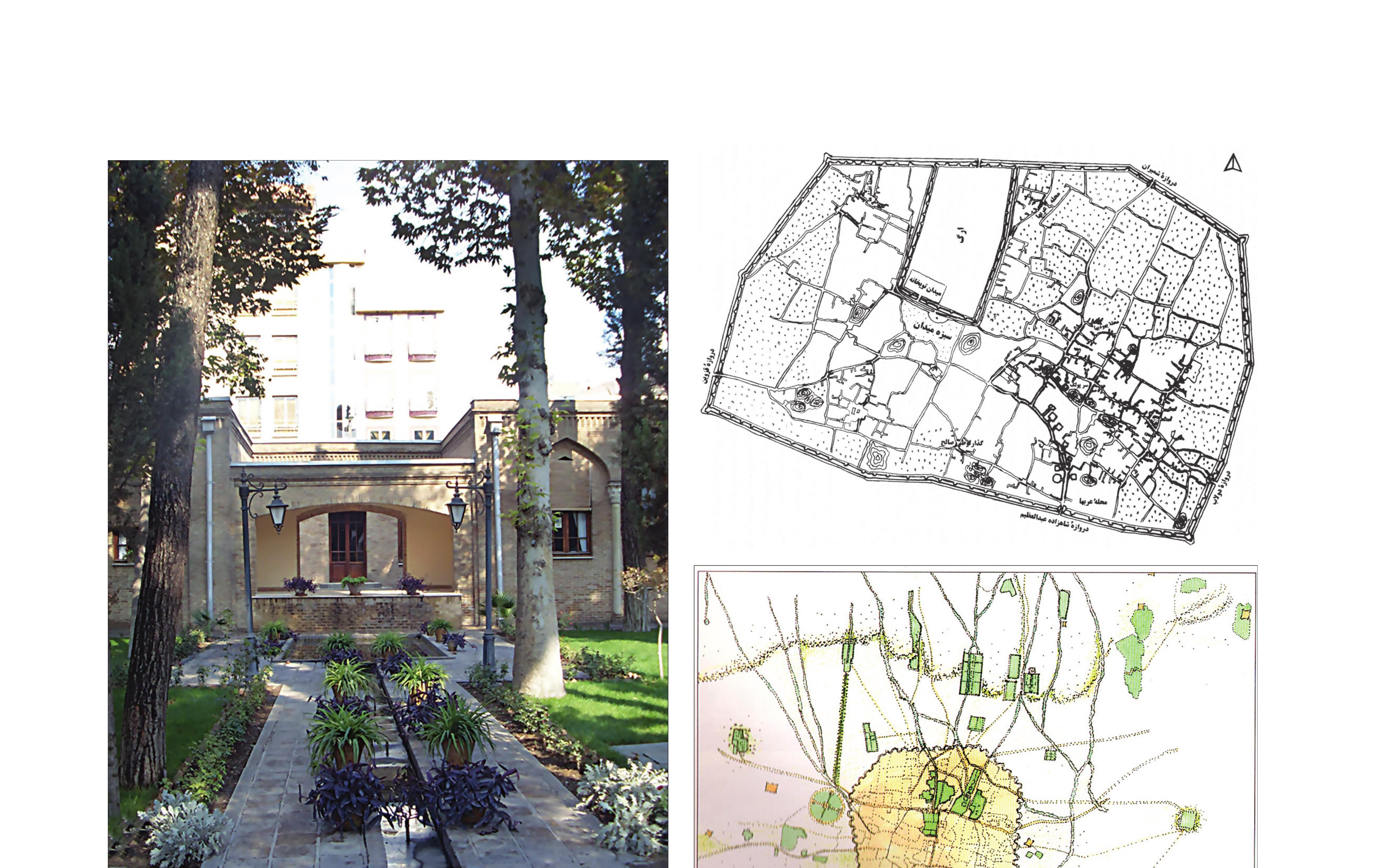
“Only inside the very small Safavi nucleus of the city,” Jacob Polak writes in his memories, “… there are 144,000 square meters of gardens, according to Major Kershish” — who has drawn one of the oldest maps of Tehran under Nassereddin Shah. He built many palaces and gardens during his 50 years reign: Eshrat-abad, Saltanat-abad, The Turquoise Palace, the Sorkhe-hesar palace, Sharestanak Palace, Doshantappeh Palace, etc. Of those precious gardens there remains only part of the Negarestan Garden.
Gonzalez de Clavijo, the famous Spanish traveler also writes about Tehran in 1404 AD: “Tehran is a very vast town, with no walls, and lots of joyful greenery”; while Pietro della Valle, the Italian who travels to Tehran with Shah Abbas calls Tehran ‘the city of Plane Trees’. Of all the Qajar gardens only some signs remain today: the Baharestan garden around today’s Parliament, The Masoudieh Garden, the Eshrat-abad garden as part of a military camp, the Ilkhani garden in the Central-National Banks’ area in Ferdowsi, and 2 or 3 embassies in central Tehran.
During Nassereddin’s reign, Tehran started moving towards the north, first by constructing gardens and villages who brought their water from the mountains faults of northern Tehran, through ‘Qanats’. The reason for this interest towards the north was not only the sources of Qanats, but also the existence of old and new villages who produced fruit and vegetables for the city, the better climate of these villages during the summer, and the number of roads that were drawn towards the northern territory by the king and other wealthy families to their palaces and villages. Until days not very long ago, Tehran had 500 strings of Qanats that brought water to all these historical lands and gardens: Mehran, Vanak, Tajrish, Chizar, Sohanak, Narmak, Evin, Kan, and 300 other villages that are today part of the urban fabric. The Mehran Qanat, writes E’temadolSaltaneh, is 1000 years old.
Unfortunately today these precious infrastructural installations of the city do not function any more, and in Tehran — the city with no sewage system! — serve as canals which conduct the dirty underground current waters.
Another important garden of Tehran today is the Farmanieh Garden of the Qajars, bought in the 1930s by the Italian Government. As the residence of the Ambassador of Italy, it is recently restored beautifully, and remains as one of the few historical gardens of Tehran.
During Reza Shah’s period (1920-1940), with the Pahlavi Street [today’s Vali Asr St.] being stretched towards the north, not many traditional gardens were built near the new road. But so very many Villas were erected in all directions, outside the city, in the suburbs.
With the modernized approach towards life in the capital, houses, especially those of the richer classes, started being more extrovert. So, houses built around an internal courtyard were substituted by Garden-Villas situated in the middle of the green, with a fountain and a pool, and the garden decorated with flowers.
Today, Tehran needs green public spaces more than ever in its history. Before apartment towers occupy the remaining empty space, we should save some of these treasures of Old Tehran with the help of the urban authorities.
Mehdi Memarzadeh since his graduation in Architecture in Tehran University, has worked for the Organization of the Cultural Heritage, guiding the conservation projects works of the historical monuments. As a researcher on Iranian Heritage, he has many articles in specialized magazines, and in the Greater Islamic Encyclopedia.