Project credits
Architect: Hossein Sheikh-Zeinoldin / Bavand Consultants
Location: Sa'dabad complex, Tehran
Area: approx. 20,000 m²
Construction period: approx. 2 years
Executor: Special Buildings Executor, Ministry of Housing and Urban Development
Director of execution: Jalal Sadeghi
Project manager: Mohammad-Javad Esmail-pour
Site supervisor: Mohammad-Reza Mowashahi-Asr
Outfitting manager: Malih-os-Sadat Karimi-Paydar
In the Construction & Industry section we have turned to the project for the Hafeziyeh Building — the residence for the heads of state of Islamic countries — to which we have devoted this issue's Criticism section as well. Among the features of this project that prompted Memar to dedicate the Construction & Industry section to its study is the high quality of execution achieved in a relatively short period (about two years) at a cost of around three million rials per square metre — a very reasonable figure, and a sign of vigorous and efficient organization.
In a conversation with those who carried out the project — engineer Jalal Sadeghi, project executor and director of execution; engineer Mohammad-Javad Esmail-pour, project manager; engineer Mohammad-Reza Mowashahi-Asr, site supervisor; and engineer Malih-os-Sadat Karimi-Paydar, building outfitting manager — we asked them, in addition to discussing important managerial aspects and project-organization methods, to explain to Memar's readers how they achieved an execution quality that is considered an achievement for the country's construction industry.
The Special Buildings Executor
Jalal Sadeghi
Before turning to the methods of management, organization and execution of this project, allow me to briefly explain how the Special Buildings Executor came into being; this will answer a large part of your question.
The principal reason the Special Buildings Executor was formed within the Government and Public Buildings & Facilities Executor Organization of the Ministry of Housing and Urban Development was that certain government construction projects had special problems that made their execution by the customary methods — in conformity with current regulations and the standard fee schedule — impossible. Examples include the restoration of the Majles building, on account of the sensitivity of the subject and the historical importance of the structure; the Qur'an Museum and the Negarestan Cultural Centre, on account of the technical complexity of their structures and the need to use special materials; and the Hafeziyeh building — not only because of the special nature of its use (hosting high-ranking foreign government guests) but also because it had to be designed and built simultaneously in a very short time. These were among the projects that had to be carried out by the Special Buildings Executor.
At the start of the Hafeziyeh work, given the importance of its function, we knew we had to build a structure that would be of international standard in quality and that could in some sense fill the gap left by the absence of fine and accomplished buildings in recent decades.
Our short time-frame for simultaneous design and execution created its own problems. The most important was that we could no longer operate by the customary methods used to build government buildings: we could not send drawings or the architectural design to existing technical units for review, approval and authorization before construction began — though I personally am not entirely in favour of that kind of control either, and I believe that in some cases the design is not deeply examined at all.
In addition, the sensitivity of the work — despite our belief that the architectural design was very good and appropriate — required, given the lack of time for any subsequent revision, that we form expert panels to review the various components of the design during execution. This panel met about seventy times over the course of the project, the final session held some two weeks before delivery and the start of operation. In these meetings all architectural and interior-design details and all material and equipment choices were examined by experts and the final decision was announced.
Beyond this panel — which one might call a decision council or a project-steering council — we consulted experts in every area to the fullest extent possible. For example, on stone materials we asked the Non-Metallic Minerals Deputy of the Ministry of Mines to introduce specialists to us, who then assisted us in numerous meetings. We applied the same approach to other fields such as security planning and equipment, audio-visual systems, simultaneous translation, and other equipment required for the building, which had to be of a level higher than that of a five-star hotel. I would like here to sincerely thank the experts of the Islamic Republic of Iran Broadcasting (IRIB) and the respected Security Deputy of the Ministry of the Interior, who assisted us in these fields.
On guest-house equipment, we had difficulties even in finding reliable references, since in the past twenty years no major hotel has been built in Iran and we lag far behind the world in this area. In some matters — such as interior design, which we were in fact undertaking for the first time — we encountered many problems because of the short time, since by the customary practice in the country execution of the interior and outfitting is communicated to us only late in the work — about one year and two or three months after the start of construction. In my opinion, however, interior design, outfitting and architectural design must be carried out concurrently, so that we do not have to redo work during execution. The outfitting of the building should likewise, in accordance with worldwide practice, be carried out concurrently with the architectural design. In Iran, however, it is customary first to design and build the structure, deliver it to the user, and let the user outfit it — and sometimes that outfitting is done in a way that violates all the underlying principles intended by the designer. It is worth noting that the Hafeziyeh building, as soon as its construction and outfitting were complete, began operating at full capacity.
These are a sample of the special problems of the construction and execution of the Heads-of-State Residence project that I have raised to open the discussion. Mr Esmail-pour and Ms Karimi can also speak to their own areas of work on this project.
Project Management and Scheduling
Mohammad-Javad Esmail-pour
About my responsibilities I should say that we began the project with the equipping of the site, and as the broad outlines of the work were defined, the organization of work and personnel was begun in a general way. The volume of work and the precision it required on the one hand, and the very tight schedule on the other, made one thing imperative from the very first day: drawing up a project schedule whose conclusion was a completely defined, definitive and unalterable date. Any delay in carrying out any part of the schedule, for whatever reason, had to be promptly made good in the next part — and this could not be achieved linearly, because the amount of work in each subsequent period had been determined case by case in advance. These adjustments were made about once a week. The project schedule was therefore not a static plan but a fully dynamic one based on variables of every kind and form.
The organization of work, personnel, supplies and financial affairs were all constantly subject to change. As project supervisor it fell to me to manage these matters, largely in the course of execution. In general, my principal duties consisted of: organizing the workforce; opening multiple work fronts to run in parallel; carrying out operations outside the scheduled time to make up subsequent shortfalls; and engaging specialist and devoted personnel for whom — beyond personal interest — matters such as national prestige and the defence of Iran's engineering capability and similar concerns were at stake.

Site Execution
Mohammad-Reza Mowashahi-Asr
Because of the responsibility I had on site I had to deal with the execution details more than the other colleagues. The simultaneity of design and execution in our area of activity created special problems, largely connected with the speed of design work and decision-making about execution details, whose verification was not possible by the customary methods of design review. For this reason it sometimes happened mid-work that the specifications of work we had already executed — and were glad to have finished — were declared incorrect, and had to be changed.
An important matter that especially arose in my area of work was the correct deployment of individual and collective skills of the human workforce across the various execution operations; this planning and direction naturally encompassed engineers, technicians, technical workers and even unskilled labourers.
Another important feature of execution management — one of the effective and successful factors in advancing the work — was the order and discipline that prevailed on site, which itself in a sense raised the quality of the work. Assembling, deploying and retaining execution personnel for the various trades — carpentry, painting, metalwork, masonry, plastering, mechanical installations and others — was, given the simultaneous start of hotel renovations across Tehran and other buildings in some way connected with the Islamic-states summit, especially in the last six months, one of the greatest difficulties of this period. Given that in many of the above situations several groups were moving in parallel according to a previously agreed policy, we were able to relieve some of these pressures.
Building Outfitting
Malih-os-Sadat Karimi-Paydar
The ultimate satisfaction one derives from a building depends on the correct functioning of all its parts, of which the building's outfitting is the final completing link. This part of the work, which in Iran is not generally given much attention, is so important that it can entirely undermine the functionality and aesthetic merits of the architectural design. At the Hafeziyeh building, because of its special use, this aspect of design was necessarily — if belatedly — attended to. We began outfitting the building in Bahman 1375 (January–February 1997). At first we had to prepare a complete list of the equipment required for a residence appropriate for our country's high-ranking official guests.
Unfortunately, given the lack of sufficient experience in Iran — which lags behind many European and even Asian countries that have advanced considerably in attracting tourism in the field of hospitality and tourism — we faced many problems. The client asked that outfitting be carried out making use of the skills and latent capabilities of Iranian industry and art; the idea was that what is available in the market should be raised in quality, and that by guiding Iranian manufacturers, producers and factories, a permanent exhibition of the country's best products would take shape inside the Hafeziyeh building.
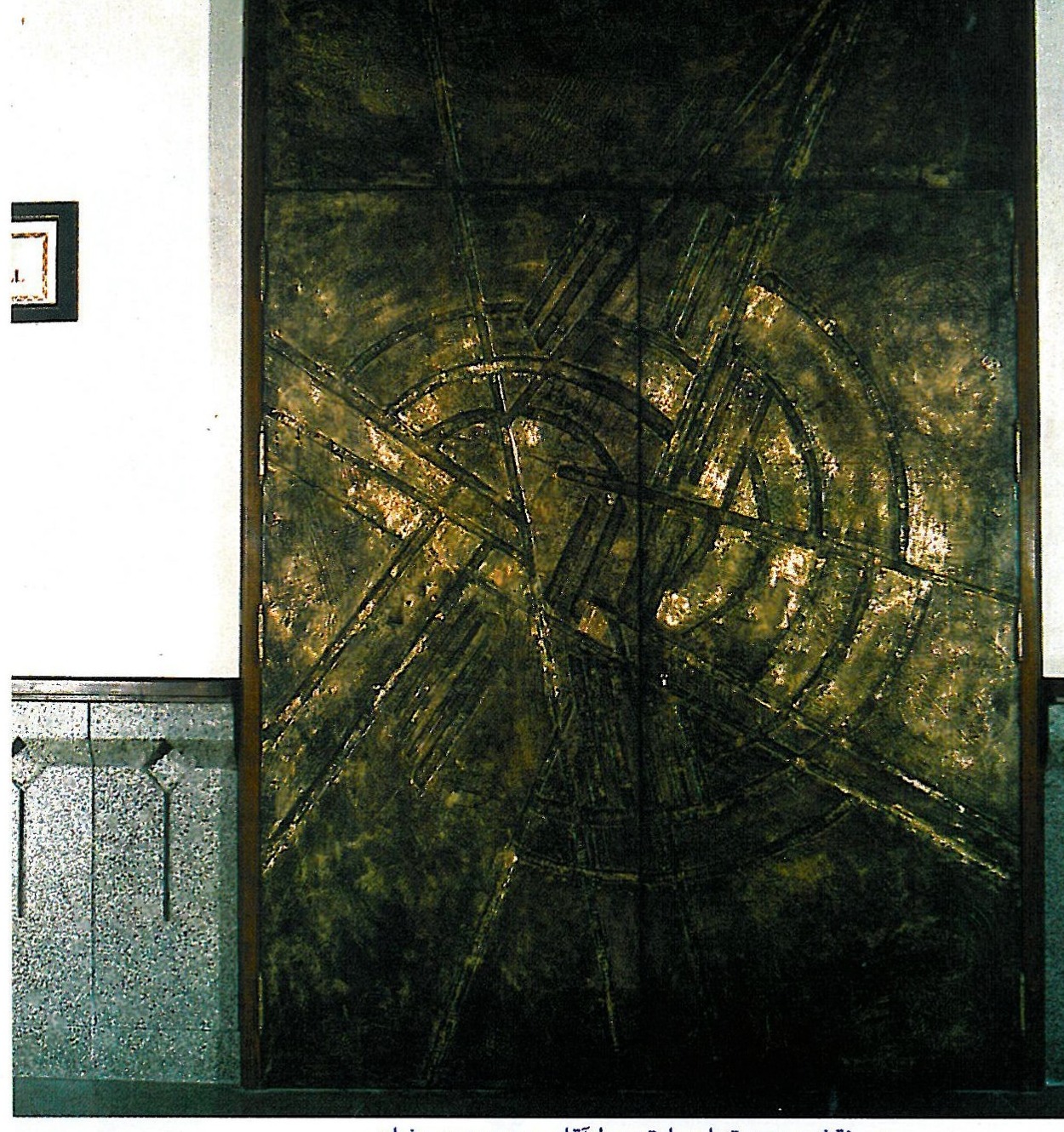
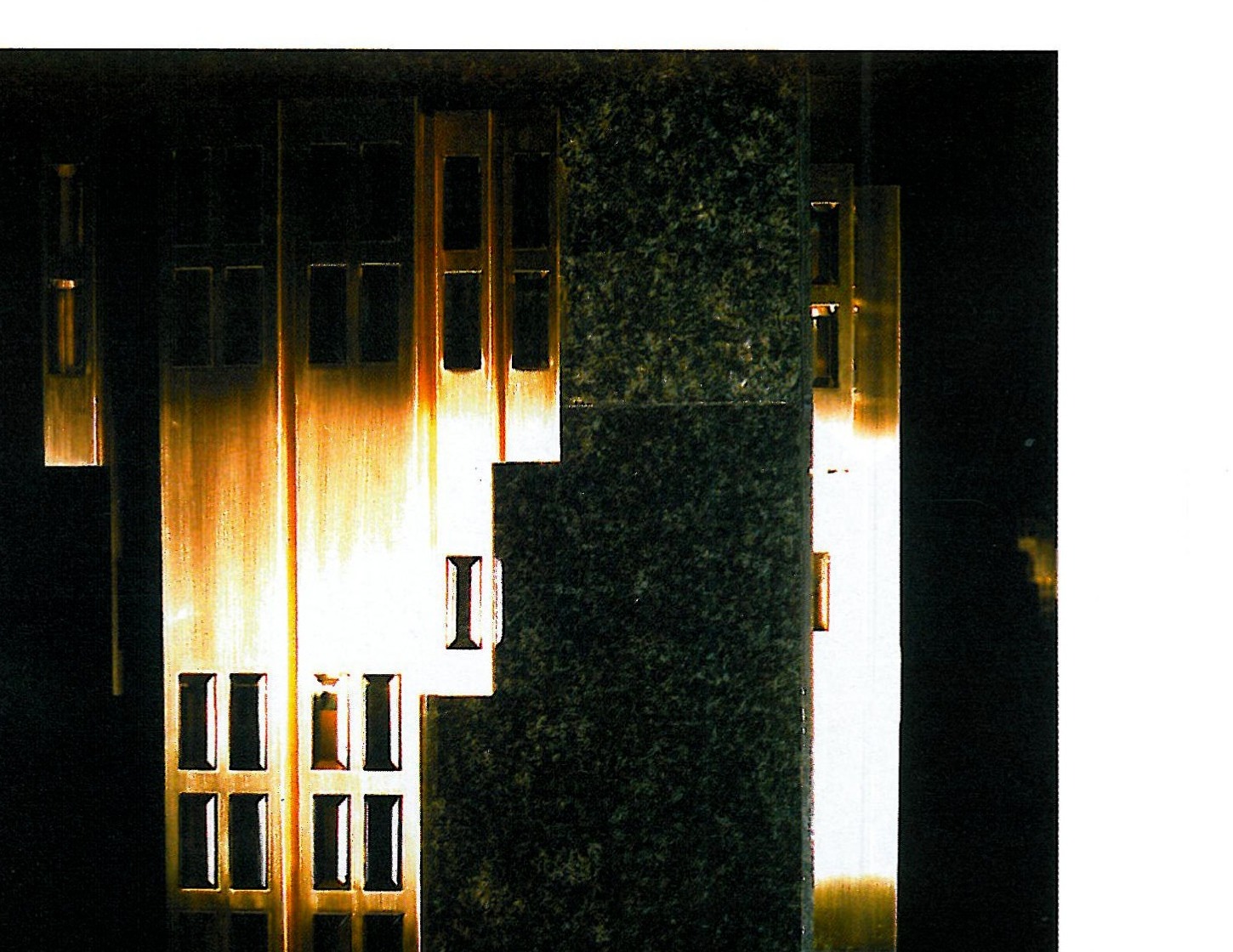
Another difficulty was the diversity of spaces inside the building, which differed substantially from a hotel: single rooms, suites, lounges and restaurants, conference halls, sports areas, private meeting rooms — each required specific equipment, which in turn required specialist study and discussion. We were therefore obliged to draw up an individual schedule for each space, then determine how many of each item were needed, and decide whether to design the required items or simply select and order them. We accordingly grouped the items under several headings: service items, textiles, tableware, equipment, decoration, furniture, floor coverings, and printed matter. In the course of work some of the items needed were designed and others were chosen and ordered — the details of which deserve a separate occasion. I will only note that in certain cases we particularly succeeded in raising the quality and developing the latent skills of Iranian craftsmen — including some textiles such as fabric and blankets, bronze work, the manufacture of furniture such as sofas and chairs, stone paving for floors and walls, the production of tile and ceramic, sanitary fittings, china and leather goods — about which we will, if needed, give further explanation in a subsequent round.
Memar: The opening round of remarks has made clear that the management and execution organization of the Hafeziyeh building was very broad and extensive, and that it ultimately succeeded in completing the work to good quality within the assigned period — itself a very important experience. The question that arises here is this: given your youth — for you have been the principal elements of this management and execution organization — and given that it does not appear you had any opportunity in the past to acquire comparable experience, how were you able to accomplish such a task? Apart from the general layout, structure and mechanical installations — each of which itself requires coordinated organization of many skilled craftsmen and special expertise in various trades — there were many more issues besides. Achieving execution quality in the facade, in the interior, and in the surroundings — over and above the deployment of a large number of master craftsmen each of whose work had to be excellent — requires a coordinating management with judgement and familiarity with the desired quality in every detail. Given your youth, the very fact of having achieved this is difficult to understand. On the project for the Heads-of-State Conference Hall most of those involved — both executors and designers — were the oldest and most experienced engineers in our country, and it is easier to see how they could have organized the work teams, set quality standards, and taken delivery of the work, than in your project, where everyone appears so young. At the same time it might be of interest to many readers to learn about the master craftsmen and artisans on your project.
Achievements and Track Record
Jalal Sadeghi
Thank you for calling us young. But perhaps it would be useful here to mention some of the national projects we have carried out in the country to date: the dormitories of Taleghani Hospital, Tehran (16,000 m²); the Lakan project, Rasht (18,000 m²); the great Shahid Baqaei Hospital, Ahvaz (60,000 m²); Taleghani Hospital, Abadan (23,000 m²); Vali-Asr Hospital, Khorramshahr (24,300 m²); Al-Zahra Hospital, Khorramshahr (5,700 m²); the Midwifery School, Abadan (2,800 m²); the restoration of the former National Consultative Assembly building (6,000 m²); the Negarestan Cultural Centre — Qur'an Museum — (12,000 m²); and the Hafeziyeh building (20,000 m²).
All of these have been carried out on a force-account (amani) basis and together they comprise a built area of more than one hundred and ninety-eight thousand square metres, which is the empirical backing of this young group. In other words, my colleagues and I have over the past fifteen years produced an average of 327 m² of significant construction per day. And if you look at the progression of these commissions you will see that as time has gone on the projects entrusted to us have become more important.
At the same time we too may raise a question: when, after all, should young groups be given an opportunity to do such work? But to tell the truth, if our work is judged successful, it is because from the very outset of our work we addressed this puzzle: why can we Iranians not build the way others do? Why, despite having consultants, architects, supervisory groups, the Plan and Budget Organization and immense technical bureaus, can we still not polish stone like the Europeans and Americans — or at least like our neighbours? We simply decided not to be content with the customary techniques of construction in this country. And I am firmly convinced that this is also the key to our success: not to be content with what exists, and to build something one step better.
It is interesting that all the works I have mentioned were carried out on a force-account basis — that is, we have played the full role of the client, part of the consultant's role, and the entire role of a contractor in our projects. In other words, we have not been a traditional project executor who has a consultant and a contractor for the project and who supervises remotely on a periodic basis; we have been directly engaged in the execution of the work. For that reason I have always believed that the offices of myself and my colleagues should be at the site, not at the headquarters of the ministry.
Another matter: the management of Hafeziyeh and hospitality were also entrusted to us at the time of the conference, and we brought into full operation a building in which, just a few days before, construction workers had still been at work — and we hosted twenty-four high-ranking international delegations and dignitaries. This shows that the execution quality was such that we could operate without trial periods — though in spite of all the assurances, in those few days we were unbearably anxious about the possibility of unforeseen incidents.
Mohammad-Javad Esmail-pour
Your question is, in effect, that even if a set of good or average master craftsmen were available to us, what experience would they bring? — because not all good master craftsmen deliver good work everywhere and all the time. The truth is that the principal guide of this project has been its execution management: a director who attended with care and meticulousness to every detail and minute execution issue; with about fifteen years' experience at the Ministry of Housing and Urban Development on special projects with strict deadlines; who applied a particular style of centralized management combined with the gathering of expert opinion, in the course of which every detail was reviewed and decided upon, with a single defined goal in view: that what we build should be better than everything that has been built before.
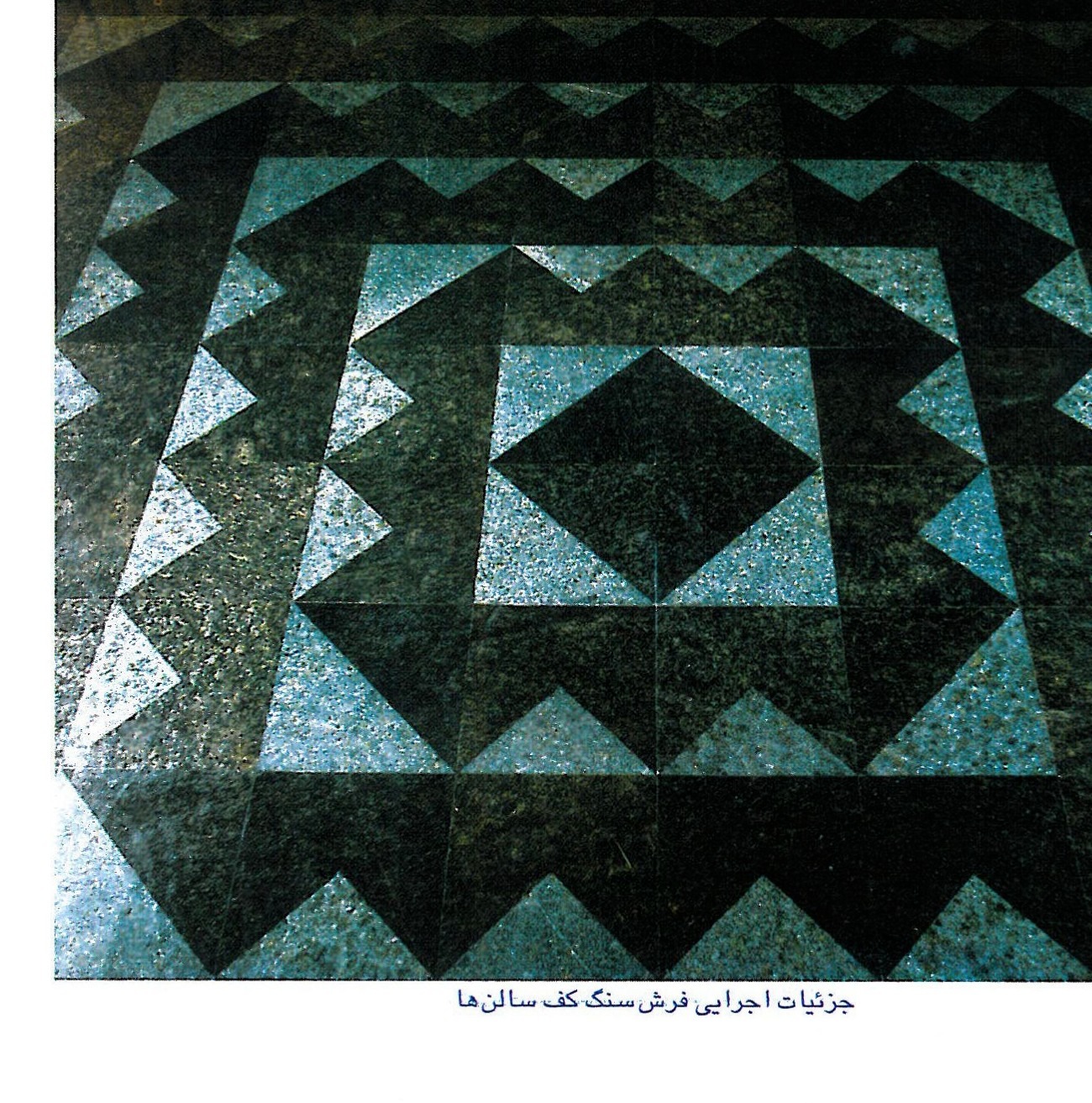
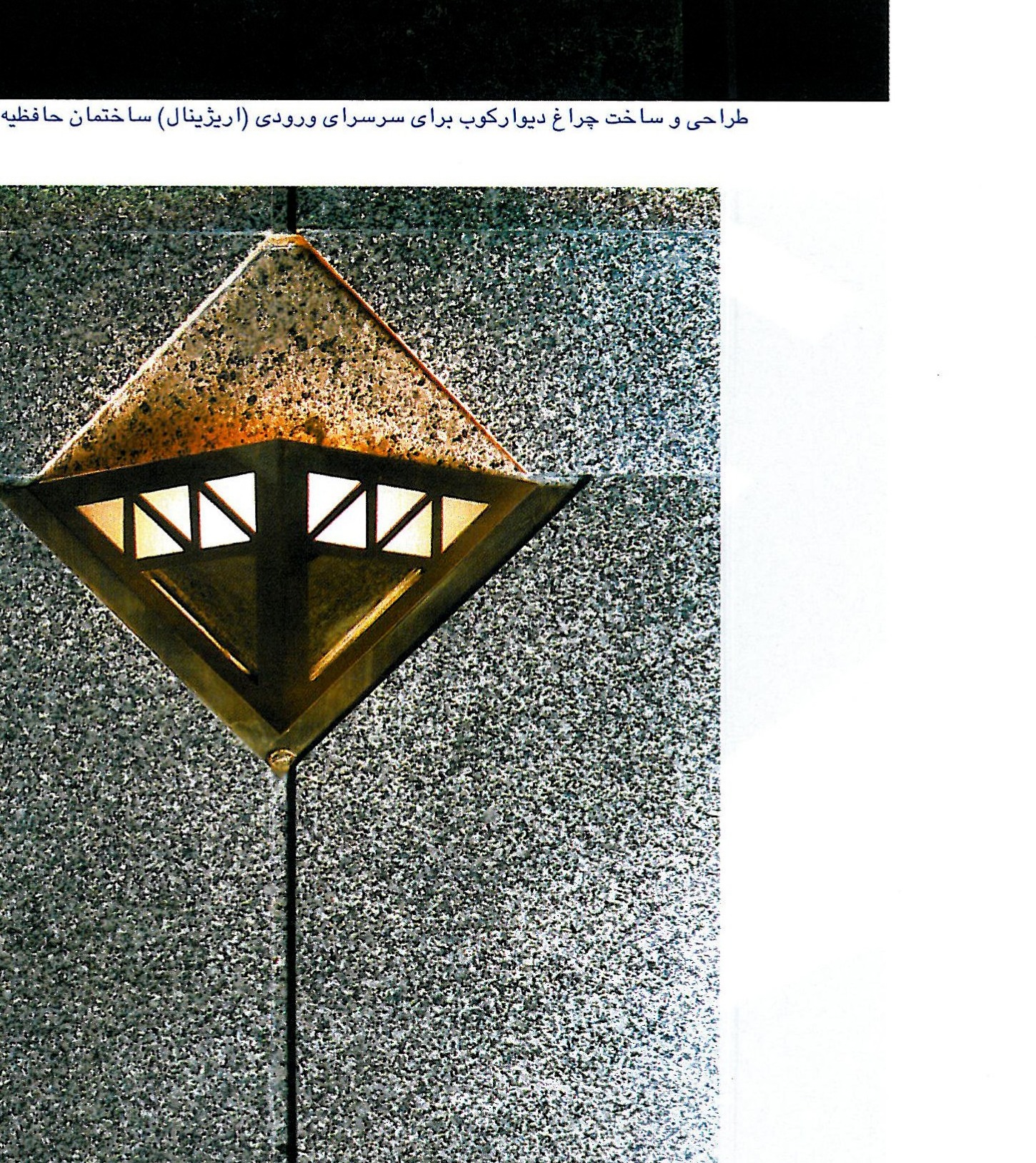
For this reason we were always asked to work on the execution of details to find better methods — even though this made the beginning of every task more time-consuming and sometimes even held it up until the optimal method was achieved. Many people repeatedly told us to drop those details, but to the extent that our capabilities and resources allowed, we worked carefully on the details. The best example is the stone skirting and the stone flooring we executed in this building, which perhaps has no precedent in Iran on this scale.
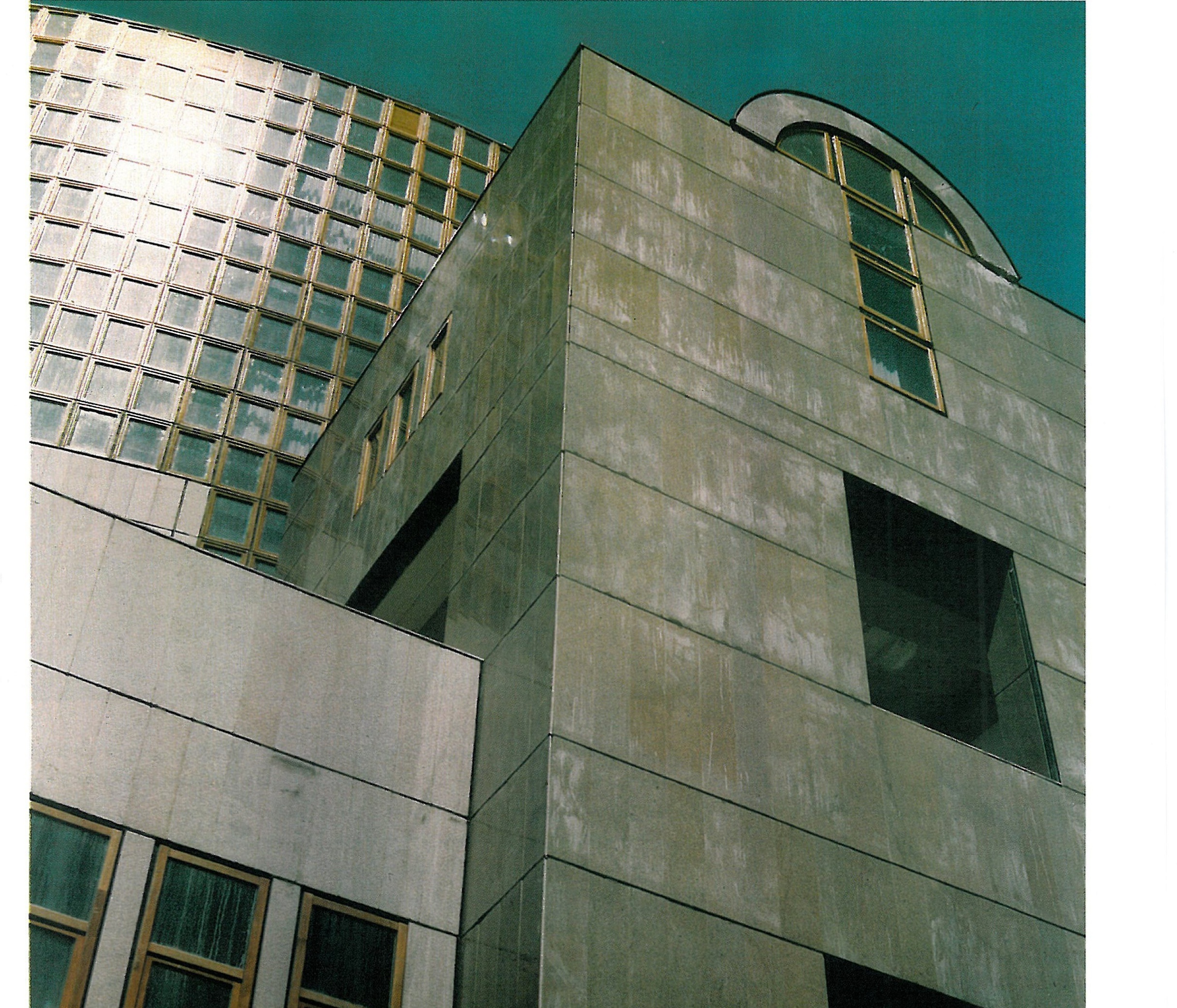
In this building we drew the stone out of the work ourselves. The architect's wish was that the facade be stone but without the gloss and shine of polished stone. To achieve this, stone is normally bush-hammered, which often does not produce a uniform and desirable result. The new method for this work in advanced countries is to fire-melt the entire surface of the stone, and we used this method for the first time in Iran. In the early stages, sometimes nineteen out of twenty fired stones were rejected, until at last the skill and craft of the work achieved acceptable quality.
Another notable point in stone work concerned the moulded skirtings over the area you see — which could in no way be produced by the customary method (hand-chiselling) and could not have the precision and refinement required. Special machinery had to be designed and built for this, which produced precise and uniformly shaped moulded stones in large quantities — otherwise not possible. It would be good if Mr Sadeghi could give further explanation in this area.
Jalal Sadeghi
My only explanation is that in Iran, across the various trades of building execution, we have a great many talented craftsmen. I firmly believe in this; God willing, if they are given the space, they will demonstrate their capabilities.
Memar: So you can claim that you have applied new methods in place of the customary, so-called traditional ones — methods that may be common in the world but, because they have not existed in our country, in themselves constitute a step towards industrializing construction. Perhaps this is in some way related to the earlier discussion: that one should not suppose that only people who have worked for thirty years can do all the work. Perhaps it is this characteristic of youth that at the time of work allows one to look at the subject and the possible solutions in a different way. Please tell Memar's readers about your own successes in this area.
Innovation in Materials and Techniques
Jalal Sadeghi
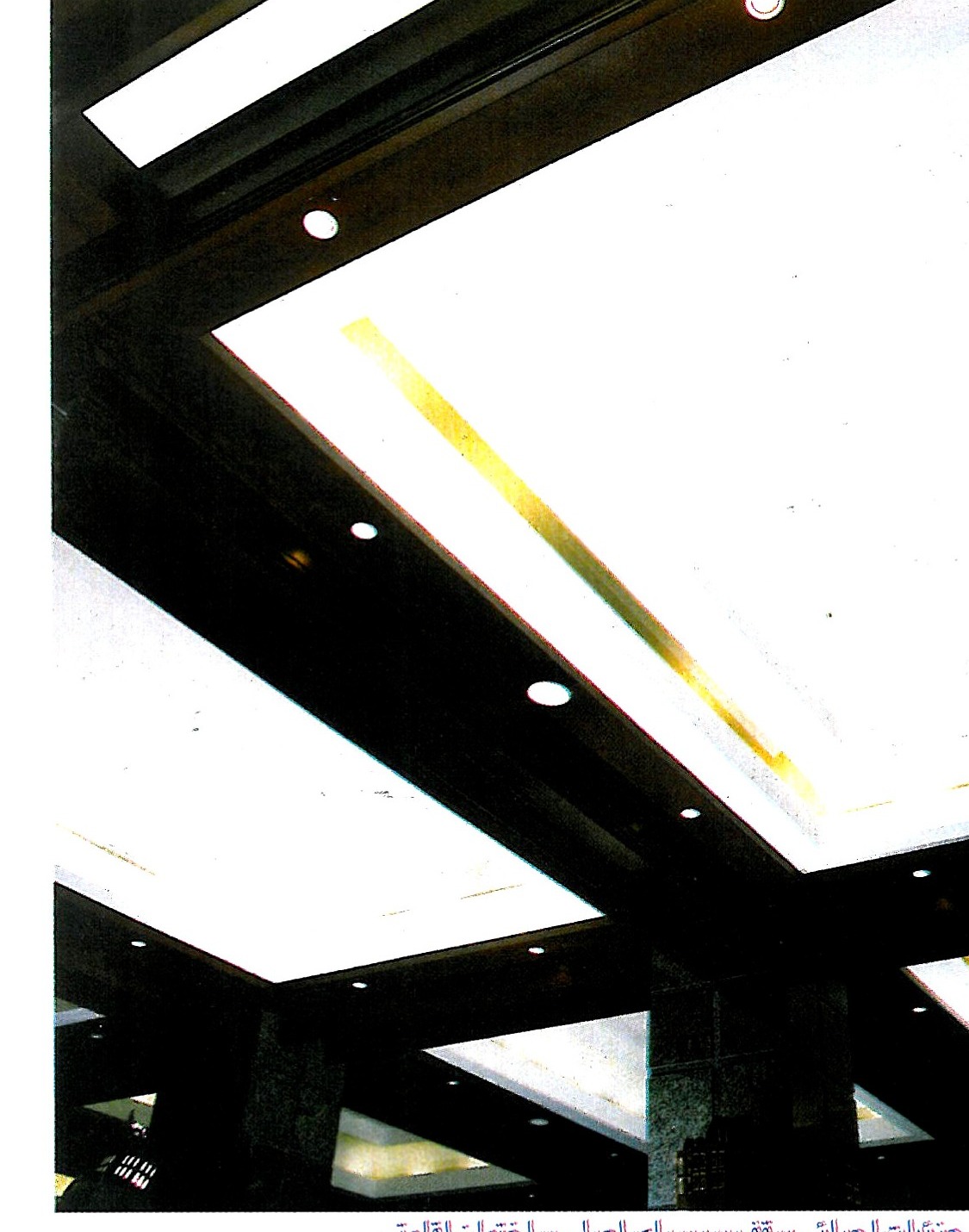
There are many examples in the Hafeziyeh building that we can each explain separately. The first concerns the use of wood for the windows. In our country, and particularly in Tehran with its cold winters and hot summers, the use of wood is not very common. Indeed, in the Hafeziyeh design we originally intended to use sliding aluminium windows. But Mr Sheikh-Zeinoldin, the architect, wished the windows to be wooden. We discussed how other countries use wood. The customary method is to "cook" the wood: heavy woods such as oak are boiled in very large kilns and vats so that the other substances in the wood that keep it living are extracted; the wood is thereby converted into a dead substance, like metal, from which doors and windows can be made. We did this. Of course, because it was being done for the first time in Iran, the result may not be complete, but if it continues the necessary skill will be acquired.
In tile we proceeded similarly. We did not go to the old tile producers. We turned to a young group — graduates in ceramic art of the Faculty of Fine Arts — who fire traditional designs and patterns with today's technology. They do not use the old lead glaze; they use a glaze used in the production of industrial ceramic, which lasts longer. We could not turn to the traditional tile-makers, because their work is suitable for the rooftop of a dome but not for a washroom that is viewed from fifty centimetres away. After contacting these young craftsmen, we helped them increase the size of their kilns and improve the way the glaze is prepared, and they fulfilled our order.
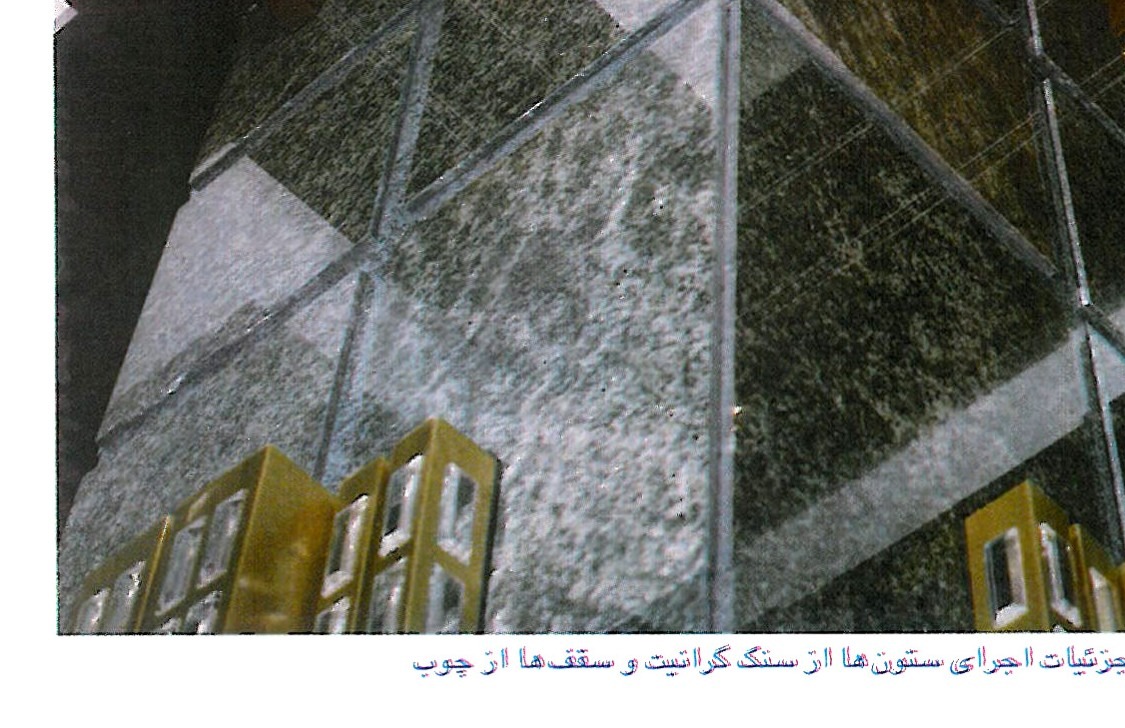
For the stones as well, for the first time, we tried to produce them according to the model that Mr Sheikh-Zeinoldin had shown us. In fact we executed stone fire-melting for the first time. We imported the machine from Italy. It is in essence a torch that moves over the stone and bursts the surface to a depth of two or three millimetres, removes the polish, and produces colours that cannot be imitated. As Mr Esmail-pour mentioned, we encountered many problems at first: roughening the surface of the stone through fire-melting caused the dimensions of the stones to bow slightly. We installed the machine at the site itself. At first our output was not very good, then it gradually improved.
To produce moulded stones for skirtings and similar items, we built a special machine. Such work is normally done by workers with hand-held stone grinders, but mass production with uniform shape is not feasible that way. Our reasoning was that the Italians, who do this work in large quantities, must surely have a machine and do not do it by hand. We therefore designed and built a machine of our own.
One further point, again concerning stone: the execution of the stone facade without grout was also a novelty.
Mohammad-Javad Esmail-pour
At first we tried to persuade Mr Sadeghi to remain with the grout method, since we knew that for that work we could find as much manpower as was required. But he did not agree. We first tried the method of lifting the stones up as crane-assembled panels and fixing them onto the facade like signboards. Alongside the site we had set up a small workshop research section; we ran the experiment there but concluded that, given the backwardness of construction technology in Iran, this work was perhaps still a little premature. We therefore returned to the customary method of advanced countries — installing the stone with metal fixings. In practice we then saw how much faster and better this method was than grouting, and how it does not stop the work in unfavourable weather — that is, in extreme heat or cold. Later, each of the stones can also be easily replaced. As far as I know, since that time several buildings have been executed using this method.
Jalal Sadeghi
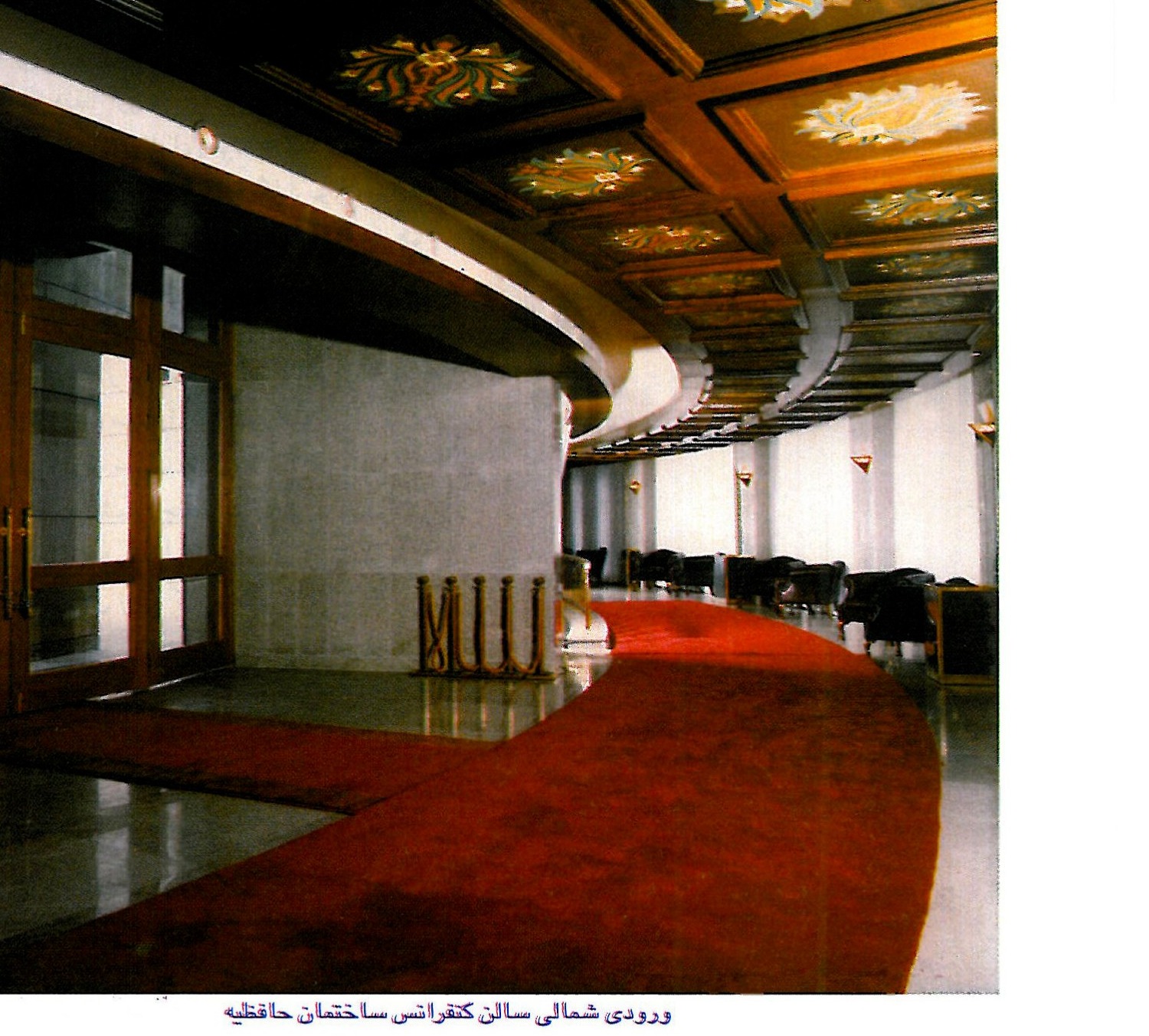
Today around the world stone installation is also done in more advanced ways than ours. We will certainly use better methods in our next projects. In other building areas and details, most countries — even Pakistan or Dubai — use better and more disciplined techniques. For example, we usually have a problem with the order of plumbing and bricklaying in a building: we build the wall, then we chase it and run the pipes and damage the wall; or we run the pipes first and then build the wall, and at brick-laying time the water-sealing of the pipes is damaged. In any case, in adopting different techniques it is not only the question of needs and economic conditions that compels us to use the old and traditional methods — it is also lack of familiarity with the new methods. When we were doing the stone facade of the Hafeziyeh building, many engineers and builders came to us, copied the details, and began to use this method. You can imagine how important it is for someone who wants to install granite without drilling it, not to be forced to pour grout, drill the stone and tie it to the mortar behind with wire.
Summary of Achievements
In any case, to summarise our remarks: in the construction of the Hafeziyeh building we succeeded in carrying out the following, some of which were new:
- The use of various councils for the guidance and improvement of work quality.
- The use of an interior architect for the building's interior design.
- The use of several new methods in the construction industry.
- The application of new methods for the production of traditional materials.
- The improvement of the quality of a large number of domestic products.
- The setting of a new record for the use of stone materials in a building of this standard and quality.
Memar: We thank you for taking part in this conversation.




