Architectural criticism, like any other form of criticism, does not — in and of itself — have a documented history, especially in Iran. Consequently, the trajectory of its historical evolution and the characteristics of its various periods remain unknown, unnamed, and without theoretical foundation. And while a handful of individuals among the cognoscenti may hold private views, their failure to publish these — at least within schools of architecture and among the profession — has meant that virtually no criteria, standards, precedents, exemplars, or shared concepts upon which one might base a critical discussion have been formulated or codified. We must therefore begin with empty hands. We hope that, through the efforts of experts, this long gap will soon be bridged.
The site chosen for the building was the treeless end section of Sa'dabad Garden. It had formerly been a police training ground. In front of it stood an educational complex and an administrative building, which were designated for the creation of a Persian garden. The terrain slopes from north to south with two main breaks: the first in the northernmost part of the site at a height of approximately 3 meters, and the second in the middle at approximately 5 meters. These two steps or grade changes occur in the undivided portion of the site. Beyond that, the slope continues southward, but the small residential plots — whose courtyards each sat at different levels according to the circumstances and means of their owners — created an uneven terrain.
Such a site offers particular opportunities and constraints that cannot be compared to flat, virgin land. The building had to settle into this terrain, fit its contours, and take advantage of its rises and falls. The interplay of internal functions had to be facilitated in the best possible way, while many geometric principles and tenets remained preserved and stable in combination with the terrain's undulations.
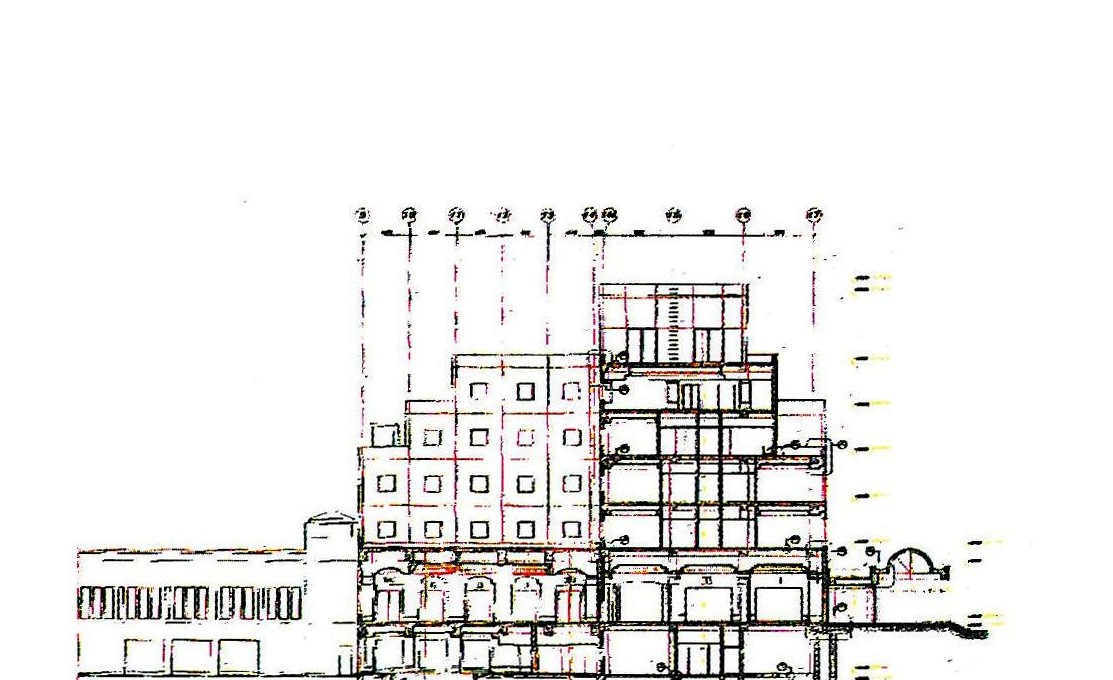
The physical concept of the assembly hall was shaped first and foremost by the 10-meter drop in elevation from the northern street, and then reached its final form through combination with other factors.
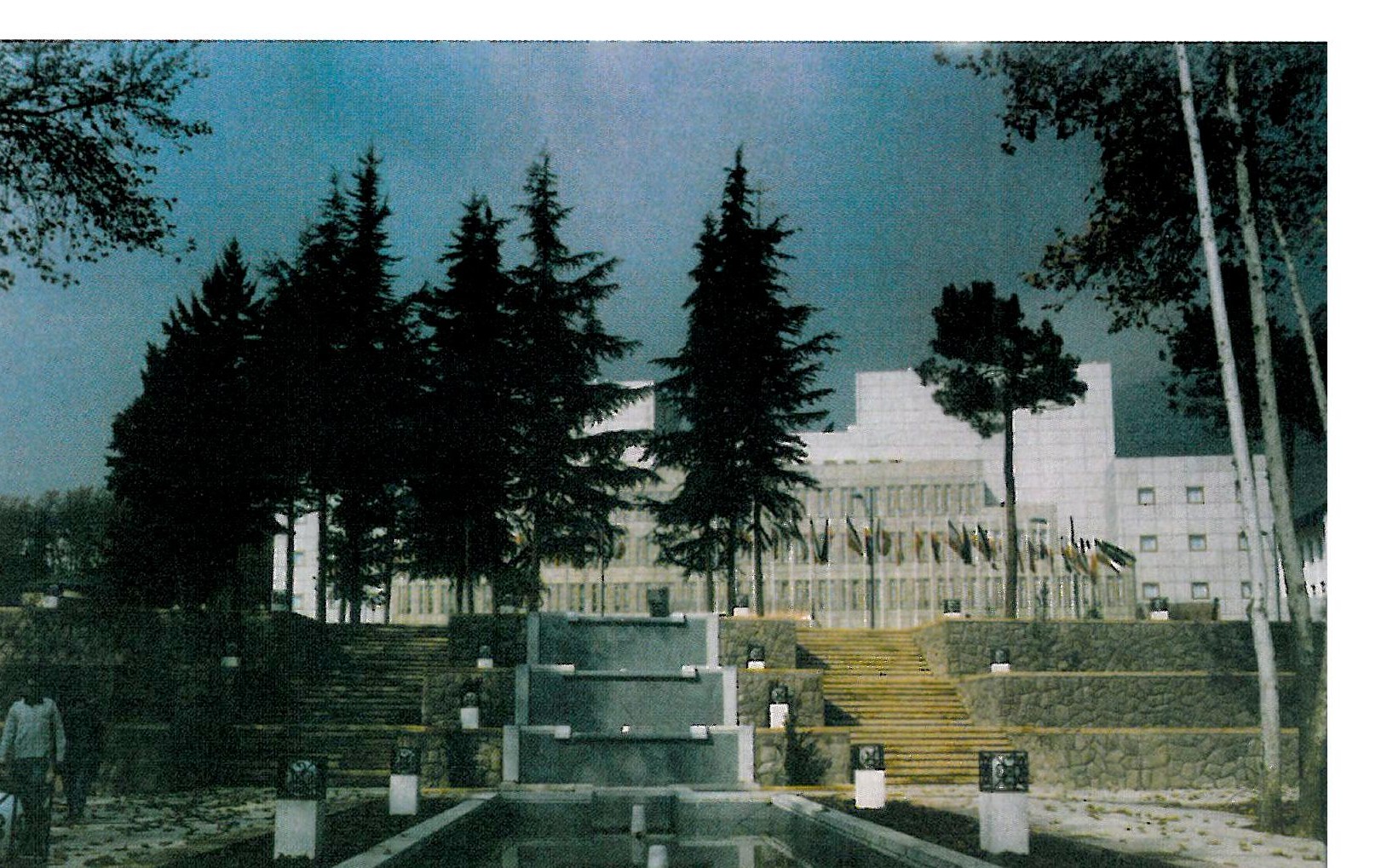
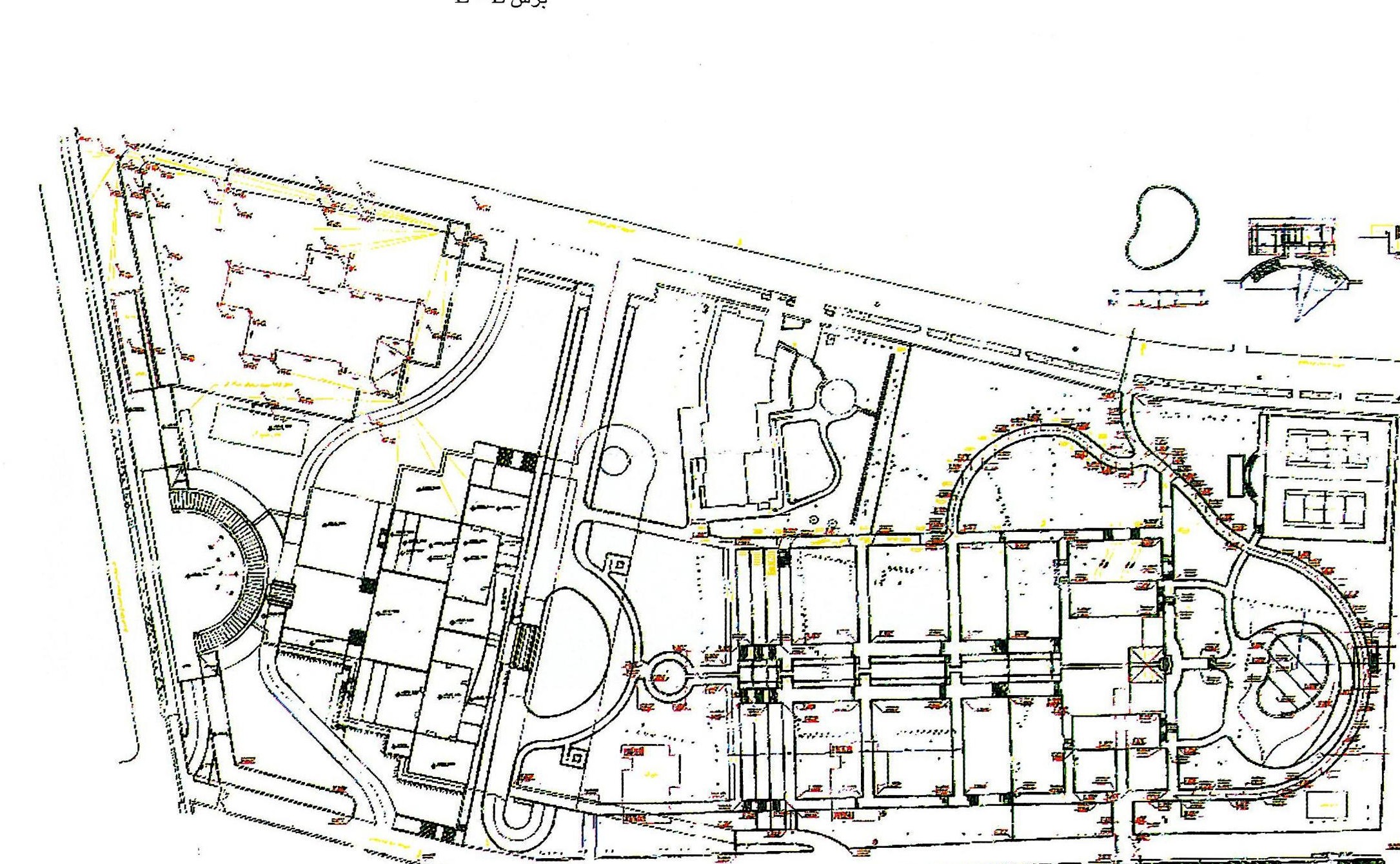
A secondary factor that should not be overlooked was the alignment of the building's main axis with the garden's axis and its edges with the adjacent streets and elements. The site had no regular geometric shape; the northern axis — a tree-lined and rather narrow street — entirely dominated the massing and forecourts of the northern portion, while the axis or central bed of the Persian garden situated to the south of the site — the principal element and structural spine of the overall plan — did not sit at a favorable angle relative to the upper street. The middle section, too, was constrained by the presence of several important buildings, making it impossible to freely choose the desired angles in relation to them.
The solution was to select forms that would most readily accommodate changes in axis and the building's rotations. The semicircular form of the assembly hall greatly facilitated the rotation of the axis, and the entrance volume, like a cradle, served as a hinge connecting the two elements of the interior body and the assembly hall; the twisting of volumes was accomplished without being overly apparent.
At the junction of the garden axis and the building, a circular pool and its associated sculpture in the courtyard perform this same twist and connection of the two axes.
In this way, the building has followed the command of the land and, in accord with nature, nestled itself within the terrain, spreading across it with delicacy and precision to create a harmonious and varied composition of mass and ground. Achieving this harmony on flat land would have been impossible — even though the task itself would have been much easier.
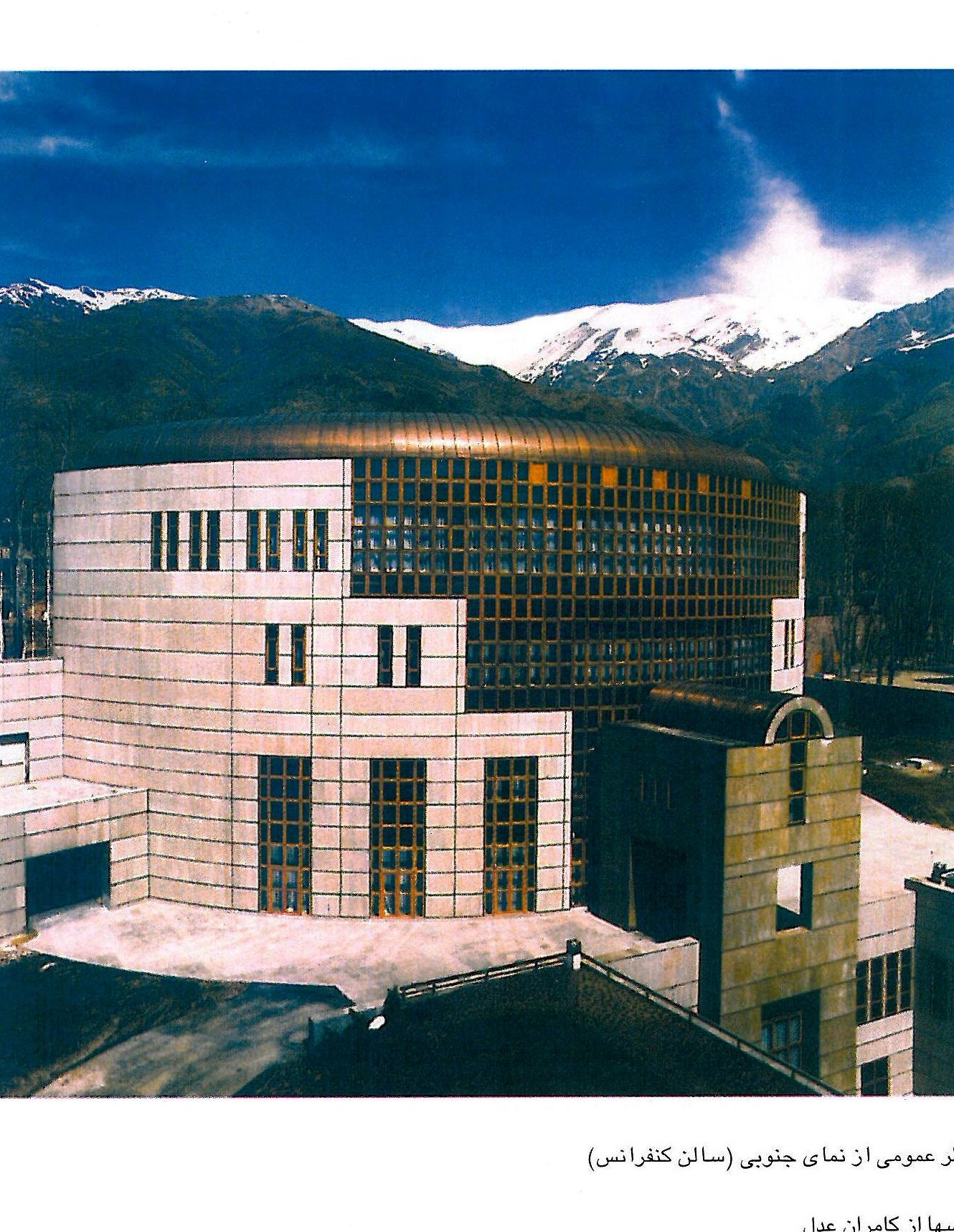
A building of approximately 20,000 square meters is no small structure, and by virtue of its sheer volume it profoundly affects its surroundings. If the building's relationship with the land, the slopes, the neighboring structures, the streets, and especially the trees and the general condition of the garden is not balanced and respectful, it will not only disrupt the integrity of the environment but also destroy the building's own virtues and beauties, creating an unpleasant prospect for its users.
To the north of the guesthouse runs a tree-lined street, not particularly wide, whose neighboring buildings are mostly two or three stories tall. The trees are proportionally between 7 and 12 meters in height; the entrance to the assembly hall is on this street. To respect the central scale and the shape of the massing and to honor the privacy of the tree-lined street, the assembly hall has been set back from the street in a semicircular form, creating a proportionate plaza whose 7-meter-high wall is in complete harmony. This plaza, in addition to meeting the needs of pedestrian and vehicular access and removing cars from the street, provides the necessary distance for viewing the building and approaching it gradually — so that any passerby on this street, upon seeing this setback, understands that an important building lies beyond the plaza. Its low height also imposes no large, harsh, or inappropriate volume upon the trees and the street.
This sensitivity to scale and modesty in dimensions has also been observed with respect to the adjacent buildings. The rectangular, multi-story northern building known as the "Tableau Building" still retains the same dimensions and scale it had from the day of its construction, and the new building has been so precisely designed as not to affect it. Although the volume and variety of the new building far exceed those of the old one, the creation of proportionate courtyards and grounds has actually better integrated the old building into its environment.
Special care has been taken so that the varied views of the building — which enjoy a backdrop of the beautiful Alborz mountains and the magnificent trees of Sa'dabad — always benefit from this backdrop. Accordingly, the heights of the buildings are such that they remain proportional to the height of the trees, never making the trees appear small as a principal natural element of the environment. For this reason, and taking advantage of the existing slopes, a considerable portion of the building has been so concealed within the earth that it receives light, air, and access from around the central courtyard without any volumetric presence on the exterior — so that the volume of construction above ground is both varied and fragmented (avoiding a single heavy, monolithic mass), functional requirements are properly met, and the trees from most vantage points complete the building's scenery.
In the landscape design as well, great attention was paid to the trees — a very difficult task given the geometric nature of the garden. As previously mentioned, the Persian garden in front of the building was created by combining and consolidating a number of small residential plots, whose existing trees had each been planted according to different preferences and alignments, and whose courtyard levels differed from one unit to the next. After consolidation, establishing order within the irregular trees so that the ensemble would appear as a unified and harmonious Persian garden was an extremely challenging task — one that was carried out successfully.
The central idea was inspired by traditional architecture, and in reality a formal garden took shape within a natural setting. Had this synthesis not been achieved, connecting the formal garden to the Sa'dabad complex would have been very difficult, and many ancient and beautiful trees in the complex would not have found a proper place.
During the entire landscaping operation, no tree was felled except for a few sickly and misshapen ones, and eight trees were relocated at the appropriate time and with prior preparations due to conflicts between the garden's formal geometry and the irregularity of the earlier planting.
Proper criticism requires attention to three aspects: comparing the work with other works within the country; evaluating the work's response to its intended objectives; and comparing the work with the designer's previous works, which reveals the trajectory of their professional evolution. Since examining the designer's other works was not possible for me, I will address only the first two aspects.
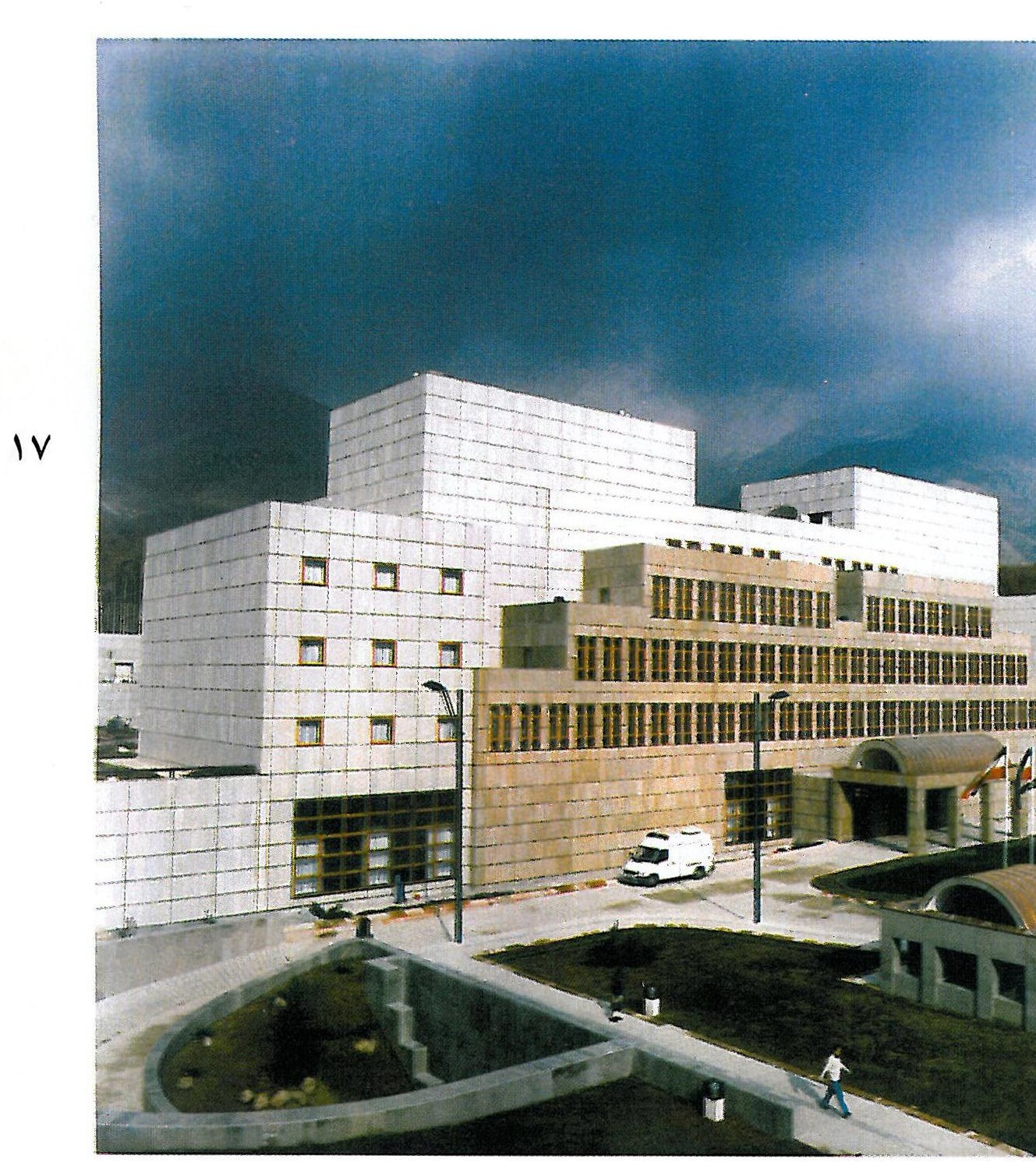
This design, compared to other works built in Tehran — both public buildings and private residences — is very good. Amid the extreme visual pollution of Tehran, the evident simplicity of this work is commendable. The rarity of such execution in comparison with available resources demands attention. The merits and scale of a strong work are only transformed into a special and distinguished status under normal circumstances. Most of our experiences in Iran, conversely, have seen special and distinguished situations reduced to ordinary ones.
The emphasis on the building's symmetrical design has given its main axis a pivotal role; however, insufficient attention has been paid to the design of the relationship between this axis and the garden axis.
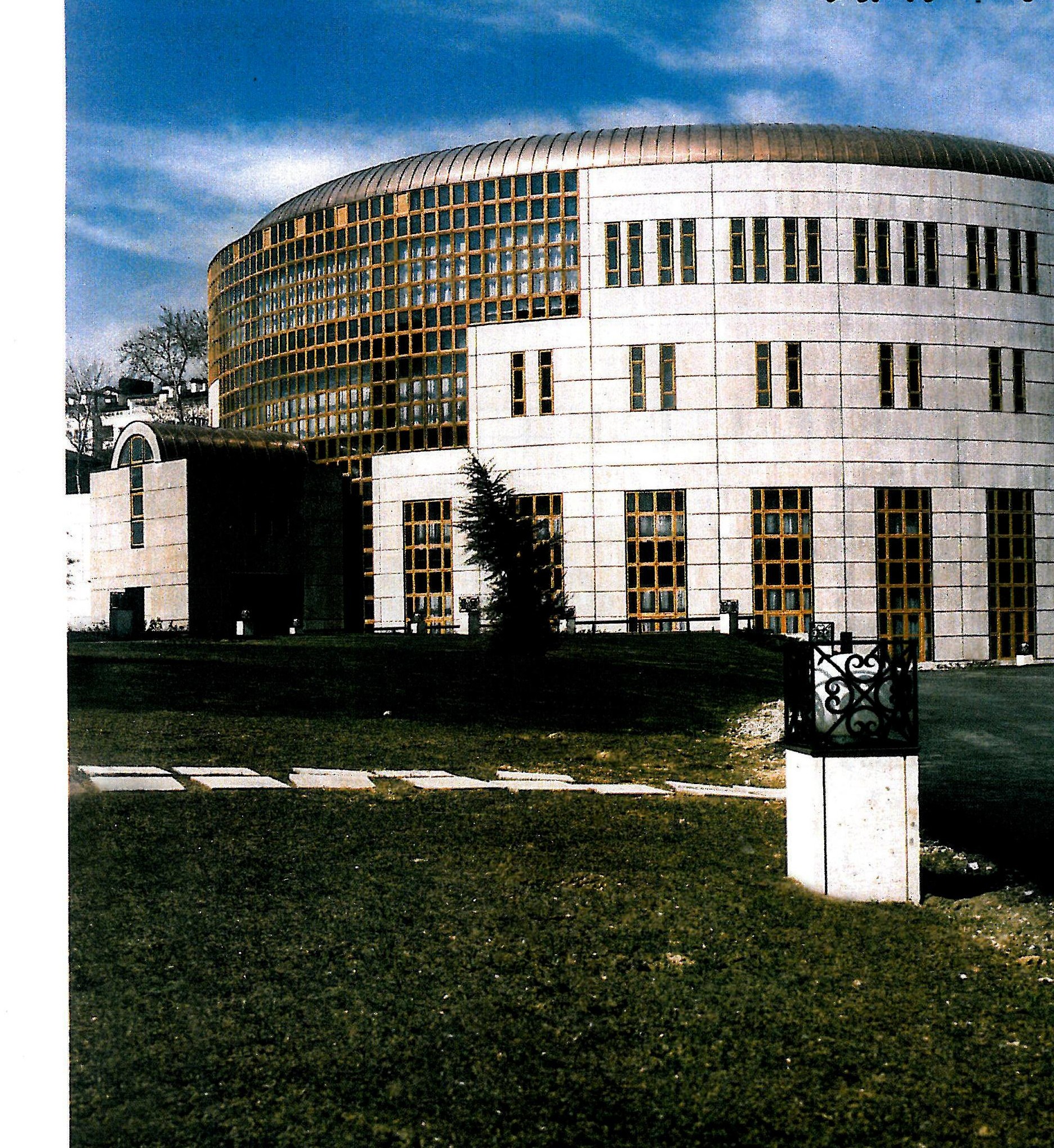
The modulation of the windows, the types of stone used, their proportionality with the floor stones, the good selection of copper for the roof and wood and stone for the facade — all are very successful. The Hafeziyeh building is, in this respect, a successful work with pleasing proportions.
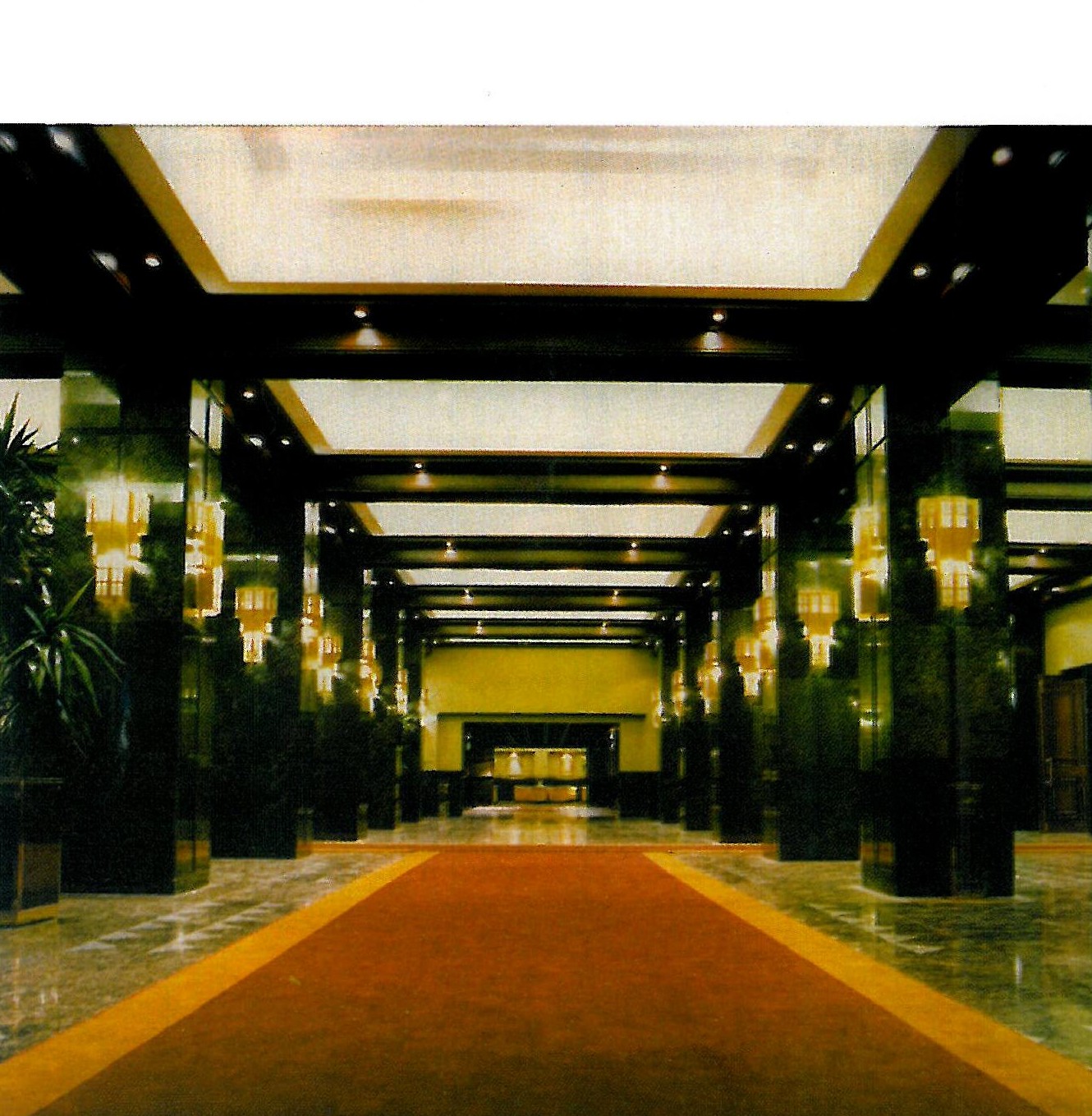
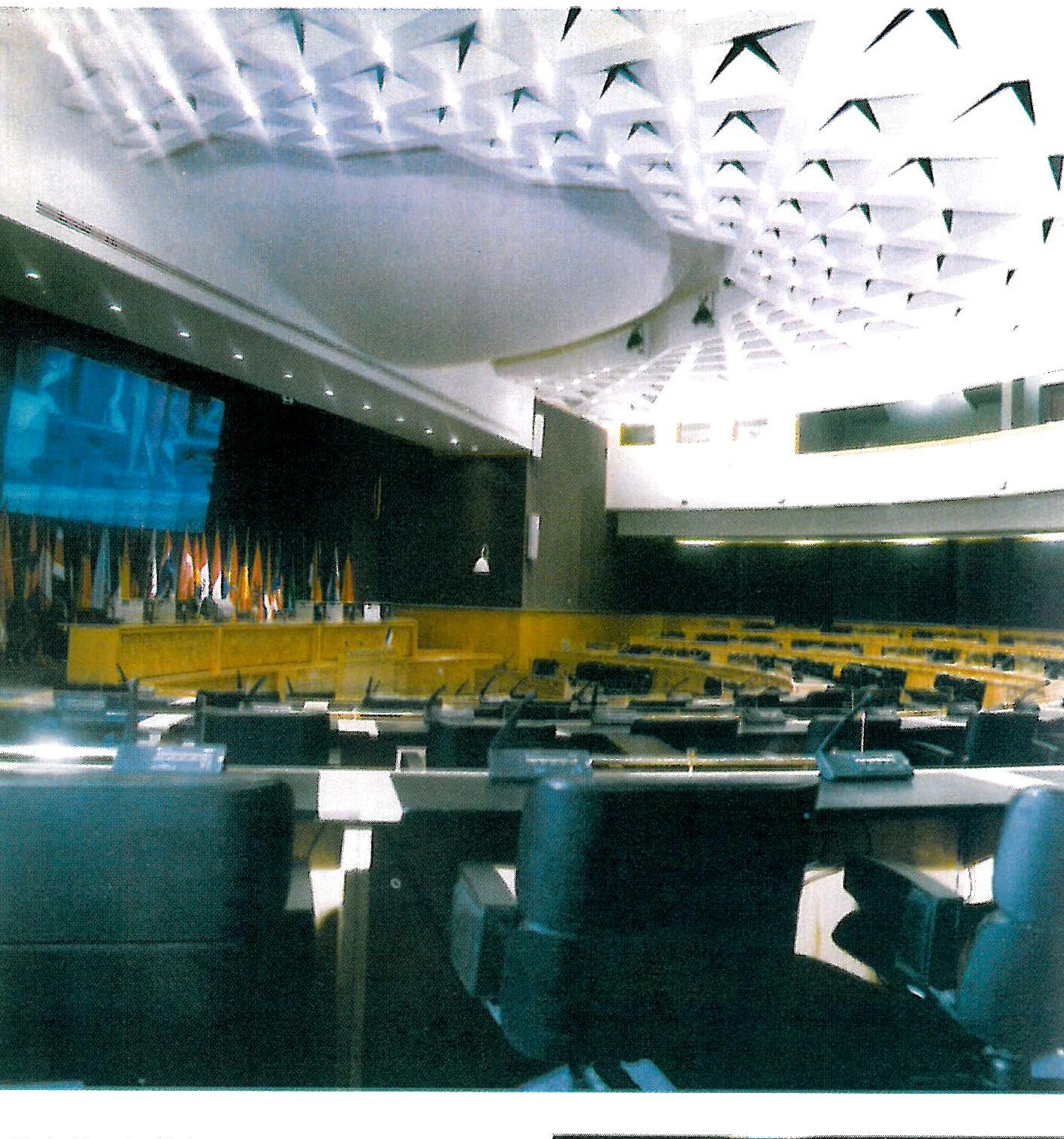
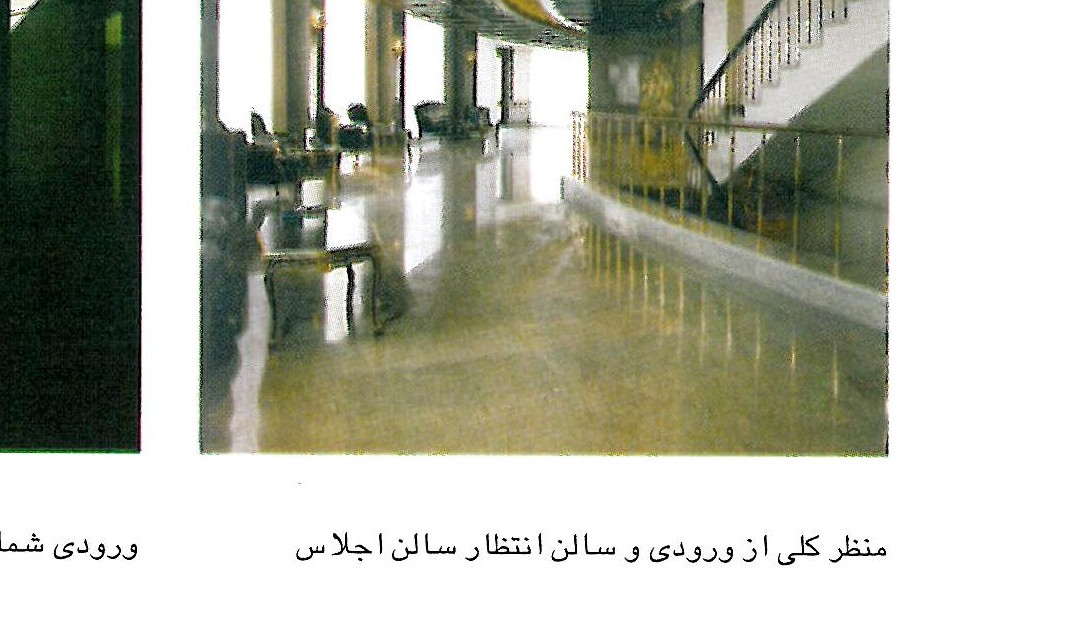
The interior design, however, reveals fundamental errors in spatial perception. The interior circulation paths, given the variety of spaces, create confusion. The routing of mechanical and electrical systems is not accessible for maintenance purposes. In general, the level of interior design is far below the quality of the building's architecture.
One of the most difficult problems for architects is that form can be easily controlled on paper, but controlling real proportions on the ground is not easy. Recognizing whether a design works well or has weaknesses at, say, a height of 10 meters requires considerable experience. The weakness of such judgment is very evident in Tehran's architectural experience. Many new buildings look like enlarged models — the result of an inability to control real proportions.
Sheikh Zeineddin, the designer, says of his own work: "It is the particular shape of the land that, more than anything else, has determined the form of the building." And: "The physical concept of the assembly hall was shaped first and foremost by the 10-meter drop in elevation from the northern street, and then reached its final form through combination with other factors." Elsewhere, in continuing the discussion, he notes: "A secondary factor that should not be overlooked was the alignment of the building's main axis with the garden's axis and its edges with the adjacent streets and elements. The site had no regular geometric shape." These words show that the designer has given due consideration to the conditions of the land.
Another point is the designer's success in exploiting opportunities and overcoming challenges, and that too within a timeframe of barely one year.
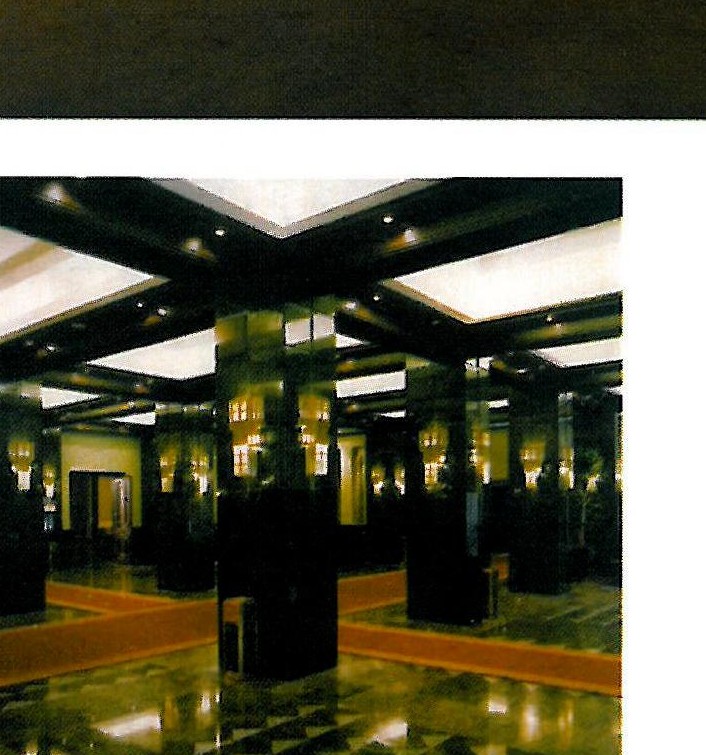
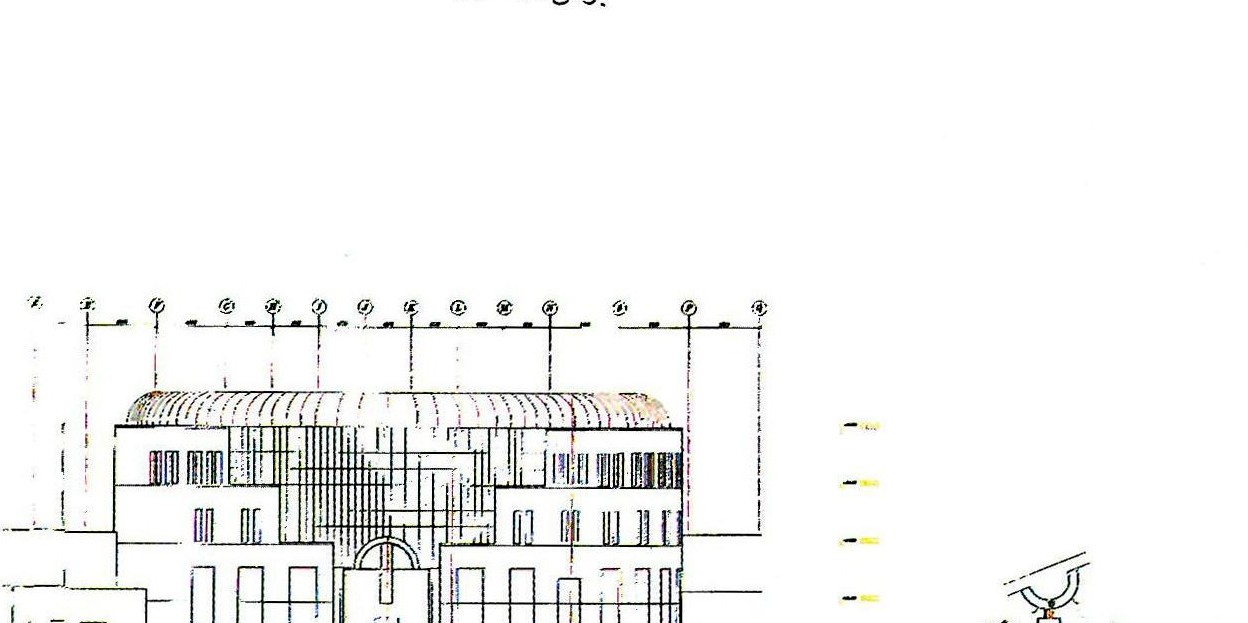
If we set aside the details, what is apparent is that the volumes and spaces of this building — both exterior and interior, especially on the south facade — are very heavy and massive. The designer may justify this by saying he wished to create a building with dignity and gravitas, and in keeping with his own disposition — one that rejects the glass buildings of modern architecture — one that produces the effect that ziggurats have upon the viewer. This argument may indeed be a justification that can be accepted from certain perspectives. But the question that remains is this: can the dignity and stature befitting a building's role be achieved only through heavy volumes, or can it also be achieved — as with the Veresk Bridge, for example — through elegance and daring in structure? How many more centuries can the gravitas of ziggurats serve as the measure of solidity and weightiness? Especially if such weightiness comes at the cost of blocking the views from interior spaces toward the beautiful panorama of the Alborz — and of eliminating the opportunity to see the Persian garden in front of the building?
In my view, an important issue that strikes the eye at first glance in this design is its duality. There is a semicircular or cylindrical volume, and a cubic volume behind it whose function and architecture are quite different. The manner of connecting these two volumes through the sunken garden has given the design a very dynamic quality.
The building from south to north does not rise higher — it does not even reach the height of the surrounding trees — and the semicircular plaza on the south side is inviting and attractive. If a cubic volume had simply been set back from the street, this quality would not have been achieved.
Another important issue is the manner in which these volumes are placed on the terrain. This site had two challenging angles: the slope of the land, and the angle of the site relative to the main street. In other words, one angle in section and one angle in plan. The designer has placed the various cubes within the terrain in such a way as to create an urban landscape. In this placement, the panorama of the Alborz mountains, the angle of sunlight, and other factors have also been well considered.
Setting aside technical and calculated evaluations, every building at first encounter produces a feeling that is an important criterion in evaluating a design. The Hafeziyeh building at first glance conveys the dignity, composure, and mature taste that have gone into it. That its stylistic affinities may belong to the 1970s and 1980s does not diminish its value. In the visually chaotic environment of Tehran, this dignity and composure — aided by restraint in the variety of color and materials, and by good, clean execution — is very valuable.
The harmony of the design, materials, and grounds is very valuable. Except that the covered entrance volume, in terms of its separation from the building and the cylindrical form in contrast to the cubic form of the main structure, slightly compromises the clarity and simplicity of the main form — especially against the straight and continuous interface that the building's body has created with the grounds, where this appendage draws attention.
In another assessment, compared to the soft and inviting quality of the semicircular front of the building, the south facade appears somewhat heavy and rigid.