Saying, “Keep this stone dear to yourself;
In that lane, build a house of stone from this one,
For the companion of this stone you shall surely find;
Thus from the tumult of so many desires,
With his companion stone, you shall be sated and content.”
— Nezami Ganjavi
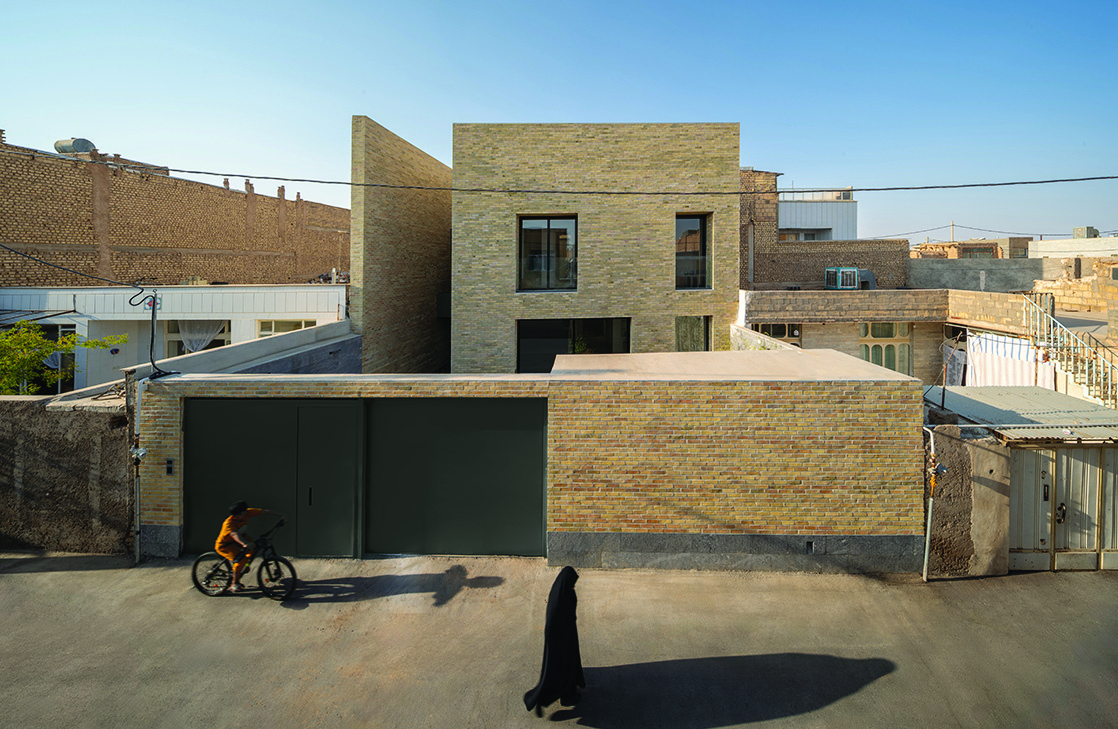
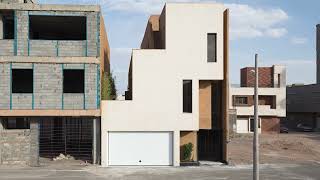
In the middle of Meysam Street, across from the two-shift Abazar School, stands a house whose story — from the school custodian and its builders to the neighbours — is intertwined with the homeowner’s family, through near and distant kinship: the story of local identity.
As a first step, we tried to ensure that the house, like its occupants, conducts itself with dignity within its surrounding community, so that it might become a source of influence. Hamsang House in Dowlatabad was designed for a family of four — father, mother, and two children. The design was born out of a deep dialogue with the urban fabric and was shaped by local culture. The urban context of this building is an extension of unpretentious presence in a quiet neighbourhood. In Dowlatabad, residential architecture follows a familiar pattern that holds one standard for all groups: a house for living — individually, as a family, or sometimes collectively. In this pattern, spatial and cultural values take precedence over outward appearances. People, too, are hamsang — of equal standing — in this small community.
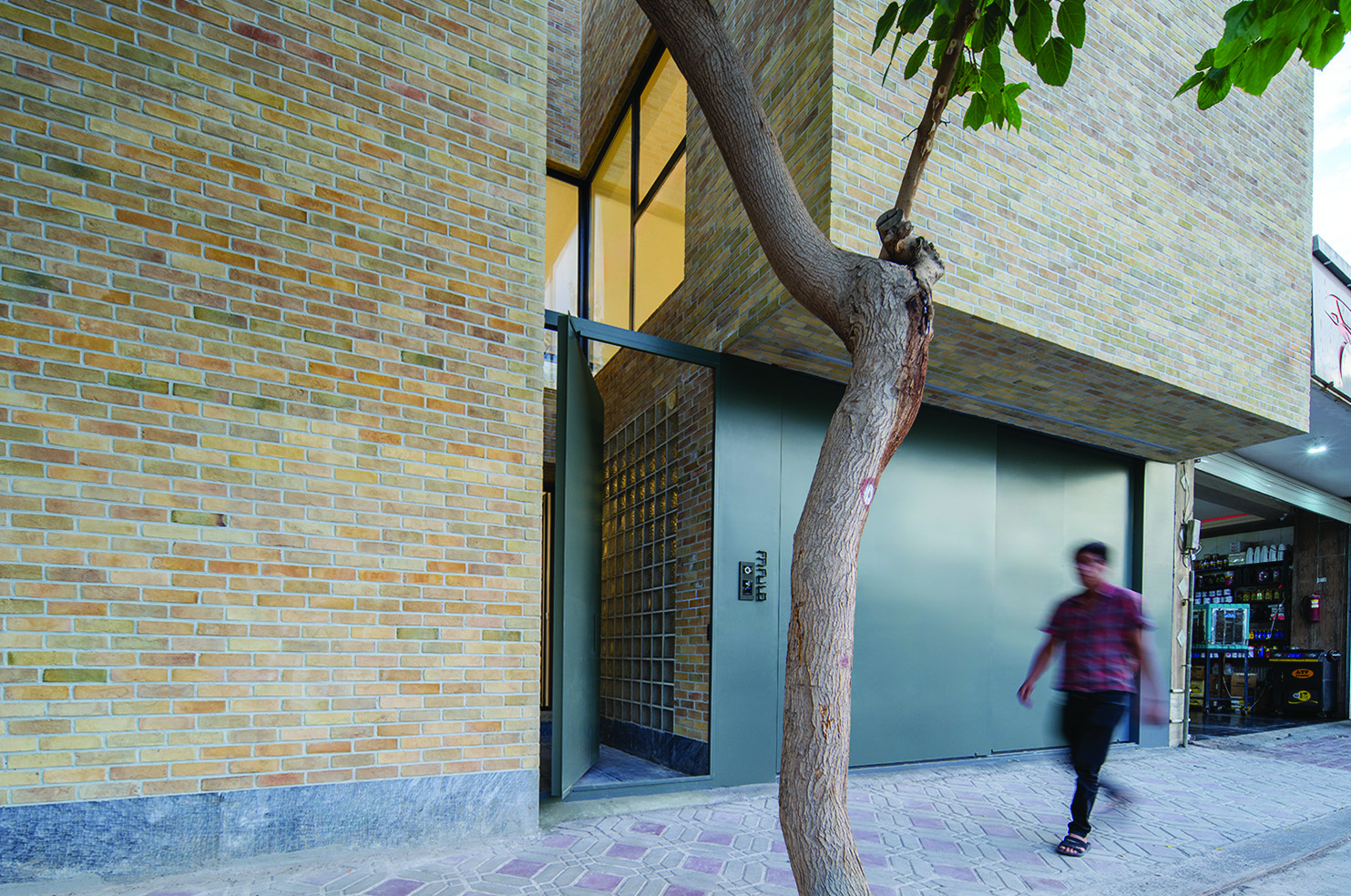
Life in this town still revolves, as far as possible, around courtyard houses; even housing complexes are horizontal. Families draw close to one another as best they can — grandparents are near their grandchildren, children are not far from their parents — and this pattern repeats. This building strives to support that chain, so that the house may remain, as much as possible, a place for family interaction.
In this exercise, the house is a message from the past generation to the present, and likewise to the future: stay, continue this way of life, and dwell in your own city.
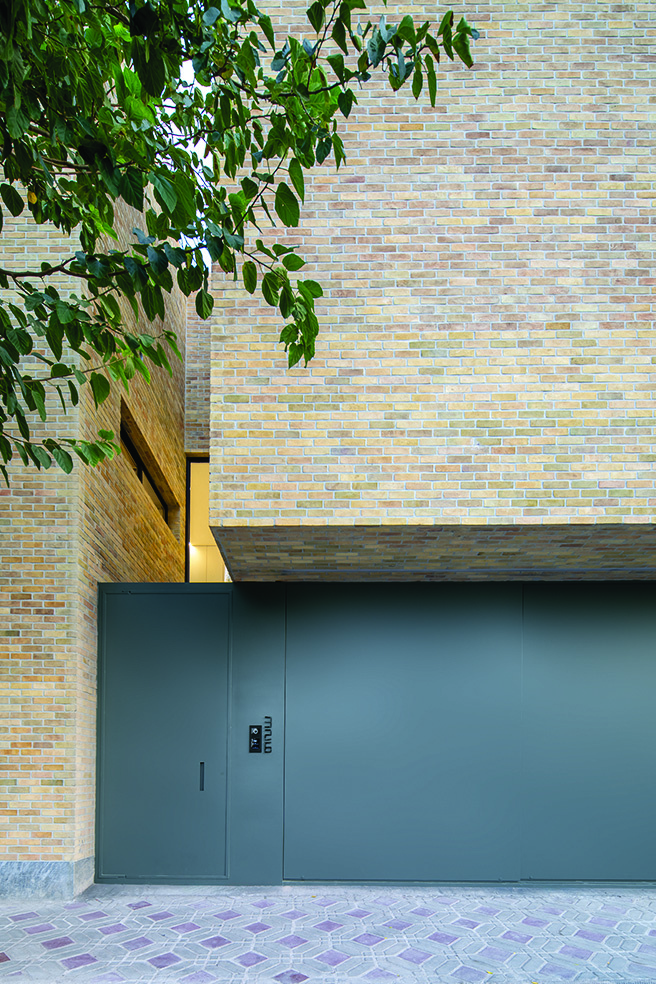
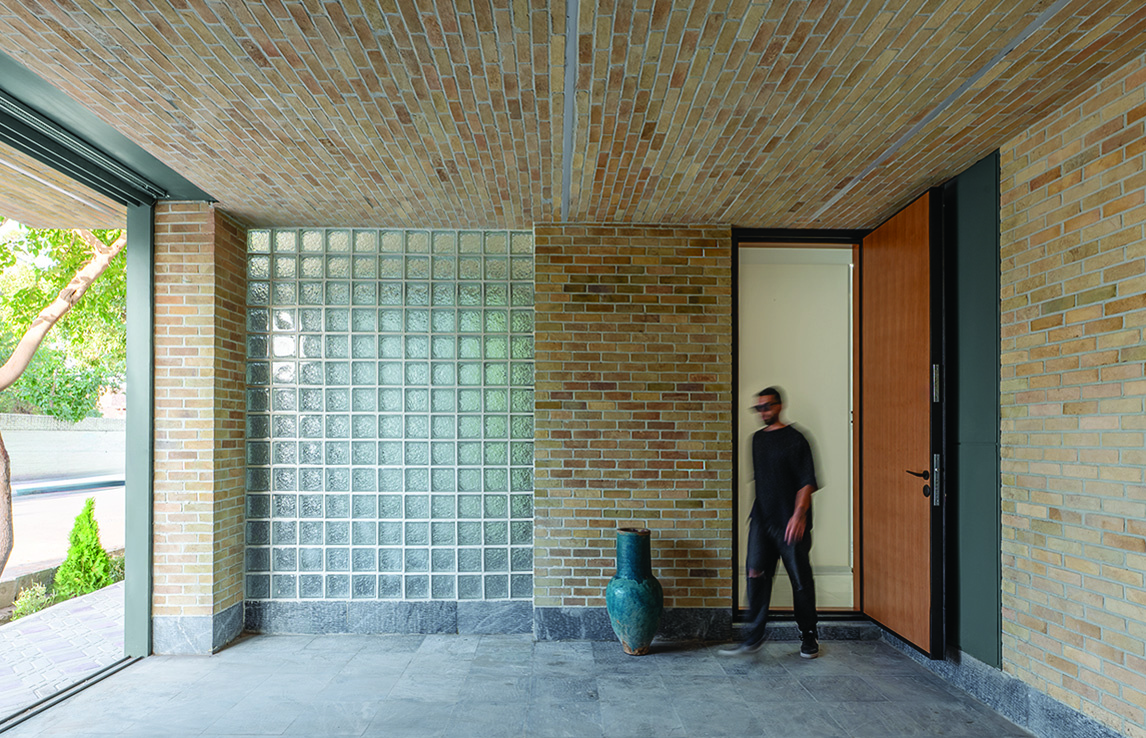
The client’s priority was to choose a plot near his parents’ (the grandparents’) house, even if it was small and irregular. This choice not only reduced distances but also made it possible to plan a space for their comings and goings to this house.
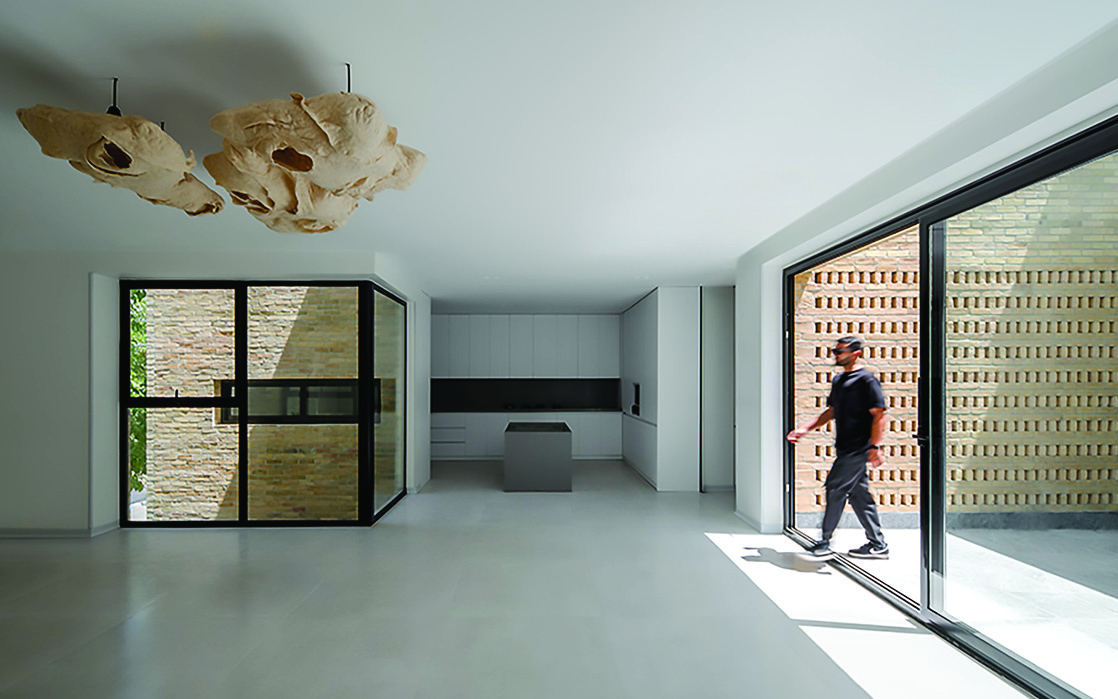
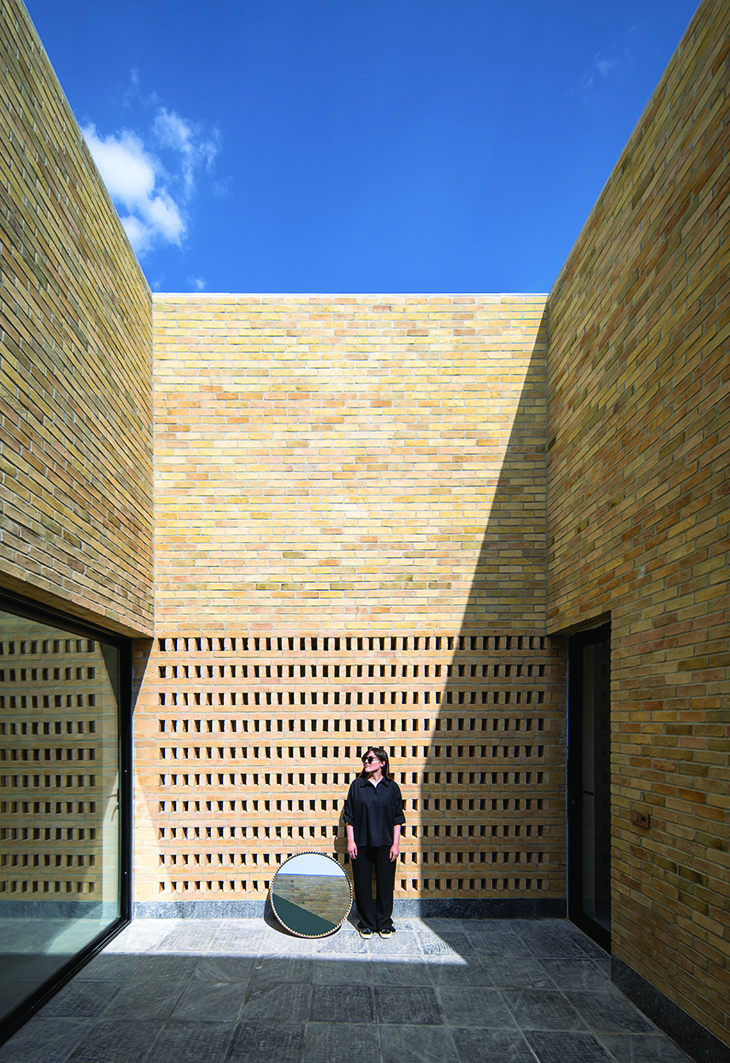
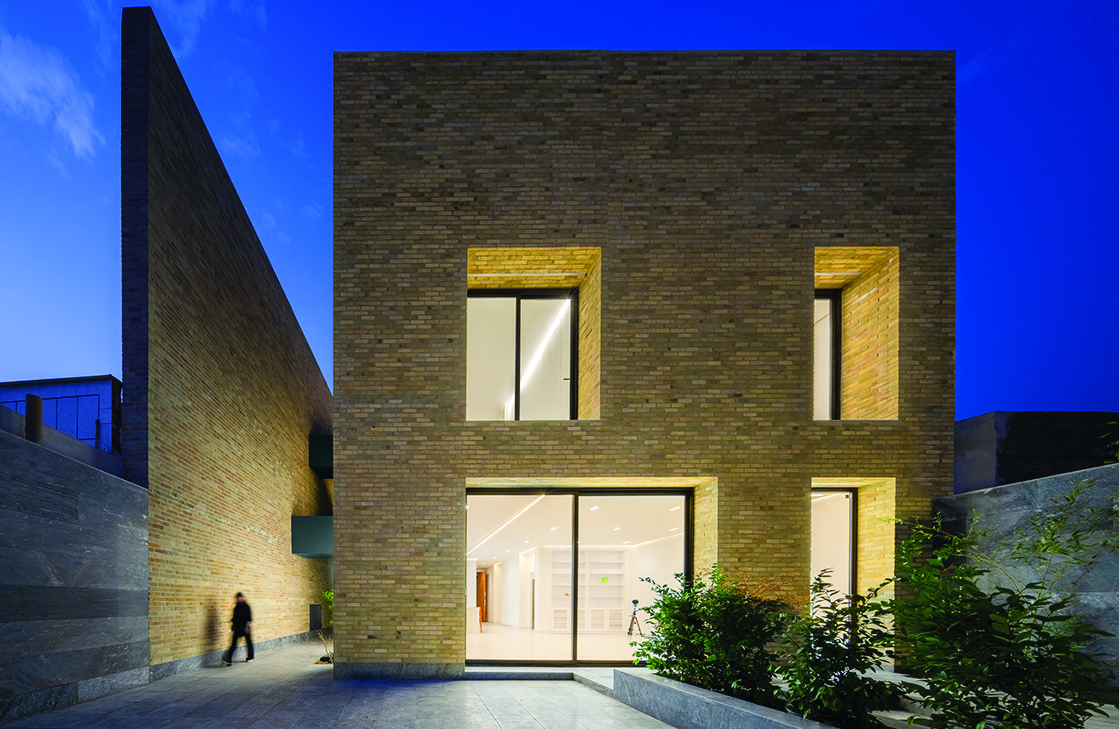
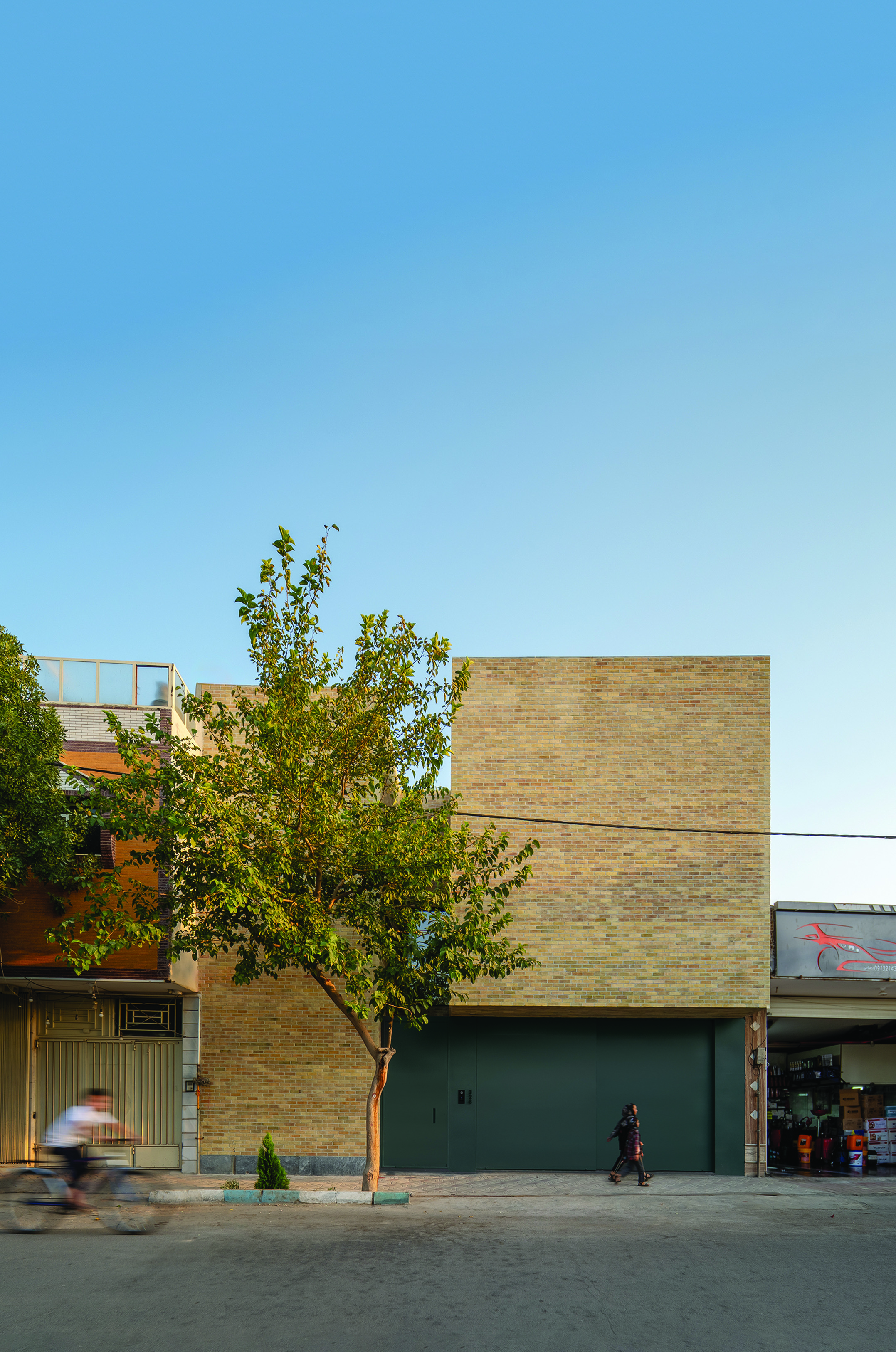
The building’s main concept is the arrangement of all functional zones around the axis of open spaces. Every functional zone must see an opening beside it — desirable spaces for collective and individual activity. The choice of materials is rooted in the neighbourhood’s identity. The building’s skin is clad in handmade traditional brick to create a visual and cultural bond with the fabric. The placement of openings in the facade originates from the plan and is entirely functional.
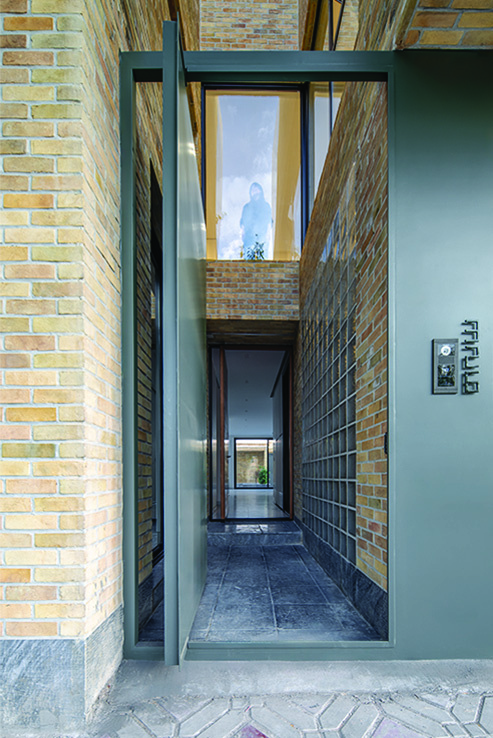
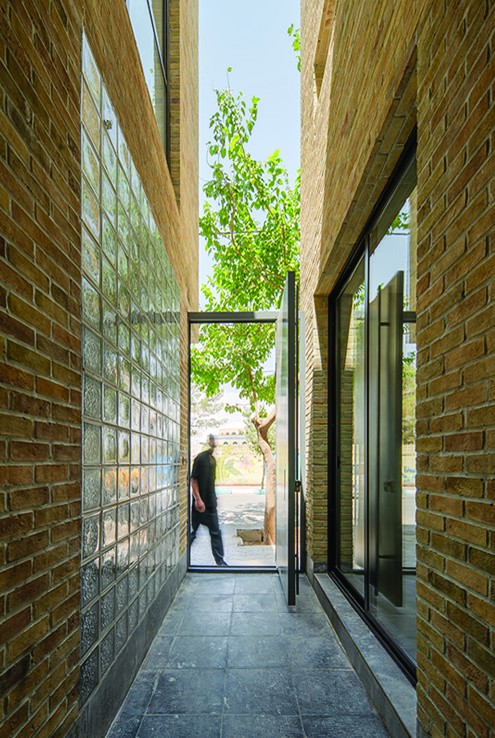
Facade and Plan
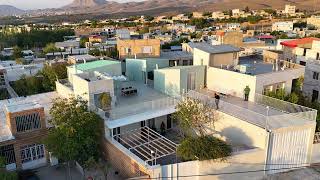
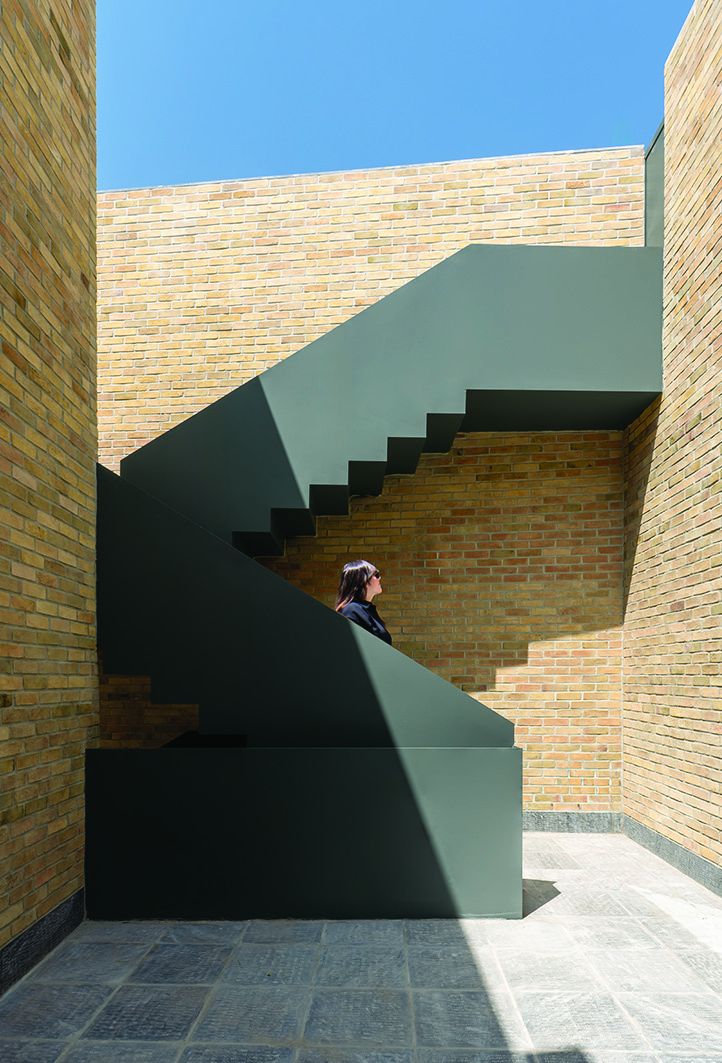
Each part of the facade takes shape precisely where a functional need exists: in one place a window, in another a recess, and elsewhere a courtyard and access. On the upper floor, a central courtyard serves simultaneously as a hinge between private and communal spaces, improves natural lighting, and provides a connection between the ground floor and the roof. The design of this building’s form and facade pursues four main goals: optimal natural light; creating privacy between the building and its neighbours and among the house’s interior spaces; eliminating unwanted views and noise; and the direct influence of the plan on the facade.
The plan is organised so that it works well with both the north and south sides of the plot. The parking area and the vertical stairway access were placed along the western edge to resolve the site’s irregularity while simultaneously providing sufficient space for other functions.
The elevator at the heart of the house manages movement between floors, while the staircase connects all zones; however, its primary role is linking the entrances below to the heart of the upper-floor plan: the communal courtyard! The plan strives to offer every visual sequence something beyond white interior walls: both kitchens have outward views and ventilation, both living rooms look onto the courtyard. The spaces receive southern light and breathe — even the parking area draws light from the northern courtyard and receives fresh air from the southern courtyard through an indirect connection. The upper-floor bedroom corridor, thanks to its adjacency to the service corridor, can function independently, allowing people to reach any courtyard or ground-floor space via stairs or elevator without passing through the communal areas.
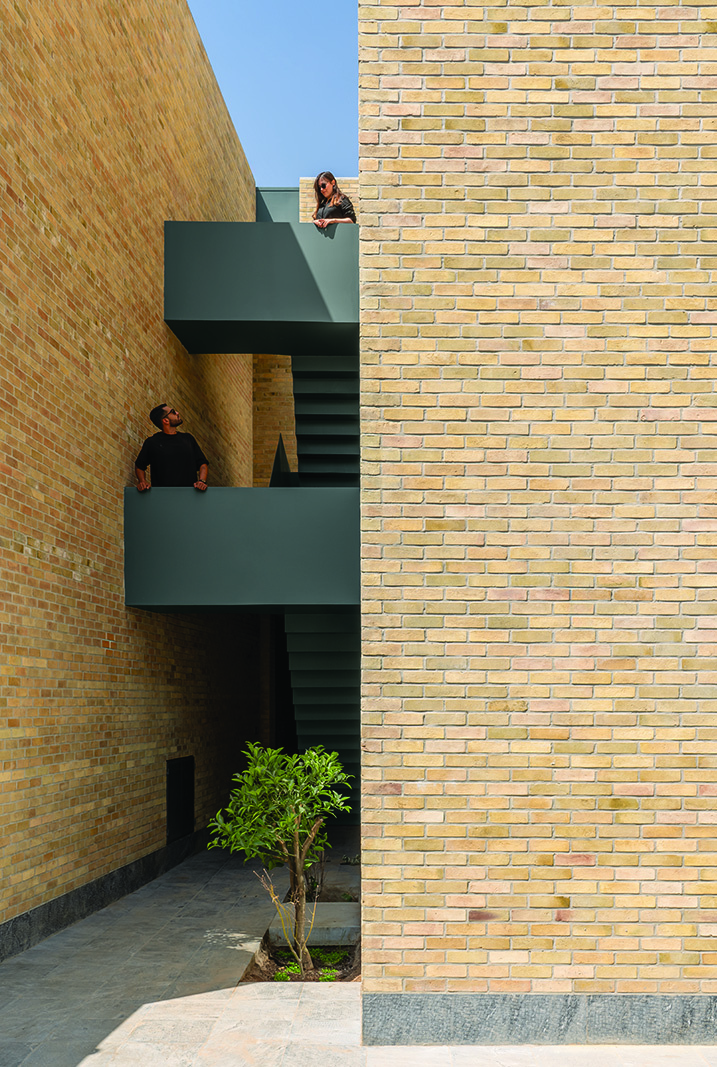
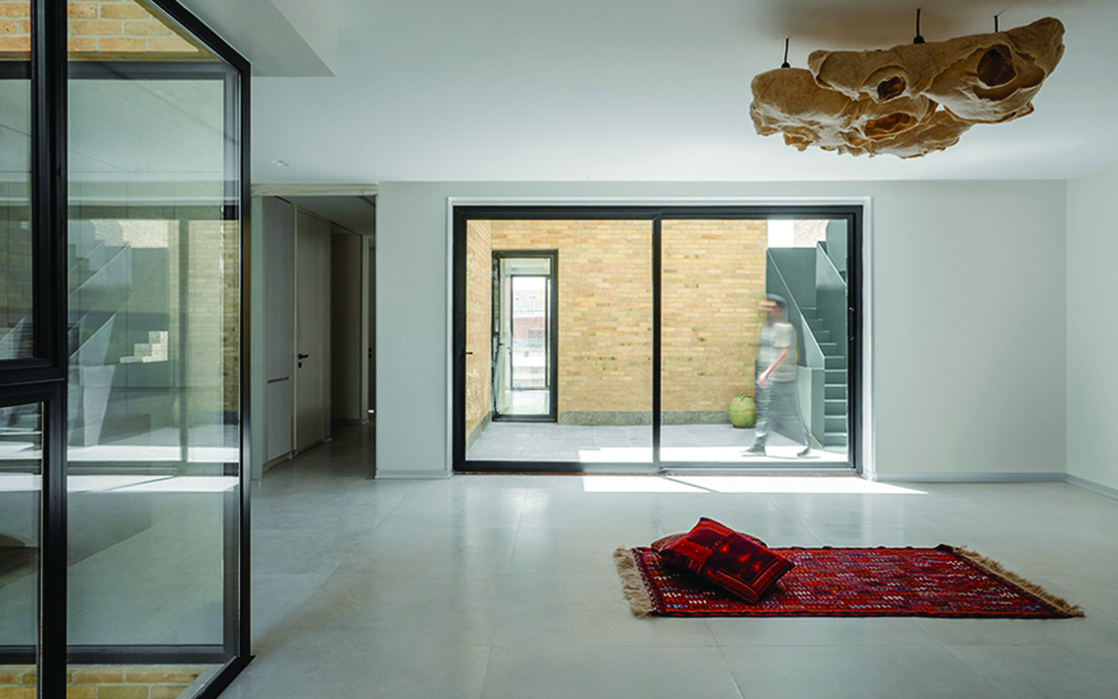
The family courtyard on the upper floor is the centre where people and events converge — the beating heart of Hamsang House, in harmony with the fabric!