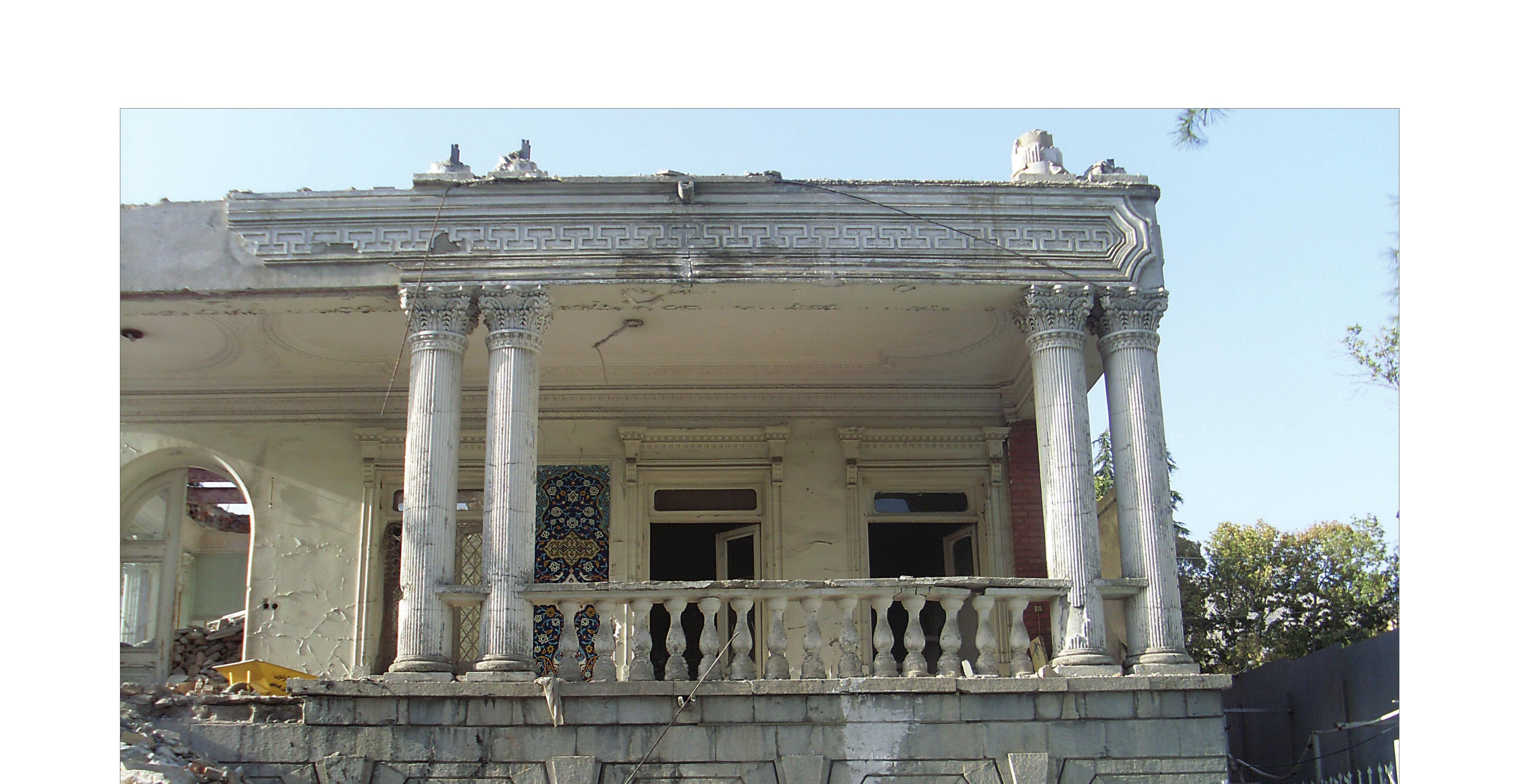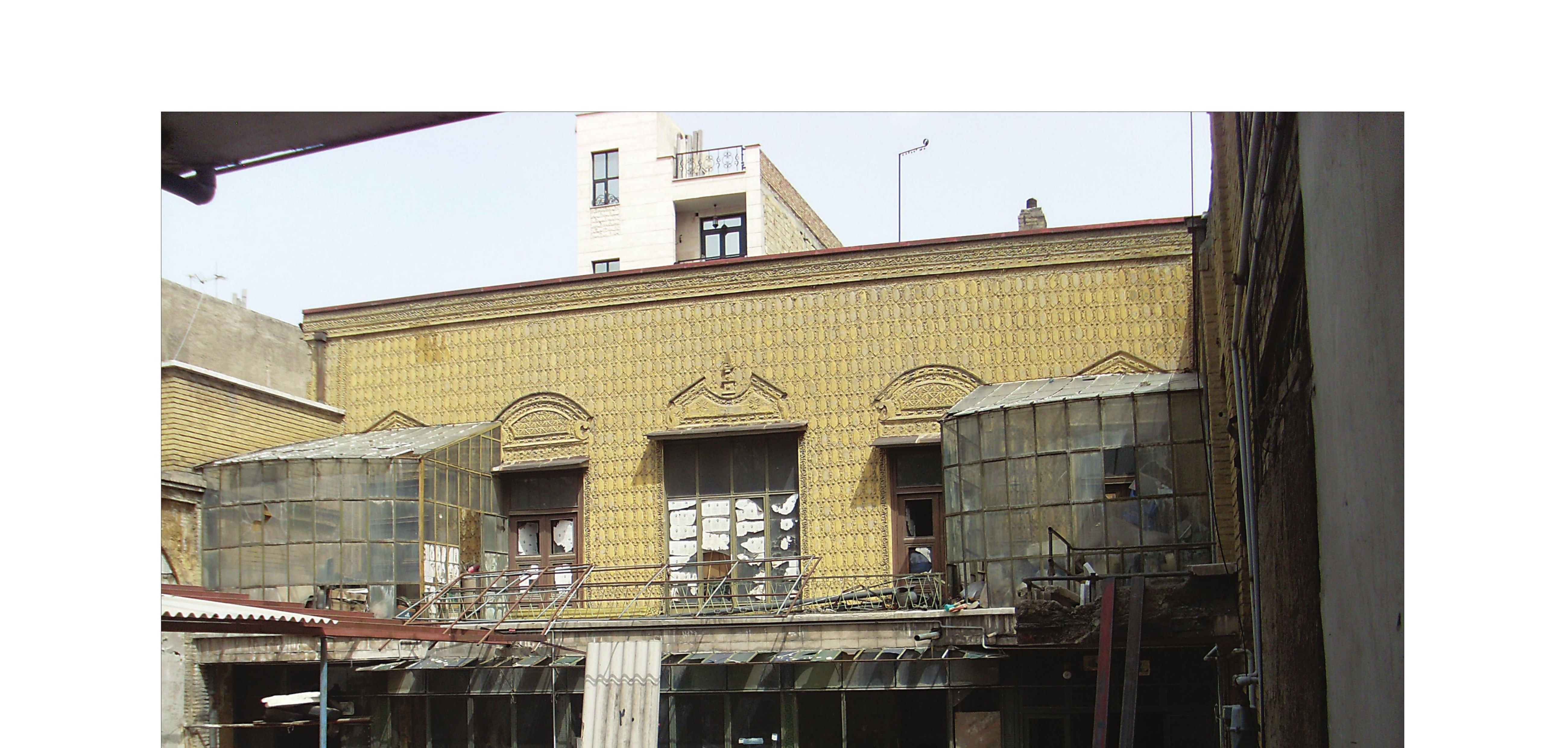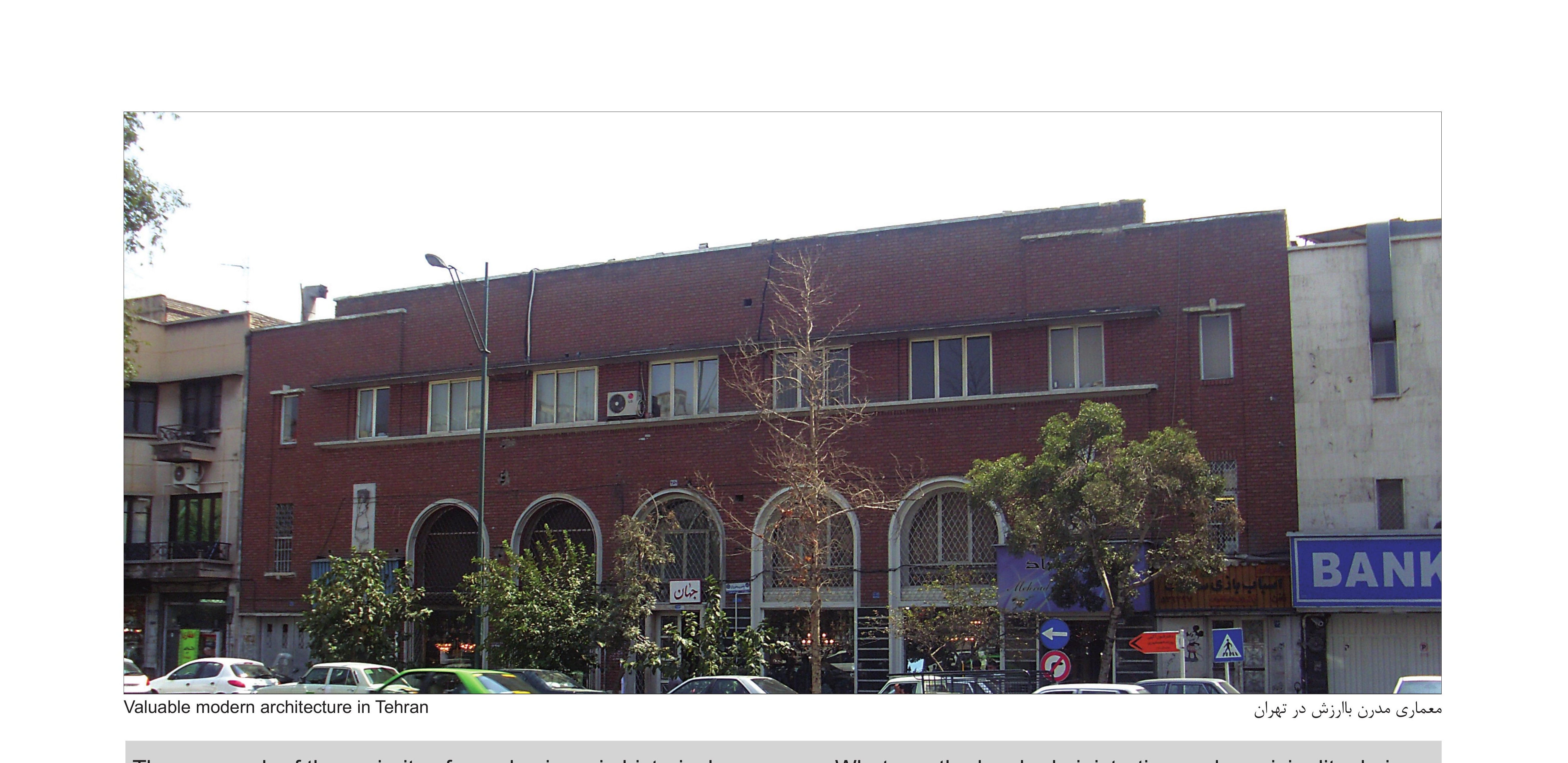
The approach of the majority of people vis a vis historical houses in Iran is a ‘museum approach’. They go to visit the historical houses of Yazd and Kashan, and can count their advantages, but when it comes to living in these houses, they have all the excuses to refuse. It is true that with age, one gives more importance to his or her older environment because of all the bonds and memories that bind us to places affectionately. Nevertheless, this does not reduce the expectations one has from a house: to be mod- ern and well-equipped. also It is always true that people prefer their personal interests to any social responsibility as the conservation of historical houses. The truth is that local bonds are strong, but when it comes to second generations, they prefer to sell and renovate. They do not believe in the culture of old houses any more. It is also a fact that the conservation of the public historical monuments and houses is not secured either. In the Ministry of Education, the experts find all kind of logical excuses to replace the old schools with new substitutions. The seismic bylaws and regulations are the best. People in commerce also prefer modern buildings to old bazaars. It seems that the heads of old mosques and religious buildings also strangely prefer the aesthetics of modern buildings for their mosques, and would spend public money on changing and renovating the place, if possible. Developers are interested in buying old buildings to rebuild from scratch. Their buildings are usually built with less care towards the infrastructural equipments, and their unsustain- able buildings do not usually respond in a long term period. The ones who build commercial buildings and malls, insist on reducing the space of each unit in order to have a higher number of shops. The bad quality of these buildings normally rises the maintenance costs and overheads, and becomes a burden on the consumers. The market is not very well bal- anced, but the scarce and incorrect policies of the governors of the city[ the municipality of Tehran] are also responsible for this situation. The bad quality of the new commercial buildings in the historical fabrics of Tehran is the reason why the upper levels of the buildings remain unused, proving the inefficient investment. Developers insist on their irrational building habits also because they are not guided into any other better way to invest in the older fabrics. The bazaars in the historical areas sprawl into the residential quarters around it, and the houses give way to warehouses, sending the inhabitants out of the historic environment. After some years, there live only workers or poor immigrants. The area is thus abandoned by the once richer social strata who used to live around the place.
What can the local administration and municipality do in this situation? How can they resist the free and unplanned development of commercial centers in the historical center of Tehran? Most of the experts who take part in administrative meet- ings have no belief or interest in cultural heritage. Most of them are also consultants to the political power, thus eager for some compromise whose example is their interest in the embellishment of the urban facades. The conservation of an old façade, or making a brand new copy of it for a modern building, is the popular instruction today. Many architectural consultants do not have the confidence or the knowledge to stand for the old buildings; they have not studied the typology of the traditional houses and buildings, and do not have the right experts in their offices to back a project where the work of renovation could back the conservation of some buildings in the older fabrics. We are witness to a contradiction where despite the fantastic number of graduates in architecture, our professional society of architects and planners is not well armed for handling vast projects of rehabilitation and conser- vation of old fabrics. To conclude: if we expect that our historical cities have a higher value than touristic Disneyland constructions, we will have to conserve the existing buildings in a correct man- ner, putting the basis of urban management on policies for conservation and sustainable development. On the other hand, if new buildings are to be built in the old fabrics, they have to be modern and contemporary, but at the same time respecting and addressing their historic environment, reducing to the minimum the changes that need to be made in order to adjust the building to today’s needs. The new buildings should be distinguished from the old, without doing any harm to the urban landscape in the whole. The International charts, of which the Washington Chart of 2008, approved by the International ICOMOS, and addressed to architects, planners and other experts and stakeholders-, have clear guidelines for a correct approach towards the old fabrics in historical cities. It is clearly expressed in the Chart that the participation of the inhabitants is essential to the con- servation of towns and urban areas.
* Arash Boostani is an active personage in the international arena of Restoration of Monuments belonging to the world heritage. He has worked for 14 years on the conservation of monuments in Iran, Afganistan, and Azerbaijan, and has around 100 big and small accomplished projects of restoration in the city of Herat in Afganistan, of which 3 have won Unesco’s prize for for the conservation of Historical Monuments, in the asia-pacific zone. He is now a jury for the Unesco prize, and has had a decisive role in the reactivization of the Iran Icomos ( the Int. council of Monuments and sites).