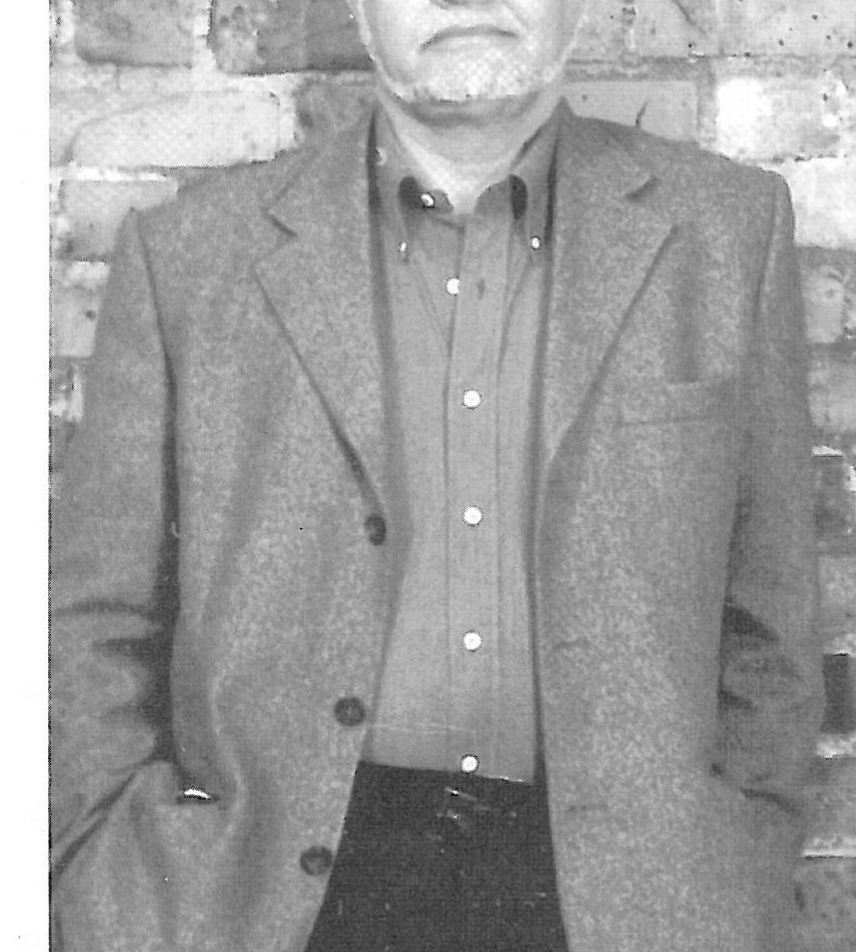
Source: Informal Engineer, domus 854, December 2002, page 70.
Between the enormous, vertiginous sculpture by Anish Kapoor at Tate Modern, the monumental Staatsgalerie pavilion by James Stirling in Stuttgart, the lighter "fairground hat" of Toyo Ito at the Serpentine, the spiral that Daniel Libeskind has proposed for the V&A, and very nearly everything Rem Koolhaas has built to date, there is one thing in common: without Cecil Balmond, none of them would have been built. Balmond is an engineer, and engineers, in exchange for being trusted, often pay the price of having their specialist work go unseen. To explain the precise nature of an engineer's work raises so many awkward questions that it may scratch the sensitive pride of the architect. But when those engineers feel their way blindly — the wobbling Millennium Bridge, undertaken by Balmond's firm Arup, comes to mind — they wish they had not. Balmond, however, is unlike other engineers. "In the old days I used to entertain people," he says, "I played flamenco guitar and always took pleasure in having someone listen to me." He also lets something slip about Anish Kapoor: Balmond showed Kapoor — an artist who is not at ease with collaborative work — that if the project was to be finished on time and the fire-safety constraints respected, the very form of the structure (Marsyas) had to be the joint outcome of the two of them. He also recounts his conversation with Daniel Libeskind: he told Libeskind that the spiral could not be built from the huge blocks of stone the architect had imagined. Balmond, who was born in Sri Lanka, was educated at the Royal Academy and now runs a branch of the Arup consortium with 1,800 members, says: "I do not build anything; the contractors do that. My job is to see how things can be done."
Yet Balmond is clearly seeking a role greater than that of an unseen technical assistant. The temptation in him is to go beyond the gymnastics of British high-tech engineering. For Balmond, a display structure is not an end in itself: "I felt engineering needed a more delicate approach."
Koolhaas describes Balmond's work in these terms: instead of rigidity and certainty, his structures embody doubt, a particular taste, mystery and even a kind of mysticism. They stand as if without obvious reason. Rather than relying on thick, symmetrical walls for added strength, they rest on what he calls a deep understanding of nature.
In his gentle yet decisive manner, Balmond tries to change the way we look at engineers and at engineering. The drive comes from a social dissatisfaction and from an artistic eye. Speaking of his student years in Sri Lanka he recalls: "Engineers were treated with contempt; that was a shock to me." He tells the story of one of England's most famous engineers, Thomas Telford: "He was sitting in a coach when the coach broke down. He climbed out and fixed the problem. But then they would not let him back into the coach, because he had dirtied his hands and shown himself to be a workman. That settled the matter for me once and for all." The instrument Balmond has chosen to redress this imbalance is the book he has written about his profession.
Informal — designed by Jannuzzi Smith and distinguished from earlier engineering books by the beauty of its layout — moves from the story of the construction of a house in France, to the definition of fractal geometry — a word architects use again and again without knowing what it means — and from there to a description of String Theory. The book is illustrated entirely with Balmond's own drawings. These drawings are more contrived and more compressed than architects' sketches, but they possess an authentic poetic quality. The way the book looks at the hidden order of things and at the latent properties of numbers and shapes makes it a kind of "other Brief History of Time" — in illustrated form. When Balmond speaks about it, for a moment one thinks that, beyond the chance which is not knowable, there is something knowable, a kind of certainty too. It seems clear that Balmond grasps, in his collaboration with Rem Koolhaas, the worth of authorship. The book Informal, which Jannuzzi Smith has so elegantly composed, bears no resemblance to a conventional engineering book — and his idea is that an engineer, and engineers (as he puts it) must engage with reality.
- Anish Kapoor
- Tate Modern
- Staatsgalerie
- Toyo Ito
- Serpentine
- Cecil Balmond
- Thomas Telford
- String Theory
- A Brief History of Time



