In late summer 1396 [2017], together with Ms Samira Mohandesan, an artist friend and sculptor who is at the same time an accomplished painter, we made a trip to Armenia. Besides her studies in Iran, she had completed a full course of university study in sculpture in Yerevan and was fluent in Armenian, and it became a valuable opportunity for me to establish a good connection with the local community, especially the artists.
One day, as we were wandering through this lyrical and lively city, we went to visit the great "Gan" church, and while we were resting in the cool of a small park, a large old building caught our attention; the coming and going of young people who, by their looks, seemed to be artists led us to approach the building's entrance to find out more.
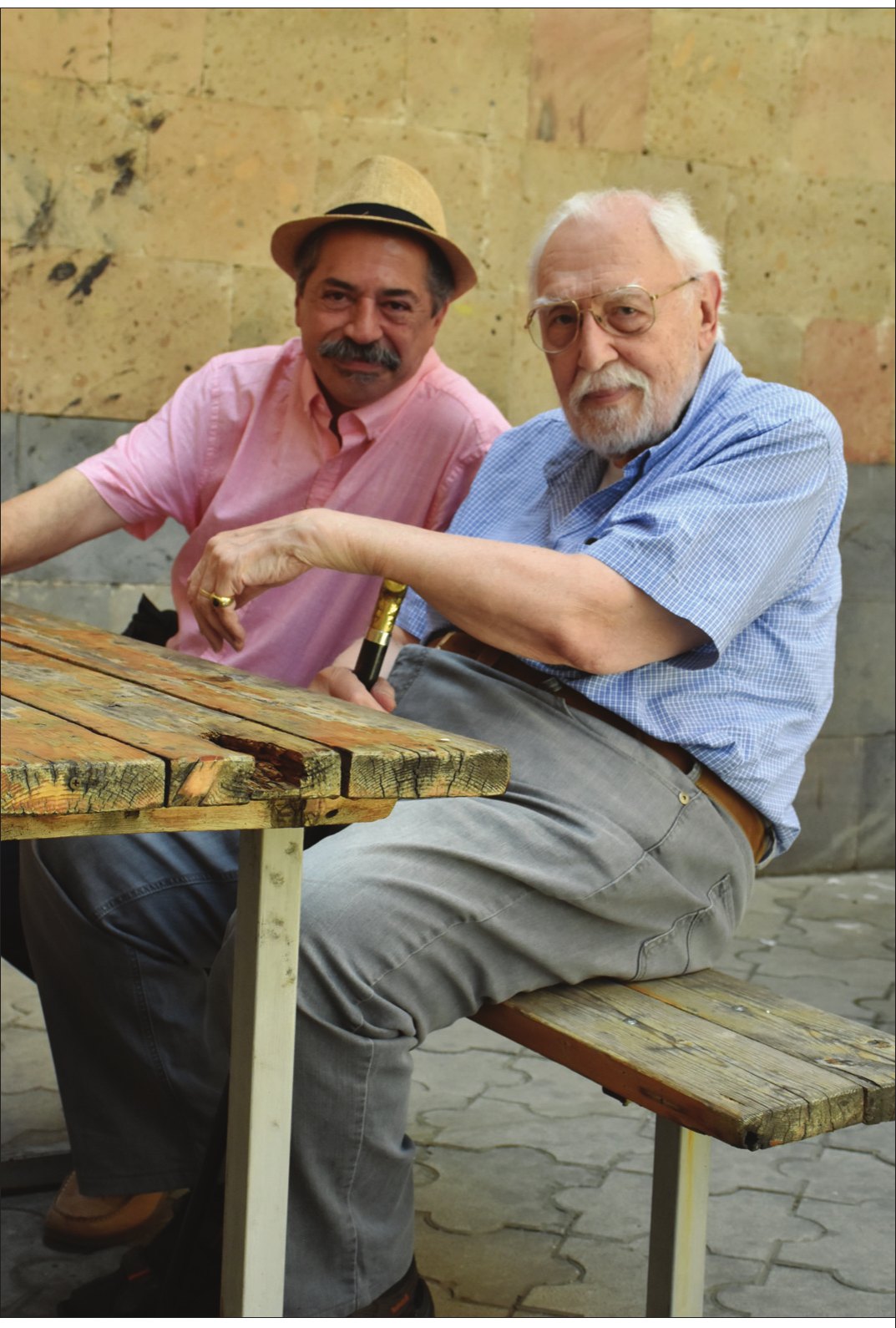
From the exterior of this brick building one could guess that it was a public, formal, but non-administrative space; a few wooden tables and benches served the young people and passers-by, and among them the face of a large-built, elderly, stooped man with a smiling countenance looked very different. Out of courtesy my friend respectfully greeted him in Armenian and he too answered, stared for a while and asked whether we were also artists and from Armenia. And when he heard the answer that we had come from Iran, he opened the conversation in fluent Persian, as though after a long time he had found relatives from his birthplace, and I realised, by my great good fortune, that he was Edward Balasanian, the well-known Iranian-Armenian architect. I had long heard of what he had done, with utter magnanimity, for his teacher Mohandes Foroughi in his time of trouble and illness, and had always admired him in my heart, and now a tall old man stood before me.
What follows is my conversation with this distinguished artist, who accepted my request with great kindness.
Unfortunately, despite efforts to give him a copy of this interview and to make any corrections, such an opportunity never arose; the corona epidemic and the disruptions after it compounded matters until this connection was cut forever. Some time ago I learned that he has passed away and that this intention of mine will never be fulfilled; the only way left to me was the effort to publish this conversation and the memories of the professional and social life of this great man.
Mr Balasanian, whatever you tell us of your past is worth hearing, from your school days and study at high school and then university ...
I was born in 1315 [1936] in the city of Gorgan. My father was one of the Armenian emigrants who had come from Armenia to Iran before the formation of the Soviet Union, and my mother was born in Tiflis in Georgia.
Which school did you go to in your primary school years?
The Koushesh Davoudian primary school, one of the primary schools for Armenians in Tehran on Manouchehri Street, and after that Firouz Bahram high school on Stalin Street (Mirza Kouchak Khan), below the Zoroastrian fire temple; because the Armenians had no high school at that time and the education of Armenian children ended at the primary level, I went to Firouz Bahram high school. On the whole I was a very good student in two subjects, mathematics and painting. I left Firouz Bahram high school in the final year and went to Adib high school and graduated there... .
Later I took two entrance examinations at the University of Tehran, the examination of the Faculty of Engineering and the examination of the Faculty of Fine Arts.
Were these examinations held separately?
Yes. From the start I did not like engineering, and although my mathematics was very good, my goal was architecture and above all art, because my two maternal uncles were both artists, Barbod Sarvari and Manouchehr Sarvari, who were decorators and stage designers for the theatre in Iran.
I too had a love of the theatre, and in my youth I also played roles in professional theatre. Specifically, I played the role of "Othello" at the Anahita theatre with Rahim Oskouei.
Let me add that I designed the decor of that play myself too. I performed one or two other plays on television in that period, one of them the play "The Bear" by Anton Chekhov and another a short role in the play "The Little Foxes" by Lillian Hellman, and a play called "The Executioner" and three or four other television plays, but my important work in the theatre was that same play "Othello". I also acted in a few films, but my interest was in the performing arts and only graphics, but not painting; for that reason, naturally, I did not succeed in the examination of the Faculty of Engineering, but I was accepted in architecture at the Faculty of Fine Arts.
At that time, apart from the usual courses in drawing and painting, what subjects were in your entrance examination?
I remember that to be accepted at the faculty we had to take an examination in technical drawing, geometric and artistic drawing; there were questions on art, and in the atelier they had pasted up sheets of Whatman paper and there was also a model in the hall, a statue of "Venus".
There was also a horse's head and other classical objects related to the fine arts, since they wanted to see whether our hand was strong in drawing and painting or not.
That was the aim, because in principle this is part of the Beaux-Arts philosophy. The fact is that architecture is not only solving functional problems in the plan, but also lies in how you combine beauty with function.
I began painting the statue of "Venus". In the middle of a white board 60 by 80 I painted it within half an hour; at that moment Mr Ghahremanpour was the examiner of our hall.
Yes, whose son also became an architect.
As he walked around the hall he saw that I had painted very small in the middle of such a large sheet. At that time he was on the administrative staff of the faculty, but he had the discernment to say immediately: no, this is not right, what are you doing? He took the paper off the board, turned it over to the back and said, draw it again.
You had drawn the painting small?
Yes, I am indebted to Mr Ghahremanpour all my life.
One of the important points of the examination was how you place the image on the surface of this sheet; that is, you have to know the proportions and dimensions so that, for example, 5 centimetres of space remain from the top of the sheet and 5 centimetres from the bottom, and the painting also sits in its proper place. Although Mr Ghahremanpour was not an artist himself and did administrative work, he saw that I was really good at painting and rightly made the judgement to guide me.
Yes, he was in administration; that is, if he had not noticed this mistake, you would not have been accepted at all?
No, I would not have been accepted. So I sat down and in another half hour drew the statue of "Venus" and worked on it well. I am indebted to Mr Ghahremanpour; of course he could have said, to hell with him.... (laughter), and in this way I entered the Faculty of Fine Arts.
What year was it, Mr Balasanian?
I think the last years of the 1950s, but well, the dates can be looked up.
I began studying at the faculty, in the "Foroughi - Farmanfarmanian" atelier. At first it was only "Foroughi", but he hardly had the time to come to class; I remember he came to the atelier two or three times at correction time, and then they said that his presence was not sufficient for the students, and for that reason Mr Abdolaziz Farmanfarmaian was added too and our atelier was named the Foroughi - Farmanfarmaian atelier. We liked him very much too. In his French accent he would say work with an "ash-tay-ash" pencil, by which he meant HH. But well, he always had that French gesture and discipline. Later they saw that this prince did not always come either, and then these students did whatever they pleased on their own. As it happens, I used to say, in the Seyhoun atelier the students worked in Seyhoun's style. In the Riahi atelier too to some extent, but not in the Foroughi atelier... because he himself was not there. At first, since Foroughi himself was not building any projects, his projects were collaborations with others; so what were we to learn from? It was magazines such as Architecture d'aujourdui and domus.
Yes, I know these magazines.
These were the model, the starting point and a turning point for us. The late Mr Moayyed Ahd, who has now passed away, was added to the atelier and our atelier had three teachers, by the names of Foroughi, Farmanfarmaian and Moayyed Ahd. Moayyed Ahd came; those two did not come. He reviewed and corrected, and then when they saw that these teachers had become few, they brought in Etesam too.
When Iraj Etesam came we were in the upper years and in another world, because in the ateliers we basically learned from the upper years; we were the "slave" or "nègre", which is a French term; that is, for example, someone did the work and you had to hatch from this end to that end. The hatching had to be even and..., and in this way you also learned what these people were doing.
David Oshana was there too, and one other person whom we respected a great deal; I do not remember his name.
In short, the qualities we learned from the atelier of Foroughi, Farmanfarmaian, Moayyed Ahd and Etesam were: stand on your own feet and learn the work from your surroundings and from the upper years; if the teacher is not there, be yourself and be free. I learned this from the theatre.
Stanislavski's theatre does not tell the actor to stand left or right... understand why you want to turn your back on the audience, why? What message do you want to give your audience? It is the same in architecture: why did you paint this wall green? Why, are you mad? Why did you do this? Why is it green? Say, for example, why is it not verdigris blue, or why is it not white at all? Do you see? Or, for example, what we learned from people like Moayyed Ahd was the spirit of work. Moayyed Ahd was of course a consummate artist and I personally learned many things from him.
In any case, in the end we also presented our diploma project at the Faculty of Fine Arts of the University of Tehran.
What was the subject of your diploma project?
A cinema city.
Was your supervisor Mr Moayyed Ahd too?
Yes, Mr Moayyed Ahd and Etesam; Etesam was his assistant. My work at the faculty ended and I worked for a year or two at the office of consulting engineers of Ali Adibi, but my mind was focused on the idea that I had to go and study urban planning, and abroad at that; for about two years I was head of Mr Adibi's atelier.
Was he himself an architect and urban planner too?
Yes, a graduate of Columbia University, and truly a knowledgeable, understanding person and a good manager. He had an organisation, and the ink of my diploma signature had not yet dried when he told me, you are the head architect of the atelier, that is, my replacement.
In that two-year interval I married, and we decided to go abroad, because if it got late and we started working and building a home and a life, there would be no more patience for study at all. Perhaps that would have been the more right thing to do. But I had made up my mind, a serious and final decision to continue my studies: I had to go and specialise in urban planning, I wanted to become an urban planner. The first year we were in London and I had to choose a university.
How did you choose the university you wanted?
I applied to two American universities, one Yale University in Boston and the other the University of Pennsylvania; I had focused on these two and was accepted by both.
In the one year we were in London, our English teacher was a lady who knew one of the very famous architects at the Royal Institute of British Architects, what is called RIBA.
From this lady teacher of mine came the answer: don't go to Yale, go to the University of Pennsylvania.
Teachers such as Louis Kahn and ... all of them were in Philadelphia and taught there, and other teachers who were innovators. It was the middle of the years 1966-67, the second half. Now what period is this? The period of the protests against the Vietnam War and the period of the hippies.
They had killed Kennedy too, in 1962
Yes, they had killed both brothers too. We entered into this atmosphere and wanted to study urban planning. Right at the start it turned out that in the faculty they had divided the urban planning department into two parts, one urban design and the other urban planning. It was the second half of 1960, and the Faculty of Fine Arts of the University of Pennsylvania had pioneered this division.
Now what was it all about? In principle urban planning is regarded as a continuation of architecture, or in other words architecture on a large scale, urban architecture and so on... but the essence of the subject is the aesthetics of the environment, whereas those who had come to teach urban planning said that although aesthetics and urban planning in the sense of building are important, this is the last stage of the work of urban planning, and before it you must solve the social and economic problems of the city, the problem of the city's growth and the problem of ecology; you must find solutions for all of these.
That is, the urbanism that Le Corbusier had designed only with his own ideas is no longer a standard for urban planning at all.
Chandigarh remained empty for years and years, then slowly people moved towards adapting to it... It was the same story as buying a new suit and getting used to the new clothes after wearing them a few times.
As a socially active person, let's say, I went for urban planning. I love architecture very much. I am an architect myself, but the issue of urban planning is development. But in the last stage of development, or in parallel with the completion of the urban planning work, you must create an environment that does not stay empty for ten years like Chandigarh.
Yes, that it be what the citizens want.
Yes, that people want to live in it. Of course there is a fundamental philosophical problem: if you follow public taste and want to persuade and satisfy people, the aesthetic level of the work comes down. I do not consider aesthetics to be mere prettiness but the spirit of the building. In Baku they built a cultural complex, Zaha Hadid did it, but in my opinion, and I have only seen photographs of the building, naturally you must definitely create an environment that elevates people, so that the cultural level and artistic perception, the aesthetics, are raised. At the same time, it should not be so abstract that nobody comes.
Yes, that it does not connect.
Yes, the danger is that it may be that, instead of you going somewhat above what people want so that you can guarantee progress.
The condition of progress is change. The condition of progress is innovation. If you are not innovative, you do not invent anything new.
If nothing changes it becomes a swamp, it becomes mire.
Instead of running water.
Instead of running water, which is the basis of life. This is philosophy. So the essence of the matter is this, in the belief of this urban planner. My doctoral thesis was that urban planning is the art of social leadership. Why? Because to develop, you must first innovate; if you want to innovate, the intellectuals must be ready for innovation. At the same time they must not be far removed from society, which is a very difficult task. My doctoral thesis had five stages for urban planning.
The first condition: identifying the set of values, what is good, what is bad, from aesthetics to social relations, family relations and... .
The second stage: urban planning on the basis of the value system is identifying the environment and assessing the problems, because you can understand a problem and a shortage only by comparison with the value system.
So, identifying the set of values, then recognising the environment, for example, what part of the street is ruined, where is how? At what stage are unemployment and poverty at all? The fourth stage is formulating solutions for such problems.
So from the value system we arrived at identifying the environment and then defining the problems, so that finally we decide what problems there are and then show solutions. All of this is based on this system, the set of values.
The last and fifth stage is the implementation of the project.
How it is implemented?
Yes, implementation is not necessarily a building; implementation means how we prepare people's minds for the fact that these changes are necessary, and how we bring these changes about. Finally I got my doctorate and became Dr Balasanian (laughter).
Then, by a stroke of fortune, the Union of Soviet Socialist Republics collapsed, with 15 republics, one of which was Armenia, which became the independent Republic of Armenia.
These matters belong to the eighties AD. From the seventies to the eighties, what work had you taken on? Where were you in this interval? In Iran or in another country?
I was in Iran and worked.
This same urban planning work?
Yes, and I did very interesting work too.
So you came to Iran to work?
At first, yes, I came to Iran; two or three years before the revolution I came to Iran and opened the consulting engineers Tarh-e Projeh va Pajouhesh, of which Mohandes Tajamoli is the managing director. We began producing master and detailed plans for several cities of Gilan province, the cities of Rasht, Bandar Anzali, Langroud, and the city of Semnan too and... .
Apart from urban planning work, did you also practise architecture in Iran as an architect?
Yes, I designed a restaurant at the Shahr-e Rey oil refinery. Apart from that, on the site of my own personal, inherited house on South Kheradmand Street, I designed a residential complex with modern apartments and a square courtyard measuring ten by ten with a pool and a pool-house, which I hope still stands. Perhaps it is worth mentioning that I also designed and built a small memorial over the grave of my father and mother at Darvazeh Doulab, in the Armenian cemetery, which has a cruciform plan with four intersecting vaults and for whose body I used white travertine.
... In my view our modern architecture must combine the mood and spirit of authentic Iranian architecture with new technology. For example, vaulting to roof large spaces was a valuable technique in its time. If a new and pioneering architecture is to be the custodian of our earlier architecture, it must blend the valuable spirit of the old with new technology, and there is no reason for it to hide new technology. In Armenia too I wished that modern Armenian architecture had a logical relationship with the classical and authentic Armenian styles. Sometimes I feel that in modern architecture some people imitate the past instead of properly drawing inspiration from it; that is why they build vaults of reinforced concrete that can be regarded as a mere imitation of authentic architecture.
Mr Balasanian, what made you come to Armenia?
The Soviet Union collapsed and the Republic of Armenia was formed. At that same time there had been an earthquake here; a year before that I said I would go to Armenia to serve. It was 1992; they had set up the All-Armenian Fund and were collecting money to help the earthquake victims there with reconstruction. I, who had worked all my life with the Plan Organisation, with a set of regulations and standard contracts for architecture and urban planning, realised that here, first of all, there were no competitions or tenders whatsoever. They say that prices are fixed, because the Soviet state had nothing to do with the free market. My luck was that I had worked in Iran. I asked my brother-in-law, Mr Aripar Petrosian, who was also an architect, to prepare for me at the Plan Organisation a standard contract for consulting engineers in architecture, urban planning, a building contract and ... . I found one of the Iranian Armenians and told him to translate these into Armenian. Of course his translation was good only for his aunt (laughing).
Did you correct it again?
Yes, we translated all of it again. It has technical terms that they did not understand.
Mr Balasanian, are you still active in this work?
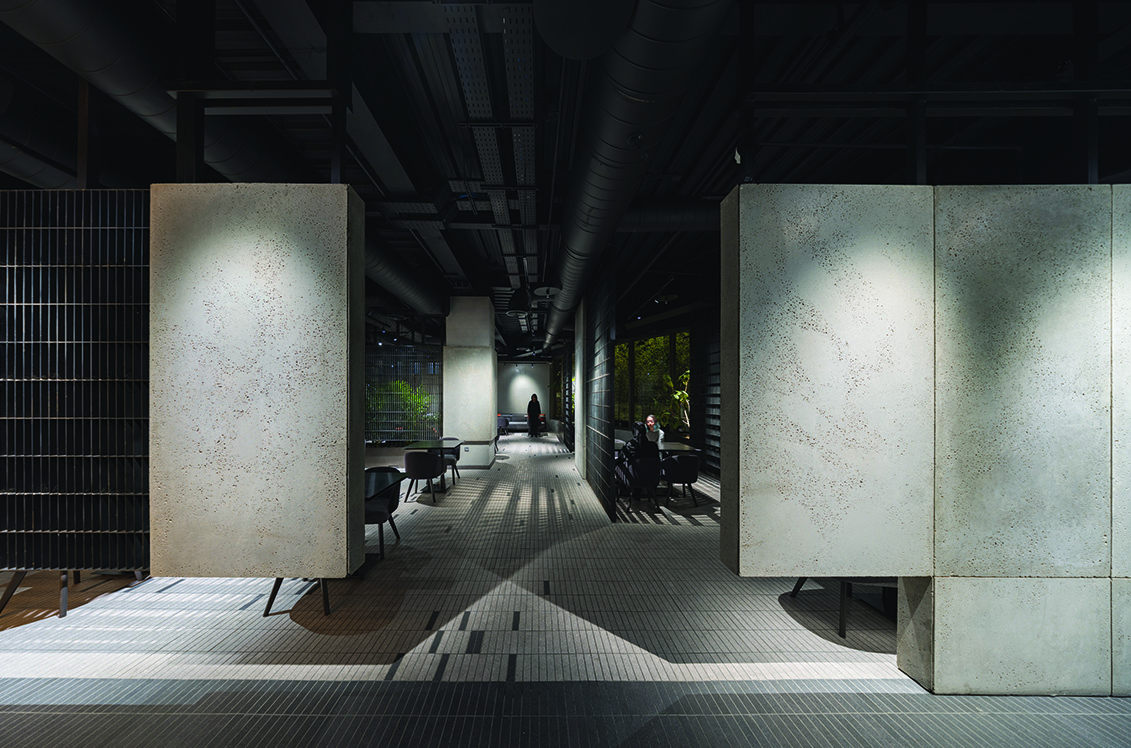
No, here I am active in the Armenian Center for Contemporary Experimental Art.
It would be very good if you could explain a little about this place too.
In December '92 I came from America to Armenia and settled in Yerevan. I had come and gone here before, but this time I came only to work.
I was employed at the All-Armenian Fund, I have told the story; besides working on the reconstruction of the earthquake-stricken areas, I drew up the contracts.
I implemented the system; system-setter for the construction sector of Armenia's economy, from socialist to free market, from central control to free-market control, that is how we should put the names. This was one of my jobs.
That is very valuable too.
Then they sent me to America; for a while we went to New York to raise money there.
For the Armenians?
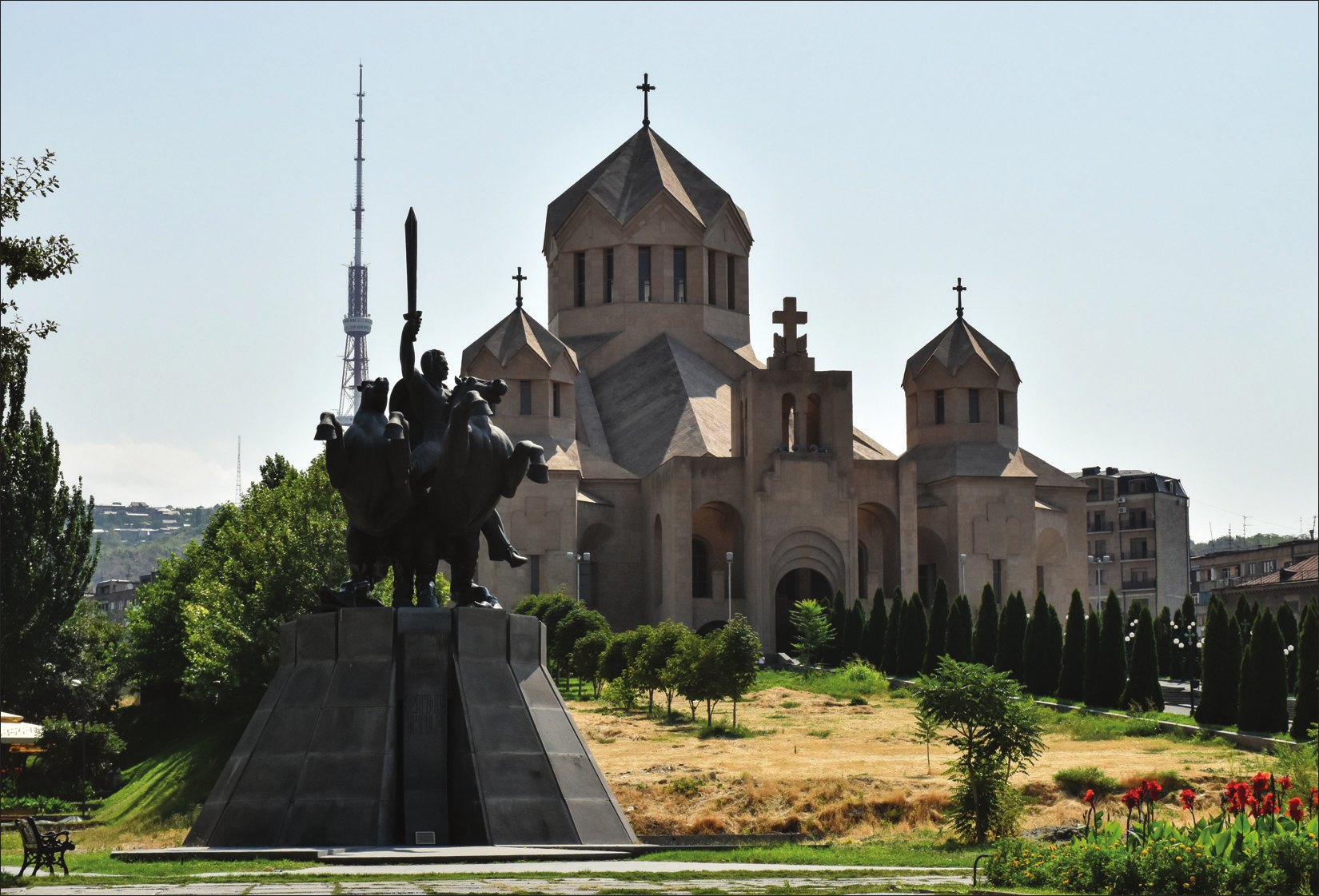
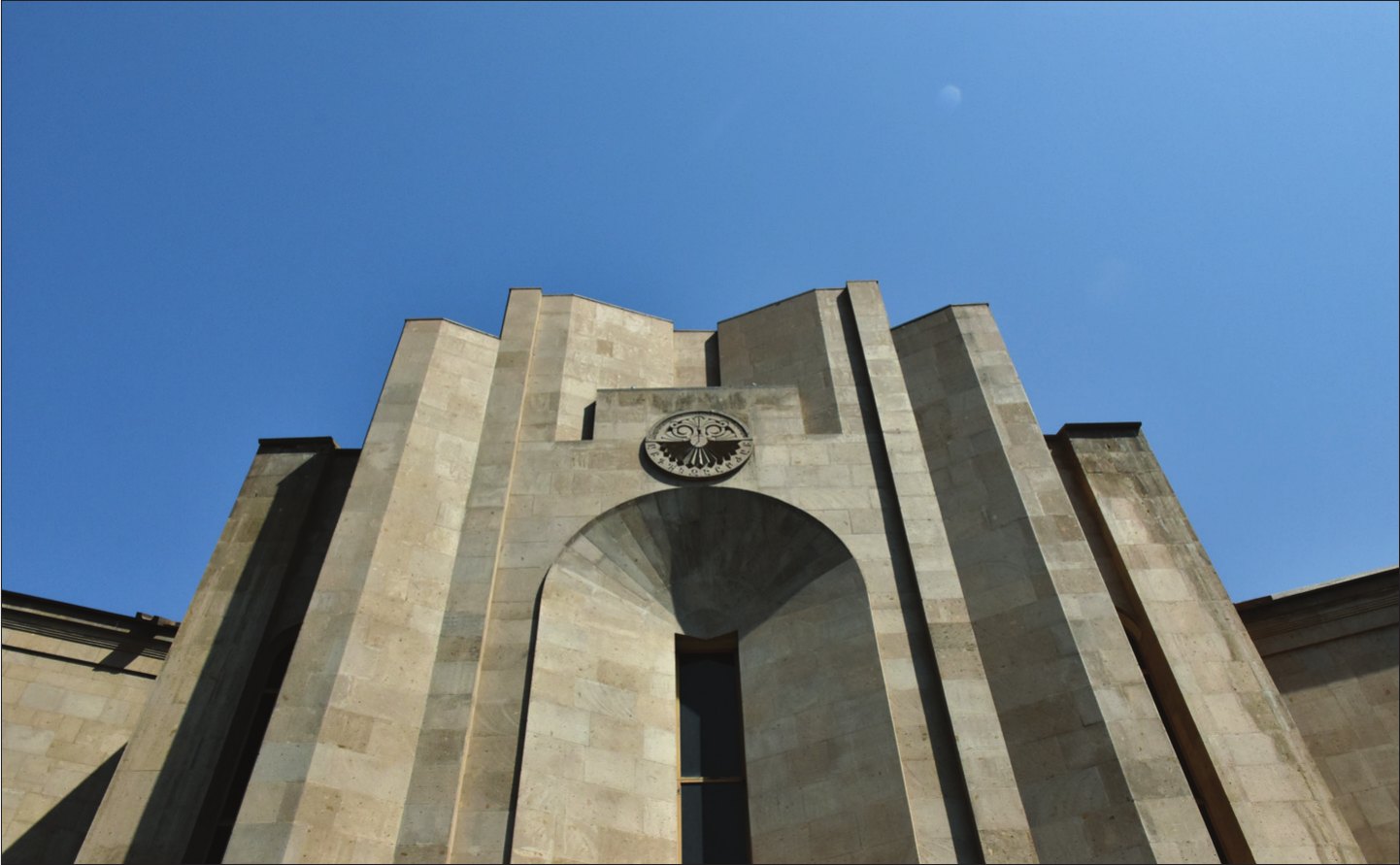
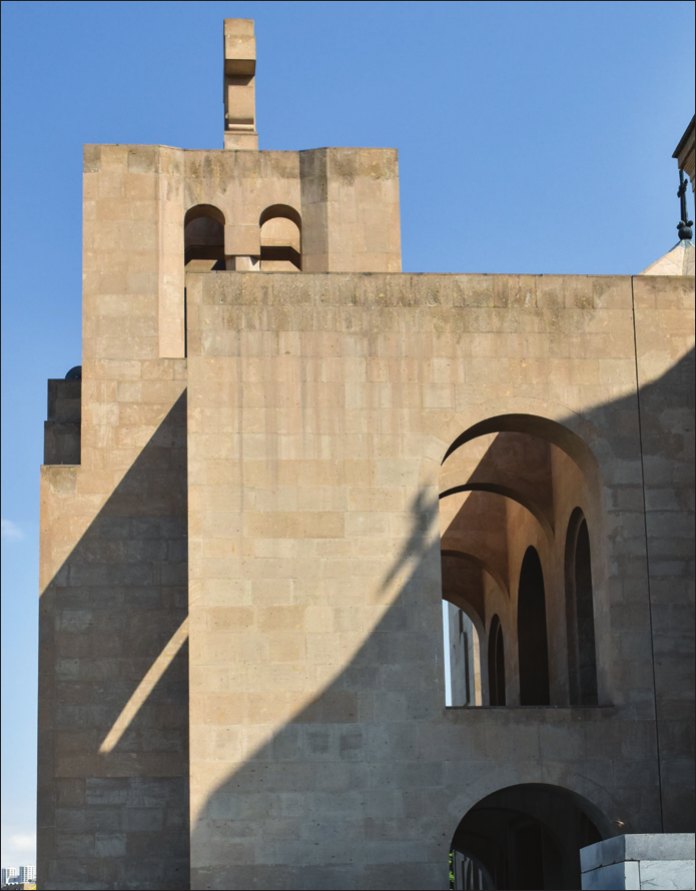
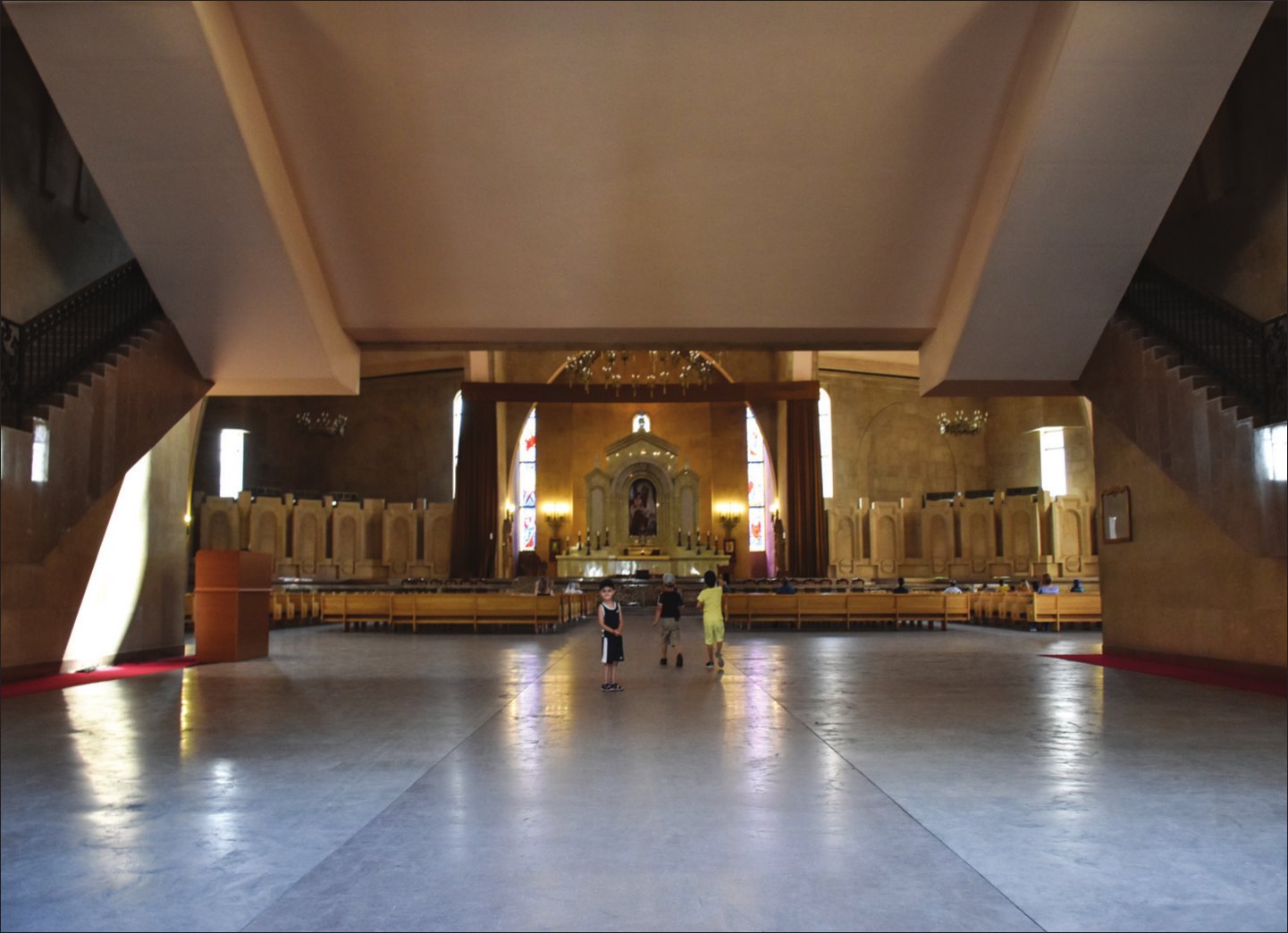
For this same fund; I worked there for a while. For a year and a half I also became director of the Armenian Diocese in New York. I ran it there; there were social and cultural projects. Then I saw that my place was not there. I came back to Armenia... The Armenian Archbishop said, have you seen this great church (the Gan church)? We must build this church to mark the 1700th anniversary of the Armenian people's acceptance of Christianity, which coincided with the year 2001, because in the year 301 AD the Armenian state officially made Christianity the official religion of Armenia. Now, on the 1700th anniversary of that important event, this church was to be built in its memory. This was in 1998, and we had only 3 years, and the church was still at the stage of building the foundations.
The Gan church was very much worth seeing.
Its architect has passed away
It is very good work.
I am not judging. The Archbishop of the Armenian Catholics called me on that occasion, and my friends said don't go..., we don't know why he has invited you, but they probably want to saddle you with finishing this church!! It is still at the foundation stage now; when will this project be finished? And with such grandeur.
Yes, it is a very grand church.
I said no, I went to see the Archbishop; he said this is the issue. I said yes, I know, and it has reached my ears for what work you have made me responsible; I accept. But my condition is that whenever I give a payment order, the money be deposited to my account within 24 hours. If you promise, I will do this work.
The bishop invited his head of finance there, and Mr Karamaniko said that the money is in Switzerland and when we want to transfer it, it takes a day or two. I said my point is not about a day or two; my point is that when I say this gentleman (the contractor) has done work, you must pay for it, we must pay. I said there is no rush about a day or two days. It was agreed. I said, we will roll up our sleeves; and the proof is that on 20 September 2001 they inaugurated the church.
That is, you were overseeing the project until it was finished? That is a very great work.
Two days later the Pope came; I said, Your Holiness, my work is done. We left.
How long did it take?
3 years, from zero, from zero foundations. Its foundation was not even a foundation at all.
We said we will do this work on condition that you pay for it. Later the bishop himself died and someone else came in his place. Then again someone else (laughing); we came and finished the work and handed it over.
What you have done is very valuable.
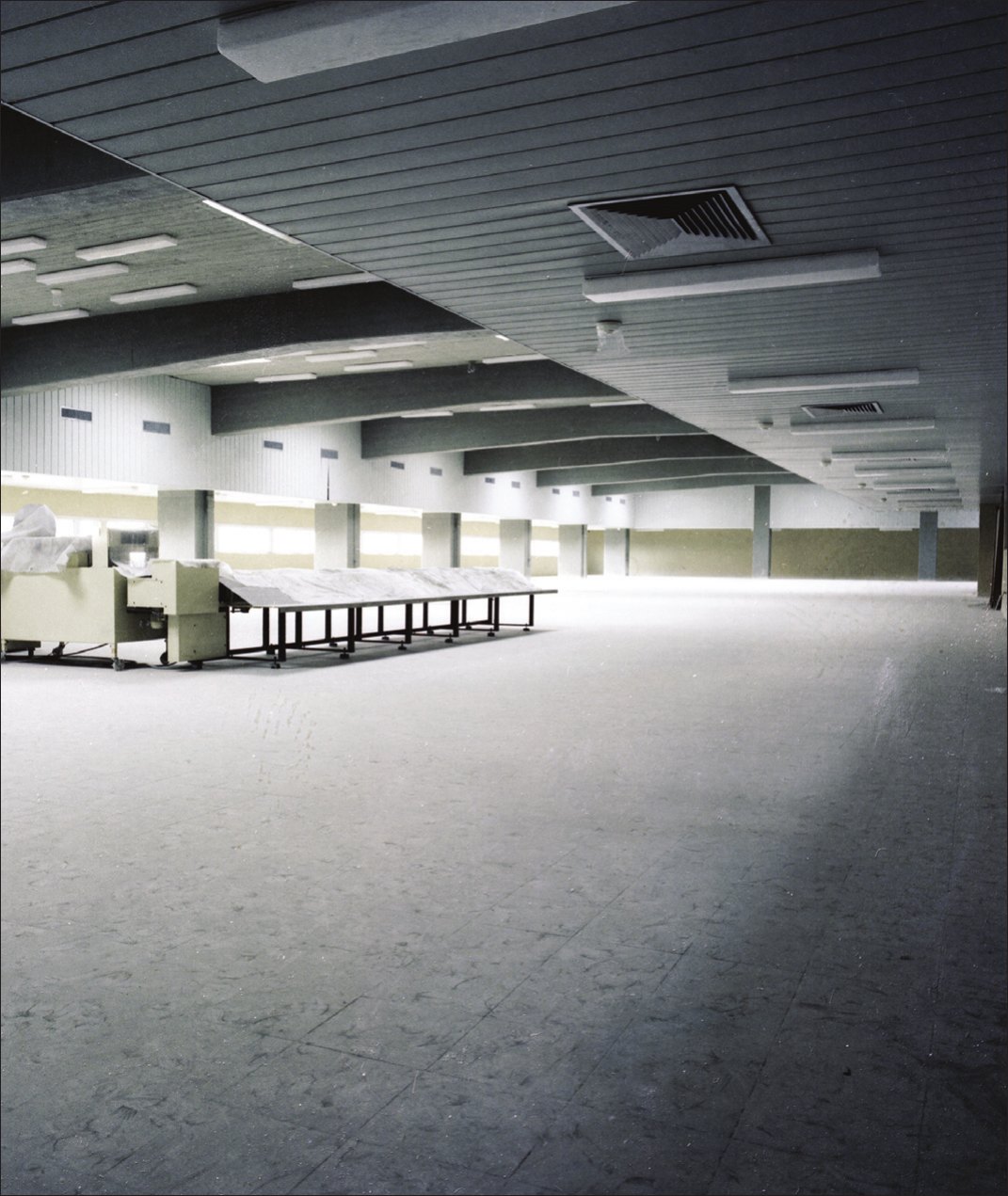
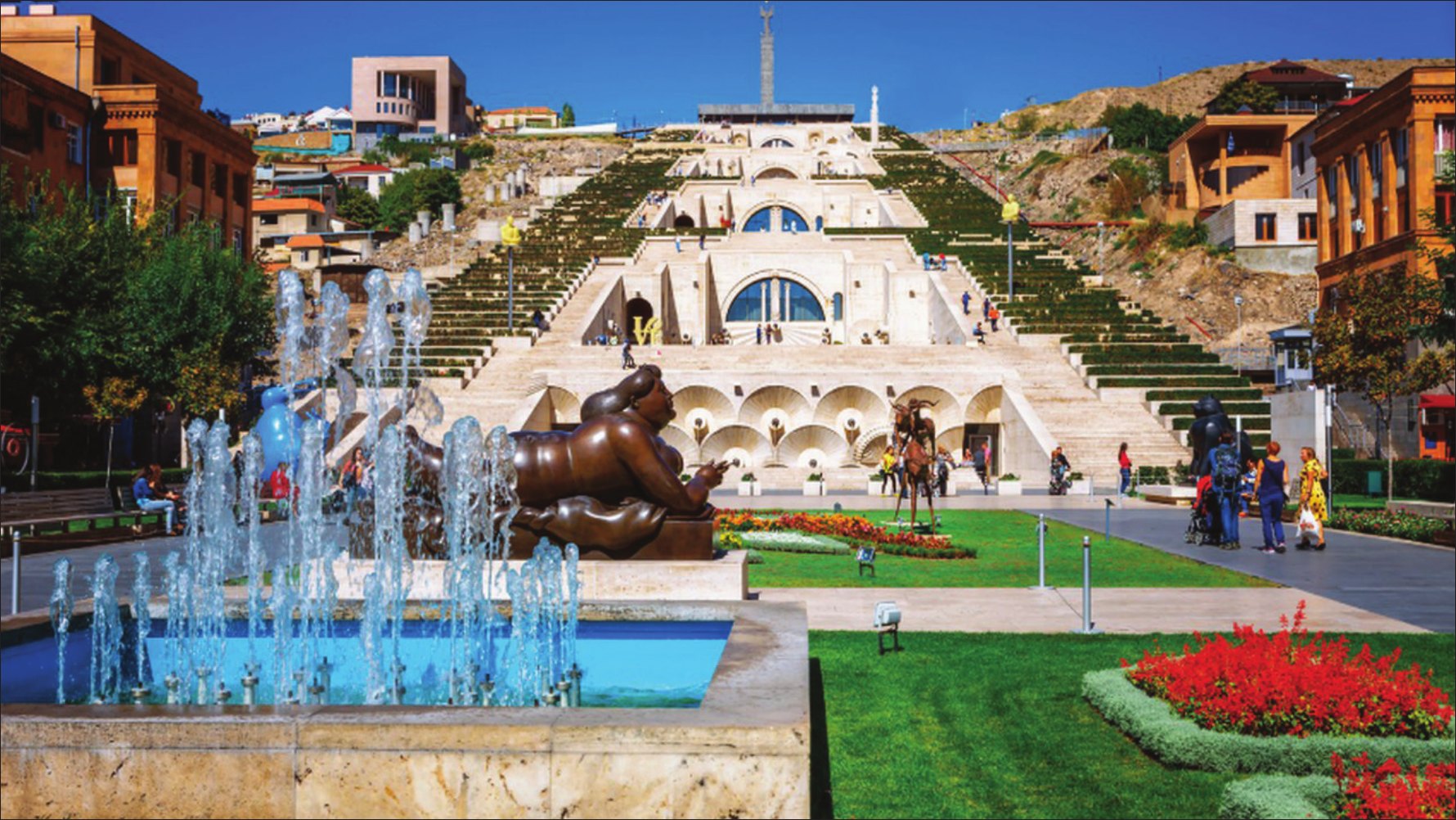
My next work was the Cascade, the famous Cascade building in Yerevan.
This same Thousand-Steps Cascade?
Yes, this project had been left over from the Soviet period, in a ruined and derelict state; the black-and-white photographs of it from that time are now in the Cascade building.
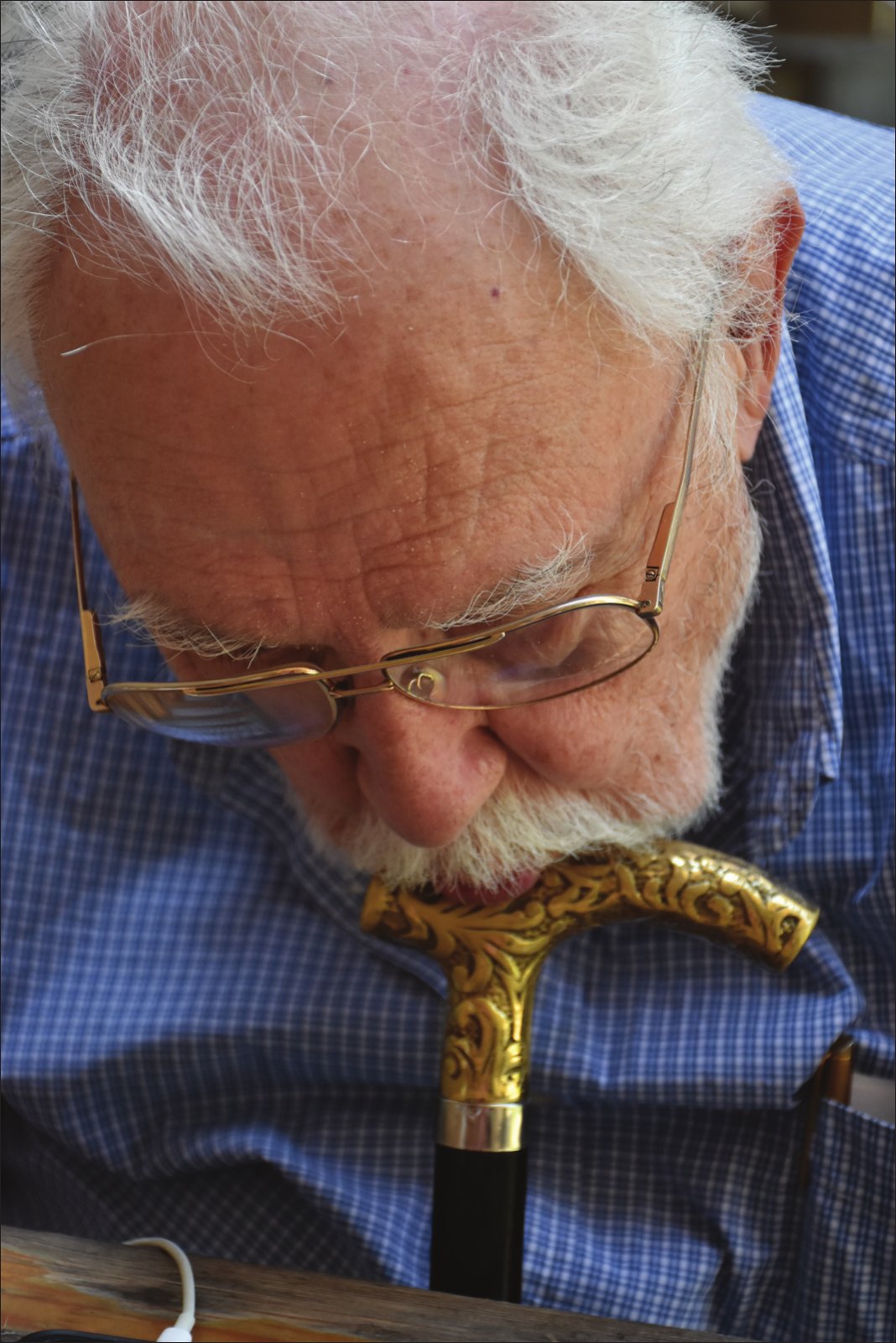
Everything you see today I did within eight years.
It is very valuable.
In parallel with all this, from 1992 until today, my wife, Ms Sonia Balasanian, an Iranian and Armenian poet and painter, with my companionship, set up the Armenian Center for Contemporary, Experimental and Innovative Art, which in Armenian we call NPAK.
Of course this was the lady's goal. I came in December 1992, but she had come here 4 months earlier, in midsummer, and had started the work. The work of putting the arts of the modernists in order.
Imagine, only one year after the revolution and the collapse of that socialist system and the pressure that had been on free-spirited artists, suddenly Sonia had come and was saying do whatever you like; an exhibition was put on and people poured in, including the American ambassador to Armenia. Sonia held the first group exhibition of modern art in the "Art" building. And then we found the rest of them too.
On our website, 1992, you see that the name of the exhibition was 9, because there were 9 artists. Sonia was one of them, and 8 other artists who had made crazy works.
It is truly crazy, that year. After '95 they got this present place (he points with his hand) and we continued our work again, until it came to the point where, for a period, Mr Karaschian was our financial sponsor for two and a half years and we brought our activity up to over 20 exhibitions a year.
I am proud that we carried it out in Armenia. Besides these stories I have told about modern art, we came and said that academic training and the traditional arts are a very necessary condition, but there is another necessary condition too, and that is distancing oneself from the traditionalists.
That is, truly modern?
That is, break the frameworks, as plainly as that..., academic foundations are very important. Because in that same preparatory year of the Faculty of Fine Arts all our work was copying, copying Ionic and Doric columns and Achaemenid ones, and we learned these. We learned drawing as well as proportions, and we became acquainted with architecture.... Then they let us go, and from the preparatory year we went on to year one... . The world was turned upside down entirely. We carried out this same philosophy here in Armenia: it is absolutely necessary and essential that you complete this academy. Of course I do not say that if you do not complete the academy I will not let you show your art, but if you want to learn, the prerequisite is that you go to the academy and learn, then say, now I want to break with tradition this way.
Truly breaking with tradition?
Yes. The second condition was that I would say, don't be afraid, jump into the water; you thrash about, and if you can't swim you grab the edge of the pool and come out, but you understand that you are not a swimmer; or you thrash about so much that you get going and reach the far end... .
That is, learning to swim.
Yes, this was the main condition; the other condition is that you must have the courage to jump into the water, and this too is as simple as that. Here, since I myself never worked full time and mostly supervised, we also had several art directors, but I fired them because they put pressure on the artists... You have no right to put pressure on him; he has been under enough pressure (addressing the art directors).
The artist is not just under enough pressure, he is under more pressure than necessary. Now you too have become insult upon injury: don't do it this way, do it this way, why are your proportions not good? You must do it this way and ....
Indeed I would like this fellow's nose to have become very striking, or that same story of the colour green in my youth.
Indeed, that is the very nature of art.
And we are proud because in the end they invited us to an exhibition in Moscow. Moscow is not an easy place; we went on the Moscow art channel and our works were shown on that network.
In 1995 we went to Venice; for the first time Armenia took part as a country and Sonia was there too. After that, 8 times, that is 16 years in a row, we took Armenia to the Venice Biennale ... after that, of course, the state itself decided to do it, which is our greatest success.
Yes, that is something to be very proud of.
Of course my greatest success has been that Edward Balasanian leaves them, that is, it shows how strong this body has become and that it has dared to stand on its own feet and needs no one. It is my pride that the Armenian state finally, after 16 years, decided to take part in the Biennale itself.
Yes, that is, they understood its value.
Yes, after 4 years they won the Golden Lion. The Armenian pavilion. In 2015 it took the Golden Lion. Out of modesty I do not say these things, but those 16 years were not in vain; in those 16 years we built and rose....
For example, I remember that articles were written about our works in a prestigious art newspaper.
All of these are very valuable.
Mr Balasanian, we are deeply grateful for the time you have given us. If you allow, we will also ask you the rest of the questions by telephone. It was truly an extraordinary privilege for us to be able to be with you today and to record this fascinating conversation.
Until we meet again
* With thanks to Samira Mohandesan, without whose presence this interview would not have come about.