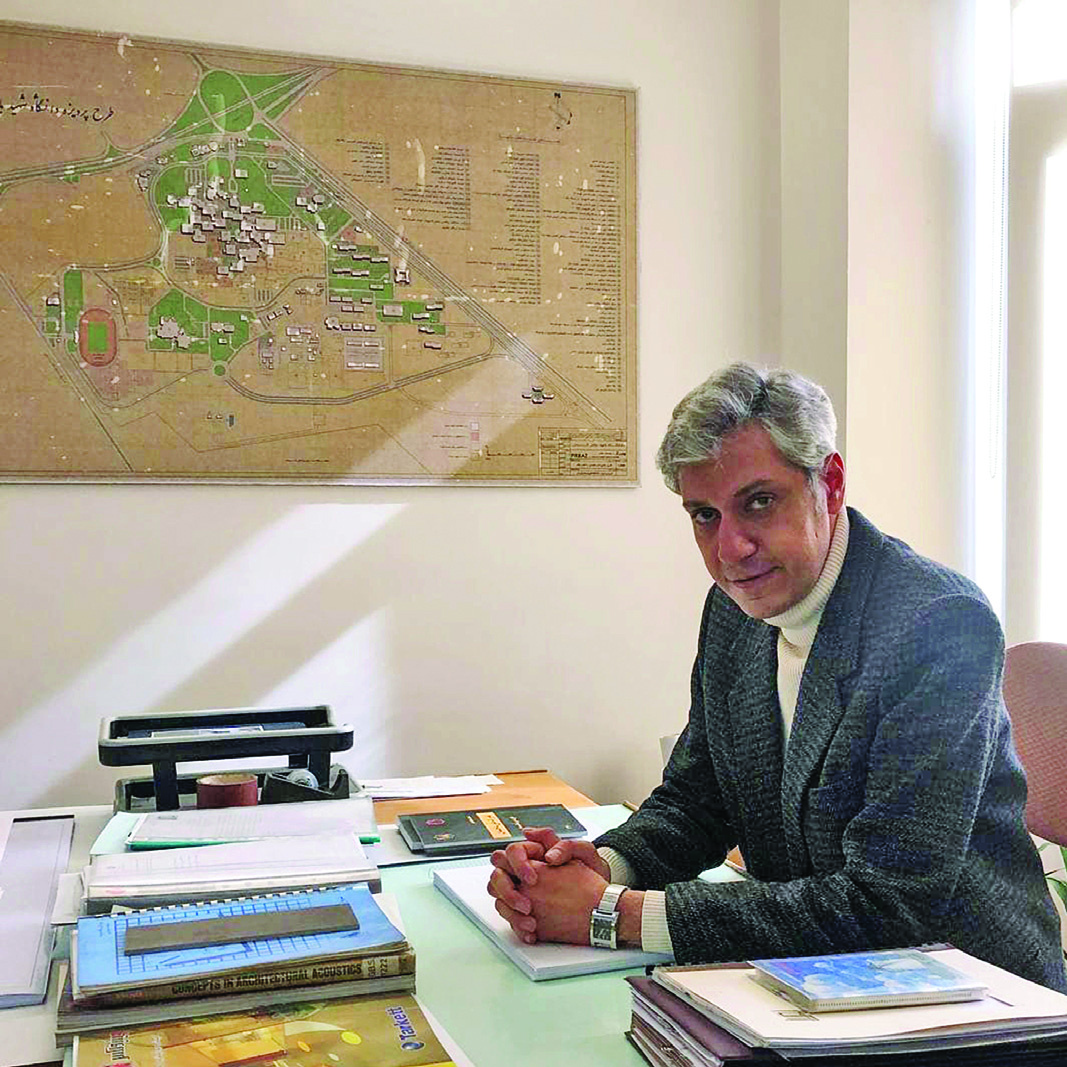

Let us begin by looking at Shariatzadeh's architectural thinking. How did Shariatzadeh look upon architecture?
In the thinking that prevailed at Banyan Consulting Engineers and later at Pir-Raz, attending to pure form at the start of an architectural project had no place at all. In the work of Banyan and Shariatzadeh you will never observe an idea of architectural mass as the axis of design, or symbolic resemblances in a building. We never see — in Shariatzadeh's work — an architecture like the building of Professor Samii's Neurology Centre. The notion that you might have a concept, for example, of a safe with its door open frozen in space — from the standpoint of Shariatzadeh's thinking — would be, for a public building, an error and outside his architectural design process. On the other hand, his approach in architecture was not opposed to form and its importance, and he did not even have any quarrel with a building being symbolic in cases where the situation called for it.
Briefly, on Shariatzadeh's architectural principles.
What one can say concerning Shariatzadeh's architectural principles is this. First, when architecture is designed for the user, the horizons that present themselves in today's world for responding to that user's needs must be identified. As an example, one may consider the architecture of three office buildings designed by Shariatzadeh and Banyan: the Ministry of Labour building (1339 / 1960), the National Iranian Oil Company building (1351 / 1972), and the Ministry of Education building, which was in fact not built (designed in 1375 / 1996). The changes in the way of looking at the design program of an office building, and the points and requirements raised in each project, can be seen. The changes — over the span of thirty-five years — in the manner of interaction with the user, in the nature of the work performed, and in the circulation of work within the building, certainly bore on the programming and design process of each of the three projects. In the design of the Rivoli Cinema as well, one may observe that — at the time of design and construction, and as a result of significant studies into the structural requirements of cinema halls — the best specifications and technical hardware of image projection and sound acoustics of the day were achieved in the world.
Second, attention to the continuity of optimal function in the face of structural and organisational changes in public buildings over time. For example, in the National Library project the importance of the building's flexibility — given the day-to-day needs of work relations and the services provided, and their changes over time — was of key importance. At the time of designing the Oil Company building, there was no perception of the virtual world, of digital communication, and of the digital workstation; but at the time of designing the National Library, this inference about the workspace and the daily flow of work was entirely foreseeable.
Third, attention to the intelligence of the building — an understanding that, in Shariatzadeh and his colleagues, had taken shape long before the general notion of intelligent buildings, in its present-day definition, became common. From their viewpoint, intelligent buildings must be able to adapt — in terms of space, quality, and durability — to the structural changes of future needs. In terms of structure and mechanical services, beyond flawless performance, the building must accommodate functional changes over time and require no physical or structural alteration. A telling example of this can be seen in the design of the buildings of Kerman University. Four to five decades after the start of their use, no additions such as window air-conditioners on the facade or interior, and no physical alteration to the exterior face, can be detected. In this project every building has several distinct layers, and these layers contribute to their intelligence.
The fourth point is the importance given to compatibility with sustainable development and economy in the wastage of energy. This important matter is well observed in the design of the National Library and the buildings of Kerman University. The optimal use of natural light of the best quality, and control of temperature in the environment by means of the architectural form, was always important to Shariatzadeh and his colleagues.
What do we know about the Iranian identity in Shariatzadeh's architecture, given that we are aware of his complete command of the history of architecture and of Iranian architecture?
In the 1370s SH (1990s), in society and consequently in the architectural community, the discussion of Iranian and Islamic identity in architecture was very prominent, and prominent architects such as Engineer Sheykh-Zeineddin worked on the subject. Shariatzadeh had a deep mastery of Iranian architecture and the history of Iranian architecture, and he held that when we speak about the identity of place — for example, if in the Gilan climate a building is constructed with that climate's coordinates — the same building would not be built in a desert climate. In the north, architecture is extrovert; in the desert, it is introvert. Understanding this is easy for everyone. Alongside it, the identity of time is raised. A building designed and constructed in a city in 1375 certainly does not have the same shape and design as a building constructed at the same place centuries earlier. From Shariatzadeh's viewpoint, the architect may take elements of past architecture — the dome, for example — and repeat them in a new work, but this will not create an Iranian identity for that new construction. Today, up-to-date materials of high performance are at the disposal of architects and builders; and what need is there, in the architecture of today, to repeat past architecture with the limitations that took shape on the basis of the need, technique, and materials of that same time? Perhaps one can bring motifs of past architecture into the scheme of a new building, although the technology of its execution is modern and current. One must use modern materials and techniques to the extent of their own capacity to produce a humble and simple architecture; the mere repetition of old, historical forms will not create identity for architecture. What matters is being current, observing modern technical principles, and functional considerations. For instance, in the National Library building, on passing through the entrance and after entering the building, we see no sign of old, historical symbols. Even the capitals of the columns — which at first glance bear a resemblance to Iranian architecture — in fact have a structural function. On entering, one crosses bridges and encounters water channels that carry a substance of Iranian architecture. The sunken garden courts as well are taken from Iranian architecture. This concept has no aim of inducing a sense of presence in the Mosque of Aqa Bozorg in Kashan. The use of water, the bringing of green space into the architecture, the use of natural light by means of windows at high elevations as in old Iranian buildings, and the keeping of simple and un-Platonic external facades — these are the architect's answer to the expectation of observing Iranian architecture in that project.
You have said that Shariatzadeh, at the start of his architectural projects, devoted considerable time and energy to studying the principles, nature, and form of similar projects in different parts of the world. How is it that Shariatzadeh's architecture is not subjected to their influence and traces its own architectural path?
Engineer Mirheydar used to say: "We became architects bit by bit." In fact, in the 1340s SH (1960s) this volume of sources was not at the disposal of architects. In the office there was a bound volume of Timesaver and a few bound volumes of restricted journals and books. In a project such as the Tabriz Hospital you will find that the architect was acquainted with its requirements, observed the relationships, and had command of the techniques of execution — in that project the wall was load-bearing — and shaped the architecture on the basis of these matters. After the completion of the project, and during its use, they constantly monitored the feedback and the quality of functions, so as to assure themselves of the correctness of their architecture and to gain command of any possible defects in the scheme. In subsequent similar projects — for example the Labbafinejad Hospital — using these same experiences, and this time with a wholly different and newer technology of construction, a more desirable architecture was produced. Over the span of a decade between the execution of the two projects, Shariatzadeh had become acquainted with the new structuralist thinking in Western architecture and had made use of it in his work. For example, in the design and construction of the building of the National Iranian Oil Company, the Precast technology — which was attracting attention in those years — was used. From the viewpoint of architectural thinking and the technique of execution, this building was, without doubt, one stage more advanced than the Ministry of Labour building.
Later, in 1375, when the building of the Ministry of Education was designed, we see — relative to the National Iranian Oil Company building — an architecture of considerably more up-to-date character, in which the design principles emphasised by Shariatzadeh underwent significant changes in the direction of a good and modern architecture. The discussion of the optimal use of energy, the function of skylights for the provision of natural light, and carefully calculated shading were among the strong points of this design, which unfortunately was not built.
At a single glance: did Pir-Raz and Shariatzadeh implement an avant-garde architecture, or did they arrive at a method of architecture which gave good results and repeat the same?
From my point of view, doing unconventional and different work in form and shape does not necessarily mean that the architect is avant-garde. If we speak of avant-gardism, attention to compatibility with sustainable development, economy in the use of energy, compliance with earthquake conditions in most regions of this country which are earthquake-prone, and proper function in relation to the user of the building can result in a new and up-to-date architecture. In the working and organisational relationship as well — the work that the consulting engineer carries out for an institutional client may, in some cases, be guiding and constraining at the same time.
In Shariatzadeh's projects, do we encounter anything by way of a manner or — so to speak — a "Shariatzadeh signature"?
In form, perhaps not; in working method, yes. As an example, in the Kerman University project, on the advice of the designer, the educational programming for the university was entrusted to the Espandar firm, and, with consideration of its findings, the master plan of Kerman University, prepared at Pir-Raz Consulting Engineers, led for the first time to the shaping of a foundation that became the design strategy in educational projects afterwards. In the result of these studies, and with regard to the limited project budget, the programme had proposed that originality be given to the academic groups rather than to the faculties, which led to economy in spaces, in construction, in the acceleration of the construction and operation of buildings, in the number of professors and required working personnel, and in facilities. In this architecture, you encounter various buildings between which the faculties have spaces in a fluid manner. Blocks have been formed in which the faculties are located in parts, and these blocks have formed an interconnected superstructure within which the academic groups exist. In this project all the buildings are designed at the scale of three thousand to five thousand square metres. They are built with a smaller budget and in a shorter time and brought into use. Whereas the construction of a twenty-thousand-square-metre building for a single faculty with the necessary dedicated facilities might tie up your capital for five years until it bore fruit. This system was very efficient and successful in practice, and Pir-Raz and Shariatzadeh repeated it in later projects such as Shahrekord University and Kerman University of Medical Sciences.
In the buildings of Kerman University, did the use of concrete — in contrast to the dominant brick facade of the other buildings — have a particular reason?
Let me say first that in many large projects all decisions and choices are not necessarily the result of the architect's opinion. In the initial design of the Kerman University project the structure was steel. In the early years after the Revolution, the Plan and Budget Organisation banned the use of steel structure for certain reasons and made the use of concrete structure mandatory. Designs were therefore changed to concrete structure. As a result, buildings such as the Faculty of Medicine and the Faculty of Agriculture were carried out with concrete structure. About the entrance gate, it must be noted that this structure was originally formed with a pre-entry forecourt, which in later years — owing to traffic considerations and the relation of access routes — was subjected to alterations that, as a result, placed it alongside the street. Shariatzadeh was essentially, in the course of his work, never a person of designing and building monumental structures in order to impress the viewer. He always describes his own architecture in terms of the humility of Iranian architecture and the importance of observing human scale, which he observed in his own work as well.
About the many houses Shariatzadeh designed — in which heavy programming and the observance of the many requirements and demands of a client are not customary — does the architect follow a personal and uniform shape and vision?
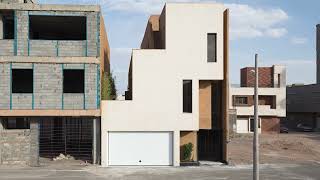
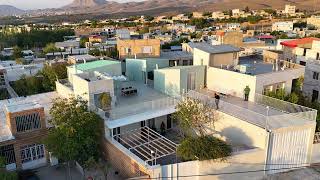
Yes, of course he follows. Shariatzadeh has a serious tendency toward the organic in his architecture. This outlook is clearly visible in the building on Zartosht Street. In this work the architect has brought green space inside the architectural space, and his architectural geometry presents a notable example of organic architecture. In the Yousefabad residential building — his own house — you do not encounter the customary forms of architecture. In the Tandis residential building, again, we see that the architect has designed for each unit a private and uniquely individual green space. In residential architecture in Iran, at such a scale, I have not seen a comparable example. From the Dr. Tabbi residential house — which is among Shariatzadeh's relatively early residential works and bears a degree of resemblance to the architecture of Richard Neutra — to his latest works, this inclination toward organic architecture and, of course, the obligation to observe human scales, are seen with greater intensity and concentration.
Azar 1404 (December 2025)