The staging of the fourth annual meeting of the Iranian Architects Society (13–16 October this year), which met with a warm reception from the architectural community and especially from young architects, is an auspicious event in the field of architecture. The continued holding of these meetings, the growing success in the way they are organized, and the sustained professional activity of the Architects Society — which this year led to the association's membership in the International Union of Architects — all testify that a serious professional architectural body has been founded, whose strength lies in the cooperation and companionship of a large number of architects, of different ages, in its committees and varied activities. The report on the fourth annual meeting of the Iranian Architects Society, which you read below, is good witness to this claim. We wish the members of this society, and especially its founders and board of secretaries, ever-growing success.
The annual meeting of the Iranian Architects Society, titled “Having a Share of the City,” was held at the House of Artists in Iran with the participation of architects and urban planners, on the occasion of World Architecture Day and World Habitat Day.
The International Union of Architects (UIA), founded in 1948 with 27 members and now having more than 100 members, has named the first Monday of October each year World Architecture Day. The UIA titled the theme of World Architecture Day 2005 “Having a Share of the City,” and advised its members to mark the day by holding exhibitions, lectures, debate sessions, and so on.
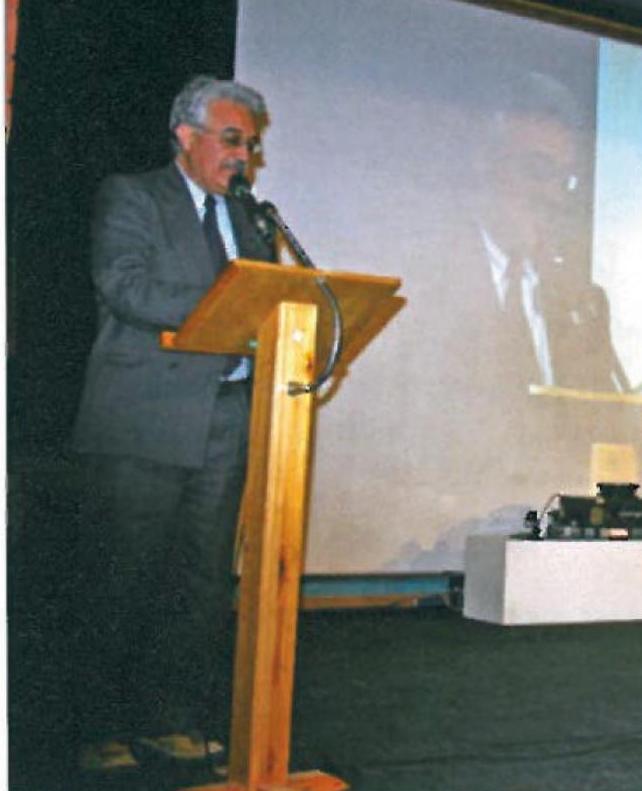
On the first day of the meeting, Kamran Shahinfar, secretary of the Architects Society, read out the society's message. Explaining the UIA's theme for the year, he declared that the Iranian Architects Society responds to the slogan “Having a Share of the City” with the slogans “An architect present in every neighbourhood” and “architecture as a social solution.”
The programme continued with the reading of the UIA president's message for World Architecture Day, after which Mahvash Mehrafshar, the meeting's secretary, presented a report on the 22nd International Congress of the UIA (Istanbul, 2005), and then the Istanbul congress declaration was read out to those present (a summary of this report and declaration was published in Memar no. 32).
On the same day a short film titled “Welcome to Istanbul” was screened, and Sohrab Mashhoudi offered explanations on the theme of having a share of the city; a film of Peter Eisenman's lecture at the congress was then shown.
In his lecture, titled “Architecture Matters,” Eisenman stressed the need for social critique and said: “We need a new idea to connect architecture, society, and politics, and this cannot be done without a simultaneous critique of architecture. If we return to the idea of social critique and architectural critique, we will have the possibility of arriving at a new paradigm.”
After the screening of Eisenman's lecture, a roundtable on his remarks was held with the participation of Mohammad Reza Judat, Ali Akbar Saremi, and Bahram Shirdel. An exhibition and sale of foreign and domestic books and magazines on architecture and art, by the Negareh Soraya company, was a side programme of the first day.
The second day's talks were devoted mainly to describing the activities of the cultural, social, professional, membership, and student associations of the Iranian Architects Society. The Iranian Architects Society began its work in December 1999 (Azar 1378) with the formation of the House of Artists in Iran, as one of the nine artistic groups of the House of Artists' High Council.
The cultural association of the Architects Society, whose activities Hamidreza Naser-Nasir spoke about, is among the oldest associations of the Iranian Architects Society and has been active since the society's founding. It has taken an active part in the society's annual and seasonal meetings. So far three annual meetings and two seasonal meetings have been held, under titles such as “Achievements of the 21st World Congress of Architecture – Berlin, Architecture and the City, Architecture and Society, Pioneering Architecture at the Turn of the Century, ....” Among the cultural association's activities are: a series of sessions introducing and critiquing the architecture of today's Iran, a series of sessions on critique of urban space, publishing the Iranian Architects' Newsletter as the society's first channel of communication with those interested in architecture, forming workshops such as the children's architecture workshops and the Iranian architecture-education workshop, screening specialist architecture films and preparing an architecture film archive, mounting specialist exhibitions during the annual and seasonal meetings, and establishing international contacts and information exchange in the international arena.
The programme continued with Babak Shokoufeh providing information on the activities of the social association of the Iranian Architects Society. The association's main activities so far are: obtaining the licence to publish the quarterly Architects' Newsletter, the official organ of the Iranian Architects Society; holding exhibitions of architects' works; liaison with the press; relations with the international bodies ARCASIA and UIA; preventing the demolition of one of Mahdi Alizadeh's works and having it registered on the national heritage list; efforts to restore the statue in Horr Square; and opposition to the widening of Vali-Asr Street. The most important matter currently on the social association's agenda is a plan to reform building-and-construction regulations and the way land is occupied.
The society's professional association, according to the next speaker, Niloufar-Sadat Tehrani, began its work in November 2004 (Aban 1383). In her words, the grounds for forming this association were the importance of the architectural profession, the many difficulties of this profession before and after the revolution, and the absence of a sound, lawful, and well-defined framework for architecture. So far the association has prepared a preliminary plan for “codifying an architectural system” and begun discussion and debate about it.
The society's student association, whose activities Iman Raeesi spoke about, began its work in autumn 2004 (Paeez 1383), inviting six architecture doctoral students as principal members and five master's and bachelor's architecture students as alternate members. Among its activities are: compiling profiles of Iran's architecture faculties; cooperating with the cultural association in planning and holding the monthly sessions introducing and critiquing the architecture of today's Iran; holding a photography competition and judging under the title “Congress in Frame” at the 22nd UIA Congress; planning and coordinating a panel on the critique of architectural education in Iran; and holding monthly sessions of student critique.
On the second day, the films “Passage to the Congress (Istanbul 2005)” and “The Architect Sinan” were screened, the photo exhibition “Congress in Frame” was held, and the architectural works of Tadao Ando (winner of the UIA gold medal in 2005) were presented by Hanieh Abbaszadeh.
On the third day, Keyvan Khatir spoke about “Architecture in Turkey (1900–2000).” He examined the state of architecture in Turkey during the years of the republic's founding, the transitional period, the war years, the post-war period, and the present day. On the same day, Bijan Shafei spoke about the city of Tehran under the title “Tehran, a Spirited Foundation, an Ailing Countenance,” tracing the historical evolution of Tehran's face from the past to the present.
A report on the activities of specialist architectural associations and press over the past year by Babak Motalleb-Nejad, a report on the specialist earthquake workshop by the Architects' Circle of the University of Tehran, and a report on the activity of the urban-studies group of the Cultural Research Office in connection with the journal Andisheh-ye Iranshahr by Mohammad Reza Haeri were among the other programmes of the third day.
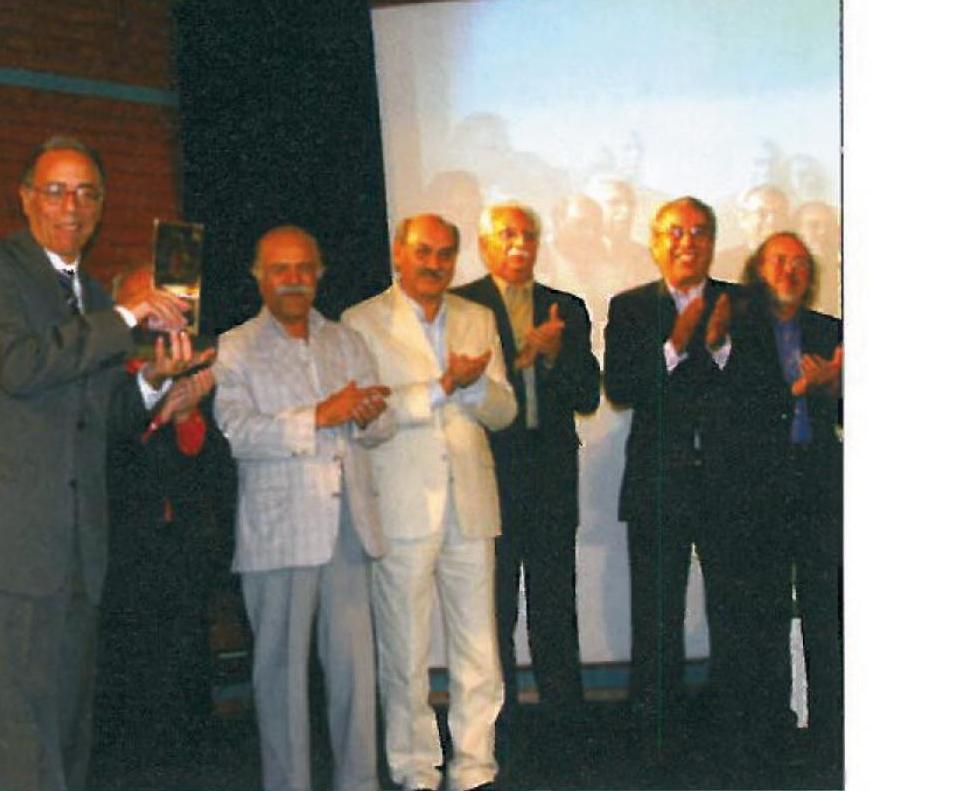
On the fourth day, Victor Daniel first gave an account of the architecture and architects of the era of transformation, and Mohsen Mirdamadi reported on the formation of the High Council of Architecture and its importance and standing. The Iranian Architects Society then named Iraj Kalantari-Taleghani as the laureate of the fourth annual meeting of Iranian architects and honoured his efforts in the field of architecture. On the same day, an exhibition of Kalantari's architectural works was held. A graduate in architecture from the University of Tehran and founder and chairman of the board of Bavand Consulting Engineers, Iraj Kalantari has more than 32 years of experience as a consulting engineer.