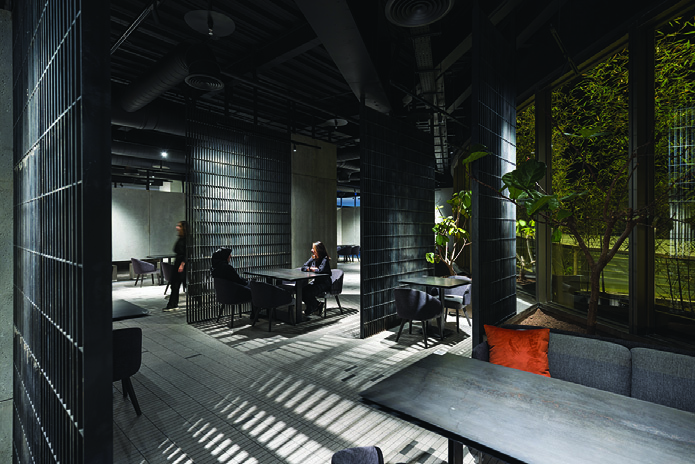

Shirdel never talks of aesthetics. He puts forward organisation. This covers the two concepts of space and place. The first is invention and the second is discovery. Space is not merely volume. The mechanism of its discovery, the position of man in space, dimensions and other qualitative parameters play the main role. Place is considered at two levels. The first level is macro and is related to the urban scale. In his recent projects Shirdel is particularly concerned about the discovery of the settling principles and the correspondence of the project with the hidden but important characteristics of the building site. At the micro level, place means giving priority to the development of the potentialities of the appropriation and the definition of space instead of trying to assign and impose function.
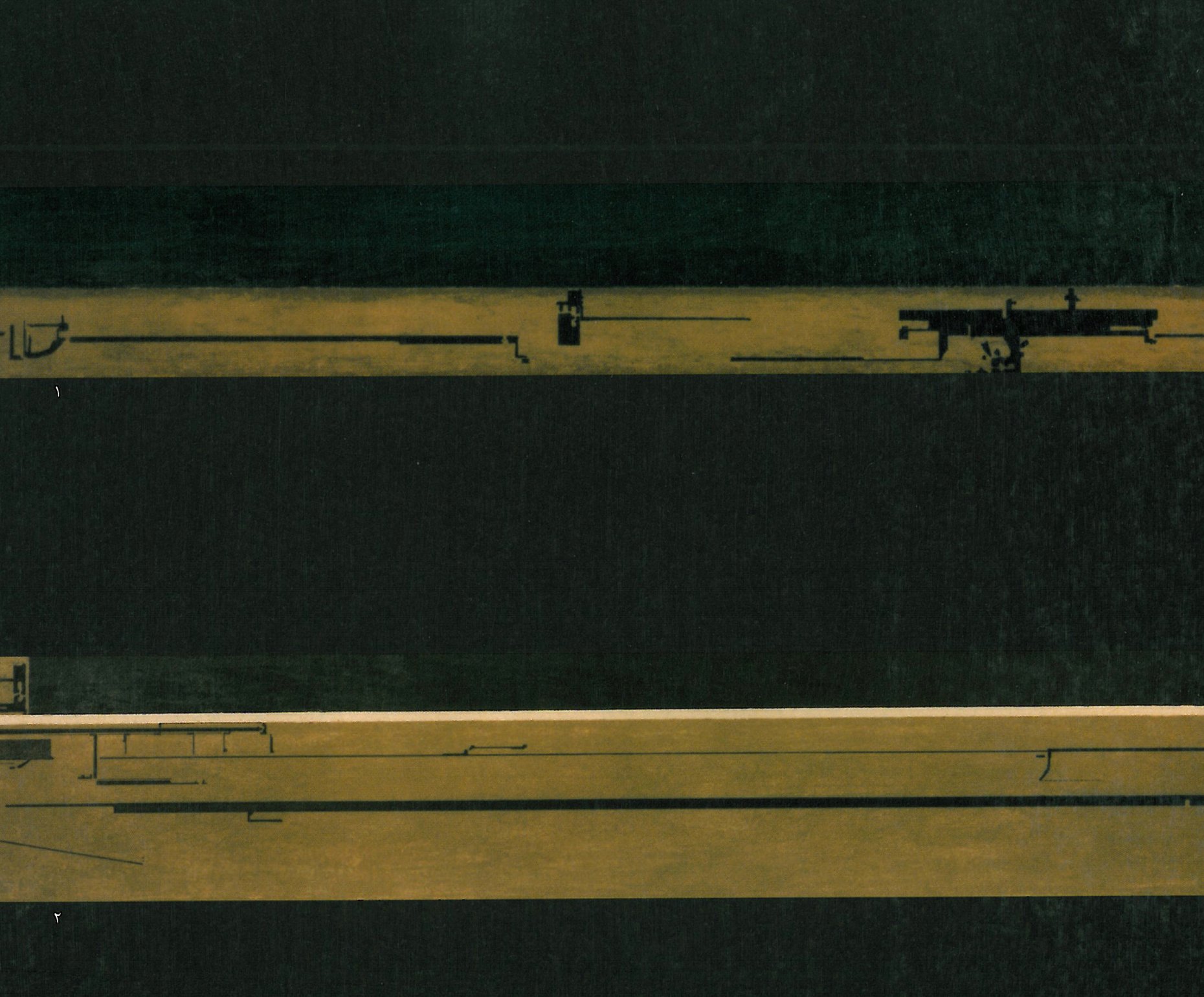

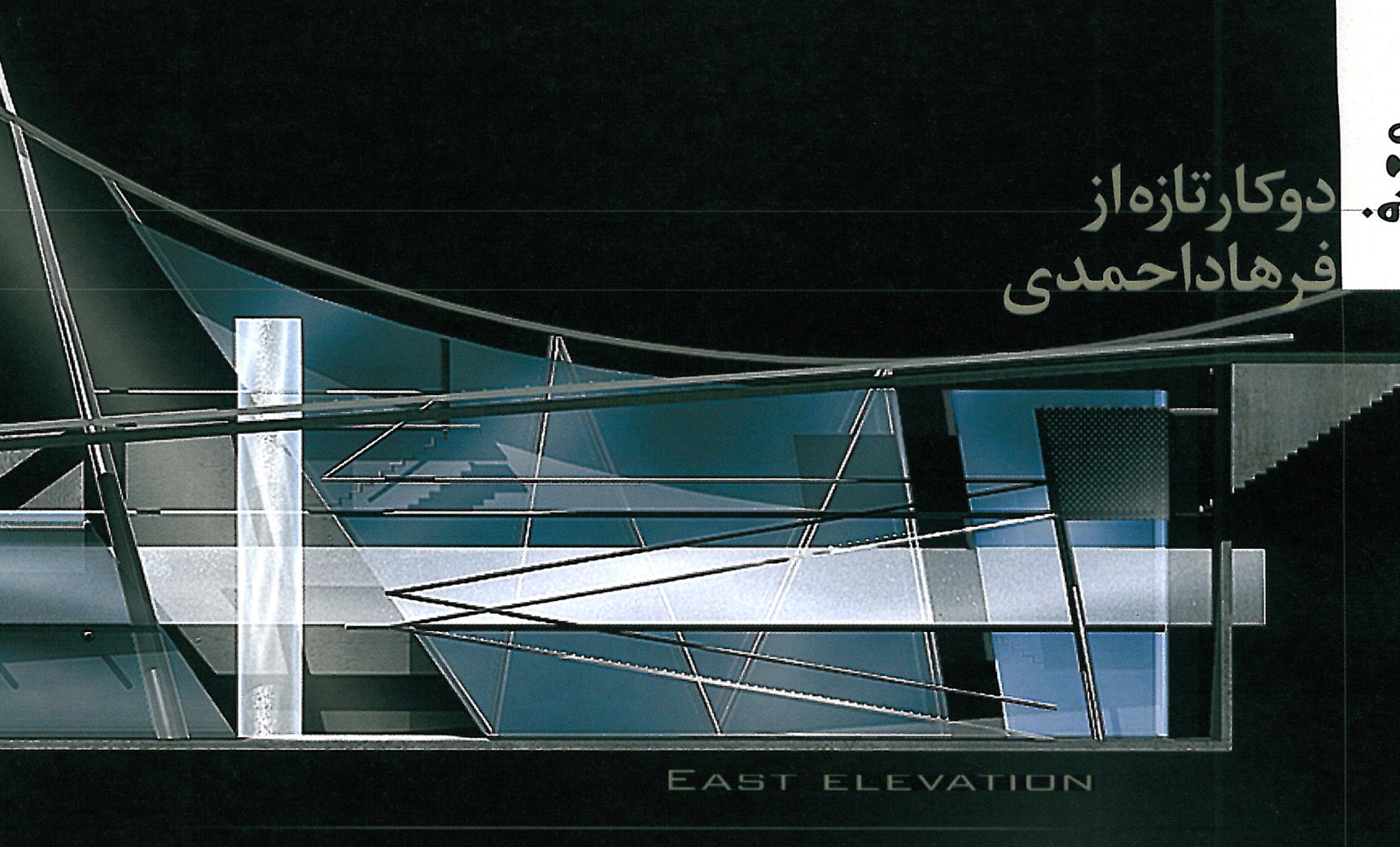
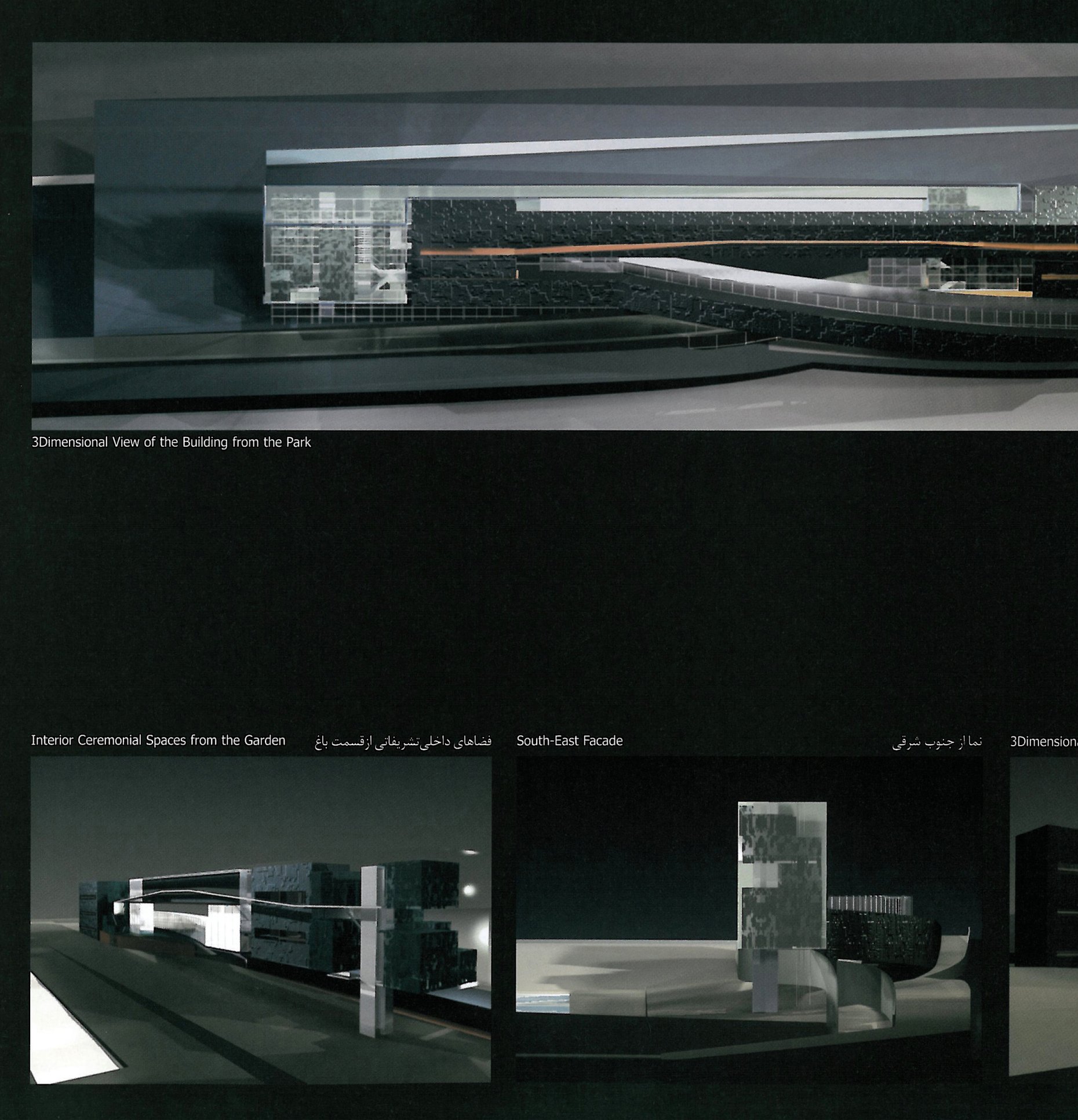
The project is located in a lot of 25 000 square metres. The lot is the beginning of a city block which is adjacent to a park. The Iranian embassy is situated between the park and other buildings. In an area dedicated to foreign representations, the goal is to find a method of organisation which gives meaning to the whole block and thus claims the value of the landscape of a city block — which contains several representations — and also the park for its own. For this aim to realise, the building should dominate the surrounding area and it should resemble a mansion in a Persian garden. In this regard it is as if the park and the grounds have been created to give value to the building of the Iranian embassy.
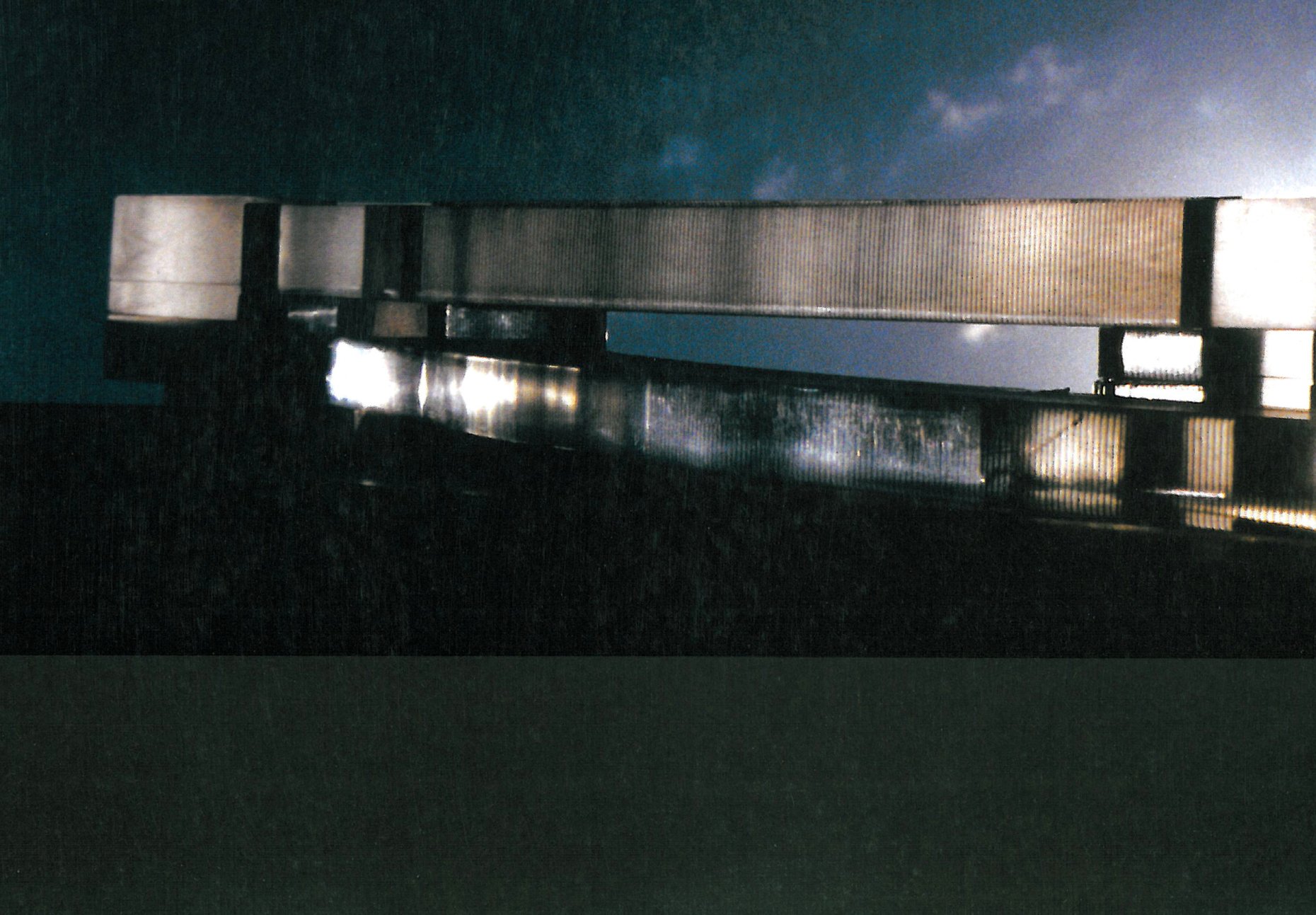
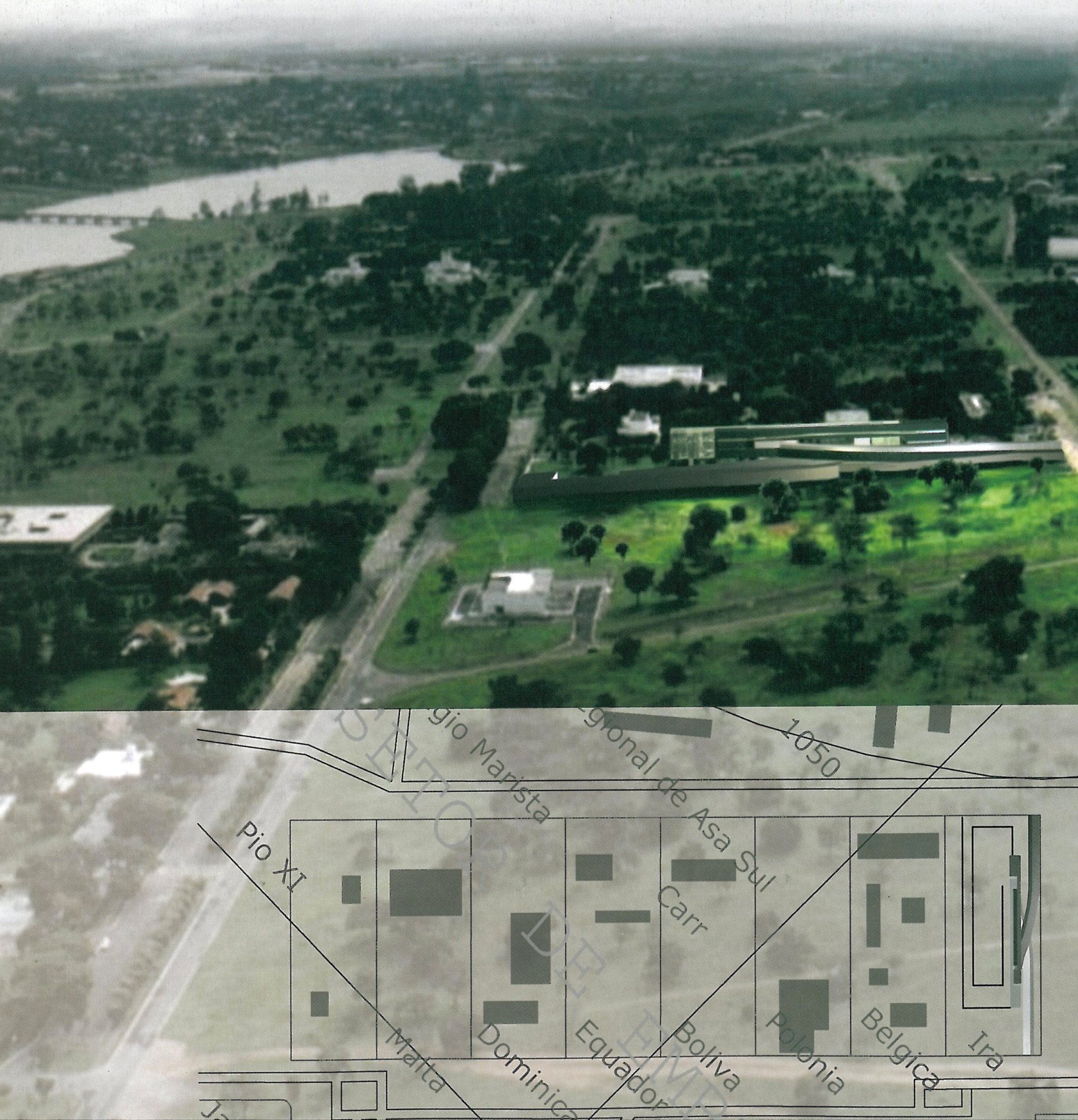
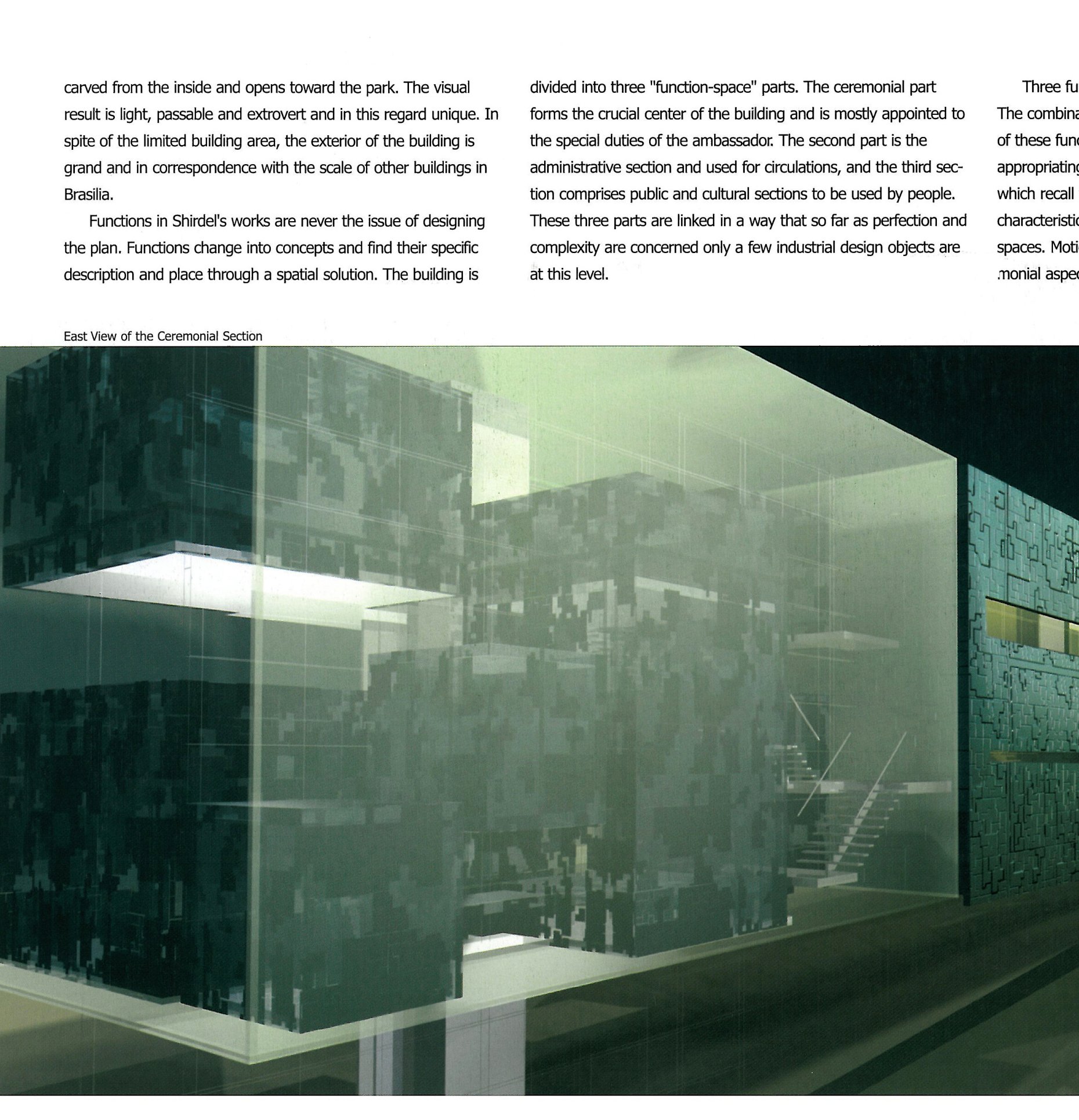
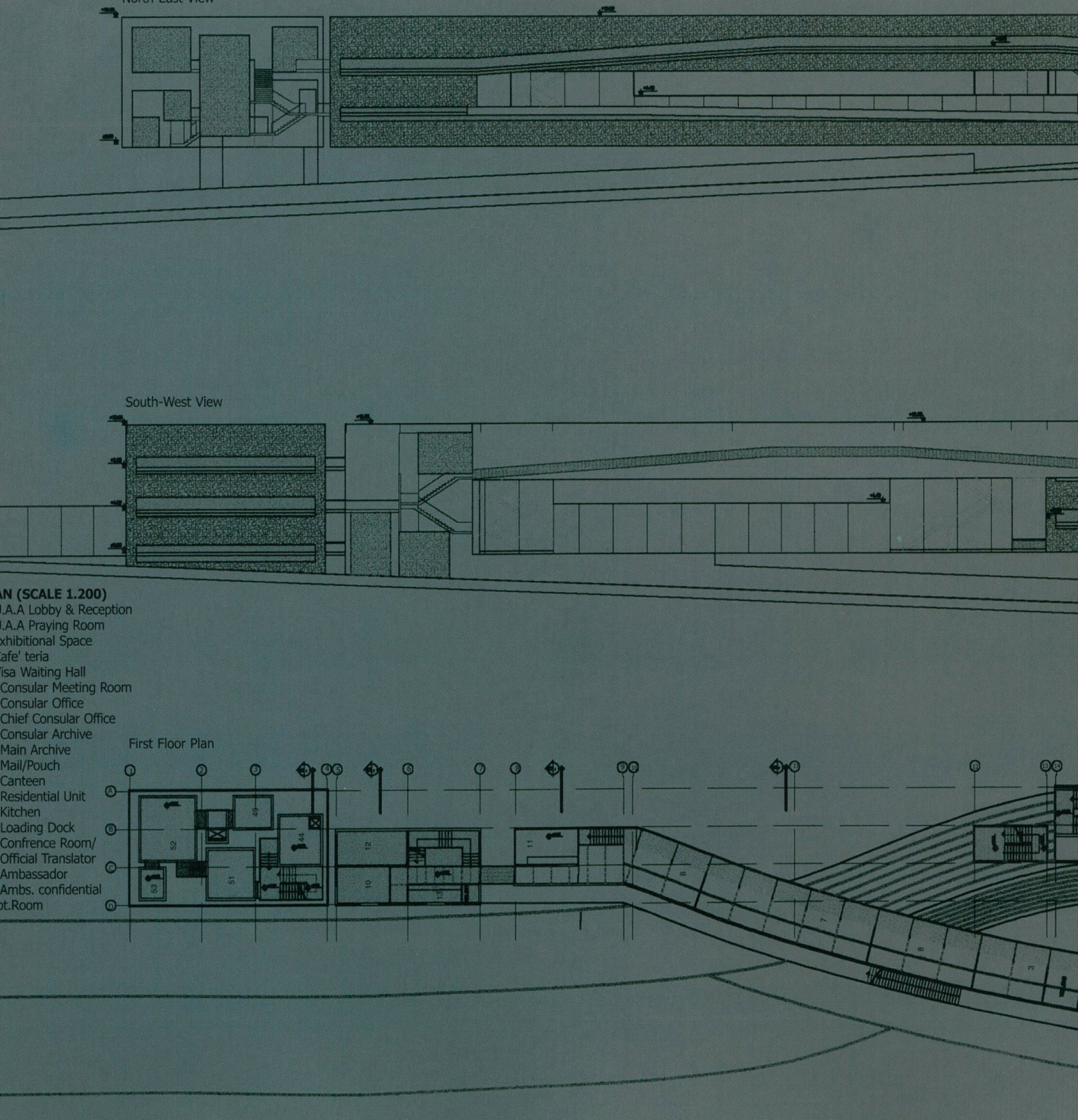
Important projects are those that revolutionise the concept of place. The place of the embassy in this work has been changed. Usually embassies are isolated buildings surrounded by high walls and have no contact with the environment around them. Here, walls have been disappeared. The building is its own surrounding wall. Paths and circulations are organised carefully, and there is no need for a surrounding wall in its familiar sense. Unlike the usual typology, the building is not by the main street and in the middle of the lot. The designer has chosen the side adjacent to the park. The embassy building, in a linear form and perpendicular to the street, as an important landmark, defines the beginning and the end of the block.
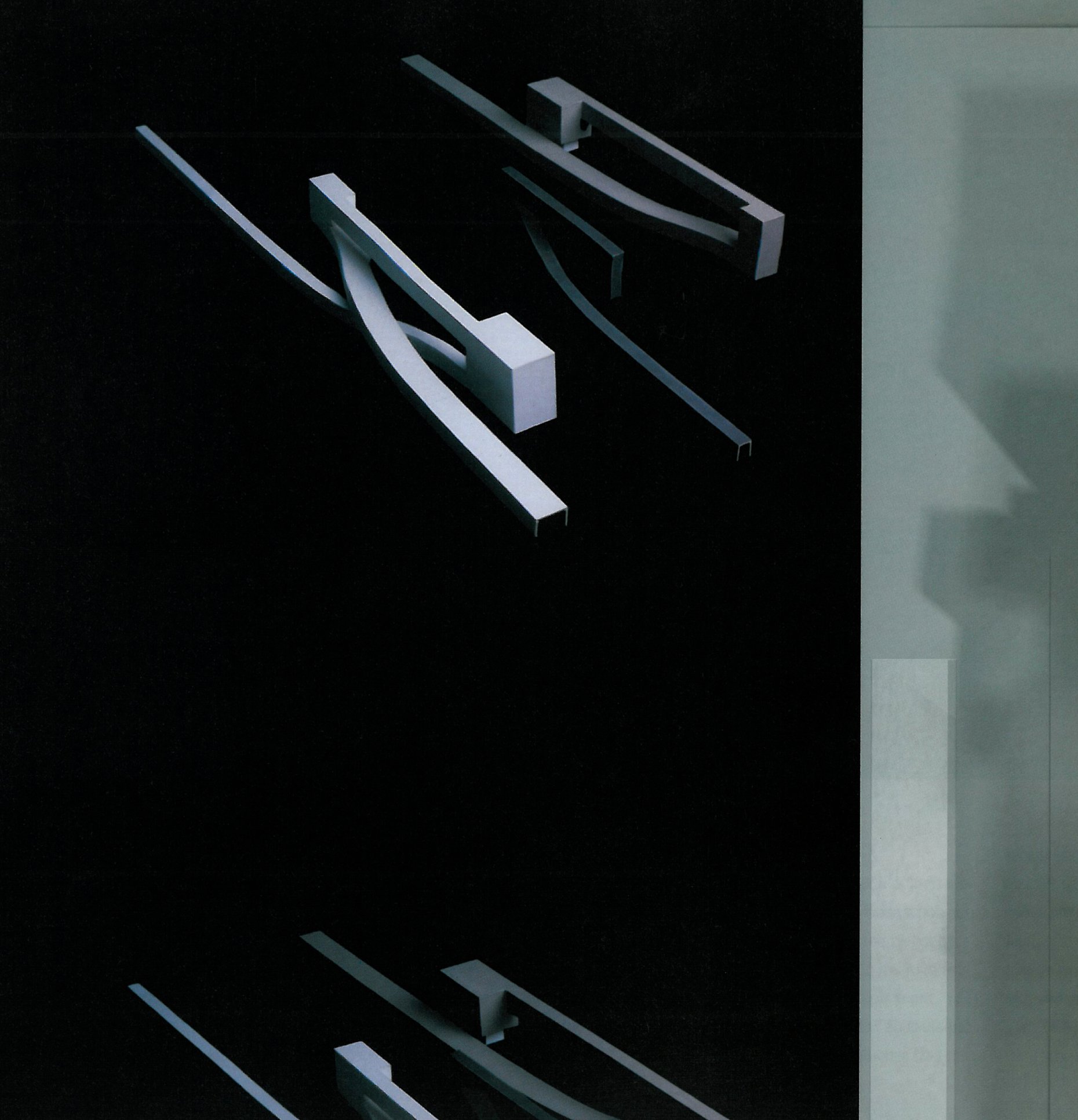
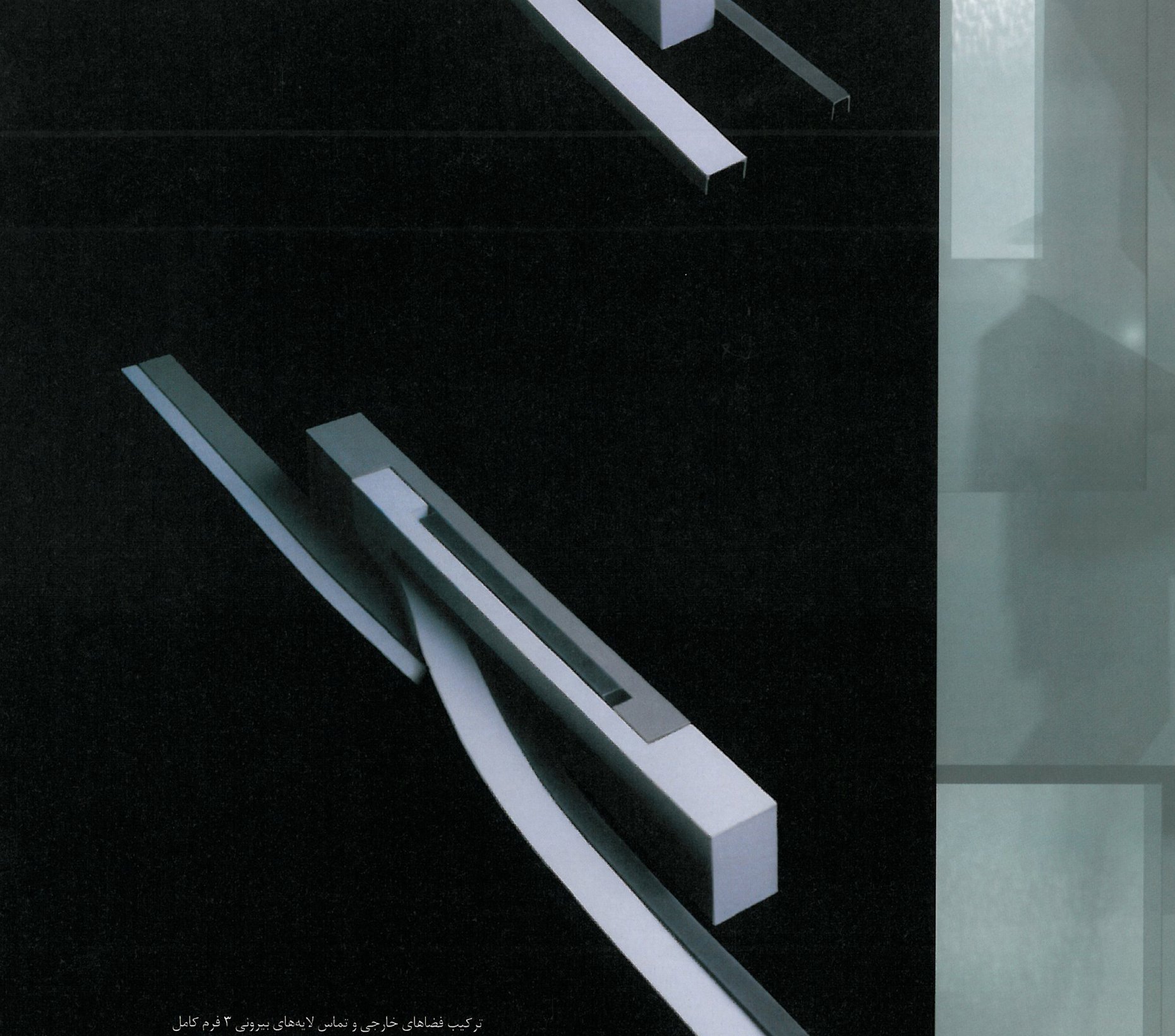
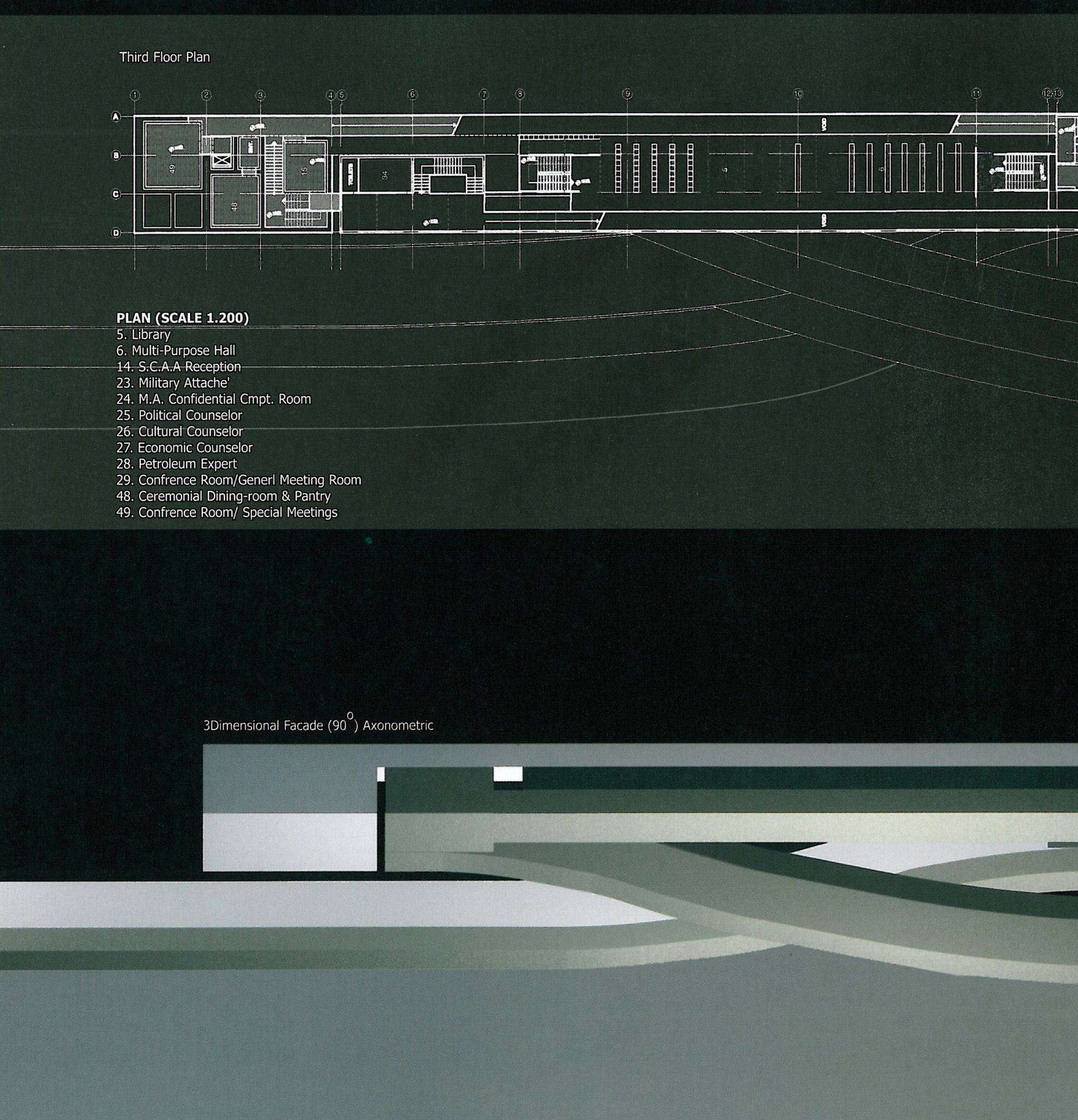
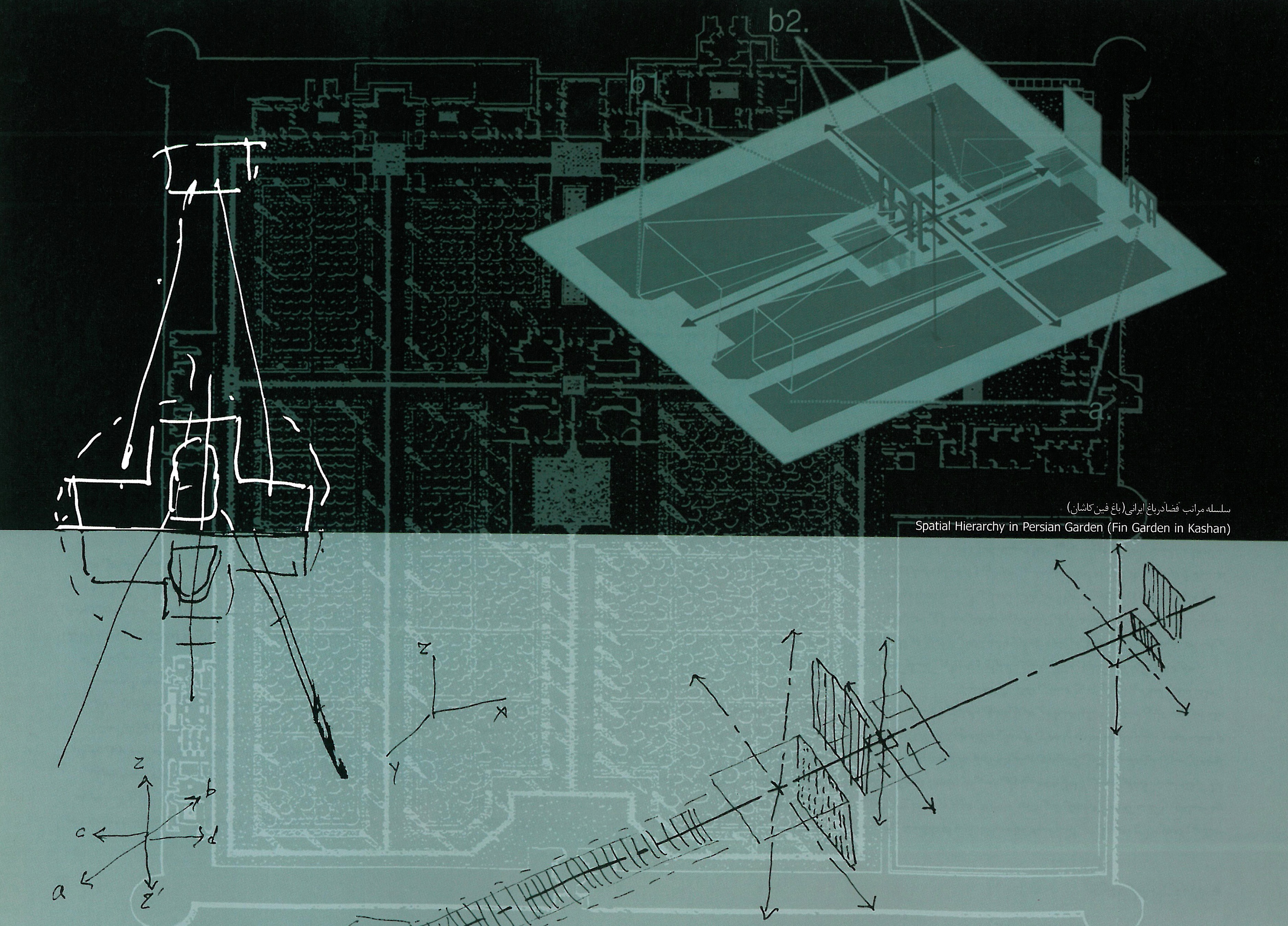
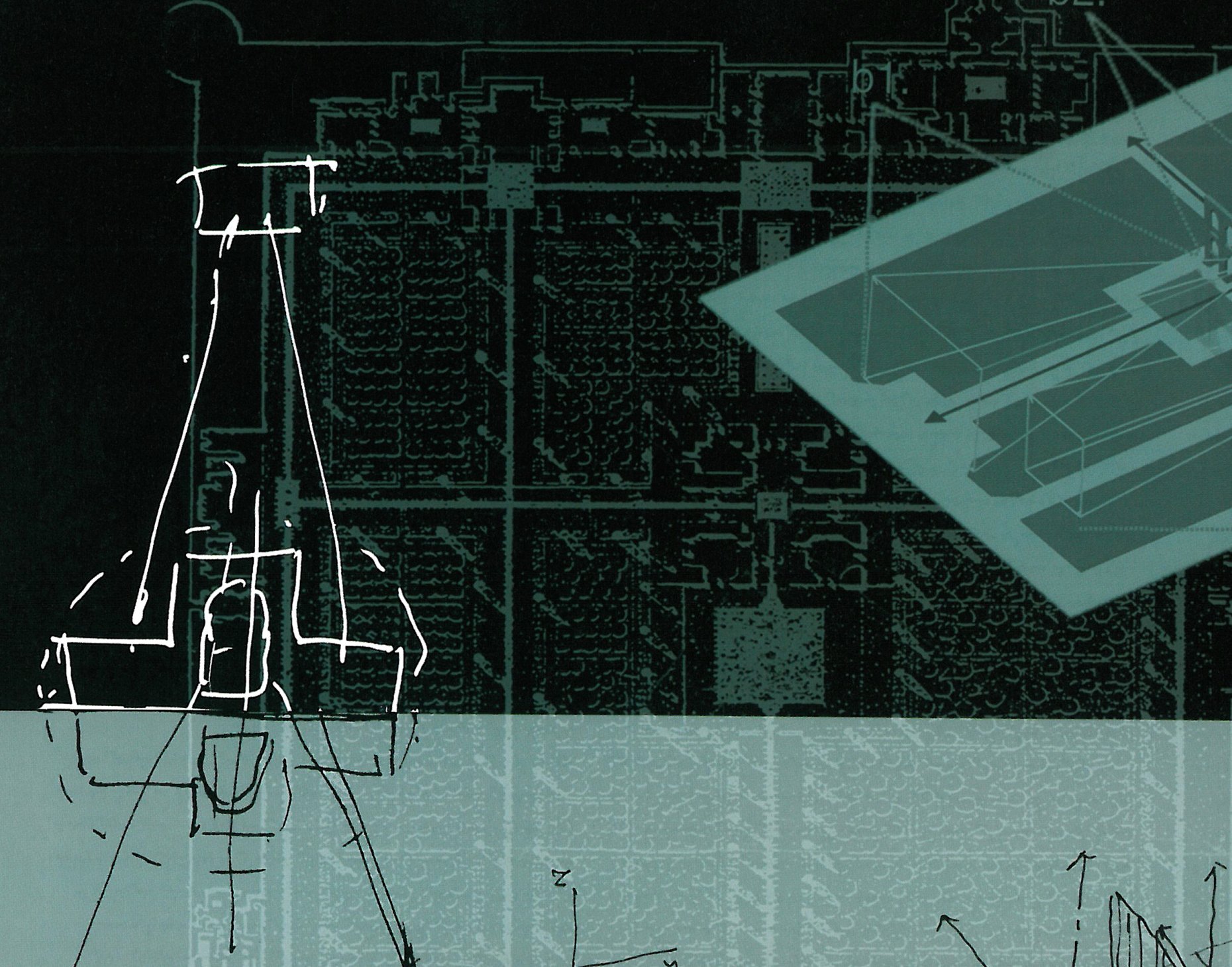
Iranian architecture is history. It is difficult to establish a relationship between Iranian architecture and a city with no history. Brasilia is by nature non-historical. It has been born out of a project and not out of layers of historical events. The trend cannot be found, so it must be created. The key to the problem is the Persian garden. Landscape is the common feature and the linking factor between the Persian garden and Brasilia. Common principles are axis, perspective, geometrical organisation, focal points, monumentalism and horizon. A systematic study of the garden starts. The relationship between the spatial organisation of the garden and the buildings is subjected to analytical research. Urban studies and surveying the site and its potentialities are carried out simultaneously.
Right paths, though not many may tread them, generally meet at a common point. Local surveys and analyses regarding the Persian garden end in drawing up specific and singular rules. Shirdel is among the few architects whose work has the capacity of turning into instructions. Issues are presented and resolved step by step. The procedure is systematic and orderly.
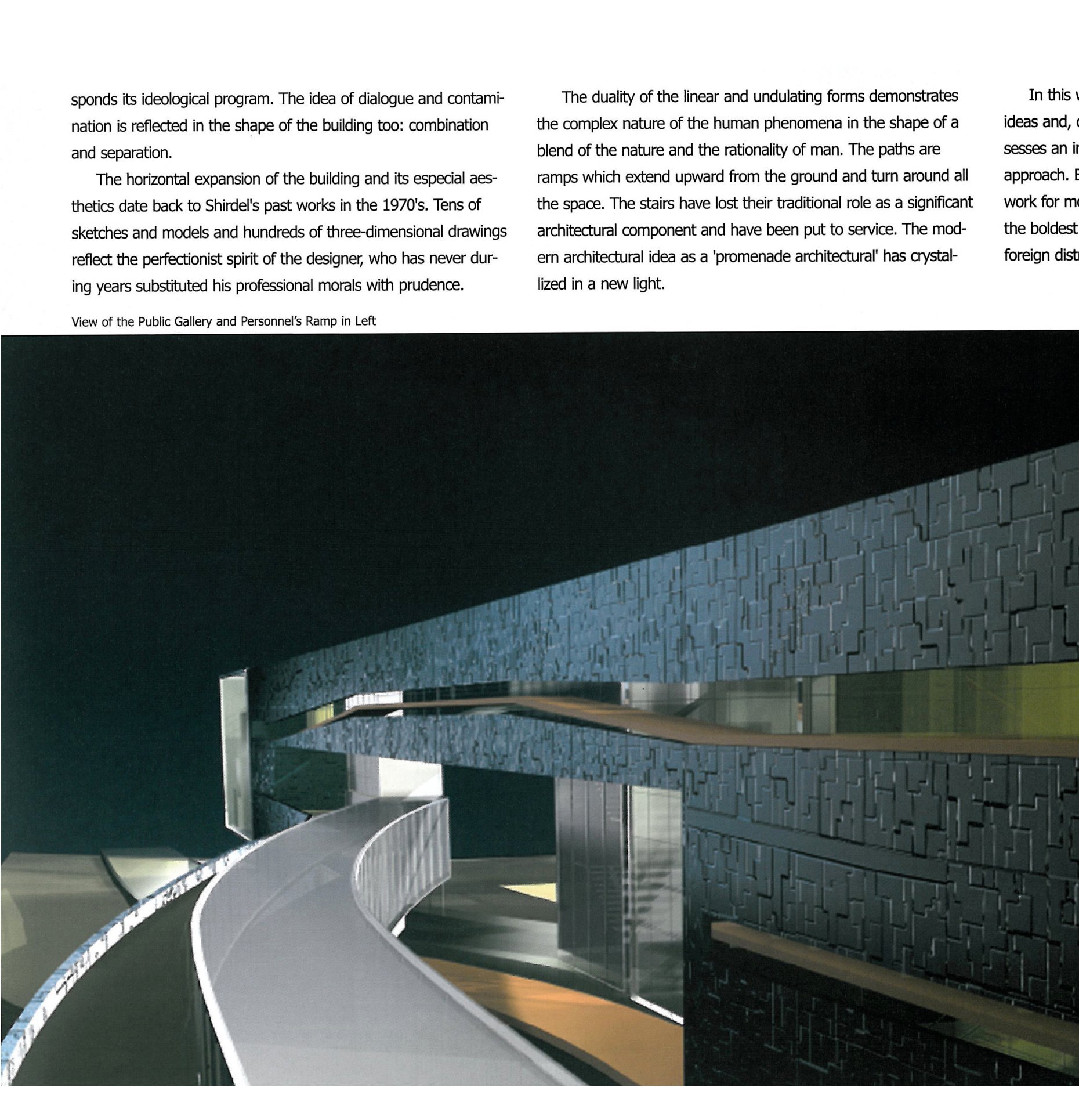
All know that architecture is an art and thus entails innovation. Every issue has an extraordinary essence and an ordinary appearance. The responsibility of the architect is to find that essence and to develop those areas which, in addition to fulfilling a practical and specific purpose, cause the progress of the general culture of architecture. On the other hand, we also know that innovation is based on previous knowledge and therefore related to memories and "pre-existing phenomena." In designing, data becomes the subject of research, not used as quotations. Artistic research means discovering unknown or unused potentialities of phenomena and applying them in a different way and in correspondence with organisation and a completely new and specific concept.
In the embassy project, being neighbours with the works of great architects such as Hans Scharoun, Pier Luigi Nervi and Fumihiko Maki makes comparison and also dialogue inevitable. To be the representative of one's national culture — not for show but seriously — seems essential for a country whose main global aspect is its being autochthonous.
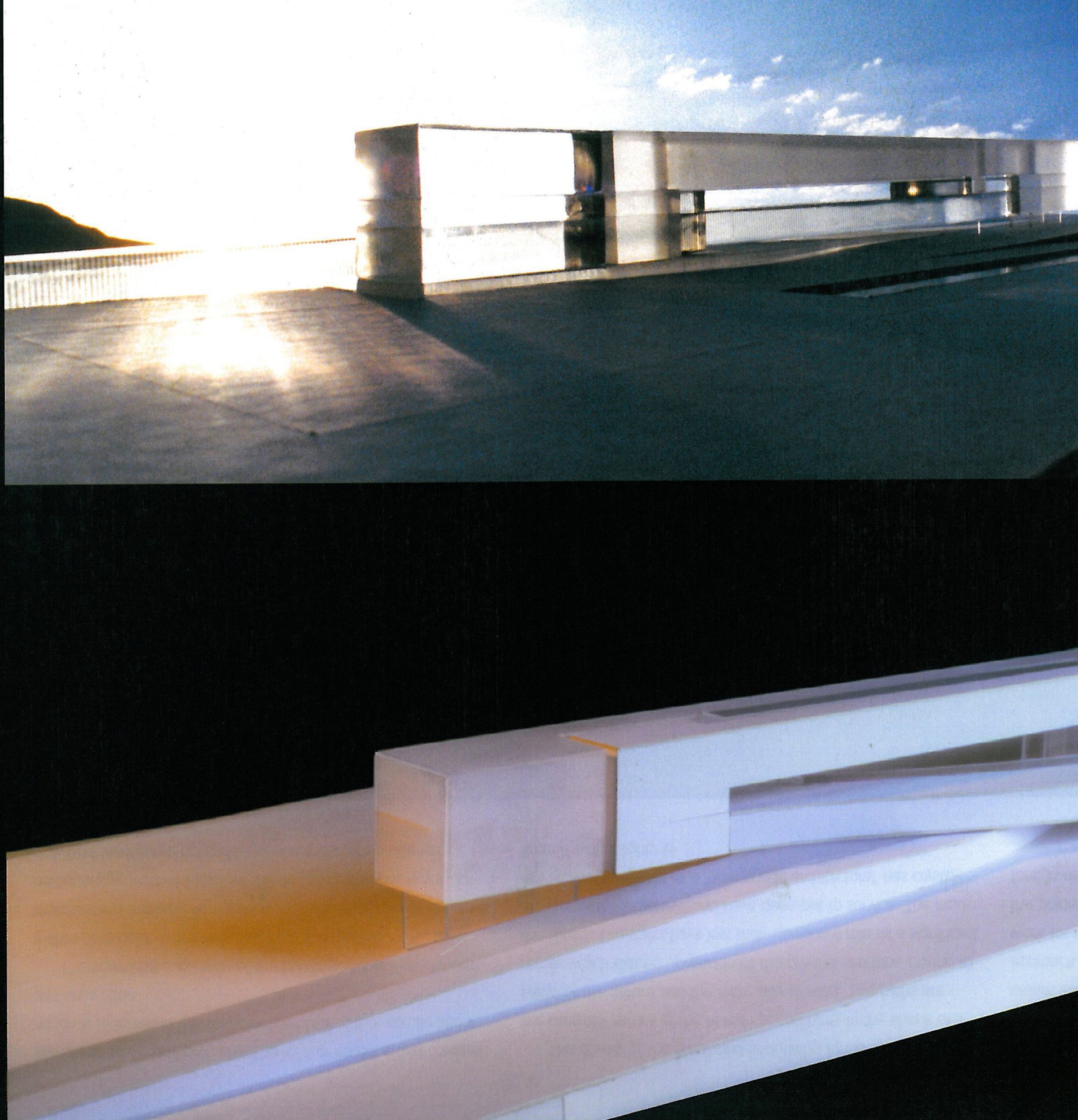
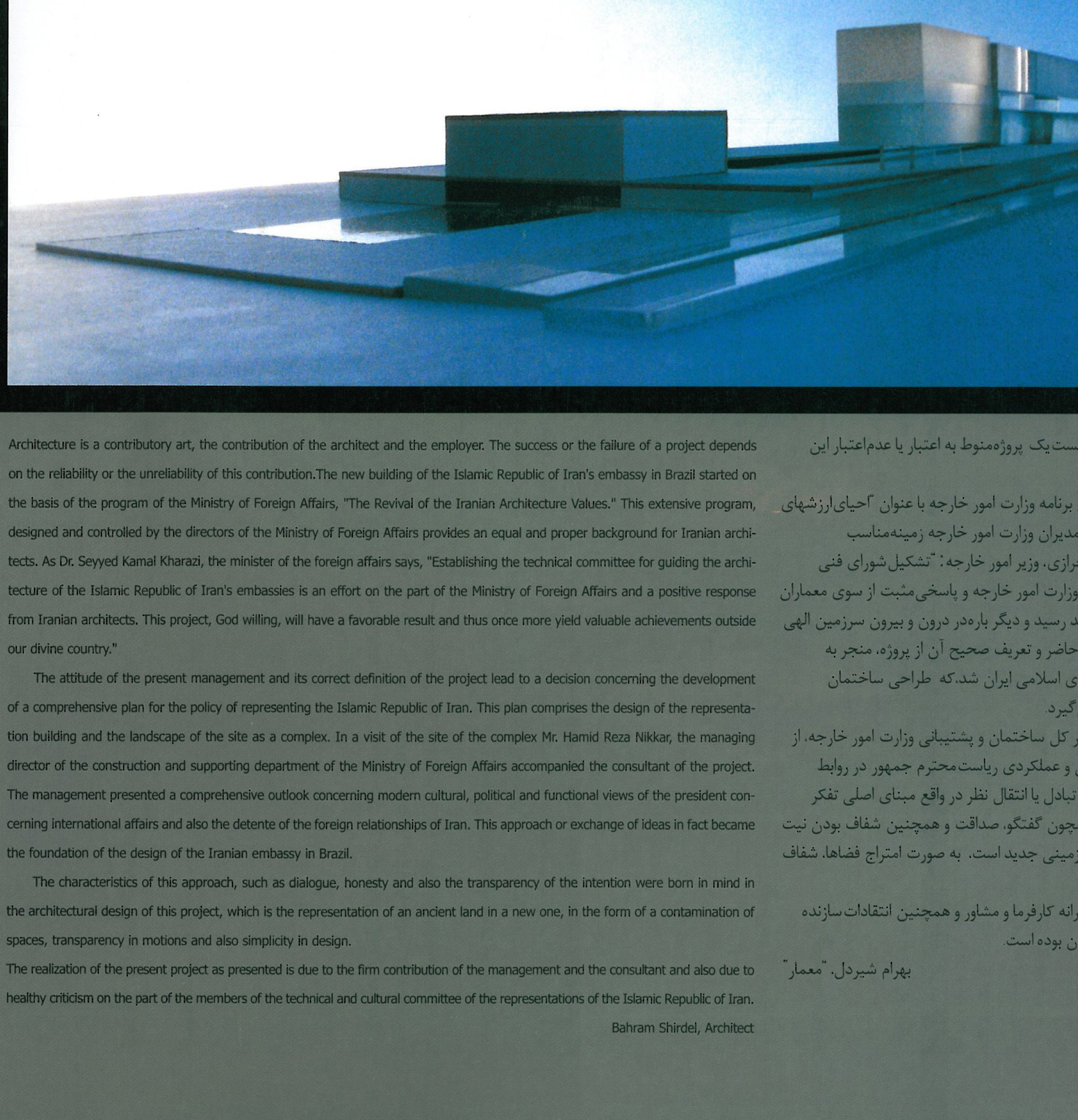
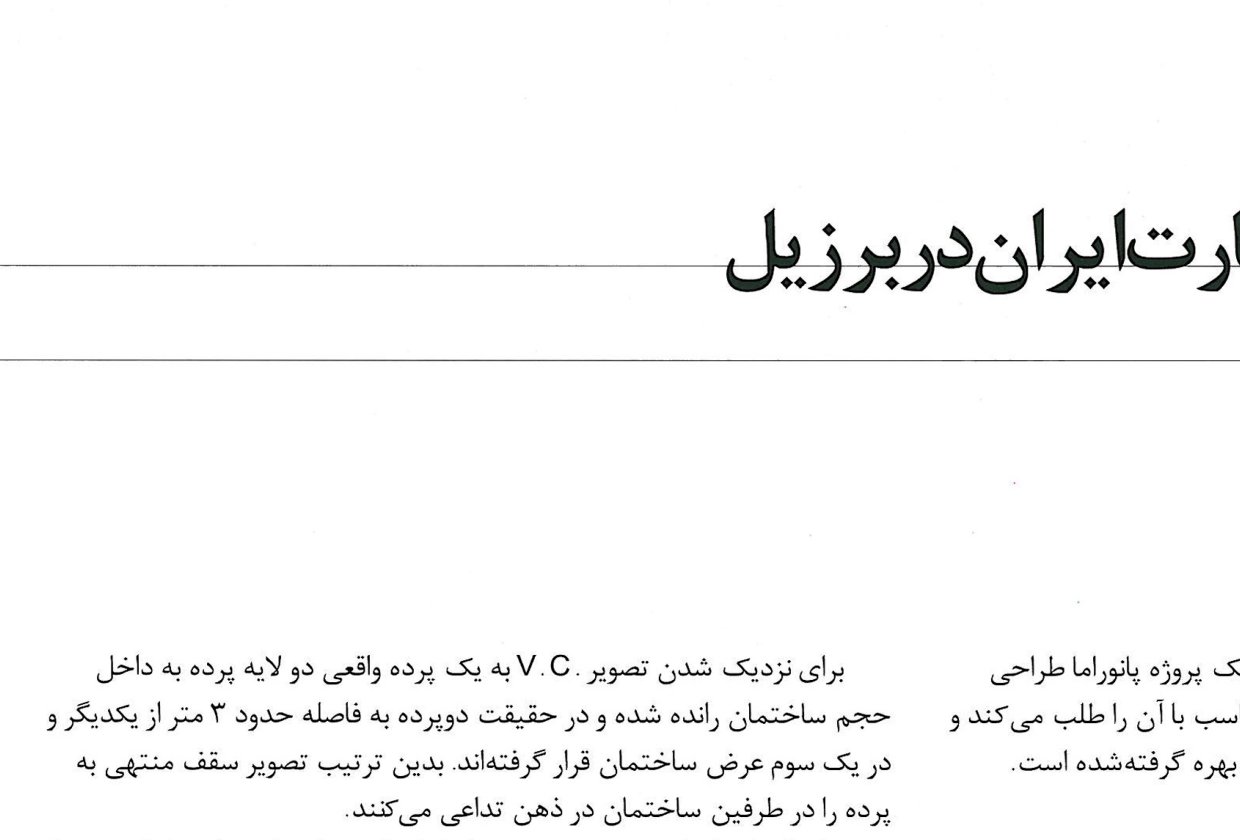
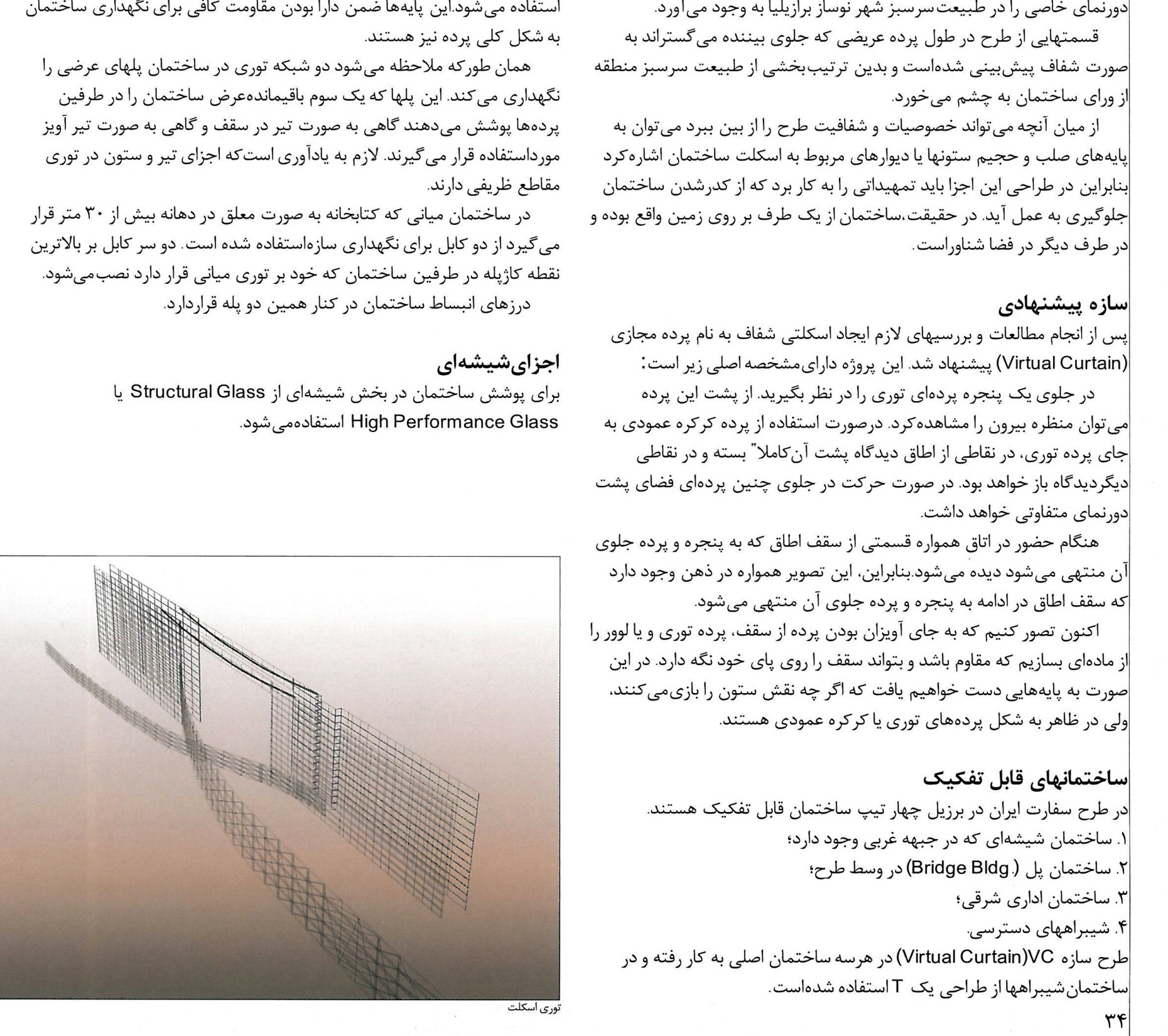
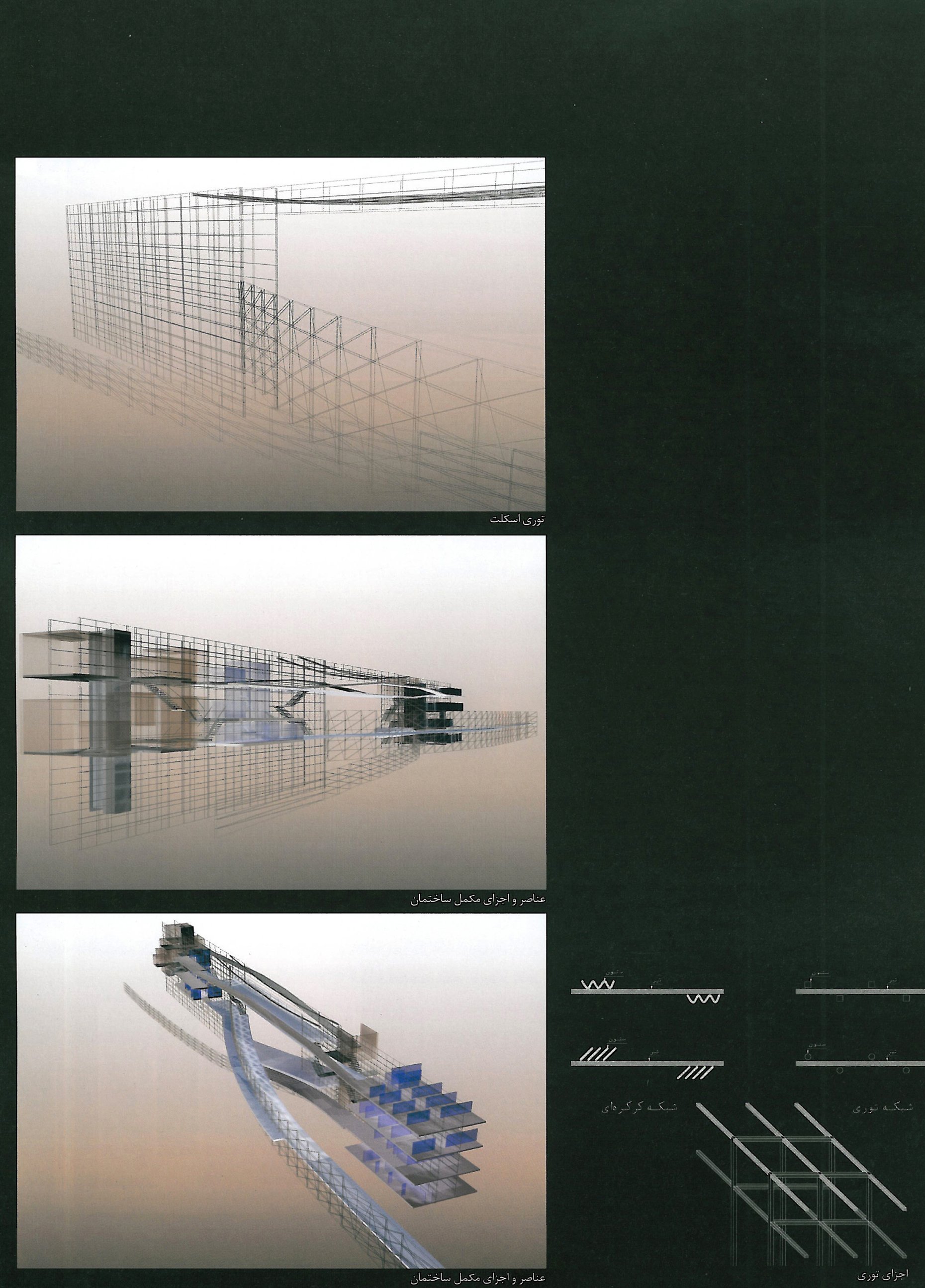
The design of the Iran Embassy in Brazil — presented as a base project by the Building & Support Office of the Ministry of Foreign Affairs — is worth attention because, in addition to the unique architectural aspects, it brings together a combination of reinforced-concrete structure, structural steel, and structural glass. The architectural and the structural aim alike was a project which, at the smallest possible height, would place the tallest visual horizon at the user's disposal. That requirement called for particular structural systems.
The most important feature of the structure is the construction of the long cantilevers on the façade and the flanks. These cantilevers, with a metal skin and careful joint-sealing, have made possible interior spaces with minimal vertical columns. On the other hand, the main façade is built with a "Virtual Curtain" glass wall — a system in which the glass sheets are fixed to the main structure from behind by steel ties and, from the front, no alien element is visible.