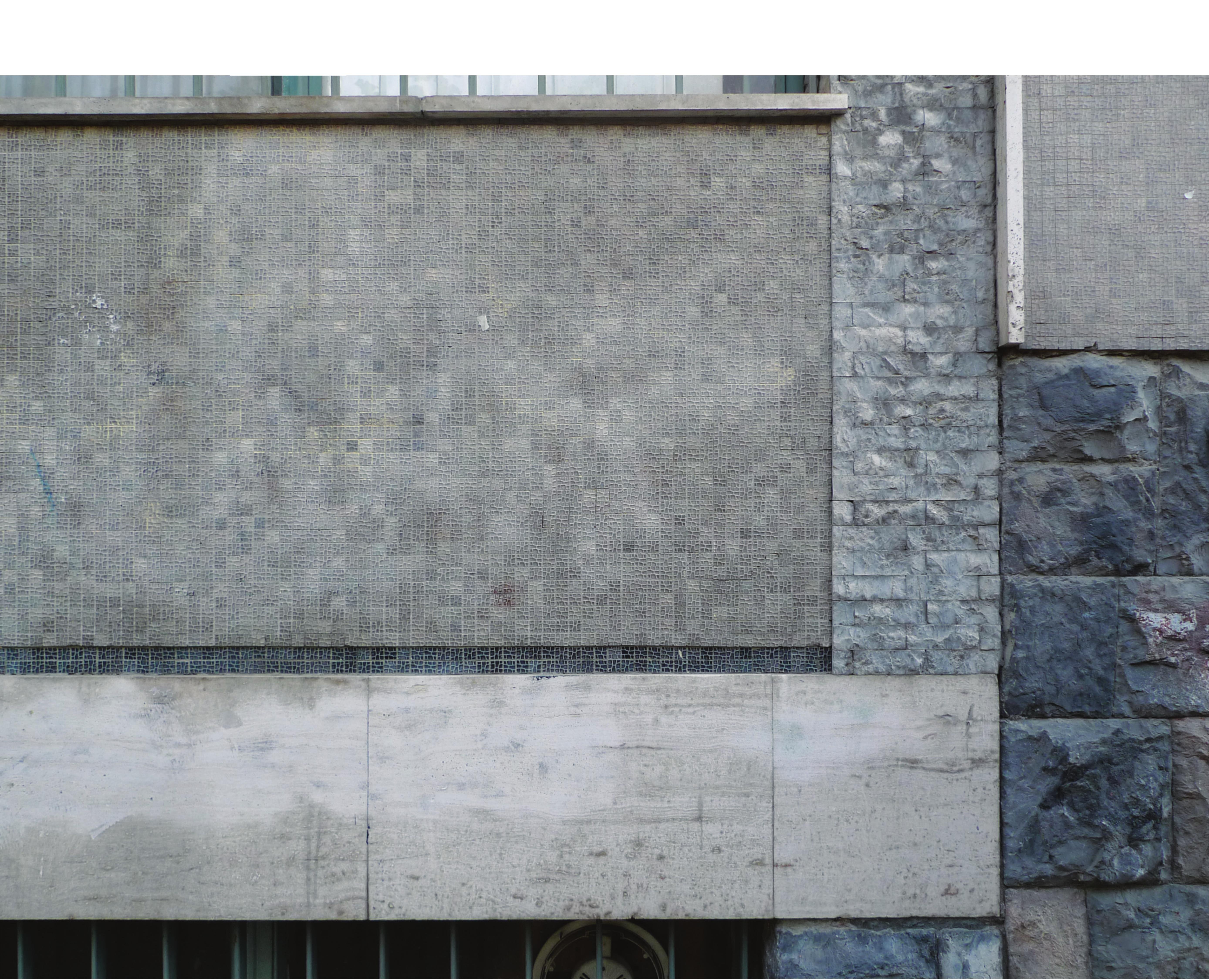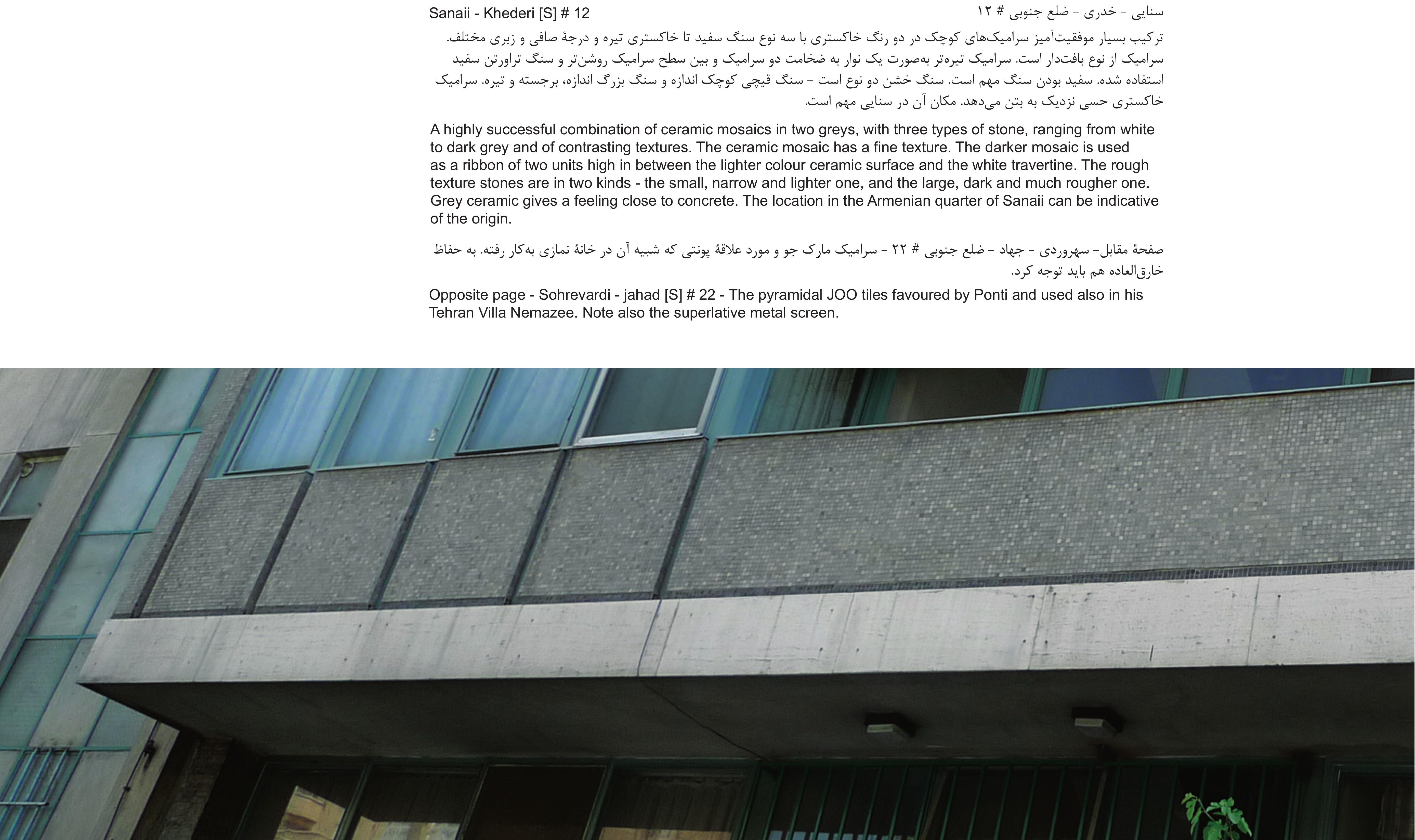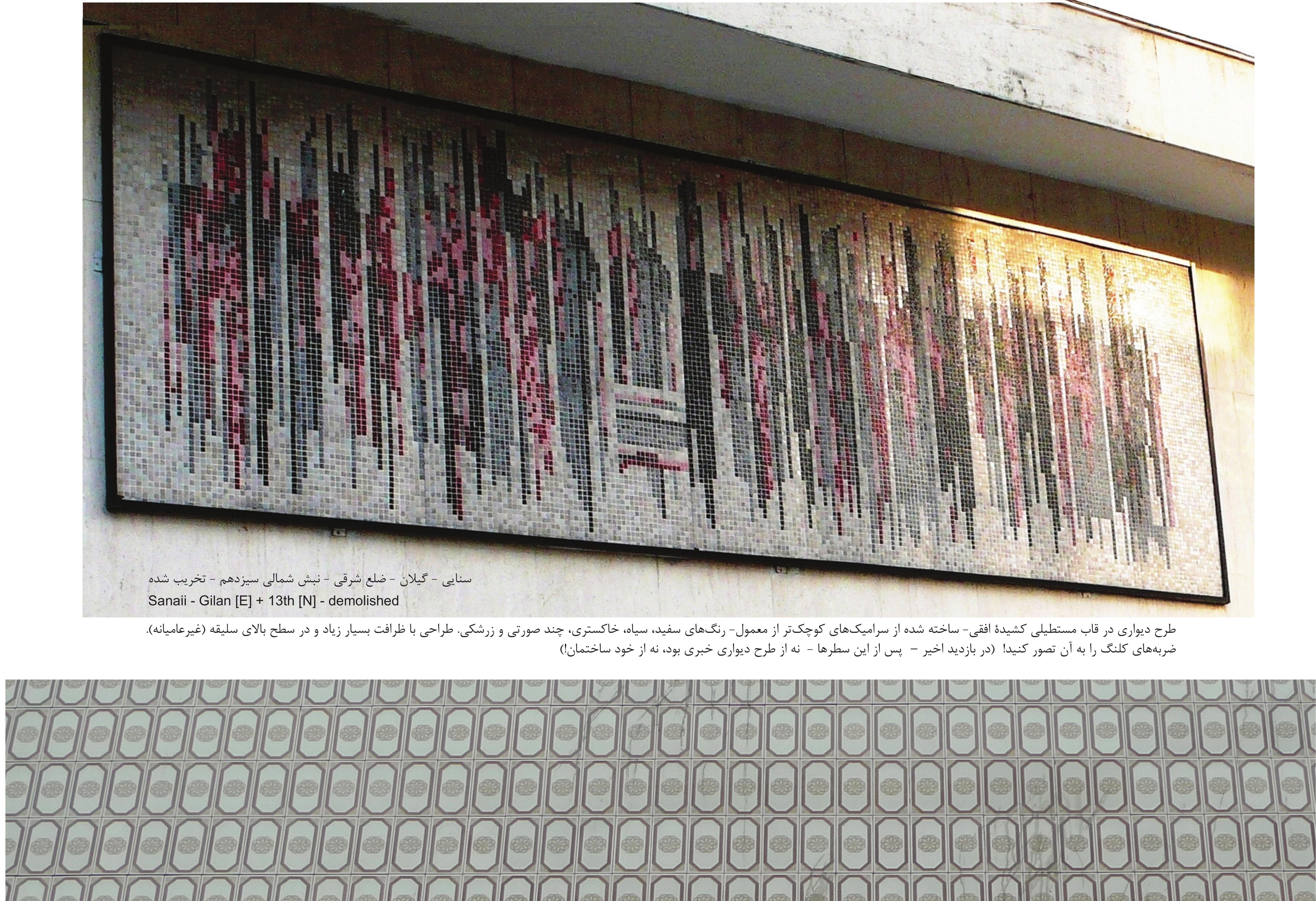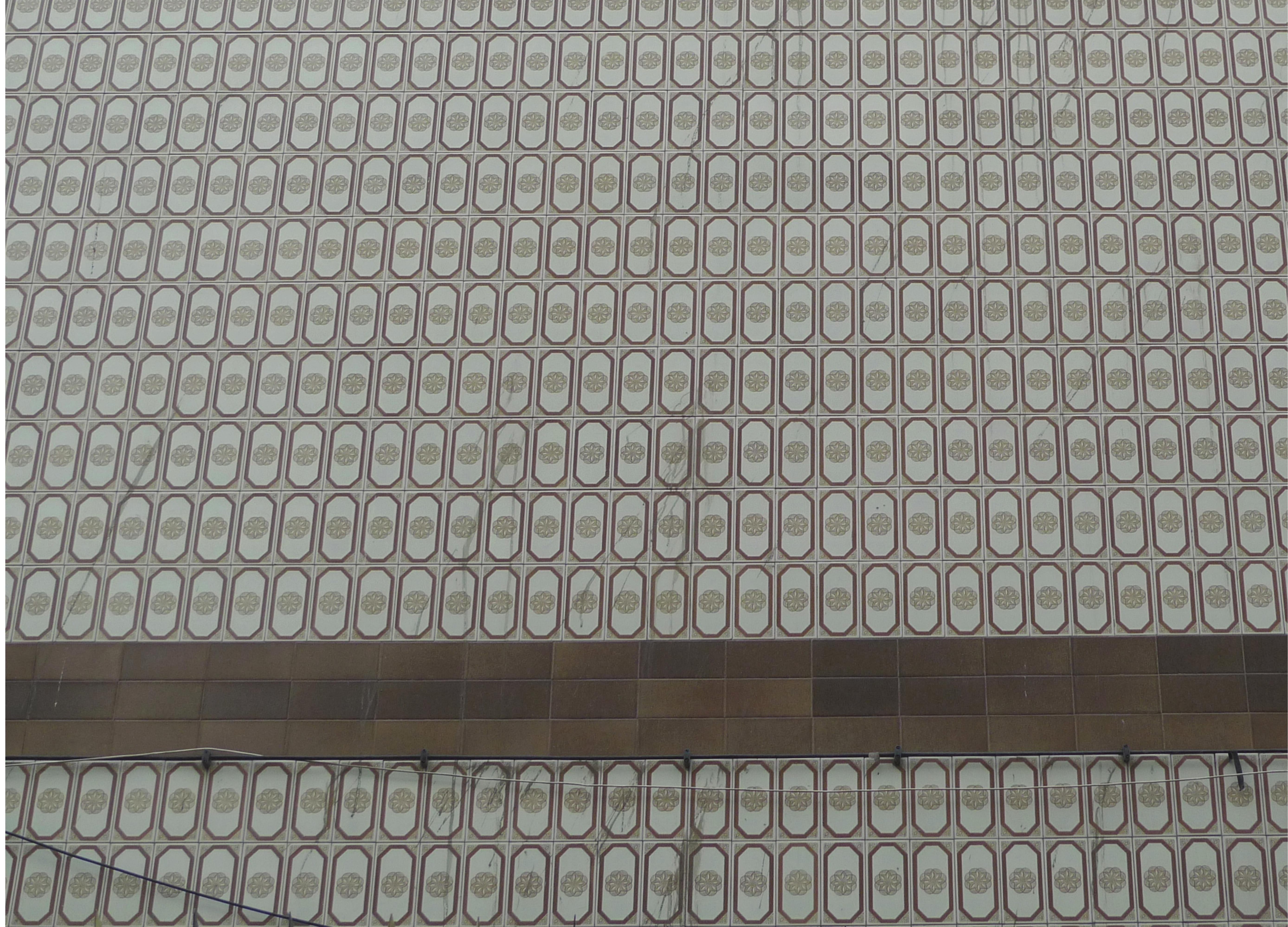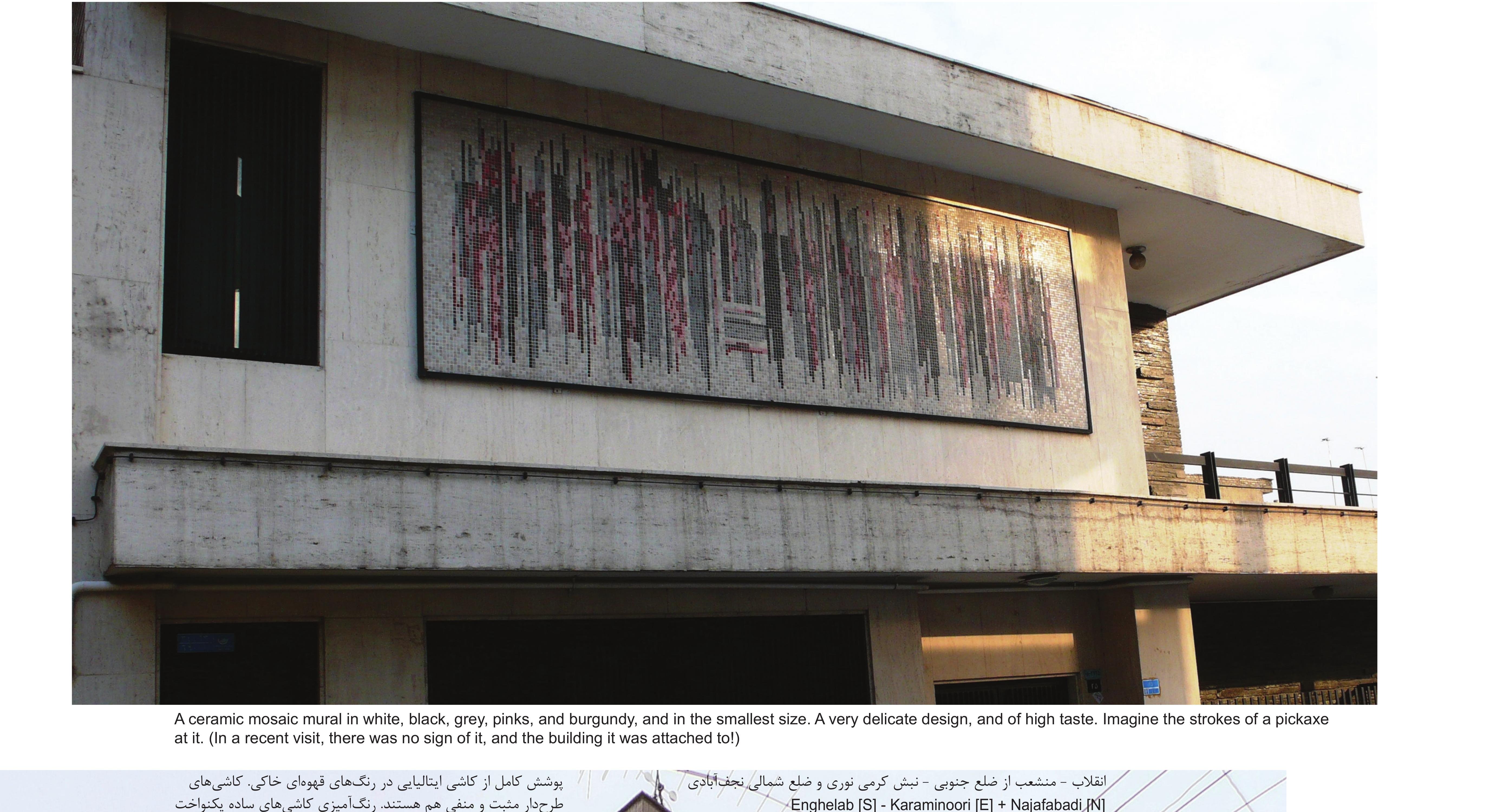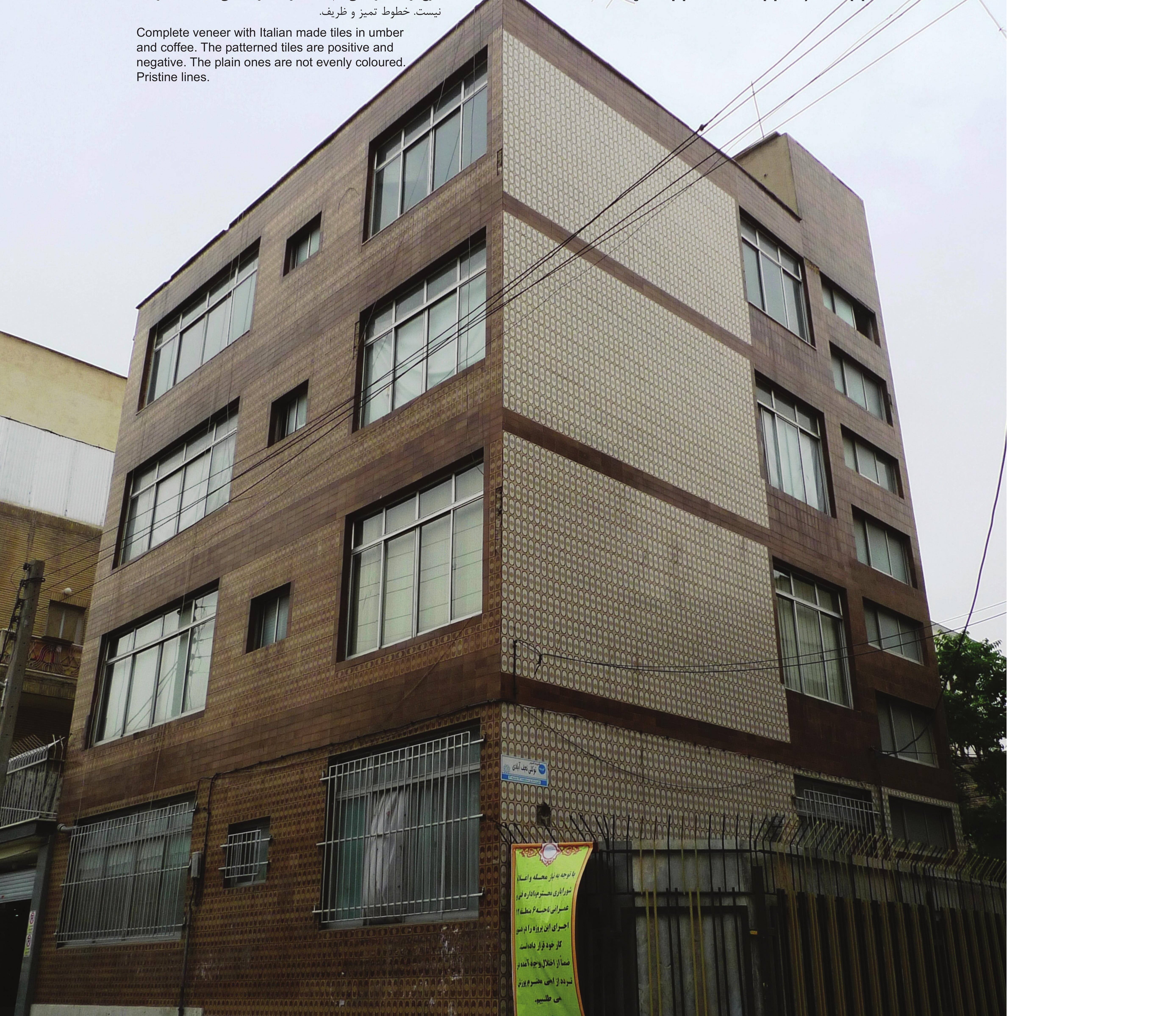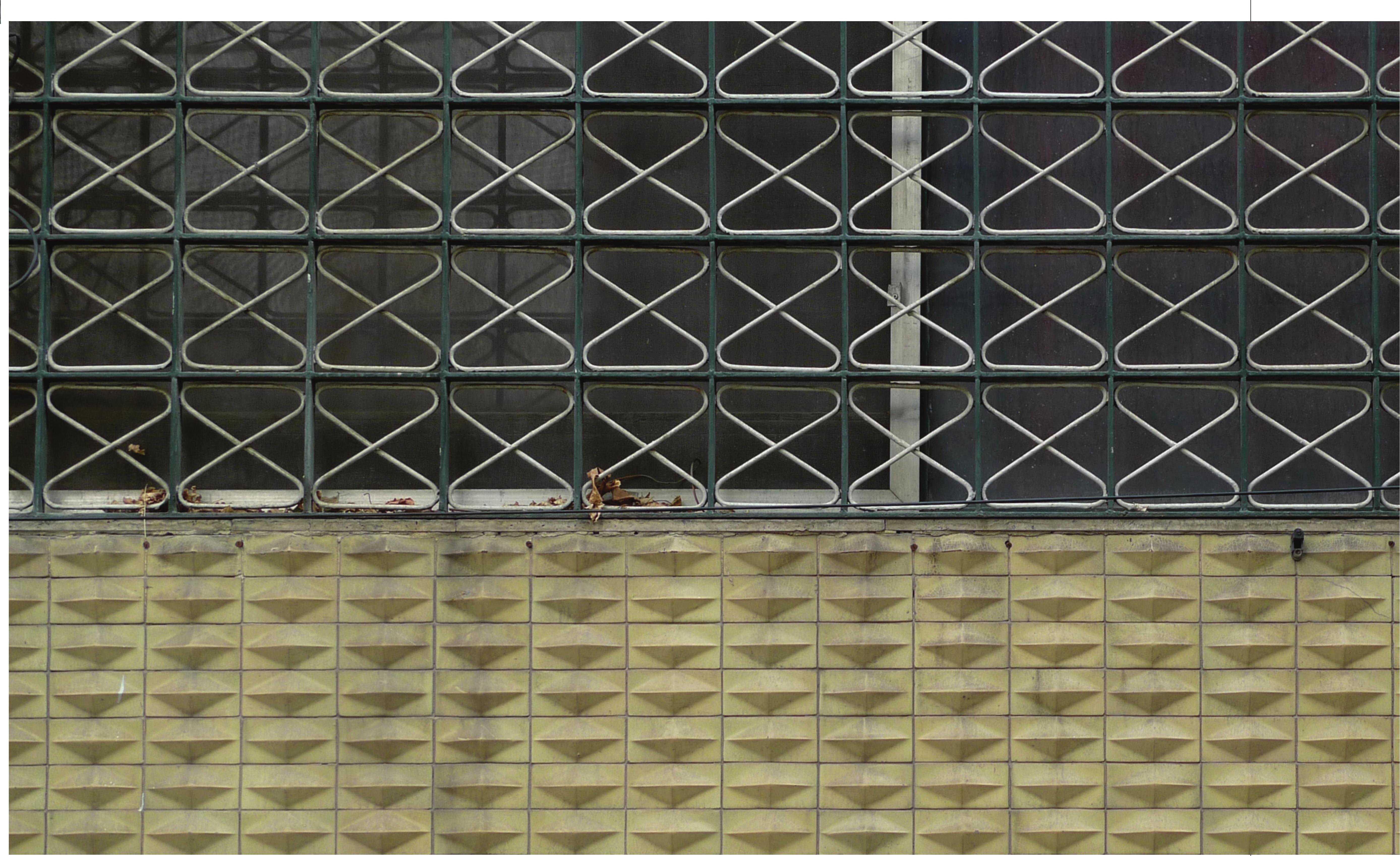
Ceramic variations were a particularly fine veneer option of the period. The type used most often was the small square, usually 2 x 2 cm, but also smaller, or at times rectangular. The mosaics or tiles were usually made in Italy and of fine quality. It is quite depressing to see them vanish as a result of the demolitions, or damaged when a pipe has to pass through, or some other incomprehensible case of adhoc engineering or adverse creativity. A case in point is a recent Persepolis palace style pastiche (a mere caricature of the original of course, as is always the case) on the main side of an outstanding Tehran exterior at the SW corner of Jomhouri and Si-e Tir junction, which has two prominent floating sail-like planes all veneered in delicate white and grey ceramic mosaics laid in a fine stripy pattern – “very Ponti”, as would be the parlance. The colours of the ceramic varieties made a special palette (for example the blue-green ceramic mosaics used in the public areas of the ASP Towers near Vanak). Their surfaces were different too: shiny and slightly convex, flat and matt, finely textured, and coloured evenly or unevenly. The permanence and durability of ceramic materi- als offered great possibilities to the architect. Different colours and patterns could be combined even at the small scale – like a carpet (as in the large frame of the Cinema Golden City – now Cinema Felestin). At the large scale, the main library (a 60s addition) of the Tehran University, and the Cinema Polidor at the SW corner of Valiasr Roundabout can be mentioned. The embossed, “diamond- shaped” rectangular JOO tiles, favoured very much by Ponti were also used, as were large tiles and other varieties. As a clean and durable surface material, and one that can be applied with not a great deal of complication, as well as one with a rich precedence in Persian architecture, the ceramic veneer can be considered as an option again, in particular because of its inherent fineness. The greys get close to the sense of concrete - a tempting option.