A singular thing can be seen in the architectural character of a city. Every city has its own character. What is beautiful and attractive in one city may be ugly and repugnant in another. The buildings of Danzig1, with their bare brick façades, would lose their beauty at once if transferred to Viennese soil. This has nothing to do with the power of habit. Because there are very specific reasons why Danzig is a city of bare brickwork and Vienna one of lime plaster.2
I do not want to discuss those reasons here, because proving them would need an entire book. Not only materials, but architectural forms too depend on place, soil and climate. Danzig has high, steep roofs. The architectural solution of these roofs called for all the creative power of Danzig’s architects. Vienna is different. Vienna has roofs too. But our architects have ignored the roof. If on a midsummer night you are still out in the street, and the roofs come forward before you, you will imagine you are in a new city. We no longer need to pay attention to passers-by, carriages and cars, and we are astonished at the treasure of details that the day has withheld from us. Then we see the roofs of Vienna, we see them for the first time, and we are astonished that we had overlooked them by day.
But the Viennese architects had left the roof entirely to the carpenter. With a gentle slope the entablature3 completed the work. The palaces had parapet4 walls with vases and figures on them. The sober citizen did away with this.
Five minutes from Vienna, past the present ring-road glacis5, there was the ‘roof’. The same architects who did not design roofs in Vienna were full of spirit and creativity when the roofs and domes of a palace or a house in the suburbs were in question. I mention this only to prove that the old architects of Vienna took the character of the place into account and avoided anything that would confuse it.
I accuse contemporary architects of not taking the character of buildings into account. But the architecture of the Ringstrasse has adapted itself to the city. Though if the Ringstrasse were built today, we would no longer have this street; we would have a kind of architectural catastrophe.
If I look from the Opera towards Schwarzenbergplatz6, this feeling is aroused in me: the Ringstrasse! This feeling: Vienna! But on the Stubenring7 I have this feeling: five-storey Mährisch-Ostrau8. Are the buildings on the Stubenring bad? Or are those on the Kärntner Ring really good? Neither is so. In both places there are good and bad buildings, buildings made by artists and by forgers. But the artists and forgers on the Kärntner Ring took the character of Vienna’s buildings into account, whereas on the Stubenring none of them paid any attention to it.
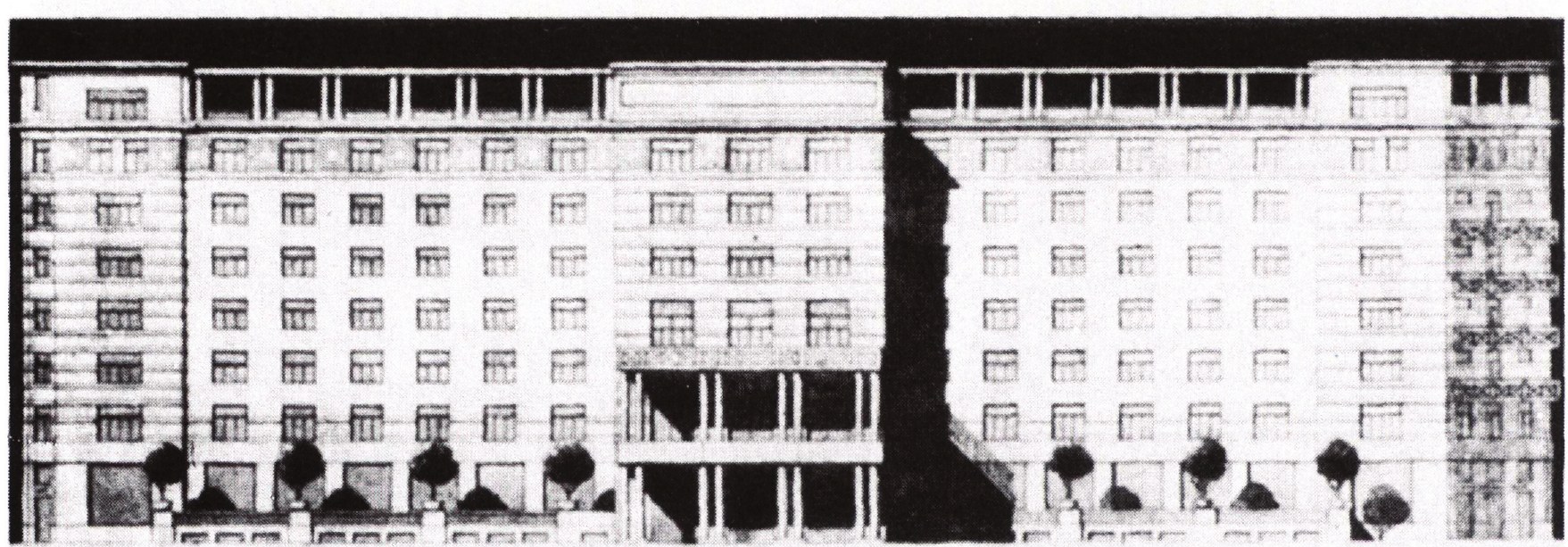
As a rule, the Viennese building ends flat, without roof, dome or other structures. The building law has set a height of 25 metres to the upper edge of the parapet. But the roof must be usable and contain studios and other lettable rooms. Because property costs a great deal and taxes are heavy. And for financial reasons, the old character of Viennese buildings has been lost. I think there is a way by which we can restore the character of Vienna. Certainly not through new laws that take away the rights of the owner of house and land. Certainly not in keeping with this popular principle: equal injustice for all. But: whoever undertakes to build nothing, absolutely nothing, above the parapet should be given permission to build five storeys above the parapet. So that the truly tall building gets built sooner than a building with roof monsters, the so-called demolition style9. Then once again we will have beautiful monumental lines and noble proportions, we who for centuries have enjoyed the air that has blown to us over the Alps, the splendour and the Italian monuments, things that run in our blood, for which the people of Danzig rightly envy us.
And then we have lime plaster. We turn up our noses at it, and in this materialistic age we have gradually become ashamed of using it. Good old Viennese plaster is ill-treated and debased, no longer allowed to remain who and what it is, and is used to imitate stone. Because stone is expensive, and it is cheap. But there are no expensive or cheap materials in the world. Here air is cheap and on the moon expensive. In the eyes of God and of the artist all materials are equal and valuable. I side with the people who regard the world with a sacred and artistic eye.
Lime plaster is skin. Stone is structural. Despite their identical chemical composition, the greatest difference between them lies in their artistic use. Lime plaster has more in common with leather, wallpaper, wall textiles and lacquer paint than with its cousin limestone. If lime plaster honestly presents itself as a covering of brickwork, it need no more be ashamed of itself than a native of the Tyrol10 in leather breeches11 and bare knees in the town of Kaiserberg12 [a town in France]. But put tails and a white cummerbund on both, and then one feels insecure, and lime plaster suddenly realizes that it is a fraud.
Kaiserberg! Its neighbourhood alone is the touchstone13 of authenticity or inauthenticity. I always give good advice to people of unstable taste. If you want to know whether an object is good or bad, ask yourselves: does it suit the walled medieval town or not? This is the trial by fire. Tasteful objects, for example the products of the Danish porcelain industry, Galees14 spectacles and the works of the Wiener Werkstätte15, do not pass this test, while at the same time the monsters of taste, such as the waiting Dobermann painted on metal and used for tongs and pokers, survive it. But the metal Pinscher16 dog is right, and the Copenhagen porcelain cat17 is wrong.
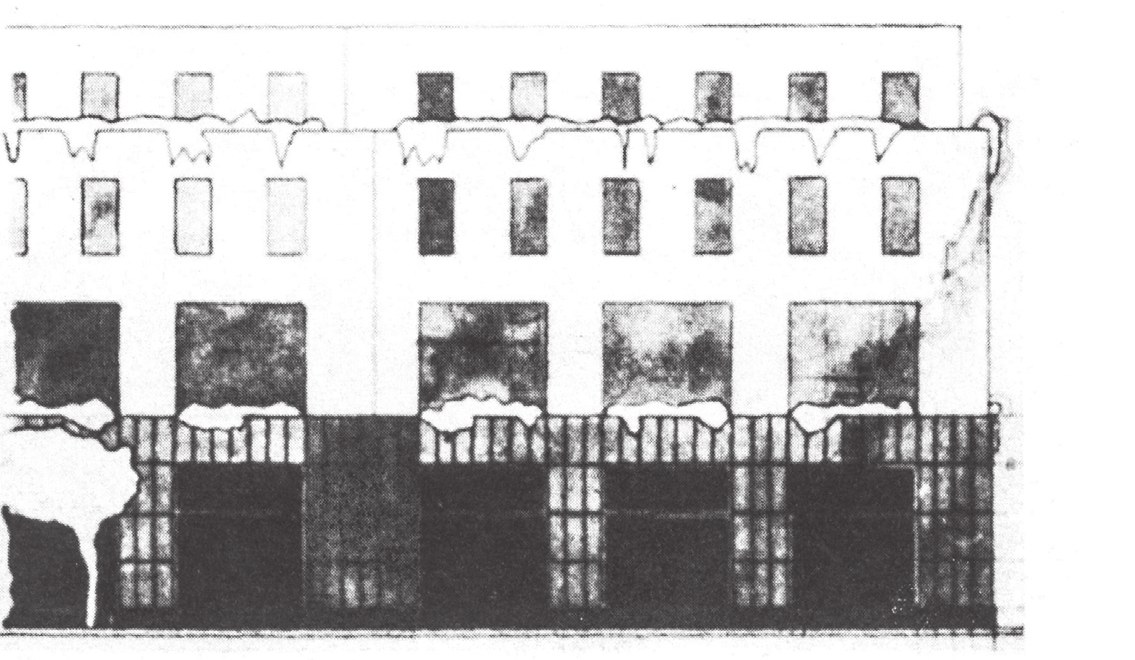
And near Kaisenberg, work on putting up a new building was under way, a site for a modern business. The task was to create a kind of transition from a royal residence through the palace of a feudal lord to a beautiful shopping street18. The building site, which Professor Mayreder19 and the head of municipal planning, Oberbaurat Goldemund20, had laid down at the time, had been enlarged. Certainly not to the benefit of the square. They have tried to make up for this mistake with a column of solid cipollino21, which sets the façade back three and a half metres on the ground floor and mezzanine. It was supposed to be a kind of bourgeois house: the architectural design stops at the parapet, and the copper roof, which will soon turn black, will never catch the eye of midsummer-night dreamers. And four storeys are covered with lime plaster. What is needed for decoration must be applied by hand and honestly, a rule that the Baroque masters observed in that happy age, when there was no building law at all because everyone had the law by heart.
But the ground floor and mezzanine, where the business offices open, need a modern solution. And rightly so. For modern business, the old masters could leave no model. Nor for electric light. But if they were to rise from the grave, they would find the solution quickly enough. Not, of course, in keeping with the spirit of the so-called modern age. Nor in the archaizing22 manner of the paper sleeves that hold porcelain candles on old candlesticks. But new, and very different from these two opposing camps.
An attempt was made to bring this building into harmony with the royal palace, the square and the city. If this attempt succeeds, Baurat Greil23 will deserve praise for finding a beautiful interpretation of, and alternative to, an inflexible law.
Footnotes:
1- Danzig
2- Lime Plaster
3- entablature
4- parapet
5- glacis
6- Schwarzenbergplatz
7- Stubenring
8- Mahriisch - Ostrau
9- enreoffment
10- Tyrolean, relating to the Tyrol region of Austria
11- lederhosen
12- Kaiserberg
13- touchstone
14- Galees
15- Wiener Werkstatte, the first Viennese firm to make furniture and decorative objects. Tr.
16- Pintscher
17- Copenhagen cat, a porcelain figure of a cat made by the Royal Danish porcelain manufactory in the 1890s.
18- Kohlmarkt
19- Mayreder
20- Oberbaurat Goldemund
21- Cipollino
22- archaizing
23- Baurat Greil