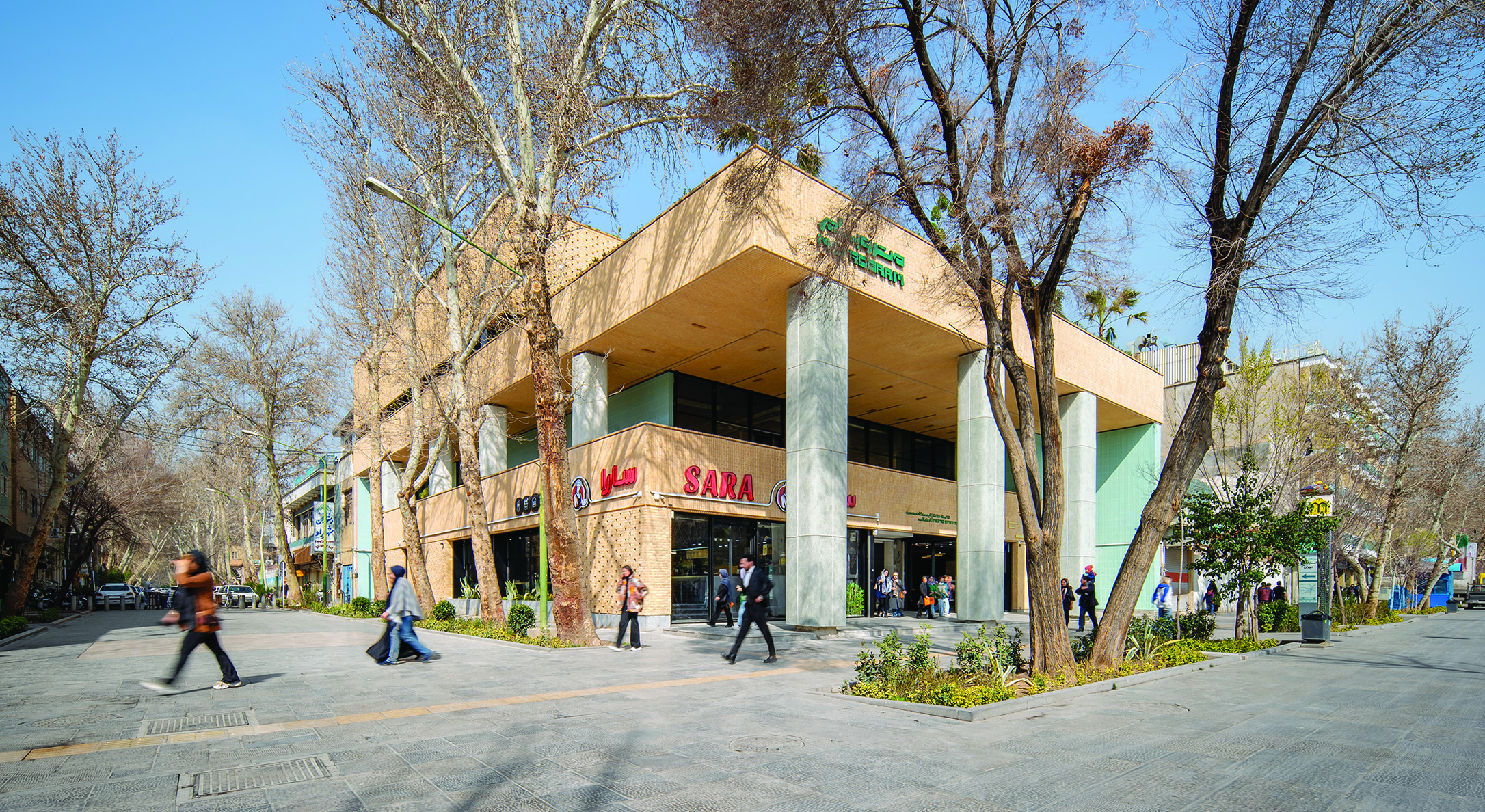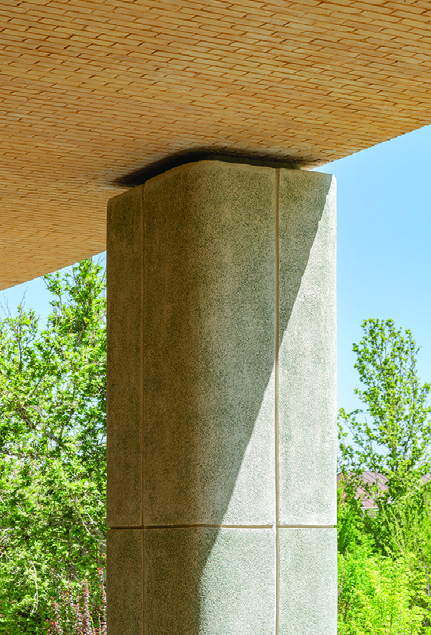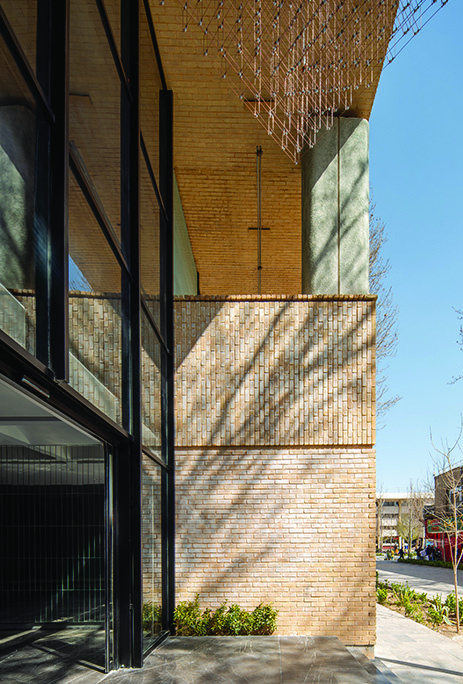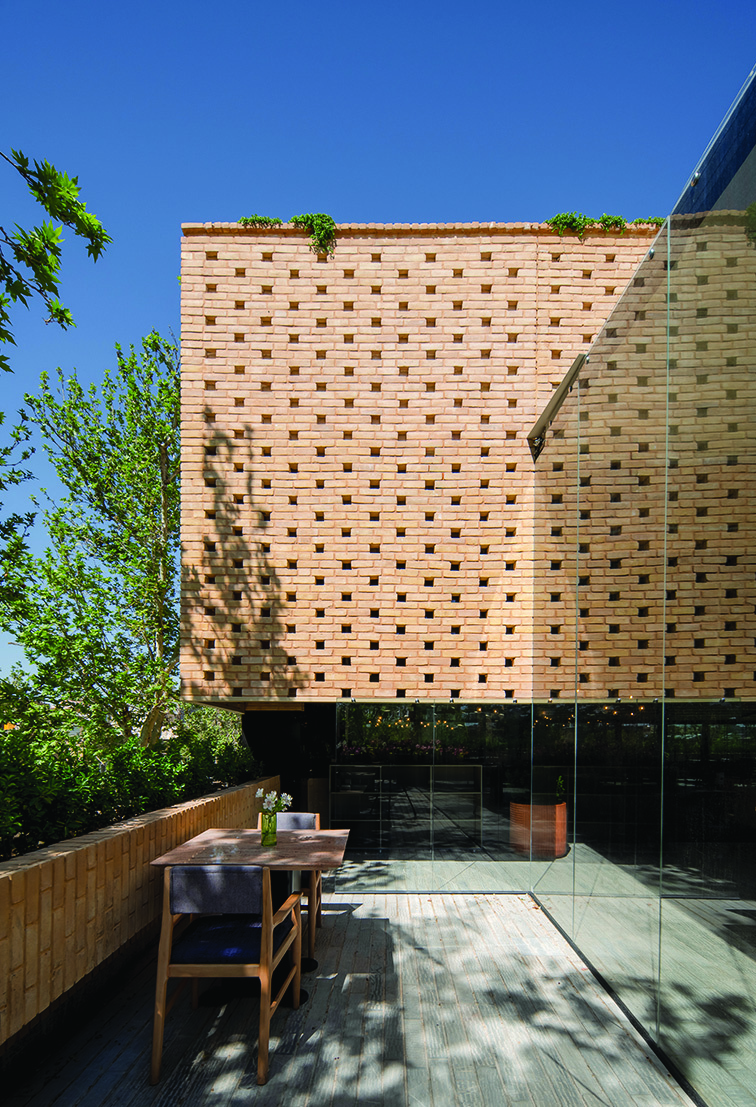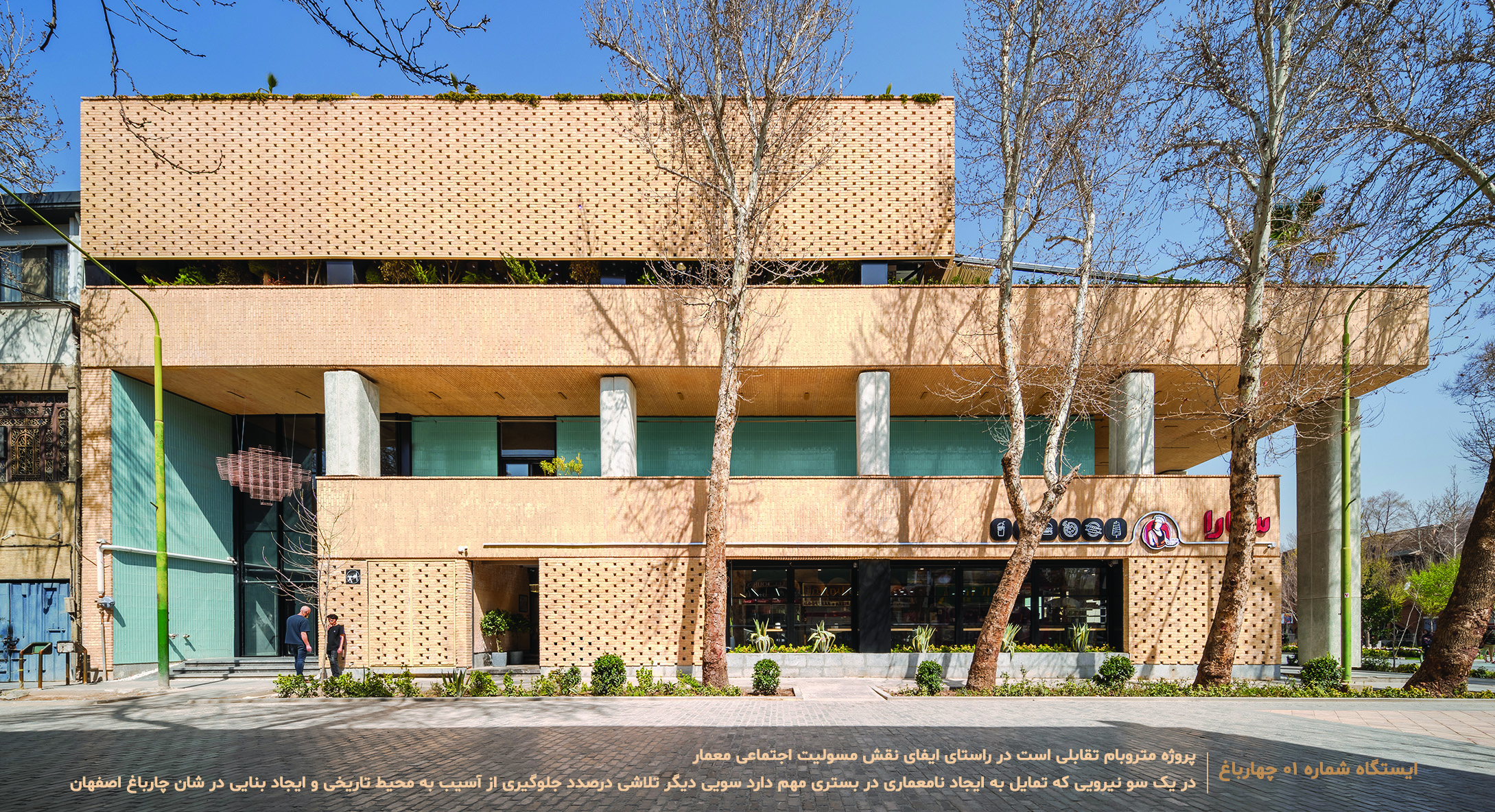
The project consisted of designing atop a four-storey concrete structure that had been erected as a consequence of the metro line passing through Chaharbagh and then abandoned, while a private-sector investor sought to complete it and lease the units to various commercial tenants.
With the passage of the metro line along the Chaharbagh axis and the subsequent construction of structures designated as stations and metro entrances, Entrance Building No. 01 — near Si-o-Se-Pol and at the intersection of Chaharbagh with the Abbas Abad axis — was erected. A structure utterly unrelated to the metro station itself, it had been left as a half-finished skeleton for years. In recent years, following the transfer of some of these buildings to the private sector under a BOT arrangement, the MetroBam complex project was referred to our office.
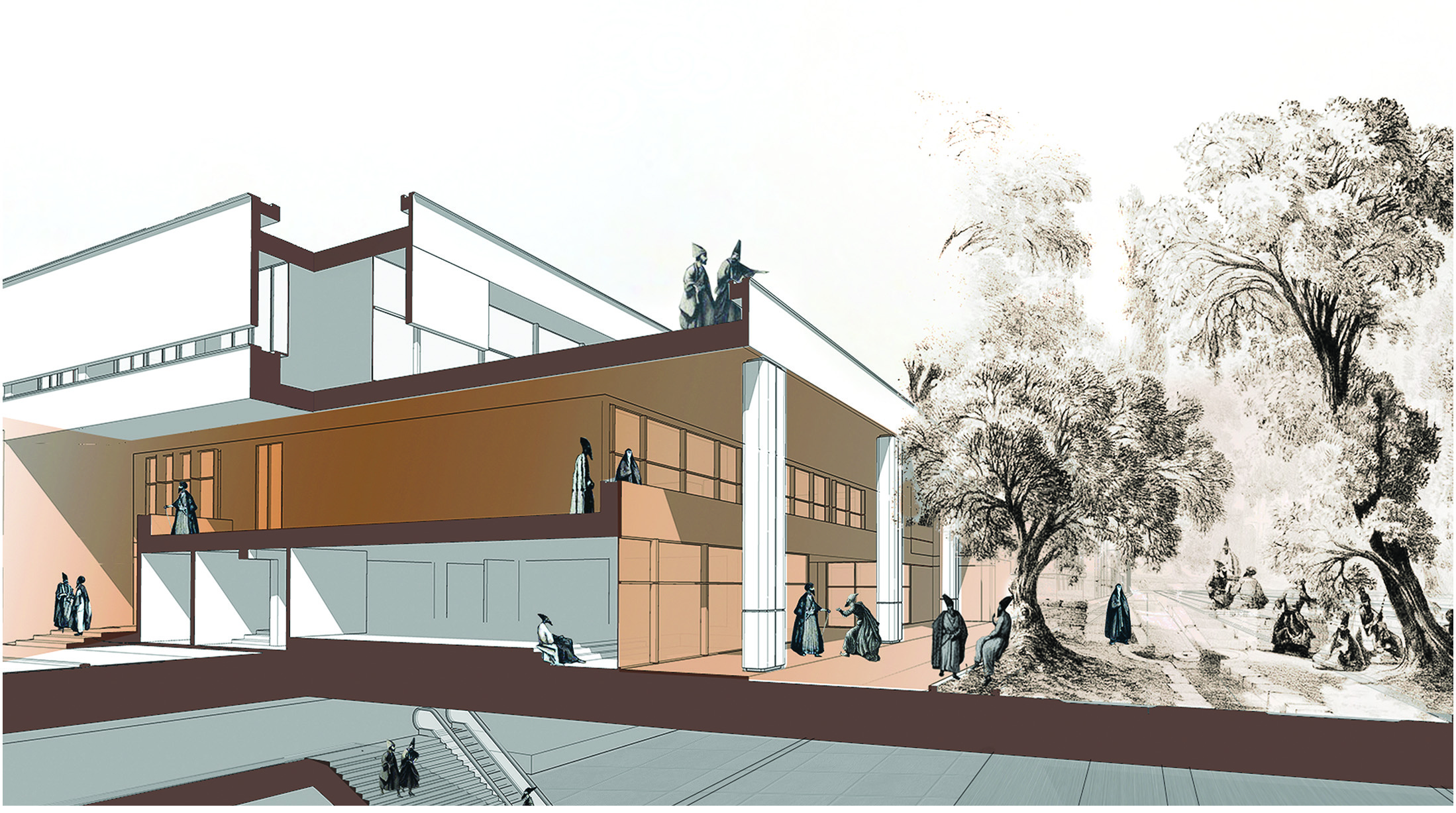
The MetroBam project is fundamentally a confrontation in pursuit of fulfilling the architect’s social responsibility. All these confrontations stem from the complex circumstances and behind-the-scenes ambiguities of the project: the nature of the transfer conditions, uncertainty in the physical programme and future uses, economic justification, the type of existing skeleton and structure, and the rush for rapid utilisation — all of which directly affected the complexity of the design process. Therefore, beyond the design process itself, preventing damage to the scheme and vigilance during construction was perhaps the most important dimension of social responsibility in this project.
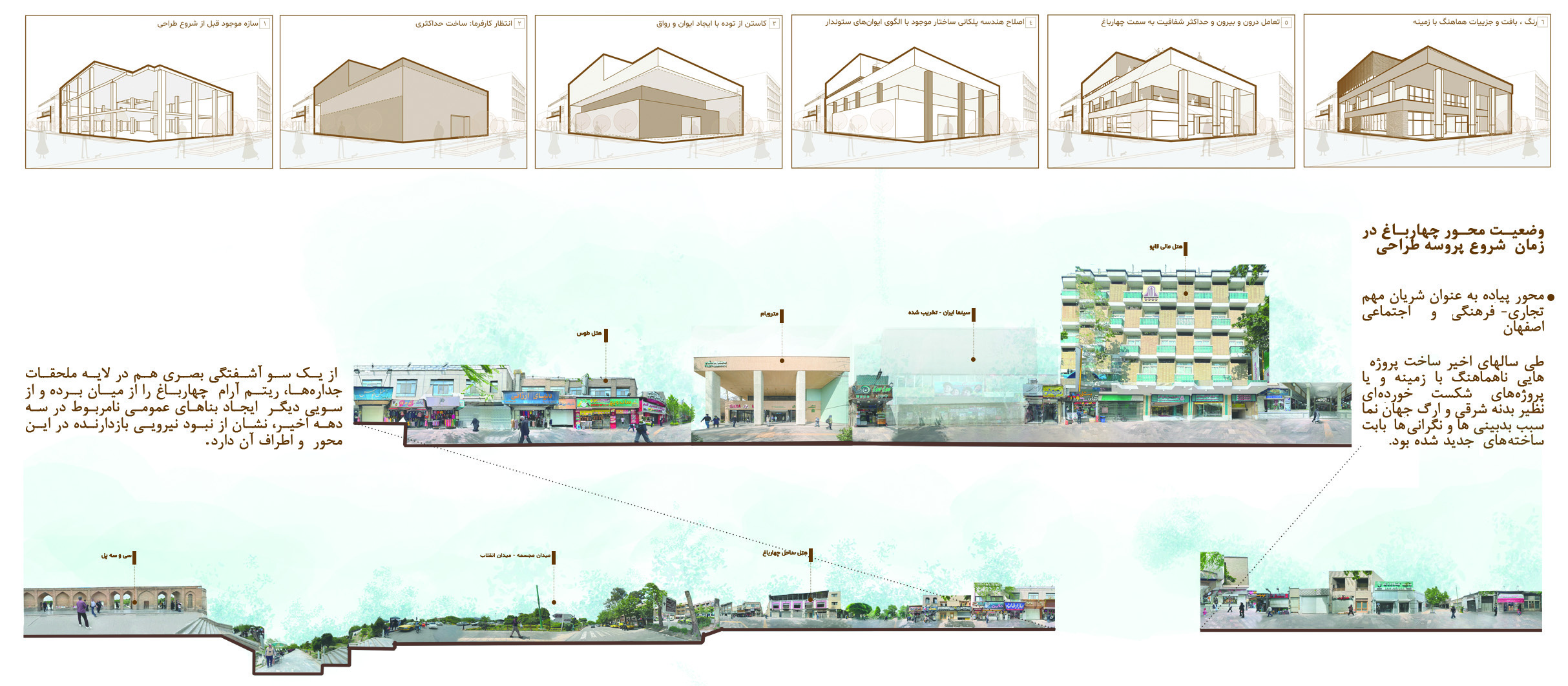
Through studying the architectural patterns of the surroundings, it became clear that postmodern buildings such as Hotel Cyrus, Hotel Iran Tour, and other structures from the First and Second Pahlavi eras were situated at or near this location. All of them featured elongated colonnaded porticos facing the street, which over time had been demolished and replaced by newer structures. Consequently, the complex’s design is in some sense a continuation of this forgotten architectural tradition — one that strives, in ultimate harmony and consonance with the Chaharbagh context, to express the architecture of its own time while also answering the needs of today.
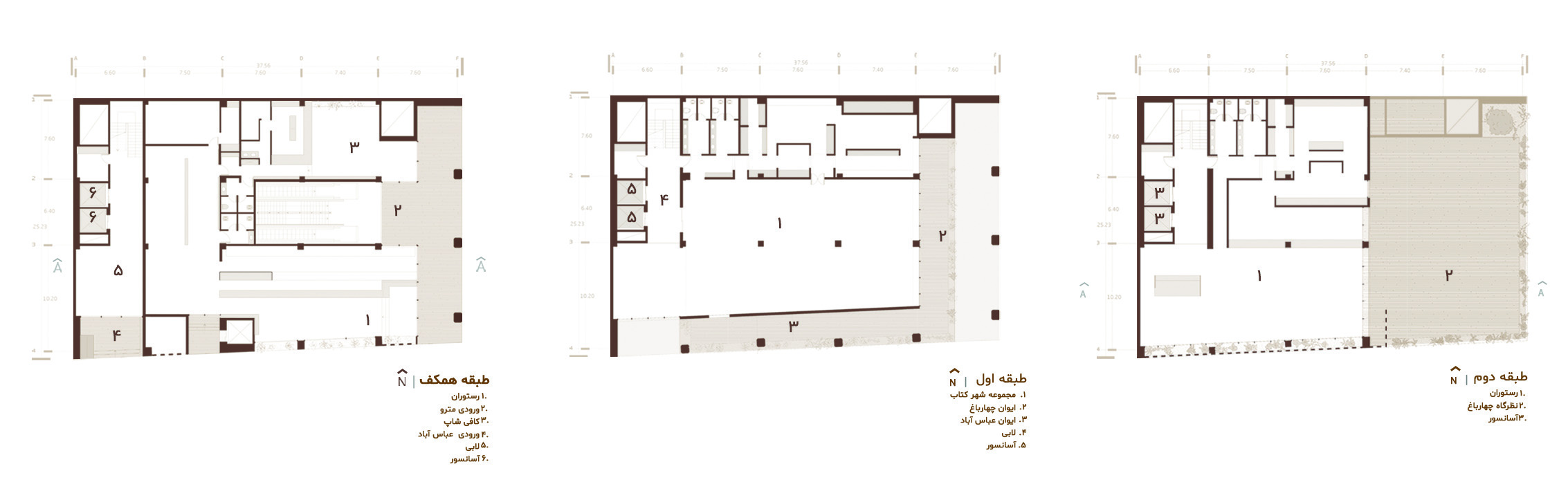
Design Process
Access to the metro station was through the entrance of the unfinished building. The station building had been transferred to a private investor eleven years earlier under a BOT arrangement — Build, Operate, Transfer — with exploitation conditional on completion. The previous design for the complex had not been approved by the Urban Landscape Committee, and a recommendation to replace the designer and consultant had been issued.