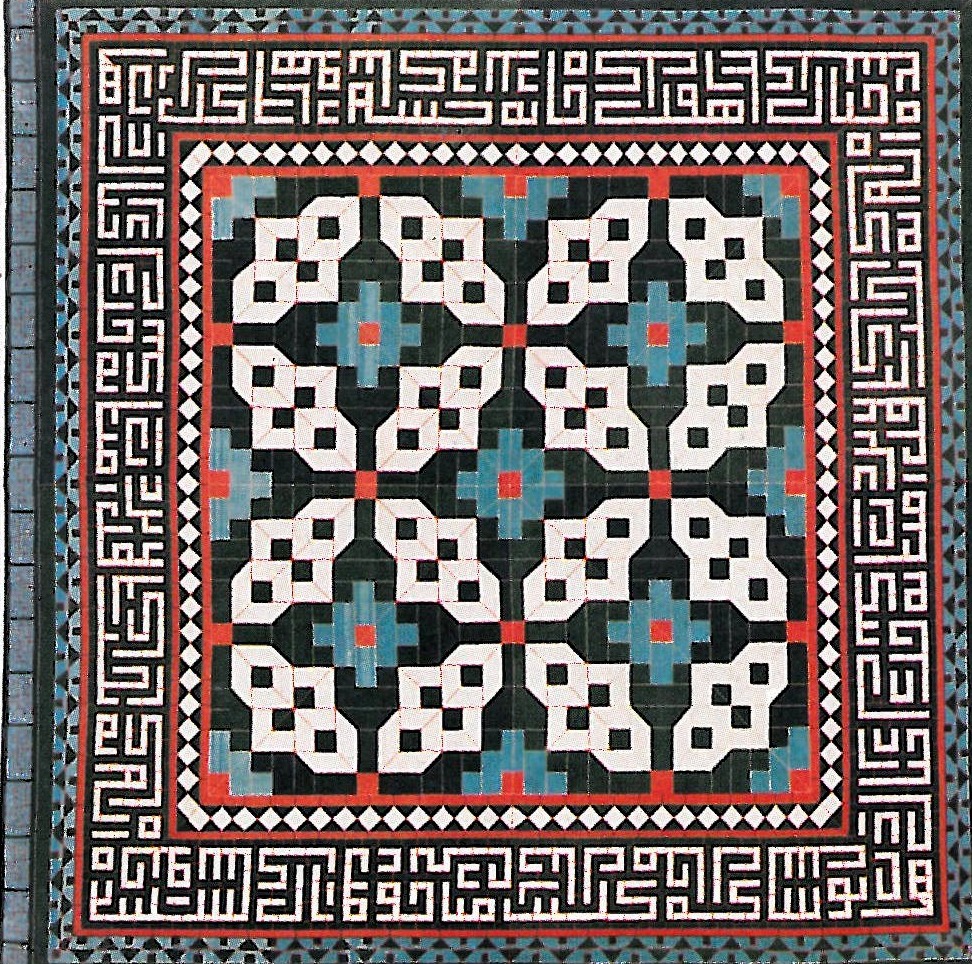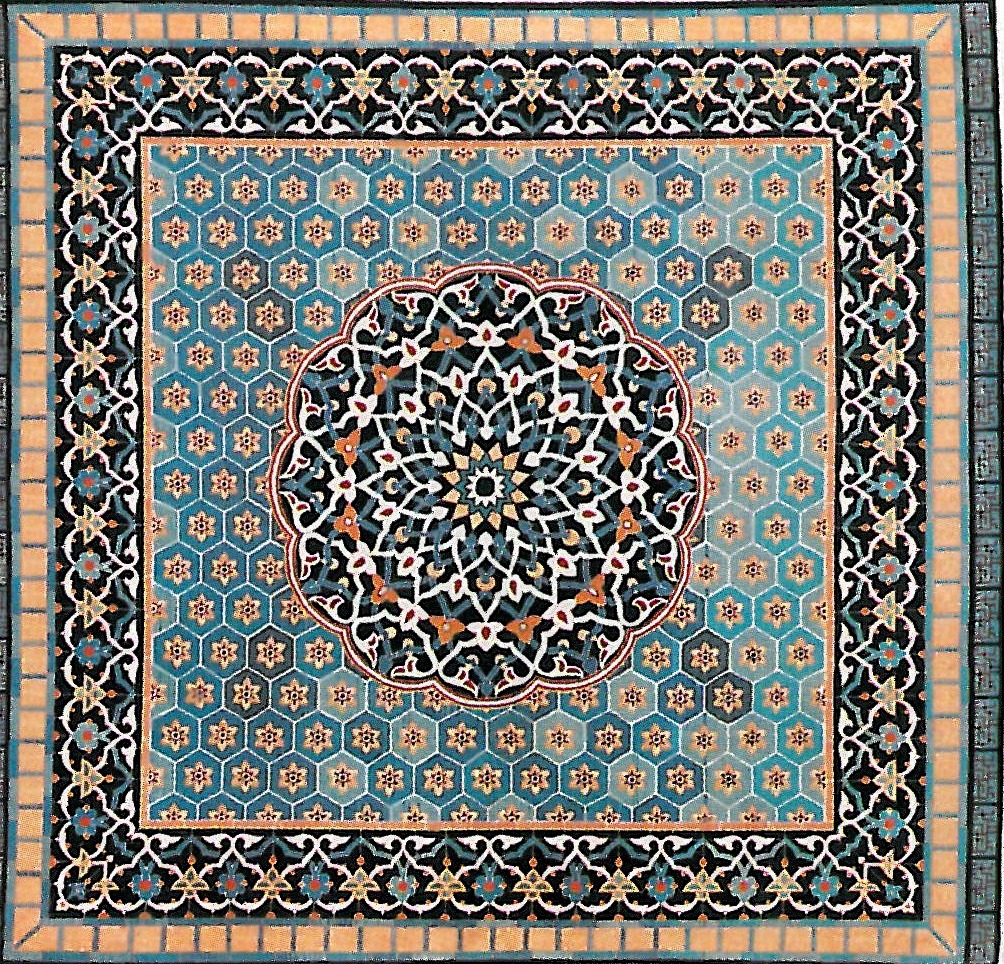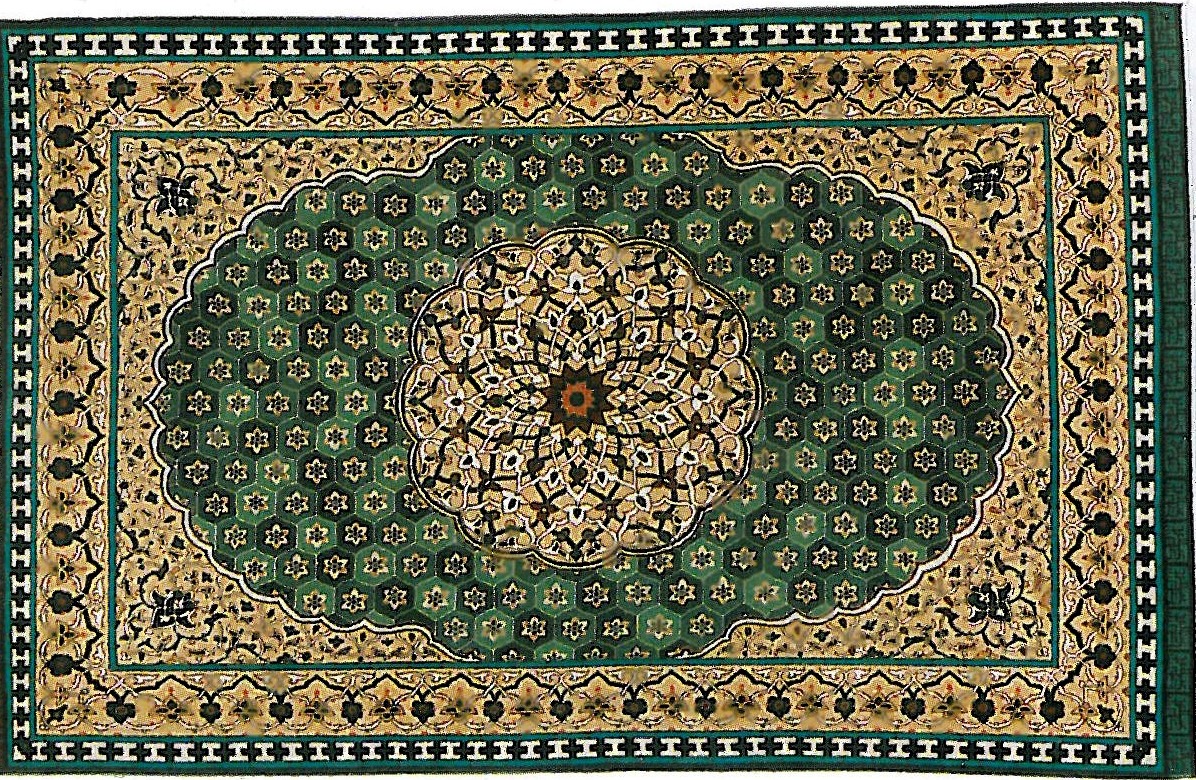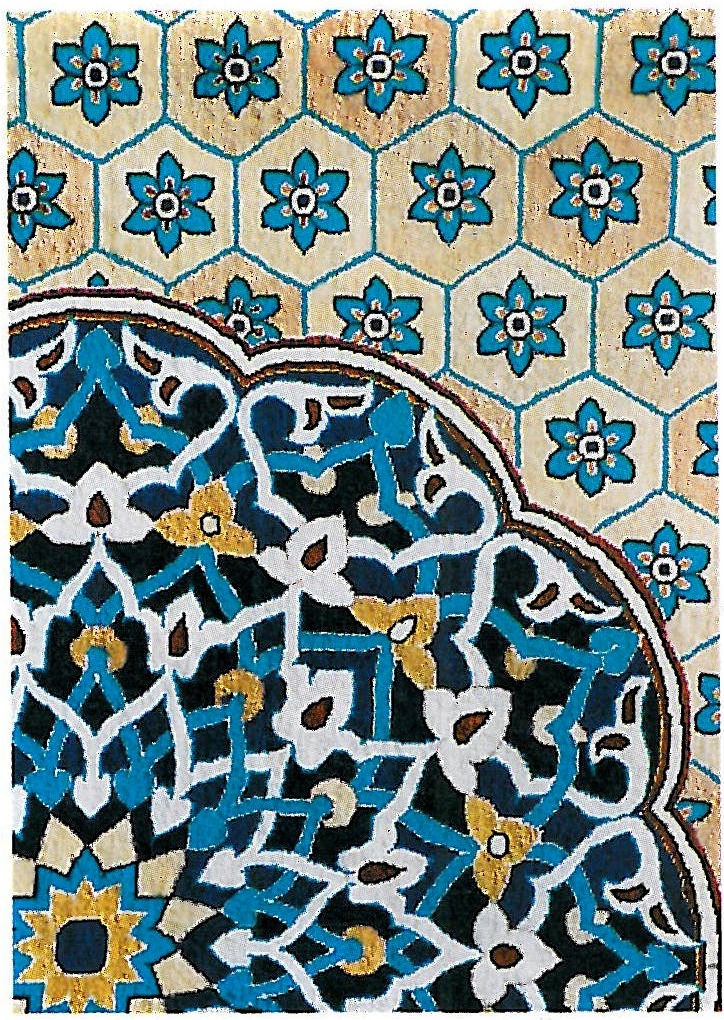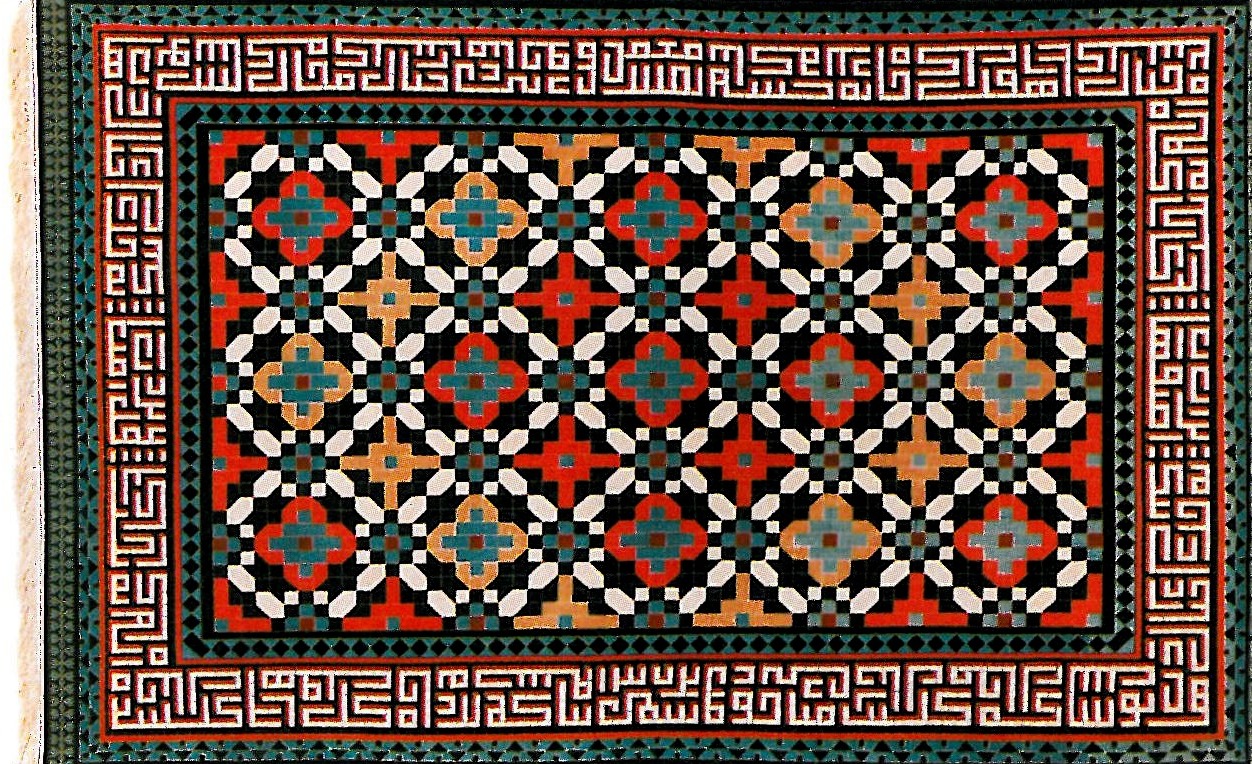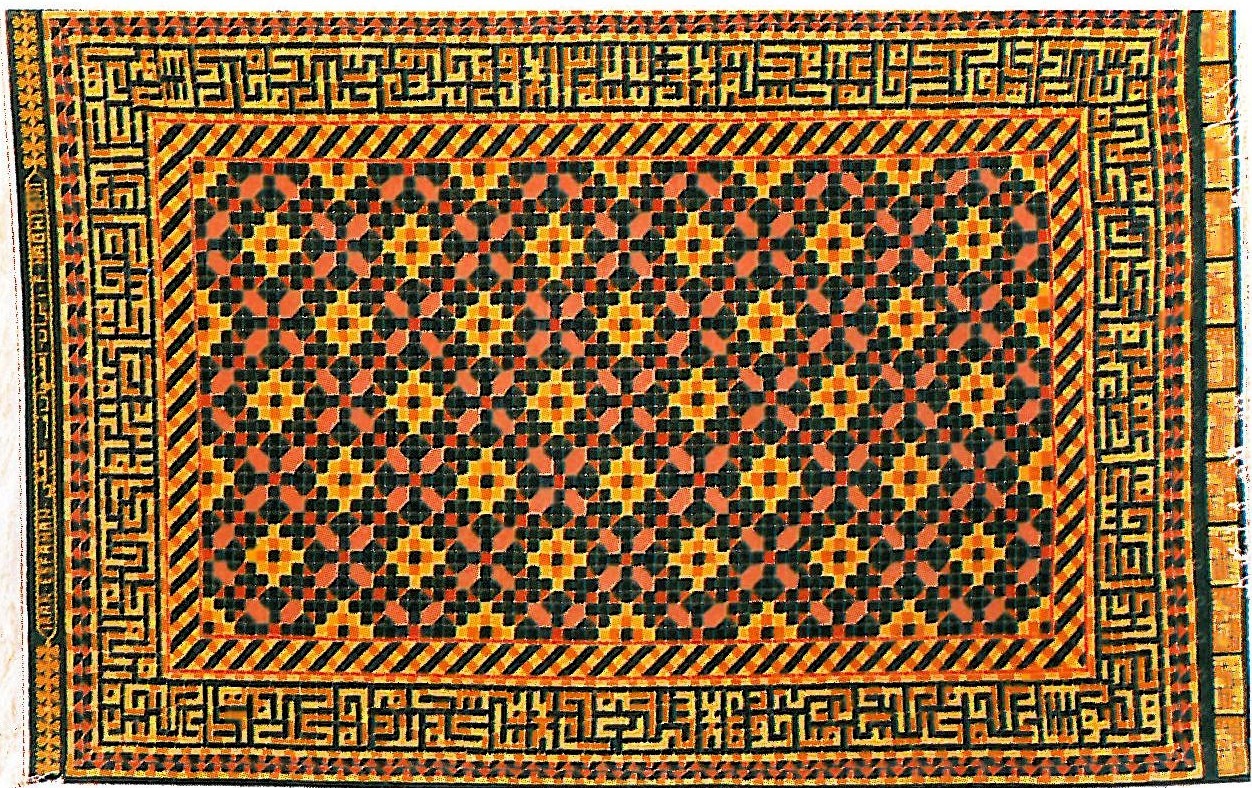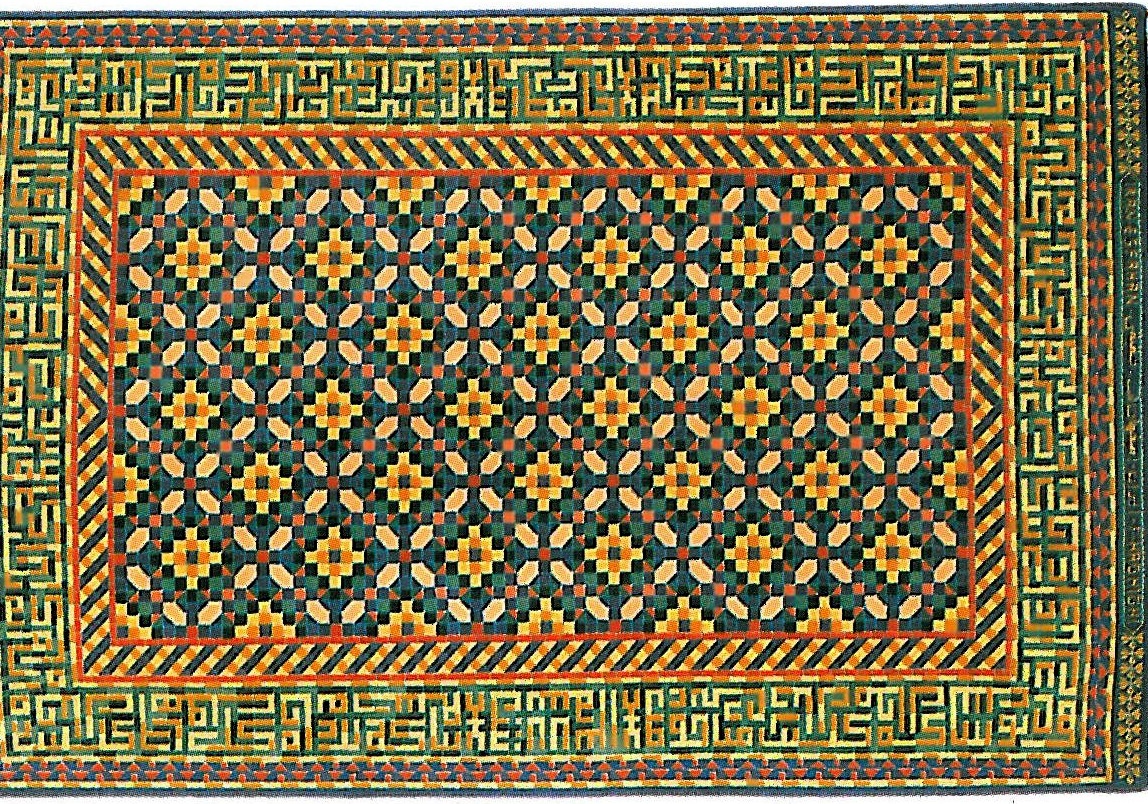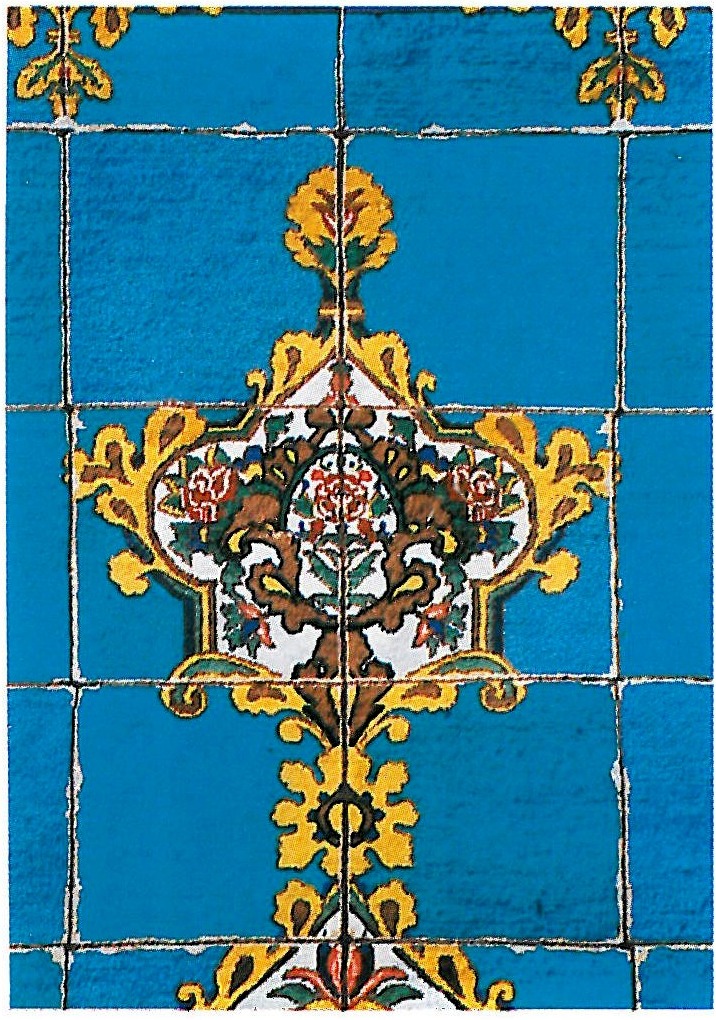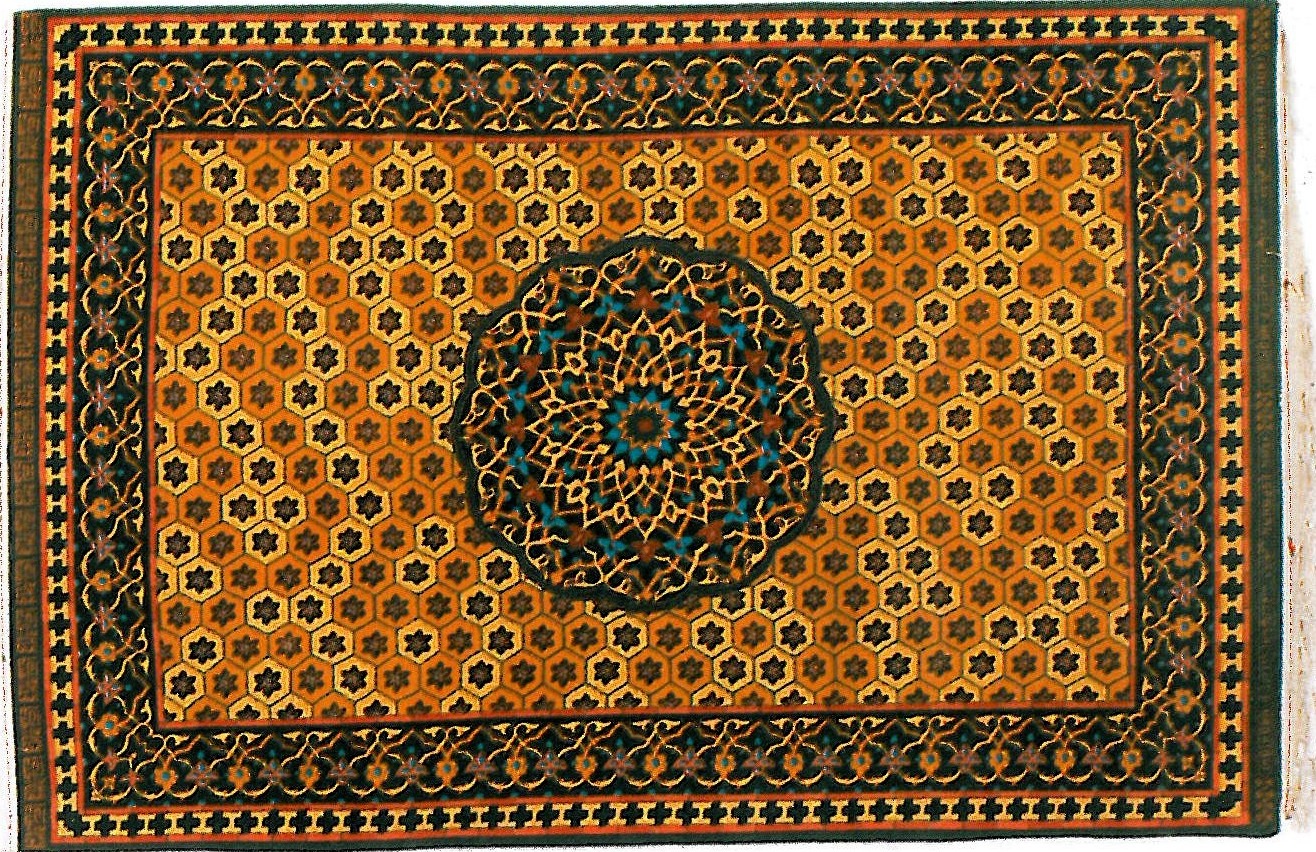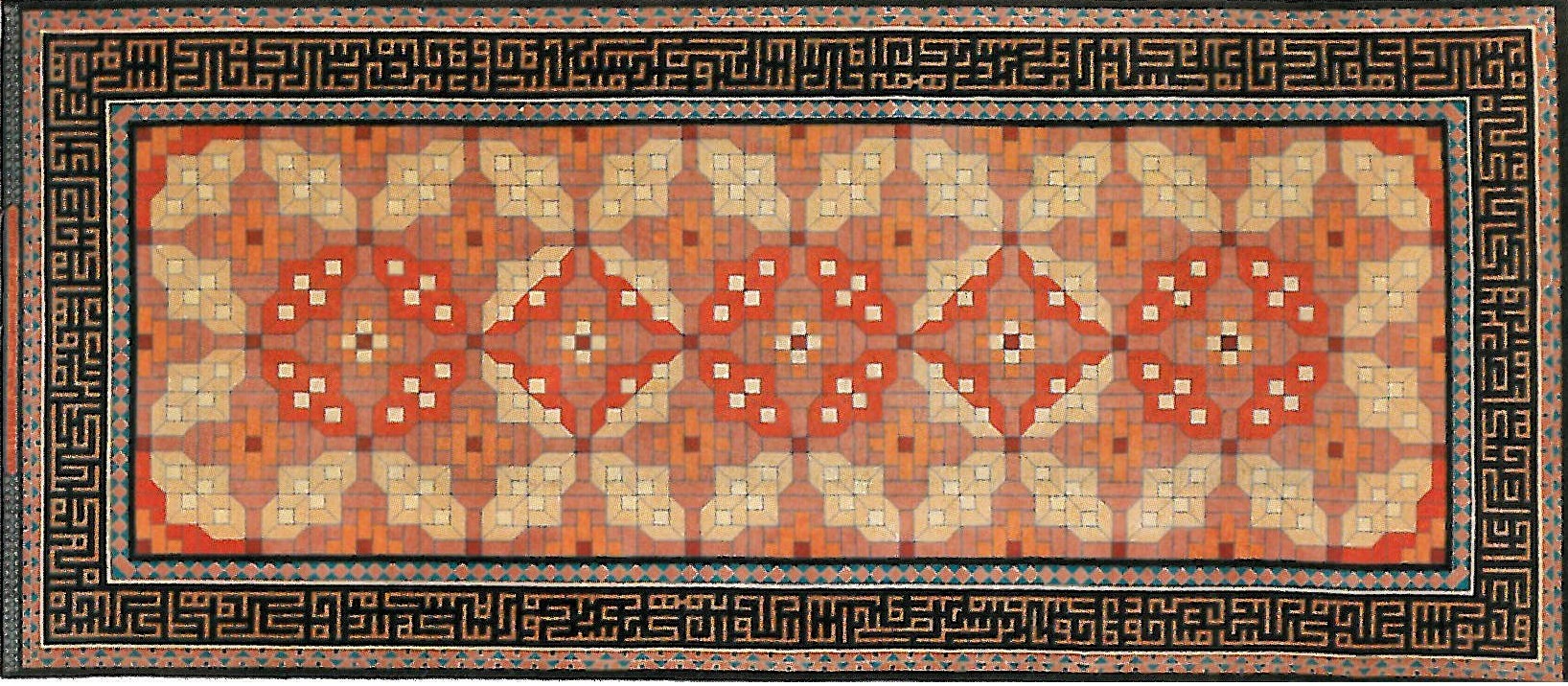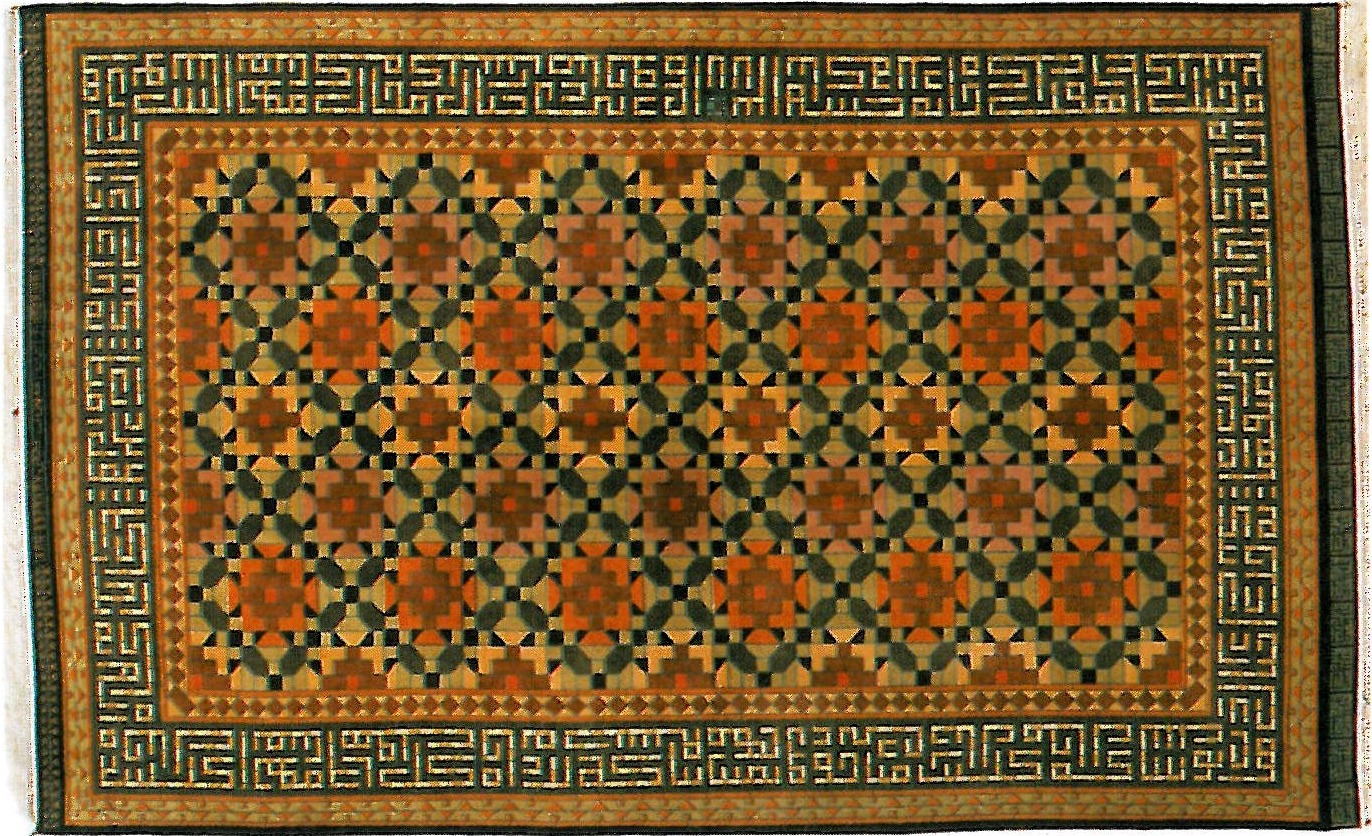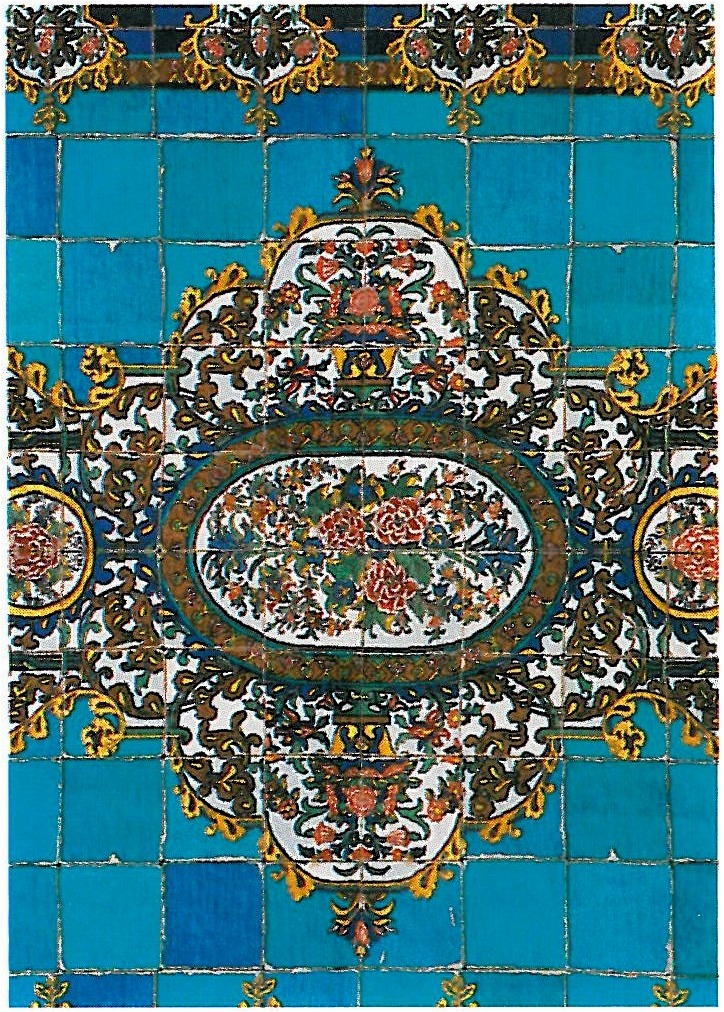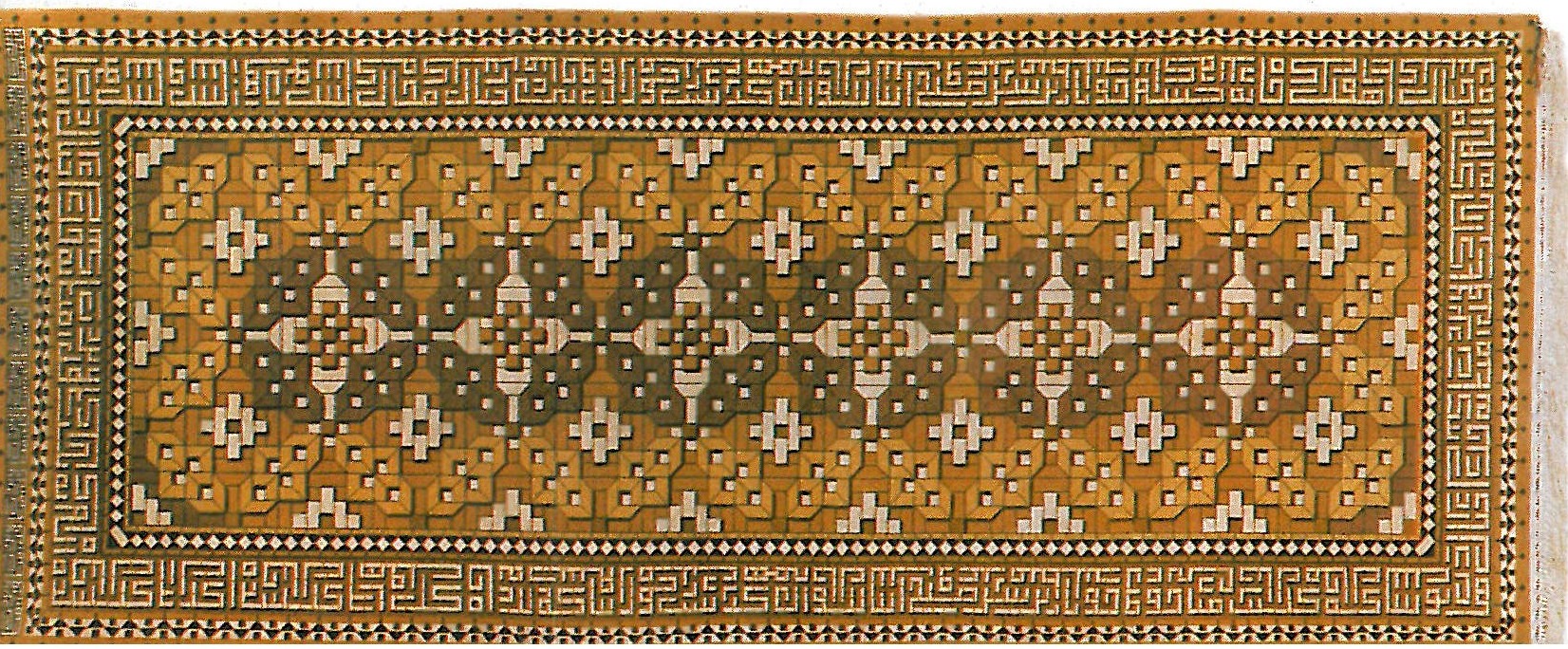
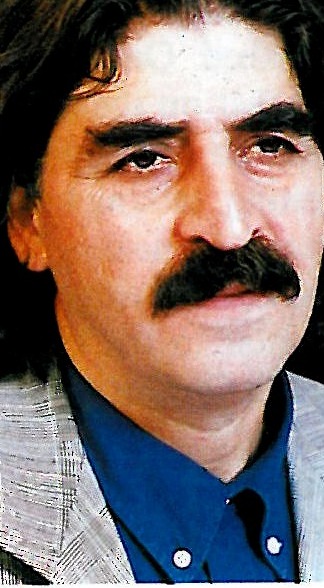
Amir Houshang Yazdan has for several years been experimenting with carpet design alongside his architectural work. Among his relatives were people engaged in carpet production. Yazdan's dual experience in architecture and carpet created the motivation to bring architectural decorative elements onto carpet. He first drew on mosque tile patterns and by learning geometric brickwork calligraphy (khatt-e bana'i) from an elderly master working at the Hafez shrine, ventured into geometric patterns.
He experimented with the first samples using the actual colors of tiles. But in later carpets he introduced changes in dimensions, number of knots, geometric (mo'aqqeli) patterns and colors. In carpet coloring, each color comes alive next to another. He used desert colors including burnt brown, dirty pink and turquoise for borders, and earth tones, copper, brick cream and beige for the
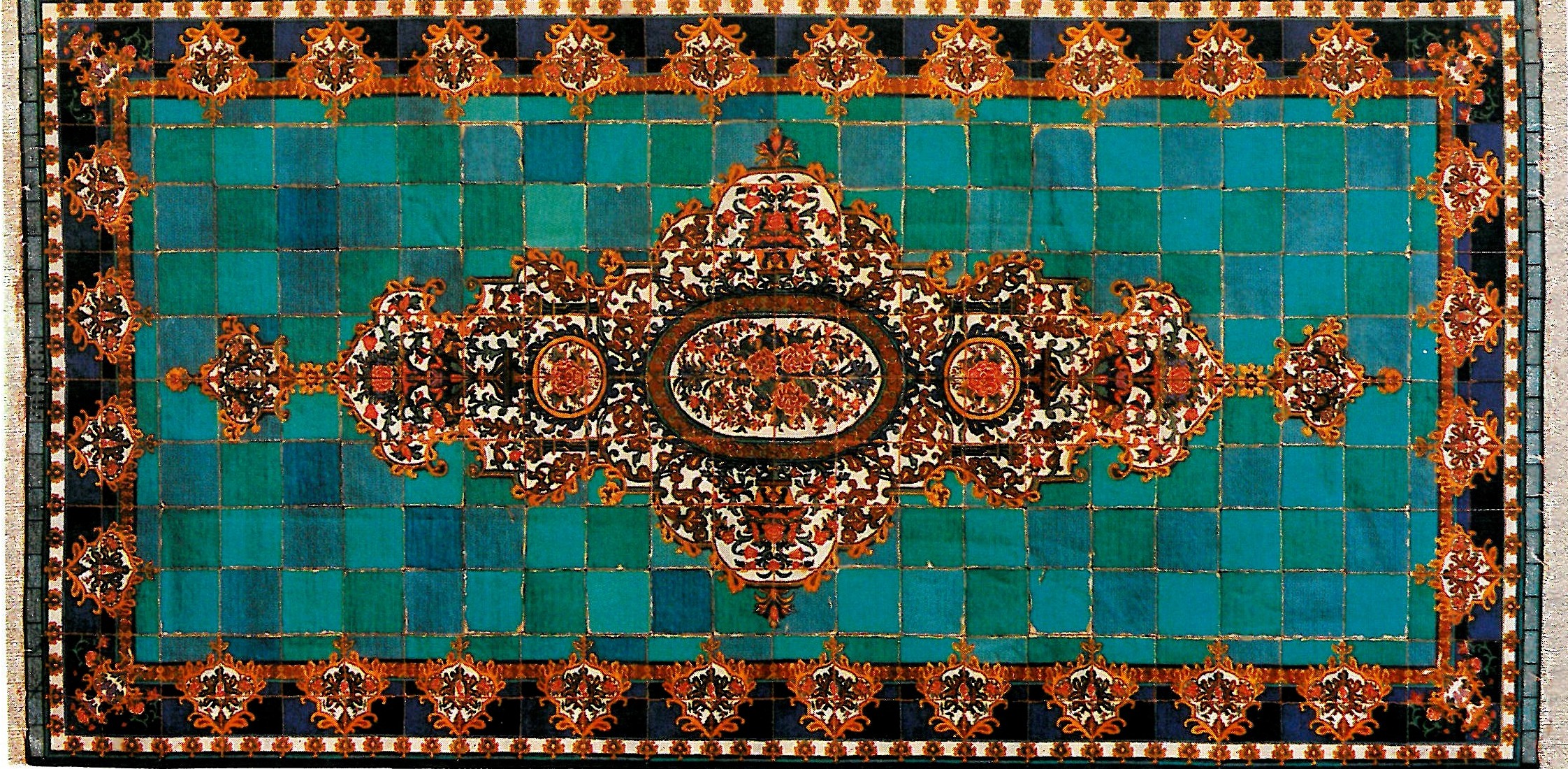
Carpet, 370 x 195 cm, 1500 knots per row, Qajar motif
Architectural Motif and Color in Carpet
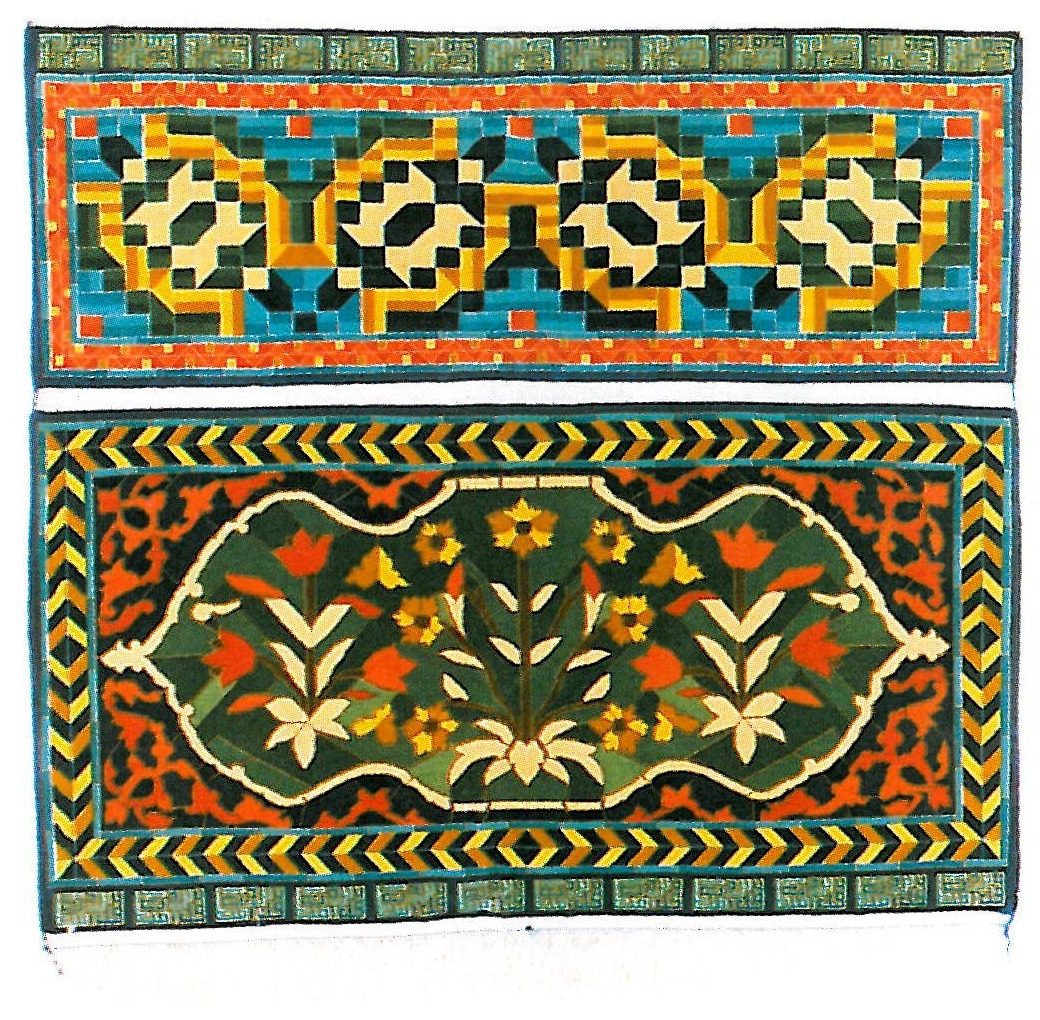
field. He tested this combination of colors — composed of twenty different layers — across various sizes, knots and patterns. In another phase, he experimented with combining mosaic tilework (kashí-ye mo'arraq) with arabesque (eslimi) forms.
He has never exactly repeated any design and says: "These changes, despite the reception they've received, are still not worthy of the Iranian carpet. I still haven't mastered its secrets." His latest work has a background of brick tile with a Qajar-era medallion (toranj) woven in a spectrum of seven turquoise shades at dimensions of 2.3 x 6 meters. On color mixing he says: "Working with tile colors helped me understand the play of colors alongside each other. I have become familiar with many spectrums of colors whose preparation has specific stages.
Determining the exact amount of wool and the proportionate amount of natural plant dye is very precise, and the color you see in dyed wool is not the real color. The true color appears when, after weaving, you cut the pile with scissors and look at its cross-section. Producing carpets with varied designs and abundant colors is not very feasible for those just beginning to experiment, and in this path one must proceed slowly and patiently. I have benefited greatly from the generous resources that the esteemed master Feyzollah Safdarzadeh Haghighi has placed at my disposal over the past 10 years. He has been my guide in every field, and moreover has opened to me his precious collection of dyed wools."
* Photos except photo 1 taken by engineer Aligholi Ziaei. The architectural project images of Amir Houshang Yazdan that were published in Memar 6 were also taken by Mr. engineer Aligholi Ziaei.
Carpet, 150 x 160 cm, 1200 knots
Details of one of the designs
Carpet, 150 x 230 cm, 1200 knots
Carpet, 150 x 160 cm, 1200 knots
Poetry from Hafez
Carpet, 150 x 160 cm, 1200 knots
Carpet, runner (zar-o-nim), 100 x 160 cm, 820 knots Poetry from Hafez
Carpet, 220 x 150 cm, 1200 knots, yellow-toned Details of one of the designs
Carpet, border (kenareh), 150 x 210 cm, 1200 knots, plant-based colors
"Whoever has a claim to virtue must seek pardon / One can forgive the cruelty of rivals in all circumstances"
Carpet cushion (poshti), 45 x 105 cm, 930 knots
Top section: Study of motif and color
Carpet, 230 x 150 cm, 1200 knots Details of one of the designs