Tehran's pattern of dwelling in past decades was, for the most part, single-unit, single-family houses. The courtyard was an inseparable element of these buildings, and the trees were taken to be part of the house's identity — so much so that years after the family had left such houses and gone to live in apartments, not only the kind of tree in the courtyard but also who had planted it remained in memory. The public spaces of these houses — courtyard, wrap-around terraces, roof shed, roof and basement — were all in use, and they enriched the experience of dwelling for the household. As land prices rose and density grew of necessity, the single-unit houses (of every size) were demolished one after another and gave way to four- or five-storey apartments on pilotis. In this housing model — a unit of one or several bedrooms with a few windows onto the courtyard and a few onto the patio — the courtyard has effectively been given over to the path of the car, the stairwell and the roof carry no spatial quality, and the size of the terrace is at most fit for drying clothes.
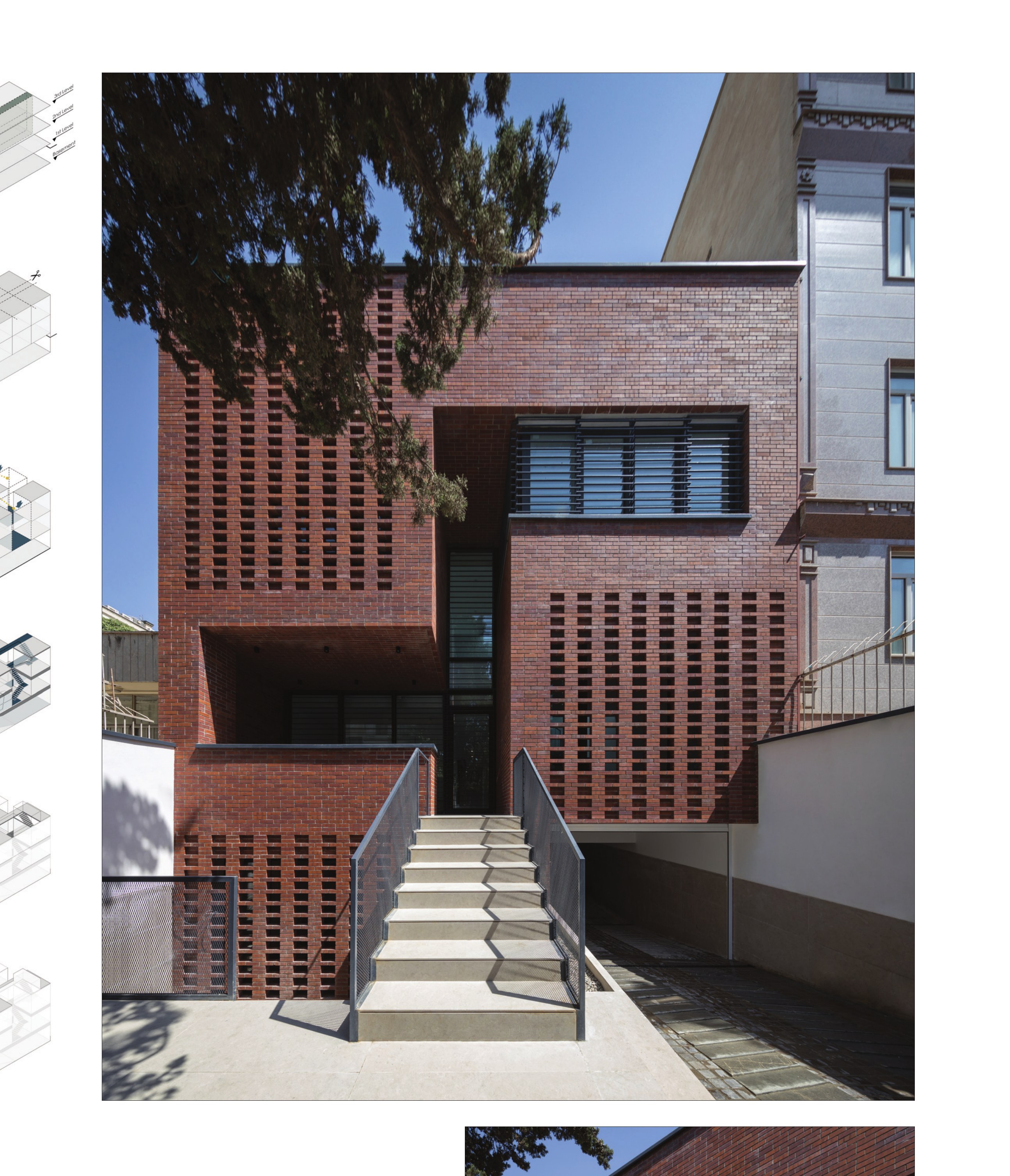
The Nahal House project takes a subject that runs against the general current of Tehran's building. A single-unit house was designed for a four-person family (father, mother and two children) on a 200-square-metre plot in the Pasdaran neighbourhood of Tehran. Of the old house on the site, only a relatively tall cypress tree remained. The plot faces north, and the tree sits exactly at the middle of its southern side, in a way hiding the building's facade behind it. The principal aim of the design has therefore been to set up a dialogue between the body of the building and the tree.
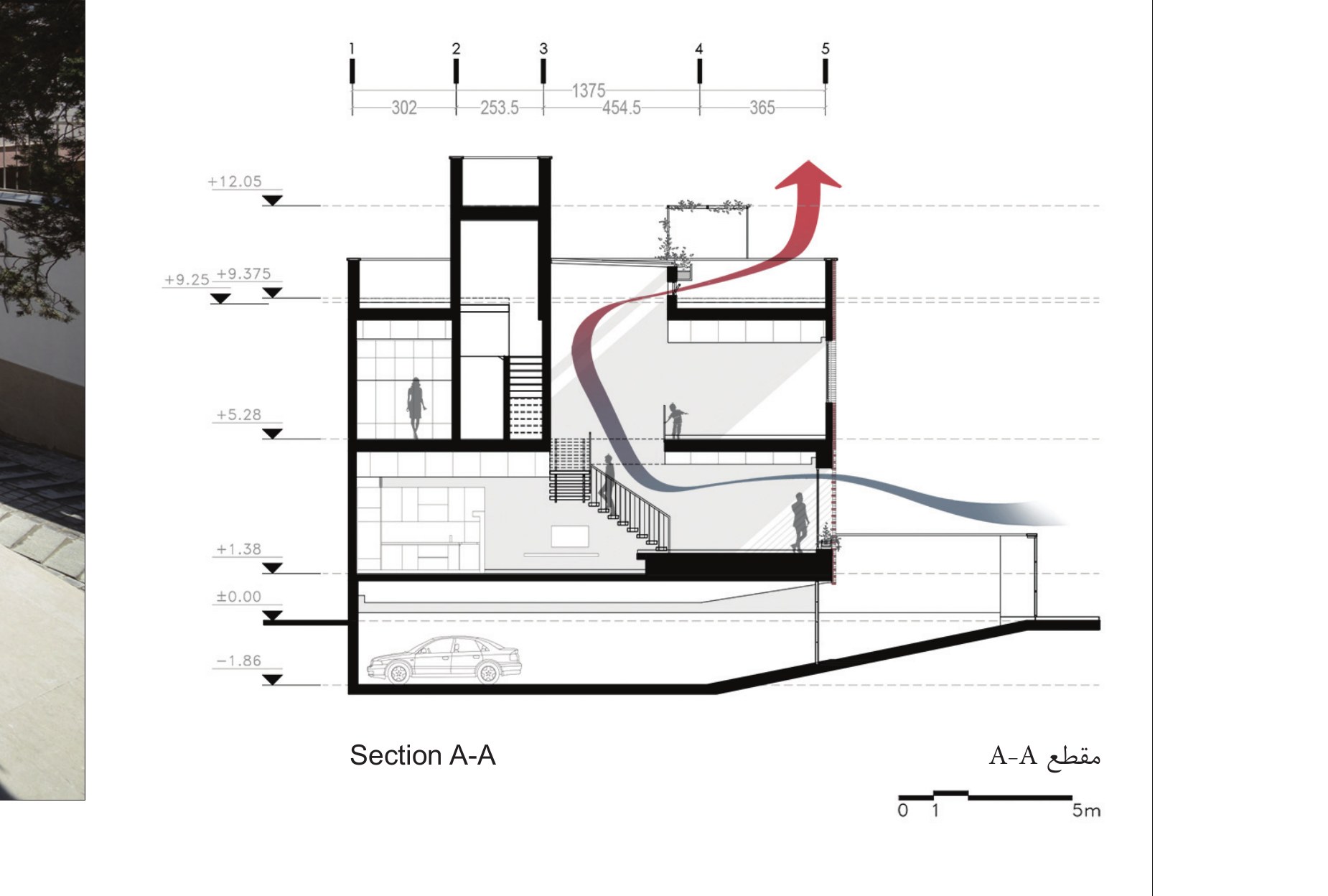
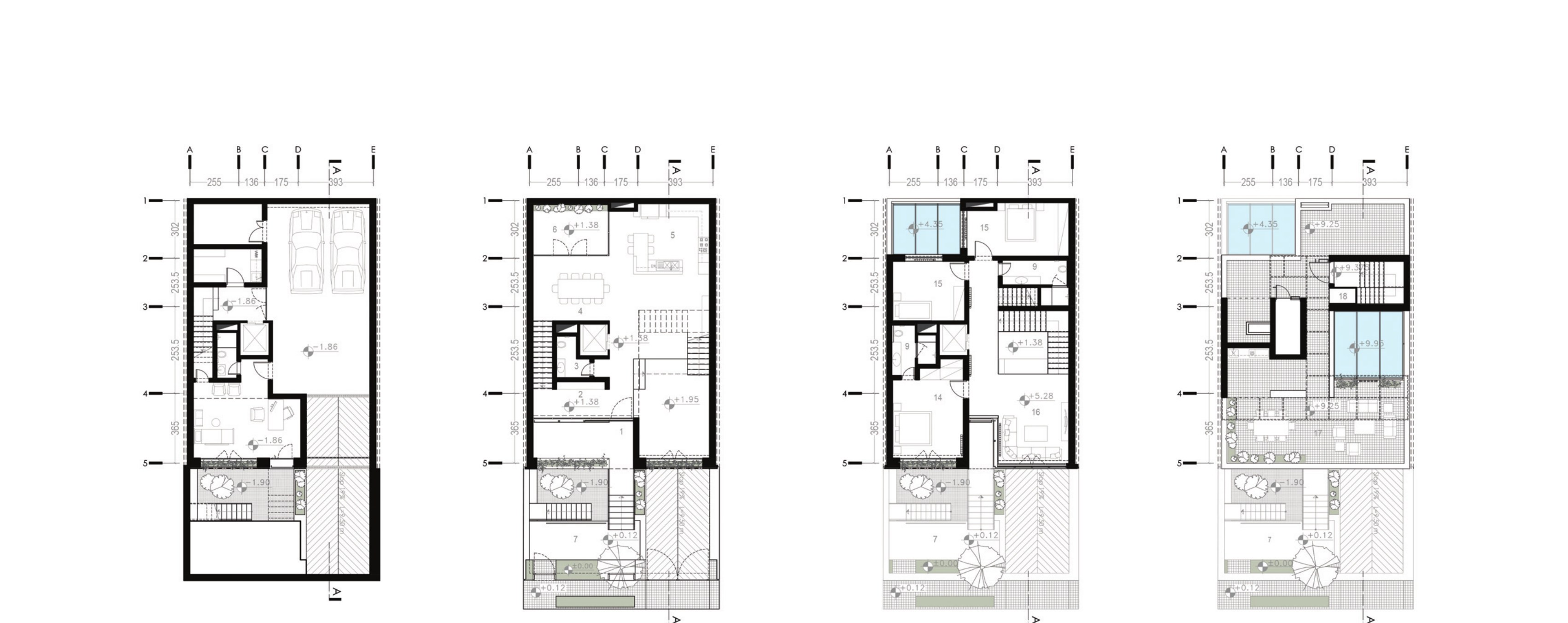
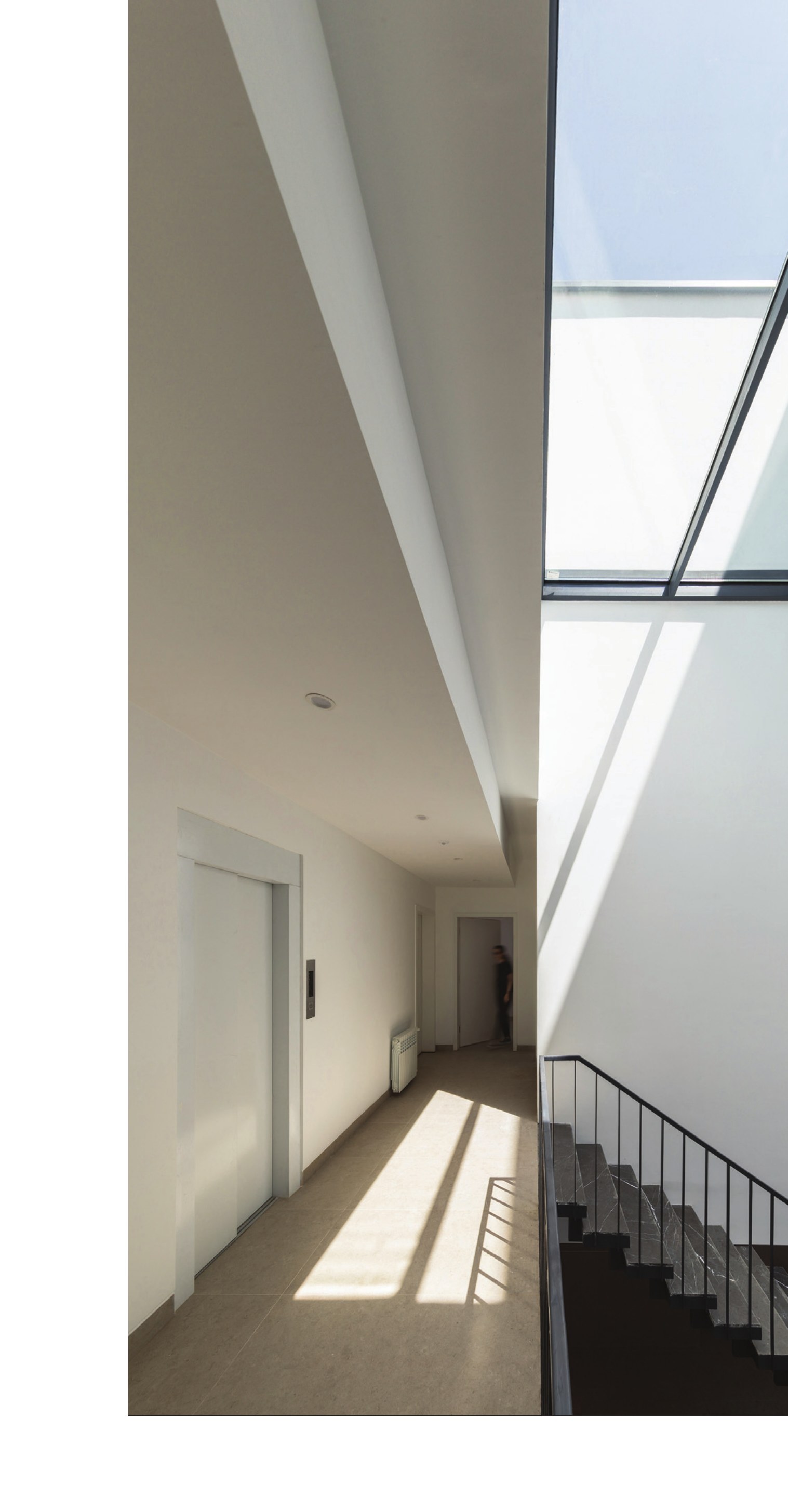
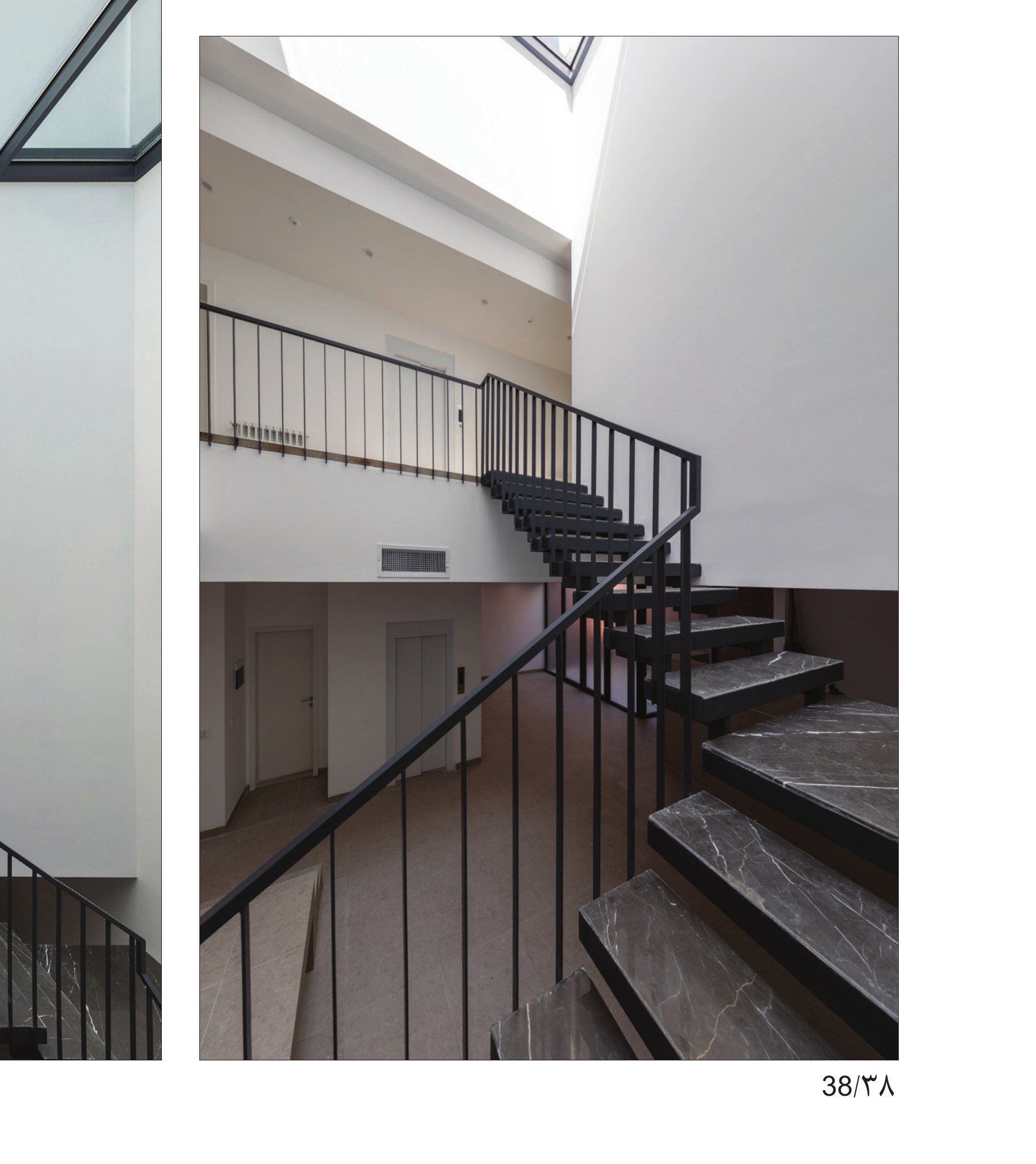
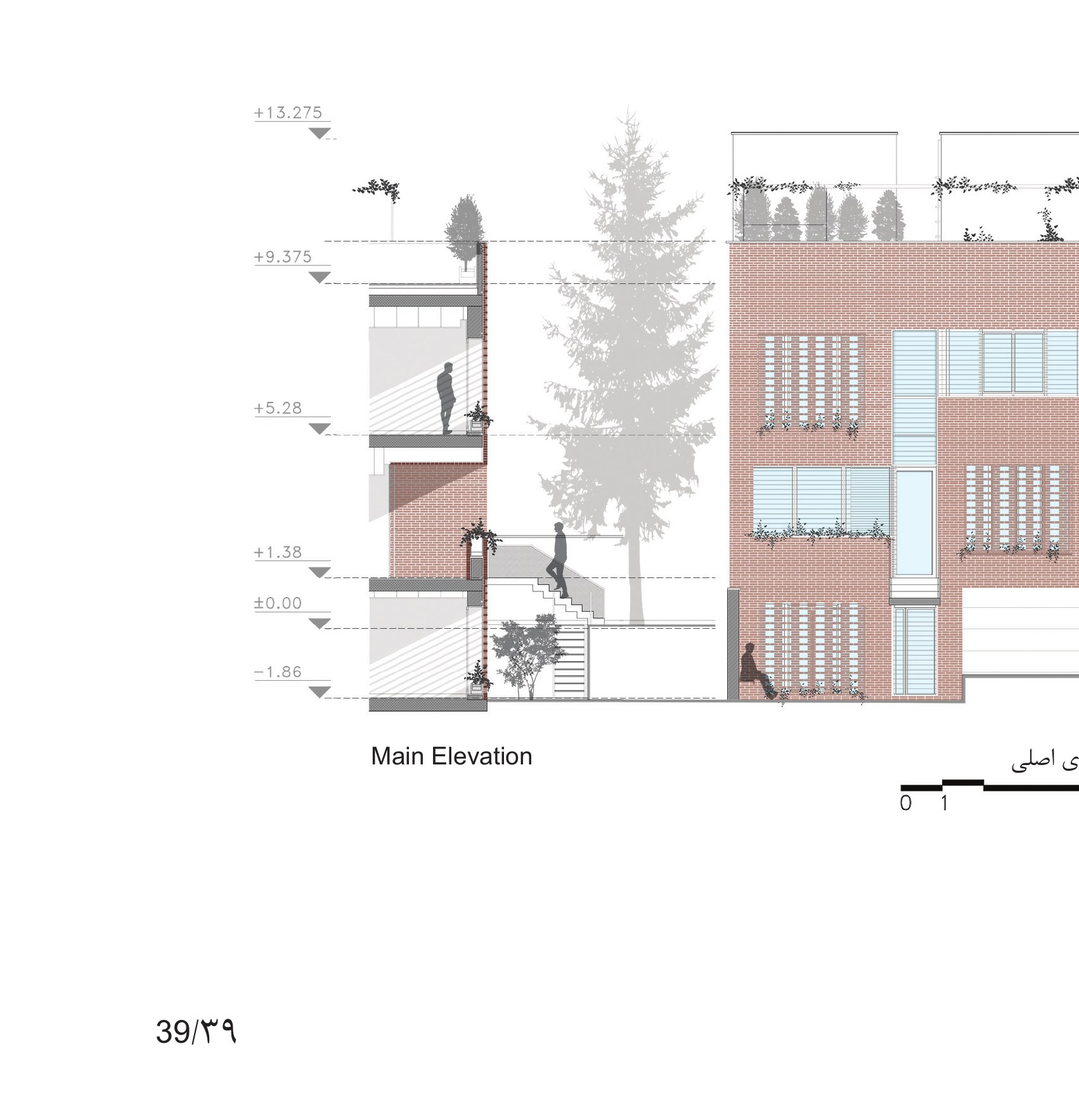
The building has been assumed in four levels — basement, ground, first and roof — and this notional cubic volume has been divided into smaller cubes. Each cube has a separate function, but movement between them is fluid and free; and in order to deliver natural light to the depth of the volume, some of the cubes have been removed (the central void, the northern patio, and the garden well).
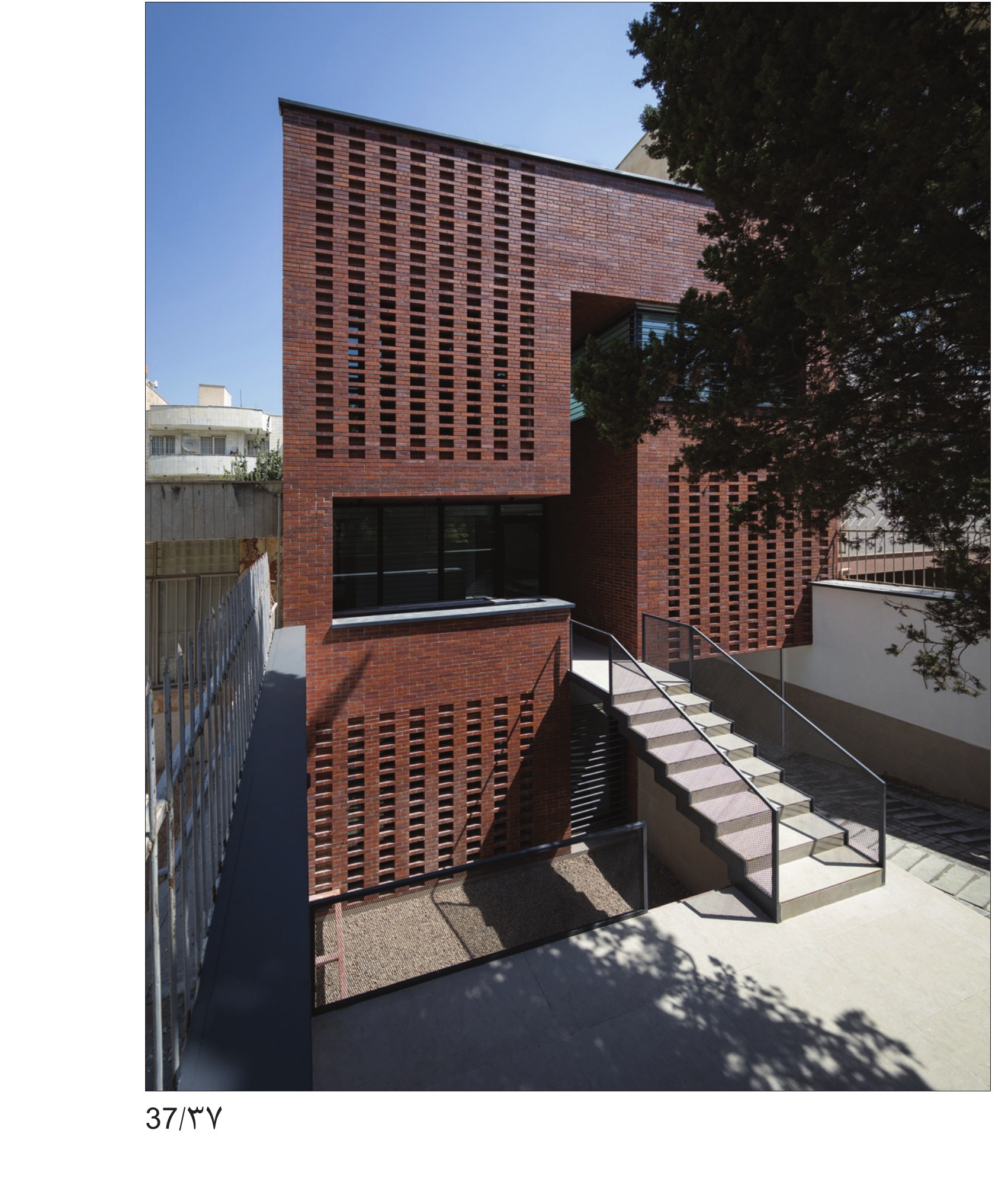
Because of the favourable view to the south, the project's facade has been taken as entirely transparent, and to control the measure of view and light at the uses behind the facade, an integrated skin has been provided that includes closed, lattice, and open parts. This skin is in truth a transitional space that registers within itself the influence of the inner volumes, the outer prospects and the tree standing in the courtyard; and in symmetry with the old school across from the project, brick has been chosen as its material. The space between the brick skin and the body of the building is made green with the placement of continuous planters.
To temper the environmental conditions, natural air circulation has been foreseen in the project. For heating, radiators and a hot-water system have been used; for cooling, an evaporative cooler — a fitting choice given Tehran's dry air.