Key points of the competition brief
Conduct of the competition and consultants' fee: The competition is held among a limited number of Iranian/foreign collaborating teams, selected through evaluation from a long list of Iranian and foreign consultants. The fee for each invitee is set at a fixed sum of 1,000,000,000 (one billion) rials; if all conditions of the competition are observed and the entry wins first place, the engineering services contract for the continuation of the project (Section C of Volume One) will be concluded. The winner is determined by a jury chosen from prominent Iranian and foreign architectural authorities, on the basis of pre-defined criteria and a points system.
The jury consists of: Nader Ardalan, Iraj Etessam, Arata Isozaki, Darab Diba, Ali Akbar Saremi, Amid Massoudi, and Sir Michael Hopkins.* The Project Management Unit's representative (without vote) acts as secretary of the jury. The jury is supported by experts in structure, mechanical and electrical services and so on (without vote). The official languages for designs, reports, and proposals are Persian and English. (* Peter Davey replaced Michael Hopkins in the jury.)
Evaluation criteria: 1) The values of the design in terms of contemporary architectural concepts — endurance, creativity and innovation. 2) The fitness of the design for the importance of the new oil industry in Iran. 3) Suitable adaptation of spaces and structural beds to present and future managerial needs. 4) Attention to workstations in office space design. 5) Suitable siting and best relation with the natural and built environment. 6) Environmental compatibility and use of green architecture. 7) Energy-saving and climate control. 8) New technologies, office automation, building management and intelligence. 9) Innovation and suitability of the proposed structural and constructional systems. 10) Proposed time-schedule. 11) Organisation and proposed staff for the continuation of the work.
Interview with Engineer Mohsen Bahravi, adviser to the Minister of Oil and project manager
The chief reason for this scheme was that the staff of the Ministry of Oil were dispersed in some 72 buildings around the city, which was disrupting communications. Hence the need for a single central building able to house the staff of the oil industry, who are in close working relation with one another, was always felt. After the end of the fifth Majles, pursuit of this project was one of the Minister of Oil's wishes.
An estimate showed that nearly 8,000 staff would work at various levels in this complex, and that nearly 100,000 m² of useful space and 170,000 m² of gross space were needed. The Abbas-abad lands and the area east of Taleghani Park, between Shahid Haqqani and Shahid Hemmat highways — which had previously had a commercial use — were proposed for this building. In long discussions with Abbas-abad Renewal Company, with members of the Article 5 Commission and with the honourable mayor, Mr Elviri, we were able to allocate 30,000 metres of this area to the building.
Of ten consultants invited, eight teams entered the competition and prepared their designs in the prescribed period — four months from the signing of the contract. The jury was selected from international experts: five Iranians, one Briton and one Japanese. A panel of experts was also appointed to study the designers' submissions and reports as to building intelligence, environment, architecture, structure and so on, and to rank the schemes; experts spent four days, the architects two days, in studying the designs. We look at these schemes as a useful occasion, since each is a lesson, not only for students but for active practitioners and academics. The project executor will deal reasonably with the jury's view and will try to enter into a contract with the first-ranked scheme, unless for a sound reason the first scheme is set aside.
Jury report (translated from the original English)
Introduction: The competition was held to find a suitable building in which the key elements of the Iranian Government's Oil enterprises could be brought together on one site. Competitors were required to provide accommodation for the Oil Ministry, the National Iranian Oil Company (NIOC), the National Iranian Oil Production and Distribution Company (NIOPDC), the National Iranian Gas Company (NIGC), and the National Iranian Petrochemical Company (NIPC).
The sponsors were looking for a development of distinction, which can set the tone for the whole of the Abbas-abad quarter — one of the most important sites in the capital where some of the major institutional buildings are to be assembled. The building should also symbolically demonstrate the importance of the organization it houses, be a land marker for the city as a major reference exemplifying new technologies and progressive social and cultural aims. The architecture should exemplify humanly enriching trends in science and technology with the aim of inspiring the future general direction of the country. It should also inspire new perspectives on social and cultural development.
The complex should provide a basis for the study of physical planning and its relevance to cultural context and human well-being, to provide working and social environments that can set advanced standards for the nation. Proposals should consider latest developments in generating environmentally appropriate buildings and make creative contributions in this area. The program set the very difficult problem of incorporating large and interconnected sets of functional spaces on a limited site in an area that is still developing.
Submissions: All eight submissions made creative suggestions about environmental issues, in particular new forms of ambient energy use, climate control and pollution restraint. Many entries proposed new approaches to efficient and humane office organization and workstation design. In many cases, communal areas were imaginatively designed to provide convenient and socially engaging places. On the other hand, some entries seemed to import fashionable forms without full consideration of cultural context and the competition brief. Space and light were often well considered in relation to use, climate, latitude and social customs. Creative approaches were often made to organizing the different specialized parts of the complex and the circulation systems between them. Overall designs were usually intended to project an architectural presence appropriate to the nation and the symbolic intentions of the program, creating potential cultural landmarks.
Jury report: After careful deliberations, the jury decisions are as follows: 1. First place winner shall be project number two (2), who shall be commissioned for the professional design services, contingent upon the appended detailed considerations related to the project that has been prepared by the jury being agreed to be implemented by the consultant in the final design. 2. Second place shall be project number one (1).
Entry 1 — Bavand Consultants + Kirkland Partnership International (Toronto, Canada) — Second Place
Bavand design team: Principal in Charge: Iraj Kalantari. Design Advisor: Hossein Shaikhzeineddin. Project Manager: Majid Zandieh. Construction Management: Mohammad Moghadam. Coordinator: Shahrzad Mahdavi. Design Architects: Kaivan Kodairi, Hossein Lotfi Shemirani. Kirkland Partnership International: Principal in Charge / Design Lead: Michael Kirkland. Project Manager: Kit Wallace. Production Manager: Steven Robinson. Design Architects: Angela Chang, Yang Li, Krassimir Vassilev. Structural design: Halsall (Toronto). Mechanical and electrical design: Jain & Associates Ltd., Toronto. Quantity surveying: Curran McCabe Ravindran Ross Inc., Toronto, in association with Currie & Brown, London. Dayere Design Office: Ali Moghadam, Farshad Afzalinejad, Ali Farivar Sadri, Ashkan Ghadirinia. Presentation works and 3D: Jamshid Bayandor.
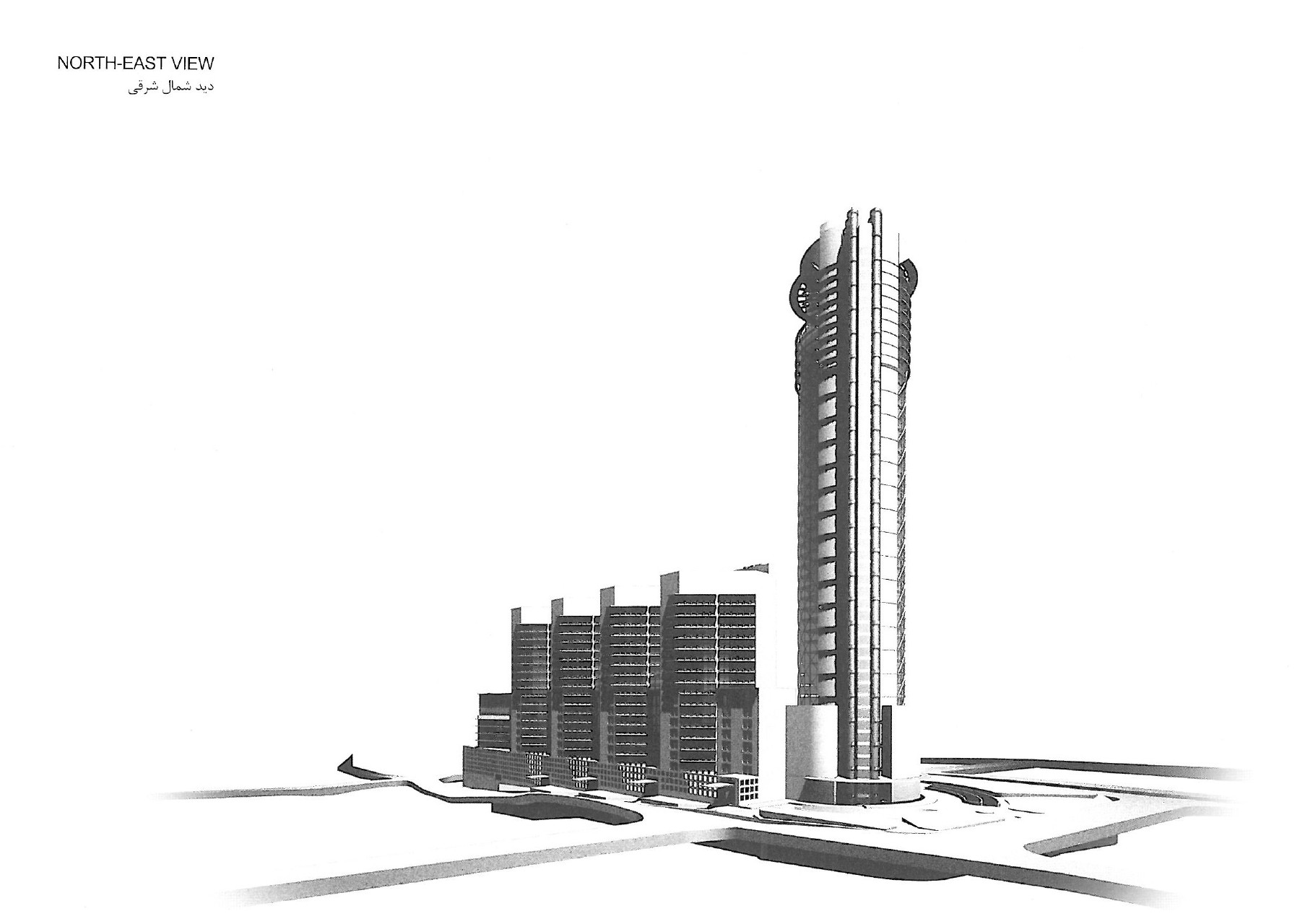
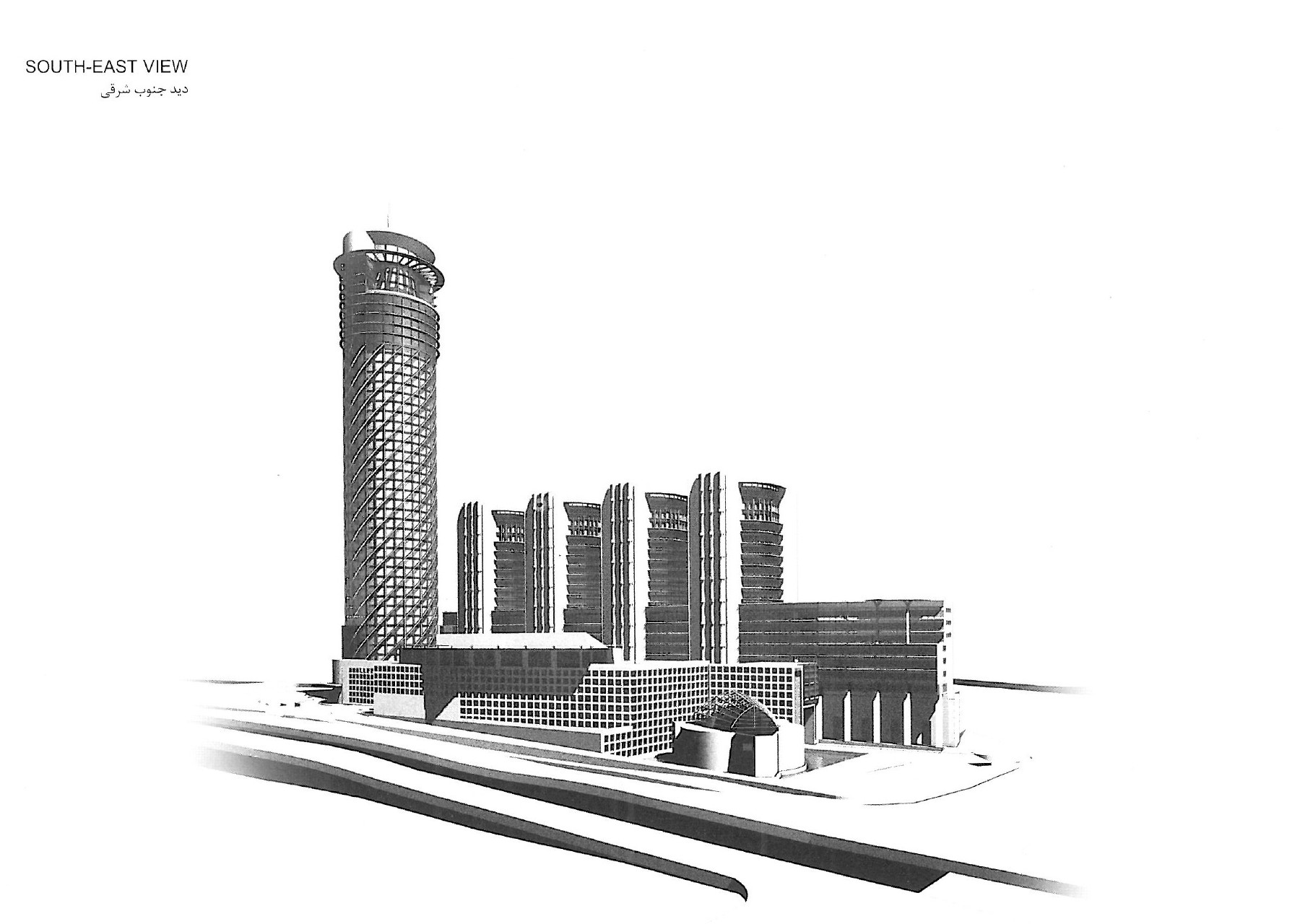
The Abbas-abad site, though situated within the established city, is a unique and mysterious thing. The subject site is at the centre of a proposed constellation of public institutional buildings, parks and plazas. We embrace the potential of providing a building formation which acts as a sentinel, a campanile for this precious district, to the larger city. Using a wilful interpretation of site boundary anomalies, the given north-south ordnance grid and a notional geographical orientation to Mecca, the scheme is governed by an underlying geometrical system. At the centre of the composition is an axis which positions the great tower and minaret marking the entrance to the courtyard of the mosque. A 9 m grid rotates about this central axis providing simple orthogonal structure compatible with parking, and economic spans in both concrete and steel.
The five oil-industry divisions sit on a shared podium base, with one of the principal volumes — the Oil Minister's building — atop. Movement is organised by a series of routes and promenades; each company has an individual street entrance which connects to a separate lobby and an affiliated courtyard. The courtyards comprise, collectively, a series of terraces arrayed along a set of circulation axes. Building security uses a three-tier system, with electronic pass cards that may be upgraded to fingerprint identification. A brise-soleil screening system is proposed for the street front: a 2.2 m square grid inclusive of 1.6 m square openings, providing shade and a kind of Persian privacy. The complex is set on a 9 m base grid; the cladding is travertine with curtain wall and aluminium panels, and an alabaster wall provides a honey-toned luminescent presence between the concourse and the garden promenades.
Entry 2 — Gueno Consulting Engineers + NORR Group (Toronto, Canada) — First Place
Gueno Consulting Engineers is a renowned Iranian consulting firm with 29 years of experience of providing multi-disciplinary consultancy services to a vast number of clients in Iran and abroad. Gueno is the first Iranian private consulting firm to have ISO 9001 certification and is also the recipient of the Arch of Europe special-recognition award for the year 2002, among 200 firms worldwide with ISO 9001 certification. NORR Group Consultants International Ltd. is a fully integrated firm of architects and engineers, with head offices in Toronto, Canada and regional offices in Abu Dhabi and Dubai. NORR's parent company, Giffels Associates Limited, founded in 1948, is one of Canada's leading consulting engineering firms. NORR provides architectural, interior and space-planning, structural, mechanical and electrical engineering, civil engineering, master planning, project management and facilities management services.
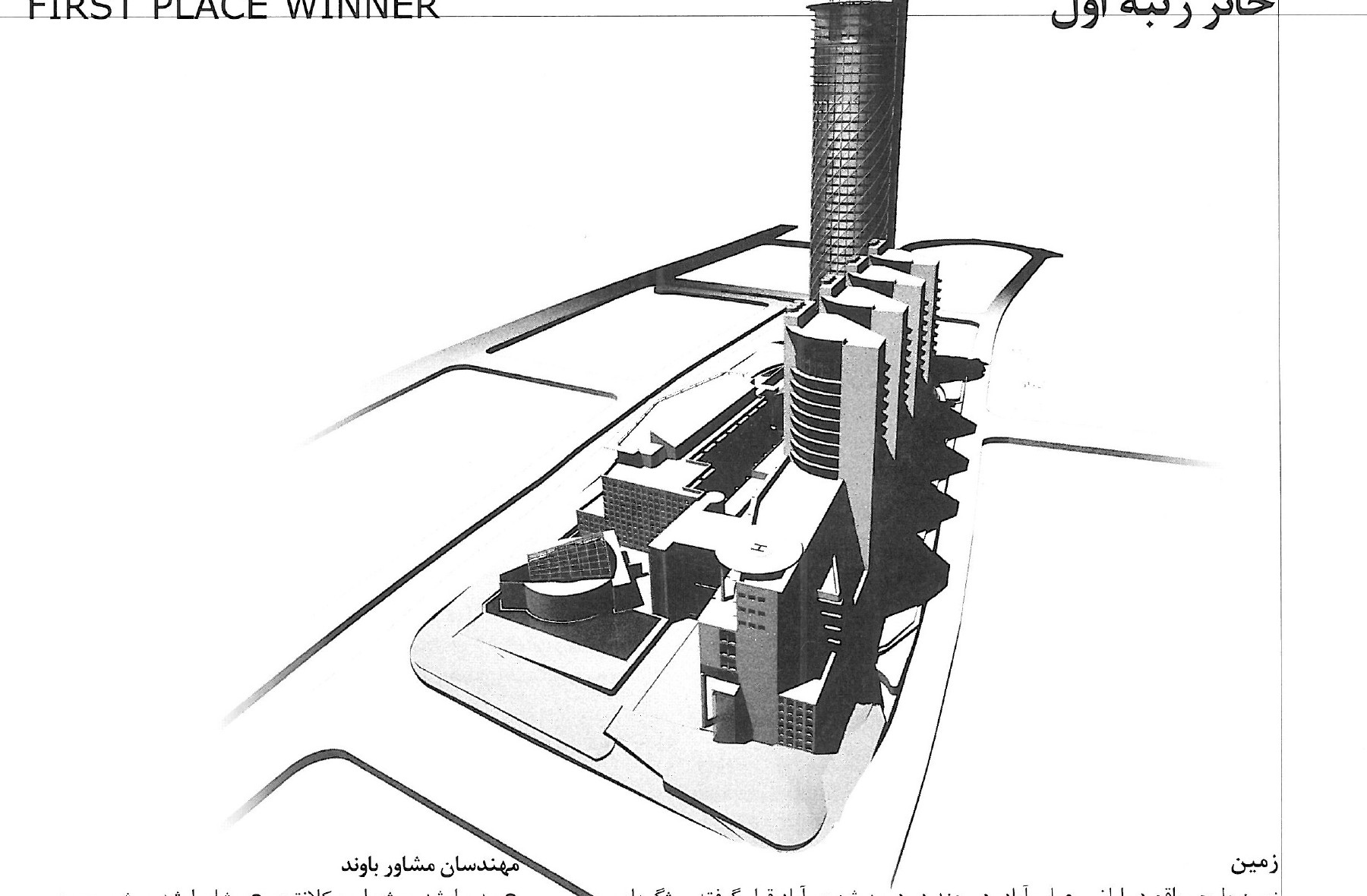
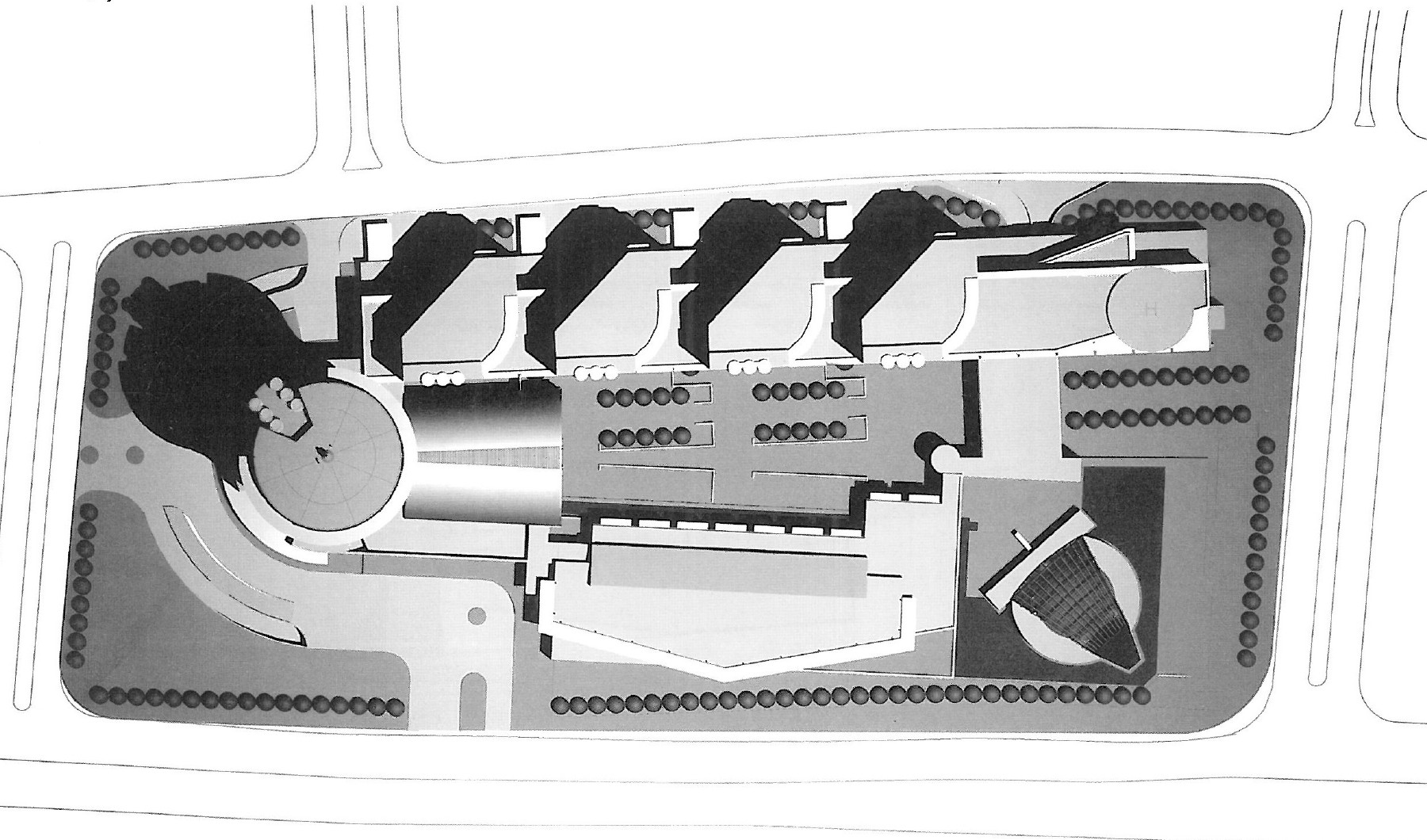
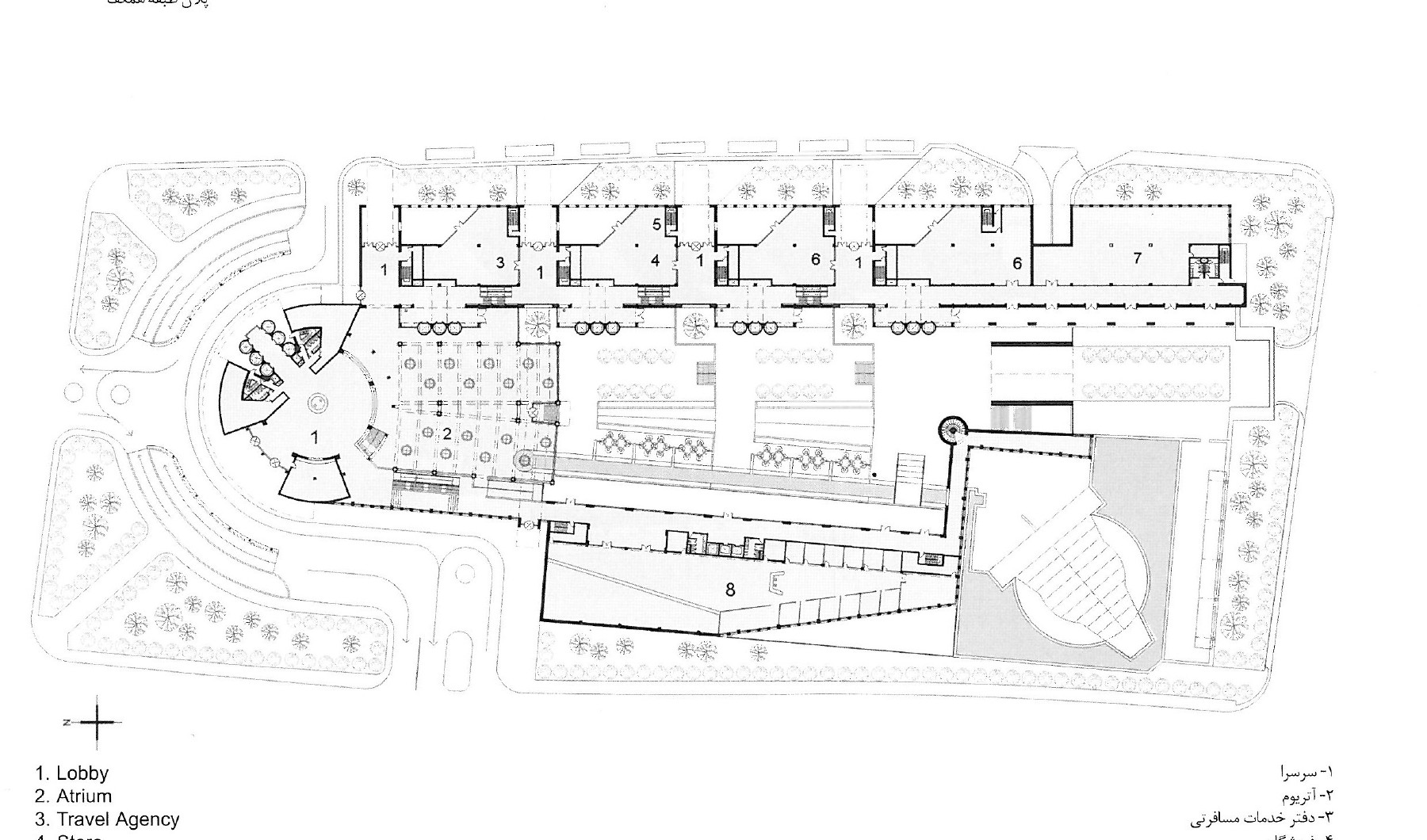
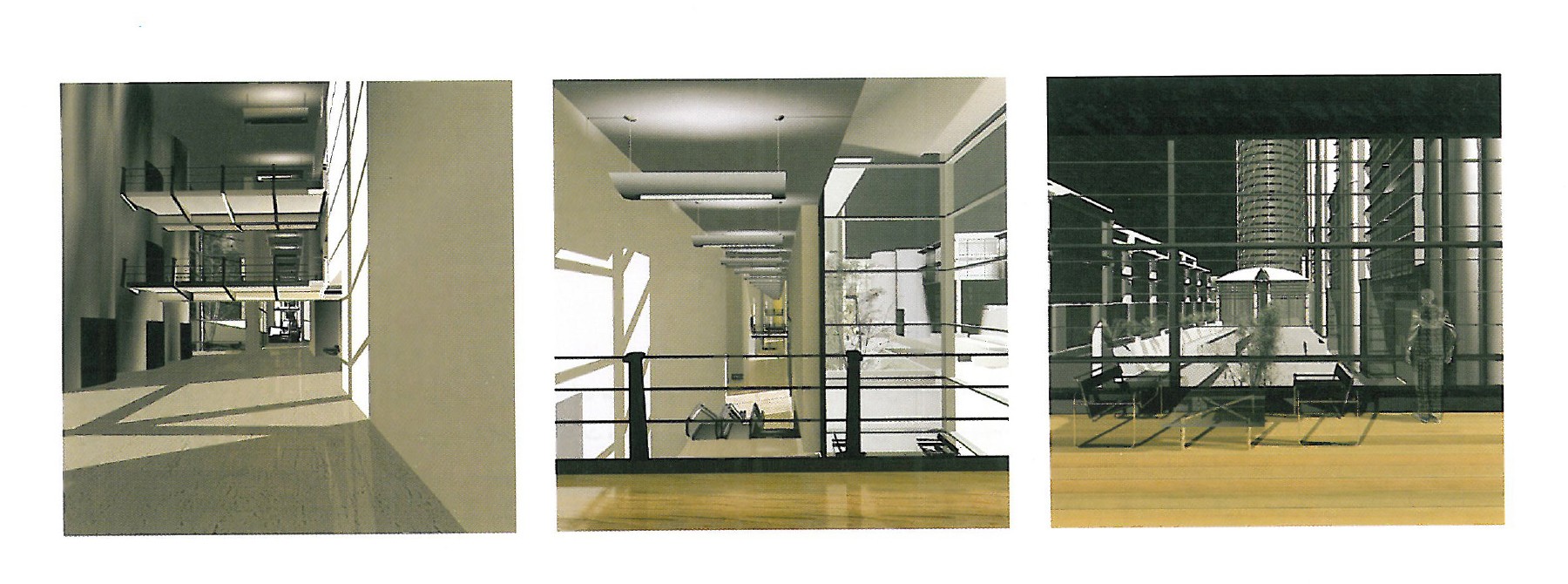
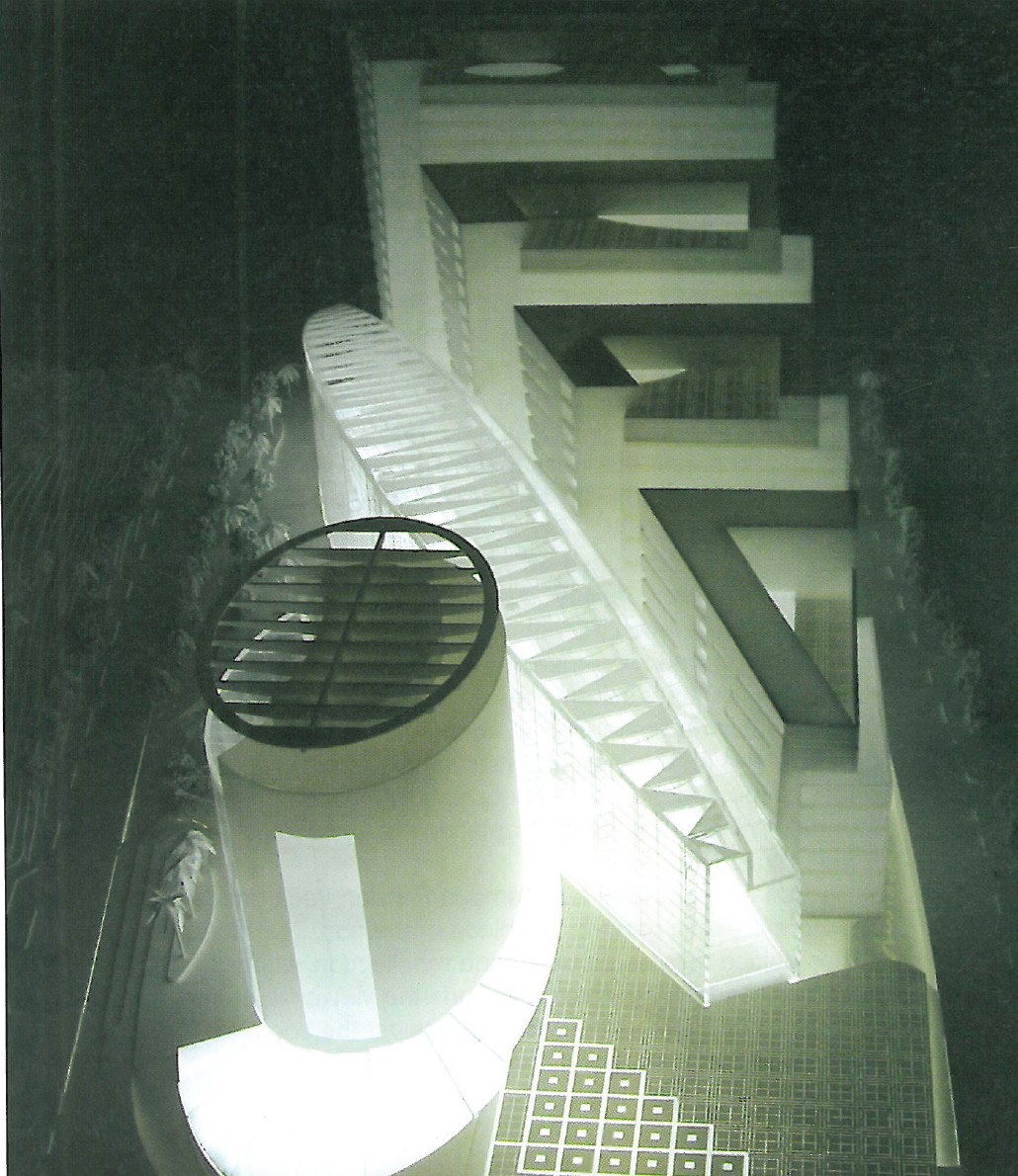
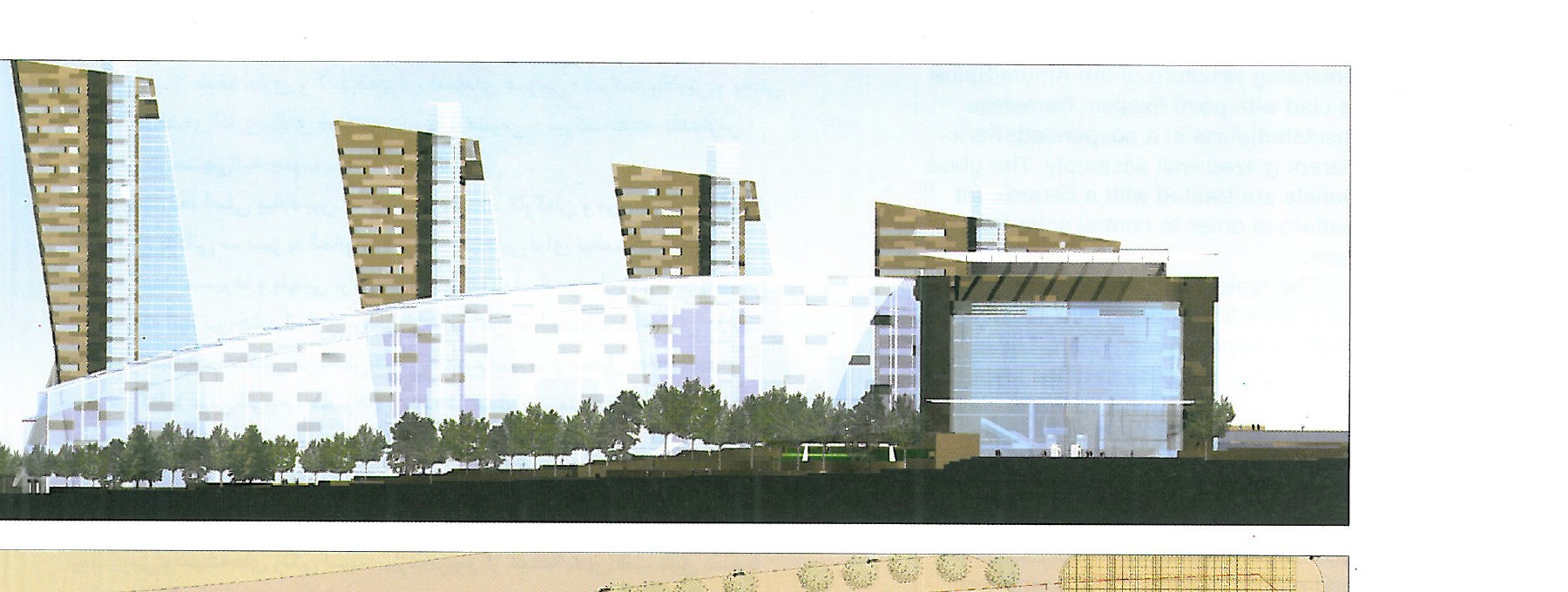
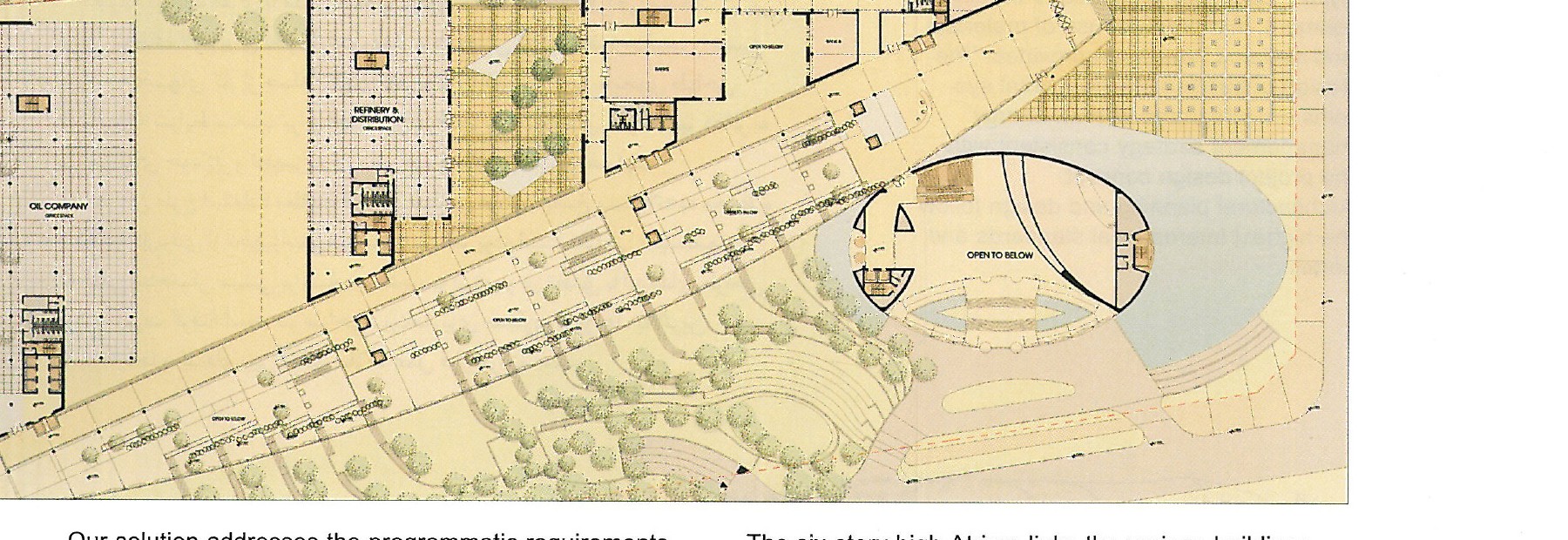
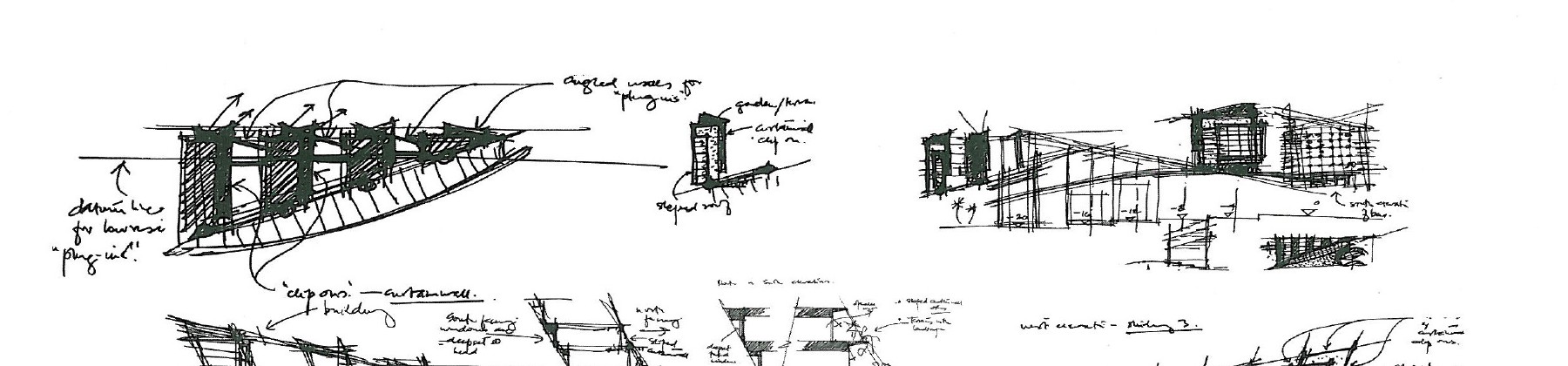
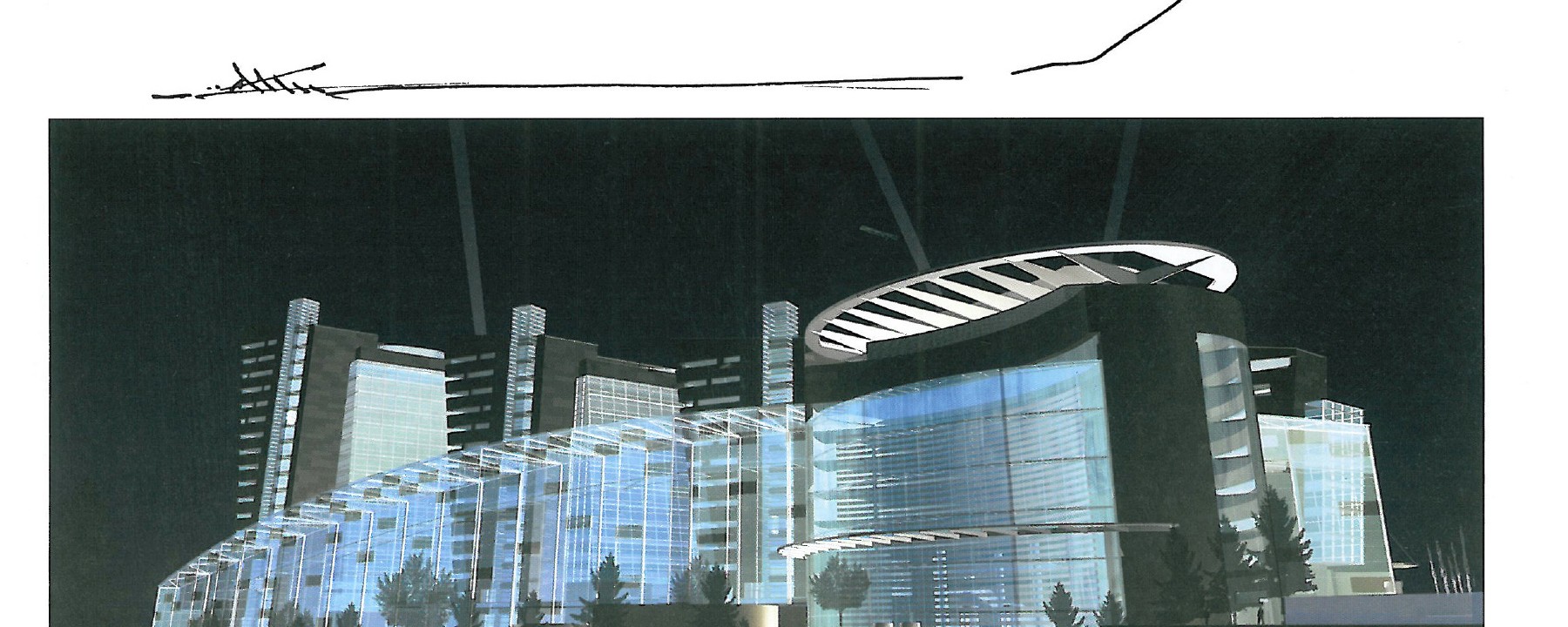
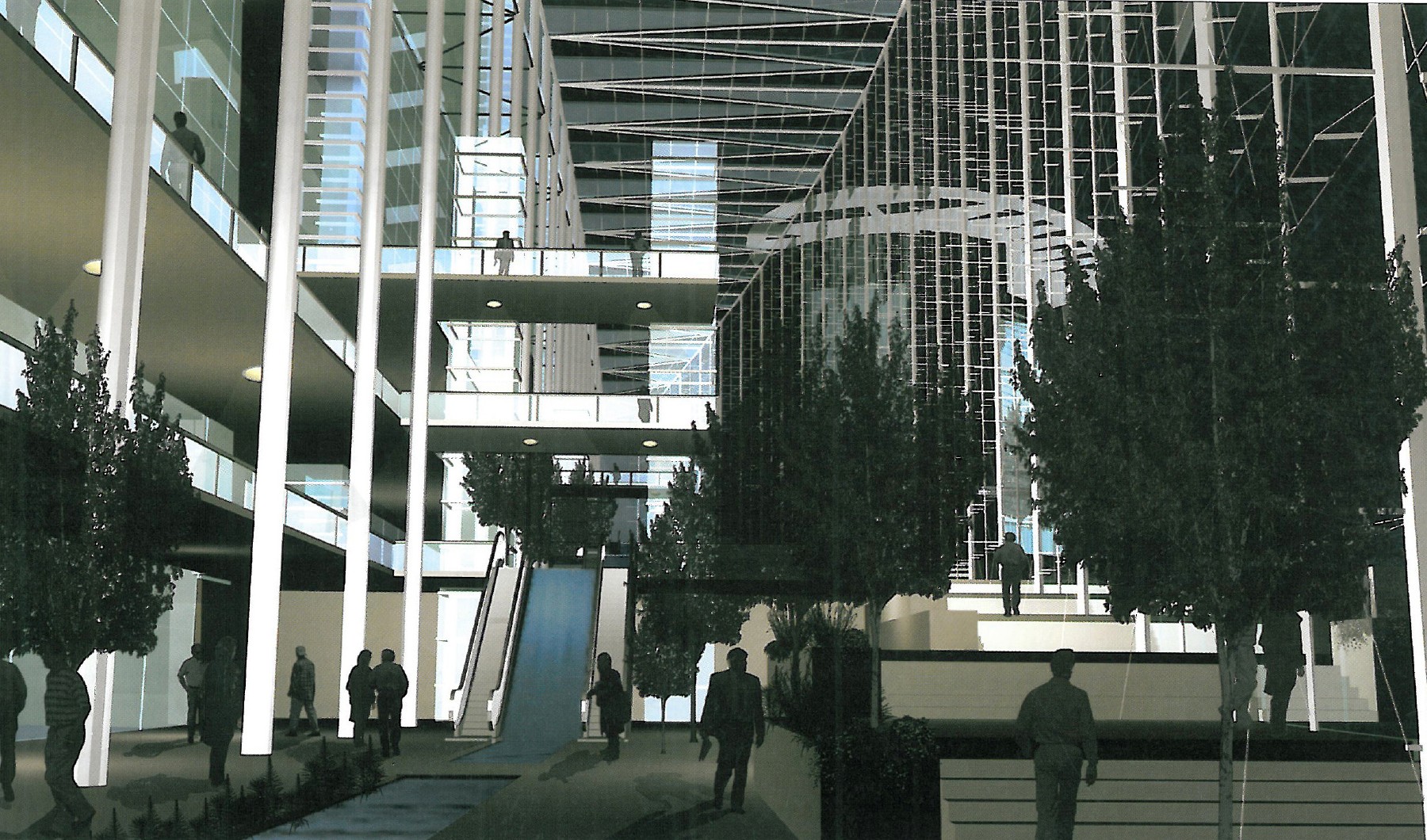
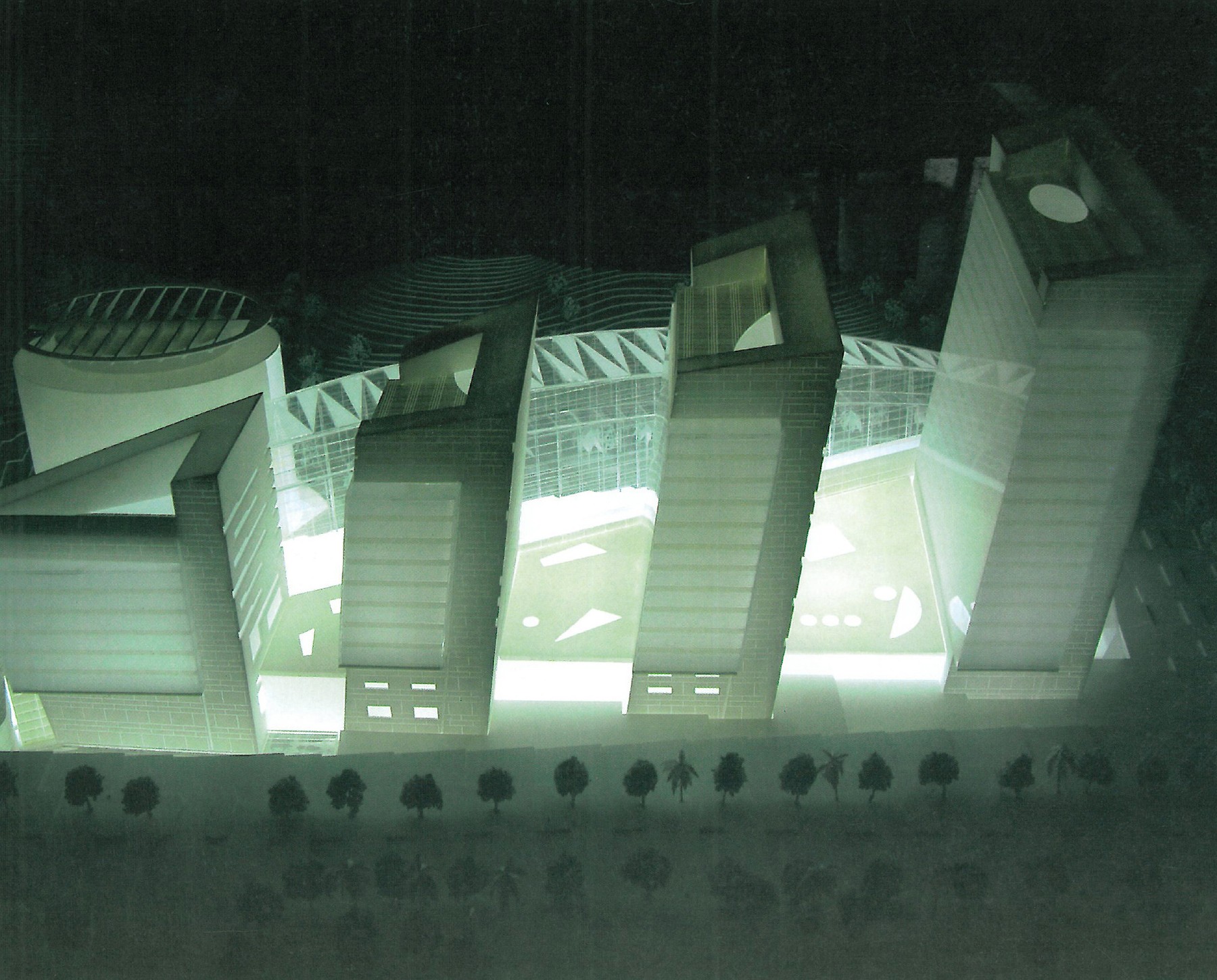
The project takes maximum advantage of the site, balancing the needs of the oil industry, its progressive values, and aspirations of the environment with the values of Iranian society. The large building mass is designed in harmony with the mountains north of Tehran and is a complex of stepped buildings linked by a six-storey glass atrium. The covered green oasis of this atrium plays the part of a winter and summer garden, moderating the building's interior climate throughout the year. The spaces between the buildings are arranged as a sequence of semi-public covered and open courtyards.
The five departments of the oil industry are arranged as separate buildings linked by the central atrium. The six-storey atrium links the various buildings and activities on the site. Starting from the northernmost element and moving south: the Petrochemical Company is at the northern end, with 8 office levels and 4 levels of common areas; the Gas Company has 9 office levels and 4 levels of common areas; the Refinery and Distribution Company has 13 levels of office space rising above common services; the Oil Company, the southernmost and tallest element, has 17 office levels. The Oil Ministry sits in the northern part of the site, on the eastern axis (where the National Library also stands), benefiting from a central, distinctive position 6 m above the podium. The atrium is the primary pedestrian link, with stepped landscaped gardens, water elements, plants and seating, glass-enclosed panoramic lifts, a curved glass wall along the east connecting to a walled garden, and roof terraces with views of the northern mountains. On the exterior, the office buildings are clad in polished and honed Iranian granite and unitised aluminium.
Entry 3 — Naqsh-e-Jahan-Pars Consultants (Hadi Mirmiran) + NHT & Partners (Frankfurt, Germany)
Naqsh-e-Jahan-Pars was founded in 1367 (1988) by Engineer Seyyed Hadi Mirmiran together with several Iranian architects and engineers in the specialised fields of architecture and urbanism. NHT & Partners was founded in 1965 in Frankfurt by three partners, with Hans Ulrich von Mende, Frantzik Netupil and Karl Michael Toss joining the firm; it has continued for many years in close cooperation with various working teams and has been general planner for several distinguished projects, including a high-rise for the Hanseatic Trade Center in Hamburg and a second high-rise for the IBM pension fund (WaG) in Frankfurt.
Naqsh-e-Jahan-Pars team: Design Manager: Seyyed Hadi Mirmiran. Associates: Hamid Mirmiran, Samira Bahrami, Ebrahim Sina, Kiarash Nokhost, Mitra Keykhosravian, Saman Sayyar, Pooya Razavi. Model: Hamid Asgari. 3D drawing and animation: Saman Mo'ayyer.
Entry 4 — Baft Shahr Consultants
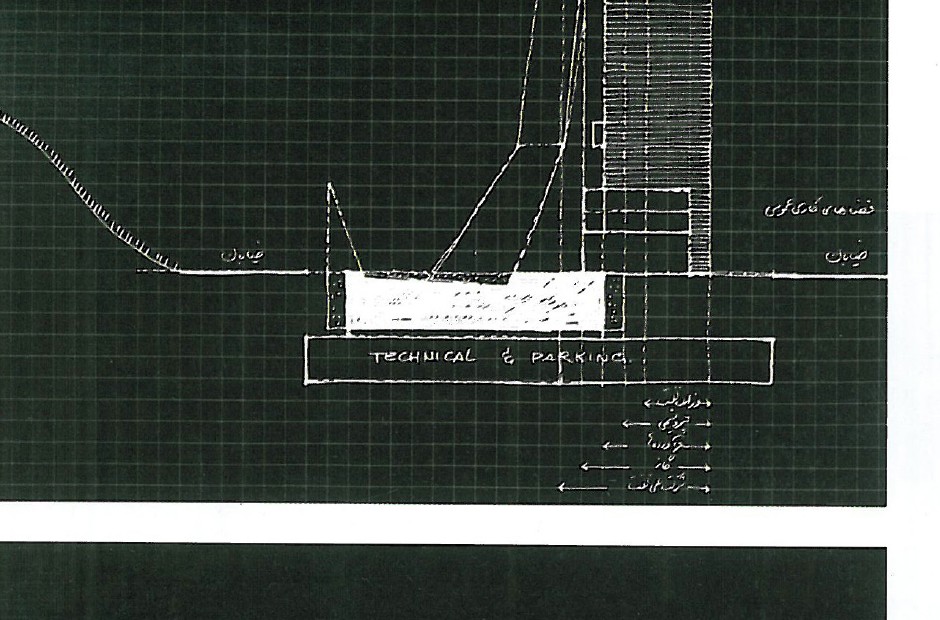
The expert members of Baft Shahr Consultants started their professional and specialist work some thirty years ago, and from 1360 (1981) adapted their organisation in line with the new regulations of the Plan and Budget Organization, continuing their activity since.
Entry 5 — Tarh Takvin Bana + Carlos Ott Associates (Montevideo / Toronto)
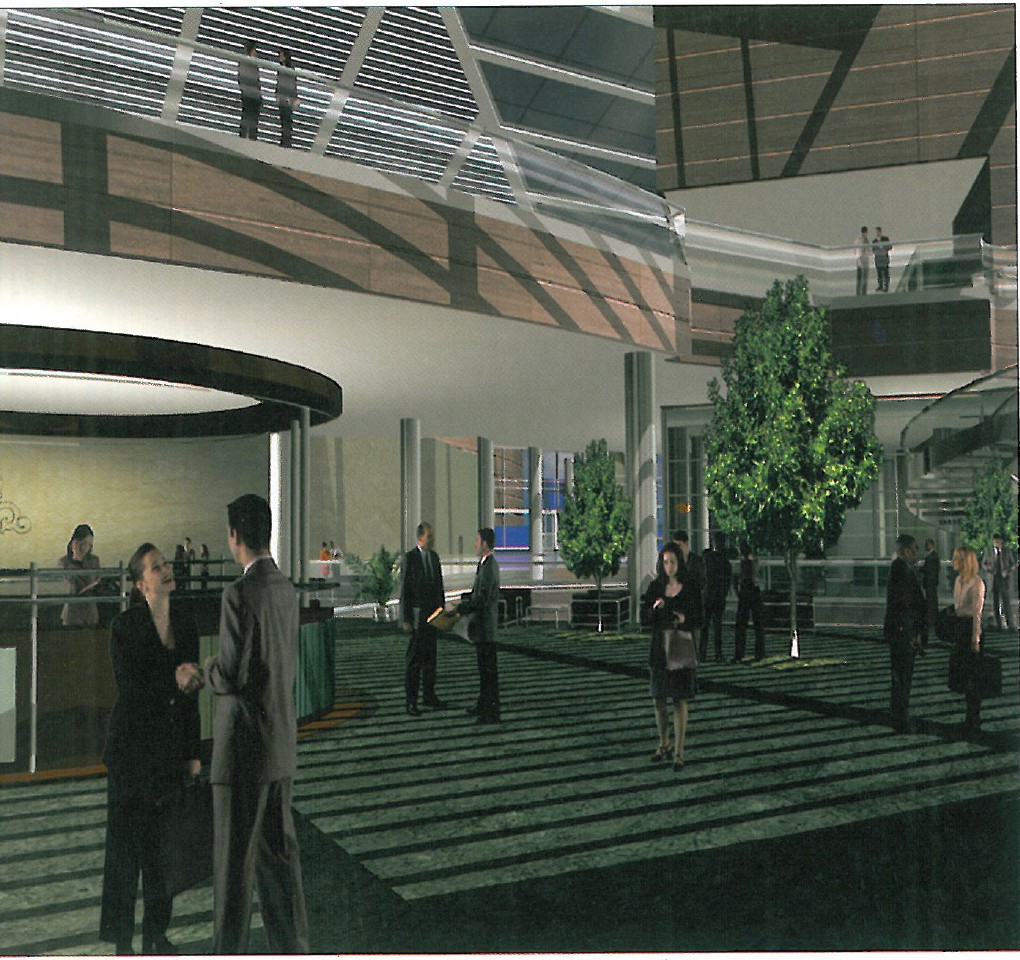
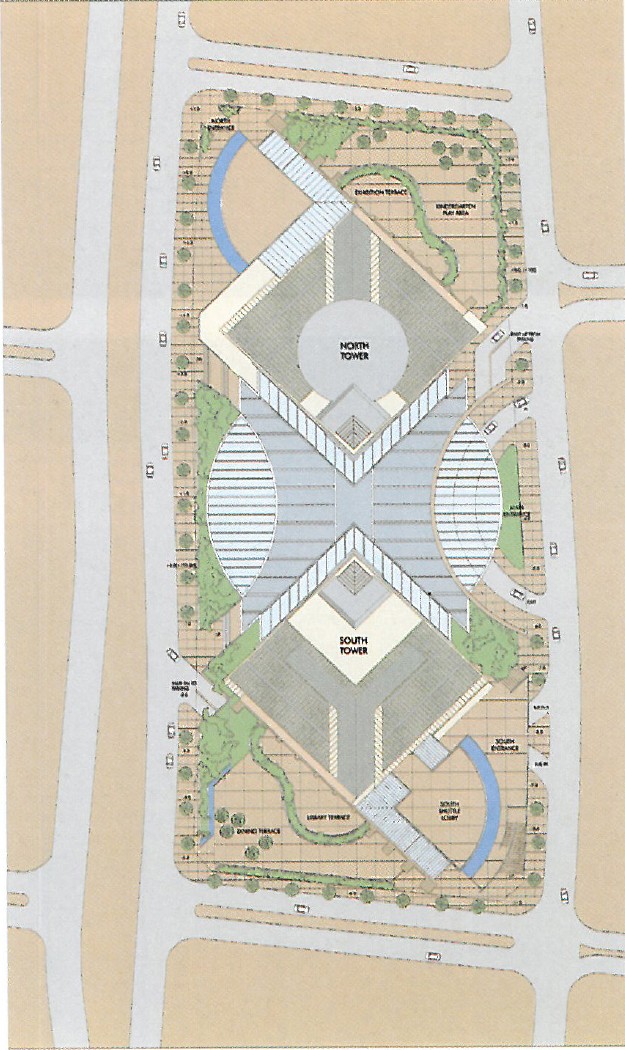
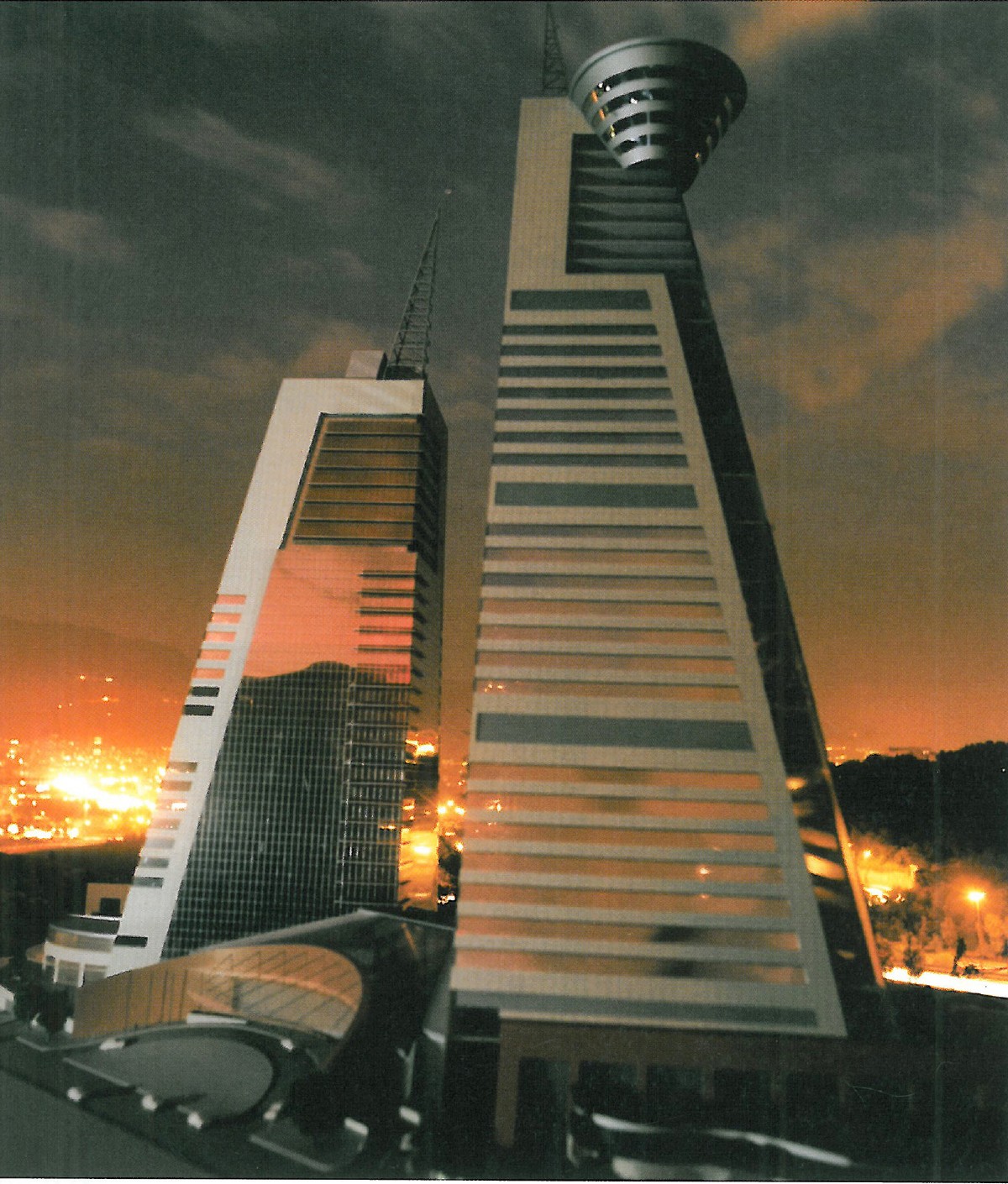
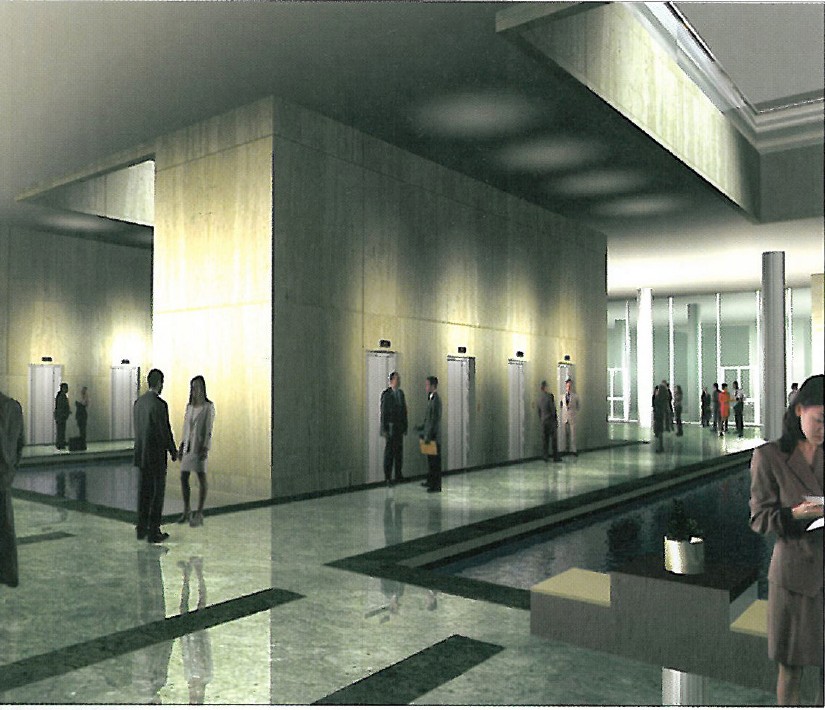
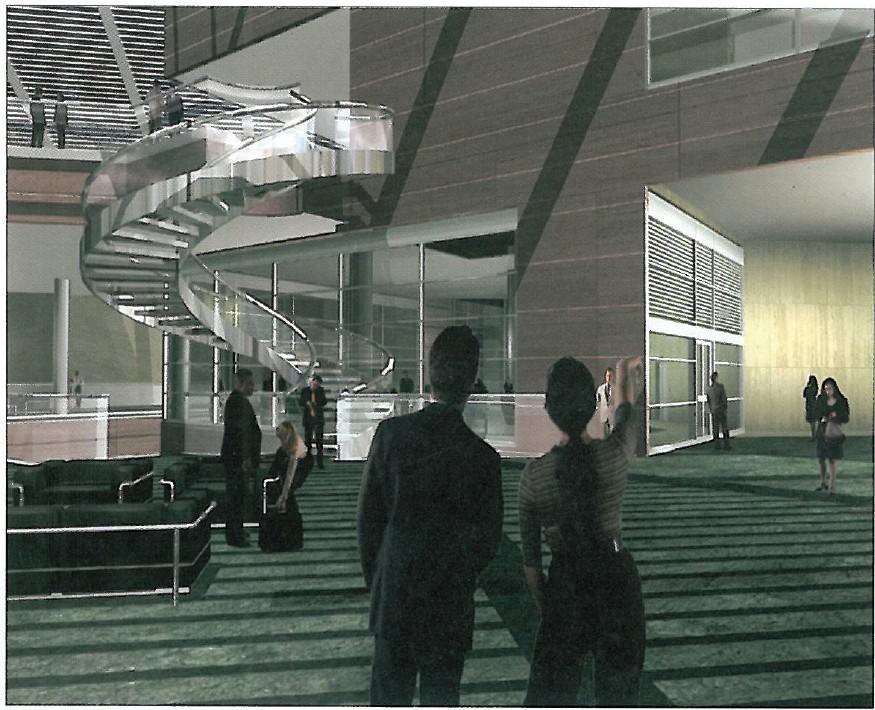
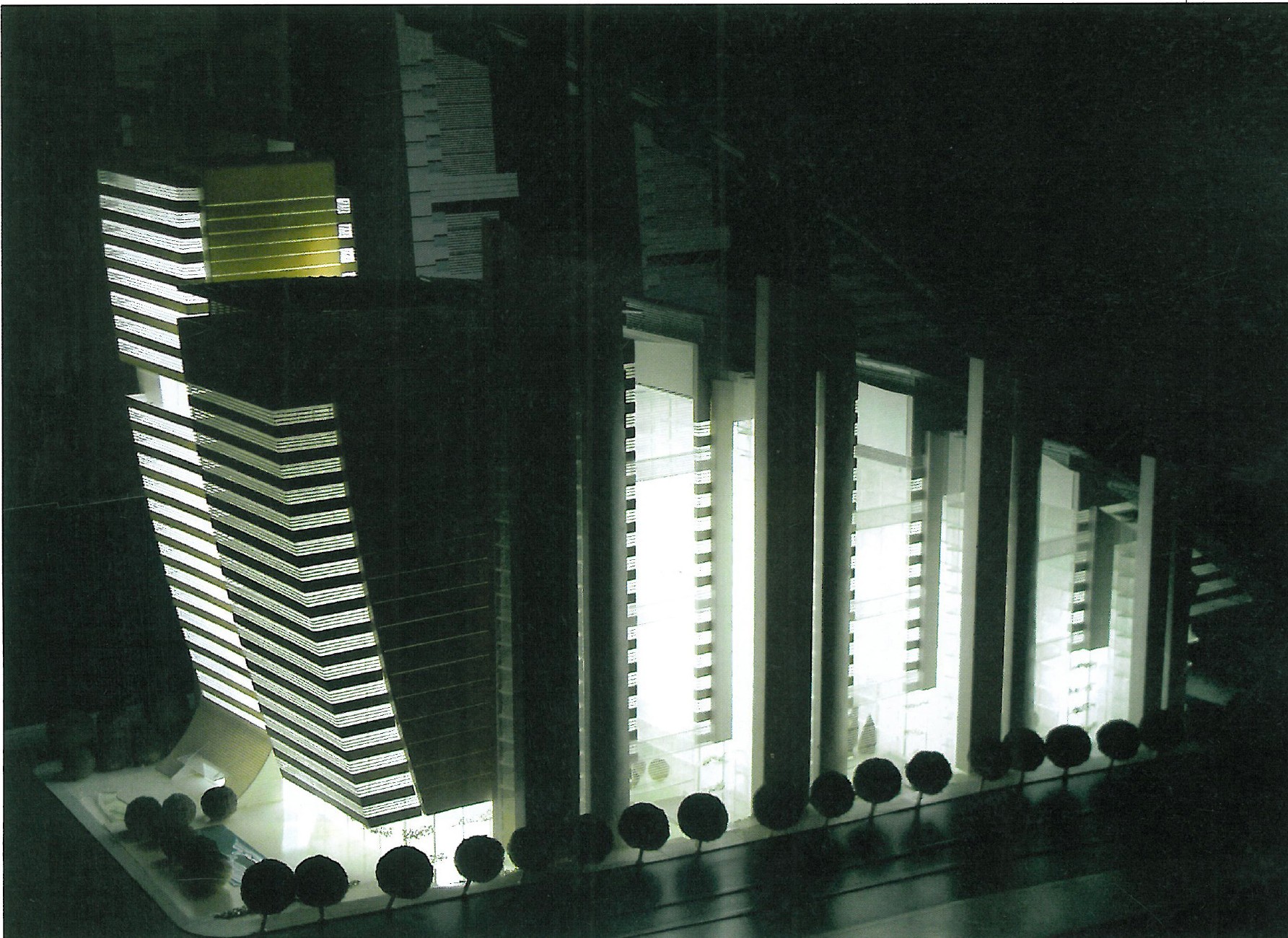
Tarh Takvin Bana, alongside the design of various private-sector residential and office projects, is the architect of the Milad Tower in Tehran (from the start of the project till now) and Ayandeh-Saz town. With long experience in international competitions, Carlos Ott has designed major projects and has been the winner of many international competitions, including the Headquarters of the Ministry of Oil in Abu Dhabi, the Headquarters of the National Bank of Abu Dhabi, the Bastille Opera in France (1989, Légion d'Honneur), the Headquarters of the German Architects' Association, the NASA Headquarters, the architecture prize of the University of Washington (USA), and others.
Architecture team: Carlos Ott, Silvia Menendez, Fernando Alba, Mehdi Ghafari, M. Tabib Ghaffari, M. Asadikia, A. Toomeh, G. Afsharzadeh, M. R. Hafezi, with the technical staff of Carlos Ott Associates and the Tarh Takvin Bana office. Structure (Tarh Takvin structural division): B. Haghighi, M. Halabian, M. Tabesh, A. Ayoubi. Electro-mechanical: with Energy Consulting Engineers.

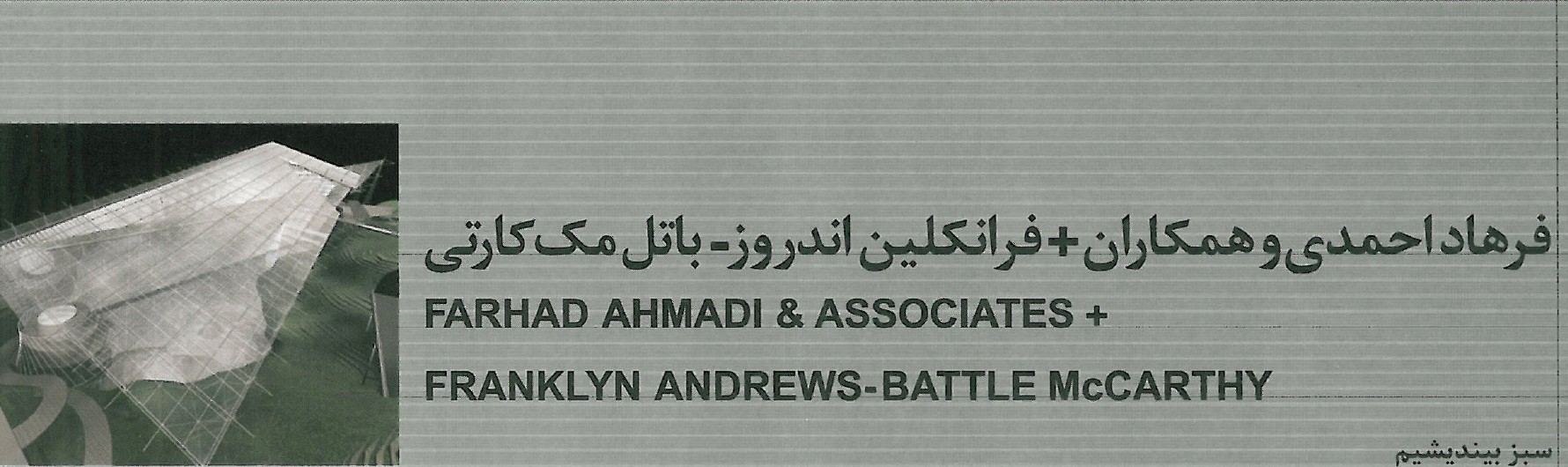
Entry 6 — Farhad Ahmadi & Associates + Franklin Andrews / Battle McCarthy
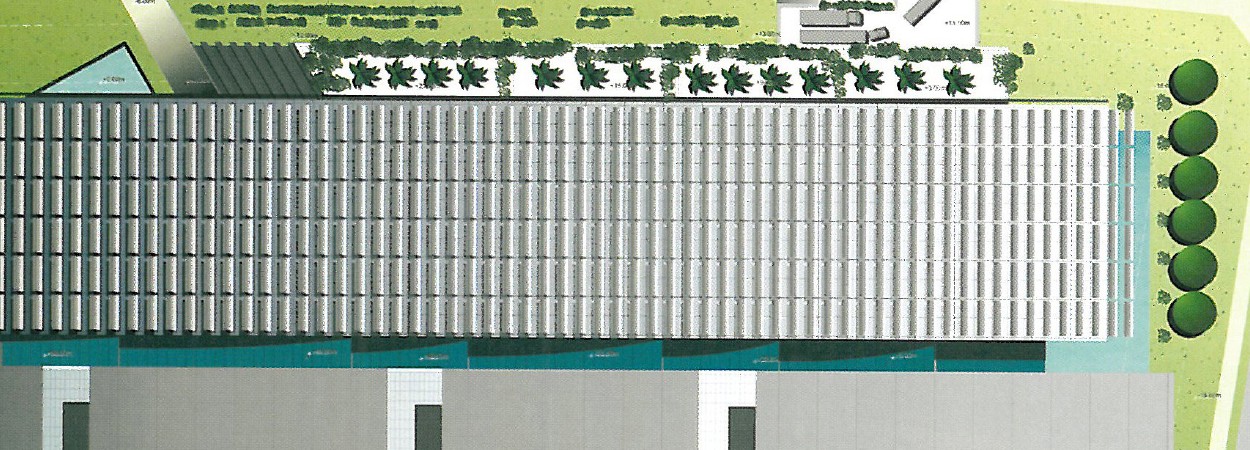
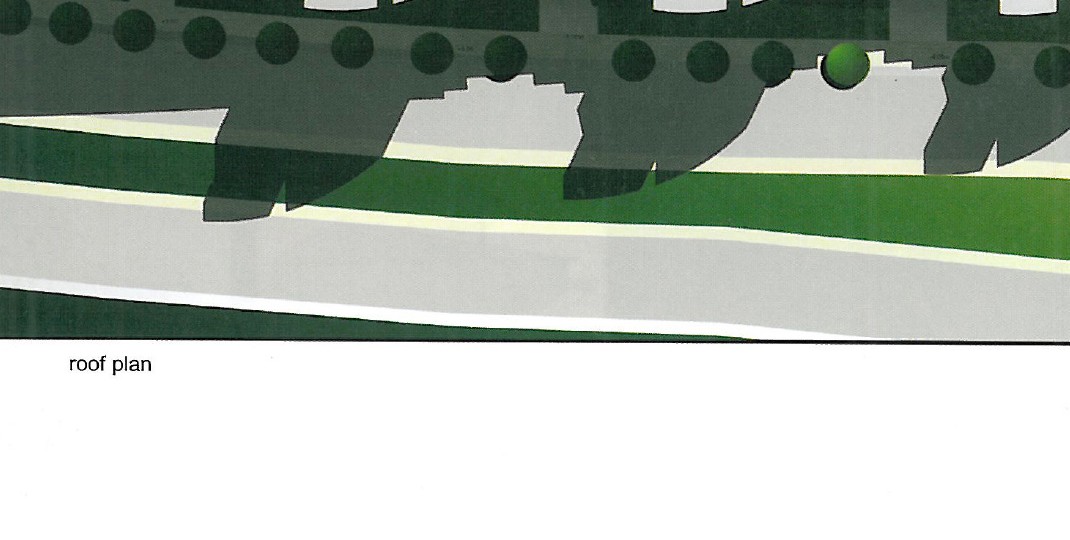
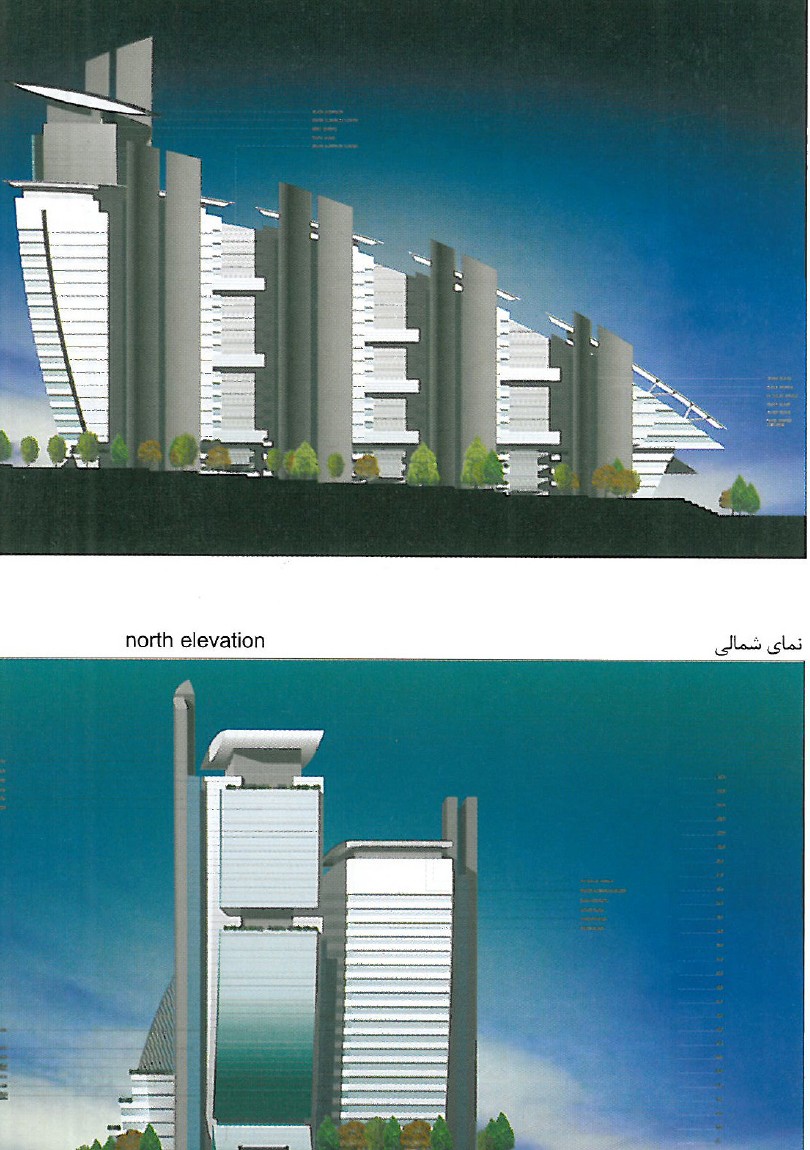
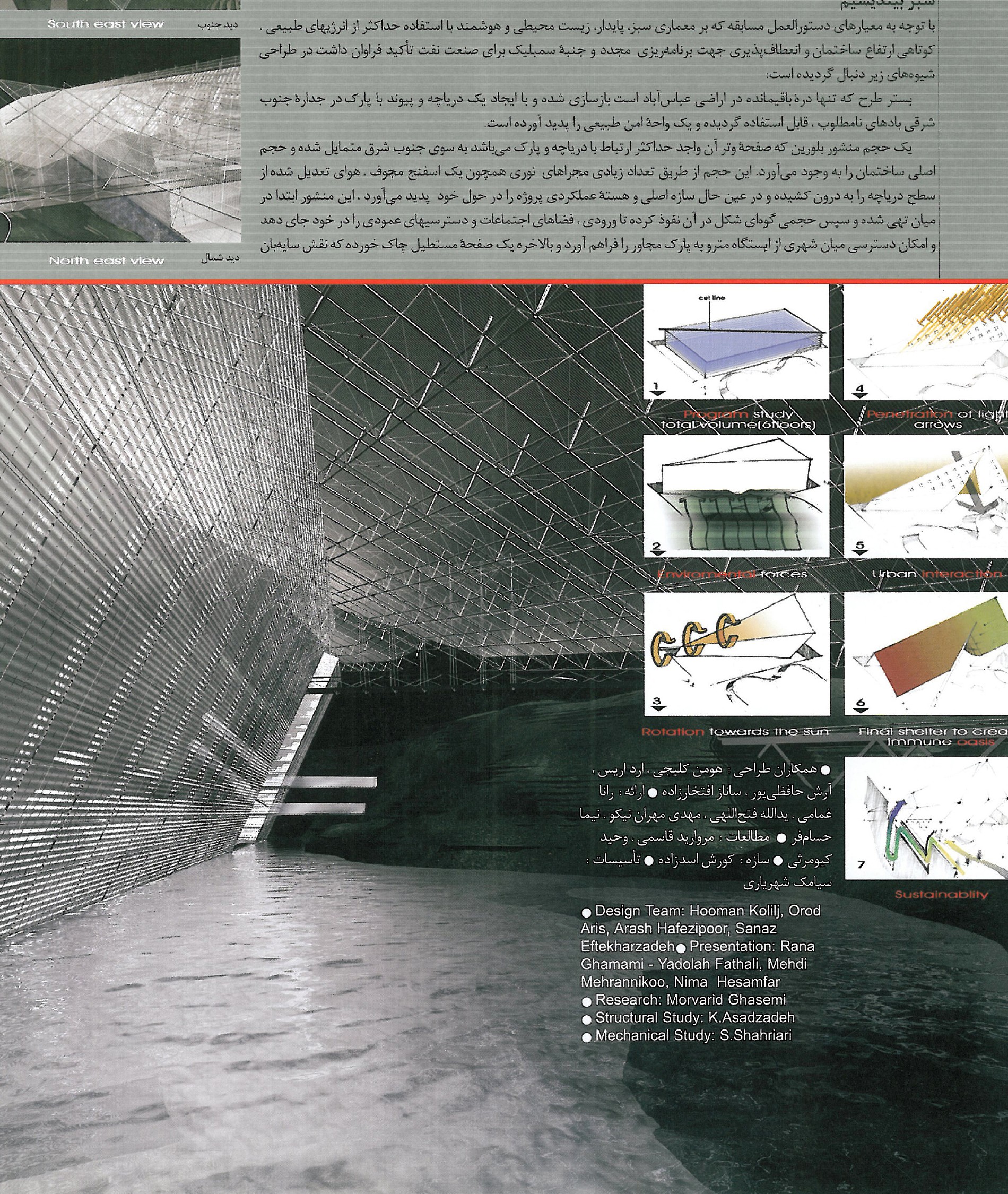
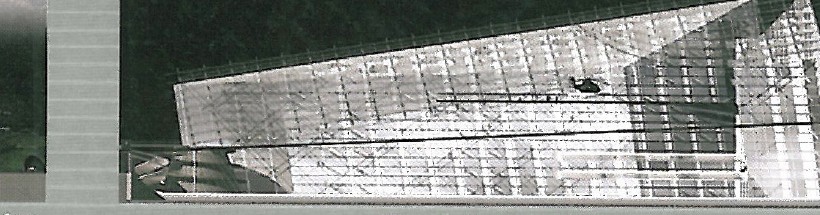
Given the brief's emphasis on green, environmentally sustainable, intelligent architecture with maximum use of natural energy, low building height, flexibility for re-programming, and a symbolic aspect for the oil industry, the design pursued the following methods: the hill — the only remaining tree-cover on the Abbas-abad lands — was reconstructed and, with the creation of a lake and a link to the park along the southern edge, gives unity and a symbolic dimension to the building. In the crystalline-prism part the disciplined work spaces are placed; the service-amenity spaces are formed along the other edge of the lake, beneath a green surface, in a topological space.
Using a natural oasis and emptied building rods, energy use for lighting and ventilation is reduced by more than 85 per cent, and the staff feel themselves in a natural environment; the integrity of the volume allows re-programming. The maximum height of the building from the surrounding streets is ten storeys. The building's steel skeleton is combined with H-section concrete pieces that hold the raised floor and the air and light ducts. The façade is wholly glazed, and the sun-shading screen is made of metal.
Entry 7 — Goudarz Manavi + Francois Dubuisson + HQE expert Miroslav Jorgasevic
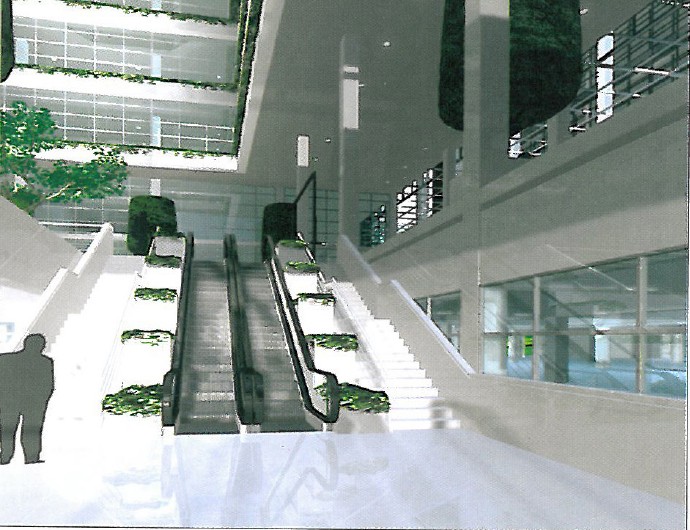
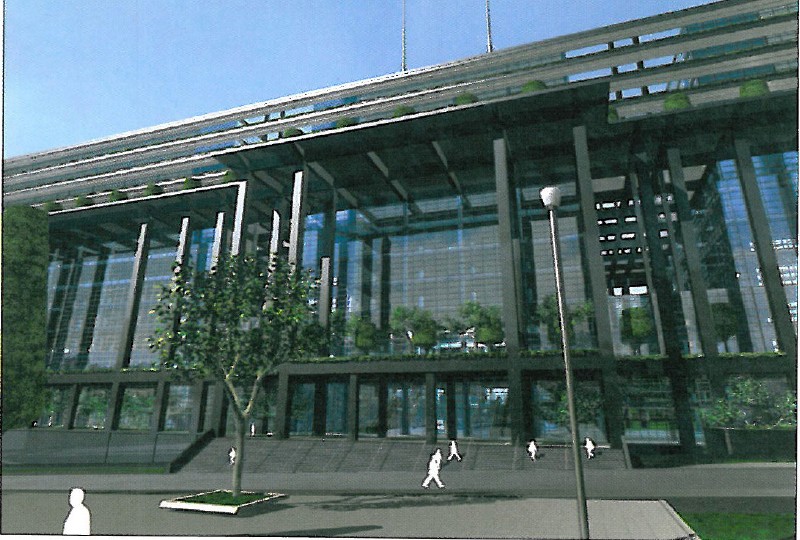
The headquarters of the oil industry is a lasting building whose inner concerns must perform in a simple and distinct body. We believe that a design is for being built; in this respect attention to function, the speed of works on site, materials and construction means available in the country, building costs, ease of maintenance, and finally the observance of the rules, laws and standards governing the design will have high priority. The most fundamental concern of the designers will be to bring about a pleasant and comfortable space for staff and visitors. Acting on the recommendations drawn from environmental standards ISO 14001 — HQE, Green Building, Ecological Building — has been our guide here.
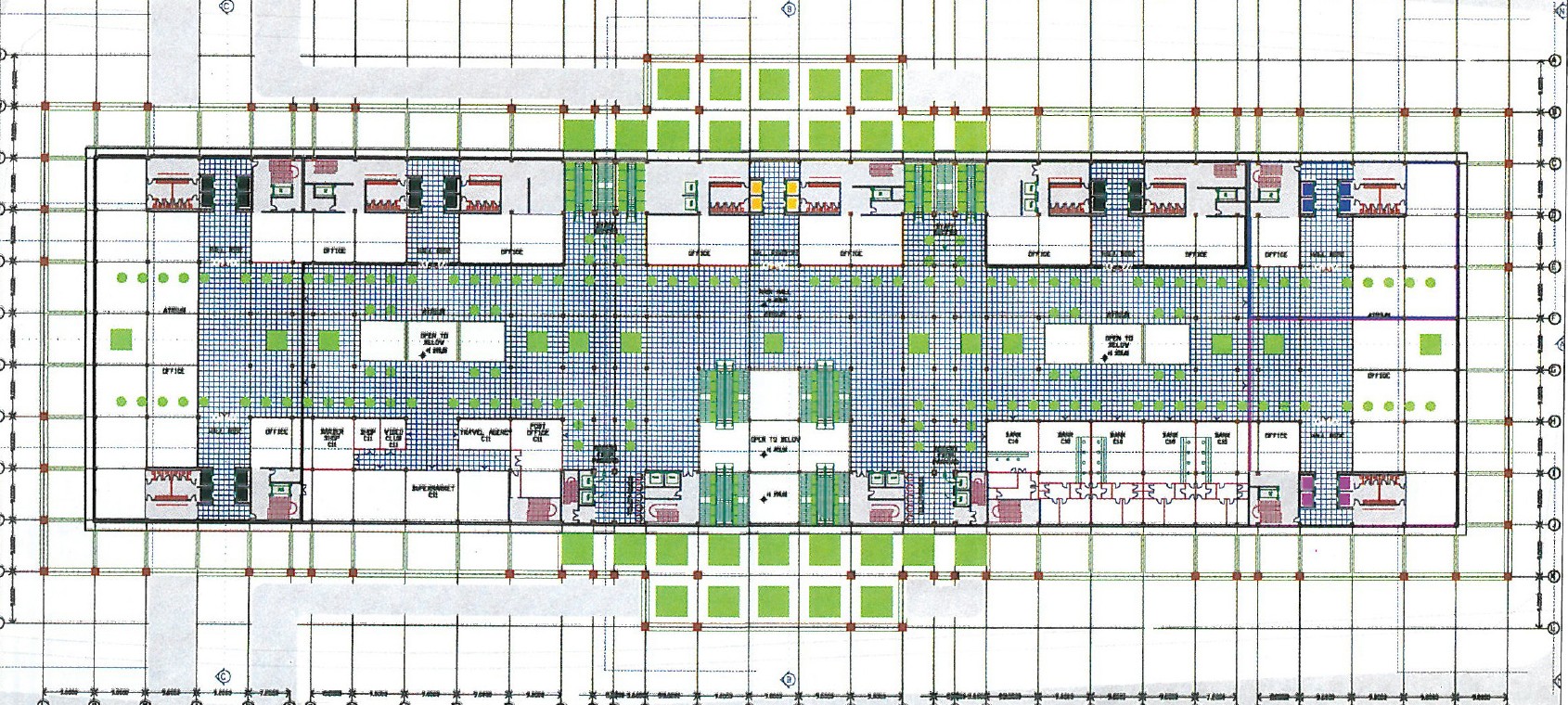
Entry 8 — the eighth team in the competition
The eighth team — the eighth Iranian-foreign collaborating team to enter the competition — also presented its scheme on the same brief criteria (green engineering, current technology, office automation, flexible work space, and a distinct presence in the urban setting of the Abbas-abad lands). The closing pages of the article introduce its model, plans and elevations.