Location: Chahar Bagh Khaju · Client: Akbari & Family · Structure: Majid Bozorgi · Design team: Sara Ghafoori, Mahsa SheikhAkbari, Sepideh Gholamhosseini · Construction: Seyed Mohammad Hassan Abtahi, Ali Nemati · Graphic: Ali Gorjian, Ashkan Behjou, Mahsa Esmaili, Hanie Fareghdefaee, Shahin Jafari Danesh · Photo: Arash AshorInia · Total built area: 1,230 m² · Site area: 543 m²
Just a short while ago there were sibehs, alive and well. House by house, they stood shoulder to shoulder around the sibeh and held an extended family within. Just a short while ago there were enclosed courtyards. Room by room, they stood shoulder to shoulder around the courtyard and held a single household within. Just a short while ago, this sibeh (a semi-public urban space) and this courtyard (a semi-private space) would gift us the "sky" the moment we stepped out from under the roof.
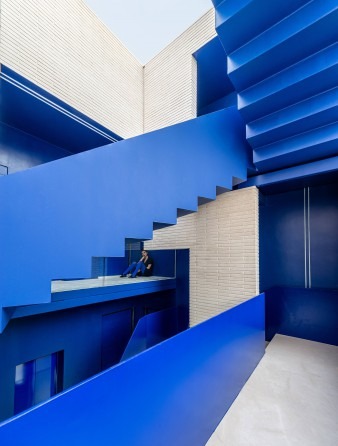
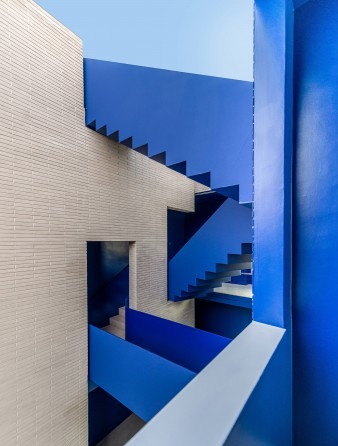
Today, however, this extended family — that household, or even its individual members — each live in some other corner of the city, the country or the world. Where? In an apartment. In apartments where stepping outside the door reveals an enclosed, dreary environment with a low ceiling and a lift. But where is the "sky" — the one thing shared by all people, that mysterious blue canopy? In Paakat, we gifted the sky to Mr. Akbari's family, with a character aligned with the common culture of the people of Isfahan.
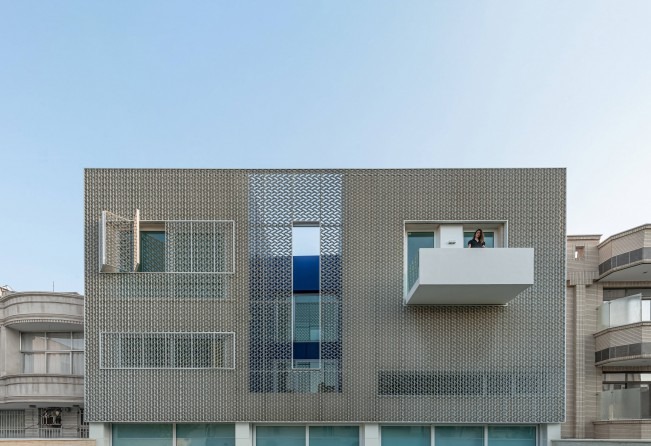
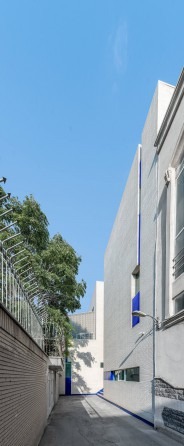
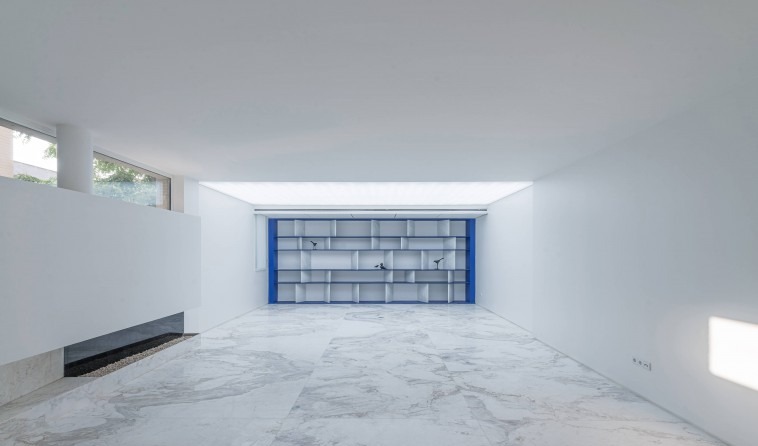
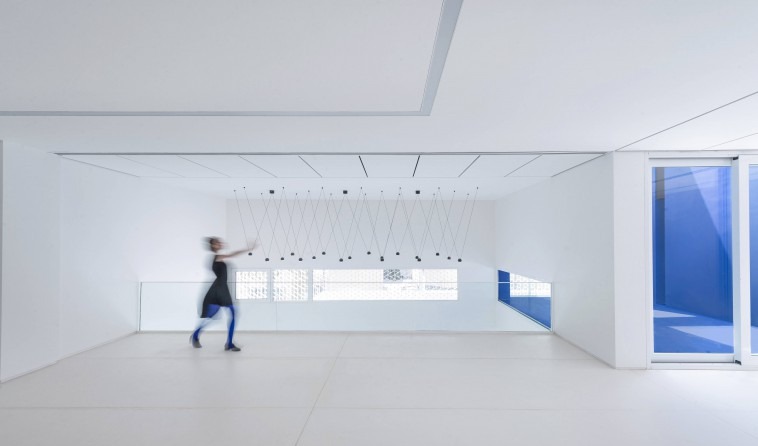
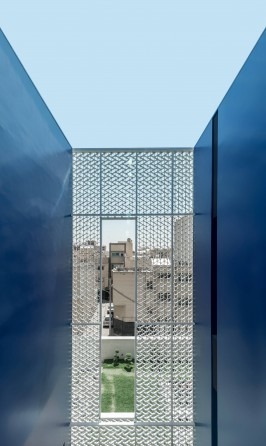
Paakat — perforated grey-brick street facade with cantilevered balconies, holding back from the Chahar Bagh Khaju front.The side alley between Paakat and its neighbour — the perforated mass opens to a blue interior void within.The central blue void — the heart of the project, where the architects' "gift of sky" to the Akbari family takes its colour from the canopy itself.The blue stair tower threading the floors — each landing opens to the grey-brick interior face.Living space at the top of the void — marble floor, white walls, and the blue shelving niche carry the sky into the unit.White interior open to the sky through the central void — the perforated facade hangs above as a luminous threshold.Plans and section — the blue void at the centre, with apartments stacked around it as the contemporary reading of the sibeh.