An opening
Parviz Tanavoli is an outstanding sculptor who has — for more than four decades — had an active presence in the modern sculpture scene of Iran, a field of which he is in fact one of the founders. Before him, the modern sculpture had no place in Iran. Sometimes untimely creativity not only does not bring success, but can lead to isolation and obscurity. It was just Tanavoli's luck that the manifestation of his creativity coincided with conditions providing a fitting ground for its flourishing. This good fortune does not in the least diminish Tanavoli's value as a leading sculptor — who has now become an artist of the world — but rather marks his place as an intellectual familiar with the requirements and the climate of his own era.
The years after Shahrivar 1320
Tanavoli is among those artists who, in the troubled market of the years after Shahrivar 1320 (August 1941), strove to break the lifeless moulds. In that era, Western life and the new artistic moulds — to the extent that they did not arrive at protest and the negation of the existing situation — practically stood opposite traditional thought, and by drawing close to the intellectuals, sought to legitimise the whole existing order.
The clever artists of that period made use of this opportunity to create remarkable works which now — after several decades — still keep their freshness and appeal. The new generation, excited by the waves of new civilisation, would not listen to the rhyming of the traditionalists. Although the liberalism of the modern civilisation could not abide the dictatorship of the years of suppression, the manifestation of selfhood in the midst of this paradox was charged with value.
Studies and travels
Tanavoli, who, after completing his studies at the Fine Arts Technical School in 1956 (1335), spent some time at the Carrara Academy of Arts, becoming closely familiar with the new methods of Italian sculpture, returned to Iran. While teaching at the Faculty of Fine Arts, he began fresh experiments at his own sculpture studio in southern Tehran — using scrap metal parts from automobiles, which were plentifully found in the workshops adjacent to his studio.
Although the result of his efforts in this period — leading to the making of sculptures such as Darius Chariot — was met with some welcome, it did not satisfy his seeking spirit. He was rather in search of native elements and signs that, by their side-by-side placing, could lay the foundation of his own particular expressive structure.
Atelier Kaboud and the Saqakhaneh school
Acquaintance with the new artists, all of whom shared similar concerns, led to the formation of the school later known as Saqakhaneh.
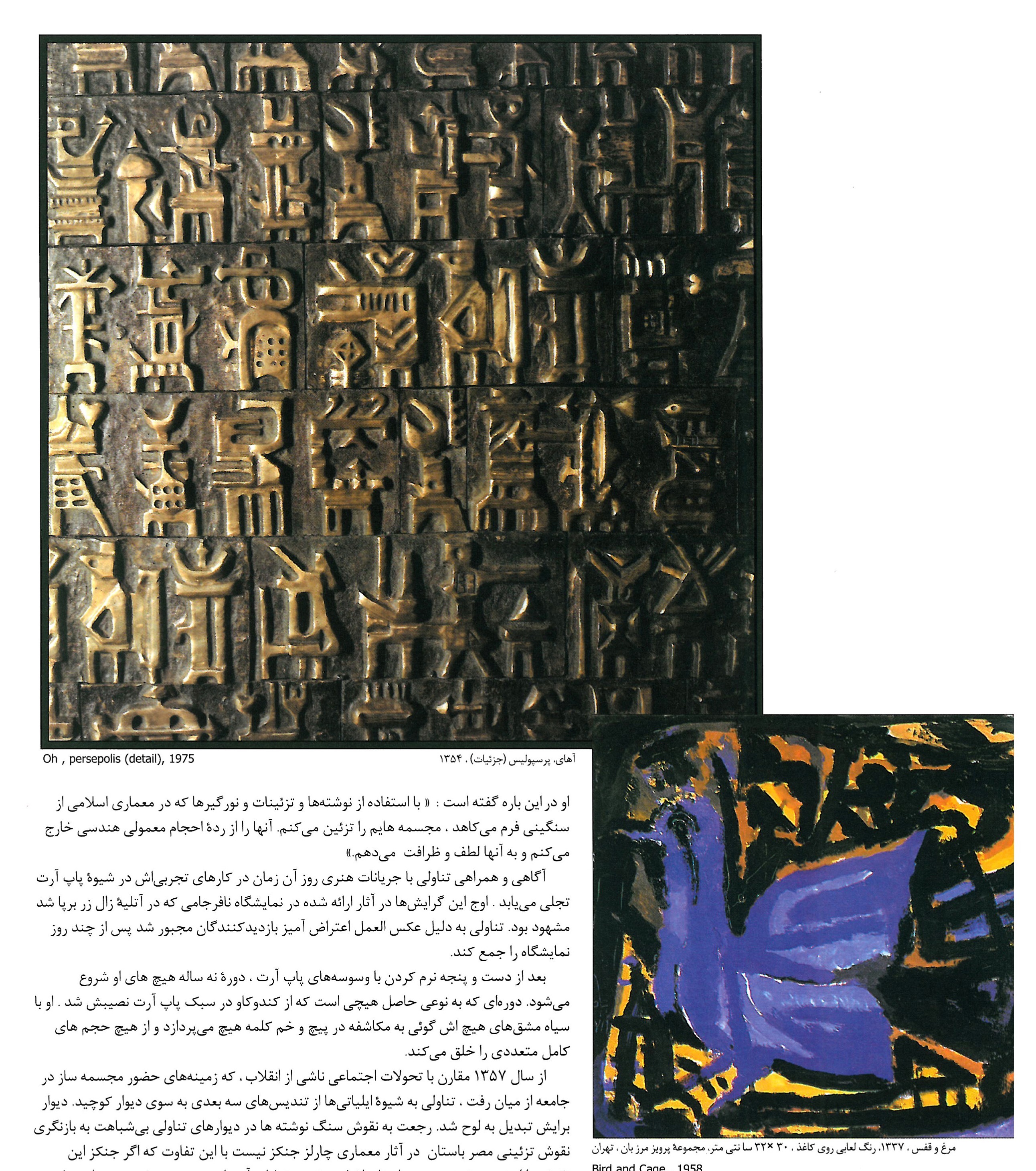
At the same time as the founding of the Atelier Kaboud in 1339 (1960), Tanavoli replaced the scrap parts of machinery with copper, and turned to research in the works of native culture. In his works of this period, written motifs, and the openings that, in Islamic architecture, made up the chief decorative elements, found their voice. His sculptures gradually became volumes inscribed with pictorial signs.
Research through written motifs and architectural ornaments
Tanavoli has continued his research through written motifs and architectural ornaments, applying them to statues, stone tablets, and wall painting.
Notable works
Mountain Goat, 1959, plaster and iron, 29 × 23 × 15 cm (ca.), Private Collection.
Deer Cub, 1957, scrap metal, 28 × 25 × 7 cm, Collection of Guiti and Jamshid Tanavoli.
Poet in Love with Bird, 1961, bronze, 38 × 14 × 7 cm, Gery Art Gallery & Study Center, New York University Art Collection, G 1975.45.
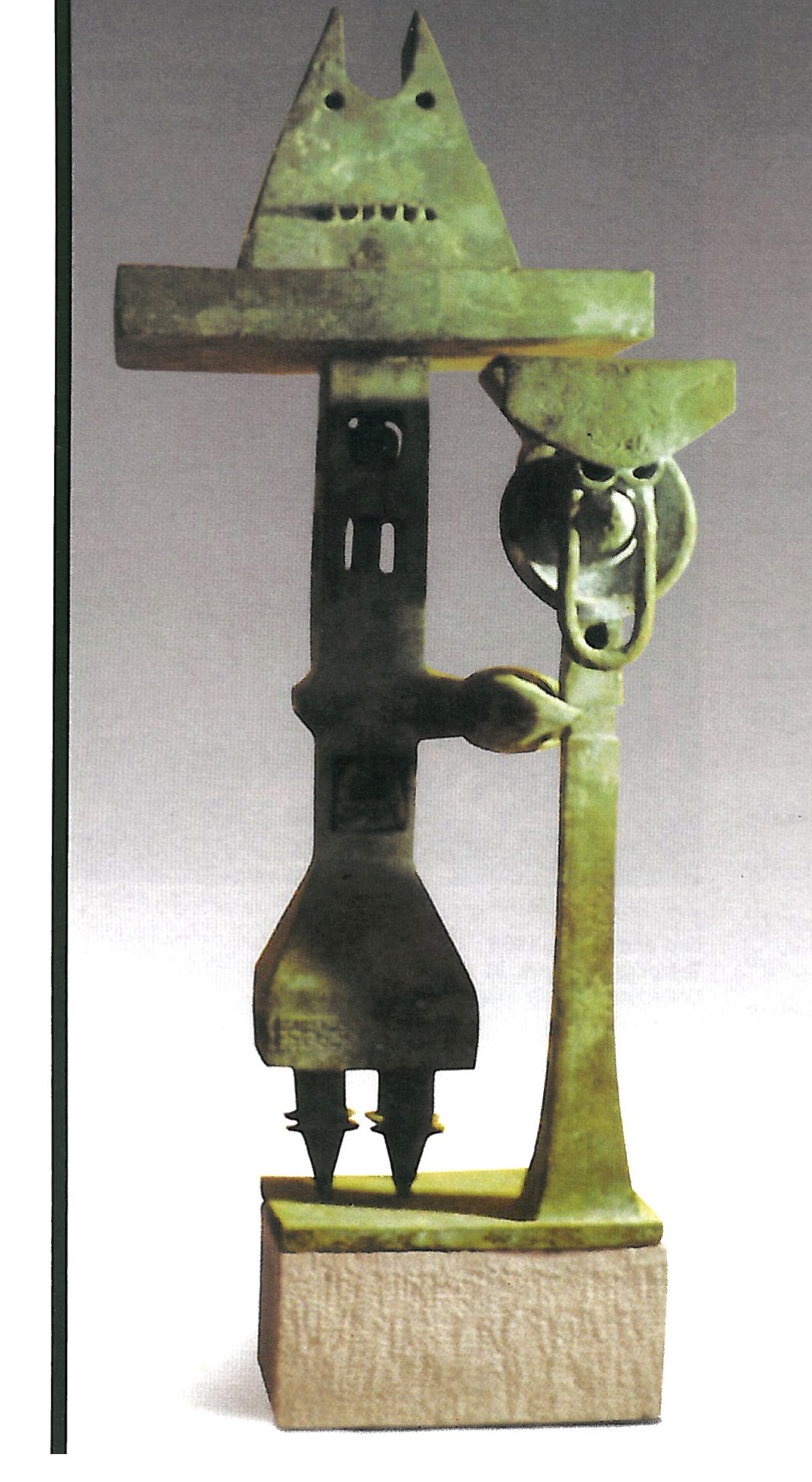
Poet and the Standing Beloved, 1969, bronze, 84 × 35 × 15 cm, Private Collection, Tehran.
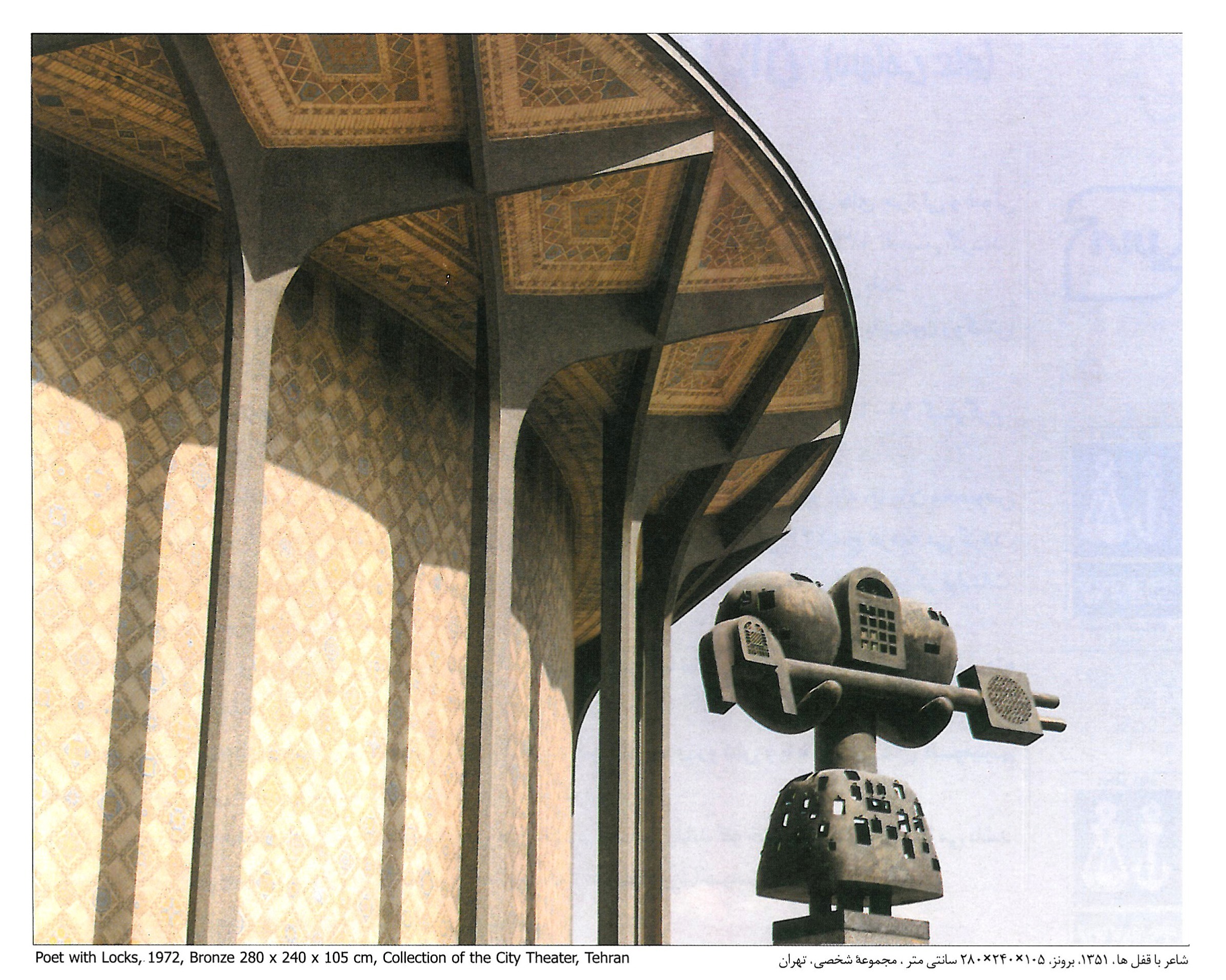
Poet with Locks, 1972, bronze, 280 × 240 × 105 cm, Collection of the City Theatre, Tehran.
The Family of Poet III, 1970, bronze, 20 × 16 × 12 cm, Private Collection, Tehran.
Simorq (Fabulous Bird), 1972, silk-screen A/V, 56 × 51 cm, Private Collection.
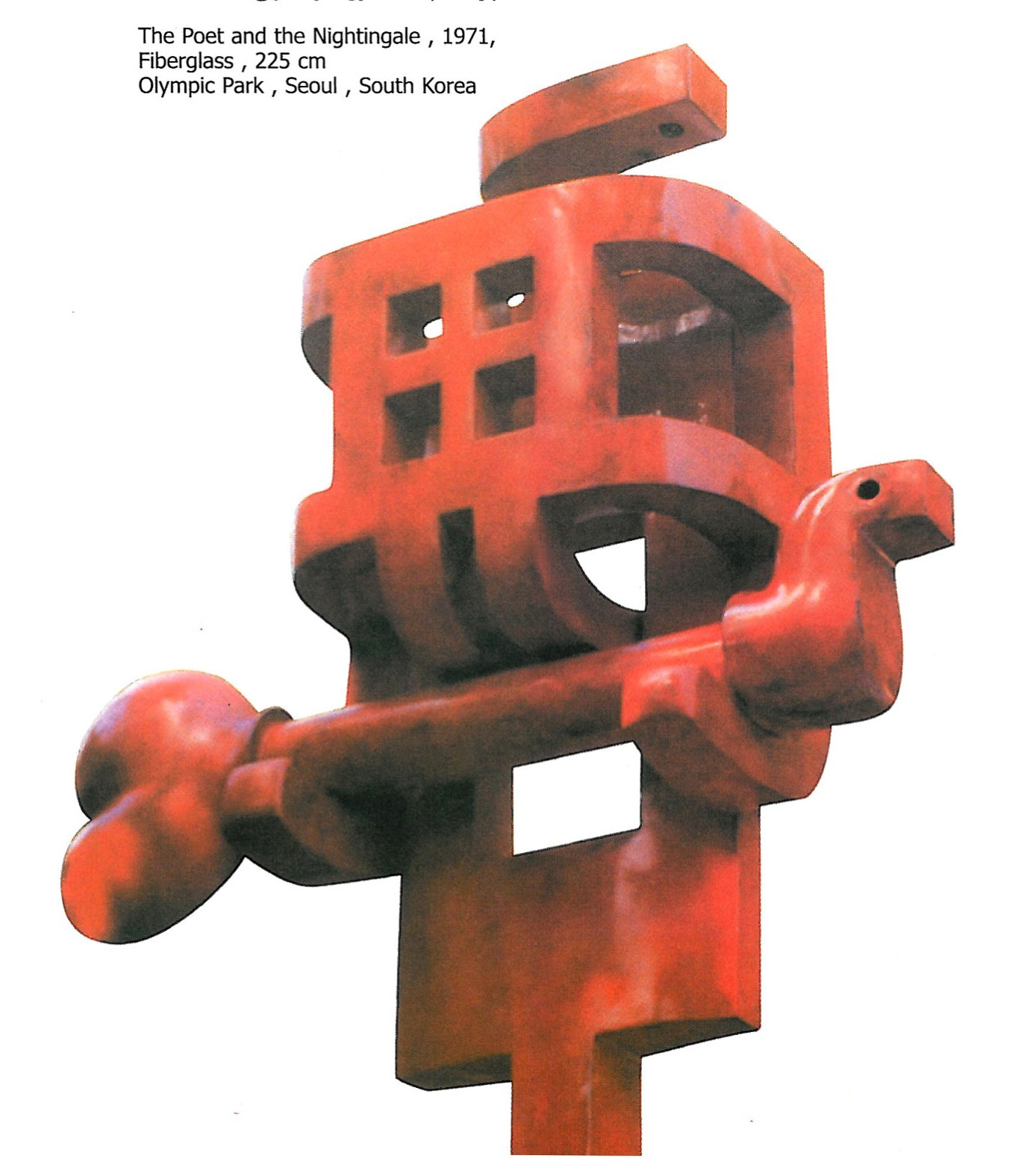
The Poet and the Nightingale, 1971, fibreglass, 225 cm, Olympic Park, Seoul, South Korea.