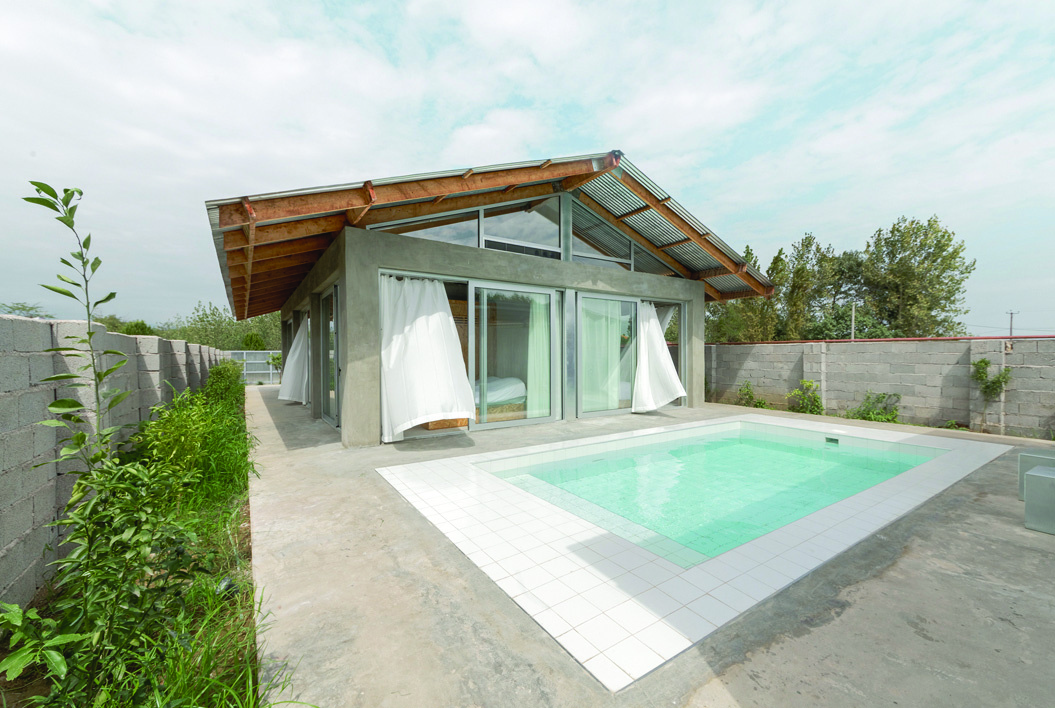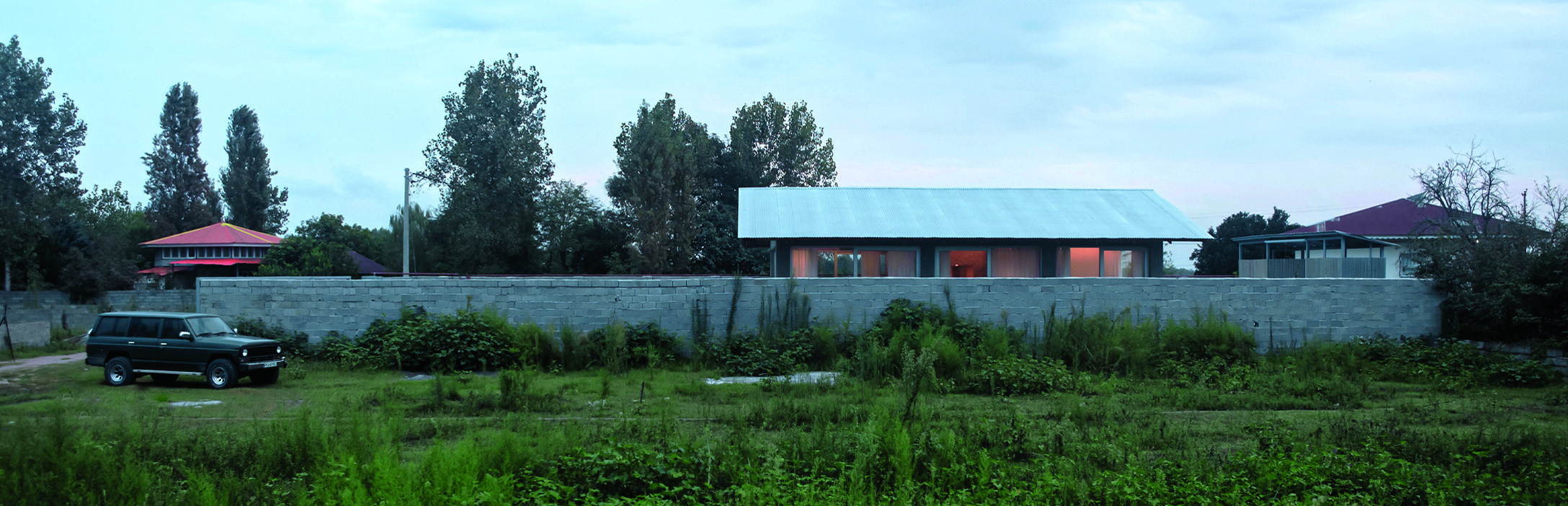
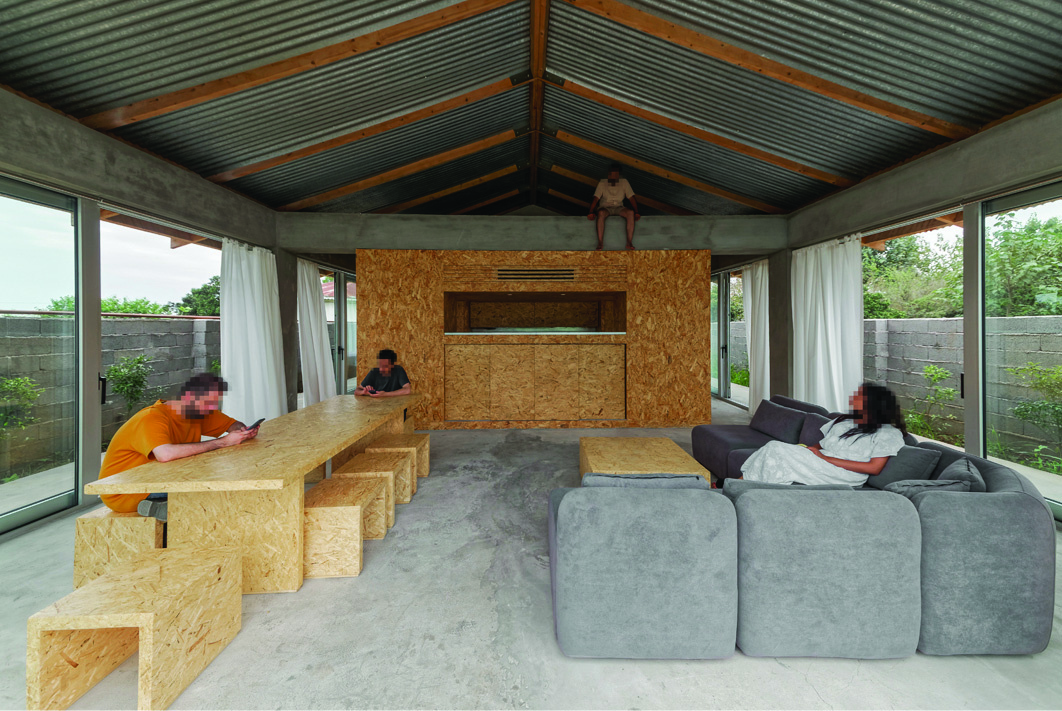
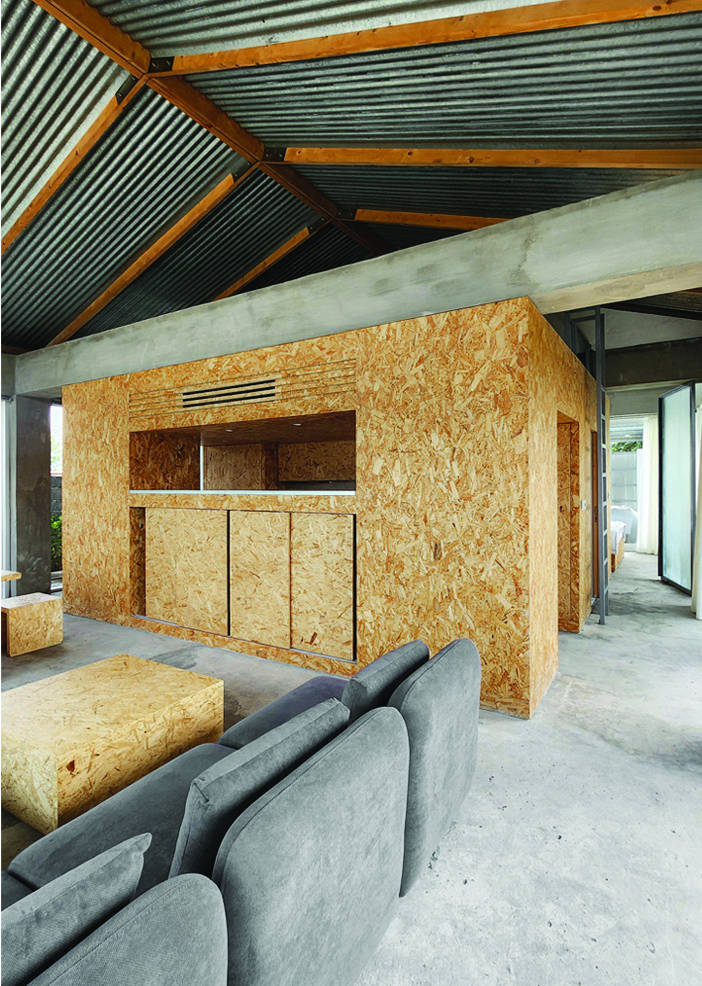
The project was offered to us at a stage when a framework of eight concrete columns and beams at its first level had already been built. The client’s initial request was to design a villa of roughly one hundred square metres, slightly better in quality than the comparable constructions around it. The way the structure was positioned on the site meant that the circulation corridors alongside the project — which connected north and south — would be extremely narrow. We thought: what if the service functions were gathered into a compact box at the centre, so that the villa’s walls could enjoy connection and daylight from every direction?
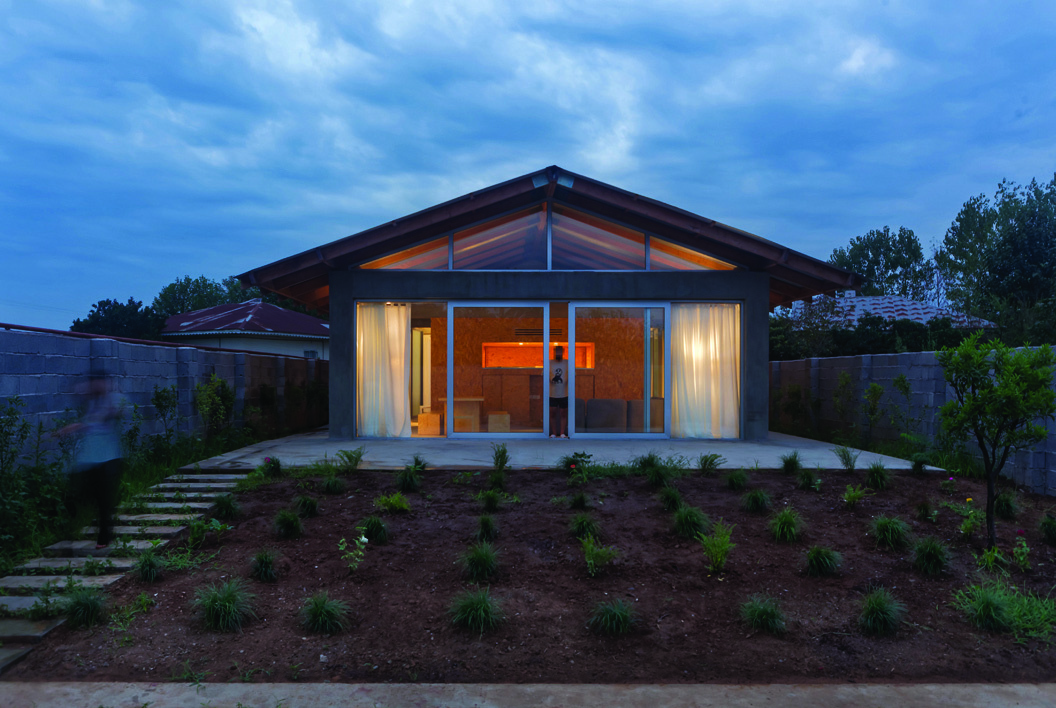
As though the project were to clear its surroundings so as to become transparent on all sides, covering only those parts of itself with a curtain where privacy was needed — much like the moment of stepping out from under the shower with the most accessible and minimal covering. This semi-naked and familiar condition reminded us of the word “pati” (bare, plain, exposed). Thus the question of Pati became this: a bare platform, more expansive than its prescribed boundary, spreading its tablecloth as wide as possible.
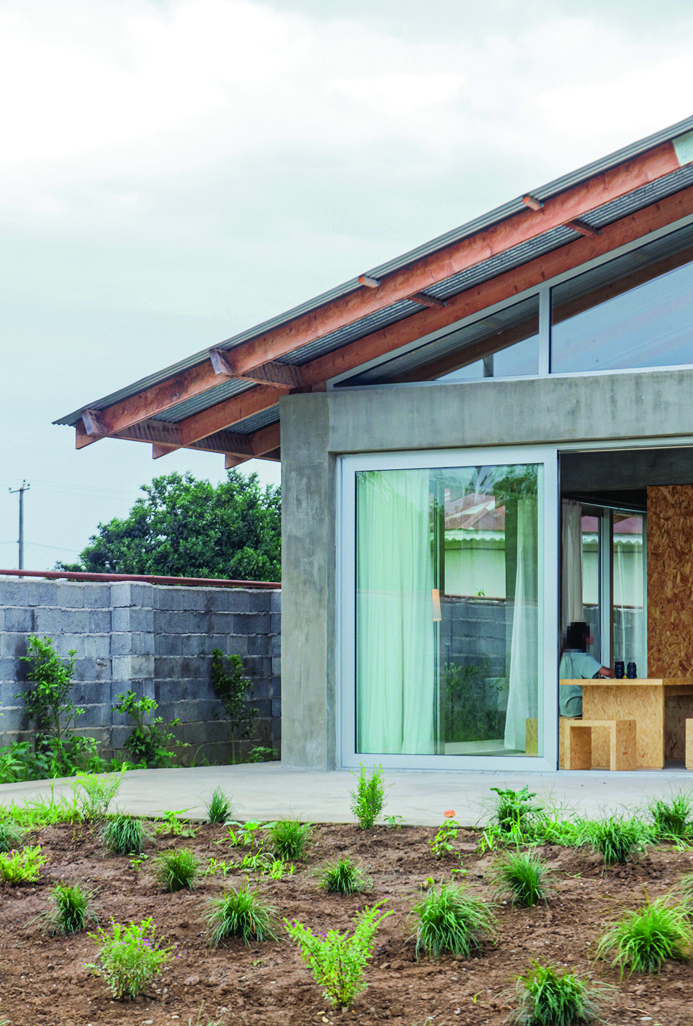
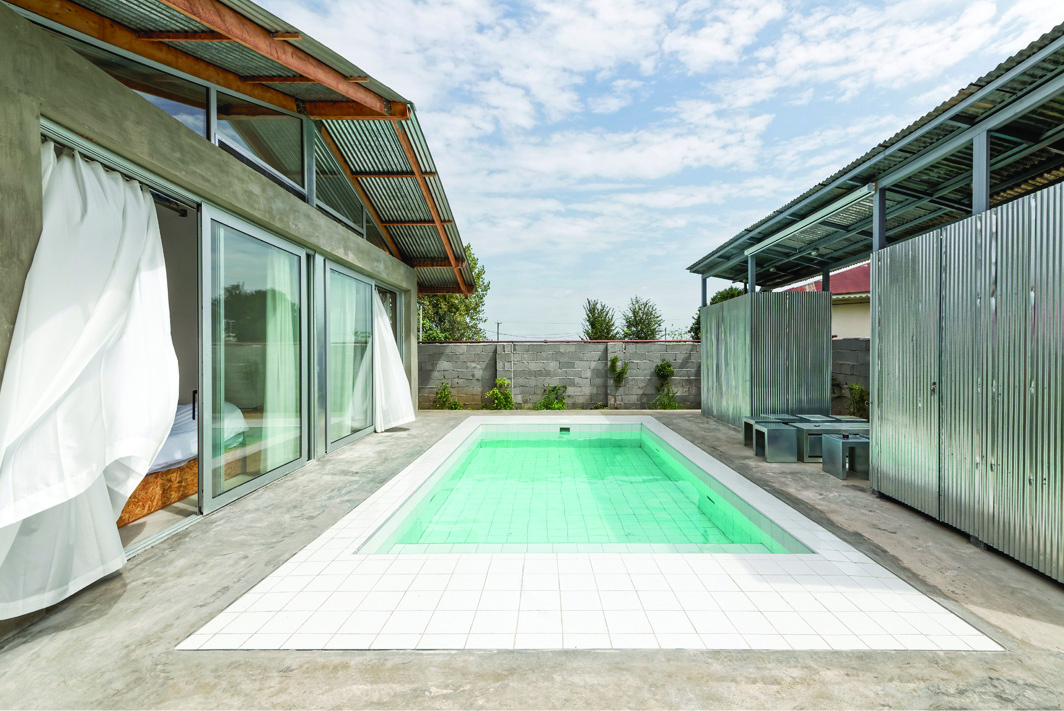
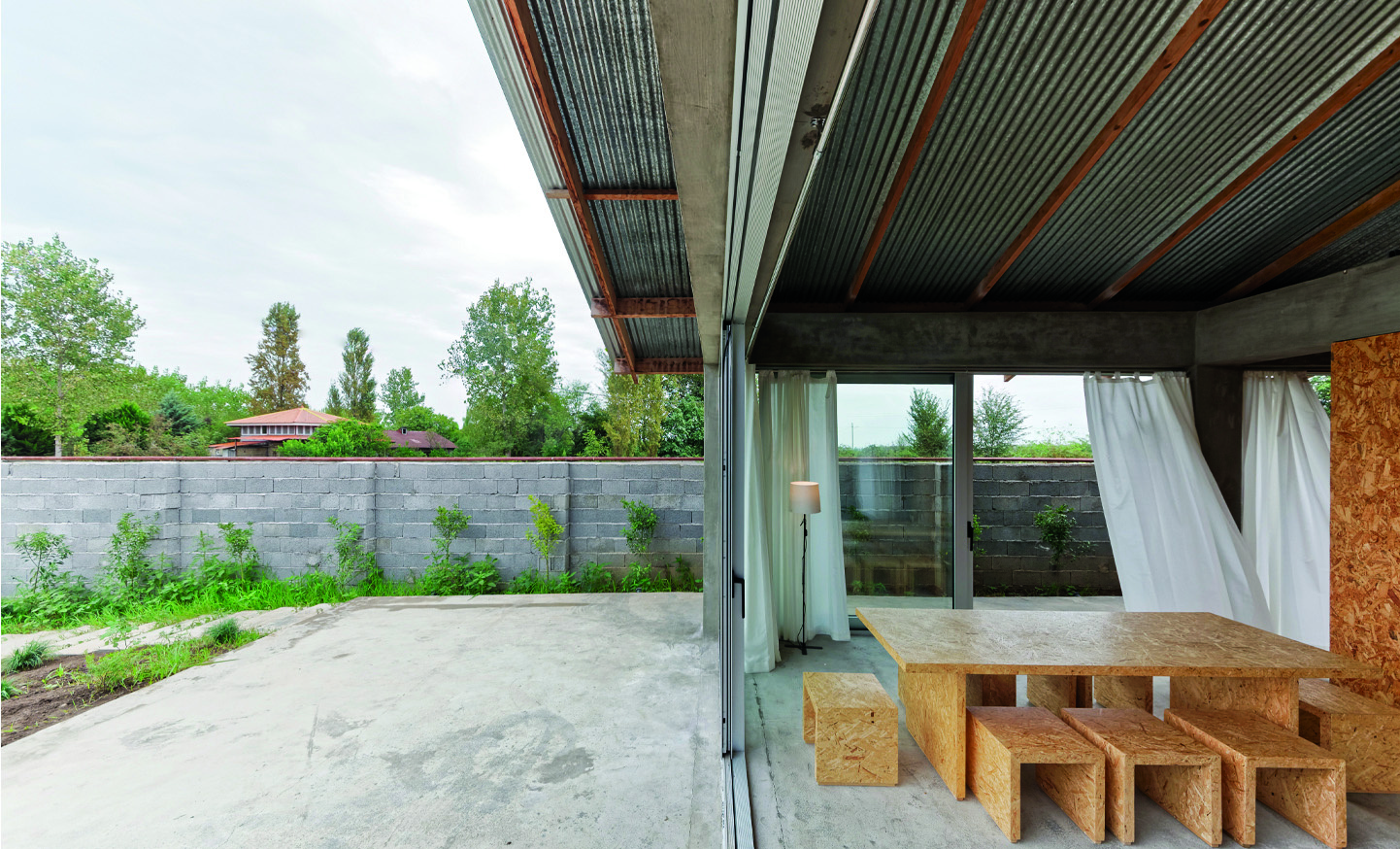
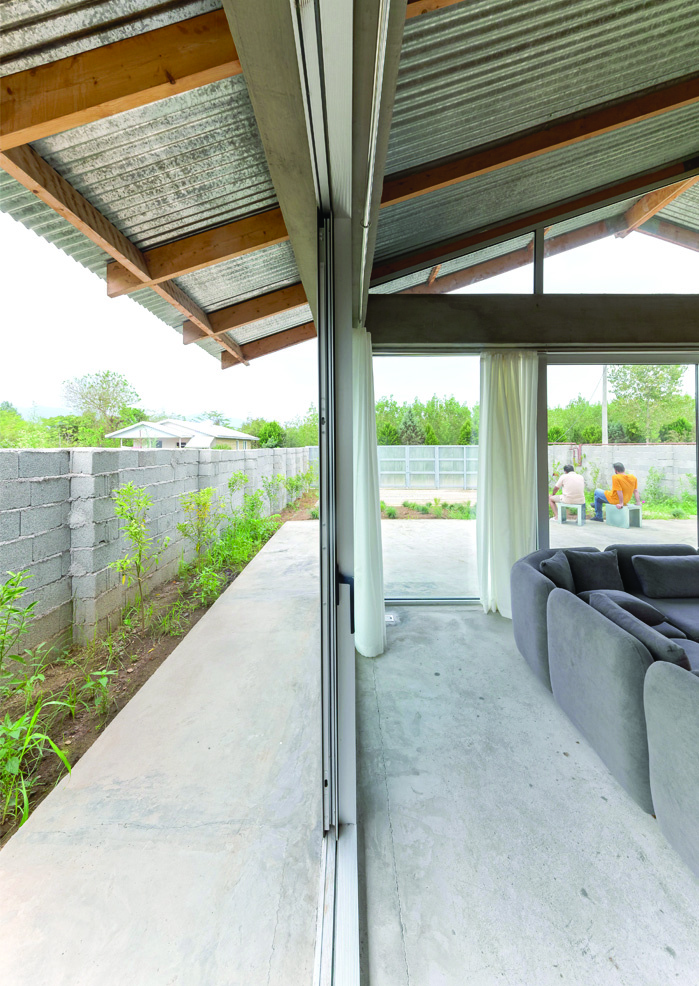
This expansion was achieved on the ground plane by extending the existing concrete slab and overhead by placing a simple, shelter-like covering — akin to the local fabric — atop the existing beams. Becoming pati gave the project the courage, at the stage of construction detailing as well, to be cleansed of almost every superfluous covering, so that every element would be itself and reveal itself in the most unadorned manner. This unadorned quality was practised in subsequent decisions as well: in the semi-open metal structures on the site, the mechanical and electrical installations, the detailing of openings, and the construction of the project’s furniture.
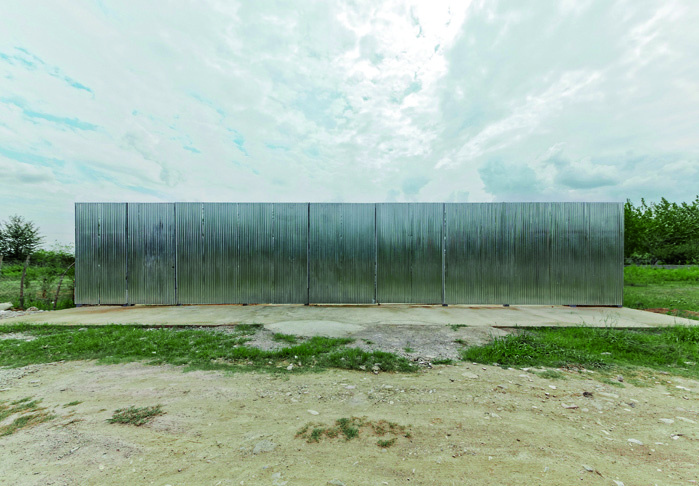
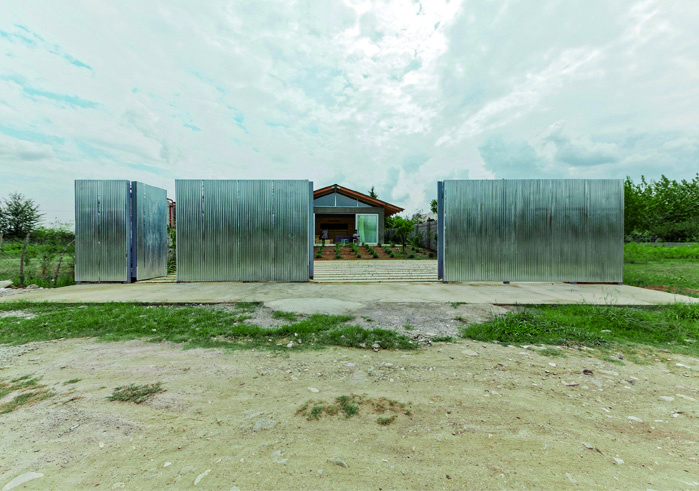
Three Realms
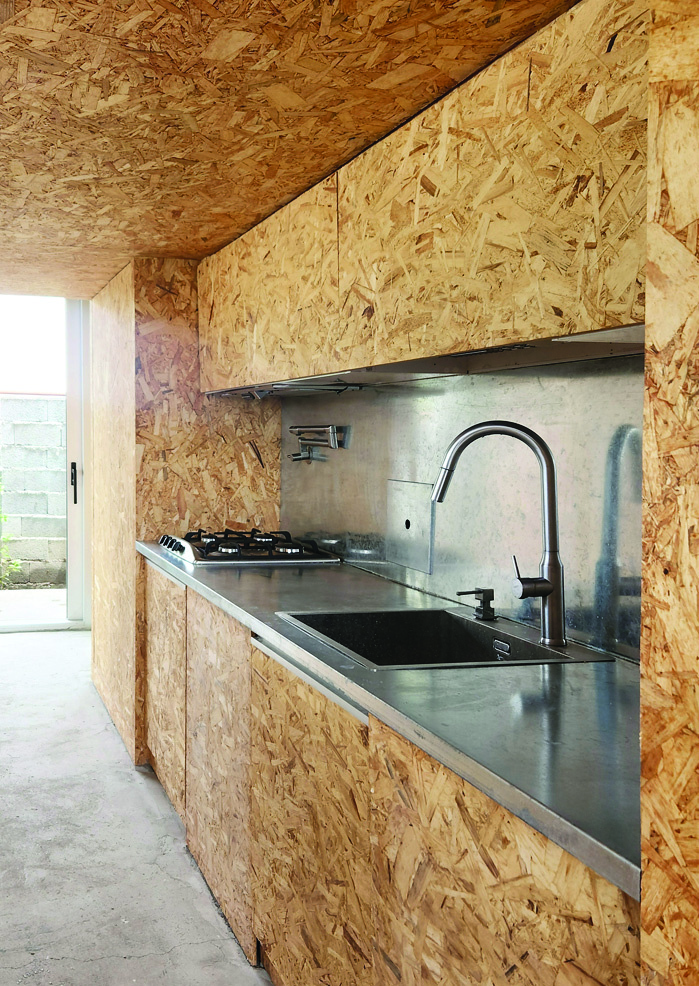
The project took shape through the coexistence of three overarching realms, and it has striven to remain faithful to them in both plan and section. Service functions such as the kitchen, bathrooms, and private dressing rooms have been positioned as a wooden box at the centre of the project in such a way that each side plays a different role (the service zone). The experience of resting on the roof of this box — its fifth face — was another role tested within this realm. Living spaces in the form of a sitting area, dining area, and bedrooms are arranged around this service core, maintaining a reciprocal relationship between inside and outside (the living zone). And the outside, encompassing spaces such as the extended platform, pool, film-watching area, and gathering space, is called the leisure realm (the leisure zone).
Habitability
The existing structure has been made habitable through three decisions. First, a double-skin roof, in keeping with the project’s neighbours, was placed atop the beams to provide shelter from rain and sunlight. The extension of the roof’s outer skin, besides expanding the habitable space and creating shade, channels rainwater toward the green strip adjoining the side corridors. Second, the structural bays were enclosed with glass walls to provide suitable ambient temperature conditions for the project. At the same time, by opening the walls, natural ventilation is established throughout the project, shielded from direct contact with rainfall. Third, the floor of the living space, by virtue of the foundation’s thickness, sits higher than the earthen bed of the site.
The aforementioned elements of the habitability process, while working in concert, preserve their independence. In other words, these components, rather than merging into one another, simply sit beside each other.
Context and Craft
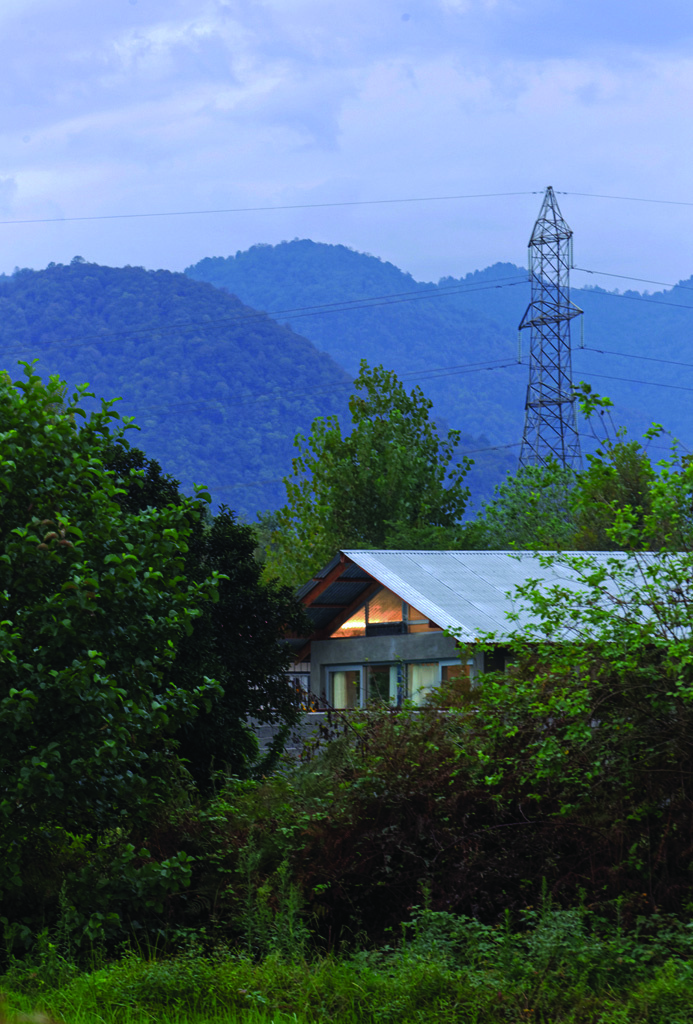
The project’s endeavour has been to calibrate its physical form to the existing assets of the environment, out of respect for the prevailing language of the context. It therefore seeks the familiar elements of that very place. Decisions such as erecting a shelter-like roof composed of wooden elements and a metal covering, or using concrete-block walls, have emerged from this search — a path that was not limited merely to recognising local and available techniques, but also extended to advancing the project with the collaboration of local technicians.